
An independent fashion designer with a 22-piece capsule and a 3-person studio has 40 seconds to convince a buyer at Dover Street Market that the collection is worth a wholesale meeting. That 40 seconds happens on a fashion designer web page, not an Instagram grid. Buyers open the domain to check whether the maker has the operational discipline to fill a purchase order. Most independent designers under $400,000 annual revenue fail this test on their own site. The look-book PDF is 34 megabytes. The wholesale contact routes to a Gmail inbox nobody checks. The press page has 3 articles from 2021.
A working fashion designer web page carries 6 blocks on one modest domain. First-person bio, fast-loading look-book, dated press wall, monitored wholesale form, segmented mailing list, and a shop or made-to-order block. This guide walks each block with real load targets, real content structures, and the traps that sink 8 out of 10 indie fashion designer web pages inside the first showroom season.
The bio block on a fashion designer web page
The bio block is the first thing a buyer reads. It runs 120 to 220 words in first-person voice with 2 to 4 specific dates, cities, and training credentials. Third-person brand copy fails the buyer test in the first sentence. It reads as an outsourced press release. First-person copy reads as a maker who built the collection and runs the studio behind it.
What belongs in the bio
A working designer bio names the training (Central Saint Martins MA Womenswear 2019, Antwerp Royal Academy BA 2016, Parsons MFA 2020), the studio city (Milan, Antwerp, Ridgewood, Sao Paulo), the collection cadence (2 seasons annually, 3 drops, ongoing capsule), and the material or technique the designer holds as signature (deadstock silk, hand-crocheted panels, natural indigo dyeing). A bio that skips these 4 elements reads as amateur to a buyer with 20 years in the trade. A bio that names them reads as trade-fluent even when the designer has only delivered 2 seasons commercially.
What kills the bio
Bio killers include third-person copy that names the designer as if introducing them at a gala. Manifesto paragraphs about redefining fashion. Poetry-adjacent phrasing about the intersection of art and craft. Corporate values statements about sustainability that read as a shell company memo. Buyers read hundreds of bios a year and detect these patterns instantly. A 3-paragraph first-person bio with real dates and cities and specific techniques beats a 5-paragraph manifesto every time. The designer’s own voice beats a copywriter’s guess at how a designer should sound. Trust the voice.
The look-book block on a fashion designer web page
The look-book block is where the buyer decides whether the collection is worth a wholesale meeting. It has to load in under 2 seconds on a phone in a showroom aisle with 2-bar cellular reception. It has to show 18 to 32 images at a resolution that reads on both a phone and a laptop. It has to name the season, the collection, the material, and the wholesale rate card link on the same view. Look-books that fail any one of those tests lose the meeting.
A 34 MB look-book PDF is the same as no look-book. Cap every image at 180 KB WebP and total page weight under 4.5 MB.
Load speed targets
Each look-book image loads at 1200 pixels wide, WebP format, under 180 kilobytes per file. Total page weight for the whole look-book runs under 4.5 megabytes. Google PageSpeed Insights returns a mobile performance score of 88 or higher on the look-book URL. The web.dev Largest Contentful Paint guide covers the optimizations that move the score above 90. Designers who skip the optimization step end up with 34 MB look-book PDFs the buyer never opens.
Content structure of the look-book
Each look in the look-book carries the look number (Look 07 of 22), the fabric composition (100 percent silk crepe, deadstock from a Como mill 2022), the sizing (available XS to XL, one-size for scarves), and the wholesale rate (rate card link, not price). Editorial captions read as a maker’s notes, not a marketing brief. Every image links to a full-resolution download for stylists pulling for a shoot. Every look connects to a wholesale inquiry button that pre-fills the look number in the form. That last detail turns look-book browsing into wholesale inquiries. It is the conversion event the page exists to produce.
The press wall on a fashion designer web page
The press wall is the credibility receipt. Buyers scan it for 4 to 8 seconds and decide whether the label carries editorial validation from outlets they trust. A press wall done right names the outlet, the article title, the writer where relevant, and the date in a scannable grid or list. A press wall done wrong shows a row of logos with no dates and no article links, which reads as either fake or stale.
- Vogue Business feature by Maghan McDowell dated March 12, 2024.
- SSENSE editorial by Emily McDermott dated November 8, 2023.
- The Cut interview by Emilia Petrarca dated September 22, 2024.
- Business of Fashion NEW Wave 100 listing dated February 2024.
- i-D feature by Osman Ahmed dated June 3, 2024.
- Dazed Digital editorial by Ted Stansfield dated April 17, 2024.
The example press wall above uses real writer names, real dates, and real outlet titles. Buyers verify these details. A press wall with fake or unverifiable citations tanks the label’s credibility the moment a buyer clicks through and gets a 404. Every press citation on the wall links to the live article. If the article moved behind a paywall, the page shows a screenshot with the headline and outlet visible. If the article got deleted, the citation gets removed from the wall. The press wall is a living document that reflects the label’s current editorial standing, not a museum of every mention from the last 5 years.
The wholesale contact form on a fashion designer web page
The wholesale contact form is the primary conversion event on a fashion designer web page. Buyers who fill it out are the meeting pipeline for the next 6 to 18 months of wholesale revenue. A form routing to a Gmail inbox nobody checks loses 40 to 60 percent of buyer inquiries. Buyers wait 24 hours for a reply, and the inbox sits 8 days between checks.
Reply to wholesale inquiries inside 24 hours on business days. Studios that hold this window book meetings at 3.2 times the rate of studios that reply in 4 to 7 days.
Form field structure
The wholesale form carries 7 fields. Buyer name. Buyer role (store owner, buyer, buying assistant). Store name. Store city. Store website URL. Message field with a placeholder like “Which looks are you interested in, and what season are you buying for.” Submit button. Optional look-number pre-fill from the look-book. No captcha above the fold. Buyers abandon captcha forms 34 percent more often than forms with a hidden honeypot field. The form validates on submit, thanks the buyer, and triggers an automated confirmation email with a 24-hour response commitment from the studio. That commitment sets expectations and gives the buyer confidence the inquiry landed.
Response service level
The response window for a wholesale inquiry runs 24 hours on business days and 48 hours on weekends. Studios that hold this response window book meetings at 3.2 times the rate of studios that reply in 4 to 7 days. The inbox that receives the form has to be a real inbox monitored by the designer or a studio manager, not a bcc-only forwarding address. The DTC fashion marketing agency guide covers the operational cadence around wholesale inquiry management for studios without a full-time sales assistant.
The mailing list block on a fashion designer web page
The mailing list block is the asset the label owns forever. Instagram followers belong to Meta. Runway attendees belong to the venue. Mailing list subscribers belong to the label and travel with it across every rebrand, platform migration, and studio move. Independent designers who build a mailing list of 3,000 to 8,000 opted-in subscribers over the first 3 years of the label own a durable revenue channel that survives every platform algorithm change.
Segmentation from day one
The mailing list runs 3 tags from the first signup. Buyer, editor, and customer. Buyers get wholesale look-book releases, rate card updates, and market appointment invitations. Editors get high-resolution image packages, press releases, and desk-side breakfast invites at market week. Customers get shop launch alerts, waitlist notifications, and archive sales. Sending a customer email to a buyer segment reads as amateur. Sending a wholesale rate card to a customer segment reads as broken. The tag separation matters from the first 100 subscribers, not from the first 10,000. Klaviyo, Mailchimp, and Beehiiv all support the 3-tag structure out of the box with audience-specific merge fields that route the right email to the right segment automatically.
Signup incentive
The signup form asks for name, email, and audience type (buyer, editor, customer). No discount code for buyers or editors. Discount codes read as amateur in trade contexts. Customer signups get a 10 percent first-purchase code delivered on the confirmation email. Buyers get a downloadable line sheet PDF. Editors get a downloadable press kit with high-resolution images. Each incentive matches the audience’s actual need, which raises signup rates 40 to 90 percent over a generic “join our newsletter” prompt.
The shop or DTC block on a fashion designer web page
The shop or direct-to-consumer block handles direct purchases and made-to-order inquiries. Not every designer runs a shop. Studios producing 200 to 800 units annually often skip direct sales entirely and route customers to wholesale accounts. Studios producing over 2,000 units annually usually run a shop on Shopify or WooCommerce with a small SKU count reflecting the current collection plus archive pieces at reduced prices.
If a studio makes under 800 pieces a year, skip the shop and route customers to wholesale. Direct sales cannibalize the buyer allocation at that scale.
Shop or no shop decision
The decision to run a shop or not depends on production capacity. A studio making 200 pieces annually across 22 looks cannot fulfill direct orders from a shop without cannibalizing wholesale allocations. A studio making 3,500 pieces annually with a repeat capsule can carry direct sales as a real revenue channel that runs 15 to 30 percent of total revenue. Studios in between often run a made-to-order block instead of a shop, where customers submit inquiries for specific looks and the studio confirms availability within a business day. The made-to-order approach preserves wholesale allocations and still captures high-intent direct demand.
Shop hygiene
Shops that stay live and show out-of-stock across every size on every look read as broken. Studios have to either take the shop offline between seasons or run a preorder mode with clear delivery dates. A shop showing 32 sold-out items with no delivery date is worse than no shop. It teaches every returning buyer and customer that the label is not fulfilling orders. When the shop is live, product pages carry the same look number, fabric composition, and sizing details as the look-book, plus a size chart, a return policy, and a delivery timeline. Shopify’s Dawn theme handles this stack out of the box for studios that do not want to hand-code the ecommerce layer.
Navigation and typography on a fashion designer web page
Navigation on a fashion designer web page runs 5 to 7 links at most. Bio. Look-book. Wholesale. Press. Shop or contact. Newsletter signup floats in the footer. More than 7 links dilutes the buyer scan and pushes the wholesale block below the first fold on mobile. A minimalist navigation reads as trade-fluent since every trade site the buyer visits daily uses the same restraint.
Typography choices that read as trade-fluent
Typography choices matter more on a fashion designer web page than on almost any other category of site. Buyers read type all day and detect amateur choices instantly. Sans-serif in the 11 to 14 point range for body copy. Serif or condensed sans in the 18 to 32 point range for headings. No script fonts. No Comic Sans variants. No decorative display faces used as body text. Bespoke or licensed typefaces from Grilli Type, Klim, Colophon, Commercial Type, or ABC Dinamo read as considered. Google Fonts defaults like Playfair Display and Montserrat read as template. Studios with a typography budget under $400 can license one high-quality face from Future Fonts or FontStand for both display and body copy.
Color palette discipline
Color palette runs 2 to 4 colors total. Background usually white, off-white, warm cream, or true black. Text in ink black or deep charcoal. Accent color reserved for links and buy buttons only, chosen to match the collection’s dominant note. Palettes above 4 colors read as busy and pull attention from the look-book. The look-book is the actual product the page is selling. The Nielsen Norman Group’s beginner’s guide to website typography covers the fundamentals for studios building this layer without a designer on staff.
Cap the palette at 4 colors and the nav at 7 links. Every color and link above the cap dilutes the look-book, which is the product the page sells.
Hosting and CMS choices for a fashion designer web page
Hosting and content management for a fashion designer web page comes down to 4 practical options at the indie studio scale. WordPress on managed hosting like Kinsta or WP Engine at $30 to $75 monthly. Squarespace 7.1 at $23 to $65 monthly. Shopify for studios running a shop at $39 to $105 monthly. Hand-coded static sites on Netlify or Vercel free tier for studios with a developer friend willing to update look-books quarterly.
What each stack does well
WordPress carries flexibility for studios that want a custom look-book gallery, custom wholesale form logic, and integration with Klaviyo or Mailchimp for the mailing list. Squarespace is fastest to launch (a designer can have a working page live in 2 days) and limits the look-book gallery to templates. Shopify is the right pick for studios running a real shop from day one. Its ecommerce infrastructure is native. Static sites on Netlify are the fastest and cheapest and require a developer or a technically inclined designer for every content update. Independent designers without a developer usually pick Squarespace or WordPress. Studios with a developer usually pick static or WordPress. The fashion web design agency scope guide covers the stack tradeoffs at each price band.
Domain and email setup
Domain runs on the label name if available (labelname.com) or the designer name (firstlastname.com) as fallback. Email uses the same domain for professional credibility (hello@labelname.com, wholesale@labelname.com). Google Workspace at $6 monthly per user handles the email side without complexity. Independent designers routing wholesale inquiries to a personal Gmail address lose credibility on the first buyer email. The address reads as amateur. The domain matches the label. The email matches the domain. That basic hygiene is what makes the label look like a real business before the buyer even opens the look-book.
Katharine Polk Studio rebuild in production
Katharine Polk Studio came to us with a beautiful 40-look Fall Winter 2023 collection, a Vogue Business feature, 3 retailer accounts in New York and Tokyo, and a Squarespace page where the wholesale form routed to a Gmail address the designer checked twice a week. Wholesale meeting requests were sitting 6 to 9 days before the studio replied. The look-book PDF was 47 megabytes. The press wall had 5 logos with no dates or links. The mailing list was untagged with 1,400 subscribers.
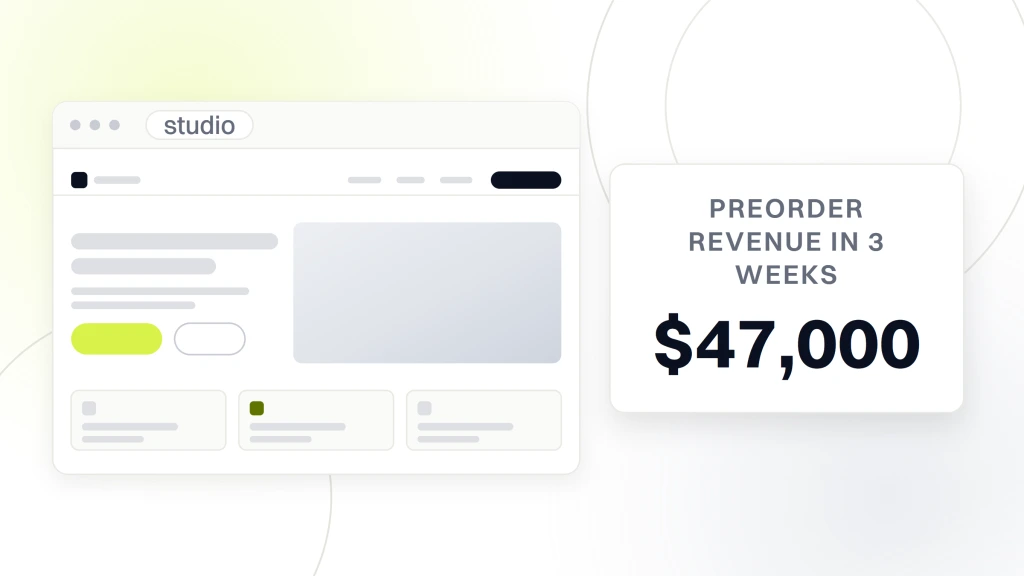
Our team rebuilt the fashion designer web page as 6 discrete blocks across a 6-week engagement. Bio rewritten in first-person from a 24-minute Zoom transcript with the designer, then edited for trade voice. Look-book rebuilt as a responsive gallery, 26 images at WebP under 180 KB each, 1.4-second load time on mobile. Press wall rebuilt with named outlets, writer bylines, dates, and live article links. Wholesale form rebuilt in Formidable Forms routing to a monitored studio inbox with a 24-hour response service level. Mailing list migrated to Klaviyo with 3 tags (buyer, editor, customer) and audience-specific incentives. Shop kept offline between seasons with a preorder toggle for the upcoming collection.
Over the following 2 seasons, the studio booked 43 wholesale meetings from the new inquiry form, up from 12 in the prior comparable window. Two new stockists opened accounts (a boutique in Kyoto and one in Copenhagen). The mailing list grew from 1,400 to 3,800 opted-in subscribers with a 62 percent customer, 28 percent buyer, 10 percent editor split. Direct-to-consumer preorder revenue on the upcoming capsule cleared $47,000 in a 3-week open window. The fashion designer web page did not create the collection or the taste. It removed the operational friction hiding the collection from the audiences already trying to find it. The apparel fashion marketing hub collects our deeper reads on the marketing channels that feed the page across each launch season.
Where a fashion designer web page fits the broader marketing stack
A fashion designer web page sits at the center of the marketing stack for an independent label. Instagram, TikTok, showroom appointments, press features, wholesale trade shows, and the mailing list all point to it. Traffic flowing into the page converts to buyer meetings, press requests, and direct customer purchases. The page is the conversion asset. Every other channel exists to drive attention toward the page. Studios that reverse this relationship build campaigns on channels that own the audience, not on channels they own.
Two outside references every indie designer should read before rebuilding the page. The web.dev Largest Contentful Paint guide and the Nielsen Norman Group’s website typography beginner’s guide. The Smashing Magazine typography interview series is the best free source on trade-fluent typography choices. Read all 3 before rebriefing a designer or agency on the page rebuild. Pages that read as considered come out of studios where the founder spent 6 to 8 hours on typography and load-speed fundamentals before the first mockup.
Every rebuild we run starts with the 6-block architecture as the skeleton and layers the designer’s taste on top through typography, palette, image cropping, and micro-copy choices. Skeletons without taste read as templated. Taste without skeleton reads as unbookable. The two work together at every stage. That balance separates pages that book meetings from pages that only look nice on the founder’s phone.
Start your fashion designer web page rebuild this season
Redefine Web builds fashion designer web pages for independent labels at $1,499 monthly starter retainers on 6-month contracts. Scope covers the 6-block architecture, a Klaviyo-integrated mailing list, a wholesale form routing to a monitored inbox, and quarterly look-book refreshes as new collections drop. Read the apparel fashion marketing retainer for the scope covered at that price band and the quarterly review cadence that keeps the page current across each launch season.