
Your DTC apparel brand is one hero product away from a real month, or one bad creative rotation away from a quiet quarter. That gap is the whole reason to hire a fashion marketing agency instead of piecing together a freelancer, a part-time media buyer, and a Meta autopilot campaign. You need paid social running at a cost that clears margin, TikTok and Reels creative produced faster than a single freelancer can turn out, retention email that pulls repeat purchase past 32 percent, and one honest attribution model that tells you which of those levers moves the number. Every fashion brand between $80,000 and $2 million a month runs into the same wall. The founder is the taste maker, the ops lead is drowning in fulfillment, and nobody owns the whole growth stack. A recent read on fashion marketing trends covers the trend-scoring filter for 2026.
This guide walks through what a real fashion marketing agency does for a DTC apparel brand, what the scope of work looks like month to month, how retainer pricing lines up against the revenue you’re trying to protect, and the signals that separate operators who understand apparel from generalist shops running the same deck across every vertical.
What a fashion marketing agency actually does for an apparel brand
A fashion marketing agency owns four things day to day for a DTC apparel brand. Paid social spend across Meta and TikTok. Weekly creative production tuned to seasonal drops. Retention email and SMS flows. Attribution reporting that reconciles Shopify with ad platform data into one number.
The ecommerce digital marketing strategy playbook we run for DTC clients starts with a channel mix decision. For a $100,000 a month apparel brand, that mix is roughly 55 percent Meta paid social, 20 percent TikTok paid, 15 percent retention email and SMS, 5 percent Google branded, 5 percent influencer seeding. Numbers shift by category. A denim brand tilts harder toward TikTok organic. An accessories brand tilts harder toward Meta since ad libraries let you saturate iteration faster on smaller product photography budgets.
Weekly creative volume is the input most fashion brands underspend on. You need 8 to 12 fresh ad variants per week just to keep a Meta account from fatiguing on the same creative. A single freelance video editor caps out around 6 variants weekly on a good week. A real agency runs a two-editor pod plus a UGC creator on retainer, so the numbers add up at the retainer tier and not below. That labor math is what the retainer actually pays for every month.
How a fashion marketing agency prices monthly retainers
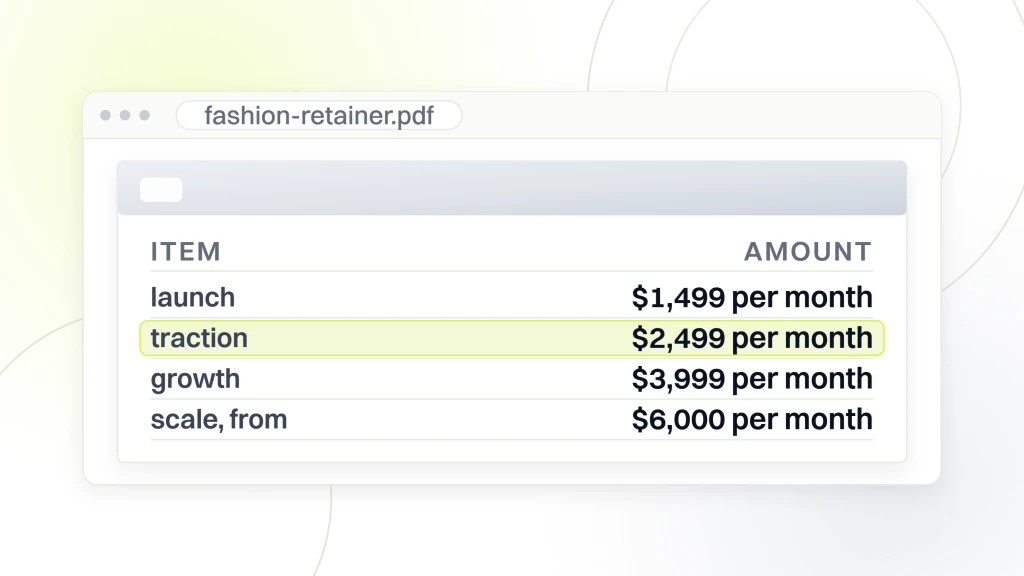
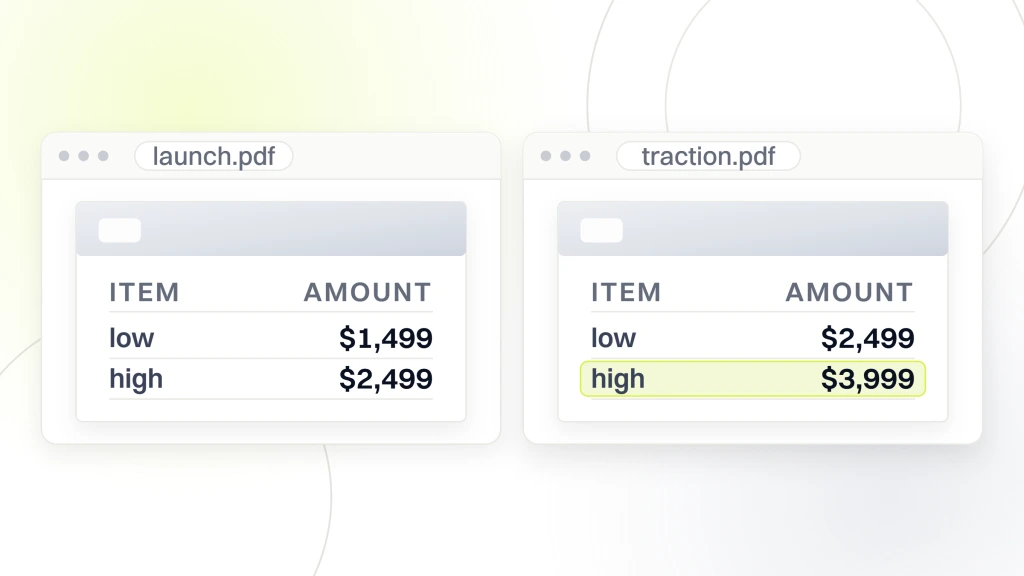
Retainer pricing for a fashion marketing agency lands between $1,499 and from $6,000 per month for DTC apparel brands, with most growth-stage brands sitting in the $2,499 to $3,999 monthly band. Ad spend, creative volume, and pod size drive the tier the account lands in.
For founders scoping partners rather than tactics, our guide to evaluating fashion marketing companies covers the scoring rubric, red flags, and reference call playbook that separates a working agency from a slick reel. Read our fashion designer web page portfolio and brand site guide for the block-level structure independent labels use to book buyer meetings from a modest domain.
For the ranked shortlist by tier, pod size, and retainer band, see our roundup of the top fashion marketing agencies worth a discovery call for DTC apparel brands.
For the pillar plan and format matrix that sits above these tactics, see our guide to content marketing for fashion brands across style, occasion, sustainability, and brand editorial.
For the ecommerce merchandising, size and fit, and checkout side of the plan covered here, see our guide to fashion ecommerce marketing for DTC apparel brands.
For the wider funnel and budget rulebook that sits above these tactics, see our guide to marketing for fashion brands across acquisition, brand, and retention.
Founders scoping the higher-end tier of the roster can read our guide to luxury fashion marketing for the scarcity, VIC retention, and brand versus performance ratios that separate luxury programs from mass market DTC apparel.
For the strategic framework that sits above the tactical playbook covered here, see our guide to fashion marketing strategies for DTC apparel brands.
| Brand stage | Monthly ad spend | Creative volume | Retainer band | Team on the account |
|---|---|---|---|---|
| Launch, under $20K MRR | $0 to $5K | 4 assets weekly | $1,499 to $2,499 | 1 buyer, part-time editor |
| Traction, $20K to $80K MRR | $5K to $25K | 6 to 8 assets weekly | $2,499 to $3,999 | 1 buyer, 1 editor, part-time UGC |
| Growth, $80K to $250K MRR | $25K to $80K | 10 to 16 assets weekly | $3,999 to $6,000 | 2 buyers, 2 editors, UGC creator |
| Scale, $250K to $700K MRR | $80K to $220K | 18 to 26 assets weekly | Starts at $6,000 per month | 3 buyers, 3 editors, retention lead |
| Enterprise, $700K MRR up | $220K plus | 26 to 40 assets weekly | custom scope | Full pod plus international lead |
Founders shopping this space compare apples to oranges when the agency deck lists services but hides the labor mix behind them. Ask every agency three questions. How many people work on my account. How many hours weekly. What does the creative volume actually look like at that price. Any agency that dodges the labor question is billing hours to the highest-margin client and letting your account starve. Retainer math is transparent or you should walk. A 6-month contract is the industry norm since paid social iteration needs 90 days of learning before you know what works, not 30.
For the campaign layer that sits above the always on tactics covered here, see our guide to fashion marketing campaigns for DTC apparel brands.
Paid social inside a fashion marketing agency for apparel
Paid social is the loudest lever in the stack. Meta still pulls 60 to 70 percent of trackable revenue for most DTC apparel brands under $500,000 monthly. TikTok pulls 15 to 25 percent and grows faster on newer brands with sharper native creative. Google branded search catches your customer at the wallet-open moment and rarely goes above 8 percent. The mix is a live decision the agency revisits every 30 days.
Meta creative for apparel breaks into four archetypes a good pod rotates weekly. Product-in-motion, where a model wears the piece with a sound-on hook. Founder voice, a 30-second brand story with product cutaways. UGC testimonial, a real customer video with a real caption. Static carousel, 5 to 7 lifestyle stills with a hook slide. Each archetype gets 2 to 3 variants per week during a stable month and 4 to 6 during a drop week. Winning creatives get scaled into duplicated campaigns and eventually get promoted to broad targeting once cost per acquisition holds.
- Broad audience with creative-led segmentation, not interest-stacked ad sets.
- Advantage Plus shopping campaigns for at least 60 percent of scale budget.
- Weekly creative refresh, not weekly campaign rebuilds.
- Post-purchase survey data (Fairing or KNO) fed back into audience modeling.
- Pixel plus Conversions API on both Meta and TikTok, not one or the other.
- Seasonal budget flex of 40 to 60 percent between drop weeks and quiet weeks.
- Attribution reconciled against Shopify weekly, not against ad platform reporting.
How does TikTok fit into a fashion marketing agency stack
TikTok pulls 15 to 25 percent of trackable revenue for most DTC apparel brands and drives top-of-funnel awareness that Meta cannot buy. A fashion marketing agency runs TikTok in three lanes. Organic shorts from a house creator, paid Spark Ads amplifying winners, and TikTok Shop where margins clear.
Native TikTok creative is the failure point where most generalist agencies get exposed. A Meta editor cannot cut TikTok. The pacing is different, the hook window is under 1.5 seconds, and the audio-first structure changes how you frame a product. Real fashion marketing agencies staff a dedicated TikTok editor who lives in the app 3 hours a day tracking trends, sounds, and format shifts. That editor produces 4 to 8 shorts weekly for a growth-stage brand, plus a Spark Ads amplification calendar built around the top 2 to 3 organic winners.
DTC brands that run TikTok and Meta off unified pixel data tend to see better blended acquisition efficiency than brands running the two platforms as separate silos. The tracking discipline pays off inside 90 days once the Conversions API events reconcile cleanly against Shopify order data. That reconciliation work is what a real operator does before scaling TikTok spend past $10,000 monthly, and it is the piece most generalist agencies quietly skip yet charge for as platform management on the invoice.
Instagram content strategy a fashion marketing agency runs
Instagram sits between paid social and organic community for apparel brands. Meta owns the ad inventory. The organic feed drives brand equity that makes paid conversions cheaper. Both work together or you leave money on the table. A fashion marketing agency treats Instagram as one integrated program, not two disconnected teams posting and running ads out of separate calendars.
The ecommerce social media marketing playbook we use runs a weekly cadence of 4 to 6 organic Reels, 3 to 5 static posts, 2 to 3 carousel posts, plus 15 to 25 Stories. That volume needs one full-time content producer or an agency pod. Nobody delivers that from a solo VA. The Reels double as paid creative source material, so the paid and organic teams stop being separate cost centers and become one production line.
Content pillars for a DTC apparel Instagram fall into 5 buckets. Product-in-motion, behind-the-scenes founder content, community and UGC reposts, styling and how-to-wear, and seasonal or drop-adjacent content. Each pillar gets weekly allocation on the calendar in advance. Brands that skip the pillar map default to product-in-motion only, which fatigues the feed inside 6 weeks and depresses reach 30 to 45 percent for the following two months. Instagram rewards variety, and the agency’s job is to structure that variety before the content producer has to decide on a Sunday night.
Seasonal drops and a fashion marketing agency cadence
Seasonal drops are the rhythm of DTC apparel. Fall drop. Holiday capsule. Resort. Spring hero. Summer core. Each drop is a 4 to 6 week campaign arc that a fashion marketing agency plans 90 days ahead of go-live. Miss the arc and you launch a drop into a cold ad account, spend two weeks warming pixel data, and burn the release-week traffic curve for nothing.
The pre-drop 21-day warm-up is the phase every agency cuts corners on. Teaser content, waitlist opt-in ads, remarketing pool building, and email nurture flows all run in the 3 weeks before the drop. The launch day itself carries a 3 to 5 times spend surge across Meta and TikTok, then a controlled taper across weeks 2 to 4. Post-drop we run a UGC harvest and a retention email push to convert first-time drop buyers into second-order customers inside the 30-day repeat window.
Founders new to this cadence usually try to run every drop as its own project. That works for the first two. By drop three the team is exhausted and the calendar is chaos. An operator agency runs drops on a rolling arc where drop N+1 pre-work starts before drop N sells out. The rolling arc is what turns seasonality from a stress cycle into a repeatable production line. That production discipline is what separates a $2M brand from a $200K brand running the same underlying product.
Retention email and SMS a fashion marketing agency owns
Retention is the margin lever paid social cannot touch. A DTC apparel brand with a 22 percent repeat purchase rate makes 40 to 60 percent more contribution profit than the same brand at 15 percent, on identical top-line revenue. That gap comes almost entirely from Klaviyo flows, an SMS list built through post-purchase opt-in, and a segmentation model that treats first-time buyers, VIPs, and lapsed customers as three separate audiences. The organic side of the stack sits in our ecommerce SEO services guide for founders reading past the paid social lens.
The base Klaviyo flow stack for an apparel brand runs 9 flows minimum. Welcome series with 3 emails. Abandoned cart with 3 emails plus SMS. Abandoned browse with 2 emails. Post-purchase with 4 emails across 60 days. Win-back at 90, 120, and 180 days. VIP nurture. Back-in-stock. Price drop. Review request. Below 9 flows and your retention program has holes big enough to lose 8 to 12 percent of trackable revenue.
Campaign cadence outside flows runs 2 to 4 emails weekly plus 4 to 8 SMS monthly. Apparel is a category where over-emailing wrecks list health inside a quarter, so segmentation has to filter recent purchasers out of every campaign send. Agencies that skip the suppression rules end up with unsubscribe rates over 0.6 percent monthly, and the brand pays for that across the next 12 months in reacquisition cost. Retention is a discipline problem more than a creative problem, and it takes an operator who reviews the numbers weekly not quarterly.
Attribution a fashion marketing agency should be running
Attribution is where most fashion marketing agency relationships quietly break. The agency reports a 3.2 return on ad spend from Meta. Shopify reports total revenue that only clears a 1.8 blended figure. The founder loses trust. The agency doubles down on platform data. Nobody wins. A real attribution model reconciles three data sources every week. Shopify order data, ad platform CAPI-enriched conversions, and post-purchase survey attribution from Fairing or KNO. The three sources rarely agree, and reconciling the delta is the whole job.
Boogie Board, an ecommerce brand our team supported on paid media, saw platform-reported ROAS of 4.1 against blended Shopify math holding at 2.3 for the same quarter. The delta was 44 percent of ad-platform-attributed revenue that would have converted organically anyway. Our paid media program held cost per sale at $31 across the annual curve on the same account, so the trust gap closed once weekly reporting showed blended contribution and not platform ROAS in isolation. The agency that hides this delta from the founder is either dishonest or ignorant. The agency that surfaces it and structures spend to protect the 2.3 blended number is the one to keep. Google Analytics 4 with server-side event tracking is the free tier of this stack. Triple Whale, Northbeam, and Rockerbox are the paid tiers for brands over $150,000 monthly where the tool cost pays for itself in reallocated spend.
Weekly reporting from a real fashion marketing agency shows the delta, not the ad platform number. Founders reading the platform ROAS alone make the wrong reallocation decision every time. Ask for a blended contribution margin report by channel, not a platform ROAS report. That single reporting discipline is worth more than any media buying tactic.
Who should hire a fashion marketing agency and when
Hire between $30,000 and $80,000 monthly revenue. Below $30,000 the retainer eats too much of the contribution margin and a founder-led paid social program with a freelance editor makes more sense. Above $80,000 you have already lost 6 to 9 months of compounding growth that a real agency would have captured. The sweet spot is the traction-to-growth transition where the founder is out of hours and the ad account is out of runway on autopilot.
- Revenue between $30K and $250K a month with clear category-market fit.
- Founder spending 12 plus hours weekly on marketing tasks a specialist should own.
- Ad account fatigue signals like cost per acquisition drifting up 3 months running.
- Product library of 8 to 40 SKUs, seasonal drops planned 90 days ahead.
- Retention flows either missing or built once and never audited.
- Shopify data present but never reconciled against ad platform reporting.
- Founder open to a 6-month contract with quarterly scope reviews.
Brands that do not fit the profile above should stay founder-led another quarter. Hiring an agency before the product-market fit is proven wastes retainer dollars on media buying against demand that is not there yet. No agency can manufacture demand for a product the market has not accepted yet. Get the first $30,000 monthly clean, then bring in a partner to scale what is already working. The apparel fashion marketing retainer page has the current tiers by revenue band.
Signals of a real fashion marketing agency versus a deck jockey
Signals of a real fashion marketing agency show up in the sales conversation before you sign anything. A real operator names the exact people on your account, hours weekly per role, creative volume as a number not a phrase, and a 90-day plan with three checkpoints. A deck jockey talks about strategy without a labor mix, references 10-year-old case studies, and pushes a 12-month contract with no mid-point exit.
Ask for the last 3 client accounts they onboarded, in the same revenue tier as you, with permission to reference. Ask what they cut from those accounts in the first 60 days. Ask for a blended contribution margin report from a live account, redacted client name is fine. Real operators produce these inside 48 hours. Deck jockeys stall or come back with a case study PDF. The difference is worth $30,000 to $80,000 a year in ad spend efficiency.
One ecommerce account our paid media team supported held cost per sale at $31 across the annual curve and grew revenue past $650,000 for the year, on the back of a structured test-and-learn cadence rather than random creative swings. That kind of discipline is what an apparel brand gets when the agency treats media buying as a scientific practice, not a monthly guessing game. Founders should ask every agency for a specific test plan of that shape before signing.
What is the onboarding timeline for a fashion marketing agency
Onboarding a fashion marketing agency takes 21 to 45 days from signed contract to first fully optimized week. The first week is access, pixel audit, and creative asset intake. Weeks 2 and 3 are campaign restructure, audience rebuild, and creative production ramp. Weeks 4 through 6 are the learning phase where paid social iterates against the new creative pool.
Founders who expect week-1 gains from a new agency are on the wrong timeline. Meta needs 7 to 14 days of Advantage Plus learning per campaign restructure. TikTok needs 10 to 21 days. Klaviyo flow rebuilds need 30 days of send data before revenue attribution stabilizes. Any agency promising results inside 14 days is either lying or setting up a spend structure that will collapse in month 3. The right expectation is neutral month 1 for learning, gains in month 2, compounding in month 3.
Every founder onboarding call reaches the moment where somebody asks why the account manager needs read access to the Meta Business Manager, the Shopify admin, the Klaviyo account, the TikTok Ads Manager, Google Analytics 4, Google Search Console, the Triple Whale dashboard, and the customer service Slack. The founder pauses. By the fifth password reset, everyone remembers that a real agency runs eight tools daily where the freelance option runs two, and that access breadth is where the retainer math actually lands. The ecommerce marketing companies hiring guide covers the access checklist so month one starts on the right foot.
Where a fashion marketing agency fits the broader stack
A fashion marketing agency sits between the founder and the ad platforms as the daily operator of the growth stack. It does not replace the founder as taste-maker. It does not replace the ops team on fulfillment. It owns paid social, creative production, retention, and attribution as one integrated program that the founder reviews weekly instead of daily. That trade-off buys the founder back 20 to 30 hours weekly.
Two outside documents every founder should read before evaluating an agency. The GA4 event measurement documentation and the Shopify order analytics reference. You need to know what data you own before you hand access to a partner. The Think with Google data and measurement library is the best free source for attribution frameworks worth arguing about with your agency during weekly reporting calls.
Redefine Web runs a fashion marketing agency practice from a fully remote team. Retainers start at $1,499 per month with 6-month contracts and quarterly scope reviews, stepping up to $2,499, $3,999, and from $6,000 per month as pod size and creative volume scale. A fashion marketing agency is the operator that decides which levers get pulled which week. The founder decides the taste. The agency decides the schedule and the math on ad spend allocation. Read the retainer scope before the call so we can spend 30 minutes on your account, not on scope 101 questions. Our deeper read on digital marketing for fashion brands covers the channel mix apparel brands actually run against the drop calendar.
For the platform specific breakdown across Instagram, TikTok, Pinterest, and YouTube, our social media marketing for fashion brands playbook covers the cadence, shoppable setup, and paid overlay.