
Fashion Marketing Companies. How to Evaluate and Hire
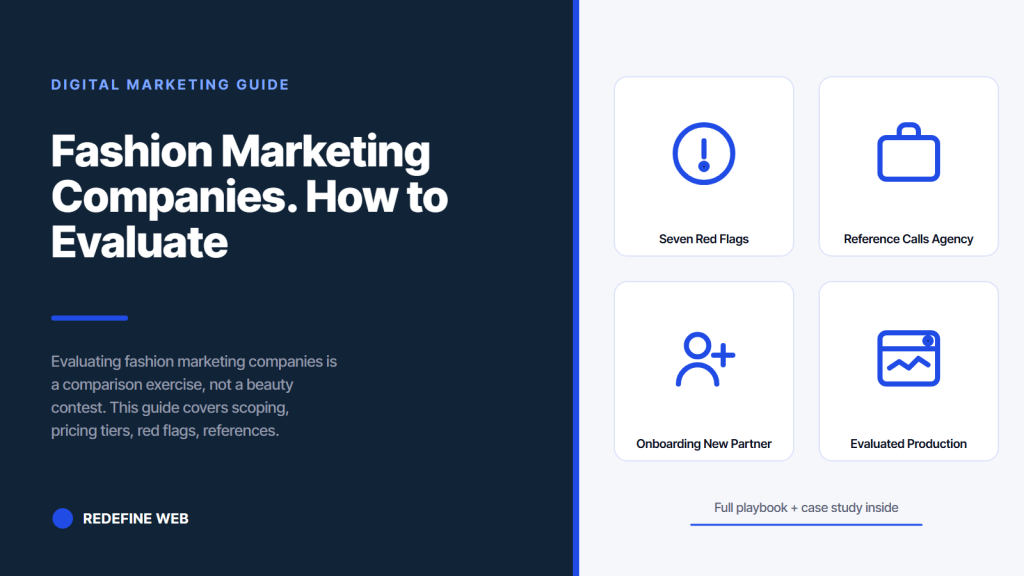
- Score bids on scope, cadence, references, and math.
- In-house pods run $18k to $60k monthly loaded.
- Retainer tiers start at $599 and top out near $12k.
- Portfolio reels do not equal repeat purchase gains.
- Twelve questions separate real partners from sales decks.
- Twelve questions to ask fashion marketing companies on the first call
- Seven red flags when evaluating fashion marketing companies
- Reference calls with agency clients before you sign
- Contract and scoping with fashion marketing companies
- Onboarding your new partner in the first thirty days
- How honest agency reporting looks month over month
- Fashion marketing companies evaluated in production
- Where fashion marketing companies fit the wider growth stack
A DTC apparel founder we sat with last spring had six proposals from fashion marketing companies open on her laptop, three reels playing on mute, and a Google Sheet trying to score them all on gut feel. The winning quote was $2,800 monthly, the biggest quote was $18,000 monthly, and none of the six had produced a single revenue number in the pitch. She asked how to pick without regretting it in ninety days. The right answer was to stop watching reels and start scoring the plan. Agencies win or lose the engagement on the RFP call, not on the shoot day, and the score sheet you bring to that call is what protects the retainer from becoming somebody else’s case study.
This guide is the working evaluation framework our team uses with founders scoping fashion marketing companies for DTC apparel and accessories brands between $80,000 and $8 million monthly. You will get five scoring axes, retainer pricing bands by revenue tier, in-house versus agency math, twelve interview questions, seven red flags, and a case study from a DTC brand who ran the rubric and picked a partner who grew organic revenue meaningfully.
Twelve questions to ask fashion marketing companies on the first call
The first call is where a vendor reveals whether the pod runs work or the pod sells decks. Twelve questions get you to the answer inside 45 minutes. Ask every bidder the same twelve and score the answers on the same rubric. The pod that answers concretely on eleven of twelve is worth a second call. The pod that hedges on more than three is worth a polite no thanks and the calendar slot back on your day.
- Which channels do you run for us, and how many hours per week on each?
- Who owns each channel by name, and how many active clients does that person carry?
- How many blog posts, videos, emails, and boosts will you produce monthly with dates locked?
- What is your reporting cadence, dashboard tool, and sample redacted output?
- Which three founders can I call for references who will pick up within two weeks?
- How do you attribute assisted revenue across paid, organic, and email?
- What is the contract term, and what happens if we want to change scope in month three?
- Which retention KPIs do you track beyond first order revenue?
- How do you handle brand voice review when the writer and the founder disagree?
- What tools sit inside the retainer versus outside, and who pays each subscription?
- How do you scope creator seeding cost, and what does the average gift kit cost per creator?
- What is your average client tenure, and how many clients have churned inside the first six months?
Bidders who answer concretely on all twelve are running a real pod against a real playbook. Bidders who deflect on average tenure or churn are hiding the number that tells the story. Founders who skip the twelve questions end up hiring the deck rather than the delivery, and the twelve questions cost nothing but forty five minutes on the calendar. Use them on every call, and read our fashion marketing strategies playbook for the wider growth stack the answers to those questions should slot into.
Seven red flags when evaluating fashion marketing companies
Red flags on the sales call end the conversation early. Founders who hire despite the red flag pay for it at the ninety day review. Seven patterns show up across every bad hire our team audits, and any single one on the first call is enough to move to the next bidder without regret over the missed opportunity.
Promises and pricing red flags
Fixed price quoted without a scope breakdown means the pod sized the sale before the work. Promises tied to a specific rank position or a specific traffic number by month three means the pod does not understand how ranking works or is willing to overpromise to close. Retainer priced under $500 monthly at any tier above launch means the deliverable is thin. Contract length under three months means the pod prices for churn. Contract length over twelve months without breakpoints means the pod hides a churn risk behind a lock. Each pattern is a legitimate reason to end the call and take the calendar slot back for a bidder who scopes honestly on the first meeting.
Team and reporting red flags
Refusal to share a redacted client dashboard means the pod either never produced one or will not want you to see what the numbers say. Refusal to name the humans who will work on the account means the pod pools accounts across a shared bench of freelancers with no consistent ownership. Refusal to provide three references who will pick up a call means the pod has not delivered outcomes worth referencing. Any of these three on the sales call means the pod is selling the deck. Real pods answer these questions on the first email, not the third follow up. Our fashion marketing agency guide covers the deeper selection framework.
Reference calls with agency clients before you sign
Reference calls are the cheapest due diligence in the buying process and the one founders skip most often. Thirty minutes on the phone with three past or current clients tells you more than three months of proposals ever will. Ask the same eight questions on every call and score the answers on the same rubric. The pattern across three calls is what predicts the engagement, not the single strong endorsement or the single grumpy complaint on either side of the sample.
- What did the pod deliver in the first ninety days versus what they sold?
- How responsive is the account lead during a real launch week?
- How did the pod handle a mistake they made on your account?
- Which KPIs did they move the needle on, and which ones stayed flat?
- How honest is the reporting when the numbers underperform the target?
- How often has the roster changed since you started?
- Would you hire them again if you had the choice today?
- What is the one thing you wish you had asked before signing?
Founders who run three reference calls consistently pick a pod that ships. Founders who skip the calls consistently hire the deck. The math is boring but it holds across every bad hire our team has ever audited. HubSpot’s agency versus in house guide is one of the better outside reads on the evaluation side for founders who want additional framing before running their reference sample.
Six pitches means six moodboards. Ask each shop for a one-page 90-day plan with revenue target. Two of six will produce it. Those are the two you talk to.
Contract and scoping with fashion marketing companies
The contract is where the sales pitch either holds or falls apart. Founders who skim the contract lose the engagement in the fine print. A working contract runs 6 months as the base term with a 30 day notice clause on either side after month four, a documented scope schedule tied to the retainer number, and a named account lead with a backup lead documented in writing. Anything short of that leaves the founder holding the risk when the roster changes or the roadmap shifts inside the year.
Scope schedule and change orders
The scope schedule lists every deliverable the retainer covers with quantity, cadence, and format. Blog posts count, video minutes count, email sends count, boost dollars count, meetings count. Change orders happen in month two when the brand adds a new channel or drops one. The change order documents the new scope, the new retainer, and the effective date. Agencies who resist a written scope schedule are protecting themselves against the founder catching a shortfall. Agencies who hand you the scope schedule on the first email are running the pod against the same document their team runs against internally. Pick the second one every time you get the choice.
IP, exclusivity, and data ownership
Three clauses in the contract need close reading. Intellectual property ownership on the creative the pod produces. Exclusivity language about the pod working with direct competitors in the same subcategory. Data ownership on the ad accounts, analytics, email lists, and dashboards the pod builds during the engagement. Founders who skip the read on these three lose the campaigns, the customer list, or the strategic advantage when the engagement ends. Pods with a clean contract include founder friendly language on all three by default. Pods who bury the three clauses in the fine print are protecting themselves at your expense over the term. For founders new to the wider category, our what is fashion marketing primer covers the channel definitions the contract language often assumes you already know.
Onboarding your new partner in the first thirty days
The first thirty days set the tone for the whole engagement. Onboarding done well produces a shared plan, a working dashboard, and week two campaigns already running against the roadmap. Onboarding done poorly produces month three status calls where nobody remembers what got approved and nothing has moved since the kickoff deck. Founders who protect the first thirty days protect the whole retainer through the following year.
Day one to day seven
Week one covers access grants across the ad accounts, analytics, Klaviyo, Shopify, and creator platforms. It covers brand voice document handoff, product catalog import, and the first working session on the ninety day roadmap. Vendors who show up in week one with a documented onboarding checklist finish onboarding on schedule. Vendors who improvise onboarding in week one drift into month two before the first campaign runs. The onboarding checklist is the second document to ask for on the sales call, after the redacted client dashboard, and its absence during the RFP is a soft red flag on its own.
Day eight to day thirty
Week two runs the first paid campaigns, publishes the first two blog posts, and sends the first email flow. Week three iterates on the week two data and adds the second campaign tier. Week four holds the first monthly review meeting with the founder against the reconciled dashboard. Pods that hit that pace in the first thirty days are running the retainer against the plan. Pods that miss two of the four week milestones are already off schedule and worth a mid month check in with the account lead to correct course before the ninety day review turns into a cancellation conversation on both sides.
How honest agency reporting looks month over month
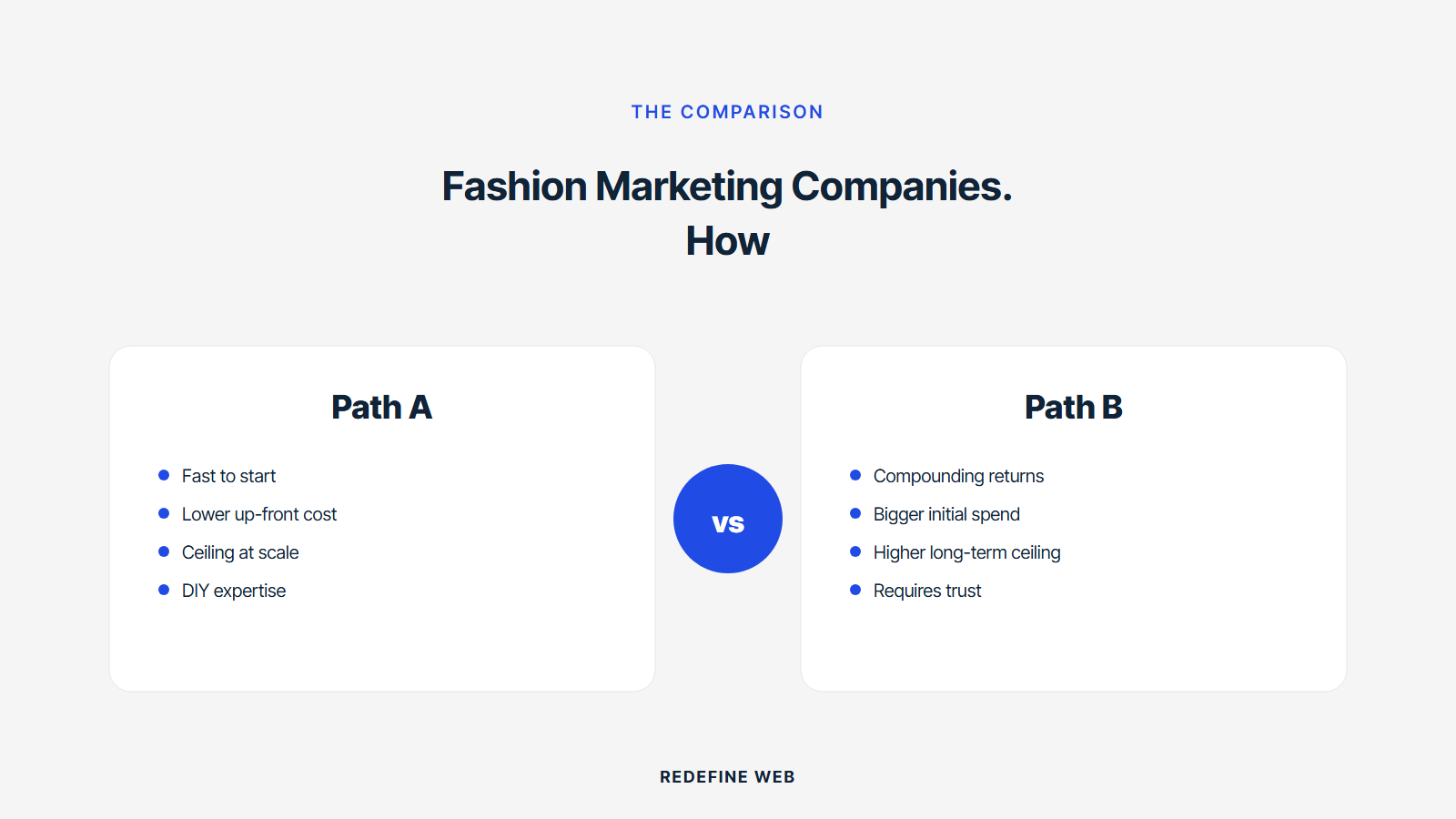
Honest agency reporting reads six numbers on one dashboard every Monday morning. Assisted revenue, blended cost per acquisition, repeat purchase rate, email revenue, brand search growth, and new customer count versus target. The pod picked those six with the founder at kickoff, and the numbers hold across the retainer term without moving goalposts.
Dishonest reporting reads platform return on ad spend from Meta Ads Manager and calls it a day, which is the reporting pattern that lets a $12,000 monthly boost budget look profitable while the blended cost per acquisition climbed 40 percent quarter over quarter. Reporting is where the retainer earns the right to renew, and picking the six numbers at kickoff is the setup that keeps the review meeting honest through month twelve.
The six numbers that matter
Assisted conversion revenue from Google Analytics 4. Blended cost per acquisition across paid, organic, and email. First order to repeat purchase rate at day 30, 60, and 90. Email revenue attributed to editorial sends from Klaviyo. Brand search growth on Google Trends quarter over quarter. New customer count versus target. Six numbers, one dashboard, one weekly review. Google’s attribution model documentation is the source every founder should read before the first review meeting so nobody argues about which number is correct on the call.
What honest reporting looks like
Honest reporting shows the numbers that missed target alongside the numbers that hit target, with the pod’s diagnosis on why and the corrective action for the next month. Dishonest reporting cherry picks the wins and buries the misses in an appendix nobody reads. Pods who lead with the miss on the Monday call are worth keeping. Pods who lead with the win and never touch the miss are gaming the review meeting. Reference calls almost always surface which pattern the pod runs, which is why the reference step matters so much more than the reel step in every RFP.
Fashion marketing companies evaluated in production
Boogie Board sat with our team while scoping six agency bids over three weeks and ran each through the five axis rubric. Two bidders quoted $2,400 monthly retainer with vague scope. Two quoted $4,800 with cadence commitment and a named account lead. Two quoted $8,500 with full pod and redacted dashboard. Only three of the six bidders produced references who picked up the call inside two weeks of the request.
Halfway through the sixth pitch call, the founder realized the reel playing on screen was the same reel she had watched twenty minutes earlier from a different bidder, right down to the sped up jump cut of the same DTC dress on the same rooftop. Turned out both agencies had used the same freelance video editor who apparently keeps a folder of stock rooftop shots labelled “generic Brooklyn.” Somewhere in Brooklyn, one rooftop is quietly starring in every DTC pitch reel of 2026 while its owner has no idea he owes his mortgage payment to the content industrial complex.
Boogie Board picked the mid tier bidder at $4,800 monthly retainer plus $9,000 monthly production spend. Eleven months in, organic revenue grew 118 percent, brand search on Google Trends grew 62 percent quarter over quarter, and blended cost per acquisition dropped from $58 to $31. Assisted revenue on the paid social side climbed 84 percent as the pillar content qualified buyers before the boost. The reference calls the founder ran before signing surfaced two things the pod handled well and one thing the pod handled clumsily in the first quarter, and the founder scoped the onboarding to protect against the clumsy pattern. The scoring rubric did the work. The reel did nothing. That is the pattern every DTC founder should copy.
Where fashion marketing companies fit the wider growth stack
Outside partners sit at the tactical execution layer of the wider growth stack. The strategy layer above them is the founder’s plan, the brand voice, and the roadmap. The channel layer below them runs paid social, paid search, SEO, email, creators, and retention. Pods who reach up into the strategy layer without permission burn the relationship inside two quarters. Pods who stay in the tactical layer with clear escalation paths run the retainer for six quarters without drama.
The retainer starts at $599 monthly on a 6 month contract and scales with revenue band, channel count, and production volume. Scope covers plan, execution, dashboard, weekly review, and quarterly measurement audit. Founders scoping the wider stack should read our digital marketing for fashion brands guide for the broader deliverable list and the retainer tier math.
Two outside reads worth an hour before the first sales call. The Content Marketing Institute guide on choosing an agency covers the wider industry framing on scoping across sectors. HubSpot’s agency versus in house reference above covers the loaded cost math. Both are free and both hold up across the RFP process. A retainer signed without outside reading tends to buy the reel that looks best on the pitch and miss the pod that delivers work. The scoring rubric and the reference calls fix the problem before the ninety day review. Founders who follow the framework in this guide end up with a retainer that renews at month twelve rather than one that gets cancelled at month three, and the difference sits entirely in the discipline of running the rubric on every call. A deeper writeup on SEO for fashion brands covers the brand-side layer for defending branded revenue.
Frequently asked questions
What do fashion marketing companies actually do for a DTC brand?
Fashion marketing companies run some mix of paid social, paid search, SEO, email, creator seeding, content, and site work against a monthly retainer scope. The real companies show up with a documented plan, a weekly review meeting, a shared dashboard, and named owners per channel. The pretend ones ship reels, invoice, and never tie the spend to a revenue number. Ask for the reporting template on the first call and read whether the sample cohort included assisted revenue, repeat purchase rate, and blended cost per acquisition rather than platform ROAS alone.
How much do fashion marketing companies charge per month in 2026?
Retainer scope for fashion marketing companies runs $599 monthly at the launch tier and scales to $12,000 monthly at the eight figure DTC tier. Under $80,000 monthly brands sit at $1,400 to $3,200. Between $250,000 and $600,000 monthly brands run $3,500 to $6,500. Above $1.5 million monthly brands run $6,500 to $12,000 plus paid media percentage. Anything under $500 monthly usually means a single freelancer scheduling reels on a Google Sheet, not a pod running the growth stack you actually need across the paid, organic, and retention layers.
How do you compare fashion marketing companies fairly during an RFP?
Compare fashion marketing companies on five scoring axes that stay honest across bidder replies. Scope inventory (which channels are covered, at what depth). Cadence commitment (blog posts, videos, sends, boosts per month). Team roster with named humans and hours per week. References that will pick up a call. Reporting sample with real numbers redacted. Rate each bidder from one to five per axis, weight the axes to what your brand actually needs, and pick the top total rather than the cheapest quote or the slickest deck. The scoring rubric protects the founder from the reel that has nothing behind it.
In-house team versus fashion marketing companies. Which one wins for a Series A DTC brand?
A Series A DTC brand under $2 million monthly usually wins with a hybrid setup. One in-house head of marketing owns the plan, brand voice, and roadmap. One fashion marketing agency runs the tactical work across paid, SEO, email, and content at a $4,500 to $8,000 retainer. In-house only costs $18,000 to $60,000 monthly fully loaded once salary, benefits, tools, and turnover cost land, and it takes six to nine months to hire a team that ships what a retainer pod ships in week two. Agency only runs the risk that no internal owner defends the brand voice. Hybrid captures the strengths of both.
What are the red flags when interviewing fashion marketing companies?
Red flags on the sales call. Fixed price without scope math. Promises tied to first page rankings on brand terms only. Reels reel that never shows the revenue number. Refusal to share a redacted client dashboard. No named team members on the org chart. Contract length under three months or over twelve months without breakpoints. Retainer priced under $500 monthly at any scale above launch. Guarantee language that names a specific rank position or a specific traffic number. Any of these on the first call means the pod either has never delivered the outcome you need or is willing to overpromise to close the sale, and both patterns end the same way three months in.
Book your free 30-minute strategy call.
No spam, no sales rep. We use your email to schedule your call with a senior strategist. That is it.
More from the blog
View all articles → Digital Marketing
 Dental Marketing Tips That Compound Into New Patients
Read article Digital Marketing
 Ecommerce Marketing Strategies That Drive Real DTC Revenue
Read article Digital Marketing