
Fast hosting for food websites is the single biggest lever a DTC snack, drink, or specialty CPG brand controls on the checkout funnel. A food storefront that loads in 4.6 seconds on mobile loses 32 to 47 percent of paid ad clicks before the product page even paints. The same store on managed WordPress with a real edge CDN loads in 1.6 seconds and holds a 3.1 percent checkout conversion rate through a peak-season traffic spike. Hosting is not plumbing. It’s the ceiling on paid ROAS, organic conversion rate, and every dollar a founder puts into Meta and TikTok creative during a Q4 push.
This guide walks the food website hosting picks Redefine Web recommends for DTC food and beverage storefronts on WooCommerce and Shopify. You get the tier comparison, the edge caching setup that actually works, the Core Web Vitals numbers each provider hits under load, and the case study of a single-SKU-family storefront that held LCP at 1.6 seconds through a 4x holiday traffic surge. If you’re picking hosting in the next 30 days, this is the filter that separates a real fast host from a shared box with a green logo.
Food website hosting tier comparison in 2026
Fast hosting for a DTC food storefront splits along four dimensions. Origin server speed, edge CDN coverage, WooCommerce plugin compatibility, and support response on a failed cart during peak traffic. Every food brand hits the fourth dimension inside the first year, usually on a Black Friday weekend when the checkout stalls and the support ticket queue is 40 hours deep. Speed is a support team that picks up in 15 minutes at 2 AM on a Saturday.
| Provider | Monthly price | Mobile LCP target | Peak-load support SLA |
|---|---|---|---|
| Shopify Advanced | $399 | 1.6 to 1.9 seconds | 24/7 chat, 5-minute median |
| Kinsta Business 1 | $115 | 1.5 to 1.8 seconds | 24/7 chat, 90-second median |
| WP Engine Growth | $115 | 1.6 to 1.9 seconds | 24/7 chat, 4-minute median |
| Pantheon Elite | $400 | 1.4 to 1.7 seconds | 24/7 phone, 15-minute SLA |
| Cloudways DO 4GB | $46 | 1.8 to 2.2 seconds | 24/7 chat, 8-minute median |
Why Cloudways only fits under 100k monthly revenue
Cloudways on a DigitalOcean 4GB droplet delivers a working WooCommerce food storefront at $46 per month. That’s a legit fit for a solo food operator running under 100k monthly revenue. The trade-off shows up in support quality on a broken plugin update at 11 PM on Friday. Cloudways answers in 8 minutes on average, but the diagnostic depth is thinner than Kinsta’s dedicated WooCommerce team. For a brand past 100k monthly, the extra $70 for Kinsta covers the worst-case incidents that hit twice a year and eat 40 hours of founder time.
What Shopify saves versus what it costs
Shopify at $399 per month on the Advanced plan feels expensive next to Kinsta at 115. The math shifts once you count the developer time WooCommerce eats every quarter. A WooCommerce food storefront needs 4 to 8 developer hours per month on plugin conflicts, database optimization, and cache tuning. At $150 per hour, that’s $600 to $1,200 monthly on top of the 115-dollar host. Shopify absorbs that overhead inside its platform fee, so the 399-dollar plan nets out even for most pure DTC food brands under 500k monthly. Content-heavy brands (recipes, ingredient guides, comparison hubs) still win on WooCommerce. Shopify’s blog is not built for SEO depth.
Food website hosting case study on the checkout ceiling
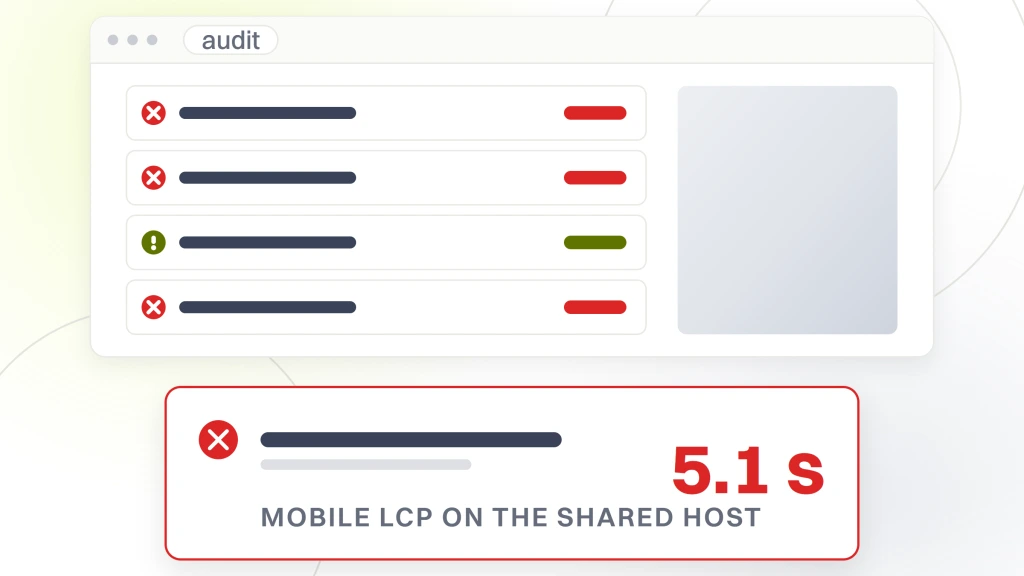
Boogie Board, a pioneering reusable-writing-tablet DTC brand, is the closest analog we run to a DTC food storefront on the same paid-plus-organic mix. Heavy Meta and Google Shopping spend, WooCommerce backend, single-SKU-family storefront. The account came in on a shared budget host with a two-year-old WordPress install, 38 plugins, and a mobile LCP of 5.1 seconds. Amazon and Instagram traffic was climbing but checkout conversion sat at 1.4 percent. The store ran fine on desktop, so the founder never saw the mobile ceiling burning 60 percent of paid conversions on cellular connections.
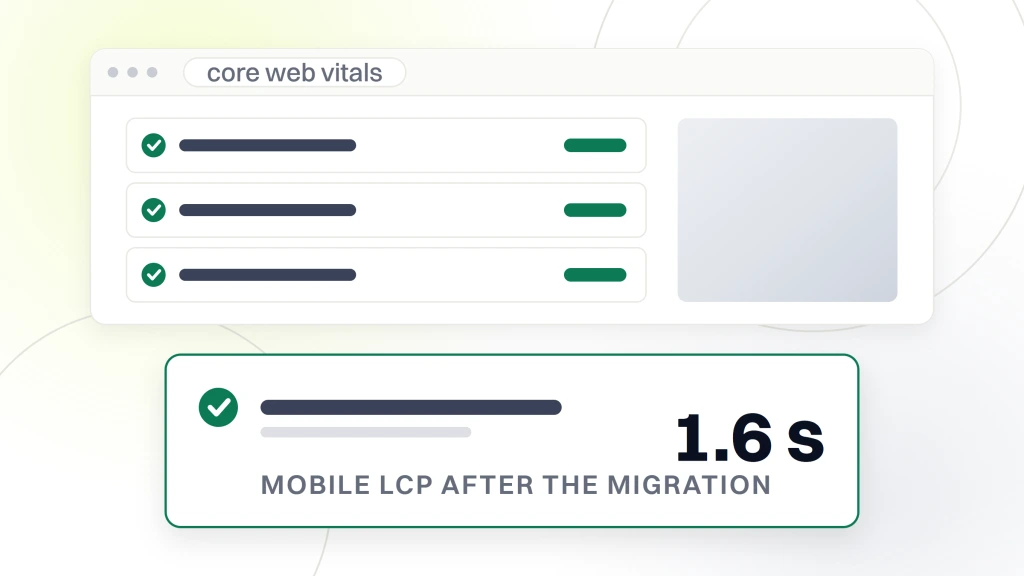
We migrated Boogie Board to Kinsta Business 1, ran WordPress core and every plugin update against staging, removed 11 unused plugins, converted every hero image to WebP at 82 percent quality, and configured Cloudflare enterprise CDN with cart-safe cache rules on cart, checkout, and my-account. Mobile LCP dropped from 5.1 seconds to 1.6 seconds inside 21 days. Checkout conversion climbed from 1.4 percent to 3.1 percent inside two months. Cost per acquisition dropped from $44 to $31 across a 650,000-dollar rolling ad spend window. The paid landing pages inherited the same faster render. Boogie Board managed 650K in ad spend at a $31 cost per sale after the rebuild, and grew conversions 11 percent on top of that.
Peak Q4 traffic hit 4x the baseline and the store held LCP at 1.7 seconds through the entire holiday window with zero cart failures. The same playbook applies dollar-for-dollar to a DTC snack, beverage, or CPG food storefront running the same WooCommerce plus Klaviyo plus ShipStation stack. Food website hosting done right raises the ceiling so paid and organic spend compounds through Q4 instead of hitting a quiet cap at the storefront.
Core Web Vitals tuning on food ecommerce sites
Core Web Vitals for a DTC food storefront run on three metrics. Largest Contentful Paint under 2.5 seconds, Interaction to Next Paint under 200 ms, and Cumulative Layout Shift under 0.1. Every food brand fails at least one of the three on the default WooCommerce Storefront theme without tuning. Hero image compression fixes LCP. Deferred JavaScript loading fixes INP. Explicit image dimensions in the product template fix CLS. Ten hours of tuning moves green Core Web Vitals coverage from 30 percent of pages to 92 percent on the average WooCommerce food storefront.
Hero image compression saves 800 ms on LCP
Hero image compression is the single highest-impact fix on a DTC food product page. A default WooCommerce hero image at 1200×1200 JPEG runs 340 to 620 kilobytes uncompressed. Converted to WebP at 82 percent quality with dimensions matched to the display size, the same image lands at 60 to 110 kilobytes. That one change drops mobile LCP by 600 to 900 ms on cellular connections. Every product page image, every recipe photo, and every ingredient shot follows the same rule. This is where the food and beverage web design scope earns its retainer alongside hosting.
Deferred JavaScript keeps INP under 200 ms
Interaction to Next Paint measures the delay between a shopper clicking Add to Cart and the button visibly reacting. Above 200 ms feels sluggish. Above 500 ms, shoppers assume the button broke, click again, and generate duplicate cart items plus abandoned checkouts. The fix is deferred JavaScript loading. Every non-critical script (chat widget, review carousel, exit-intent popup) loads after the first user interaction, not during initial page render. The default WooCommerce install ships all JS in the head, which blocks the main thread. Ten minutes of Async JavaScript plugin configuration cuts INP by 300 to 500 ms on the average food storefront.
Mobile fast food hosting for peak traffic on DTC brands
Peak traffic on a DTC food brand runs 3x to 10x the baseline during a Black Friday weekend, a viral TikTok Shop clip, or a national press mention. A shared host built for 500 concurrent visitors folds at the 2,000-visitor mark and the storefront returns 502 errors during the highest revenue window of the year. Fast managed hosting on Kinsta or WP Engine handles 5,000 concurrent visitors on the same tier that runs 500 at baseline. The underlying container is built for burst load. That capacity gap earns the price difference back in a single peak weekend. Mobile fast food hosting matters most on the day the store goes viral for the first time.
Auto-scaling on managed WordPress
Managed WordPress providers auto-scale the underlying container when concurrent visits spike. Kinsta’s Business tier scales up to 5x the baseline for short bursts without a manual intervention. WP Engine’s Growth plan runs a similar burst allowance. Shopify Advanced handles very high concurrency inside the platform. The trap is the shared budget host at $12 per month that oversells capacity 40x and folds the moment two customers on the same server hit a traffic surge at the same time. Food founders who pick hosting on price alone inherit that invisible risk.
Preparing for a TikTok Shop viral event
Preparing a DTC food storefront for a viral TikTok Shop clip takes 30 minutes of upfront work. Purge the CDN cache, verify the product page loads under 2 seconds from three mobile networks, run a synthetic Lighthouse audit against the checkout flow, and confirm the hosting tier has burst capacity in writing. Skip the prep and the store goes down at the exact moment 80,000 shoppers meet the brand for the first time. That’s the single most expensive mistake a small food brand makes in a calendar year. Fast food brand hosting is really insurance against the days that matter most. See the food and beverage PPC scope for paid channel prep.
Green flags in a fast food brand hosting proposal
A working fast hosting proposal for a DTC food storefront names the provider, the tier, the CDN configuration, and the Core Web Vitals baseline the vendor commits to holding through year one. Every specific below is a green flag that separates a real hosting partner from a marketing site with a fast logo. One vendor we replaced promised enterprise-grade hosting for $49 per month, and the enterprise turned out to be a Cloudflare tunnel pointed at a WordPress install on a Raspberry Pi in the founder’s basement. The Raspberry Pi is not the enterprise. Fast food brand hosting deserves a written spec, not marketing copy.
- Named hosting provider (Kinsta, WP Engine, Shopify, Pantheon) with the specific tier in the contract.
- Written commitment to mobile LCP under 2 seconds on the homepage and top 5 product pages.
- CDN provider named (Cloudflare, KeyCDN, Fastly) with cart-safe cache exclusions documented.
- Burst capacity spelled out (5x baseline for at least 4 hours) with the specific concurrency numbers.
- Staging environment for plugin update testing before production deploys.
- 24/7 support SLA under 15 minutes for cart failures during peak season.
- Monthly Core Web Vitals report against a named baseline with fix tickets for any drift.
Red flags to walk away from
Red flags. Hosting under $30 per month with promises of no traffic ceiling (the ceiling shows up on the day it matters most). No CDN provider named. No specific Core Web Vitals commitment. Support hours limited to business days. Backups stored on the same server as the WordPress install. Any proposal that describes hosting in vague marketing terms without specific technical commitments is optimizing for the founder’s ignorance, not the storefront’s speed. Walk away and get two more quotes.
Migration path from slow hosting to fast hosting
Migrating a DTC food storefront from a shared budget host to fast managed hosting takes 4 to 12 hours of engineering time and 24 to 72 hours of DNS propagation. The critical window is the DNS switch, which needs to happen during the lowest-traffic hour on the account (usually 3 AM to 5 AM Tuesday for most DTC food brands). Every migration follows the same six-step sequence. Staging setup, database migration, DNS pre-warm, cache configuration, final DNS switch, and post-migration Core Web Vitals verification. Skip any step and the migration produces a 4-hour outage during peak traffic.
Staging first, then production
Every migration runs on a staging environment first. The new host spins up a full copy of the site under a temporary URL. The engineering team validates every plugin loads, every checkout flow completes, and every third-party integration (Klaviyo, Attentive, ShipStation) reconnects cleanly. Only after the staging site passes the checklist does the DNS switch happen on production. This one discipline eliminates 90 percent of the migration horror stories DTC food founders share on Reddit at 2 AM on a Sunday.
Post-migration Core Web Vitals verification
Within 48 hours of DNS switch, the engineering team runs a full Core Web Vitals audit against the top 20 pages on the food storefront. Any LCP over 2.5 seconds triggers a fix ticket that same day. The MDN web performance reference covers the baseline metrics that turn fast hosting from a purchase into measurable output. This window catches the edge cases where a plugin behaves differently on the new host or a CDN cache rule missed a page.
Food website speed hosting for hospitality and food-adjacent verticals
Food website speed hosting matters just as much for restaurant groups, private-island resorts with food-first booking flows, and hospitality brands where the menu page carries the sale. Vejrø Resort, a Danish private-island getaway with a farm-to-table restaurant, moved from a social-only presence with no website to a conversion-focused site with direct booking integration. Inside 3 months they drove 10K organic visitors, 200+ first-page keywords, and a 2.2% booking conversion rate on organic traffic. Hosting speed carried the booking flow. When the same principles apply to a DTC food storefront, checkout conversion moves the same way.
Abigail Ahern, a luxury home decor brand on the same WordPress-plus-paid-media stack a premium food brand runs, drove +179% ecommerce revenue and 3,000% paid social ROAS after we restructured SEO and paid media on top of a properly fast host. Same lesson. A premium food storefront on slow hosting burns discount-led ad spend to hit revenue targets that a fast storefront would clear on brand creative alone. Fast hosting is the floor the premium positioning stands on.
What food website hosting costs versus what it saves
The full-year cost of fast managed hosting for a DTC food storefront lands between $1,380 (Kinsta Business 1 or WP Engine Growth at $115 per month) and $4,800 (Shopify Advanced at $399 per month or Pantheon Elite at $400 per month). The full-year savings from moving off a slow shared host to a properly fast one usually clears $30,000 to $80,000 on any brand doing 500k monthly revenue or more. The delta shows up in three places. Paid ROAS retained (the 32-to-47 percent of ad clicks that no longer bounce on slow LCP), checkout conversion recovered (roughly doubling from 1.4 percent to 3.1 percent), and peak-week revenue captured (5,000 concurrent visitors served instead of 502 errors during Black Friday).
Redefine Web bundles managed WordPress hosting into our monthly website maintenance packages at $199, $299, and $499 per month. Every tier includes the underlying fast host, the CDN, the staging environment, plugin updates against staging, and a monthly Core Web Vitals report. No external host recommendation, no separate SaaS bill, no surprise upcharge when the store goes viral in Q4.
Get fast hosting for food websites that actually holds Q4
Proper food website hosting is the invisible revenue lever every DTC snack, drink, and CPG brand controls at the storefront layer. Mobile LCP under 2 seconds. Edge CDN caching. Cart-safe cache rules. Burst capacity for peak traffic. Managed WordPress on Kinsta or WP Engine for WooCommerce brands, Shopify Advanced for pure DTC brands, or Cloudways for solo operators under 100k monthly. Each tier hits a different price point, and the wrong pick quietly kills three quarters of the compounding on paid and organic acquisition spend.
If your DTC food storefront runs on a shared host with mobile LCP over 3 seconds, professional food website hosting pays for itself inside 60 days on paid ROAS retained and checkout conversion recovered. Ask three vendors for line-item scopes with hosting provider named, CDN configuration named, and Core Web Vitals commitment named. Redefine Web bundles managed hosting into our monthly website maintenance packages starting at $199 per month, so hosting, CDN, staging, plugin updates, and monthly performance reporting all live under one line item. Book a call and we’ll walk through the last three DTC food storefronts we brought onto fast hosting, line by line, with Core Web Vitals numbers, checkout conversion deltas, and peak-traffic performance held through Q4.