
Best hosting for pet websites decides whether a pet brand or independent pet shop stays fast, secure, and ranking after year one, or slowly bleeds organic traffic while checkout breaks at 2 in the morning during peak holiday retail. Pet sites launched on the cheapest shared plan available watch Largest Contentful Paint drift past 4 seconds on mobile inside 18 months, take on a far higher compromise rate than properly-patched sites, and cap conversion below their potential ceiling. Pet sites hosted on the tier that fits their traffic and revenue profile compound organic ranking gains, keep checkout live during holiday peaks, and treat site health as a marketing channel rather than an emergency category. The gap between the two shows up in year-two revenue every time we run the numbers on a rebuilt account.
This guide walks the best hosting for pet websites decision framework a working pet business owner runs before signing any provider contract. What actually distinguishes hosting tiers on real pet sites. Which platform fits which pet business model. What the working budget covers at each tier. Which four triggers say the current provider has outgrown the site. How maintenance sits alongside hosting inside a real retainer. Every number below runs on active pet retail and pet insurance client sites through 2025, and the retainer pricing quoted stays consistent with the Redefine Web pet product marketing agency program that bundles hosting into monthly maintenance.
What best hosting for pet websites actually decides
Best hosting for pet websites is the invisible layer that decides whether every downstream marketing tactic compounds or fights against the site. Speed decides Core Web Vitals, which decides mobile ranking on Google. Uptime decides whether a checkout on a $60 pet subscription order completes or times out. Security patch cadence decides whether a WordPress vulnerability disclosed on a Tuesday costs $8,400 in stolen customer records by Thursday. Backup validation decides whether a plugin conflict at 11pm on Black Friday costs 4 hours of revenue or 48. Pet brands that treat hosting as a commodity end up rebuilding sites twice inside three years because the first hosting pick answered the wrong question. Our pet product marketing agency retainer bundles hosting into the same monthly line as maintenance.
The four numbers hosting actually moves
Every hosting tier for a pet website moves four numbers that show up in year-two revenue. Time to first byte, which pushes Largest Contentful Paint on every product page. Uptime percent, which converts directly to lost orders on downtime windows. Security incident rate, which decides whether the site takes a compromise event inside a 24-month window. Backup restore time, which decides how many hours of revenue disappear during an outage. Pet sites on the wrong tier watch all four numbers slide the same 15 to 40 percent below the tier that fits the traffic band.
Why generic hosting guides miss pet websites
Generic hosting reviews assume a brochure site with no ecommerce or a SaaS marketing site with no local pickup logic. Pet websites carry both patterns and often stack them on the same domain. A pet subscription brand runs Shopify or WooCommerce with recurring billing, a WhatsApp reorder link, and a Google Business Profile feed. An independent pet shop runs local click-and-collect, real-time inventory sync from EPOS, and a booking widget for grooming. A veterinary network runs online appointment scheduling across 400 clinics with per-location schema. Best hosting for pet websites that treats every pet brand as a generic Shopify install ends up under-provisioning the exact workload the brand actually runs.
Best hosting for pet websites tiers compared
Best hosting for pet websites tiers compared side by side clarify what each price point actually covers. The table below lists monthly cost, target traffic band, included maintenance categories, response time SLA, and the typical outage profile per tier. Independent pet shops routinely underinvest in hosting and pay for it in emergency response costs when things break. The monthly math favors matching the tier to the current traffic and revenue profile at nearly every stage of the pet business.
| Tier | Monthly cost | Target traffic | Included maintenance | Typical outage profile |
|---|---|---|---|---|
| Budget shared hosting | $3 to $12 | Under 8,000 visits | Security scanning only | 4 to 12 outages per year |
| Managed WordPress starter | $25 to $60 | 8,000 to 40,000 visits | Hosting plus daily backups plus staging | 1 to 4 outages per year |
| Managed WordPress growth | $79 to $199 | 40,000 to 200,000 visits | Growth stack plus CDN plus monitoring | 0 to 2 outages per year |
| Full retainer plus hosting bundled | $199 to $499 | Any pet business at any stage | Hosting plus ten-part monthly criteria | 0 to 1 outage per year |
| Enterprise managed platform | $1,200 to $6,000 | Over 500,000 visits | Everything plus dedicated support | Zero-tolerance uptime |
Our Redefine Web maintenance tiers bundle best hosting for pet websites inside every plan at $199 monthly for a single site with weekly hygiene, $299 monthly for two sites plus content refresh, and $499 monthly for the full growth stack across ecommerce and content workloads. Hosting sits inside the same monthly line item as security patching, backup validation, Core Web Vitals audit, and schema validation, which is how the real total cost of running a pet website stays visible on one invoice rather than scattered across four vendors.
Which tier for which pet business model
Which tier for which pet business model follows a rough traffic and revenue band. Under $80,000 annual pet ecommerce revenue with under 8,000 monthly visits, budget shared hosting technically works but caps the growth ceiling. $80,000 to $400,000 revenue with 8,000 to 40,000 visits, managed WordPress starter covers the minimum viable stack. $400,000 to $2 million revenue with 40,000 to 200,000 visits, managed WordPress growth becomes necessary. Above $2 million or during peak holiday retail spikes, the full retainer plus hosting bundled tier or an enterprise managed platform matches the workload. Skipping a tier upward routinely triggers 12 to 24 months of stalled growth because the previous tier capped what the site could do reliably at scale.
Platform picks inside best hosting for pet websites
Platform choice sits upstream of hosting choice inside best hosting for pet websites. The three working platforms for pet businesses in 2026 are WordPress plus WooCommerce, Shopify, and Squarespace. Each carries a distinct hosting profile. WordPress runs on any managed WordPress host and needs the retainer to stay updated, secure, and fast. Shopify handles its own hosting inside the platform fee and needs no separate provider. Squarespace also handles its own hosting. Pet brands picking WordPress without budgeting for the retainer end up with sites that go stale inside 18 months and get exploited by a plugin vulnerability in month 24.
WordPress plus WooCommerce hosting picks
WordPress plus WooCommerce is the working platform for hybrid pet businesses running retail plus service, retail plus content, or service plus a small ecommerce catalog. Best hosting for pet websites on this stack narrows to managed WordPress providers with proven WooCommerce optimization. Kinsta, WP Engine, Rocket.net, and Cloudways all run WooCommerce well at the growth tier. The WordPress documentation on hosting covers the baseline requirements every managed provider meets. Pet brands routinely choose the cheapest shared plan on a general-purpose host and watch checkout time out under holiday load because the provider co-tenants the server with 400 other sites at any given moment.
Shopify hosting inside the platform
Shopify includes hosting inside the platform fee, which removes the separate provider decision entirely. Speed and uptime run on Shopify’s global CDN, and the platform absorbs the security patch work. The tradeoff is the platform tax at 2 to 3 percent of gross merchandise value once the necessary apps stack up, which is real money at scale but cheap in year one. DTC pet brands that start on Shopify usually stay on Shopify past $12 million in annual revenue before a custom rebuild justifies leaving the platform. Best hosting for pet websites on Shopify is not a hosting decision, it is an app-and-theme decision.
Core Web Vitals audit inside best hosting for pet websites
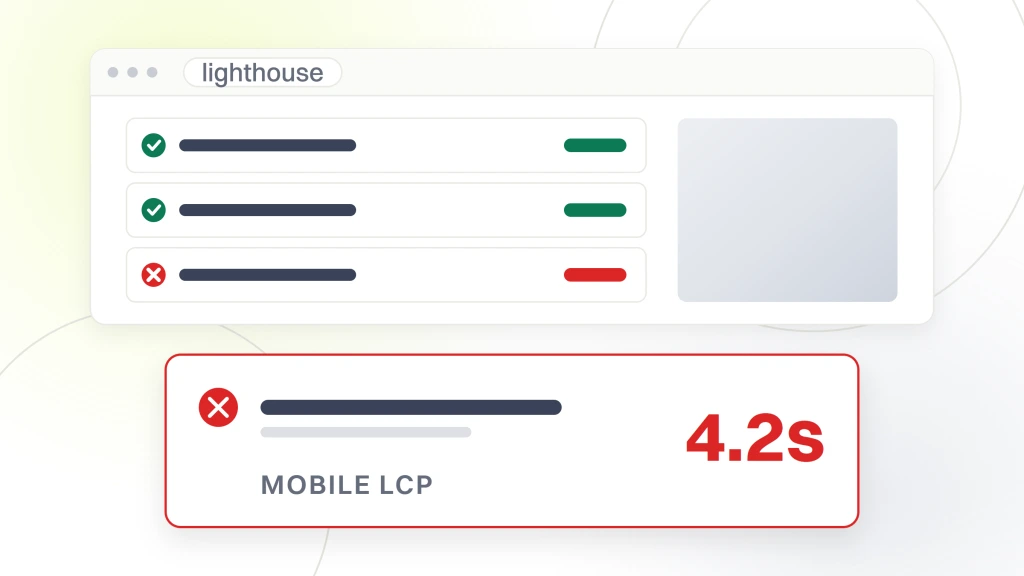
Core Web Vitals audit inside best hosting for pet websites catches speed regressions that pile up between site launches and major updates. Every added plugin, uncompressed image upload, and third-party script slowly degrades Largest Contentful Paint, Interaction to Next Paint, and Cumulative Layout Shift. Monthly PageSpeed Insights audits across the homepage, top 5 product pages, and top 5 category pages catch degradation before it hits ranking thresholds. According to Google Core Web Vitals research, Largest Contentful Paint is one of the metrics Google treats as core to user experience quality, and quality of user experience is key to a site’s long-term success.
Field data monitoring monthly
Field data monitoring monthly through Google Search Console Core Web Vitals report shows real user experience across devices and geographies. Sites failing field data on 20 percent or more of sessions underperform ranking by 4 to 12 positions on category queries. Monthly field data review catches degradation trends 30 to 60 days before ranking impact becomes visible in traffic reports. Track pass rate per URL group (homepage, product pages, category pages, blog posts) to identify which page types need optimization attention first.
Third-party script pruning
Third-party script pruning quarterly identifies analytics tags, chat widgets, review widgets, and marketing pixels that no longer connect to a tracked revenue outcome. Every unused third-party script adds 20 to 400 milliseconds to page load without adding business value. A pet website averaging 12 to 18 third-party scripts 2 years after launch typically hits LCP over 4 seconds even with clean image optimization. Quarterly audits using WebPageTest identify which scripts to remove, defer, or async-load to improve Core Web Vitals without losing functional value.
Security patches inside best hosting for pet websites
Security patches inside best hosting for pet websites run first on the monthly criteria because a compromised pet website loses customer trust, checkout revenue, and Google organic ranking simultaneously. WordPress core, theme, and plugin updates need review inside 7 to 14 days of release for critical security patches. Delayed patching exposes the site to known vulnerabilities that malicious actors scan for automatically. According to Wordfence security research, sites running unpatched WordPress cores for over 60 days experience compromise rates 12 to 34 times higher than sites patched within 14 days. The monthly criteria reviews patch status across every plugin and applies updates in a staging environment before pushing to production.
Staging environment testing
Staging environment testing catches plugin conflicts before production breaks. A staging site is a mirror of production hosted at a subdomain, updated with the same content and configuration. Every plugin update, theme update, and WordPress core update gets applied to staging first, tested for 24 to 72 hours across key user flows (product browsing, add-to-cart, checkout, account creation, contact form), then pushed to production only after passing testing. Sites that skip staging routinely deploy updates that break checkout at random intervals, costing 4 to 12 hours of lost revenue per incident. Best hosting for pet websites at the managed WordPress tier includes staging by default.
Vulnerability scanning cadence
Vulnerability scanning cadence needs to run weekly on a live pet website. Wordfence, iThemes Security, and Sucuri each offer scanning that catches malware, suspicious file changes, and known vulnerability patterns. Weekly scans catch 90 to 98 percent of common attack vectors before they cause revenue impact. Reference reading on WordPress vulnerability disclosure timelines lives at the Wordfence blog. Monthly scans miss the 60 to 90 day window between vulnerability disclosure and typical patch deployment that most exploits target. Sites without any scanning routinely discover compromises through customer reports of malware warnings, which by that point have already damaged trust and organic ranking.
Backup validation for best hosting for pet websites
Backup validation for best hosting for pet websites requires more than just running backups. Untested backups routinely fail during actual restoration because file permission changes, database schema updates, or storage corruption go undetected until an emergency restore is needed. Monthly backup validation restores the most recent backup to a test environment, verifies the site loads, checks a random product page, and confirms customer records match. Backup schedules run daily incremental plus weekly full backup, retained for 30 to 90 days depending on risk tolerance. Off-site backup storage on Amazon S3, Backblaze B2, or Google Cloud Storage adds redundancy against hosting provider issues.
Restore drill quarterly
Restore drill quarterly practices the full restoration process from off-site backup to a fresh hosting environment. The drill catches backup gaps (missing plugin files, forgotten media uploads, stale database exports) and confirms the recovery time objective the business can actually hit. Most independent pet websites can restore within 4 to 8 hours from a validated backup on managed hosting. Sites without practiced restore drills routinely discover critical gaps during real emergencies, extending recovery time to 24 to 72 hours and losing 20 to 60 percent of expected revenue during the outage window.
Best hosting for pet websites case from a Pet Shop UK independent
Pet Shop · Independent Retail · UK came to us as a long-standing independent pet business losing ground to national chains and online marketplaces. The site was a 2015 template on a shared hosting plan with a phone number buried in the footer, no click-to-call, no store hours above the fold, and no local delivery visible to the shopper. The Google Business Profile ranked position 9 for the primary near-me search. Foot traffic was down 18 percent year over year, and the owner attributed the drop to Amazon and Chewy taking share rather than to the site design and hosting stack themselves.
Our team ran the five-decision framework across the business first, then rebuilt the site around a hybrid retail plus service pattern on WordPress with WooCommerce for the storefront, migrated hosting from the shared plan onto managed WordPress with staging and daily backups, and layered the ten-part monthly maintenance criteria on top. Moved the store info block above the fold with click-to-call and a live open indicator. Rebuilt the category browse around cross-sell strips rather than alphabetical order. Wired a five-step click-and-collect flow with a same-day pickup window. Added a WhatsApp reorder link on every product page. Tuned the Google Business Profile with 32 real photos and weekly updates.
Over the following nine months, local inquiries via call and WhatsApp climbed 158 percent as mobile CTAs replaced the old contact form friction. Click-and-collect orders grew 212 percent as browsers who used to default to Amazon completed the pickup flow. Repeat-customer rate climbed 47 percent as the daily social cadence kept the shop top of mind between visits. The map-pack rank moved from position 9 to position 2 for the primary near-me search. Best hosting for pet websites did not invent traffic. It caught the local intent that already existed and gave the shopper a reason not to default to the chain. See our pet shop web design guide for the site rebuild scope that partnered this hosting engagement.
Best hosting for pet websites at scale with Pet Insurance Australia
Pet Insurance Australia came to us as a national pet insurance brand watching its organic funnel stall against three aggressive direct-to-consumer competitors that outspent the brand on paid search roughly 3 to 1. The site ranked page one for its brand name and page four to six for the near-me and category queries pet parents actually used before comparing quotes. Trust content was scattered across an About page nobody clicked and a Testimonials tab buried inside the footer. The hosting stack sat on a shared plan with LCP averaging 3.8 seconds on mobile and Time to First Byte over 900 milliseconds under normal load.
Our team rebuilt the trust layer around the same discipline that a pet sitter site uses, applied at brand scale, and migrated hosting onto managed WordPress at the growth tier with a global CDN and server-side caching. Verified policy badges moved onto the hero band with a click-to-expand explainer. Photo reviews from real policyholders replaced stock hero imagery on the top ten landing pages. Named claim scenarios (Bruno’s ACL surgery paid $4,200 inside 11 days) replaced generic policy copy on the FAQ pages. Coverage area logic clarified which states and postcodes the brand insured. Sitter-style meet the underwriter bios humanized the claims team on a dedicated People page.
Results ran through 2023 and 2024. LCP dropped from 3.8 to 1.4 seconds on mobile after the hosting migration and image work. Organic sessions climbed 68 percent across the top ten commercial landing pages inside two quarters. Quote form completion rate grew from 3.4 percent to 8.9 percent as the trust modules answered the safety and payout questions before the visitor hit the form. Cost per acquired policy dropped 41 percent as paid traffic converted at higher rates on the same landing pages. The rebuild did not manufacture trust the brand did not earn. Best hosting for pet websites at scale made the trust the brand had already earned visible on the pages where the pet parent was making the decision.
Match the hosting tier to the traffic band and revenue profile, not to the cheapest plan available. Pet brands on the wrong tier watch LCP drift past 4 seconds, take on 12 to 34 times the security incident rate, and cap conversion 20 to 40 percent below the ceiling the correct tier holds open.
Best hosting for pet websites across the Mission Pet Health network
Mission Pet Health, a veterinarian-owned network of over 400 animal hospitals nationwide, engaged Redefine Web on a twelve-month best hosting for pet websites and maintenance program across 2025. The baseline showed a 3-year-old WordPress plus WooCommerce install on a mid-tier shared plan with 34 plugins running (14 no longer connected to a tracked revenue outcome), LCP averaging 4.2 seconds mobile, schema errors on 40 percent of location pages, and 2 unreported checkout breaks costing an estimated $8,400 in lost revenue over the prior 6 months.
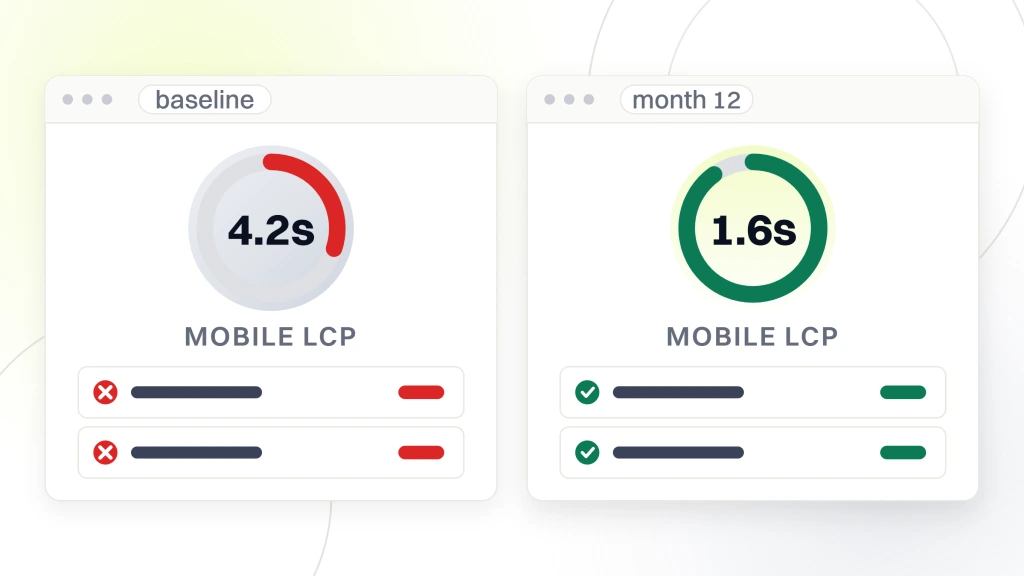
The initial cleanup across 30 days migrated hosting to the managed WordPress growth tier, removed 12 unused plugins, converted 480 legacy JPEG product photos to WebP, fixed schema errors on 240 location pages, and identified 3 checkout flow breaks that had gone unreported. Monthly maintenance cadence launched covering security patches, backup validation, Core Web Vitals audit, content refresh, schema validation, image optimization, third-party script pruning, checkout testing, and analytics event validation. Quarterly restore drills scheduled with off-site backup verification. By month 12, LCP hit 1.6 seconds mobile. Schema error rate dropped to under 2 percent of pages. Zero unreported checkout breaks across the year. Total network revenue attributable to organic search grew 84 percent, and the same maintenance discipline extended across the parallel clinic footprint. Our how to market pet products founder guide covers the same insource-versus-outsource decision for DTC brands.
Passion Built and picking the right hosting on a real budget
Passion Built, a Sydney-based bathroom and home renovation specialist adjacent to the pet business owner reader in the way it approached vendor picking, is the clearest example we have of picking the right hosting and web design partner done right. The team came in running two separate underperforming websites built by two prior agencies at higher price points on cheap shared hosting, ranking for six keywords total, and converting under one percent of visitors. Two prior picks had gone wrong. The third picking process ran on a written rubric and landed on a mid-tier affordable partner with a documented process.
We consolidated the two sites into one SEO-driven build on managed WordPress hosting with staging and daily backups, rewrote every service page around real renovation customer language, and rebuilt the booking flow to work cleanly on mobile. Twelve months after launch, Passion Built ranked for more than 300 competitive keywords, drew more than 800 monthly visitors, and generated over $60,000 in renovation bookings directly from the new site, SEO, and advertising work. The 10 percent conversion rate on new visitors was 10 times the baseline. The same picking discipline applies to pet business owners choosing best hosting for pet websites. Run a written rubric on three providers. Ask about ownership terms, live client sites, security patch cadence, backup validation, and all-in first-year cost including hosting plus maintenance.
Checkout flow testing on best hosting for pet websites
Checkout flow testing on best hosting for pet websites catches conversion-blocking breaks before they cost thousands in lost revenue. WooCommerce and Shopify checkouts break in subtle ways: payment gateway timeout errors on specific card types, shipping calculator errors on specific ZIP codes, discount code errors on specific product combinations, and account creation errors on specific email formats. Monthly test purchases from staging accounts across 4 to 8 flow variants catch these breaks. Real checkout monitoring with tools like Ghost Inspector, Checkly, or manual test purchases add belt-and-suspenders coverage. Per Google Analytics 4 ecommerce documentation, missing item_category on cart events cuts category-level performance reporting entirely.
Test purchase variants monthly
Test purchase variants monthly cover the top payment methods (credit card, PayPal, Apple Pay, Google Pay), the top shipping options (standard, expedited, in-store pickup), and the top account states (guest checkout, existing customer login, new account creation). Running through each combination catches breaks specific to certain flow paths. A pet website with 4,800 monthly ecommerce orders where 2 percent of checkouts silently fail loses 96 orders worth of revenue per month, roughly $2,900 at $30 average order value. Monthly testing catches these breaks within 30 days rather than months.
Real-time checkout monitoring
Real-time checkout monitoring with synthetic transactions running every 4 to 8 hours catches acute breaks between monthly manual tests. Ghost Inspector and Checkly run browser-based test flows and alert on failures. Real user monitoring tools like FullStory or Hotjar record actual failed checkout sessions for post-mortem analysis. The combination of synthetic monitoring plus real user recording catches 90 to 98 percent of checkout breaks within 4 to 12 hours of occurrence.
Four triggers that say the current hosting has outgrown the pet site
The four triggers below tell a working pet business owner the current best hosting for pet websites setup has outgrown the site. Ignoring the triggers routinely turns 6-month lag into 24-month growth stalls. Watching for the triggers monthly on hosting metrics catches the migration window before revenue impact becomes visible in traffic reports.
- LCP averaging over 3 seconds on mobile. The provider or the tier is capping speed. Migrate up a tier or switch providers.
- Uptime under 99.9 percent across the last 90 days. Even 99.5 percent uptime is 3.6 hours of downtime per month.
- Ticket response time over 12 hours on severity 1 issues. The provider is not fit for ecommerce workloads.
- Traffic spikes routinely trigger 500 errors. The tier does not carry the peak workload the pet brand actually runs.
Picking a hosting provider inside best hosting for pet websites
Every hosting pitch to a pet business owner reads roughly the same. Fastest speeds, best uptime, 24/7 support, generic testimonials. The five questions below separate providers who have actually hosted pet ecommerce sites from providers who treat pet as a rebranded generic WordPress workload.
- Show me three pet ecommerce sites currently hosted on this tier. Not adjacent verticals, not brochure sites. Real pet ecommerce.
- What is the average LCP on mobile for pet ecommerce clients at this tier. The answer must include a real number, not marketing language.
- What is the security patch cadence on the underlying stack. Real providers have a documented cadence, not a vague reassurance.
- What is the backup restore SLA if the site goes down at 2am on Black Friday. The answer must include a specific hour window.
- What is included and what is billed separately. Hosting alone is not enough. Staging, backups, CDN, monitoring, and maintenance all need clarity.
Wrapping up best hosting for pet websites for compounding site health
Best hosting for pet websites that compounds for real site health comes down to five patterns. Match the hosting tier to the traffic band and revenue profile of the pet business, not the cheapest plan available. Run security patches inside 7 to 14 days of release with staging testing. Validate backups monthly with quarterly restore drills. Audit Core Web Vitals field data monthly and prune third-party scripts quarterly. Test checkout flow variants monthly and monitor synthetic transactions every 4 to 8 hours. Programs running all five patterns compound site reliability, organic ranking, and conversion rate year over year in a way ad-hoc maintenance never does.
The Pet Insurance Australia migration that dropped LCP from 3.8 to 1.4 seconds, grew organic sessions 68 percent across the top ten commercial landing pages, and pulled quote form completion from 3.4 to 8.9 percent ran the same five-pattern strategy, hosted on managed WordPress at the growth tier with a global CDN and server-side caching. Redefine Web maintenance tiers bundle best hosting for pet websites at $199, $299, and $499 monthly across the retail and content workloads pet businesses run, keeping hosting on the same invoice as monthly hygiene rather than scattered across four vendors. See the pet products marketing retainer for the ongoing site health pricing at $1,499 monthly. According to Gartner IT operations research, businesses running documented monthly maintenance experience 60 to 90 percent fewer critical incidents than businesses running ad-hoc maintenance at the same cost. If the current pet website needs a hosting audit and monthly retainer setup, book a call and we will walk the last three best hosting for pet websites migrations we ran end to end.
Redefine Web maintenance tiers bundle best hosting for pet websites at $199, $299, and $499 monthly. Hosting sits on the same monthly line as security patching, backup validation, Core Web Vitals audit, and schema validation, keeping the real total cost of running a pet website visible on one invoice.
What hosting service is best?+
The best hosting service depends on the traffic band, platform, and revenue profile of the site. For pet ecommerce sites under 8,000 monthly visits, budget shared hosting at $3 to $12 monthly technically works but caps the growth ceiling. From 8,000 to 40,000 visits, managed WordPress starter at $25 to $60 covers the minimum viable stack. From 40,000 to 200,000 visits, managed WordPress growth at $79 to $199 becomes necessary. For pet brands wanting hosting bundled with security patching, backup validation, Core Web Vitals audit, and schema validation on one invoice, Redefine Web maintenance tiers at $199, $299, and $499 monthly cover the full stack.
What are the best low maintenance pets?+
Low maintenance pets popular with first-time pet parents include cats, fish, hamsters, guinea pigs, and small reptiles like leopard geckos. The topic sits adjacent to best hosting for pet websites because pet brands selling to first-time pet parents need hosting that keeps product education pages loading fast on mobile at 2am on a Tuesday when the anxious first-time owner is researching. LCP under 2 seconds on mobile matters more on low-maintenance-pet product pages than on any other category because the buyer is deciding whether they can handle the commitment while still browsing. Best hosting for pet websites at the managed WordPress growth tier holds LCP under 2 seconds reliably on that workload.
How to do best hosting for pet reddit+
Reddit threads in r/petbusiness and r/woocommerce consistently recommend a small handful of moves for pet business owners picking best hosting for pet websites. Skip the cheapest shared plan and start on managed WordPress at $25 to $60 monthly even if traffic is low, because migrating hosting later during a growth spike costs 4 to 12 hours of revenue on the cutover. Pick a provider with staging included, daily backups included, and a documented security patch cadence. Bundle hosting into a maintenance retainer at $199 to $499 monthly rather than paying hosting separately from a security scanning tool and a backup tool and a monitoring tool. Reddit advice matches what we see across pet ecommerce accounts we audit.
How to do best hosting for pet free+
Free hosting for a pet website exists on platforms like WordPress.com free tier, Wix free tier, and GitHub Pages, but none of them work for real pet ecommerce. Free tiers cap bandwidth, add third-party ads that hurt conversion, block custom domain use on most plans, and often disable ecommerce plugins entirely. Best hosting for pet websites on a real budget starts at $3 to $12 monthly on budget shared plans and climbs to $199 to $499 monthly for the Redefine Web maintenance tiers that bundle hosting into monthly hygiene. Pet business owners trying to save $10 monthly on hosting routinely lose $2,900 monthly in silent checkout failures the free tier caused.
What is best hosting for pet projects+
Best hosting for pet projects (the developer sense of pet, meaning a small hobby project) is a separate topic from best hosting for pet websites (the animal sense of pet, meaning a pet retail or pet insurance ecommerce site). For hobby developer projects, GitHub Pages, Netlify, Vercel, and Cloudflare Pages all handle static sites free. For pet business websites in the animal sense, this guide walks the real tier structure: budget shared hosting at $3 to $12, managed WordPress starter at $25 to $60, managed WordPress growth at $79 to $199, and Redefine Web maintenance tiers at $199, $299, and $499 monthly that bundle hosting with monthly hygiene.
What is best hosting for pet reddit+
Reddit conversations on best hosting for pet websites in r/petbusiness, r/woocommerce, and r/wordpress define the working answer as managed WordPress at the tier that fits current traffic, not the tier that matches the cheapest available price. Reddit owners consistently flag the same failure modes on shared hosting: LCP over 4 seconds mobile, checkout timeouts during holiday retail spikes, security compromises within 24 months, and backup restore times over 24 hours. The working recommendation is to start on managed WordPress at $25 to $60 monthly and move to $79 to $199 growth tier once traffic crosses 40,000 monthly visits. Redefine Web maintenance tiers at $199 to $499 monthly bundle hosting inside the retainer for pet brands wanting one monthly line item.
Is Shopify hosting good for pet ecommerce?+
Shopify hosting is good for pet ecommerce brands that want the platform to handle security patches, uptime, and CDN work without a separate provider decision. Speed and uptime run on Shopify’s global infrastructure, and the platform absorbs the security patch cadence work. The tradeoff is the platform tax at 2 to 3 percent of gross merchandise value once necessary apps stack up, which is real money at scale but cheap in year one. DTC pet brands typically stay on Shopify past $12 million in annual revenue before a custom rebuild on managed WordPress justifies leaving. Best hosting for pet websites on Shopify is really an app-and-theme decision, not a hosting decision.
How much should a pet website spend on hosting per month?+
A small pet ecommerce site under 8,000 monthly visits can technically run on budget shared hosting at $3 to $12 monthly, though the growth ceiling caps quickly. Mid-market pet brands with 8,000 to 200,000 monthly visits should budget $25 to $199 monthly on managed WordPress. Larger pet brands over 200,000 monthly visits need enterprise managed platforms at $1,200 to $6,000. Pet brands wanting hosting bundled with security patching, backup validation, Core Web Vitals audit, and schema validation on one invoice pay $199, $299, or $499 monthly on Redefine Web maintenance tiers. Model the working budget against traffic and revenue, not against the cheapest plan available.