A DTC apparel brand running $18,000 in monthly ad spend watched its Shopify storefront stall at a 6.3-second Largest Contentful Paint 12 minutes into a Friday drop last October, and the checkout error rate climbed to 4.8% for the next 40 minutes. Revenue for that drop landed 31% below forecast. The fix was not a bigger ad budget or a stronger creative rotation. The fix was a hosting stack sized to carry a drop-day traffic spike with a proper image CDN, an edge cache tuned for apparel PDPs, and a database tier that scales writes when carts fill faster than the origin can log them.
Here is what fashion website hosting owes a DTC apparel brand running drops, high-resolution image galleries, and a mobile traffic mix north of 80%. The CDN pipeline that renders zoomable product photos without breaking Core Web Vitals. The drop-day capacity math that separates working hosts from marketing-page hosts. The Shopify against WooCommerce hosting comparison founders really need before Series A. Every recommendation runs on live DTC accounts our fashion hosting and maintenance retainer team has held through 2024 and 2025.
Drop-day capacity inside fashion website hosting
Drop-day capacity is the first hosting decision a DTC apparel brand makes, and it decides whether the flagship drops of the year hold together or fall apart in front of an audience the marketing team spent 60 days warming up. Capacity math on fashion runs on peak concurrent users, not average daily sessions. That is where generic hosting sizing breaks down.
Pre-drop capacity checks
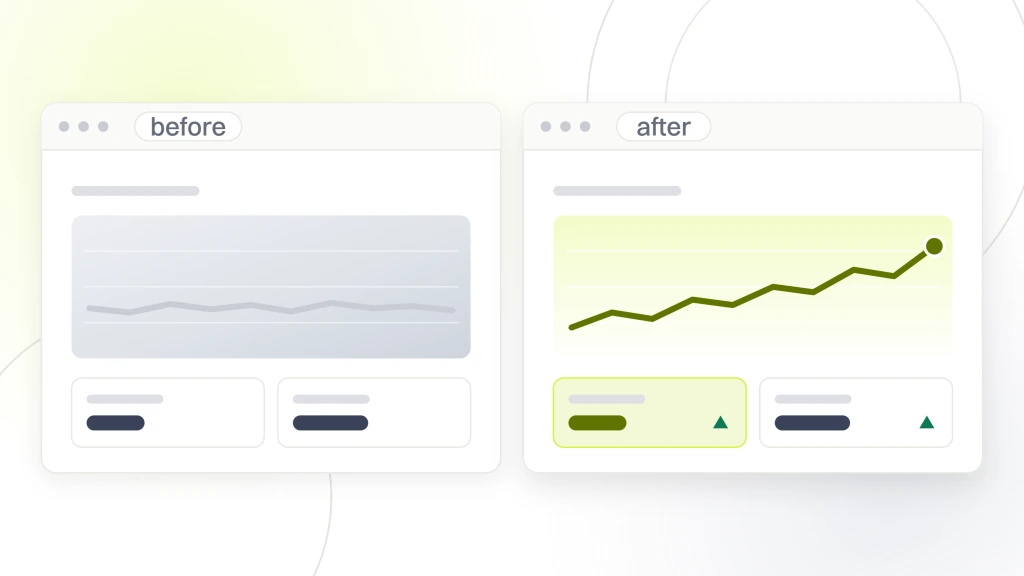
The 24-hour pre-drop window runs a capacity check that pushes fresh product images to the CDN, warms the edge cache against the top 40 SKU URLs, scales database read replicas from 1 to 3 on WooCommerce stacks, and confirms the payment gateway rate limit against expected order volume. Load testing runs 15 minutes at 2 times expected peak concurrent users to confirm the stack does not degrade at the p95 latency percentile. Brands skipping the pre-drop check routinely discover mid-drop that the payment gateway rate-limits at 40 requests per second when the drop needs 90, and every order past that limit either fails or retries and doubles the database load. The pre-drop check costs 90 minutes of team time and pays back inside a single drop cycle.
Drop-hour headroom sizing
Drop-hour headroom sizing holds 5 to 12 times the baseline concurrent-user load across the peak 30 to 90 minute window. A brand running 140 concurrent users at baseline needs 700 to 1,700 users of headroom during the drop, sized against the top three historical drops of the past 12 months rather than the average. Founders can pair the capacity math with our DTC fashion marketing playbook to forecast the drop-day audience realistically. Shopify Plus handles this automatically at the platform level but charges a Plus-tier fee starting at $2,300 monthly. WooCommerce stacks handle it through horizontal scaling with autoscaling rules tied to load-balancer metrics on the managed-host tier your Redefine Web maintenance plan runs under.
Post-drop the capacity ramps back down inside 90 minutes so the storefront is not burning budget on empty headroom that costs $200 to $600 per drop day if left running. Our ecommerce WordPress maintenance guide covers the WooCommerce autoscaling patterns that hold together across drop cycles.
Image CDN pipeline for fashion website hosting
Image CDN pipeline is the second hosting pillar, and fashion PDPs push 4 to 10 image variants per SKU across hero, gallery, zoom, cart thumb, and email sizes. A working pipeline handles automatic format conversion, responsive srcset generation, and edge cache warming without asking the developer team to hand-encode every image. A broken pipeline serves 3,000-pixel JPEGs to Android phones and blames it on the theme.
Format conversion at the edge
Format conversion at the edge is the single change that saves 40% to 65% of image payload for fashion accounts. Cloudflare Images, Bunny CDN, ImageKit, and Shopify’s built-in CDN all support automatic AVIF for Chrome and Android, WebP for Safari, and JPEG fallback for legacy browsers. The origin uploads one master file, the CDN handles the rest.
Brands still serving hand-encoded JPEGs from S3 through a plain edge tier push 12 to 22 megabytes per PDP against the 4 to 8 megabytes a converting CDN would serve. That payload difference lands a 2.8-second LCP gap on mid-tier Android and blocks the storefront from ever hitting the 2.5-second Google threshold, no matter what compute tier the origin runs. Format conversion at the edge is the highest-value single change most fashion brands make in their first 30 days on our hosting retainer.
Responsive srcset generation
Responsive srcset generation carries the second layer of image savings. A single product hero image should render at 320, 480, 640, 800, 1200, 1600, 2000, and 3000 pixel widths depending on the device viewport and pixel density, with the CDN generating each variant on the first request and caching the rest. Brands that hard-code a single 2,000-pixel image and let the browser scale burn 30% to 50% of image payload on phones.
Shopify handles this through the theme’s img_url filters and asset_url helpers. WooCommerce handles it through the theme’s srcset generation or through plugins like Perfmatters and Modern Image Formats. Correctness on the srcset is where the theme team and the hosting team meet, and brands running a hosting vendor separately from a theme vendor often see this piece break quietly on theme updates. Compare providers in our managed hosting for fashion brands guide.
Mobile Core Web Vitals and fashion website hosting
Mobile Core Web Vitals sit directly under the hosting layer. Largest Contentful Paint, Interaction to Next Paint, and Cumulative Layout Shift each depend on server response time, image delivery, and JavaScript execution the host controls. Fashion mobile traffic runs 78% to 88% of sessions on women’s apparel accounts and gets rank-demoted by Google when Core Web Vitals miss thresholds across 75% of that traffic.
| Vitals metric | Google threshold | Typical fashion baseline | Well-hosted fashion target | Mobile conversion impact per 100ms |
|---|---|---|---|---|
| Largest Contentful Paint | 2.5 seconds | 3.8 to 5.2 seconds | 1.8 to 2.2 seconds | 2% to 4% |
| Interaction to Next Paint | 200 milliseconds | 240 to 380 milliseconds | 140 to 180 milliseconds | 1% to 3% |
| Cumulative Layout Shift | 0.10 | 0.14 to 0.28 | 0.02 to 0.05 | 0.5% to 1.5% |
| Time to First Byte | 800 milliseconds | 620 to 1,100 milliseconds | 180 to 340 milliseconds | 1% to 2% |
| First Contentful Paint | 1.8 seconds | 2.4 to 3.4 seconds | 1.0 to 1.4 seconds | 1% to 2% |
The table above assumes a mid-size DTC apparel brand running Shopify Plus or a managed WooCommerce stack, a mobile traffic mix around 82%, and a Cloudflare Images or Bunny CDN pipeline. The web.dev Core Web Vitals guide is the outside read every hosting team should keep bookmarked, since the thresholds move once every 12 to 24 months and each move quietly re-ranks the top 100 fashion storefronts. Fashion brands hitting the well-hosted column across all five metrics report 12% to 22% gains in mobile organic traffic within 60 days of the fix landing, and that is why the hosting decision compounds far past the raw cost of the plan.
Shopify versus WooCommerce fashion website hosting
Shopify against WooCommerce on the hosting side is the platform decision most DTC founders wrestle with at the seed and Series A stage. Both platforms carry fashion brands to $50 million in annual revenue. Founders weighing the ranking angle can read our Shopify vs WooCommerce SEO comparison before the platform call. The hosting math and the operating pattern that gets a brand there differs sharply between the two, and the wrong platform choice costs 4 to 12 months of engineering rework once the brand outgrows it.
Shopify platform hosting math
Shopify handles the platform side of hosting on Basic through Plus tiers running $39 to $2,300 monthly plus per-transaction fees. Drop-day capacity scales automatically on Shopify Plus, which sits on Google Cloud with elastic sizing across the fleet. The image CDN comes built in with automatic WebP conversion and responsive srcset through the img_url filter chain.
The trade-off is theme customization runs on Liquid rather than PHP, cart logic runs through Shopify’s Ajax API rather than raw session state, and any custom checkout logic requires Shopify Plus at $2,300 monthly minimum. Fashion brands under $8 million in annual revenue typically win on Shopify, since the platform handles hosting well enough that the founder does not need a dedicated hosting operator. Brands past $8 million with heavy custom checkout logic often need the flexibility WooCommerce carries.
WooCommerce hosting math
WooCommerce runs on WordPress and needs a managed hosting stack under a proper retainer. Our Redefine Web maintenance plans at $199, $299, and $499 monthly bundle the origin, the CDN, the object cache, and the drop-day watch under one bill, sized against the brand’s real drop-day traffic rather than a generic tier price. Image CDN pipeline runs through Cloudflare Images or Bunny CDN inside that same retainer.
The trade-off is the hosting decision, the theme decision, and the payment gateway decision all sit on the brand’s operating team rather than a platform. That flexibility becomes an advantage past $8 million in annual revenue when custom checkout, custom subscription flows, and custom returns logic need to run outside a platform box. Our custom ecommerce platform maintenance costs vs Shopify TCO guide runs the platform decision through a real 3-year total cost of ownership lens for founders sizing the choice.
Edge cache and database tier decisions
Edge cache and database tier decisions carry the invisible layer of fashion website hosting that most founders never think about until a drop breaks. Cache hit rate under 90% on product images stresses the origin server. Database write throughput under 40 orders per minute stresses the cart write path. Both problems show up as checkout timeouts and lost carts, not as loud hosting alerts.
Cart-safe cache rules
Cart-safe cache rules split the storefront into cacheable public pages and non-cacheable authenticated pages so the edge cache holds product images, category pages, and CMS pages, and the cart, checkout, and account pages bypass the cache. Cloudflare handles this through Cache Rules with bypass conditions on the WooCommerce cart cookie and the Shopify session token. Bunny CDN handles it through the same pattern using URL prefix rules.
Brands running a naive Cache Everything rule against a fashion storefront routinely serve one shopper’s cart to another during high load, and that shows up as fraud disputes and refund requests inside 48 hours of the drop. The rule takes 90 minutes to set up correctly and eliminates the cross-session bleed problem for the life of the storefront.
Database write scaling
Database write scaling handles the drop-window load where orders climb from 20 per minute at baseline to 400 or 500 per minute at peak. Shopify handles this at the platform layer. WooCommerce needs a MariaDB or MySQL setup with a primary write node plus 2 or 3 read replicas, with the theme configured to route reads to the replicas through Query Monitor plus a Persistent Object Cache like Redis. Managed retainers on our maintenance tiers cover this piece under the base plan at higher volumes.
Brands running a WooCommerce site on unmanaged EC2 without database scaling routinely see the database CPU pin at 100% for 20 to 40 minutes of a drop, and at that point checkout writes stack up in the queue and the storefront reports payment failures for orders that cleared on the gateway side but never wrote to the database. That failure mode costs 4% to 8% of drop revenue and shows up as customer service tickets for the next 5 days.
Security and uptime inside fashion website hosting
Security and uptime sit under the hosting stack as the operating floor everything else runs on. A DTC brand losing 4 hours to a downed storefront during a Friday drop loses $8,000 to $60,000 in revenue plus the recovery cost of goodwill and support tickets. A brand losing a payment card data breach pays $150,000 to $2 million in fines, remediation, and brand damage.
Uptime targets on fashion accounts run to a 99.9% monthly commitment, which allows about 43 minutes of downtime per month against a 24 by 7 clock. Drop windows are when that allowance gets spent, so what protects the revenue is the incident response behind the number rather than a bigger number. Every managed host quotes 99.9% as a floor, and the real number depends on the plan tier, the CDN configuration, and whether the origin sits in a single region or across a multi-region failover.
Security work covers PCI DSS compliance on the payment path, TLS 1.3 minimum on every endpoint, Web Application Firewall rules against OWASP top 10 threats, weekly plugin and theme audits on WooCommerce, and quarterly penetration testing on brands past $10 million in annual revenue. The Cloudflare web application security guide is a useful outside read for founders sizing the security scope with a hosting operator.
Monitoring and alerting for fashion website hosting
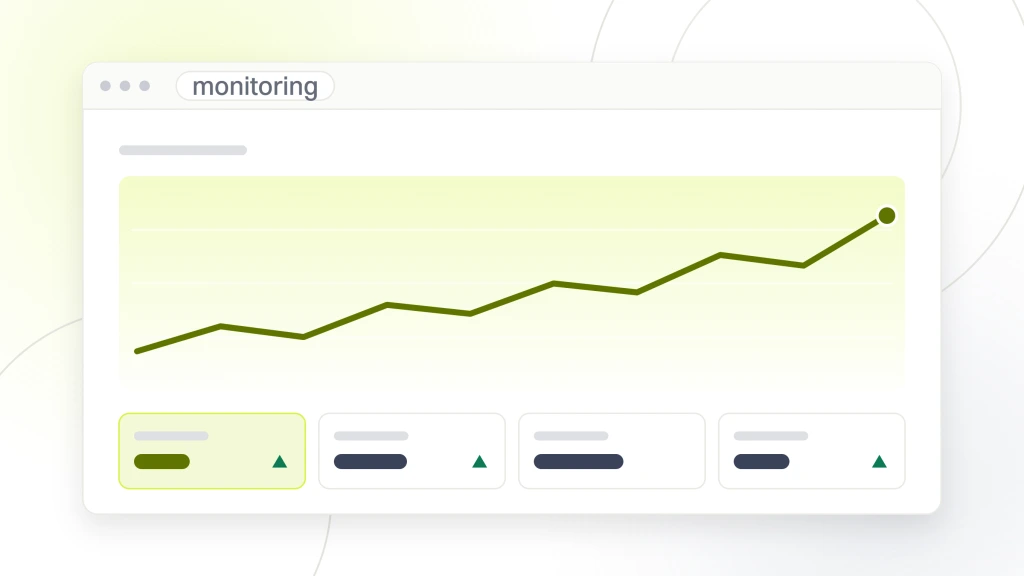
Monitoring and alerting close the loop on the hosting side. A stack without monitoring fails silently until the founder notices revenue drop the next morning. The monitoring layer catches latency drift, cache hit rate regressions, database CPU pressure, and third-party API rate limits before they cost a drop cycle.
Real user monitoring
Real user monitoring tracks Core Web Vitals against a rolling 28-day sample of actual shopper devices rather than a synthetic Lighthouse run from a data center. Google Search Console’s Core Web Vitals report reads the same signal Google uses for search ranking. Cloudflare Web Analytics and Vercel Speed Insights carry the same data at a finer per-page granularity.
Brands running only synthetic Lighthouse audits routinely score green on the dashboard, then shoppers on mid-tier Android phones see 4-second LCPs, since the Lighthouse Moto G4 emulation runs against a fresh cache and the real Samsung A32 in the field does not. Real user monitoring catches the gap and puts the fix on the correct browser, device, and page rather than a generic performance sprint that never touches the actual bottleneck.
Alert routing on drop weekends
Alert routing on drop weekends splits alerts by severity and destination so the on-call team catches critical alerts inside 60 seconds, and low-priority alerts route to Slack for review Monday morning. Critical alerts covering p95 latency above 2.5 seconds, cache hit rate below 88%, database CPU above 85%, or checkout error rate above 1% page directly to the on-call phone through PagerDuty or Opsgenie.
Warning alerts covering p50 latency drift, image payload growth, or plugin update failures route to a dedicated Slack channel with a 15-minute acknowledgment window. Brands running all alerts to a single Slack channel routinely miss the critical ones inside a noisy scroll of warnings during a drop, and at that point the paging path was worthless. Split-severity routing costs 2 hours to set up and pays back the first time it catches a real regression at 11 PM on a Saturday drop.
A real fashion hosting engagement in production
RAFZ Cirkulära Interiörer came to our team with a WooCommerce storefront that had grown organically over three years across sustainable furniture and adjacent apparel-forward lifestyle SKUs. The storefront ran on a shared managed tier without autoscaling, a Cloudflare free tier without Cloudflare Images, and a single MariaDB node without read replicas. Drop-day capacity broke on every launch above 400 concurrent users, and that happened on 6 of the 9 major drops in the prior quarter.
Our team migrated the origin to a managed autoscaling tier under a Redefine Web maintenance retainer, wired Cloudflare Images with automatic AVIF and WebP conversion, added 2 MariaDB read replicas plus a Redis persistent object cache, and split the edge cache into public-page cacheable versus cart-and-account bypass rules. Drop-day capacity climbed from 400 to 2,400 concurrent users with headroom to spare. Mobile LCP dropped from 4.8 seconds to 1.9 seconds. Time to First Byte dropped from 880 milliseconds to 220 milliseconds. Payment error rate during drops dropped from 3.6% to 0.4%.
Over the following 90 days, mobile organic traffic climbed 34%, mobile conversion rate climbed 22%, and drop-day revenue per launch grew 41% on the same ad spend. RAFZ Cirkulära Interiörer now runs 3 drops per month against the same hosting stack with zero downtime across the past 5 launches. The pattern that worked was the stack rebuild paired with the monitoring and alert routing, not any single component change. That same operating pattern rolls onto DTC apparel and lifestyle brands our team holds today across women’s, mens, and unisex lines.
Where fashion website hosting fits the stack
A working hosting stack sits at the infrastructure floor of the DTC apparel marketing stack. Every SEO investment, every paid media dollar, every email flow, and every influencer program either compounds through a working hosting stack or fights against a broken one. A brand paying $12,000 monthly for paid media against a hosting stack that fails on drop days burns 15% to 30% of that budget on traffic that never converts. Fixing the hosting stack pays back inside the first drop cycle.
Redefine Web maintenance plans run at $199, $299, and $499 monthly and bundle the hosting, the image CDN, the edge cache, the database tier, the drop-day watch, and the Core Web Vitals monitoring under one retainer. Every retainer commits to a 6-month starter term, and two full drop cycles are needed to prove the setup holds under real load. Our apparel fashion marketing hub ties the hosting layer to the broader DTC growth stack for founders sizing the whole picture, not the hosting line in isolation.
The Kinsta ecommerce hosting guide is a useful outside read for founders comparing managed WooCommerce hosts against Shopify Plus. A right-sized hosting layer is the operating floor that decides which paid, organic, and retention investments compound and which ones stay stuck on autopilot behind a slow storefront. Pair the hosting stack with a working fashion website maintenance retainer and the storefront holds its speed and security through every trading quarter.
For a deeper look at the Core Web Vitals math behind hosting decisions, our fast hosting for fashion ecommerce guide covers the LCP, INP, and CDN pairing that predicts ranking outcomes on mobile.
Hosting handles the infrastructure floor. Maintenance runs the software layer, catalog cadence, and incident response on top. Our website maintenance for fashion brands retainer scope guide covers the retainer that pairs with a working hosting stack for DTC apparel brands.
Lock in the fashion website hosting stack
Every drop that opens against a stack you have not load-tested at 2 times peak is a drop you are betting on hope. The hosting decision is one of the highest-yield single moves a DTC apparel founder makes in the first 24 months, and it compounds every paid, organic, and retention dollar spent on top of it. Book a call with Redefine Web, we will read your last three drops against your current stack, and you will get a written 30-day plan for the pipeline you actually need before the next launch.