
Google Ads Management Services Tampa That Books Real Leads
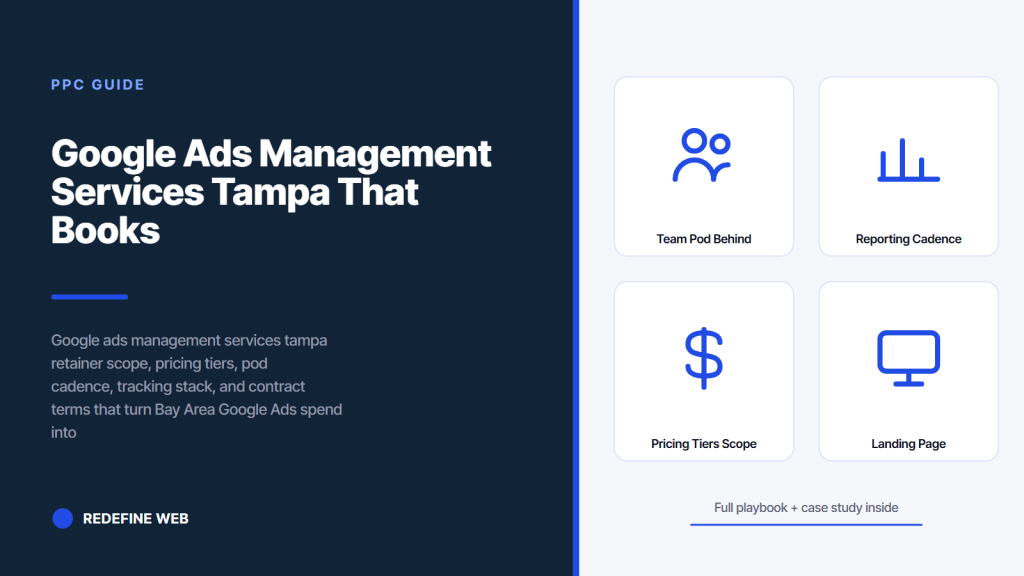
- Retainers bundle 8 workstreams into one flat monthly fee.
- Three tiers scale from Starter to Growth to Enterprise scope.
- A 3 to 5 person pod runs the account on a weekly cadence.
- Tracking stack covers GTM, CallRail, GA4, and CRM connector.
- 6 month terms match the smart bidding training window.
- Offboarding language transfers full account ownership to the shop.
- What google ads management services tampa retainers actually include
- The team pod behind a Bay Area retainer
- Reporting cadence that shows the shop where every dollar went
- Tracking stack that ties tampa spend back to booked jobs
- Google ads management services tampa pricing tiers by scope
- Berks Plumbing pattern that mirrors tampa retainer wins
- Contract shape and terms on a tampa retainer
- Landing page infrastructure inside the retainer scope
- Local Service Ads as a paired channel inside the retainer
- Onboarding sequence during the first 30 days
- Vertical strategies inside a tampa retainer scope
- Working with a tampa retainer partner on Google Ads
Google ads management services tampa retainers cover the operating model around a paid search account, not just the account itself. The retainer bundles account structure, weekly optimization, call tracking, landing page work, and executive reporting into a single monthly scope so Bay Area shops read one predictable line item instead of five vendor invoices. Tampa practices that treat Google Ads as a standalone spend line usually watch cost per lead drift 20 to 40 percent inside 6 months because the wrapper work never gets done. Google ads management services tampa scopes solve that drift by pricing the wrapper into the retainer from day one.
This guide walks the services model our team runs across Tampa retainers today. Deliverable checklists, reporting cadence, team pod structure, tracking stack, contract shape, and the offboarding rules that protect the Bay Area shop if the engagement ever ends. Numbers trace to accounts we manage across Hillsborough, Pinellas, Pasco, and Hernando counties this quarter.

What google ads management services tampa retainers actually include
Google ads management services tampa retainers bundle 8 workstreams into a single flat monthly fee. Audit, weekly bid work, ad copy iteration, landing page CRO, call tracking, GTM conversion configuration, monthly executive reporting, and quarterly deep-dives all sit inside the same scope. The wrapper work stops being an afterthought.
A well-scoped tampa retainer runs those workstreams on a predictable weekly and monthly cadence rather than a vague hourly commitment. Account audit and structure work in month one. Weekly optimization on bids, negatives, and search terms. Ad copy iteration on 2 to 4 variants per ad group. Landing page CRO testing at a monthly cadence. Call tracking configuration with CallRail or CallTrackingMetrics. Conversion tracking in Google Tag Manager with primary and secondary events. Monthly executive reporting with vertical benchmarks. Quarterly deep-dive on Auction Insights, competitor positioning, and next-quarter budget planning. Our Google Ads Management Services page lists the full deliverable stack.
How the scope splits by account size
Solo trade shops running under 5,000 dollars monthly in Google Ads spend get a compact scope. One campaign, one landing page, weekly bid work, monthly one-page report. Mid-market accounts running 5,000 to 25,000 dollars per month get 3 to 7 campaigns, 3 to 5 landing pages, weekly reports plus monthly executive briefings. Enterprise accounts spending over 25,000 dollars monthly add offline conversion imports, pipeline attribution, quarterly incrementality tests, and executive stakeholder updates across leadership. Retainer scope grows with spend because workload grows with campaign count and reporting depth across the tampa account.
What the scope specifically excludes
Scope discipline matters as much as scope width. Standard retainers do not include full website rebuilds, brand identity work, ongoing SEO content production, or paid social account management. Those sit as separate scoped projects or standalone retainers. Bay Area shops asking a single retainer to cover paid search, paid social, SEO, and web build usually watch every channel underperform because attention gets spread too thin across the account manager’s week. Scoping tight and layering channels sequentially produces better cost per booked job in tampa retainers over the first 6 months.
The team pod behind a Bay Area retainer
Google ads management services tampa retainers run through a 3 to 5 person pod rather than a single account manager. The strategist owns account direction, weekly optimization decisions, and monthly reporting. The account manager owns client communication, weekly pacing check-ins, and quarterly briefings. The paid search specialist handles daily bid work, negative keyword additions, and search term reviews. The creative operator produces ad copy variants and landing page copy tests. The analytics engineer configures GTM, CallRail, and offline conversion imports. Small pods rotating on a 3-day heartbeat keep the account fresh and avoid the single-point-of-failure risk that solo account managers carry. Our PPC Management Services page walks the wider pod model.
Pod cadence during month one
Month one runs on a dense cadence to get the account and tracking stack right. Day 1 through 5 covers the audit, historical data pull, and stakeholder interviews. Day 6 through 12 covers campaign restructure, ad group rebuild, and negative keyword file construction. Day 13 through 18 covers landing page build or refresh, GTM configuration, and call tracking rollout. Day 19 through 25 covers ad copy production, extension setup, and campaign launch. Day 26 through 30 covers the first pacing report and any early bid adjustments before month 2 begins. Tampa shops onboarding without this dense month-one cadence usually see delayed traction by 30 to 60 days across the account.
Pod cadence during steady state
Steady state cadence from month 2 forward runs on a weekly heartbeat. Monday covers bid tuning against the prior week’s data. Wednesday covers ad copy iteration, extension refresh, and negative additions. Friday covers pacing check, spend forecast to end of month, and mid-month adjustments if the account is trending soft. Executive reports drop at the first business day of each month. Quarterly deep-dive briefings happen inside the first 10 business days of each quarter. Bay Area retainers running without this weekly cadence usually see cost per booked call climb 20 to 35 percent within the first quarter as small drifts compound across the account.
Reporting cadence that shows the shop where every dollar went
Reporting on google ads management services tampa retainers should follow a 3-layer cadence. Weekly one-page pacing summary emailed every Friday. Monthly executive report delivered by the second business day of the following month. Quarterly deep-dive with a live 45-minute working session between the pod and the shop stakeholders. Each layer answers different questions. Weekly pacing answers whether we are on track to hit month-end targets. Monthly reporting answers what changed, why, and what to test next. Quarterly deep-dive answers whether the retainer scope still fits the shop’s growth stage or whether it needs to expand or contract for the next quarter.
What the weekly pacing note contains
The weekly pacing note is a single page. Spend to date, projected spend by end of month, conversions to date, cost per lead running week over week, and any budget adjustments needed to stay on target. That is the whole document. Tampa owners who read the weekly pacing note catch overspend issues in week 2 rather than at month end. Weekly notes that stretch past one page usually go unread. Shops that read the weekly note and reply within 24 hours of receipt see the pod make faster and better tactical calls because the feedback loop stays tight across the retainer window.
What the monthly executive report contains
The monthly executive report runs 4 to 8 pages. Page 1 is the headline number. Booked calls, booked jobs, or booked consults for the month, versus the prior month, versus the same month last year. Pages 2 and 3 cover campaign performance by campaign and by ad group with a top 5 and bottom 5 view. Pages 4 and 5 cover landing page conversion rates with a screenshot of any test in flight. Pages 6 and 7 cover Auction Insights competitive shifts. Page 8 covers next-month plan and any scope adjustments requested. Bay Area shops using this format read the same story every month rather than a random slide deck built from scratch each cycle.
Tampa shops that pay separately for tracking, landing pages, and reports never see the wrapper get done. Ask any agency for the 8-workstream flat scope.
Tracking stack that ties tampa spend back to booked jobs
The tracking stack on google ads management services tampa retainers covers 4 tools working together. Google Tag Manager holds the event layer. CallRail or CallTrackingMetrics handles dynamic call tracking. Google Analytics 4 holds the reporting warehouse. And a CRM connector like Zapier, HubSpot, or Salesforce native tools pushes offline conversion status back into Google Ads. Bay Area accounts running Google Ads without all 4 tools usually cannot tell whether the retainer actually pays back at the shop, and every executive meeting devolves into a debate about whether the dashboard number matches the front desk log. A free Google Ads audit shows the gaps in the current tracking stack before any retainer signs.
GTM event map every retainer builds
Every tampa retainer builds the same GTM event map on day one. Form submission triggers with a form ID variable to separate lead forms from newsletter signups. Call tracking triggers wired to CallRail webhooks so every tracked call fires as a Google Ads conversion. Scroll depth triggers at 25, 50, 75, and 100 percent for landing page diagnostics. Outbound CTA click triggers for the primary phone number and booking button. This event map takes 2 to 6 hours for a clean setup and stays in place through the life of the retainer with only minor updates when the shop adds new services or promotions.
Call tracking configuration for Bay Area service accounts
Call tracking on tampa home services accounts should use dynamic number insertion tied to the Google Ads click ID. CallRail prices this at 45 to 80 dollars monthly for a single pool of numbers plus 3 to 6 dollars per tracked minute. Every call over 60 seconds should count as a qualified lead. Every call under 30 seconds should get excluded from conversion counts because those calls rarely turn into jobs. Tampa accounts counting every ring as a conversion feed noise into smart bidding and see cost per lead drift up 20 to 35 percent within 90 days across the account until the pod pulls the noise back out.
Offline conversion imports for Westshore B2B
Offline conversion imports for Westshore B2B accounts on the retainer push qualified lead status, opportunity created, and closed-won revenue from the CRM back into Google Ads. Salesforce, HubSpot, and Pipedrive all support this workflow through native integrations or Zapier connections. Setup takes a full day of engineering time for a clean pipeline. Payoff runs 15 to 40 percent lower cost per opportunity within 90 days because smart bidding can weight bids against real pipeline events rather than raw form fills that never become signed deals for the tampa account.
Google ads management services tampa pricing tiers by scope
Google ads management services tampa pricing splits by account size and deliverable count. The table below shows the three tiers our team runs across Bay Area shops today. Practices and shops should treat these as directional ranges rather than fixed quotes because vertical, competitive set, and reporting depth all shift the retainer fee. All tiers start at 599 dollars per month at the entry level because anything cheaper than that usually runs as bot-driven optimization with no Bay Area market knowledge behind the account and no accountability when spend drifts.
| Tier | Monthly ad spend | Retainer fee | Deliverables |
|---|---|---|---|
| Starter | Up to $5,000 | $599 to $1,200 | 1 campaign, 1 landing page, weekly bid work, monthly report |
| Growth | $5,000 to $25,000 | $1,500 to $3,500 | 3 to 7 campaigns, 3 to 5 pages, weekly report, monthly briefing |
| Enterprise | Over $25,000 | $3,500 to $8,000 | Full stack, offline imports, pipeline attribution, quarterly deep-dive |
Bay Area shops choosing between tiers should map their spend, vertical, and reporting needs against the deliverables column. A tampa home services shop running 8,000 dollars a month in Google Ads and needing quarterly executive briefings sits in the Growth tier at 1,800 to 2,400 dollars per month depending on landing page count. A Westshore B2B firm running 45,000 dollars a month with pipeline attribution needs sits in the Enterprise tier at 4,500 to 6,000 dollars per month depending on CRM complexity.
Retainer fees on percentage-of-spend models drift out of alignment as spend rises past 20,000 dollars per month because workload flattens while the fee keeps climbing. Flat-fee retainers stay predictable across seasonal spend swings, which matters in tampa because hurricane season, snowbird season, and summer AC demand all shift monthly spend by 20 to 40 percent inside the same account. Flat fees also protect the shop when spend drops in slower months because the pod still works the account through the trough rather than pulling back to match the reduced revenue share.
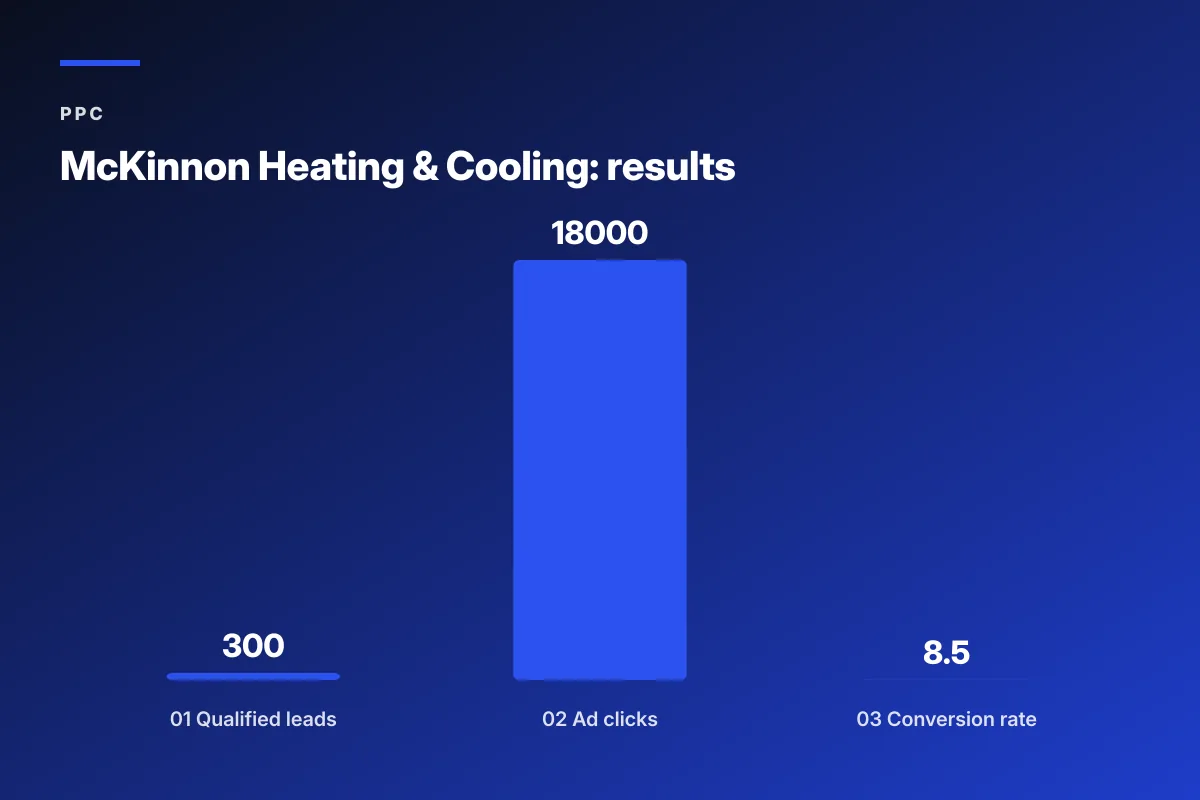
Somewhere off Kennedy Boulevard, a roofing shop has been paying a nationwide agency 1,900 dollars a month for tampa Google Ads for 4 years. The agency uses one campaign for the entire DMA, no negative keywords past what Google seeded on day one, and reports in a PDF template that has not changed since 2022. The owner keeps signing invoices because the agency emails a bright chart showing plus 12,000 impressions. When we audited the account, 71 percent of spend went to queries containing roofing job, roofing career, and roofing school. The shop has never hired a roofer through a Google Ad.
Berks Plumbing pattern that mirrors tampa retainer wins
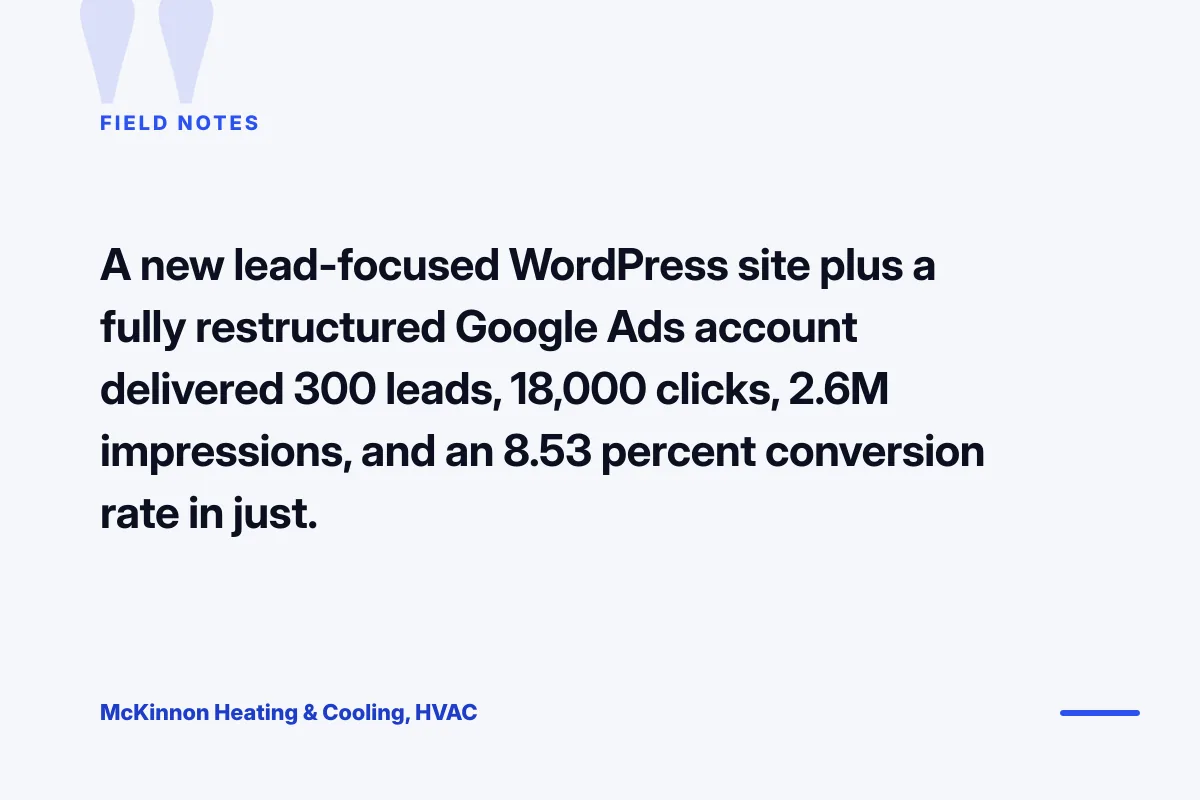
Berks Plumbing came to our team with a plumbing account that mirrors what tampa home services shops walk in the door with. A single-page website limiting keyword coverage. No service-specific landing pages. No strong calls to action. Weak call tracking. Poorly structured PPC campaigns with weak targeting and minimal ad relevance driving high CPC, wasted budget, and spam leads. Local Service Ads underused because verified reviews and job features were not tuned up. Competitors with better-optimized LSAs outranked them at the top of the map pack for emergency intent queries across the service area.
What the retainer restructured
The retainer redesigned Berks Plumbing’s website into multiple service-specific pages optimized with targeted local keywords. Technical SEO improvements boosted page speed, structure, and user experience across mobile and desktop. Google Ads got restructured into service-based campaigns with better ad quality scores, tighter negative keyword lists, and lead-focused landing pages tied to CallRail dynamic number insertion. Local Service Ads got rebuilt to highlight verified reviews, job features, and optimized targeting so the account pulled full impression share on emergency-intent searches across the county.
The measured result across 12 months
Across the first 12-month window on the retainer, Berks Plumbing generated 99 percent more Google Ads conversions than the prior period, 67 percent lower cost per acquisition, and 75 percent higher organic traffic driven by the site restructure. Google Ads conversions rose 99 percent after campaign restructuring and service-focused landing pages. Cost per acquisition dropped 67 percent. Organic users rose 75 percent through technical SEO improvements and local keyword optimization. The pattern maps directly onto tampa retainers because the deliverable stack works the same way regardless of metro. A Bay Area shop applying the same retainer scope should see comparable ranges over a similar window at appropriately scaled tampa pricing.
Contract shape and terms on a tampa retainer
Google ads management services tampa retainers typically run 6 month initial terms with 30 day rolling renewal after the first 6 months. The 6 month term matches the training window smart bidding needs on most Bay Area accounts. Shorter terms usually end before the account fully trains, leaving the shop with a partial rebuild and no data to judge whether the operating model works. Longer terms lock the shop in past the point where scope should adjust. A 6 month term gives both sides enough runway to see the pattern and enough flexibility to renegotiate scope, spend, or tier at the natural checkpoint.
Payment terms and net 15 billing
Payment terms on tampa retainers usually run net 15 with the retainer fee invoiced on the first of the month. Ad spend gets billed directly by Google to the shop’s card on file rather than routed through the retainer invoice. That split keeps ad spend transparent on the Google Ads billing page and prevents the retainer invoice from ballooning during hurricane season or summer AC demand peaks. Some retainers offer 5 percent discount on annual prepayment for shops that want a fixed budget line. Others allow quarterly prepayment at a smaller discount. Monthly rolling billing works well for most Bay Area shops without cash flow constraints.
Offboarding rules that protect the shop
Offboarding rules matter more than most shops realize at signing. A well-written retainer contract transfers 100 percent of account ownership to the shop at any point. Google Ads MCC access, GTM container, GA4 property, CallRail account, and landing pages hosted on the shop domain all stay with the shop after the retainer ends. Bay Area shops signing retainers where the agency holds the accounts hostage after termination lose 60 to 90 days of momentum during any transition. Clean offboarding language should sit inside the master services agreement rather than a separate addendum so the shop reads the rules before the first invoice.
Landing page infrastructure inside the retainer scope
Landing pages sit inside the retainer scope on any tampa Google Ads engagement. A tightly built campaign feeding a weak homepage produces 30 to 60 percent worse conversion rates than the same campaign feeding a dedicated landing page. Retainer scope should include monthly landing page CRO tests on the top-spending 2 to 3 pages. Bay Area shops that skip page-level work usually see cost per booked call climb 25 to 45 percent inside 6 months because the account cannot outrun a weak page no matter how well the campaign runs. Landing page work pays back faster than most people expect.
Above the fold structure the pod builds
The above-the-fold section on a paid landing page carries a headline that repeats the ad copy promise, a subhead mentioning the Bay Area service area, a phone number tied to CallRail dynamic insertion, a form with 3 fields max, and a trust signal like a local reviews snippet or a BBB West Florida badge. A hero image of a real crew on a real job in tampa outperforms stock photography by 15 to 25 percent in conversion rate. Landing pages reused for organic and paid traffic usually run paid conversion rates 25 to 40 percent below dedicated pages built for a single campaign.
Below the fold trust signals
Below the fold, the page carries a 3 to 5 item bullet list of what makes the service different, a service area map showing coverage across Tampa Bay, real customer or crew photos, and a review widget pulling live Google reviews via a third-party plugin. Trust signals from local tampa brands like Tampa Bay Chamber, BBB West Florida, or Angi Certified badges add authority. Pages loading these badges via async scripts avoid dragging page speed under the 2.5 second threshold on 4G mobile. The retainer scope covers monthly review of these signals as new reviews and awards come in across the year.
Form and click-to-call design
Form design carries real weight on conversion rate. A 3 field form asking name, phone, and issue converts 25 to 45 percent better than a 6 field form asking name, phone, address, email, service, and best time to call. On mobile, the phone number should tap-to-call directly with a sticky button visible on scroll. Every Bay Area account should keep both the form path and the click-to-call path active. Some visitors prefer to type. Others prefer to call. Losing either path costs the account 15 to 30 percent of potential conversions across the tampa metro. The retainer scope owns both paths across every landing page in the account.
Local Service Ads as a paired channel inside the retainer
Local Service Ads run alongside Google Ads on most tampa home services retainers. LSAs price per qualified lead rather than per click, at 28 to 110 dollars per lead depending on vertical. HVAC LSAs in tampa price at 48 to 92 dollars per lead. Plumbing LSAs price at 38 to 78 dollars. Roofing LSAs price at 60 to 130 dollars. LSAs pull impression share from Google Ads and complement rather than replace the standard search campaigns. Bay Area accounts running both channels usually see 20 to 40 percent higher total lead volume than accounts running one channel alone across the same monthly budget across the DMA.
Google Guaranteed badge process
The Google Guaranteed badge requires a background check on all technicians and insurance verification for the business. The badge process takes 2 to 4 weeks to complete for a clean tampa provider. Bay Area shops that skip the badge usually get outranked in the LSA slot by badged competitors even at higher bids. The badge signal outweighs the bid signal in the LSA auction. Any tampa shop planning to run LSAs should start the background check process before the campaign launches to avoid a soft first month while paperwork clears across the account. The retainer scope typically includes the badge coordination work.
LSA lead dispute workflow
Every tampa LSA account should have a lead dispute workflow. Google refunds LSA leads that fall outside the service area, land on the wrong job type, or turn out to be spam. Disputed leads processed within 30 days of the call typically get credited back at a 70 to 90 percent approval rate. Bay Area shops skipping the dispute workflow usually pay 15 to 25 percent more per booked job across the campaign window because they never claim refunds on the bad leads Google served over the year. The retainer scope owns the weekly dispute review as part of the LSA workstream inside the account.
Onboarding sequence during the first 30 days
Onboarding on a tampa retainer runs on a scripted 30 day sequence. Day 1 covers kickoff, stakeholder introductions, and access exchange for Google Ads, GA4, GTM, CallRail, and the CMS. Day 2 through 5 covers the full historical audit of the account and the tracking stack. Day 6 through 12 covers the campaign rebuild, negative keyword file, and ad group restructure. Day 13 through 18 covers landing page work, GTM event map, and call tracking configuration. Day 19 through 25 covers ad copy and extensions. Day 26 through 30 covers the first pacing report and any early bid adjustments before month 2 rolls in.
Access exchange checklist
The access exchange checklist covers 8 items. Google Ads MCC invite accepted by the shop. Google Analytics 4 property access at editor level for the pod. Google Tag Manager container access at publish level. CallRail account access at admin level. CMS access to the pages the pod will edit. CRM access at the connector level for offline conversion imports on B2B accounts. Google Business Profile manager access for LSA setup. Domain DNS access for any subdomain or CNAME work needed on the landing pages. Missing any of these 8 items delays onboarding by 3 to 10 days across the account.
Stakeholder alignment interviews
Stakeholder alignment interviews during onboarding cover 3 conversations. The owner or GM interview covers business goals, revenue targets, and what a successful quarter looks like from the shop’s perspective. The front desk or sales lead interview covers what makes a qualified lead versus a spam lead so the pod can tune negatives correctly. The service lead or crew chief interview covers what jobs the shop wants more of versus fewer of so the pod can shape campaign budget allocation. Bay Area retainers that skip these 3 interviews usually optimize toward the wrong signal and take 60 to 90 days longer to hit steady state.
Vertical strategies inside a tampa retainer scope
Vertical strategy shapes the retainer more than any other factor. A plumbing account and a personal injury account need different campaign structure, different tracking depth, different landing page style, and different reporting cadence. The retainer scope adjusts to fit the vertical rather than forcing every account into the same template. Bay Area shops signing retainers with agencies that run every account through the same playbook usually see cost per booked job drift 20 to 40 percent above vertical benchmarks within the first 6 months because the account fights against a template that does not fit the auction it lives in.
Home services vertical strategy
Home services accounts in tampa run on service-line campaign splits, tight negative lists, heavy call tracking, and Local Service Ads as a paired channel. HVAC, plumbing, roofing, pool service, and pest control each get separate campaigns and separate landing pages. Retainer scope for home services accounts weighs heavier on call tracking configuration and LSA management than on offline conversion imports because most jobs book by phone rather than by form. Weekly bid work concentrates on peak intent windows like emergency queries during Bay Area storm events or HVAC queries during summer heat spikes across the metro.
Healthcare and dental vertical strategy
Healthcare, dental, and med spa accounts in tampa run on treatment-line campaign splits, booking widget conversion tracking, and heavier landing page CRO because household income and household demographics matter for elective care. Retainer scope for healthcare accounts weighs heavier on landing page trust signals like practitioner credentials, before-after galleries, and insurance acceptance. Snowbird season from October through April shifts patient acquisition patterns and requires seasonal budget rebalancing across the retainer window. HIPAA compliance shapes what data flows into GA4 versus stays inside the practice management system.
B2B software and professional services strategy
B2B software companies concentrated in downtown tampa and Westshore run on account-based campaign structure, LinkedIn audience layering, and offline conversion imports from Salesforce or HubSpot. Retainer scope for B2B accounts weighs heavier on pipeline attribution and executive reporting because the sales cycle runs 60 to 180 days rather than same-day like home services. Personal injury law firms across the DMA run on separate campaigns for car accident, truck accident, motorcycle accident, and premises liability with call tracking tied to intake specialists and case type routing.
Working with a tampa retainer partner on Google Ads
Bay Area shops scoping a tampa retainer should map their vertical against the pricing tier table in this guide, confirm the deliverable stack matches the account size, and pressure-test the pod cadence against what the shop actually needs. Retainer fees at the entry level start at 599 dollars per month. Growth tier retainers run 1,500 to 3,500 dollars. Enterprise tier retainers run 3,500 to 8,000 dollars. The right tier depends on spend, vertical, and reporting depth rather than on the shop’s revenue size. A 2 million dollar home services shop with 4,000 dollars in monthly Google Ads spend belongs in the Starter tier, not the Enterprise tier.
Google Ads platform documentation at support.google.com covers the current bid strategy training thresholds worth reading quarterly. Search Engine Land at searchengineland.com covers ongoing platform changes and industry benchmarks. Florida Department of Business and Professional Regulation at myfloridalicense.com covers baseline licensure and advertising rules that apply across Florida for consumer-facing marketing spend. Vertical-specific retainers like our Dental PPC Services program tune the deliverable stack for treatment-line campaigns.
When to start the retainer engagement
Start the retainer engagement when the shop has capacity to handle 20 to 40 percent more booked jobs per month within 90 days of launch. Accounts running Google Ads without dispatch or intake capacity book leads that go unserved and generate poor reviews across the Google Business Profile. Sequence matters. Capacity first. Campaign structure and tracking stack second. Paid spend third. Tampa shops that reverse the sequence usually cancel the retainer within 6 months because leads exceed shop capacity and customer experience suffers. Sound capacity planning across the crew ahead of launch keeps the ROI predictable across the retainer window.
A final read on tampa retainer scope
A well-scoped tampa retainer works because it prices the wrapper into the monthly fee rather than leaving it on the shop to figure out. The deciding factor on Google Ads is rarely the ad spend itself. It is the campaign structure, negative list shape, tracking stack, landing page infrastructure, reporting cadence, and pod discipline around the spend. Tampa shops that invest in the wrapper turn Google Ads into a predictable booking channel. Shops that skip the wrapper usually watch the account underperform for 6 to 12 months before canceling. The right retainer scope keeps every dollar readable across the reporting stack and gives the owner a clean read on renewal at every quarterly checkpoint.
Frequently asked questions
What do google ads management services tampa retainers include each month?
Google ads management services tampa retainers cover 8 workstreams every month rather than a vague hourly commitment. Account audit and structure in month one. Weekly optimization on bids, negatives, and search terms. Ad copy iteration across 2 to 4 variants per ad group. Landing page CRO testing at a monthly cadence. Call tracking configuration with CallRail or CallTrackingMetrics. Conversion tracking through Google Tag Manager. Monthly executive reporting with vertical benchmarks. Quarterly deep-dive on Auction Insights and competitor positioning. The bundle prices the wrapper work into a single flat retainer fee rather than leaving those workstreams as separate vendor invoices.
How much does a tampa Google Ads retainer cost per month?
Tampa Google Ads retainer fees split across three tiers. Starter tier accounts spending up to 5,000 dollars monthly on Google Ads price at 599 to 1,200 dollars per month. Growth tier accounts spending 5,000 to 25,000 dollars monthly price at 1,500 to 3,500 dollars per month. Enterprise tier accounts spending over 25,000 dollars monthly price at 3,500 to 8,000 dollars per month with pipeline attribution and offline conversion imports included. Flat-fee retainers stay predictable across seasonal spend swings, which matters in tampa because hurricane season, snowbird season, and summer AC demand all shift monthly spend by 20 to 40 percent inside the same account across the year.
What contract length runs on a tampa retainer?
Tampa Google Ads retainers typically run 6 month initial terms with 30 day rolling renewal after the first 6 months. The 6 month term matches the training window smart bidding needs on most Bay Area accounts. Shorter terms usually end before the account fully trains, leaving the shop with a partial rebuild and no data to judge whether the operating model works. Longer terms lock the shop in past the point where scope should adjust. A 6 month term gives both sides enough runway to see the pattern and enough flexibility to renegotiate scope, spend, or tier at the natural checkpoint that fits the shop growth stage.
What reporting cadence should a tampa retainer include?
Reporting on tampa retainers should follow a 3-layer cadence. A weekly one-page pacing summary emailed every Friday covers spend to date, projected spend, conversions to date, and any budget adjustments needed. A monthly executive report delivered by the second business day of the following month runs 4 to 8 pages covering campaign performance, landing page conversion rates, Auction Insights shifts, and next-month plan. A quarterly deep-dive with a live 45-minute working session between the pod and the shop stakeholders covers scope adjustments, competitive positioning, and quarterly budget rebalancing for the tampa account.
Who owns the account after the tampa retainer ends?
A well-written tampa retainer contract transfers 100 percent of account ownership to the shop at any point. Google Ads MCC access, GTM container, GA4 property, CallRail account, and landing pages hosted on the shop domain all stay with the shop after the retainer ends. Bay Area shops signing retainers where the agency holds the accounts hostage after termination usually lose 60 to 90 days of momentum during any transition to a new partner. Clean offboarding language should sit inside the master services agreement rather than a separate addendum so the shop reads the rules and understands the terms before the first invoice.
Does the tampa retainer scope cover Local Service Ads too?
Yes. Most tampa home services retainers include Local Service Ads inside the scope as a paired channel alongside standard Google Ads. LSAs price per qualified lead rather than per click, at 28 to 110 dollars per lead depending on vertical. Bay Area retainers running both LSAs and standard Google Ads usually see 20 to 40 percent higher total lead volume than accounts running one channel alone. Retainer scope covers the Google Guaranteed background check coordination, weekly lead dispute review, and Google Business Profile review pace management as part of the LSA workstream across the campaign window.
Book your free 30-minute strategy call.
No spam, no sales rep. We use your email to schedule your call with a senior strategist. That is it.
More from the blog
View all articles → PPC
PPC Healthcare PPC Advertising Channels Compliance and Targeting
Read article PPC
PPC Dental Facebook Ads Guide for Practices That Book Patients
Read article PPC
PPC