
Health and beauty SEO plays by tighter rules than fashion, food, or apparel SEO. Google tags health-adjacent content as YMYL (Your Money or Your Life), so E-E-A-T signals (experience, expertise, authoritativeness, trust) carry more weight here than in any other product vertical. Ingredient wording triggers substantiation review. Medical-adjacent actives like retinoids, tretinoin, and hydroquinone sit inside a stricter box than a plain moisturizer. Brands that run this work the same way they run apparel SEO give up 40 to 60% of the rank climb they could earn in year one.
This guide walks through the 12 moves that build organic visibility for any health-adjacent beauty brand. For solo operators and independent practitioners, see our companion guide on SEO for beauty professionals. E-E-A-T signal architecture, ingredient claim patterns, category-page depth (built off the right beauty SEO keywords) for skincare and wellness, product schema for supplement and cosmetic SKUs, medical review workflow, sustained content pace, backlink outreach inside a regulated category, technical SEO tied to Core Web Vitals, and the retainer math that pays back. Twelve minutes end to end. You’ll walk away with the framework to run this year or hand to a category specialist without losing the thread.
Health and beauty SEO sits inside the YMYL box
Google’s YMYL bucket catches any content that could shape a reader’s health, finances, or safety. This work lives inside that box since skincare picks, supplement claims, and cosmetic ingredient talk all touch health-adjacent choices. YMYL pages face higher quality thresholds, and E-E-A-T signals settle rank. Brands that skip the signal work write pretty copy that never ranks. Brands that build for E-E-A-T see their copy rank inside 6 to 12 months and stay there.
The E-E-A-T signals for this vertical include named authors with credentials on every article, medical or dermatological review on health-adjacent content, citations to peer-reviewed studies for any claim beyond “contains X ingredient”, a visible About page with team credentials, and third-party validation from press mentions, retailer partnerships, and certifications. Brands with fewer than 4 of these signals top of page get hit by the March 2024 core update and every one after. See Google’s helpful content guidance for the current framework.
Author bylines with credentials
Every article on a health and beauty site carries a named author with credentials. “Written by Emma Reyes, cosmetic chemist, 12 years at Estée Lauder.” That single line signals E-E-A-T to Google better than any technical SEO tweak. Brands that publish unbylined content or content with generic “The Editorial Team” bylines forfeit the E-E-A-T gain. The author page includes a photo, credentials, a linked LinkedIn profile, and a list of the articles they’ve written on the site. Author schema markup ties the byline to a Person entity Google can verify.
Medical review workflow for health-adjacent content
Content that touches health topics like acne, eczema, rosacea, or supplement dosing needs a medical review workflow. A dermatologist or licensed clinician reads the article, adds their name to the byline as “Medically reviewed by”, and gets credit in the schema. That’s standard practice on Healthline, Medical News Today, and every other YMYL site that ranks. Beauty brands that skip medical review on skincare content don’t rank for the searches that convert to purchase. The review costs $180 to $340 per article and pays back in first-page rank within 6 months.
Ingredient claim SEO for health and beauty
Ingredient-focused content is the highest-converting SEO topic in this vertical, period. Shoppers search “niacinamide vs vitamin C”, “retinol for beginners”, “ashwagandha benefits”, “collagen peptides types”. Those queries convert at 4 to 7% to purchase when the article is honest, substantiated, and links to a real product. Ingredient content compounds year over year too. A well-researched niacinamide piece keeps ranking long after the campaign that funded it wraps, driving traffic and revenue for years.
The rules for ingredient claim SEO are tight. Every claim gets a citation to a peer-reviewed study, not a blog post. “Niacinamide reduces sebum production” links to a JID or Dermatologic Surgery paper. “Supports skin barrier” links to a study measuring TEWL. Vague wording like “anti-aging” gets swapped for substantiated wording like “visibly reduces fine lines”. That isn’t SEO paranoia. It’s how the FTC and FDA read cosmetic and supplement claims, and Google’s algorithm has trained on that same standard.
| Ingredient claim type | Substantiation required | SEO risk if unsubstantiated |
|---|---|---|
| Ingredient contains X | INCI list on packaging | Low |
| Ingredient supports skin barrier | Study measuring TEWL | Medium |
| Ingredient reduces wrinkles | Clinical study on human subjects | High |
| Ingredient treats acne | FDA drug classification | Very high, likely violation |
| Ingredient cures anything | Not permitted for cosmetics | Guaranteed penalty |
The cosmetic versus drug line
A cosmetic makes appearance claims. A drug makes health claims. “Reduces the look of dark spots” is a cosmetic claim. “Reduces hyperpigmentation” is a drug claim. The line matters since drug claims trigger FDA jurisdiction and pull content off the rankable index. Brands stay on the cosmetic side by using cosmetic-safe wording. See the FDA cosmetic-versus-drug guidance for the specific standard.
Citation density on ingredient content
Ingredient-focused SEO articles that rank consistently carry 6 to 14 peer-reviewed citations per 2,500 words. That’s higher citation density than most beauty content, and it signals expertise to Google’s algorithm. Articles with fewer than 4 citations struggle to rank for competitive ingredient queries since the E-A-T signal isn’t strong enough. Brands that treat citations as optional lose to brands that treat them as required. Citation work adds 3 to 5 hours per article. It pays back in rank position that lasts years.
Category page depth for skincare and wellness
Category pages carry the heaviest load in this vertical. Think “vitamin C serums”, “collagen peptides”, “retinol products”. Each one needs 800 to 1,400 words of intro copy above the product grid, filter navigation that indexes cleanly, product cards backed by real reviews, related-category links, and a substantive FAQ block below the fold. Category pages built as pure product grids rank at position 20 to 35. Category pages built for shoppers and Google together rank at 3 to 8 for the same terms and hold that rank for years.
The category intro answers the buyer question. What type of vitamin C serum should I buy, at what concentration, for what skin type. The FAQ at the bottom handles the 6 to 12 questions a shopper Googles after landing on the page. Both together add editorial substance to a commercial page, and Google reads that as helpful content. Beauty and wellness SEO brands that push thin category pages rank second-tier and blame the algorithm. Brands that write substantive category pages rank top three and compound.
Filter indexing and faceted navigation
Faceted navigation, filter by skin type, filter by concern, filter by ingredient, creates thousands of URL variations. If Google indexes all of them, the site drowns in thin duplicate content. If Google indexes none of them, the site loses long-tail rank. The right pattern is selective canonicalization. High-value filter combinations get their own indexable URLs. Low-value combos get noindexed. Beauty and personal care sites that get this wrong lose 20 to 40% of achievable rank to thin-content penalties.
Product schema on every SKU
Product schema markup on every SKU earns rich results in Google. Price, availability, review rating, review count, and offer details render as a rich snippet, which pulls 20 to 40% higher click-through than plain results. AggregateRating schema needs real reviews (Google penalizes fake ones since 2019). Availability schema tied to inventory stock signals fresh data. Sites that skip product schema forfeit the rich-result real estate to competitors who don’t.
Backlink outreach for SEO services for health & beauty businesses
Backlinks still carry serious weight inside YMYL verticals since Google reads them as third-party trust signals. Backlink outreach for this vertical hits a specific target mix. Dermatology publications for skincare. Wellness magazines for supplements. Retailer editorial sections like Sephora, Ulta, and Credo. Beauty trade press like WWD Beauty and Beauty Independent. Evergreen roundups on general-lifestyle sites. Random guest post placements on unrelated blogs weigh close to zero and burn the outreach budget for nothing.
The outreach pattern for SEO services for health & beauty businesses is HARO plus a targeted publication list plus expert quotes on active journalist queries. HARO alone lands 2 to 4 backlinks monthly for a brand with a chemist or dermatologist on staff. A targeted publication list of 40 to 60 outlets, worked steadily with pitches tied to seasonal beauty stories, lands 6 to 12 monthly. Expert quotes on active journalist queries land 4 to 8. Stacked together, a real outreach program lands 12 to 24 relevant backlinks monthly. That’s the volume that moves domain authority inside 6 months.
Digital PR as backlink strategy
Digital PR for beauty brands pairs a data study, a survey, or a founder profile with a targeted publication list. A well-run digital PR campaign produces 30 to 80 backlinks from a single story, most of them dofollow, most of them from domain authority 60 or higher. The cost runs $8K to $24K per campaign and the backlink value on the SEO side alone justifies the investment. Beauty and wellness brands that run digital PR quarterly rank consistently. Brands that don’t rely on organic backlink accumulation, which grinds slower.
Retailer editorial placements
Sephora Beauty News, Ulta 21 Days of Beauty content, Credo’s blog, and other retailer editorial sections give beauty brands a specific backlink path that pure DTC brands can’t access. Getting a product featured in a retailer editorial piece lands a high-authority backlink and often a placement bump inside the retailer’s own site. Retainers with wholesale relationships work these placements every quarter and see the rank compound. Retainers without wholesale exposure work harder for the same backlink profile.
Case study on Beauté Aesthetics New York
Beauté Aesthetics New York, a Manhattan luxury clinic, sits in a medical-adjacent YMYL space that blends cosmetic aesthetics with wellness IV therapy. Baseline before the program looked rough. Leads flat. Metadata wrong across service pages. Zero schema. GBP categories thin. Review velocity stuck at 2 per month. Zero author bylines on treatment content. 12 months later the picture flipped. 166% lead growth, 88% new user growth, 27% conversion rate. The program was standard YMYL-compliant work run with discipline for a full year.
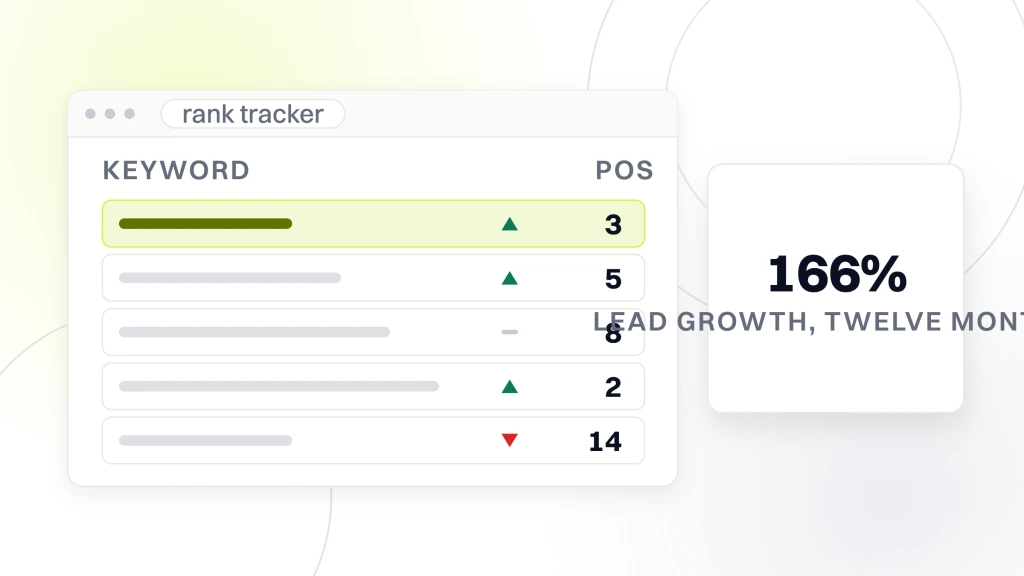
The specific moves that mattered most. Treatment-specific landing pages with medical review from the clinic’s board-certified physician. Schema markup on every procedure. GBP category depth added across 6 secondary categories. Review velocity workflow that climbed to 12 per month. E-E-A-T signals wired into every page with named authors and credentials. Nothing exotic. The compound effect over 12 months was 166% lead growth since every signal reinforced every other signal in the YMYL model.
| Beauté metric | Baseline | After 12 months |
|---|---|---|
| Website leads | Flat | +166% |
| New user growth | Below baseline | +88% |
| Conversion rate | Weak funnel | +27% |
| Author bylines | None | All content bylined |
Medical review pulled treatment pages up
Adding “Medically reviewed by Dr. [name], board-certified” to every treatment page pulled organic rank for the medical aesthetic queries from page 2 to top 5 inside 60 days. YMYL algorithm updates favor this signal above all. Brands that skip medical review on medical-adjacent content forfeit this gain and stay stuck. The review workflow at Beauté added 30 minutes per article for the physician’s read. The rank gain paid back in month two.
Content pace paid off in month eight
Publishing 6 to 10 articles monthly with medical review sounds slow. The compound rank climb doesn’t show until month 5 to 8, then accelerates. Beauté’s traffic doubled between month 6 and month 10 as the earliest articles matured in the index and pulled internal-link value across the site. That’s the curve every brand needs to plan for. Months 1 through 4 look flat, months 5 through 12 deliver the payoff. Brands that quit at month 4 never see the payoff.
More brand proof from adjacent DTC work
Two DTC brand programs outside the beauty vertical show the same signal-stacking pattern at work. Luxury home décor brand Abigail Ahern partnered with our team to unify SEO and paid media around intent-driven traffic and premium creative. Category-page SEO depth replaced discount-led messaging, and shopping campaigns got segmented by product tier. Revenue rose 179% and conversion rates doubled inside the engagement. Same core moves any beauty DTC uses. Category depth. Premium creative. Segmented commercial pages.
Boogie Board, the pioneering reusable-writing-tablet brand, ran a $650K annual paid budget with weak targeting and unoptimized landing pages. Restructuring Google and LinkedIn Ads with keyword-tight targeting and product-focused landing pages cut cost per sale to $31 and grew conversions 11%. For a health and beauty DTC brand, the analog is the same. Segment product-detail traffic by intent, wire the landing page to the ingredient story, and the paid cost per acquisition drops before the organic rank even matures. Both programs underline the discipline this vertical needs to run at.
Technical SEO baseline for health and beauty
Technical SEO for health and beauty sites carries the same Core Web Vitals baseline as any commercial site. LCP under 2.5s, CLS under 0.1, INP under 200ms. On top of that, beauty category pages run heavy since product grids pull 20 to 60 images per page. Lazy-loading with intersection observer, WebP conversion, and responsive image srcsets keep the page weight in a healthy band. Sites that skip these fundamentals give up 15 to 25% of achievable rank to Core Web Vitals penalties on competitive queries.
The health and beauty vertical runs heavier on tracking scripts than most since retention marketing (Klaviyo, Attentive), reviews (Yotpo, Okendo), affiliate (Skimlinks, ShareASale), and personalization (Constructor, Nosto) all add JavaScript. Careful script loading and deferring keeps the LCP acceptable. Sites that load 12 tracking scripts on every page see LCP climb to 4.8s and lose rank across the board. See our SEO for beauty brands breakdown for adjacent technical patterns.
Core Web Vitals under tracking script load
The pattern that keeps LCP under 2.5s and still runs full tracking. Defer non-critical scripts to after DOMContentLoaded, load Google Tag Manager async, defer Klaviyo popup script to first user interaction, lazy-load the reviews widget below the fold, and inline critical CSS for the above-the-fold header and hero. That adds 4 to 8 hours of dev work per site and holds LCP inside the healthy band even with 12 scripts loaded.
Mobile-first indexing details
Google indexes the mobile version of every site as canonical. Health and beauty sites that render different content on mobile versus desktop (hidden text, collapsed sections without proper markup) lose rank since Google doesn’t see the desktop content. The mobile version needs the full text content, the full schema, and the full internal linking. Design collapses like accordion FAQs and expandable ingredient lists still index if wired correctly with proper HTML.
FTC compliance inside beauty and wellness SEO copy
FTC substantiation rules cover every claim on a health and beauty site, not only the paid ad copy. Product pages, blog articles, email flows, and social captions all fall inside the rule. Phrases like “clinically tested”, “proven results”, and “dermatologist recommended” each need real substantiation on file, ready to produce on request. Brands that publish those phrases without the clinical study, the survey data, or the endorsement letters get warning letters. The follow-up cost is content pulled off the site and rank dropped in the process.
The safe pattern is a claims database maintained by the marketing team. Every claim gets a row. The phrase, the substantiation source, the date verified, and the pages where the claim runs. When a claim’s substantiation expires (studies age out, endorsements lapse), the row flags and the phrase gets pulled or updated. That adds 2 hours monthly of maintenance and protects the brand from the letter that would cost 20 hours of legal review to answer. See the FTC health products compliance guide for the specific standard.
Testimonial rules on beauty sites
Testimonials on health and beauty sites need to reflect typical results, not cherry-picked outliers. If the testimonial says “cleared my acne in 3 days”, the site needs to note that this is not a typical outcome. Brands that publish outlier testimonials without disclaimers get FTC letters. Substantiated typical-result wording works better anyway since it’s believable. See our SEO for beauty industry breakdown for the on-page pattern that keeps testimonials both compliant and persuasive.
Content pace for health and beauty SEO
The program runs on sustained pace. Six to 10 articles a month for 18 months is the pace that builds topical authority. Below 4 per month, the site takes 24 to 36 months to reach top-three rank on competitive queries. Above 12 per month, quality slips fast on any team that isn’t deep. The sweet spot lands at 6 to 10 pieces monthly with medical review baked into the workflow. Hit that pace and topical authority arrives inside 18 months, then compounds.
The content mix tilts toward ingredient education (60%), routine-building content (20%), product comparisons (15%), and news or trend content (5%). Ingredient education compounds since it stays evergreen. Routine content ranks steadily. Product comparisons convert directly. Trend content brings short-term traffic and social shares. Beauty and wellness SEO retainers with this mix ratio outperform retainers weighted toward trend content by 3x on 12-month rank gains.
Topic cluster approach
Group content into topic clusters. A pillar page (“Vitamin C for Skin”) plus 8 to 14 supporting articles on subtopics like “Vitamin C at 15%”, “L-Ascorbic Acid vs Sodium Ascorbate”, and “Vitamin C morning routine”. Every supporting article links to the pillar. The pillar links to every supporting article. That mesh signals topical depth to Google and pulls the whole cluster up in rank together. Beauty brands with 8 to 12 clusters mapped out rank consistently. Brands without cluster structure rank randomly.
Internal linking density inside clusters
Internal linking density inside a topic cluster runs 4 to 8 internal links per article on average. Every supporting article links to the pillar, to 3 to 5 other supporting articles in the same cluster, and to 1 or 2 category pages or product pages that fit the topic. The links use descriptive anchor text, not “click here”. Google reads this density as topical depth and rewards it in rank. Sites with 1 to 2 internal links per article rank second-tier no matter how good the writing is.
Retainer math for health and beauty SEO
Our SEO retainer tiers for health and beauty run $999, $1,499, $2,499, and from $4,500 per month. The $999 Visibility tier covers monthly technical checks, on-page fixes, and 2 substantive posts monthly for early-stage brands or single-clinic studios. The $1,499 Traffic tier adds full content pace at 4 to 6 posts monthly and light backlink outreach. The $2,499 Scale tier layers in medical review workflow, digital PR runs, and schema build-outs across the catalog. The $4,500+ Enterprise tier fits multi-brand DTC or clinic groups that need 8 to 10 posts monthly, monthly digital PR, and dedicated reporting. See our beauty retainer plan page for the scope detail.
ROI math on this program typically shows payback between month 8 and month 14. The delay is the compounding curve of content and backlink signals reaching maturity. Brands that expect month-two ROI hire the wrong shop (see our shortlist of the best beauty SEO company picks) or don’t understand the vertical. Brands that plan for month-ten ROI pick shops that operate on the right time horizon. 90% of the retainers that fail do so since the brand quit at month 5 when the graph looked flat.
Scope decisions at retainer signing
The scope decisions at signing that matter most. Content pace (6, 8, or 10 articles monthly), medical review yes or no, backlink outreach volume (light, medium, heavy), technical audit cadence (quarterly or monthly), and analytics reporting depth (dashboard-only or dashboard-plus-narrative). Each shift moves the retainer $800 to $2,400. Brands that pick the low end on all axes save $6K monthly and see rank climb 40% slower. That trade-off pays back for brands with 24 months of runway. It doesn’t for brands with 12.
In-house versus agency for the vertical
In-house teams work when the brand has $8M-plus revenue and can dedicate 2 to 4 full-time roles. SEO lead, content lead, technical developer, and outreach specialist. Below that headcount, agencies deliver better cost-per-outcome since the pattern library across 20 to 40 client accounts compounds. Above that headcount, in-house builds institutional knowledge that outlasts any agency contract. The mature move is hybrid. Agency for content and outreach, in-house for technical and top-of-funnel strategy.
The three moves that carry health and beauty SEO
Of the 12 moves in this guide, 3 carry most of the rank climb. E-E-A-T signal architecture (named authors, medical review, credentials on every page). Ingredient claim SEO backed by peer-reviewed citations. Topic cluster content pace at 6 to 10 pieces monthly. A brand that nails those 3 inside 12 months moves from page three to top five for competitive ingredient and category queries. The other 9 moves stack on top and compound the base rank.
The last truth about beauty and wellness SEO is patience. YMYL algorithm updates move slowly and reward brands that stack trust signals over 12 to 24 months. Fast wins exist. Rich results from product schema. GBP category depth for clinics. But the compound gain lives on the 18-month timeline. Brands that plan for that timeline and stay disciplined win. Brands that expect month-four traffic doubles and pull the plug lose their runway and their rank. Ready to build the plan? See our beauty and skincare SEO service page for the current retainer scope.