A UK tile retailer running 300 physical showrooms and a full ecommerce catalog held position 18 for near-me tile queries in Manchester whereas a two-showroom competitor with weaker product depth owned the map pack. The profile matches every hybrid ecommerce operator running strong national SEO and no local work at the store level. Every showroom inherited a duplicate location page. Every Google Business Profile carried the same generic category. In-store pickup existed on the site but never surfaced on product pages as a local ranking signal. Review capture stopped at Trustpilot.
This guide covers the local layer the way our team runs it across multi-showroom retailers, click-and-collect brands, and DTC operators with physical presence. Google Business Profile hygiene per store. Local landing pages that rank beyond a boilerplate template. In-store pickup as a ranking signal on product detail pages. Review capture at the store level. Every number below runs on real accounts our team has measured across 2024 and 2025.
Local landing pages per store that rank
Local landing pages are the second surface. Every physical store earns its own URL that ranks for city plus category queries. Chains running a single generic store locator page with 40 pins on a map lose the ranking share every individual store URL could have earned. Google reads the generic locator as a directory rather than as ranking-worthy content.
The winning URL pattern runs /stores/{city}-{store-name}/ with a self-referencing rel canonical and per-store title tags carrying city plus category plus brand. Copy on the page runs 400 to 600 words minimum, covering local staff mentions, driving directions from local landmarks, product categories carried at that location, appointment booking or in-store consultation options, and 3 to 5 photos of that storefront. Pages carrying template-scaffolded copy that swaps only the city name rank 8 to 14 positions lower than pages carrying original per-store copy, per the DTC accounts our team measures across 2024 and 2025.
Schema markup on local landing pages runs LocalBusiness plus Organization plus BreadcrumbList. The LocalBusiness block carries the store name, address, phone, hours, geo coordinates, and a linked sameAs pointing to the matching Google Business Profile URL. This linkage tells Google the on-site landing page and the Google Business Profile describe the same physical entity. Missing sameAs is the single most common schema mistake we see on multi-store retail audits. Fixing it takes 20 minutes per store record and returns measurable ranking gains inside 4 to 8 weeks. Google’s guidance on LocalBusiness structured data covers the required and recommended fields every engineer implementing this pattern should keep open during template work.
In-store pickup as a ranking factor for ecommerce local seo
In-store pickup availability on the product detail page is a local ranking signal Google reads at both the merchant listing carousel level and the standard blue-link SERP. Local ranking work that skips the pickup layer loses ranking to local independent retailers whose only paper advantage is the storefront itself.
The technical implementation covers three pieces. First, the product detail page displays real-time stock availability per store, drawn from the inventory management system via a live API or nightly sync. Second, the page emits Product schema with an availability block per offer, plus a linked Offer entity for each store carrying the SKU. Third, Google Merchant Center receives the local inventory feed alongside the standard product feed, which qualifies the SKU for the local inventory ad slot and the free local listing surface. Skipping any of the three cuts ranking gain roughly by a third.
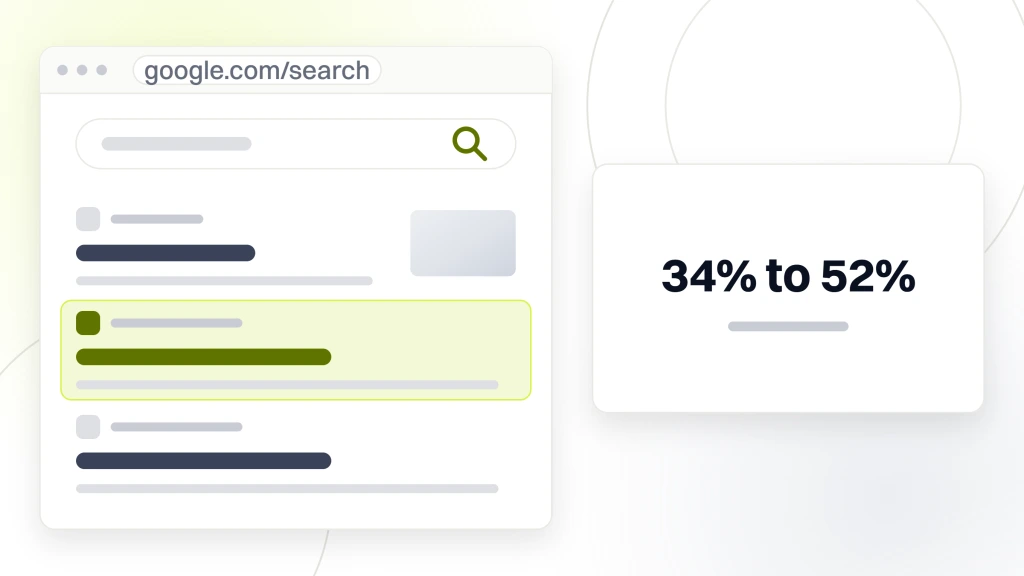
Buyers reading a product page with visible in-store pickup availability convert 34% to 52% higher than buyers reading the same page without pickup availability, per the hybrid retail accounts our team runs. The gain shows up in two attribution windows. Same-session conversions on the product page and next-week walk-in conversions at the store itself. Retailers running click-and-collect through hybrid platforms like Shopify POS or WooCommerce Point-of-Sale earn both wins from the same feature. Our seo for ecommerce product pages writeup covers the product-page schema stack in full for engineers wiring the pickup blocks.
Review strategy at the store level
Store-level reviews feed the map pack ranking, the star rating on the local landing page schema, and the trust signal every click-through visitor sees on the search result. National Trustpilot scores don’t carry over into per-store Google Business Profile rankings. Retailers who stop the review workflow at the national brand review site lose local ranking to small specialists who ask every store visitor for a Google review.
The review capture workflow that produces measurable ranking gain runs three touchpoints. First, an in-store QR code on the receipt or the counter card that links to the store’s Google review URL, not the head-office profile. Second, a post-purchase email tied to the order fulfillment record that inserts the store’s review URL when the order was picked up in store. Third, a follow-up SMS 3 to 5 days after purchase for stores with SMS opt-in coverage. Retailers running all three touchpoints capture 4 to 7 reviews per store per month at 5-star average, which raises map pack ranking measurably inside a quarter.
Review response cadence matters as much as review capture. Every review, 5-star and otherwise, earns a personal response from the store manager or a trained head-office team member within 48 hours. Google reads response cadence as a signal of active business ownership and boosts profiles with high response rates. Stores running quarterly response backlogs forfeit the boost regardless of how many reviews they capture.
How near-me query share scales with store count
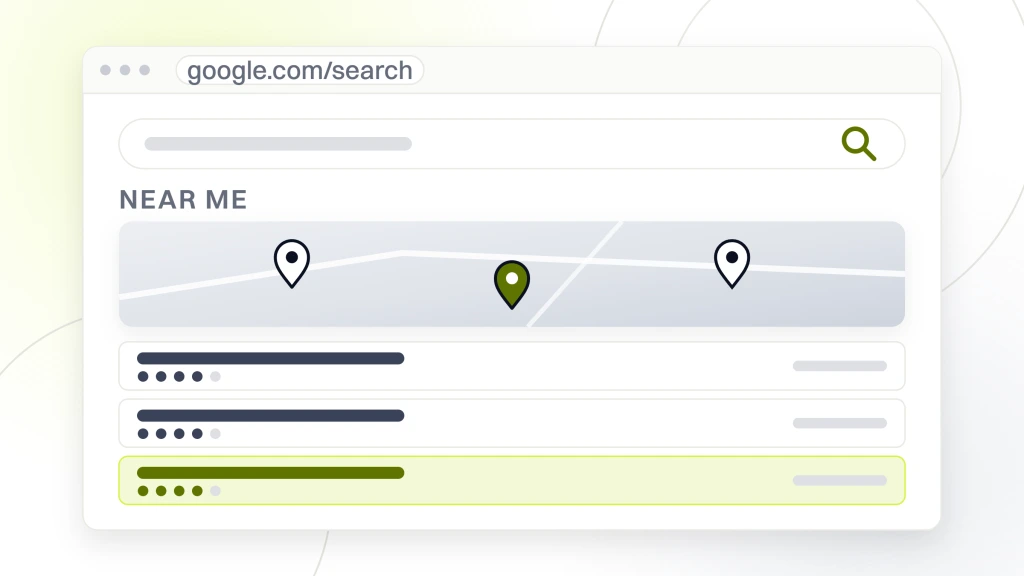
Near-me query share for a hybrid retailer scales with the number of well-optimized store records, not the raw store count. A chain of 40 showrooms running 40 duplicate profiles captures roughly the same near-me query share as a chain running 12 well-optimized profiles across the same footprint. Optimization stacks. Duplication cancels itself out.
| Store count and optimization stage | Median map pack rank per store | Near-me queries captured monthly per store | Local landing page organic sessions | Review capture per store per month |
|---|---|---|---|---|
| 1 to 5 stores, no local SEO | 25 to 40 | 10 to 40 | Baseline | 0 to 1 |
| 1 to 5 stores, optimized GBP only | 8 to 15 | 60 to 180 | +18% | 2 to 3 |
| 6 to 20 stores, GBP plus local landing pages | 4 to 10 | 120 to 340 | +46% | 3 to 5 |
| 21 to 60 stores, full four-surface stack | 2 to 6 | 220 to 640 | +118% | 4 to 7 |
| 60 plus stores, full stack plus in-store pickup | 1 to 4 | 380 to 1,100 | +184% | 5 to 9 |
The table above assumes a mid-market retail catalog with genuine buyer demand at the near-me level. Categories with weak local demand (highly specialized B2B, drop-ship-only long-tail SKUs) do not benefit from the same scale curve. Categories with strong local demand (home improvement, furniture, apparel, beauty, pet supplies) reach the upper range inside two to three quarters of dedicated local retainer work. Our technical seo for ecommerce writeup covers the crawl budget considerations that show up on chains past 60 store records where per-store page indexation starts running against Googlebot budget limits.
Choosing an ecommerce local seo company
Choosing an ecommerce local seo company for a hybrid retailer past 10 stores means picking a team that has actually run the four-surface stack across a real chain, not a boutique local SEO shop whose portfolio ends at 5-location dental groups. The technical requirements at 40 stores differ sharply from the requirements at 4 stores, and the pricing curve reflects the difference.
The evaluation checklist that separates a real vendor from a generic local SEO shop covers seven items. Multi-store platform experience across Shopify POS, WooCommerce POS, Magento, and BigCommerce. Store record management workflow that scales past 40 profiles without per-store manual work. Schema stack implementation including LocalBusiness with sameAs to Google Business Profile. Review capture workflow tied to the order fulfillment record, not a generic email trigger. Local inventory feed setup in Google Merchant Center. Reporting cadence at the per-store level, not the head-office aggregate level. Retainer pricing that reflects the store count rather than a flat local SEO fee. Our writeup on the ecommerce seo checklist covers the hygiene items the head-office marketing team should verify before signing the retainer.
Local seo strategies for ecommerce at different store counts
Local seo strategies for ecommerce run differently at 2 stores than at 40 stores. Small chains get away with hand-managed profiles and hand-written landing pages. Mid-size chains need a platform. Large chains need a platform plus a dedicated local SEO account manager owning the per-store reporting.
Chains of 2 to 5 stores run the workflow through spreadsheet-tracked profile hygiene, hand-written landing pages of 400 to 600 words each, and a QR-code review capture at the counter. Total setup runs 20 to 40 hours of one-time work plus 4 to 6 hours per store per month of ongoing hygiene. Chains of 6 to 20 stores need a lightweight platform (Yext, Uberall, or Whitespark) for profile sync plus dedicated local landing page templates in the theme. Chains past 20 stores need a full platform stack, per-store reporting dashboards, and a named local SEO account owner at the vendor.
The strategy also depends on the buyer journey pattern. Categories with high in-store pickup demand (home improvement, groceries, pet supplies) prioritize the pickup markup and local inventory feed over the review capture workflow. Categories with high showroom consultation demand (furniture, kitchens, appliances) prioritize local landing page copy quality and appointment booking integration over the pickup layer. The four surfaces stay the same. The priority order shifts by vertical. Our seo ecommerce category pages writeup covers the category page layer that pairs with the local layer for chains where category pages need to rank both national and local queries at once.
NAP consistency across directories and citations
NAP stands for Name, Address, Phone, the trio of fields Google reads across directories and citation sources to verify a physical business is real. NAP inconsistency across 30 directories cuts local ranking measurably. Multi-store chains carrying 40 store records need NAP hygiene automated at the platform level rather than hand-managed per profile.
The directories that matter for hybrid ecommerce retailers run beyond Google Business Profile. Bing Places, Apple Maps, Facebook, Yelp, Yellow Pages, industry-specific directories (Houzz for home goods, Zomato for food retail), and category-specific listings all feed local ranking signals. Every listing carries the same NAP data pulled from a single source of truth. The single-source-of-truth pattern breaks when a store manager updates the Google Business Profile phone number and forgets to update the Yelp entry, at which point the citation graph fractures and Google reads the mismatch as a signal of stale business information.
Citation-building services that promise 200 directory listings for a flat fee usually push retailers past the point of diminishing returns and into spammy directory territory that hurts rankings. The correct citation stack runs 20 to 40 authoritative directories per country, sourced from the Whitespark or BrightLocal citation lookup tools. Directories with real editorial oversight (Yelp, Yellow Pages, BBB, Trustpilot) carry ranking weight. Directories that accept any submission without verification carry zero weight and occasionally trigger spam signals. Retailers rebuilding NAP hygiene from a fractured citation graph should budget 30 to 50 hours of setup plus 2 to 4 hours per store per month of ongoing sync work.
Measurement and reporting for multi-store local seo
Measurement for multi-store local seo tracks four numbers per store. Map pack ranking on the head near-me query, organic sessions to the store landing page, review capture rate per month, and attributed store-visit conversions from Google Business Profile actions. Head-office aggregate reporting hides which stores rank and which stores lag. Per-store reporting exposes the outliers on both ends.
The map pack ranking pull runs weekly via Local Falcon or GeoRanker grid scans that pull position data across a 15 by 15 grid of coordinates around each physical store. Grid scans expose the fact that ranking varies inside a single postcode. A store might rank position 2 half a mile east of the storefront and position 12 half a mile west, which points to competitor density asymmetry the head-office reporting will never surface. Grid data lets the retainer team focus effort on the geographic quadrants where the store lags rather than treating the whole city as one ranking data point.
Store-visit conversions from Google Business Profile come from the Insights panel in the profile console. Direction requests, phone calls, website clicks, and menu views per store per month. Attribution against actual in-store revenue requires tying the Google Business Profile store ID back to the POS system store record, which is a 3 to 4 hour engineering setup per POS platform and returns a permanent attribution pipeline. Chains that skip the attribution setup spend the retainer year arguing about whether local SEO is producing revenue. Our writeup on the ecommerce seo services hub covers the reporting stack for retainer teams running the four-surface local layer alongside the standard national SEO scope.
A real local seo for ecommerce engagement
A UK independent pet shop came to our team with a stale site, buried CTAs, and a shrinking share of near-me pet searches to Amazon and larger chains. The head storefront profile was live but under-photographed. Product pages skipped click-and-collect messaging. Review capture ran through a national email blast rather than the storefront’s Google URL. The site sat on a locator page that Google read as a directory, not as ranking-worthy content.
The team rewired the site around calls and click-and-collect, upgraded the storefront profile with 20 plus new photos and correct category selection, and installed the 4-surface stack across product pages and the store landing page. Real-time stock plus pickup availability shipped on every product detail template. LocalBusiness schema linked the site’s store landing page to the Google Business Profile via sameAs. The counter got a QR review card tied straight to the storefront’s Google review URL. A daily social cadence kept the shop top of mind between visits.
Inside the first quarter, our independent pet shop client posted +158% local inquiries via calls plus WhatsApp as mobile CTAs replaced contact-form friction. Click-and-collect orders climbed +212% as browsers who used to default to Amazon converted on the local pickup path. Repeat-customer rate grew +47% over the same quarter as daily social kept the shop top of mind between visits. See the Pet Shop Independent Retail case study for the full engagement teardown. The near-me capture paid the retainer back inside the first two months and kept compounding.
Where the local layer fits the growth stack
The local layer sits alongside the national SEO stack for hybrid retailers with 2 or more physical locations. National SEO catches informational and commercial searches at the head-domain level. Category and product pages catch buyer-intent traffic across the country. The local layer catches near-me query traffic within driving range of each store, which competitors without physical presence cannot reach regardless of their national ranking authority. Skipping the local layer forces every showroom to depend on paid media and walk-in traffic rather than compounding organic near-me share.
Retainers on multi-store local SEO start at $999 per month for chains under 5 stores and scale through $1,499, $2,499, and from $4,500 per month for chains past 40 stores with per-store reporting dashboards and a named account owner. Six-month contracts are standard. The four-surface stack takes at least two quarters to produce measurable near-me query share gains once the profile hygiene backlog gets cleared. Our ecommerce marketing agency hub covers the full-stack scope for retailers who want the local layer run alongside paid media, email, and CRO.
For adjacent reads, our writeups on ecommerce seo services and ecommerce seo audit checklists pair well with this local guide. Google’s Google Business Profile help documentation covers the profile-side implementation against Google’s own guidance before the next round of profile edits. Run the profile hygiene first. Roll out per-store landing pages second. Add in-store pickup schema third. Then hold the pace as the near-me query share compounds across the store network. For the retail-side playbook that pairs with this guide, our pet shop marketing covers local SEO, Google Business Profile, and breed clubs for independent pet retailers.