
You know how the weekend goes by 11 am Saturday. If regulars are grabbing raw food and new families are asking leash questions, the register hits target by Sunday close. If the first two hours stayed quiet, no Wednesday push saves the week. Pet shop marketing is what turns that Saturday morning from a guessing game into a repeatable pattern, and the same system works whether the sale is a $32 bag of kibble or a $92 subscription box. Read our pet web design for service businesses for the service-side view.
This guide walks through pet shop marketing the way we run it for independent retailers and small online pet brands. Local SEO for a pet supply store, Google Business Profile as a near-me traffic engine, breed and species clubs that outperform generic Instagram content 3 to 1 on repeat visits, and the retainer math when you blend in-store and online. Pricing on our pet products marketing retainer starts at $1,499 per month on 6-month contracts.
Google Business Profile inside pet shop marketing
Google Business Profile is where roughly 54% of near-me pet queries turn into a store visit or a call. The profile behaves as a mini-website inside Google, and stores that treat it as a set-and-forget listing miss the 8 to 12 weekly interactions the profile can pull. A real program runs Google Business Profile as a weekly workflow, not a quarterly refresh.
Weekly cadence on the profile
- Two photo drops per week (in-store, product, staff, customer with pet, community event).
- One product post per week featuring a top-seller or new arrival.
- One event post per week tied to the breed or species club calendar.
- Q and A monitoring with same-day answers on any new question.
- Review reply inside 48 hours, positive and negative alike.
- Hours and holiday hours updated the Monday before every holiday.
- Product catalog synced with the online store weekly.
Seven touchpoints inside the weekly workflow. Two hours per week of ops time. Stores that run the cadence show up in 12 to 18 near-me queries the store never ranked for organically, and the profile pulls direct calls at a rate of 12 to 26 per month on a store with 40 to 80 monthly walk-ins from search. The Google Business Profile help documentation covers the platform basics for stores just getting started.
Products, services, and photos that pull clicks
Load the product catalog with your top 60 SKUs by monthly gross margin, not your top 60 by volume. That mix protects the store from turning the profile into a race-to-the-bottom price signal. Services list adds grooming (if offered), curbside pickup, delivery radius, subscription setup, and any adoption partnerships. Photos rotate every two weeks and include product close-ups, in-aisle depth shots, staff with pets, and community event moments. Stores that let photos age past 90 days lose visibility in the local pack. Google reads photo freshness as a signal of active operations.
Community and breed clubs for pet store local SEO
Breed clubs and species clubs are the highest retention channel inside pet shop marketing. A Saturday morning German Shepherd club meetup at your store pulls 14 to 22 owners, each of whom buys $22 to $48 in impulse product on the way out and joins the loyalty database with an average annual spend of $840. A monthly rabbit club night pulls 8 to 18 attendees at higher margin on hay, chews, and enrichment toys. These are not one-off marketing events. They are the retention infrastructure that makes pet store local SEO compound month over month.
Club calendar that beats generic Instagram posts
A working pet shop marketing calendar runs 8 to 12 club events every month across the top species in your customer base. Dogs (broken into puppy, senior, and breed-specific), cats, small mammals (rabbits, guinea pigs, hamsters), reptiles, birds, and fish. Each club runs 60 to 90 minutes on a Saturday or Sunday morning with a specific hook (trainer Q and A, grooming demo, nutrition consult, adoption spotlight). Club members drive an average of $32 in same-visit impulse spend and $180 monthly average spend across the next six months. Stores running clubs on cadence see a 41% gain in repeat visits versus stores that only run one-off events.
Adoption partnerships with local rescues
By month three, every retail program should include at least one recurring adoption partnership with a local rescue. Monthly adoption day pulls 90 to 240 foot traffic on a Saturday, three to eight adoptions, and 60 to 140 new email signups from families in the buying window for the first six months of pet ownership (the highest-LTV cohort in retail). The partnership costs the store almost nothing (space, coffee, and staff hours), and the local rescue tags the store on social every month, which builds inbound backlinks and reputation signals the map pack rewards. Stores that skip rescue partnerships miss the highest-conversion retail moment in the pet vertical.
Online storefront inside pet retail marketing
Your online storefront closes the gap between the Saturday walk-in and the Tuesday night couch search your regulars are already doing. A pet retailer without an online store loses roughly 22 to 34% of possible revenue from existing customers alone, since those customers order the recurring items (bulk kibble, litter, hay, subscription boxes) from Chewy or Amazon instead of the local store. A working online storefront layered into pet retail marketing recaptures 40 to 60% of that lost recurring revenue inside 12 months.
Platform choice for a pet retailer
| Store stage | Best platform | Monthly cost | What it handles |
|---|---|---|---|
| Under 40 online orders per month | Shopify Basic | $39 plus apps | Curbside, local delivery, basic subscriptions via Recharge |
| 40 to 200 online orders monthly | Shopify plan | $105 plus apps | Advanced reports, gift cards, 5 staff logins |
| 200 plus online orders monthly | Shopify Advanced | $399 plus apps | Custom checkout, deeper analytics, 15 staff logins |
| Existing WordPress site | WooCommerce | $50 to $250 hosting | Full control, subscriptions via WooCommerce Subscriptions |
| Multi-location retailer | Shopify Plus | $2,300 plus | Multi-store, POS unification, custom checkout |
Product organization that mirrors the store aisles
Build online store collections to mirror the physical store layout, not a generic ecommerce taxonomy. Dog food goes into raw, kibble, wet, prescription, and treats. Cat products split by wet and dry with a separate hairball and senior collection. Small mammal stays a single collection with a species filter (rabbit, guinea pig, hamster, chinchilla) since customers shop by species first. Reptile splits by lizard, snake, and turtle. Birds stay a single collection with a size filter. This mirrors how customers walk the store and drops bounce rate on category pages from a typical 74% down to 38 to 42%, which grows revenue per session directly.
Email and SMS retention for pet retailers
Email and SMS are the retention layer that turns the loyalty database into a repeatable revenue stream. A pet shop with 1,200 active email subscribers and a monthly newsletter earns $6.40 to $11.20 per subscriber per year in incremental revenue. That’s $7,680 to $13,440 annually on a subscriber base most independent pet shops build inside 18 months of consistent in-store signup asks and one paid campaign.
Newsletter cadence and content mix
Your monthly newsletter should run 400 to 700 words in three sections. What’s new in the store this month, upcoming club events, and one seasonal care topic (parasite season, holiday food safety, thunderstorm anxiety, moulting for reptile owners). Open rate targets 32 to 46% on a warmed-up list. Click rate targets 4 to 9%. Revenue per email targets $0.28 to $0.62 on a 1,200-subscriber list. Weekly sends drive fatigue and burn the list. Biweekly works but produces less measurable revenue per send. Monthly is the honest cadence for an independent pet shop.
SMS for flash restocks and event reminders
SMS converts 4 to 8 times the rate of email for the same message but demands stricter opt-in and lower frequency. Independent pet shops that run SMS well send 2 to 4 texts per month on a strict short list. Flash restock alert when a hard-to-find product arrives, event reminder the morning of a club meetup, birthday reminder for the pet in the loyalty database, and a holiday hours reminder. Nothing else. The moment SMS becomes a promotional channel, unsubscribe rates spike and the list burns down in 60 days. Our best practices for ecommerce marketing covers the wider retention cadence for shops running both retail and online.
Reviews and reputation across the map pack
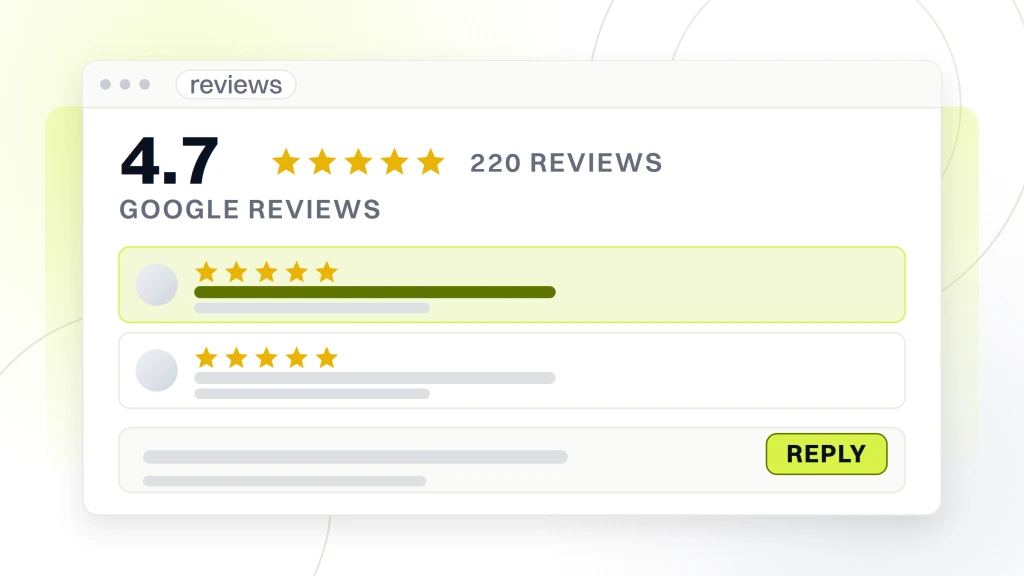
Review volume and quality are the second-highest ranking signal in the local pack after NAP consistency. A pet shop with 220 Google reviews at a 4.7 average outranks a chain with 900 reviews at 3.9 average almost every time on high-intent city plus product queries. Reviews are the single biggest walk-in trust signal for a new customer choosing between three stores inside a 6-mile radius.
Review generation cadence
Target 4 to 8 new reviews per month across Google, Yelp, and Facebook combined. The mechanism that produces this on cadence is a printed card at checkout with a QR code that opens the store review page pre-selected, plus a follow-up email 48 hours after any online order asking the customer to leave a review with a one-click link. Automated ask systems produce 3 to 7 times the review volume of manual ask systems, at a marginal cost of $19 to $49 monthly for tools like Podium, NiceJob, or Birdeye. Stores skipping the automated ask cap out at 1 to 2 reviews per month, which is not enough to compound.
Response cadence and negative review handling
Reply to every review inside 48 hours. Positive reviews get a two-sentence thank-you that references the specific product or service the customer named. Negative reviews get a public reply that acknowledges the complaint, offers a private channel to resolve, and never argues the facts publicly. Google reads response rate as an active operations signal, and shoppers reading reviews notice a store that engages every reviewer versus a store that ignores them. Response rate above 85% correlates with a 6 to 11% gain in map pack visibility on a rolling 90-day window, per the pattern our team measures across pet retail accounts.
Paid search for local pet retailers
Paid search on Google and Bing sits at the tail end of the stack since organic and Google Business Profile pull most of the near-me traffic once the earlier work streams run. Paid search fills the gap where organic ranks 4 through 8 on money queries, where a competitor is bidding on the store brand name, or where a specific product carries margin worth the $1.20 to $3.80 cost per click.
Branded and product-specific keywords
Every pet shop with any brand awareness bids on its own brand name to protect against Chewy, Petco, or a local rival stealing the branded click. Budget runs $80 to $220 monthly on branded terms depending on brand search volume. Product-specific keywords add 20 to 40 head queries with local intent (raw dog food city, exotic bird supply city, small pet hay delivery city) at $1.20 to $3.80 per click. Total paid search budget for an independent pet shop runs $340 to $840 monthly at the entry tier and $1,200 to $2,400 monthly for a store past $80k in monthly revenue.
Local inventory ads and Performance Max
Local inventory ads pull nearby shoppers into the store when they search for a specific in-stock product. Setup requires product feed sync between the online store and Google Merchant Center plus a Google Business Profile connection. Performance Max campaigns work for pet retailers past the $30k monthly online revenue mark since the algorithm needs conversion volume to optimize against. Stores below that threshold benefit more from tight Search campaigns with negative keyword lists that trim wasted spend on adjacent-intent queries. Google’s local inventory ads documentation covers the feed setup for stores just getting started.
Blending in-store and online pet shop marketing
The independent pet shops that grow through 2026 are the ones that stop treating in-store and online as separate businesses. The customer who walked in Saturday for a training treat is the same customer who Googles raw food delivery on Tuesday night. Pet shop marketing that ignores either half of that pattern caps growth at 8 to 14% annual, and the fix pattern lives in our local SEO for ecommerce businesses playbook.
Loyalty database as the shared spine
One loyalty database serves both channels. Customers signed up in-store get their online orders auto-linked to the same profile so subscription discounts and birthday coupons work across channels. Tools like Loyalty Lion, Smile.io, or a Shopify POS integration handle the in-store to online sync at $29 to $199 monthly. Stores that keep separate in-store and online databases produce duplicate offers, angry regulars, and messy churn analytics. Stores that unify the database once and hold that discipline produce a 14 to 22% higher customer lifetime value across the combined channel base inside 12 months.
Curbside and local delivery as the bridge
Curbside pickup is the highest-converting online offering for a pet retailer. Order online, pick up at the store inside 2 hours, no delivery fee. Conversion rates on curbside orders run 3.4 to 5.8% versus 1.1 to 2.2% for standard shipping orders. Local delivery inside a 6-mile radius runs at $6 to $9 delivery fee and pulls the recurring bulk buyers who would have driven to a big-box store to avoid the shipping cost. Both offerings ride on the same fulfillment stack and add roughly 4 to 8% to gross revenue inside the first quarter of launch. Independent pet shops running neither miss the layer that keeps the recurring customer local instead of drifting to Chewy.
How much pet shop marketing costs per month
Retainer pricing at Redefine Web runs a four-tier structure that scales with store size and online scope. Foundation at $1,499 per month for single-location stores under $40k monthly revenue. Growth at $2,499 per month once the online storefront is live and paid search enters the mix. Authority at $3,999 per month for stores past $80k monthly revenue running blended retail and online. Enterprise starts at $6,000 per month for multi-location retailers or high-order online stores with dedicated creative volume. Six-month contracts are standard across every tier.
Foundation tier at $1,499 per month
The $1,499 per month tier covers a single-location pet shop with under $40k monthly revenue, no online store or a minimal Shopify Basic setup, and a paid search budget under $500 monthly. It includes local SEO tuning, Google Business Profile management, monthly newsletter production, review generation setup, and quarterly strategy review. Independent stores under one year old start here and usually stay at this tier through the first 12 to 18 months. It does not cover full ecommerce optimization, multi-location listing management, or paid social work. Stores needing those add either a la carte hours or move to Growth. The full creator-side rhythm sits inside our influencer marketing for pet products deep read.
Growth, Authority, and Enterprise tiers
Growth at $2,499 per month covers stores with $40k to $80k monthly revenue, a live Shopify or WooCommerce store past 40 monthly orders, and a paid budget of $500 to $1,500 monthly. It adds ecommerce optimization, paid social ads on Facebook and Instagram, SMS setup, and monthly strategy calls. Authority at $3,999 per month covers stores past $80k monthly revenue running blended retail plus online with paid media across Google and Meta. Enterprise starts at $6,000 per month and covers multi-location retailers or online-first stores past $150k monthly with weekly strategy calls, dedicated Slack, and multi-location listing management across every branch. More on the tier framework in our ecommerce marketing companies hiring guide.
Who owns marketing on the store side
Named ownership on the store side is what turns a marketing retainer from a monthly invoice into an actual growth partnership. The pattern that fails at every scale is when nobody at the store owns the relationship and the retainer becomes background noise until sales dip in month five and the owner blames the agency.
Ownership by store size
Under $40k monthly revenue the owner owns the retainer relationship and reviews the monthly report herself. $40k to $120k monthly, the shop manager or head buyer owns it with the owner in the loop on strategy. $120k to $300k monthly, a marketing coordinator (part-time or full-time) owns the day-to-day and the owner reviews quarterly. Above $300k monthly, a marketing manager owns it with a full-time creative person handling social and email in-house. Whichever level the store is at, the owner reads the monthly report, joins the quarterly strategy call, and knows the top three campaigns running that month. Without that, the retainer becomes a line item that gets renewed without anyone knowing if it earned its keep.
Reporting cadence and monthly reviews
The monthly retainer report covers map pack rank on the top 12 city plus product queries, Google Business Profile impressions and calls, new reviews and average rating, email and SMS revenue, paid search return on ad spend, and online store revenue by channel. Quarterly strategy call covers upcoming seasonal campaigns, club calendar planning, and any product mix or vendor changes that shift the marketing angle. Stores past $80k monthly revenue that skip monthly reviews tend to repeat the same underperforming campaign four months in a row before anyone notices, which the owner only sees when the year-over-year revenue number for a slow month lands 12% behind plan.
Every retainer meeting eventually reaches the moment where the owner asks why the agency has not run a campaign on the store’s TikTok account, which was set up two years ago, has 41 followers, and features one video of a puppy from 2023 that has 6 views. Nobody remembers who created the account. The password lives in a text file on the previous employee’s phone. The puppy in the video was adopted and now lives with someone in another state. Somewhere in the archive of every independent pet shop, a TikTok account with 41 followers is quietly producing more discussion in agency meetings than actual foot traffic to the store.
Pet Shop · Independent Retail · UK case study in production
Pet Shop Independent UK, a family-owned independent pet retailer with a single storefront and a Shopify online storefront, came to us with a foot traffic pattern that had gone flat over 18 months. Weekend walk-ins had drifted from 240 to 168 average. Online orders sat at 22 monthly. Reviews had drifted to 3.9 stars across 74 reviews on Google. The owner was working 62-hour weeks and the marketing side kept getting pushed to the back of the ops list.
Our team ran the seven work streams for Pet Shop Independent UK on a 6-month timeline. NAP cleanup across 42 directories in month one. Google Business Profile weekly workflow started week two. Breed and species club calendar launched month two with 8 monthly events across dogs, cats, small mammals, and reptiles. Online storefront rebuilt to mirror the store aisles in month three. Email newsletter cadence started month three with the first campaign to the 340 in-store signups collected during club events. Review generation via QR code at checkout and post-purchase email started month four.
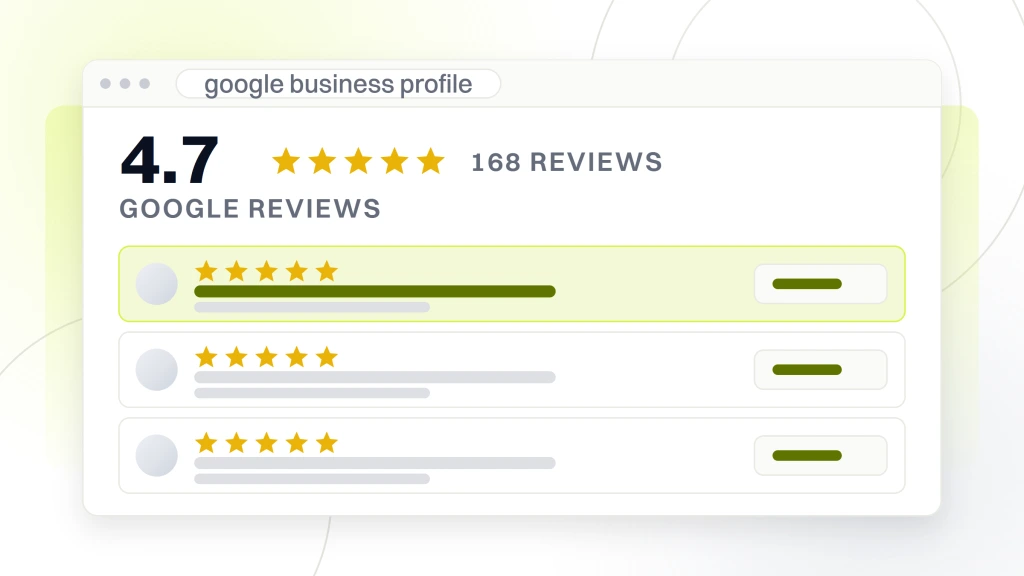
By month six, Pet Shop Independent UK posted +158% local inquiries, +212% click-and-collect orders, and +47% repeat customers versus the six-month baseline before the retainer started. Weekend Saturday walk-ins climbed from 168 to 284. Google reviews grew to 168 at a 4.7 average. Map pack rank on the top three city plus product queries moved from position 6 to 8 range into position 1 to 3 range. The largest single revenue driver was breed clubs turning first-time attendees into repeat monthly buyers on the loyalty database.
How to increase sales at a pet store?
Run the seven-stream stack. Google Business Profile as a weekly workflow, breed and species clubs 8 to 12 times per month, an online storefront that mirrors the aisles, email and SMS retention on the loyalty database, reviews at 4 to 8 new per month, paid search on branded plus product-specific keywords, and curbside pickup as the conversion bridge. Stores that run all seven typically see a 30 to 50% gain in monthly revenue inside 6 months. Pet Shop Independent UK ran the same stack and posted +158% local inquiries and +47% repeat customers by month six.
How to do pet shop marketing for dogs
Dog-owner marketing is the highest-volume segment inside pet shop marketing. Split the dog audience by puppy, senior, and breed-specific clubs. Puppy classes on Saturday mornings pull 12 to 20 owners in the first-six-months buying window at an average annual spend of u0026#036;1,200 per household. Breed-specific meetups (German Shepherd, Golden Retriever, Frenchie, Doodle) pull 14 to 22 owners with average annual spend near u0026#036;840. Senior dog clinics on Sunday afternoons pull 8 to 14 owners at higher margin on joint supplements, orthopedic beds, and prescription diets.
What is pet shop marketing strategy
Pet shop marketing strategy is the weekly cadence that turns Saturday walk-ins into a repeatable pattern instead of a guessing game. It runs seven workstreams in parallel. Google Business Profile at seven weekly touchpoints, breed and species clubs at 8 to 12 monthly events, an online storefront that mirrors the store aisles, email newsletter on a monthly cadence, SMS on 2 to 4 texts per month, review generation at 4 to 8 new per month, and paid search on branded plus product terms. Full stack, run on cadence, compounds month over month.
What is pet shop marketing examples
Real pet shop marketing examples pair a specific channel with a measurable revenue outcome. A Saturday German Shepherd club pulls 14 to 22 owners with u0026#036;22 to u0026#036;48 in same-visit impulse spend. A monthly rabbit club night pulls 8 to 18 attendees at higher margin on hay and enrichment toys. Curbside pickup posts a 3.4 to 5.8% conversion rate versus 1.1 to 2.2% for standard shipping. Pet Shop Independent UK ran all of it and posted +212% click-and-collect orders inside 6 months.
What does pet shop marketing cost per month?
Foundation tier for pet shop marketing starts at u0026#036;1,499 per month for single-location stores under u0026#036;40k monthly revenue. Growth at u0026#036;2,499 per month covers stores with an online storefront and a live paid search program. Authority at u0026#036;3,999 per month covers stores past u0026#036;80k monthly revenue with blended retail and online media. Enterprise from u0026#036;6,000 per month covers multi-location retailers or online-first stores past u0026#036;150k monthly. Six-month contracts run across every tier and ad spend is billed separately from retainer fees.
How long before pet shop marketing shows results?
Google Business Profile and review generation show measurable gain in 30 to 60 days. Breed and species clubs show retention gains by month three. Full local SEO and online storefront gain lands between month four and month six on a working 6-month engagement. Pet Shop Independent UK posted +158% local inquiries and +212% click-and-collect by month six on the same 6-month timeline, with the largest driver landing in months four through six as clubs turned first-time attendees into repeat monthly buyers.
Do we need an online store to run pet shop marketing?
No. Stores under 40 online orders per month can start with local SEO, Google Business Profile, breed clubs, and email or SMS retention. Adding an online storefront usually pays back inside 12 months once recurring buyers stop drifting to Chewy or Amazon. Pet retailers without an online store lose roughly 22 to 34% of possible revenue from existing customers alone. A layered online storefront recaptures 40 to 60% of that lost recurring revenue inside 12 months on the same customer base.
Which breed clubs work best for an independent pet retailer?
Dogs (broken into puppy, senior, and breed-specific), cats, small mammals (rabbits, guinea pigs, hamsters), reptiles, birds, and fish. A working pet shop marketing calendar runs 8 to 12 club events per month across the top species in the local customer base. Club members drive an average of u0026#036;32 in same-visit impulse spend and u0026#036;180 monthly average spend across the following six months. Stores running clubs on cadence see a 41% gain in repeat visits versus stores that only run one-off events.
Who owns pet shop marketing on the store side?
Under u0026#036;40k monthly revenue the owner owns it. u0026#036;40k to u0026#036;120k the shop manager or head buyer owns it with the owner in the loop on strategy. u0026#036;120k to u0026#036;300k a part-time or full-time marketing coordinator owns the day-to-day and the owner reviews quarterly. Above u0026#036;300k a marketing manager owns it with a full-time creative person handling social and email in-house. Named ownership turns a marketing retainer from an invoice into an actual growth partnership across every tier.
Where pet shop marketing fits the retail stack
Pet shop marketing sits underneath every other retail investment on an independent pet store. Vendor buying, staff hiring, store layout, and product mix all assume the store pulls consistent foot traffic and grows the recurring buyer base over time. Break the marketing layer and every dollar spent on inventory, staff, and rent works against a lower ceiling.
Stores that treat marketing as an afterthought learn its importance the hard way, usually in a slow February when Q1 revenue misses plan by 14% and the owner scrambles into a discount campaign that trains regulars to wait for coupons. Stores that budget for the retainer at the same rigor as vendor payments end up with a store that pulls consistent foot traffic, a growing loyalty database, and an online storefront that catches the recurring buyer before Chewy does. The Google structured data documentation for local businesses is the canonical reference for the local schema piece.
The parallel case in another retail vertical is influencer partnerships for brands running creator programs across categories. Both share the reality that consistent, boring, weekly execution beats sporadic big-push campaigns almost every time. Pet shops that treat marketing as core operating infrastructure rather than a discretionary line item see the difference inside the first six months, in both foot traffic patterns and the recurring buyer base that shows up in the loyalty database month after month.
Retailers looking at the wider DTC side of the pet market start with our pet product marketing agency guide for the online-first playbook that pairs with the in-store work. The two guides read as a pair for retail owners running both a physical location and a subscription-driven online storefront through the same brand.