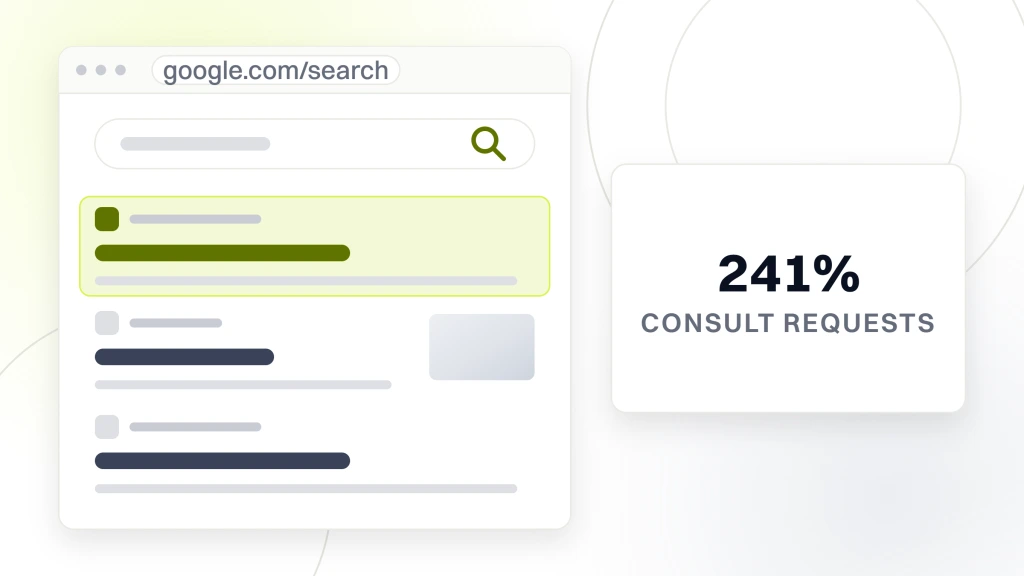
Med spa SEO earns its retainer on one number. Booked treatment consults per month from organic traffic, tracked back to specific pages and specific queries. Ranking screenshots do not pay for the retainer. Traffic totals do not pay for the retainer. Only booked consults do, and the SEO layer either produces them or gets replaced. Our Med Spa · Pacific Northwest client hit +178% organic traffic and +241% consult requests inside 9 months on the same structure this guide covers.
This guide walks the working structure from the inside out. The treatment page layout that ranks and converts. The local pack work that decides 60 to 70% of consult volume in the aesthetics vertical. The image work on before-and-after content that pulls 20% of organic traffic in mature accounts. The technical build that keeps Core Web Vitals green under real traffic. The numbers below track what we see across active engagements at Redefine Web.
What med spa SEO actually covers
Med spa SEO covers technical build, treatment content, local pack, image work, link outreach, and reporting on booked consults from organic. Those 6 blocks decide whether the site produces bookings or sits on page 2 while a competitor takes the calls. Anything less is partial and usually shows up as flat rankings by month 5.
The most common mistake is treating aesthetics work as a content-only exercise. Blogging without technical hygiene produces indexed pages that never rank. Blogging without local pack work produces rankings on informational queries that convert poorly. Blogging without image work leaves 20% of the potential organic traffic in Google Images uncaptured. A working program runs all 6 blocks in parallel from the first month, not sequentially over three quarters.
- Technical SEO. URL structure, sitemap, schema markup, Core Web Vitals tuning.
- Treatment page content. One page per treatment family with the 7 decision blocks.
- Local pack work. Google Business Profile posts, reviews, citations, local schema.
- Image work. Treatment-tagged alt text, WebP format, indexable gallery.
- Link outreach. Local partnerships, provider association mentions, guest posts on aesthetics blogs.
- Reporting. Rankings, traffic, and booked consults from organic sources.
Skipping any single block cuts the overall program output by 15 to 30% depending on which block. Local pack work carries the highest weight in single-location practices. Technical hygiene carries the highest weight in multi-location practices with dozens of pages to keep clean. Content strategy carries the highest weight in markets with weak competition and thin existing results. Balancing the blocks against the specific market is where a medical spa SEO specialist earns the retainer versus a general agency running the same playbook everywhere.
Local pack work inside med spa SEO
Local pack rankings decide 60 to 70% of consult volume in the aesthetics vertical for the average practice. Google Business Profile optimization, weekly posts, review response, review velocity, and consistent NAP (name, address, phone) citations across directories carry the local pack. Practices skipping any of these see local pack visibility drift down over the first year. Practices running all of them hold the local three-pack for their core treatment queries and pick up an outsized share of clicks versus organic blue-link results below.
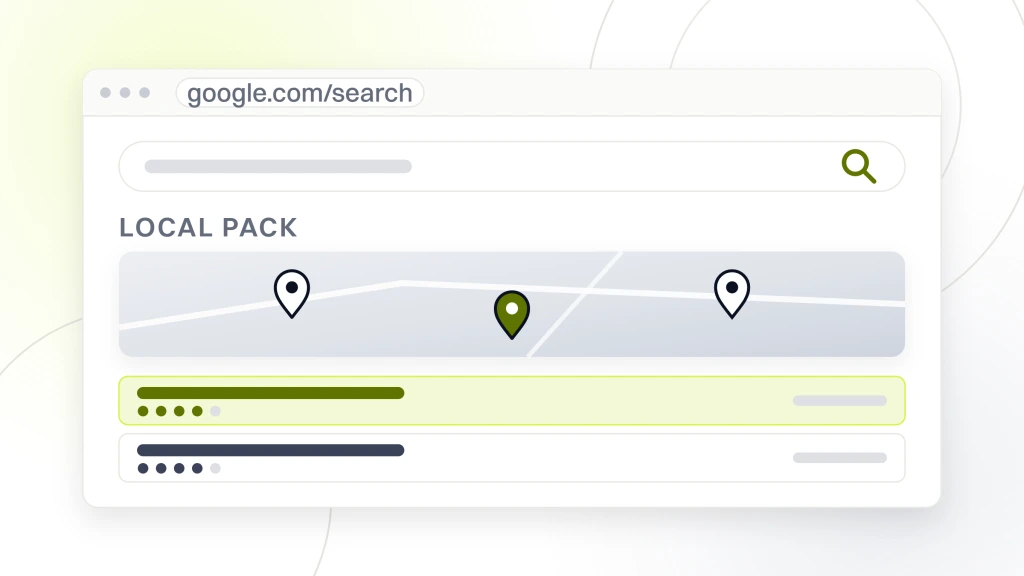
Review velocity is the most underrated local ranking signal in local SEO for med spa work. A steady flow of new Google reviews (4 to 8 per week for a mid-size spa) outranks a spa with more total reviews but stagnant velocity. That’s why post-treatment review request workflows via SMS and email carry so much weight.
- Google Business Profile. Complete every field, add all treatment categories, upload photos monthly.
- Weekly GBP posts. Treatment offers, provider spotlights, patient results with consent.
- Review response. Reply to every review inside 48 hours, positive and negative both.
- Review velocity. SMS review request 24 hours after the appointment, 4 to 8 new reviews per week target.
- NAP citations. Consistent name, address, phone across 40 to 60 authoritative directories.
- Local schema. MedicalBusiness plus Service plus AggregateRating on the homepage and treatment pages.
The local pack work runs every week, not once at onboarding. Practices treating local as a set-and-forget task see three-pack visibility slip inside 4 months as newer competitors put in the weekly work. A working aesthetics SEO team has a designated local specialist running the local pack work on a fixed weekly cadence, not squeezing it into a general checklist alongside link outreach and content production.
Treatment page content inside med spa SEO
Treatment page content decides which pages rank on Google and which stay on page 4 regardless of how many backlinks point at them. A treatment page ranking for its target queries carries the 7 decision blocks buyers actually need. Hero with clear headline. Benefit stack. Cost transparency block. Timeline block. Provider bio. Before-and-after gallery. FAQ. Pages missing 2 or 3 blocks rank slower, convert lower, and drop faster when a competitor with a better page moves into the market.
Word count is a side effect, not a target. Pages that hit the 7 blocks rank at the same speed regardless of whether they run 900 or 2,400 words. Pages that miss blocks and pad word count with generic filler rank slower even at 3,000 words. Search intent covers whether the buyer got the answer to their question quickly, and Google measures that through dwell time, scroll depth, and return-to-search rate. Filler content signals poor intent match. See the Redefine Web med spa SEO structure for the full page-by-page pattern.
- Injectables treatment page. Botox, filler, Kybella, lip enhancement.
- Laser treatment page. Hair removal, skin resurfacing, tattoo removal, vein treatment.
- Body work treatment page. CoolSculpting, Emsculpt, body contouring, treatment area guide.
- Skin treatment page. HydraFacial, chemical peels, microneedling, membership pricing.
- Cost transparency page. Real ranges by treatment, financing options, package savings.
- Comparison pages. Professional versus at-home, med spa versus dermatologist.
- City pages. Treatment plus city variants for each core service area you cover.
Practices building all 7 categories rank on 40 to 120 treatment-related keywords inside 12 months of publishing. Practices publishing only a services overview page and blog posts rank on 8 to 22 keywords in the same period. That gap is where a real content strategy justifies its retainer. Content up front pays back for the life of the site, and it costs nothing in ad spend once the pages are live.
Image SEO in med spa SEO programs
Image work on the before-and-after gallery pulls 20% of organic traffic in mature accounts. Patients scrolling Google Images for ‘botox before and after {city}’ or ‘coolsculpting results {city}’ click through to whichever site indexed real cases with treatment-tagged alt text. Practices with the gallery locked behind a PDF download or a JavaScript modal are absent from these queries entirely. That’s often 800 to 3,200 monthly visits left on the table.
Indexable galleries require 3 things. Real image tags on native img elements, not background CSS images. Treatment-tagged alt text on every case (‘botox before and after, 26 units, Seattle patient A’). WebP format with lazy loading configured correctly so page speed stays under 2.5 seconds. Practices that hit all 3 pull real traffic through Google Images. Practices missing one of the 3 see almost no image traffic even on a beautiful gallery.
- Native img elements in the gallery, not background CSS or JavaScript-only rendering.
- Treatment-tagged alt text. Treatment name, unit count or session count, brief case detail.
- Descriptive filename. treatment-slug-case-01.webp, not IMG_4523.jpg.
- WebP format under 100KB per image with responsive srcset for mobile.
- Lazy loading configured on images below the fold to preserve initial page speed.
- Consent verification. Written patient consent on file for every case in the gallery.
Our Med Spa · Pacific Northwest client now pulls 22% of incoming organic traffic through Google Images alone after the gallery was rebuilt with indexable image tags. That percentage represents traffic the practice never previously received on the same monthly retainer. The Google Images optimization guide covers the pattern in depth.
Technical SEO inside med spa SEO
Technical SEO decides whether the content and local pack work translate into actual rankings. URL structure, sitemap health, schema markup, Core Web Vitals, and internal linking all sit in this layer. Sites failing Core Web Vitals see rankings drop inside 90 days regardless of content quality. Sites without treatment schema miss out on rich result appearances. Sites without clean internal linking between treatment pages and cost pages waste ranking equity on unrelated blog posts.
Core Web Vitals sit at the top of the technical priority list. Largest Contentful Paint under 2.5 seconds on mobile. Interaction to Next Paint under 200 milliseconds. Cumulative Layout Shift under 0.1. Sites failing any single threshold see mobile rankings drift down and mobile bounce rate climb. The fix is usually image optimization, hero video handling, and JavaScript deferral, which takes 20 to 40 hours of specialist time on an existing site.
- URL structure. /treatments/{treatment-slug}/, /locations/{city}/, /cost/, clean and lowercase.
- XML sitemap. Submitted to Google Search Console, priority weights set correctly.
- Schema markup. MedicalBusiness, Service, Review, AggregateRating, FAQ across pages.
- Core Web Vitals. LCP under 2.5s, INP under 200ms, CLS under 0.1 on mobile.
- Internal linking. Treatment pages link to cost, cost links back to treatments, city pages link to both.
- Canonical tags. Self-referencing canonicals on every page to block duplicate content issues.
Schema markup on treatment pages produces rich result appearances that add 15 to 30% click-through rate at the same ranking position. Reviews schema adds star ratings to search results. FAQ schema adds expandable question blocks. Service schema adds pricing and provider details. Sites without schema look plain against competitors with schema, and that decides which link the patient clicks even when both rank in position 2.
Link building inside the program
Link building for aesthetics work focuses on local relevance over raw domain authority. A link from a local wedding blog, a local charity partner, or a state cosmetic association carries more ranking weight than a generic guest post on a national SEO blog. The reason sits in how Google evaluates local ranking signals. Local links reinforce that the practice is embedded in the community, and that correlates with local pack visibility and treatment query rankings.
Volume is not the goal. 6 to 12 high-quality local links per year outperform 60 low-quality guest posts on unrelated sites. Practices chasing volume through automated outreach services see rankings stall or drift down as Google’s link spam detection catches the pattern. Practices building slower with local partnerships see rankings compound quarter over quarter. The Google link spam update guidance covers the pattern shift.
- Local charity partnerships. Sponsor a local event, earn a link on the event page.
- Local business partnerships. Cross-promotion with a related local business, mutual links.
- Provider association mentions. State or regional cosmetic association member pages.
- Guest posts on aesthetics blogs. Technical or clinical topics written by the provider.
- Local press coverage. Newsworthy angle (new treatment launch, community event participation).
- HARO or Qwoted responses. Expert commentary on beauty and aesthetics articles.
The link outreach runs at 4 to 8 hours per month for a solo-provider spa and 8 to 16 hours per month for a multi-provider or multi-location practice. Redefine Web bundles link outreach into every aesthetics retainer starting at $1,499/mo. Cheaper vendors usually skip link work, which is where the ranking curve flattens after month 6 even when other program elements run correctly and traffic looks fine on paper.
Reporting that tracks booked consults
Reporting covers 6 numbers. Ranking positions on core treatment queries. Organic traffic split by treatment category. Booked consult volume from organic sources. Google Business Profile calls and direction requests. Local pack ranking position by treatment. Backlink profile growth or decline. Reports that stop at rankings and traffic hide the number that matters, which is booked consults from organic sources.
Attribution ties this together. GA4 with UTMs on internal links tracks how organic traffic moves through the site. CallRail attaches phone numbers to organic sources so calls that came from Google get counted separately from calls that came from paid. The spa management system carries a source field the front desk fills in 8 seconds per new patient. Skipping the source field costs the reporting layer its accuracy, and that costs the agency its ability to tune the program.
The report cadence sits at weekly ranking updates, monthly traffic and consult breakdowns, and quarterly deep reviews with strategic recommendations. Any agency delivering only monthly reports without weekly ranking touchpoints has stripped out the responsiveness that lets the program catch algorithm updates quickly. Any agency delivering only quarterly reports has stripped out enough that the spa cannot tell whether the retainer is producing value between reports.
Booked consult attribution is where reporting either builds trust or breaks it. The Med Spa · Pacific Northwest engagement produced monthly reports showing consult requests climbed from a baseline of 42 per month to over 143 per month across the 9-month engagement, a +241% jump on the same media spend. That trajectory is the number every owner should expect a working aesthetics team to produce in the reporting layer.
Cost benchmarks for the retainer
The table below tracks what we see across active engagements at Redefine Web. Numbers shift with starting position, competitive intensity, and treatment mix. Solo-provider spas in less competitive markets sit at the low end. Multi-provider spas in dense urban markets sit at the top. Discount-only packages sit in the bottom row where the math stops working inside 2 quarters and the account churns.
| SEO program tier | Monthly retainer | Booked consults from organic (month 12) | Cost per organic consult (month 12) | Best fit |
|---|---|---|---|---|
| Visibility (local pack focus) | $999/mo | 12 to 22 | $45 to $70 | New spas, single provider, tight budget |
| Traffic (local + content + technical) | $1,499/mo | 28 to 52 | $32 to $58 | Single-location spas, 1 to 3 providers |
| Scale (full program plus links) | $2,499/mo | 62 to 128 | $22 to $42 | Growing spas with paid ads already running |
| Enterprise (multi-location, custom scope) | Starts at $4,500/mo | 85 to 220 | $28 to $52 | 3+ locations, complex regional pricing |
The middle band produces the strongest ROI for most single-location practices. Adding link outreach at the Scale tier typically produces 24 to 56 extra booked consults per month at month 12, which is a $2,400 to $9,600 revenue return on the incremental retainer at a $600 average first-visit ticket. Skipping the link work saves the retainer money but plateaus the ranking curve at month 7 or 8.
Spas in the bottom-tier band typically have a single fixable issue. Content missing from key treatment pages. Google Business Profile with incomplete fields. Broken schema markup. Fixing the biggest single issue moves the account into the middle tier inside 90 days without any change in retainer. That single fix is often the cheapest ROI improvement available in the program.
Common aesthetics SEO mistakes to avoid
Most sites we audit share the same 3 mistakes. Treatment content stuffed onto a single services overview page instead of split into treatment family pages. Google Business Profile with 3 or 4 fields blank. A gallery locked behind JavaScript that Google cannot index. Fixing all 3 takes 30 to 50 hours of specialist time and moves a stuck account from page 2 rankings to page 1 across most treatment queries inside 4 months.
The next tier of aesthetics SEO mistakes shows up in the reviews layer. Practices with strong review counts but stagnant review velocity see local pack visibility slip while a newer competitor with steady weekly reviews climbs. Practices with review response only on five-star reviews miss the trust signal that comes from professional responses to three-star and four-star reviews. Practices that never mention treatments inside review request prompts miss the exact detail that AI review summaries reward.
- Single services overview page instead of one page per treatment family.
- Incomplete Google Business Profile. Missing photos, categories, or attributes.
- Gallery locked in JavaScript with no indexable image tags.
- Review response only on positive reviews. Negative reviews left unaddressed.
- Generic review request prompts. No treatment detail for AI summaries to catch.
- Hero video autoplay costing Core Web Vitals and mobile rankings.
- Blog volume over blog quality. 4 posts per month at $600 each with no ranking output.
Each of these mistakes is fixable inside a normal aesthetics retainer without extra scope. The audit at the start of any engagement should surface which of the 7 mistakes the account has, and the fix roadmap should sequence them by expected revenue impact. Any agency skipping this audit and moving straight to generic monthly deliverables is running the same playbook everywhere, which is where retainers get charged without ranking output. Patients pay the price when the practice cannot be found for its own treatment names.
Where med spa SEO is heading next in 2026
Google AI Overviews now appear on a growing share of treatment-related queries. Aesthetics sites cited in AI answers pick up click-through advantage that compounds week over week. The winners share 4 traits. Structured treatment and cost pages. Recent verified reviews. Real before-and-after content with case details. Provider bios with credentials.
The second shift is toward AI-generated review summaries in the local pack. Google now surfaces summaries of recent reviews for local businesses at the top of the local pack, and that increases the weight of review sentiment and recency. Practices with strong review velocity and treatment-named mentions inside reviews benefit disproportionately from this shift. The review request workflow (post-treatment SMS with a treatment-named prompt) is worth tuning for this exact pattern.
The third shift is toward first-party data. Patients now expect price ranges, provider credentials, and real timelines on the page before they book. Sites hiding this data behind a form lose the click to a competitor that publishes it clearly. This maps back to the 7 decision blocks on the treatment page and pays off in higher dwell time, lower return-to-search rate, and a small but steady lift in ranking position on core queries.
Start your med spa SEO program with Redefine Web
If organic consult volume has flattened over the last 2 quarters or the treatment queries you used to rank for have slipped, the first move is a 2-week audit of the treatment page structure, the local pack setup, the gallery indexation, and the technical build. That audit produces a specific list of fixes ranked by expected revenue impact. Redefine Web retainers start at $999/mo for Visibility, $1,499/mo for Traffic, $2,499/mo for Scale, and from $4,500/mo for Enterprise multi-location scope.
See the full Redefine Web med spa program or general SEO services or the med spa marketing retainer for the fuller program. The Med Spa · Pacific Northwest engagement went live in 2023 and hit +241% consult requests and +178% organic traffic across 9 months. Your practice can follow the same curve once the 6 blocks run together on a weekly cadence.