
A natural food marketing agency is the growth partner an organic snack, non-GMO drink, or better-for-you pantry brand hires to run natural retail, DTC, and Amazon on one retainer. The natural aisle has a shelf math, a certification story, and a specialty press stack that a generic CPG shop simply does not track on the weekly report. Founders in the organic set need a natural food marketing agency that knows the Whole Foods, Sprouts, and Erewhon buyer calendar cold, and pairs the retail push with a real Shopify and Amazon program at the same time.
This guide walks the retainer scope a natural food marketing agency should carry, the fee bands by brand stage, the shortlist filter to run on the first pitch calls, and the five numbers every founder should track at month three. It also names how Redefine Web runs the work when an organic or non-GMO brand walks in with a Shopify site, a natural retail placement, and an Amazon storefront that needs one unified strategy across every channel.
Scope a natural food marketing agency carries
A natural food marketing agency carries five workstreams on one retainer. DTC growth on the Shopify or WooCommerce catalog with paid social, Google Shopping, and email. Amazon Ads on the retail shelf inside Amazon Fresh, Whole Foods, and Sprouts categories. Retailer digital placements on Instacart, Erewhon.com, and Sprouts.com. Trade marketing support with the natural retail buyer teams. And the reporting layer that blends every channel back into one blended cost per new customer.
Every workstream needs a natural-specific creative pipeline. Meta and TikTok Shop want ingredient storytelling, farm and sourcing content, and third-party certification callouts on 15 second cuts. Amazon needs A-plus content that shows the ingredient panel above the fold, brand store pages with certification badges, and Sponsored Brands video showing sourcing. Retailer networks need creative sized to the Instacart or Erewhon shopper template, not a Meta template repurposed. Any pitch that hands a Meta script into an Instacart placement is skipping the natural retail shopper signal.
Redefine Web scopes the five workstreams into one retainer with a strategy lead who sat in a Natural Products Expo aisle in the last 12 months. The natural aisle moves on trade show cycles, buyer calendars, and category reset windows the generic DTC shop simply does not track. Read the food and beverage marketing hub for the parent scope on how the natural retail workstream fits inside a full CPG retainer.
Why a natural food marketing agency beats a generic CPG shop
A natural food marketing agency is different from a generic CPG shop on three category-specific points. The buyer path runs through a natural retail placement before the DTC catalog catches most repeat orders. The reviewer set skews toward specialty press. And the certification story sits at the top of every ad creative in the first 3 seconds.
The specialty press stack matters for the earned media strategy. Well+Good coverage moves the natural aisle shopper more than a generic lifestyle placement. Nutrition Business Journal coverage moves the retail buyer at Whole Foods. A generic shop chases lifestyle press and general food bloggers, and the coverage does not translate into shelf velocity on the natural aisle. The natural food marketing agency knows the specialty stack and briefs the story into every reviewer contact on the calendar.
The retail-first buyer path changes the whole media mix. A generic DTC shop runs Meta prospecting into a Shopify checkout as the primary conversion path. A natural food marketing agency runs Meta prospecting into a store locator, an Instacart order button, and a DTC trial pack SKU as three parallel conversion paths on the same campaign. The store locator catches the shopper who tries the brand at Sprouts. The Instacart button catches the digital retail order. The DTC trial catches the direct-to-brand buyer. Every ad needs all three on the landing page.
The reviewer set matters as much as the buyer path on the earned side. A generic shop chases lifestyle press and general food bloggers. A natural food marketing agency chases specialty press and the natural retail category buyer inside the same PR calendar. Getting a placement on Well+Good or a demo in a Whole Foods aisle moves more retail velocity than a general lifestyle placement. Read the New Hope Network coverage for the trade signals every serious agency should track weekly on the natural category calendar and the buyer meeting flow.
Filter 1. Category-specific case studies
Filter 1 on any natural food marketing agency shortlist is category-specific case studies inside the last 24 months on the account book. An agency that has run an organic snack, a functional beverage, and a non-GMO pantry brand knows the natural aisle reset calendar, the buyer meeting cycles at Whole Foods and Sprouts, and the review site placement path that moves natural retail velocity every quarter. An agency with one better-for-you logo and 8 D2C beauty brands is a beauty shop that will learn on the natural food account inside the first two quarters.
Ask on the first call for the last 3 natural brands the agency onboarded, the last time the agency ran a Natural Products Expo activation, and the current relationships the agency team has with Whole Foods, Sprouts, and Erewhon buyer teams. If the answer names one contact and one activation from 3 years ago, the category depth is thinner than the pitch deck shows. Founders paying for shallow depth carry the learning curve on the retainer cost inside the first 6 months.
Category-specific case studies carry the KPI benchmarks the founder needs to grade the retainer at month 3. A natural food marketing agency running 3 organic brand accounts knows the Amazon ACoS range in the natural category, the ROAS band on Meta prospecting for functional beverage, and the review velocity on a Whole Foods placement inside the first 90 days. A generic shop makes up the benchmarks from broader CPG data. The specificity gap shows up on the reporting call inside the first month of the retainer.
Filter 2. The natural aisle buyer path
Filter 2 on the shortlist is the natural aisle buyer path the agency actually maps on the strategy deck. A real natural food marketing agency draws the buyer path from a Meta impression through a Sprouts sample, into an Erewhon Instacart order, and closing on a DTC subscription auto renew inside a 90-day cycle. A generic shop draws a linear path from Meta impression to Shopify checkout and calls the map complete on the strategy call the first week.
The retail-first path changes how creative gets briefed. Every ad concept needs a store locator moment, a DTC trial moment, and a certification story moment in the same 15 second cut. Landing pages need 3 parallel CTAs above the fold. The Klaviyo flow needs a store locator branch for shoppers who ask for the retail moment first. Any agency that briefs creative without these 3 moments is running a DTC-only script on a natural retail account that lives on the shelf across the natural chain.
Trade marketing sits inside the same buyer path on the natural aisle. A natural food marketing agency runs sample days, in-store demos, and Whole Foods aisle activations on the same calendar as the paid social launch. A generic shop treats trade marketing as a separate line item the brand runs internally. The founder ends up paying for a retail team plus a digital team plus an agency that never coordinates the launch calendar across all three functions. See the Food Navigator USA coverage for the trade-side signals the natural aisle buyer teams track every quarter on the shelf.
Filter 3. The certification and story stack
Filter 3 on the shortlist is the certification and story stack the agency writes into every ad. A natural food marketing agency puts the Non-GMO Project Verified stamp, the USDA Organic seal, the Regenerative Organic Certified badge, and the fair trade certification into the first 3 seconds of every ad. The certifications are the trust signal a natural shopper scans before the price and the flavor. Ads that bury the certifications waste the 1.5 second attention window on the paid social feed.
The story stack pairs with the certifications on the ingredient and sourcing story. Every natural brand has a founder origin, a sourcing partner, and a category-defining ingredient the brand needs to name on the pack, the site, and the ads. A natural food marketing agency writes the story stack once and repeats it across paid social, Amazon A-plus content, retailer network placements, and the DTC site header. The consistency compounds the brand equity on every impression across the buyer path over months.
The story stack carries into the PR and community work too. A natural food marketing agency briefs the story stack to reviewers, to influencers, and to the buyer team at Whole Foods on the same one-page brief. The brief lives on the brand’s shared drive, gets updated once a quarter, and stays the source of truth for every partner writing about the brand. Any agency that reinvents the story stack per campaign burns the equity built on the previous campaign and forces the founder to relitigate the brand story with every internal team. Read the Well+Good coverage for the natural product press format worth briefing against.
How Vejrø Resort maps to a natural brand growth curve
Vejrø Resort is a Danish private-island resort with a farm-to-table restaurant serving organic locally sourced cuisine to guests staying in luxury suites and cozy guest houses. The engagement transfers to a natural brand growth curve since the shape of the digital work carried the same natural-aisle-relevant moves inside a 3 month window on the account.
Vejrø Resort hit 10,000 organic visitors, 200-plus first-page keywords, and a 2.2% booking conversion rate inside 3 months of the program launching. The brand had strong social engagement and no way to convert the engagement into direct bookings on the digital side. The Redefine Web team built a conversion-focused website, a direct booking system, an SEO layer, and a competitor analysis on the same 3 month sprint. Every play transfers to a natural food brand with strong social engagement and no way to close the engagement into a DTC or retail sale on the same digital funnel.
The transfer point for a natural brand is the site plus attribution plus organic stack. A natural brand with strong Instagram engagement and no DTC catalog is Vejrø Resort with strong social and no booking system. The fix is a conversion-focused Shopify catalog, a real Klaviyo funnel that catches the browse and abandons, and an SEO layer that captures the ingredient and category head queries. Vejrø Resort ran the same three-part fix on a hospitality funnel. A natural food brand runs the same three-part fix on a CPG funnel and lands in the same growth math inside 3 months.
Natural food marketing agency archetypes compared
The table below compares the common natural food marketing agency archetypes a founder sees on the first pass through the shortlist. The fit column names the brand stage the archetype actually works for on the natural retail calendar. The gap column names the workstream the archetype typically drops from the retainer scope in the first quarter. Use the table as a filter on the first 3 names on any pitch shortlist to cut the field before working sessions start.
| Archetype | Best fit natural brand stage | Typical scope | Common gap | Monthly fee range |
|---|---|---|---|---|
| Natural retail specialist | Pre $2M retail-first | Trade, sample days, buyer intros | DTC paid social, Amazon | $4K to $10K |
| DTC boutique shop | Pre $3M DTC only | Meta, Google, email | Natural retail, Amazon | $5K to $15K |
| Amazon specialist | Amazon-first natural brand | Sponsored, DSP, AMC | DTC creative, trade | $4K to $12K |
| Full-service natural shop | $2M to $20M natural brand | All 5 workstreams | Deep connected TV | $10K to $35K |
| Enterprise holding company | $30M plus natural brand | All workstreams plus TV | Founder access, agility | $40K to $150K |
Two mistakes natural brand founders make on the shortlist. First, hiring the natural retail specialist and asking them to add DTC paid social 6 months in on the same team. The retail specialist has strong buyer relationships and no in-house Meta media buyer with natural category depth. The founder pays for the ramp on the DTC side inside the first quarter of the expanded scope. Second, hiring the DTC boutique at $3M in revenue and asking them to build natural retail relationships from zero on the trade side.
The right archetype for most $2M to $20M natural brands is the full-service natural shop with all 5 workstreams on one retainer. The scope covers DTC, Amazon, retailer networks, trade marketing, and the blended reporting layer under one strategy lead. The team stays small enough that the founder can reach the strategy lead on a Monday morning without going through an account manager. See the food and beverage marketing retainer page for the fixed-fee scope Redefine Web runs on natural food accounts every month.
Fee ranges for a natural food marketing agency
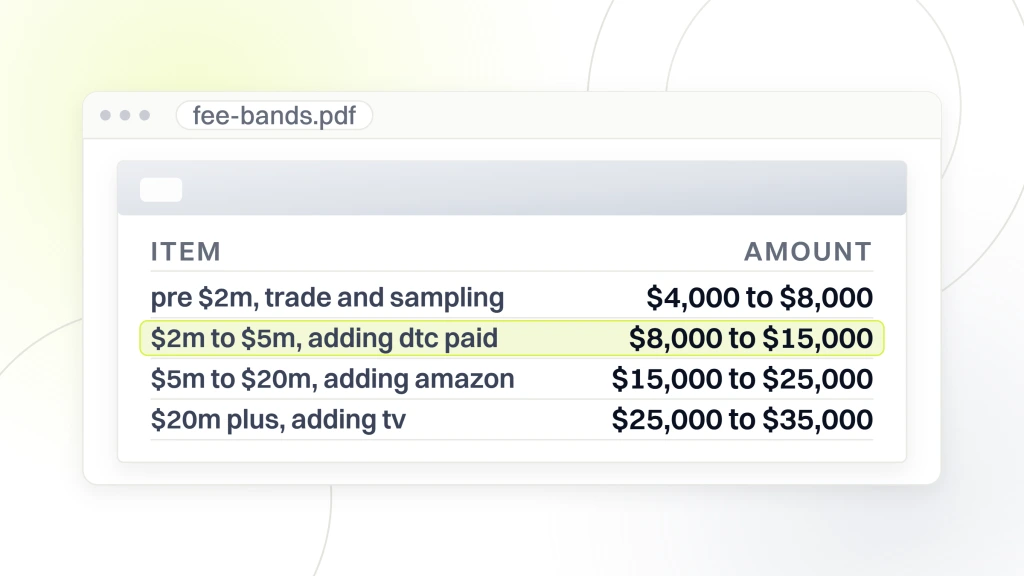
Fee ranges for a natural food marketing agency run $4,000 to $35,000 per month depending on the brand stage and the workstream count on the retainer. A pre-$2M natural retail-first brand starts at $4,000 to $8,000 with a trade-plus-sampling scope. A $2M to $5M natural brand adding DTC paid runs $8,000 to $15,000 on the retainer. A $5M to $20M brand adding Amazon and retailer networks runs $15,000 to $25,000. A $20M-plus brand adding connected TV runs $25,000 to $35,000 on the pure agency retainer.
Redefine Web publishes fixed retainer tiers that start at $999, $1,499, $2,499, and from $4,500 per month for SEO or PPC scoped standalone, so a founder can pick a single-channel retainer without wearing the full-service fee. Media spend sits on top of the retainer and does not flow through the agency invoice on most modern deals. Most natural brands pay the media platforms directly and the agency invoices the fee separately every month. This split protects the brand from a mark-up on the pass-through and keeps the platform relationships in the brand’s name.
Contract length runs 6 months minimum for natural food work since the retail buyer meeting cycles run on quarterly calendars and Amazon Ads tuning takes 8 weeks to steady state on the shelf. Any agency willing to sign a 90-day pilot is not planning to hit the retail placement or buyer meeting results inside the pilot window. A real natural food marketing agency retainer starts at 6 months, extends to 12 after the first quarter, and rebalances the workstream mix every quarter based on the natural retail buyer feedback and the cohort report on the DTC catalog.
5 numbers to track at month 3 on a natural retainer
Numbers to track at month 3 on a natural food marketing agency retainer come in 5 specific metrics that grade the agency against a real natural brand growth curve. Track them every month starting from month 3 since months 1 and 2 are ramp and setup, not steady state. Grading before month 3 punishes the agency for the ramp calendar built into the retainer scope from the first week of the engagement.
Metric 1 is retail placement count added inside the quarter. Metric 2 is DTC blended CPA on new customer count from month 3. Metric 3 is Amazon ACoS on Sponsored Products across the top 10 SKUs on the storefront. Metric 4 is Instacart return on ad spend inside the natural retail chains the brand is placed in. Metric 5 is the review site placement count inside Well+Good, Bon Appetit, and the natural category press stack the brand needs for retail buyer conversations across quarters.
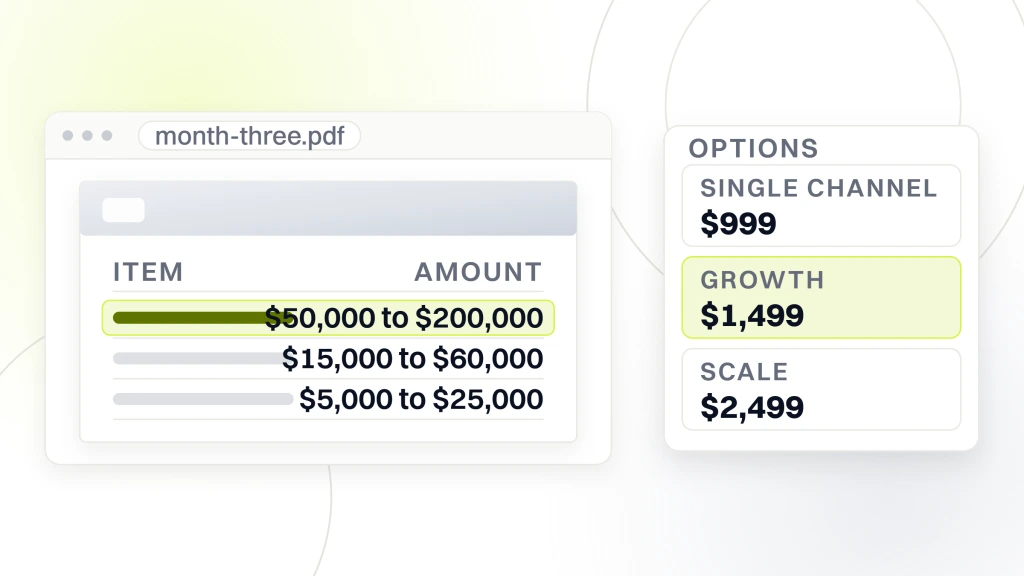
Attach a dollar figure to each metric on the monthly review. A new Whole Foods placement is worth $50,000 to $200,000 in the first year on the shelf. A 10% drop in blended CPA is worth $15,000 to $60,000 per quarter depending on media spend. A single review site placement in Well+Good is worth $5,000 to $25,000 in earned media value plus the trade buyer signal it carries. The number of natural brand founders who track vanity metrics for 6 months before switching to the 5 real numbers is roughly two thirds of every audit I have run on the vertical.
Proof from adjacent Redefine Web ecommerce work
Two adjacent Redefine Web engagements show what the DTC and Amazon side of a natural food marketing agency retainer looks like when the numbers are on the table. Both are ecommerce brands with a shopper funnel that maps to the natural brand DTC path, so the metrics translate directly to a natural food account starting a paid retainer.
Boogie Board is a direct-to-consumer product brand where the paid team ran $650,000 in ad spend, hit an $31 cost per conversion at scale, and boosted conversion rate 11% through optimized landing pages and refined ad targeting. The same paid stack applied to a functional beverage or organic snack DTC catalog holds the CPA in the same range on Meta and Google, and the landing page pattern is what a natural food marketing agency runs on every launch inside the first 60 days on paid.
Abigail Ahern is a luxury home decor DTC brand where the paid team drove a 179% ecommerce revenue lift, a 1,588% paid search ROAS, and 3,000% paid social ROAS through restructured SEO plus paid media plus premium creative. The premium-brand structure transfers to any natural food brand positioned above the mass-market shelf, where the certification story and sourcing content command a higher AOV than a commodity SKU and the ROAS math holds at a similar multiplier on retargeting.
Custimy is a separate SaaS engagement where organic reach grew to 500-plus first-page rankings, 25,000 monthly organic visits, and 165 second average session duration on the site. The SEO plus content-hub pattern maps to a natural food brand publishing category head content on ingredient science, sourcing partners, and certification comparisons. Ingredient how-to content is the top-of-funnel play a natural food marketing agency runs on the blog to catch the shopper 90 days before the first pack purchase.
Red flags on a natural food marketing agency pitch
Red flags on a natural food marketing agency pitch cut candidates fast on the first review of the deck. Three category-specific flags separate a real natural shop from a general DTC or CPG agency wearing the natural label. Any of the three drops the agency from the second-call list on the same evaluation cycle the founder is running against a fixed timeline.
Flag 1 is a pitch that treats trade marketing as a bonus line item the brand runs internally. Trade marketing on a natural retail brand is the shopper marketing layer that pulls the buyer from the aisle to the repeat purchase across quarters. Flag 2 is a case study library that lists natural food alongside 20 other verticals with no dedicated natural brand inside the last 18 months on the account book. Flag 3 is a retainer scope that ends at Meta creative and hands off Amazon, retailer networks, and trade to internal partners on the brand side.
Flag 4 is a fee structure tied to a percentage of media spend rather than a fixed retainer on the monthly invoice. Percentage-of-spend deals push the agency to grow spend, not to grow retail placements or DTC orders on the account. A real natural food marketing agency retainer runs a fixed monthly fee that grows or shrinks based on the workstream scope, not the media budget. Founders who miss this alignment pay for the misalignment in the second year on the invoice. See the food and beverage web design page for the DTC site build that pairs with the natural retail push.
Where a natural brand should start this month
Where a natural brand should start this month depends on the current growth stage on the account. A pre-$2M brand with 3 natural retail placements and no DTC catalog should start with a Shopify catalog build, a Klaviyo flow install, and a Meta prospecting campaign layered on top of the existing retail push. The retainer covers the 3 workstreams for 6 months. Meanwhile, the natural retail team keeps the buyer meetings running on the trade side.
A $2M to $5M natural brand should add Amazon Sponsored Products and Instacart Ads in the second quarter of the retainer. The channels layer on top of the existing Meta and Google structure without disrupting the current cohort or the current attribution stack across quarters. The retainer covers 5 channels with a blended reporting layer and a weekly creative refresh cadence on the top-of-funnel Meta and TikTok work the brand ships to the account.
A $5M-plus natural brand pushing deeper into the retail aisle should add Kroger Precision Marketing and Sprouts.com placements in the same quarter as the retailer network expansion on the natural chain. The retailer networks take 6 to 12 weeks to tune from launch to steady state, and the founder needs the ramp period built into the retainer plan across the quarter. Read the food and beverage PPC page for the paid channel scope that pairs with the natural retail push on the retainer.
Pick a natural food marketing agency that earns the shelf
A natural food marketing agency runs 5 workstreams on one retainer with a strategy lead who knows the natural aisle buyer calendar, the certification stack, and the Meta plus retailer network mix at the same time. Vejrø Resort hit 10K organic visitors and 2.2% conversion on the same shape of one-partner strategy plus execution. A natural brand that runs the 3-filter test on category case studies, buyer path mapping, and certification story lands with a partner that closes the same growth math inside 12 months on the DTC catalog, the Amazon shelf, and the Whole Foods aisle at the same time.