An optometrist marketing strategy is the written 12-month plan an independent practice runs against a defined budget, quarterly milestones, and weekly reporting on booked exams. Anything shorter is a campaign. Anything longer is a wish. Practices that grow 40% year over year and practices that stall at year three split on one variable, and it is a written plan the team runs week by week.
This guide walks the full annual roadmap independent practices at 800 to 12,000 active patients run in the real world. Quarterly milestones, budget allocation, cost per booked exam targets by channel, and the review cadence that keeps the plan honest. Numbers pull from the Vision Express engagement (+62% bookings and +71% practice growth in 6 months) and the framework Redefine Web runs on every new optometry account. Read it once, then draft your own two-page plan against the same skeleton.
Why an annual optometrist marketing strategy beats month-by-month planning
An annual optometrist marketing strategy beats month-by-month planning so the compounding channels get the runway they need. SEO content published in Q1 ranks in Q3. Recall automation launched in Q2 books exams through Q4. Cutting or swapping channels mid-year resets the compounding clock and pushes the payoff back another two quarters.
Month-by-month planning breaks two ways. Budget follows whatever felt urgent last week instead of what compounds across the year. Plus vendor accountability collapses when no baseline plan exists to measure the vendor against. Practices that plan month by month tend to overspend in Q1, get spooked by flat early numbers in Q2, cut the wrong channel in Q3, and finish December at flat booked exams with the invoices doubled.
The annual plan does not mean the mix is frozen. Quarterly reviews adjust the weightings, cut underperforming channels, and add new tests once the base is stable. What stays fixed is the total budget envelope, the channel priorities, and the cost per booked exam targets by channel. That fixed frame lets the vendor run experiments without draining the budget every time a new tactic sounds interesting.
Practices that write the plan down and share it with the vendor in a two-page document get better results than practices that hold it in their head. The document forces clarity on what the channels are, what each one costs, what the target output is, and what happens when a channel misses the target for two straight quarters. Vague expectations produce vague results. Written expectations produce measured ones.
Quarter one of the optometrist marketing strategies calendar
Q1 of a written optometrist marketing strategies calendar sets the base. Weeks 1 to 4 cover the full audit (site, Google Business Profile, tracking, existing campaigns) and the tracking install with call tracking plus GA4 wired end to end. Weeks 5 to 8 launch Google Ads on routine and brand intent. Weeks 9 to 12 add medical intent and kick off the SEO content cadence with the first four service-line pages.
The audit surfaces the specific problems. A stale booking form that loses 30% of clicks. A GBP without weekly posts and missing service edits. Call tracking that never got installed. A prior vendor that never split routine and medical intent into separate Google Ads campaigns. Every one of these is common. And every one of these gets fixed in the first four weeks before paid spend scales.
Tracking install is boring and non-negotiable. Call tracking with dynamic number insertion, form-fill events firing into GA4, Google Ads conversion actions imported from GA4, offline conversion imports from the practice-management system, and a Looker Studio dashboard. Setup runs $1,500 to $4,000 as a one-time project or gets rolled into the retainer of a full-stack vendor. Practices that skip this step have no defensible numbers by month three.
Q1 milestones stack up in this order. Tracking live and verified by end of week 4. Google Ads live by end of week 5 producing a first booking inside week 6. Content cadence at one deep piece per week by end of week 9. Review outreach adding 8 to 15 new reviews across the quarter. By day 90 the practice has a trackable baseline on every channel and clear cost per booked exam numbers by channel.
Quarter two of the marketing strategies for optometrists roadmap
Q2 compounds the base. Google Ads campaigns from Q1 hit their steady-state cost per booked exam. Local search work moves the map pack ranking from wherever it started to the first-page position. Recall automation goes live and books its first 20 to 40 recalled exams. Content published in Q1 starts ranking on medium-competition queries and adds organic traffic.
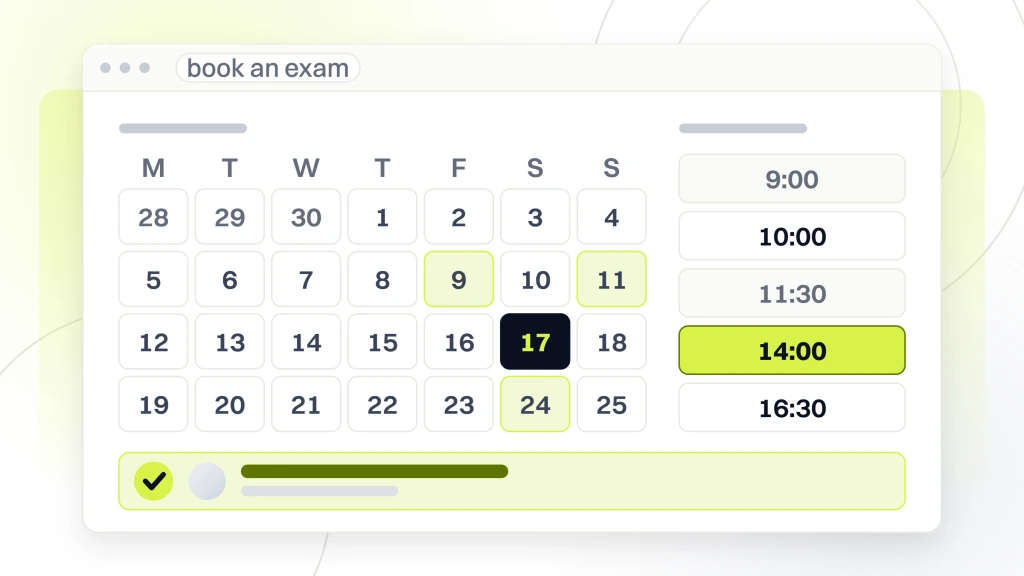
The recall launch is the highest-return move of the year. Existing patients cost 10% to 15% of what new-patient acquisition costs, and a working recall program books 30% to 50% of total exam volume from patients who last scheduled a year or two ago. Three flows go live at week 14. Month 10 recall for standard patients, month 12 nudge for those who skipped the first prompt, month 16 reactivation for lapsed patients who need a different hook.
Google Ads optimization work shifts from launch to tuning. Bidding strategies get tested against booked-exam data. Landing pages get A/B tested on booking form length and headline copy. Negative keyword lists grow from the first quarter of search terms data. Campaign structure holds steady with routine, medical, and brand each on their own budget and landing page. Practices trying to consolidate campaigns in Q2 for simplicity usually cost themselves 15 to 30% efficiency.
Q2 milestones. Steady-state cost per booked exam on Google Ads at $22 to $45 blended. Map pack ranking at position one to three. Recall automation live and producing 20 to 40 recalled exams monthly. Organic traffic gain of 15 to 30% from Q1 content. Reviews growing at 10 to 20 per month. Q2 numbers become the baseline for Q3 and Q4 targets. For the underlying signals driving organic gains, see WordStream’s Google ranking factors.
Quarter three of the optometrist marketing strategy 12-month plan
Q3 layers on the tests. With the base producing predictable numbers, you can add Meta Ads on specialty service lines, expand SEO content into condition pages beyond the initial service pages, and start location-specific expansion when a second location is on the roadmap. The practice trusts the tracking now and can afford to test hypotheses.
Meta Ads launch on specialty service lines. Myopia management, dry eye clinics, scleral lens fittings, or aesthetic services depending on the practice focus. Video creative production runs two to four pieces per month at $400 to $1,200 each. Retargeting campaigns capture site visitors who did not book. Budget runs $800 to $2,000 monthly for a solo practice testing Meta and $2,000 to $4,000 for a group.
SEO content expands into condition pages. Cataract screening, diabetic retinopathy monitoring, glaucoma follow-up, pediatric myopia progression. Each condition page runs 1,800 to 2,400 words and covers what to expect, insurance coverage, referral patterns, and follow-up frequency. These pages rank slower than service pages (nine to 15 months to compound meaningfully) but produce the highest-value patients when they finally rank.
Q3 milestones. Meta Ads producing 5 to 10 booked exams monthly on specialty service lines. SEO content library at 25 to 40 published pages with 15 to 25% of them ranking on page one. Organic traffic up 40 to 70% versus Q1. Recall program producing 30 to 50 recalled exams monthly. Total booked exams up 30 to 50% versus baseline. Cost per booked exam blended trending toward the $18 to $28 target for an established practice.
Quarter four of the optometrist marketing strategy annual cycle
Q4 harvests the work. The compounding channels are producing. The paid channels are tuned. The recall program is running. Q4 focuses on defending the ranking wins, capitalizing on year-end insurance-remaining-benefits spending, and staging the next 12-month plan. December through mid-January is the busiest window for optometry insurance-covered exams.
Insurance-benefits campaigns launch in October. Both Google Ads and Meta run creative reminding patients that unused vision plan benefits reset on December 31. Landing pages carry a use-it-before-you-lose-it headline and a booking form pre-filled with the exam type. Practices running this campaign well see 30 to 60% more exam bookings in November and December than a flat schedule would deliver.
Content publishing shifts from expansion to defense. Ranking pages get refreshed with updated 2027 numbers, new internal links, and answer-first paragraphs under question-style headings for AI extraction. Technical SEO work covers Core Web Vitals audits, schema markup validation, and internal link architecture review. For the schema updates worth applying quarterly, read Google Search Central’s structured data documentation.
Q4 milestones. Insurance-benefits campaign producing 30 to 60% booking gain in November and December. Total booked exams up 60 to 100% versus baseline. Blended cost per booked exam under $28. Recall program producing 50 to 80 recalled exams monthly. Next year’s plan drafted, signed, and staged for a January 1 launch with the vendor. Reference calls to the tax accountant scheduled to model the year-end marketing spend against patient lifetime value.
How to allocate an optometrist marketing strategy budget by quarter
Budget allocation across the four quarters follows a specific pattern. Q1 loads the setup work. Q2 hits the steady-state base. Q3 adds test budget. Q4 harvests plus stages the next year. Solo practices spend $46,000 to $76,000 annually all in.
Two-location groups spend $84,000 to $138,000 annually. Three-to-five-location groups spend $126,000 to $228,000. The table below breaks the total down quarter by quarter for each practice size. Numbers include retainer and ad spend across the full 12 months, assuming flat retainers with no ad-spend markup.
| Quarter | Solo practice | Two-location | Three-to-five location |
|---|---|---|---|
| Q1 (setup + launch) | $14,000 to $22,000 | $25,000 to $40,000 | $38,000 to $65,000 |
| Q2 (base steady state) | $10,500 to $17,000 | $19,500 to $32,000 | $29,000 to $52,000 |
| Q3 (tests + expansion) | $11,500 to $19,000 | $21,000 to $34,000 | $32,000 to $57,000 |
| Q4 (harvest + plan) | $10,000 to $18,000 | $18,500 to $32,000 | $27,000 to $54,000 |
Q1 runs highest so the one-time setup work (booking flow rebuild, GBP cleanup, tracking install, recall flow authoring) clears in a single hit. Q2 through Q4 stabilize once the setup is behind you. Q3 nudges up slightly so Meta Ads and expanded content publishing get real budget. Q4 holds steady but shifts some spend into insurance-benefits creative production, which is a productive line item that repeats every year.
Percentage split within each quarter typically runs 55 to 65% on paid media (Google Ads, Meta Ads), 20 to 30% on retainer (SEO, content, local, recall, reviews, reporting), and 10 to 15% on tools and tooling (call tracking, PMS integrations, dashboard). Practices that push paid media above 70% typically underinvest in the compounding channels and see their cost per booked exam drift up in year two.
The reporting cadence a marketing for optometrist clinics plan requires
A marketing for optometrist clinics plan lives or dies by reporting cadence. Weekly numbers keep the vendor and practice owner close to the data. Monthly numbers set the strategic narrative. Quarterly reviews reset the priorities. Annual reviews model the year-over-year growth and set next year’s plan.
Weekly reporting covers cost per booked exam by channel, total booked exams by source, review count added, and the top three anomalies to investigate. Format is a 15-minute email with a Looker Studio link. Practices that read the email every Monday catch slipping campaigns inside two weeks. Practices that skip weeks catch problems at month three, which is one month too late.
Monthly reporting adds strategic context. Cost per booked exam trend across the last 12 weeks with commentary on what shifted and why. Channel-by-channel narrative on wins and misses. Adjustment recommendations for the next 30 days. Format is a 45-minute call plus a written recap. Vendors sending only PDFs without a call are running the account too coldly.
Quarterly reviews reset the priorities. Which channels earned their slot. Which channels missed the target for two straight quarters. Which experiments graduate to full budget lines. Which experiments get cut. Format is a 90-minute call with the practice owner plus a written summary that becomes the input to the next quarter’s budget allocation and campaign roadmap.
Channel priorities across the optometrist full marketing plan example
The optometrist full marketing plan example below shows how channel priorities shift across the 12-month cycle. Website and tracking are always foundational (100% priority year-round). Google Ads is highest priority in Q1 and Q2 (95%), then tapers slightly in Q3 and Q4 once the compounding channels carry more load.
- Website and tracking. 100% priority year-round; foundation for every other channel
- Google Business Profile. 90% priority year-round; compounds fastest with weekly work
- Google Ads. 95% in Q1 and Q2; 75% in Q3 and Q4 once free traffic carries load
- SEO organic. 60% in Q1; 80% in Q2 and Q3; 95% in Q4 for ranking defense
- Recall automation. 40% in Q1 (planning); 95% from Q2 onward
- Reviews. 85% year-round; the durable trust signal
- Meta Ads. 0% in Q1 and Q2; 60 to 80% in Q3 and Q4 for specialty lines
The percentages reflect where the vendor’s attention should sit across the four quarters. A vendor spending 40% of retainer hours on Meta Ads in Q1 is misallocating attention. A vendor spending 80% of retainer hours on Google Ads in Q4 is missing the harvest window on Meta and SEO. Reviewing the retainer time allocation quarterly against the priority list above surfaces misalignment before it costs three months of momentum on the growth curve.
What an optometrist marketing strategy looks like in practice
An optometrist marketing strategy in practice hits quarterly milestones on a defined budget. Vision Express, an independent optometry practice, ran this exact plan and produced +62% booked appointments, +71% practice growth, and +135.9% organic traffic inside a 6-month window. The engagement rolled into year two on the same framework with the budget stepped up to match the higher exam volume.
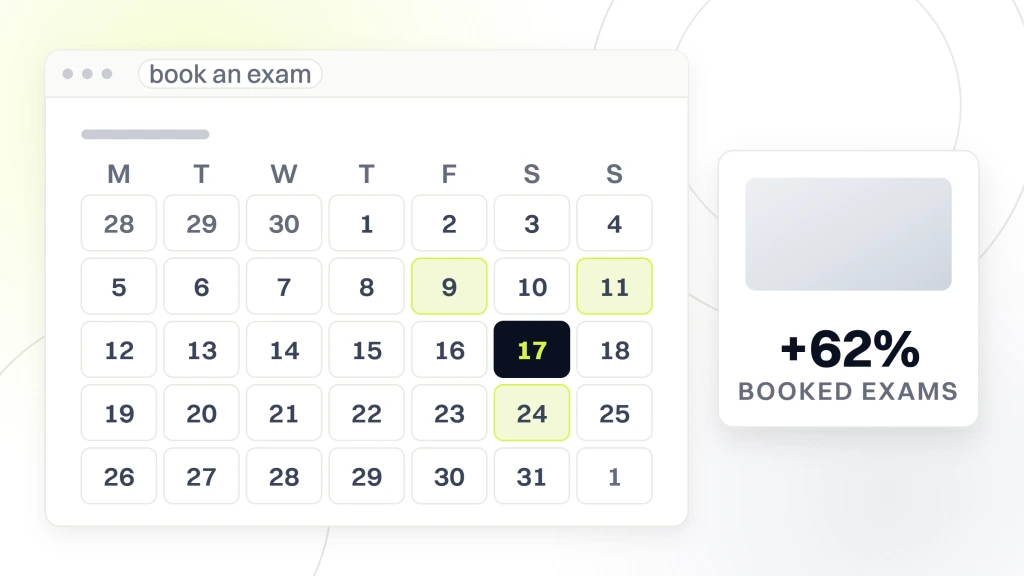
Q1 covered the service-page redesign, GBP cleanup, tracking install, and Google Ads launch across routine and brand. Hidden premium services (vision therapy, dry eye, specialty contact lenses) finally got their own conversion-ready pages. The recall list of 4,200 patients sat untouched so the automation could go live as a Q2 launch, not a rushed Q1 add-on. Reviews grew from 47 to 68 over the quarter.
Q2 added medical intent to Google Ads, launched the recall automation, and kicked off SEO content on vision therapy and dry eye. Recall booked 24 exams in month four and 32 in month five. Map pack moved from position five to position two. Reviews grew to 91. Booked appointments climbed on the compounding curve that ended the 6-month window at +62%.
Q3 launched Meta Ads on vision therapy for pediatric patients. First month produced eight booked exams from Meta. The content library grew to 32 pages with 21% ranking on page one. Q4 layered in the insurance-benefits campaign in October. November and December booked well ahead of the prior year, and organic traffic closed the window at the +135.9% mark that anchored the case study.
Working with Redefine Web on optometrist marketing strategy
Redefine Web runs an optometrist marketing strategy as an integrated 12-month program under one account lead per practice. The stack covers site work, SEO services, PPC services, local search, recall automation, and reporting. Retainers start at $1,499 monthly for a lean local program and scale to $3,999 monthly for full-stack coverage on a solo practice.
Every engagement runs the four-quarter plan above with quarterly review calls and monthly narrative reports. Weekly numbers land in the practice owner’s inbox every Monday. Quarterly review calls sit on the calendar 90 days in advance. Annual review meets in late Q4 to model the next year’s plan and set the budget envelope for January 1.
Contract structure runs six months minimum, flat retainer with no ad-spend markup, 30-day wind-down clause, and practice-owned ad accounts and domain. Reference calls with current independent optometry clients get shared during the first fit call, not held back until the pitch. See our optometrist marketing agency stack for packages and case study links, or read the optometrist marketing playbook for the underlying growth model.
When your practice does not fit our current book, we will name a peer shop that fits better and part on good terms. And when it does fit, the fit call covers the budget envelope, the quarterly milestones, and the reporting cadence so nobody signs a contract without knowing exactly what the next 12 months look like on paper.
Where to take the optometrist marketing strategy from here
A written optometrist marketing strategy is the difference between a practice that grows 40% year over year and one that plateaus at 45 monthly exams three years running. The plan is not complicated. The discipline to run it week by week, review it quarterly, and adjust it against booked-exam data is what separates the two groups of practice owners.
Draft the plan in two pages. Total annual budget envelope. Channel mix with target cost per booked exam. Quarterly milestones. Review cadence. Share it with the vendor. Review it every quarter. Adjust the mix. Hold the total. Practices that treat the plan as a living document produce measurable results year over year.
Read the optometrist marketing cost guide for the pricing math, and the marketing for optometrists guide for the channel-by-channel detail. Vendor selection frameworks from HubSpot, Content Marketing Institute, and Search Engine Land back up the channel priorities above.