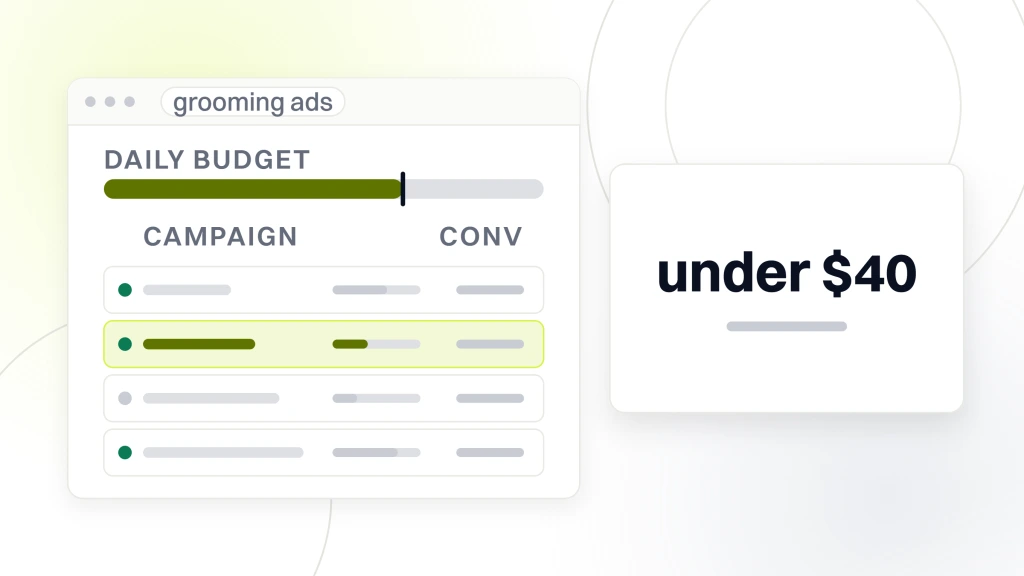
Paid ads for a grooming salon should fill the calendar on the days it has open slots, not burn budget chasing the wrong queries. Most salons run 200 to 800 appointments a month, and the paid mix either books inside the margin or eats every hour of profit on the softest weekday. With the right account structure and clean tracking, ppc for pet grooming stops feeling like a slot machine and starts reading like a real line item on the P&L. A grooming salon running paid ads through a tracked funnel books 10 to 20 new client appointments per $1,000 of ad spend at a cost per appointment under $40 in most trade areas.
This guide walks the paid channel work Redefine Web runs with independent salons, multi location chains, and mobile groomers. You will see the account structure that books, the keyword build for grooming intent, the landing page pattern that converts, tracking wired end to end, budget and cost per appointment benchmarks by salon type, and the transfer points from Mission Pet Health and Pet Shop · Independent Retail · UK. Read the pet products marketing hub for the retainer scope and pricing.
What is in this guide
- PPC for pet grooming in one page
- Account structure for ppc for pet grooming that books appointments
- Keyword build for ppc for pet grooming intent that converts
- Landing page pattern for ppc for pet grooming
- Tracking wiring for ppc for pet grooming campaigns
- Meta paid social inside ppc for pet grooming retargeting
- Budget and cost per appointment benchmarks for ppc for pet grooming
- How Mission Pet Health maps to ppc for pet grooming
- Pet Shop · Independent Retail · UK transfer to ppc for pet grooming
- Five numbers to track on ppc for pet grooming
- Pick the right ppc for pet grooming partner for a salon
- Frequently asked questions on ppc for pet grooming
PPC for pet grooming in one page
PPC for pet grooming runs Google Search, Google Local Services Ads where available, and Meta paid social to fill salon calendars with new and returning appointments. Four buckets carry the load. Google Search on high intent grooming queries. Google Local Services Ads for cost per lead pricing on local grooming. Meta paid social on remarketing to salon site visitors and lookalike audiences of past clients. Tracking wiring end to end so every dollar ties back to a booked appointment on the salon calendar.
Every extra tactic like TikTok video ads, Yelp listings, and print flyers sits on top of that base. Without the four core pieces running every month with real tracking, the salon spends paid budget hoping it works and looks at a bank balance the next month wondering where the money went. Grooming clients repeat every 4 to 8 weeks, which pushes annual client value into the $1,500 to $3,000 range on a single dog, so the cost per appointment math bends toward paid channels working hard.
Redefine Web tracks four numbers every month on grooming PPC. Cost per booked appointment. New client booking rate versus repeat booking rate. Return on ad spend across the paid channel mix. Calendar fill rate on the softest weekday. If those four numbers hold or grow, the paid channel is doing its job. See the Google Ads Help documentation for the field reference on how the platform reports each metric.
Account structure for ppc for pet grooming that books appointments
The account structure for ppc for pet grooming that books appointments splits Google Search into six campaigns and Meta into three campaigns for a clean read on what drives new client bookings versus repeat client rebookings. Google Search runs a brand campaign for the salon name, a services campaign for dog grooming and cat grooming queries, a breed campaign for poodle grooming and shih tzu grooming style queries, an emergency campaign for last minute grooming appointment queries, a neighborhood campaign for grooming plus neighborhood queries, and a Local Services Ads campaign on the pay per lead side where the vertical is available.
Meta paid social runs three campaigns. Retargeting on the site visitor pool that did not book. Lookalike prospecting on the past client email list. Video prospecting on branded content about the salon and the groomers on staff. Every Meta campaign runs alongside the Google Search account, not instead of it, because Meta earns first client trust while Google captures the booking intent that already exists in the trade area.
Skip the campaign split and the reports blend new client cost per appointment with repeat client cost per appointment, and the owner cannot tell if the paid budget is growing the client base or paying for clients who would rebook anyway. The split is not creative work. It is the minimum viable account structure for a salon running paid channels at scale. See the pet products PPC agency page for the account build scope on month one of a real retainer.
Keyword build for ppc for pet grooming intent that converts
The keyword build for ppc for pet grooming intent covers six clusters. Service plus city searches like dog grooming Austin or cat grooming Denver. Service plus neighborhood searches like pet grooming Capitol Hill. Breed specific searches like poodle grooming or doodle grooming that convert at higher rates because the buyer needs a groomer familiar with the breed. Emergency searches like last minute dog grooming or same day pet grooming that convert at premium rates. Mobile grooming searches for the mobile groomer vertical. Specialty searches like nail trim, teeth cleaning, or hand stripping for premium grooming services.
Every cluster gets its own ad group with tight match types and tight ad copy. Broad match burns budget on grooming products, grooming schools, and grooming tools queries that never book a salon appointment. Exact match plus phrase match on the six clusters keep the spend on booking intent queries only. Negative keyword lists strip the education queries like how to groom my dog and the shopping queries like clippers, brushes, and shampoo from the campaigns.
Bid adjustments follow the calendar. Bid up 30 to 50 percent on Sunday nights when clients search for Monday appointments after a weekend outing with the dog. Bid down on Tuesday and Wednesday mornings when search volume drops and the salon calendar is already full for the week. Every bid adjustment matters because grooming is a same week booking cycle, not a same month booking cycle like a vet visit. Read the Google Ads bid adjustment documentation for the field reference on the mechanic.
Landing page pattern for ppc for pet grooming
The landing page pattern for ppc for pet grooming carries seven sections in order. Top fold with the service name in the H1, the salon location, and a book now CTA above the fold. Trust signals below the CTA with review count, star rating, years in business, and any professional grooming certifications the salon carries. Service list with pricing bands by dog size or specialty service. Groomer bios with real photos of the groomers with real client pets. FAQ block on the top five questions clients ask before booking. Reviews block with recent Google reviews pulled in via API.
Every section earns conversion for a different reason. The top fold matches the ad copy word for word so the click does not bounce on message mismatch. Trust signals close the trust gap on first time visitors. Service list with pricing removes the guessing that kills first click bookings. Groomer bios earn the emotional connection that pet owners need to hand over their pet to a stranger. FAQ answers the last question before the click on the book now button.
Book now buttons open the booking calendar directly, not a contact form. A contact form loses 50 to 70 percent of the booking intent in the delay between form submit and salon callback. A direct calendar embed closes the loop on the first visit and books the appointment while the buyer is still on the page. Skip it and the paid budget costs 2 to 3 times more per booked appointment on the same traffic and ad copy. See the pet web design for service businesses guide for the calendar embed pattern.
Tracking wiring for ppc for pet grooming campaigns
Tracking on ppc for pet grooming closes the loop between the ad click and the booked appointment on the salon calendar. Six pieces anchor the tracking wiring. Google Ads conversion tracking on the book now button click and the calendar confirmation page. GA4 events on the same actions plus phone call tracking on the click to call button. Meta Pixel with the CompleteRegistration event on the booking confirmation page. Offline conversion import from the salon booking software back into Google Ads with the actual completed appointment count.
Two more pieces complete the wiring. Server side tagging via a lightweight tag manager stack so iOS 14 and browser tracker blocking does not drop conversions from the ad platforms. Weekly reconciliation between the ad platform conversion count and the salon booking software appointment count so the platforms optimize on real signal, not on a form submit that never showed up on the calendar.
Offline conversion import is the piece most grooming salons skip and the one that matters most. Without offline conversion import, Google Ads optimizes toward form submits and no shows carry the same weight as completed appointments. With offline import wired weekly, the platform optimizes toward appointments that actually happened and the cost per booked appointment drops 20 to 40 percent inside a quarter. Read the Google Ads offline conversion import guide for the field guidance on the setup.
Meta paid social inside ppc for pet grooming retargeting
Meta paid social inside ppc for pet grooming fills the pipeline stage that Google Search does not touch. Google Search captures buyers who already know they need a groomer today. Meta captures buyers who will need a groomer in the next 30 days and who are not searching yet. Three campaigns carry the load. Site visitor retargeting on people who visited a service page but did not book. Past client lookalike prospecting on the email list of past bookings uploaded quarterly. Video prospecting on branded content about the salon and the groomers on staff.
Creative for grooming Meta ads runs three shapes. Before and after photos of real client pets after a grooming session. Video walkthroughs of the salon with the groomers introducing themselves. Educational carousel posts on breed specific grooming needs and coat maintenance between visits. Every creative shape earns engagement at different funnel stages and the three together carry a cost per booked appointment on Meta that runs 60 to 80 percent of the Google Search number in most trade areas.
Frequency caps matter on grooming Meta ads because the audience is small in a local trade area and the same viewer sees the ad 20 times per week if the cap is not set. Cap frequency at 4 to 6 exposures per week on retargeting and 2 to 3 exposures per week on prospecting. Higher frequency burns the audience and drops the click through rate inside 4 to 6 weeks of the campaign launch. Track frequency weekly and rotate creative every 3 weeks minimum.
Budget and cost per appointment benchmarks for ppc for pet grooming
Budget and cost per appointment benchmarks track salon type and trade area competitiveness. A single location independent grooming salon runs $1,500 to $4,000 per month on paid ads at a target cost per booked appointment inside $40. A multi location grooming chain runs $4,000 to $12,000 per month total at a target cost per appointment inside $30 because the account structure amortizes across locations. A mobile grooming operator runs $1,000 to $3,000 per month at a higher cost per appointment inside $60 because the mobile service commands premium pricing.
Return on ad spend on grooming PPC targets a floor of 3 times the paid budget on the same month cash flow, and a ceiling of 6 to 8 times over a rolling 12 month cohort once repeat bookings are counted. The salon owner who boosts a Facebook post about a grooming special books zero appointments and blames the platform, when the real problem is the boost went to friends of the salon Facebook followers, who all already book with the salon.
The table below breaks down what falls inside each program band. These are field averages across grooming businesses Redefine Web has run PPC for, not a theoretical model. Every scope line is what the retainer buys, not what an add on covers later.
| Salon type | Monthly ad spend | Target CPA | Google split | Meta split |
|---|---|---|---|---|
| Single independent salon | $1,500 to $4,000 | Under $40 | 70 percent | 30 percent |
| Multi location grooming chain | $4,000 to $12,000 | Under $30 | 65 percent | 35 percent |
| Mobile grooming operator | $1,000 to $3,000 | Under $60 | 80 percent | 20 percent |
| Regional pet care chain | $12,000 to $30,000 | Under $25 | 60 percent | 40 percent |
How Mission Pet Health maps to ppc for pet grooming
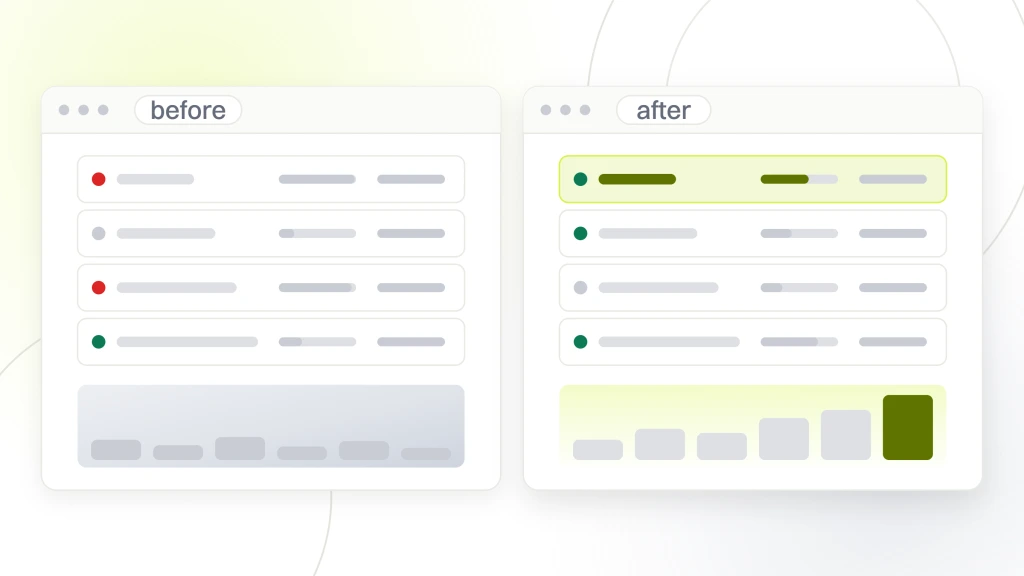
Mission Pet Health transfers to ppc for pet grooming because both share a local appointment booking motion across a multi location footprint. Mission Pet Health is a Veterinary · 400+ Locations network Redefine Web serves as Paid Media partner · multi-region. The engagement replaced fragmented paid media with a scalable framework and posted +54% YoY leads, +74% over the 12-month ROAS goal, and +11% ROAS efficiency at scale. Pet owners search local queries, click a paid ad, land on a service page, and book on trust signals in the top fold before the site loses the click.
Every play in the Mission Pet Health engagement applies to a grooming chain carrying a similar local paid motion. Build a landing page per service and per location so ads route to the right page. Wire tracking end to end so every ad dollar ties to an actual appointment on the calendar and not a phantom form submit. Grow the review count on every Google Business Profile with a text based review flow inside 72 hours of the last visit. Run offline conversion import weekly so the platforms optimize toward completed appointments, not toward form fills that never showed up.
The transfer point for grooming is the location plus service page pair. Mission Pet Health earned local ranking and paid efficiency by building a page per service per location across 400 plus locations. A grooming chain earns the same paid efficiency by building the same page pair for every service and every salon location. The mechanic scales across footprint sizes and works on a single salon site with 3 service pages the same as it works on a chain with 150 service pages. See the PPC agency for pet brands playbook for the account scope on multi location grooming chains.
Pet Shop · Independent Retail · UK transfer to ppc for pet grooming
Pet Shop · Independent Retail · UK ran a mobile first rebuild with a tuned Google Business Profile and a daily Instagram plus Facebook cadence, and posted +158% calls plus WhatsApp, +212% click and collect orders, and +47% repeat customers in a single quarter. The engagement mirrors what a small independent grooming salon faces every week. A dated site that hides the phone number. A stale Google Business Profile that loses the map pack ranking to chains. A social feed that posts once a month while the audience scrolls through daily reminders from the chain 2 miles away.
Three moves transfer to grooming PPC directly. First, make the mobile call and book buttons the first thing a buyer sees on the paid landing page, because 70 percent of grooming searches happen on a phone and every scroll before the CTA loses conversion. Second, tune the Google Business Profile weekly with fresh posts, fresh photos, and a review reply on every new review inside 24 hours so the salon shows up when the paid click hunts for social proof before booking. Third, run a daily social cadence on Instagram and Facebook so the retargeting audience sees the salon between search visits and the recall builds without extra paid spend.
The independent salon that reads the Pet Shop · Independent Retail · UK case and applies the 3 moves catches the same jump. Local inquiries climb inside 6 weeks, the click and book buttons carry the paid traffic, and the repeat rate holds while ad spend stays flat. That is the compounding pattern a small salon needs when the paid budget cannot outspend a corporate chain, so it has to convert harder on every dollar. See the PPC management services page for the retainer tiers this scope lives inside.
Five numbers to track on ppc for pet grooming
Track five numbers monthly on ppc for pet grooming. Cost per booked appointment on new client bookings only, not blended with repeat client bookings. New client booking rate versus repeat client rebooking rate. Return on ad spend across the paid channel mix at 30 days and at 90 days once cohort data comes in. Calendar fill rate on the softest weekday of the salon week. Cancellation and no show rate on paid channel bookings versus organic channel bookings. Everything else rolls into those five, and every one ties directly to appointments completed and revenue collected at the point of sale.
Attach a real dollar value to each. Every dollar of cost per appointment reduction on the same booking volume returns to the owner as margin. Every 1 percent of new client booking rate improvement grows annual revenue without any additional ad spend. Every no show reduction on the paid channel side clears an hour of groomer capacity that books at the standard rate to another new client on the cancellation list.
Set reporting to weekly on cost per appointment and monthly on the full 5 number set. Weekly reports are 1 screenshot from Google Ads and 1 from the booking software reconciled. Monthly reports are 3 to 5 pages with the 5 numbers month over month and the top 3 actions inside the retainer. Anything longer turns the retainer into a communication problem instead of a paid channel that fills the calendar every week.
Pick the right ppc for pet grooming partner for a salon
The right ppc for pet grooming partner for a salon shows 3 signals that separate a real vertical agency from a generic small business PPC shop. Named pet care or local service clients on the case study page, not generic ecommerce clients. Tracking setup experience with real offline conversion import wiring on booking software like MoeGo, Gingr, or a WordPress calendar plugin. Local map pack awareness alongside the paid work so the Google Business Profile grows with the ad spend instead of falling behind it.
Ask any candidate agency 3 questions before signing. What is the cost per booked appointment story on a named grooming client over a 6 month engagement. What is the offline conversion import setup the agency ran on the last 3 grooming clients. What is the landing page pattern the agency uses to close the calendar embed on the first visit. If the agency has to look up the answers, it does not run the vertical at scale.
Redefine Web PPC retainer tiers run $999 / $1,499 / $2,499 / from $4,500 per month, with ad spend billed separately from the retainer. The tier picks the scope of the account build, the tracking wiring, the creative work on Meta, and the reporting cadence. Start with the account build and the tracking wiring before any budget hits the account if the salon runs no paid ads today. Start with the landing page audit and the offline conversion import fix if the salon runs paid ads but the cost per appointment reads high. Read the Think with Google research library for the reference material on local paid search.
The next 30 days on ppc for pet grooming
Paid ads for a grooming salon come down to a small stack of moves run every month without exception. Account structure that splits new and repeat client bookings. Keyword build on booking intent queries only. Landing pages that embed the calendar directly. Tracking wired end to end with weekly offline conversion import. Meta paid social alongside Google Search for retargeting and prospecting. Mission Pet Health proved the location plus service page pair at scale across 400 plus animal hospitals, and Pet Shop · Independent Retail · UK proved the mobile first plus daily social cadence at the small independent scale. A grooming business hits the same math once the retainer runs every month with a real account structure and clean signal to the platforms. Read the PPC management services page for the tier that fits your salon and book a call to walk the account build.