
Your Meta prospecting account stopped scaling in Q3, Google Shopping is running at a 2.4x return-on-ad-spend when you need a 3.6x for the subscription math to work, and TikTok Shop keeps sending kittens to a checkout that never renews. The right PPC agency for pet brands works the subscription math before it touches a bid, then rebuilds the paid stack around a payback window your CFO will actually sign off on. You get first-order profitability that matches your lifetime value curve, prospecting that scales past the audience saturation ceiling, and a seasonal budget shape that shows up ready for the November gift wave.
This is the playbook we run for direct-to-consumer pet founders. What a pet brand paid ads agency actually does inside Meta, TikTok Shop, and Google Shopping for treats, supplements, and complete food. How subscription math rewrites every cost target you inherited from the last agency. Why breed-targeted creative crushes lifestyle stock on cost per acquisition. What seasonal windows cost you when you plan for them a quarter late. About a 14 minute read straight through.
Meta ads a PPC agency for pet brands runs at scale
Meta is still the biggest paid social channel for pet DTC, two years of return-on-ad-spend compression notwithstanding. The account structure that works in 2026 does not look like the one that worked in 2023. Broad prospecting, tight creative, no interest layers, and value-based bidding is the combination that pushes past the audience saturation ceiling most pet brands hit around $180,000 in monthly Meta spend.
Advantage Plus Shopping and manual campaigns side by side
Advantage Plus Shopping campaigns handle 60% to 80% of prospecting spend for most pet DTC brands we run. The remaining 20% to 40% stays in manual campaigns targeting new creative angles, retargeting, and cold-start audiences during a launch. Advantage Plus works once Meta’s model finds pet buyers across interest signals faster than any manual audience stack. Manual campaigns still win when you need creative diagnosis, want to test a new hook, or need to isolate an audience that Advantage Plus keeps under-spending. The mix shifts with the account. A brand at $40,000 monthly spend runs 40% Advantage Plus. A brand at $250,000 monthly spend runs 75%. Read the Google Ads help on Performance Max for the equivalent shift on the Google side.
Creative cadence that keeps Meta scaling
Meta creative fatigue is real. It shows up as rising cost per acquisition after roughly 3 to 5 weeks on a hero angle. A DTC pet PPC agency writes and produces 8 to 14 fresh creative variants a week at the mid-tier spend level, split across founder-story videos, product close-ups, transformation clips, breed-targeted static, and stitched user-generated content. The rule is one strong hook variant tested against three iterations per week. Most brands try to over-plan the calendar and end up producing 3 new pieces a week, which is not enough to keep the machine fed. Testing volume is what earns the scale. Not creative genius. Not brand voice. Volume plus a clean feedback loop from the ads dashboard back to the creative brief. The core pattern is the same one covered in our deeper read on ecommerce PPC management that grows DTC store revenue, with pet-specific creative variants layered on top.
TikTok Shop for pet treats, toys, and impulse buys
TikTok Shop is the second biggest paid social channel for pet DTC in 2026, especially on treats, toys, grooming tools, and impulse-priced supplements under $40. Pairing TikTok with an amazon pet products marketing agency keeps the retail shelf compounding once paid social starts scaling. A pet subscription PPC engine treats TikTok as a hybrid affiliate plus paid channel, not a pure ad buy.
TikTok account structure that earns scale
The structure that works. One live-shopping stream per week backed by paid Spark ads amplifying the top-performing organic clips, a rolling affiliate program pulling 40 to 200 creators depending on brand size, and Video Shopping Ads running against a product feed that mirrors your Google Shopping feed. Cost per acquisition on TikTok Shop for treats and toys under $40 lands at $9 to $18 for brands with a real creator engine and $22 to $34 for brands buying media without the affiliate layer. That gap is what separates the pet brands scaling TikTok from the ones stuck spending without payoff.
Creator work that pays back on TikTok
Pet creators on TikTok convert at meaningfully higher rates than lifestyle or beauty creators once the pet content vertical is one of the most engaged niches on the platform. A working affiliate program pays 12% to 22% commission, mails product within 48 hours, and gives creators cleanly branded assets they can remix. Micro-creators with 8,000 to 60,000 followers usually beat macro-creators on cost per acquisition once their audience is genuinely their audience, not a paid growth number. The unpaid side is where most pet brands still leave money on the table.
Google Shopping and Performance Max for high-intent pet buyers
Google Shopping and Performance Max together handle the bottom of the funnel for a DTC pet brand. Someone searching brand-plus-flavor combinations, breed-plus-food-type queries, and condition-plus-supplement phrases is 24 to 72 hours from a purchase. Feed quality decides whether you show up.
Feed quality that earns shopping impressions
Product feeds for pet shopping ads need title order that leads with the branded phrase, then category, then flavor or condition, then size. Not the SKU. Not the default Shopify string. Rewriting the feed usually adds 30% to 55% more impressions inside two weeks. GTIN accuracy matters for approvals. Product images without lifestyle clutter convert 15% to 25% higher than staged studio shots on shopping placements. Custom labels for margin tier, subscription eligible versus one-time only, and seasonality let a pet brand paid ads agency split budget cleanly between the high-margin subscription hero products and the promotional impulse items.
| Channel | Best for | Prospecting share | Typical CPA range | Creative cadence |
|---|---|---|---|---|
| Meta Advantage Plus | Food, supplements, subscription | 40% to 60% | $22 to $46 | 8 to 14 assets per week |
| TikTok Shop plus Spark ads | Treats, toys, grooming, impulse | 15% to 30% | $9 to $22 | 3 to 6 clips per week |
| Google Shopping and Pmax | Brand searches, condition-plus-product | 20% to 35% | $14 to $32 | Feed refresh weekly |
| Branded search | Retention, resubscribe | 3% to 8% | $4 to $11 | Copy refresh monthly |
| Amazon PPC | Marketplace share, review capture | 5% to 15% | $18 to $38 | Keyword refresh weekly |
Performance Max versus standard shopping
Performance Max still eats budget it cannot account for on brand search unless you exclude brand terms with a negative keyword list applied at the account level. That single fix usually pulls a Performance Max return-on-ad-spend from a flattering 6.4x down to a realistic 3.1x, the number your CFO should be looking at anyway. Standard Shopping campaigns still hold value for feed-priority testing and for accounts under $30,000 monthly Google spend where Performance Max cannot get out of learning. Most pet accounts run a hybrid. Performance Max for scale, Standard Shopping for category-priority visibility on the top three subscription products.
Breed-targeted creative that beats generic pet lifestyle reels
Breed-targeted creative beats generic lifestyle creative on cost per acquisition across 8 of the top 12 pet DTC verticals. A dog owner scrolling past a stock happy-dog reel keeps scrolling. That same owner sees a French Bulldog nose-first in a fresh-food bowl and stops once their French Bulldog does exactly that. Specificity earns the pause.
Top breeds to build creative around
The 12 breeds that carry the most search volume plus paid social engagement in the US are Labrador Retriever, Golden Retriever, French Bulldog, German Shepherd, Poodle mixes, Bulldog, Beagle, Rottweiler, Yorkshire Terrier, Dachshund, Boxer, and Australian Shepherd. Cat side runs Domestic Shorthair (marketed as adopted-mixed), Maine Coon, Ragdoll, Persian, and Bengal. A breed-targeted creative set means at minimum a 15-second hook video, a 30-second product-in-use clip, and three static ads per breed. That is 60-plus assets per breed, which sounds like a lot until you realize the top three breeds usually deliver 40% of your Meta acquisition volume once the creative starts serving.
Condition-targeted hooks that convert
Condition-targeted creative goes even narrower. Sensitive stomach for large-breed puppies. Joint stiffness in senior Labradors. Anxiety in rescue dogs. Hairball control for indoor Maine Coons. Each condition hook opens with the specific problem the pet parent recognizes in the first two seconds. The problem is what earns the attention. The product mention is what earns the click. Condition hooks convert at 1.4 to 2.2 times the rate of general benefit-first creative on Meta and TikTok once the viewer feels seen. That specificity is what earns the higher subscription attach on the checkout, so someone buying for a defined condition is buying with expectation of consistent use.
Seasonal spikes a pet brand PPC agency plans a quarter ahead
Pet DTC has three seasonal spikes most brands underplan and one most brands overplan. A pet brand paid ads agency maps the calendar in January for the year ahead, locks creative production against it through Q1 and Q2, then starts spending against each spike 4 to 6 weeks out, not the week of.
The four spikes that decide the year
January new-year wellness pushes supplements and premium food. April spring shedding season pushes grooming, allergy support, and outdoor gear. July and August summer travel season pushes calming supplements, carriers, and hydration products. November and December gift season pushes across every category, with premium bundles and gift subscriptions carrying the biggest gain. Most brands over-index on November and December, which are already crowded with paid competition, and underinvest in the January and April windows where cost per acquisition runs 30% to 45% lower. The right seasonal shape holds steady spend from January through October with a 40% to 60% bump for Q4. That planning discipline is the same one we cover in our deeper read on PPC strategy for ecommerce budget allocation and tests, translated into the pet vertical calendar.
Black Friday planning that starts in September
Black Friday for pet DTC is a 7-day window with a 3-day peak that decides 18% to 26% of Q4 revenue for most operators. The offer, the creative, the retargeting audiences, and the email flow all need to be locked by September 15. Not by early November. Retargeting pools built from October traffic close at a much higher rate than pools built from early November traffic once the intent has time to warm. The mistake we see. Brands scramble creative in the second week of November, launch on the Wednesday before Black Friday, and finish the weekend with a return-on-ad-spend well below what disciplined planning would have earned.
Tracking fixes for pet DTC on day one
Attribution on a pet DTC store in 2026 is broken by default. iOS restrictions, aggregated event measurement, cookie loss, and cross-device journeys mean the Meta pixel reports roughly 68% to 82% of true conversions on a healthy account, and the number gets worse without server-side tracking. A DTC pet PPC agency fixes tracking on day one so the payback model has real numbers to work from.
Server-side event tracking on Shopify or WooCommerce
Server-side Meta Conversions API, TikTok Events API, and Google Enhanced Conversions together recover 12% to 22% of the events the browser pixel misses. On a store spending $80,000 per month, that recovery is worth $9,600 to $17,600 of accurately attributed revenue every month. Setup runs 8 to 14 hours of dev work depending on stack, plus ongoing hygiene. Shopify natively supports Meta Conversions API through the official integration. WooCommerce needs a plugin like PixelYourSite Pro plus a dev to verify deduplication is working correctly. The Meta Conversions API documentation is the canonical reference. For the platform-specific tracking discussion, see our Shopify PPC agency selection guide for DTC founders.
Lifetime value tracking that closes the loop
Sending value-optimized bidding signals means passing not just the first-order revenue but a modeled lifetime value on the purchase event. A first-time buyer of a subscription bundle carries a modeled lifetime value of $340 for a fresh food brand versus $58 for a one-time treat purchase. Meta’s algorithm then optimizes toward the higher-lifetime-value buyer profile, which pulls the acquisition mix toward better-quality customers over 8 to 14 weeks of learning. Most pet brands still pass raw first-order revenue and wonder why their Meta account keeps drifting toward one-time buyers. Value-based bidding fixes that at the signal layer instead of the audience layer.
What a PPC agency for pet brands costs by scope
Retainer pricing at a real pet brand PPC agency runs on 4 clear tiers. $999, $1,499, $2,499, and from $4,500 per month, with 6-month contracts standard. The number scales with creative volume, channel count, and how much account architecture you inherited from the last agency. Ad spend is billed separately on top of the retainer.
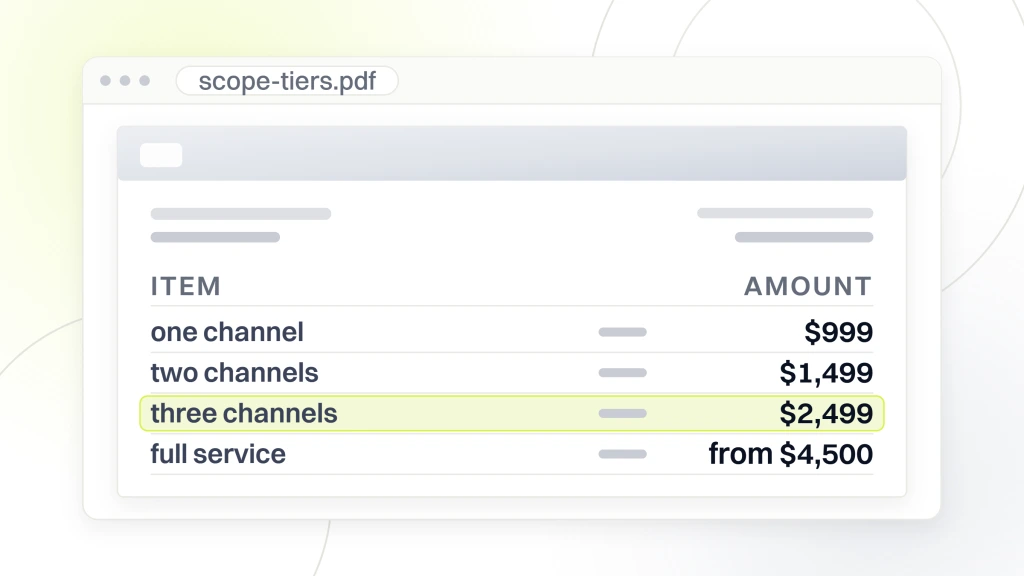
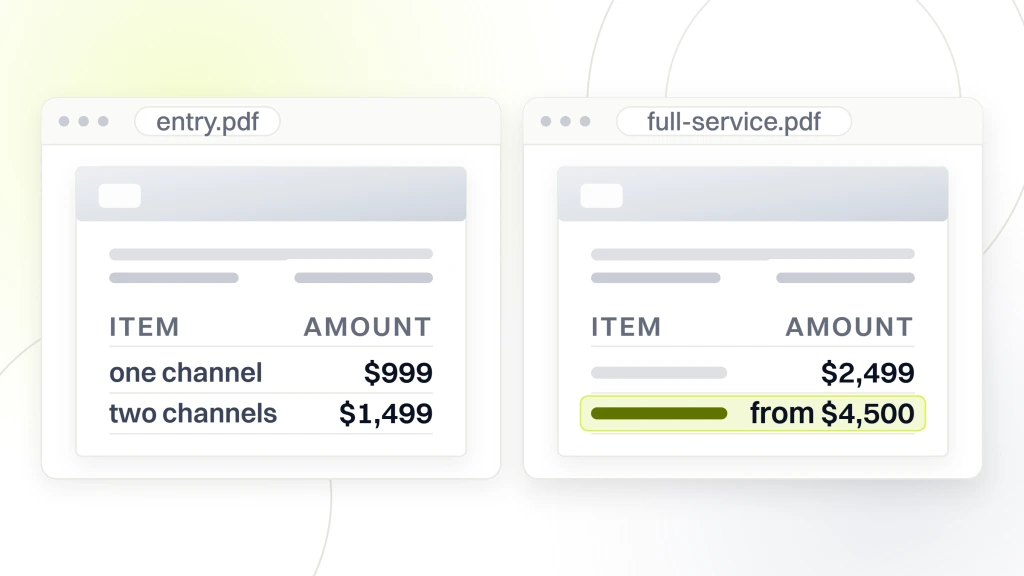
The $999 per month tier at Redefine Web covers strategy, one channel (usually Meta or Google), monthly reporting, and coaching for an in-house media buyer or founder. The $1,499 tier adds a second channel plus weekly creative direction. The $2,499 tier covers Meta plus Google Shopping plus one supporting channel, weekly creative production, monthly server-side hygiene, and pipeline-tied reporting back to your subscription payback model. The from $4,500 per month tier covers Meta, Google, TikTok Shop, Amazon, and creative production, with 8 to 14 assets per week and dedicated affiliate program management. A brand at $30,000 monthly ad spend usually starts at the entry tier. A brand at $150,000 monthly starts in the middle. A brand at $500,000-plus monthly starts at the top and expects payback inside 90 days. The PPC management services page walks through what each tier actually delivers.
Payback math on the retainer itself
A brand at $150,000 monthly ad spend with a 42% contribution margin has $63,000 of monthly gross contribution to work with. A retainer at $2,499 per month needs to produce $6,000 of incremental gross contribution to hit a 2.4x payback on the retainer. That is a 9.5% efficiency gain across the account, what a real PPC agency for pet brands produces in the first 90 days on an inherited account with tracking gaps and creative fatigue. By month six, the same account typically shows 22% to 34% efficiency gain and the retainer runs at a 6 to 8x payback. That math is why retainer PPC still beats hiring in-house on most pet DTC accounts under $500,000 monthly spend.
Contract terms that protect the founder
Standard contracts run 6 months. Anything shorter sets the account up to fail once the first 60 days go into tracking cleanup, creative diagnosis, and audience rebuilding, none of which move the return-on-ad-spend number in the same week. Longer contracts of 12 or 24 months come with 8% to 15% discounts and are worth signing once the first six months prove out. Watch for auto-renewal clauses that lock a bad fit for another 12 months. A clean 6-month contract with a 30-day notice window at renewal is the healthiest structure for both sides of the desk.
Who owns the pet PPC agency engagement inside the store
Named ownership on the brand side decides whether the agency retainer compounds or drifts. Somebody inside the store has to own the response loop with the agency, or the strategy defaults to whichever teammate happens to be least busy that week.
Ownership across the four store scales
At under $50,000 monthly ad spend, the founder owns the engagement and reads the report weekly. At $50,000 to $200,000, a marketing coordinator or head of ecommerce owns it with the founder in a monthly review. At $200,000 to $600,000, a marketing director or head of growth owns it with a creative producer in the loop. Above $600,000, a VP of paid or head of performance owns it with an internal media team plus the agency running specific execution streams. The pattern that fails at every scale is when nobody owns it and the retainer becomes a set-and-forget expense the CFO cannot defend at the next board meeting.
Reporting cadence that keeps the loop honest
Weekly async updates on spend, cost per acquisition, and creative rotation. Monthly live calls on the payback model, subscription retention curve, and next-quarter creative plan. Quarterly strategy reviews that include a written retrospective on what worked and what did not, plus a rebuild of the payback model with the store’s fresh numbers. That cadence is enough to keep the brand-agency loop tight without drowning either side in meetings. Brands that skim the weekly and skip the monthly always end up disappointed at the quarterly. Reading the report is part of the job.
A DTC pet PPC agency engagement in production
Pet Shop · Independent Retail · UK came to us with rising rent, energy, and wholesale costs, pet parents trimming non-critical spend on toys and accessories, and a mobile digital front that was failing the reassurance test inside the first three seconds. The journey starts on mobile. People search, scan reviews, flick through Instagram, then decide where to go. Every abandoned visit, every uncalled phone number, and every Amazon-default purchase hurt more than it used to.
Our team rebuilt the site mobile-first with fast load, clear pathways to call, WhatsApp, and reserve-and-collect, plus a stock-led homepage so visitors know what’s available without scrolling. Google Business Profile was rebuilt for near-me intent with consistent NAP across directories and a review-velocity workflow capturing happy customers at the till. Daily Instagram and Facebook content kept the shop in feeds. Inside one quarter, calls plus WhatsApp inquiries more than doubled, click-and-collect orders more than tripled, and repeat-customer rate climbed nearly half, all without growing the team or advertising spend. Local inquiries climbed +158% on the quarter-one curve. The paid social discipline that scaled the retail store carries straight into a DTC subscription account.
Pet Shop · Puppies + Grooming · Singapore came to us on a $500 per month engagement after a Google Core Update erased ranking equity, on a Weebly site where a full WordPress migration was too risky. We re-optimized existing pages with NLP-driven heading work, density tuning, and sentence-level semantic keyword passes informed by competitor reverse-engineering. New breed-specific pages expanded the dog-keyword cluster. Off-page, since the brand already existed, we focused on relevant authority via high-quality referring domains with branded and semantically relevant anchors to avoid over-optimization. Four months later the site went from 480 to 2,400 monthly visitors, a 5× recovery on the 4-month curve, with the main keyword climbing from page 3 to mid-page 1. That same disciplined content plus intent architecture is what backs a pet subscription paid stack once you scale off Google Shopping and start earning organic pull.
Pet Shop · Pet Superstore · Surrey, UK came to us with three workflows that had to land at once. A complete information-architecture and UX redesign aligned to a parallel rebrand, a full website plus ecommerce build on a platform the in-house team could manage, and a real-time API integration to the in-house Premier EPOS so product, stock, and customer data finally lived in one system. We delivered on nopCommerce with product catalog and customer records sync to the site’s SQL Server database in real time. ParcelForce and SagePay went live as integrated fulfillment and payment. The cart was built to split between click-and-collect and delivery, so customers can mix product types in a single checkout. Launch went live with a 10K SKUs catalog, real-time EPOS sync, integrated ParcelForce, SagePay, split-cart click and collect, and a loyalty engine. Both stories share the same pattern. A PPC agency for pet brands earns its retainer by rebuilding the account architecture first, then scaling creative on top of that clean foundation.
Where a pet brand PPC agency fits your marketing stack
A pet brand PPC agency sits between your ecommerce platform, your creative team, and your CFO’s payback model. It rebuilds the tracking foundation, produces the creative volume the paid channels need to keep learning, and translates channel performance into cash math the founder actually cares about. Brands that budget for paid tactics without a real strategy end up with tactical wins and strategic drift.
Brands that build the strategy first end up with tactical wins that compound into real growth over 18 to 36 months. The Google Ads help documentation is the outside read every DTC pet founder should keep on hand once planning the engagement.
Our pet products marketing hub covers the broader creative and organic side of DTC pet, and the entry retainer starts at $1,499 per month with 6-month contracts standard. Ad spend is billed separately. A PPC agency for pet brands is the plan that decides which paid investments compound and which stay stuck as isolated tactics.