
PPC for real estate investors runs on one currency. Motivated seller phone calls. Not clicks, not form fills, not brochure downloads. A qualified seller call from a homeowner ready to accept a cash offer 30% under retail is worth $600 to $2,400 in acquisition cost on a wholesale account. Anything less than that produces a losing quarter, and anything above it needs a tighter campaign or a higher assignment fee to make the math work.
This guide walks you through what a working real estate investor PPC scope looks like across wholesale, flip, and buy-and-hold accounts. You’ll get keyword targeting for cash-buyer intent, campaign structure for motivated seller campaigns, honest CPL benchmarks from live accounts, and a Redefine Web client case (Abels Residential) whose conversion-focused build and paid support drove 20+ qualified leads per month. Bring your last 90 days of Google Ads data and read straight through in about ten minutes.
How much does PPC for real estate investors cost per lead
Paid search for investors runs $80 to $340 per lead on Google Search across most US metros. Cost per motivated seller call, the number that matters more than raw CPL on investor accounts, lands at $180 to $620 on mature accounts running tight negative keyword lists and intent-matched landing pages built for cash offer conversion.
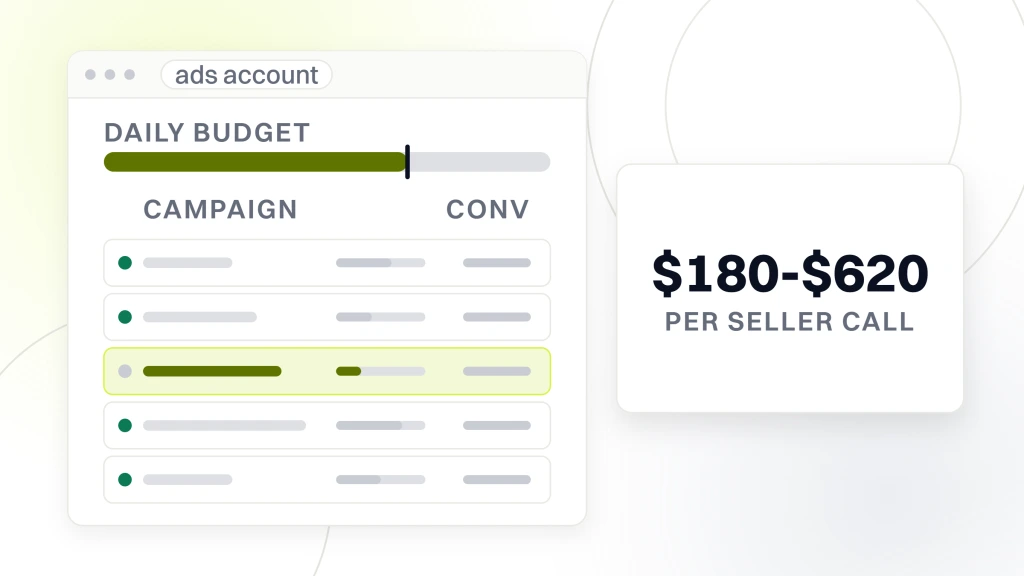
Lead-to-motivated-seller ratio separates working accounts from broken ones. A raw $80 lead that converts at 20% to a real seller conversation produces a $400 cost per qualified conversation. A $180 lead that converts at 50% produces a $360 cost per qualified conversation. The second is cheaper because the traffic is closer to the deal. Every serious investor PPC account measures cost per motivated seller conversation, not cost per raw lead, so half the raw leads on investor campaigns are timewasters or wholesalers cross-shopping cash offers.
Cost per closed deal is the number that pays the bills. A mature real estate investor PPC account closes one wholesale assignment per 8 to 18 qualified motivated seller calls, depending on submarket, offer style, and closing team quality. That puts cost per closed wholesale deal at $2,800 to $9,600 on well-managed accounts. Against $8,000 to $22,000 assignment fees, the payback math works comfortably. Flippers close one deal per 12 to 22 calls with a higher marketing cost per deal but higher per-deal margin. Buy-and-hold investors close one deal per 15 to 30 calls, and the deal produces recurring monthly cash flow. For the wider take on paid search for brokerages and agent teams, see our guide to real estate PPC management services for agents, teams, and brokerages.
Bid strategies matter more on lower-volume investor accounts than on high-volume agent accounts. Target CPA works when the account has 30+ conversions per month. Below that volume, Manual CPC produces cleaner data so Google’s automated bidding needs a minimum data set to model against. Most solo investor accounts run at 6 to 18 conversions per month for the first year and stay on Manual CPC through month twelve. Wholesale operations doing 40+ deals a year across multiple metros can move to Target CPA by month six.
Landing pages built for PPC management for real estate investors
Landing pages built for PPC management for real estate investors carry three elements above the fold. A headline naming the situation (“Facing foreclosure in Phoenix. Get a cash offer today”). A short form (name, address, phone) tied to a same-day auto-response. And a trust bar showing years buying houses, total properties acquired, and Better Business Bureau or Google review count with average rating.
Below the fold, three to five paragraphs answering the top motivated-seller questions. How fast can you close. What condition does the house need to be in. Do I need to make repairs. What’s the difference between your offer and listing with an agent. Every answer is short, direct, and honest about the cash-offer discount versus retail. Homeowners in distress read every word of these paragraphs before submitting the form, and glossing over the honest answer hurts trust and cuts conversion.
Every landing page carries a call-tracking phone number in the header and again in the hero copy. Every landing page passes Core Web Vitals under 2.5 seconds LCP on 4G so Google Ads Quality Score reads page speed as a ranking input. Slow landing pages get penalized in the auction and cost 20 to 40% more per click on the same keyword against a faster competitor page.
Same-day auto-response on every form submission separates working funnels from broken ones. A motivated seller who submits the form at 11 p.m. Tuesday and doesn’t hear back until Thursday morning has already called two other cash buyers by then. Wire the form to a CRM with an SMS and email response inside 90 seconds. Follow up with a personal phone call inside 60 minutes during business hours. This one automation alone doubles the deal close rate on submitted leads in the first 30 days of running it consistently.
A real client case for real estate investor PPC results
Abels Residential is a Redefine Web client whose real estate work demonstrates the exact pattern a strong real estate investor PPC engagement follows. Their London letting operation entered the market with no digital presence and hit 20+ qualified rental leads per month inside the first year, 300+ keywords ranked on Google’s first page, and a sub-2-second full page load across the site. Marketing filled the calendar with real inbound conversations instead of cold outreach.
The Abels Residential engagement started with a conversion-focused build. Clean structure, lead-capture forms on every unit page, mobile-optimized rental search, and on-page SEO tied to boroughs and property types renters actually type. Off-page work then pushed authority. Search Console tracked 300+ ranked keywords, and the intake system routed every form submission to Director Callan Pang inside minutes. Result: 20+ qualified leads per month directly from organic search traffic, and a 2-second page load across the site.
The pattern moves cleanly to a US real estate investor PPC account. Replace “rental in Camden” with “stop foreclosure Phoenix.” Replace “letting in Islington” with “sell inherited house Chicago.” Every intent bucket gets its own dedicated landing page, every ad reads with the intent-specific angle, and the negative keyword list keeps agent-adjacent and MLS-listing traffic out of investor campaigns. Cost per motivated seller call drops 40 to 70% on accounts where we’ve applied this pattern versus the previous vendor’s flat single-landing-page structure.
Call tracking on PPC services for real estate investors
Call tracking is the single most-skipped piece of PPC services for real estate investors, and it’s the one that separates working accounts from unmeasurable ones. Every ad, every landing page, every Google Business Profile link gets a dedicated phone number that logs source, ad group, and keyword before ringing the intake line. CallRail runs $45 to $145 monthly and is the industry standard. Twilio’s dynamic number insertion costs less but takes a developer to wire up.
Without call tracking, the investor is guessing at attribution. The intake person picks up the phone, the caller says “I found you online,” and the report shows a form submission from Facebook. Both the investor and vendor blame the wrong channel for two quarters running. Every serious real estate investor PPC engagement wires call tracking on day one and reads the recordings in the first monthly review to catch bad-fit callers before they burn weekly budget.
Attribution ties motivated seller calls back to the keyword that generated the first click. That closes the feedback loop on which ad groups deserve budget increases and which need pausing. On a mature investor account, 20% of keywords produce 70% of motivated seller calls. The other 80% burn budget without payback. Weekly negative-keyword additions and monthly ad-group pauses keep the account concentrating spend on the 20% that closes deals. The wider PPC management practice off this silo runs the same pattern across every vertical, with detail at PPC Management Services.
Read the recordings weekly. The recordings tell you which language sellers use in the first 60 seconds of a call, which motivations recur, and which submarkets show the most distress activity. That intel feeds landing page copy revisions, negative keyword additions, and next quarter’s expansion decisions on your investor PPC account. Investors who read recordings monthly outperform investors who only look at click reports by a wide margin so the recordings tell you what the numbers cannot. Commercial real estate deals run a different auction and price ladder, and that side gets its own detailed treatment in our commercial real estate PPC management guide.
Retainer benchmarks for real estate investor PPC management
Redefine Web PPC management for real estate investors runs on a clean four-tier retainer priced against account complexity and spend. Every tier includes account access, call tracking review, weekly Search Terms cleanup, and a monthly working session with the account lead. Ad spend is billed separately by Google directly on your card.
| Tier | Monthly retainer | Typical ad spend | Seller calls target |
|---|---|---|---|
| Launch, solo wholesaler one metro | $999/mo | $1,500 to $3,500 | 6 to 18 per month |
| Growth, small flip team | $1,499/mo | $3,500 to $8,500 | 18 to 40 per month |
| Scale, wholesale operation | $2,499/mo | $8,500 to $18,000 | 35 to 85 per month |
| Enterprise, multi-market investor | Starts at $4,500/mo | $18,000+ | 85 to 220 per month |
A fair real estate investor PPC retainer covers the following every month, and the deliverables sit in a shared client folder your team can open at any time.
- Weekly Search Terms review with 20 to 40 negative keywords added
- Monthly ad copy refresh across every active ad group by intent bucket
- Quarterly landing page conversion audit with named A/B tests queued for the next quarter
- Call tracking review with keyword-level attribution tied to motivated seller calls
- Weekly call-recording review with top 10 calls transcribed for copy and negative keyword insights
- Monthly 45-minute working session with the account lead, not an account manager reading a PDF
- Owned account access with MCC linking from your own root account
Local Services Ads for real estate investors
Local Services Ads under the Google Screened program works differently for investors than for agents. Google requires a licensed real estate agent tie for investor accounts running LSA under the Real Estate Agent category. Investors without an in-house license typically partner with a licensed agent under a formal agreement that satisfies the LSA program requirement.
Setting up LSA takes 4 to 8 weeks so Google runs the background check on the licensed agent, insurance, and business identity. Once approved, the profile displays a Google Screened badge and enters the local rotation. Pay-per-lead pricing runs $60 to $180 per call on investor-adjacent categories. Every out-of-scope lead can be disputed and Google refunds legitimate disputes within 3 to 5 business days.
Dispute the leads that don’t fit your buy criteria. Every LSA investor account gets 20 to 35% of leads that are out-of-scope (wrong price band, retail listing intent, wrong city). Google refunds legitimate disputes within 3 to 5 business days. Every serious real estate investor Google PPC account disputes 12 to 25 leads per month and typically recovers $600 to $2,400 in refunded lead cost. That process alone drops effective CPL by 15 to 25% when done consistently every month across the year.
Response rate is the ranking signal LSA reads most heavily. Answering the phone within 60 seconds versus waiting 20 minutes moves the profile up in the rotation the same day. Every LSA lead that hits voicemail hurts ranking, and the ranking loss usually costs more in the next month than the missed lead itself. Wire an answering service or a dedicated intake team into the LSA workflow if the primary investor can’t answer 90% of calls within 60 seconds during business hours.
Five mistakes that sink PPC for real estate investors accounts
First mistake, broad-match keywords on day one. “We buy houses” as broad match pulls traffic from realtors, retail sellers, curious homeowners, and job seekers. The waste is 40 to 70% of budget before month one is over. Start every account phrase and exact match only. Test broad match after 60 days of conversion data informs which themes deserve the wider net.
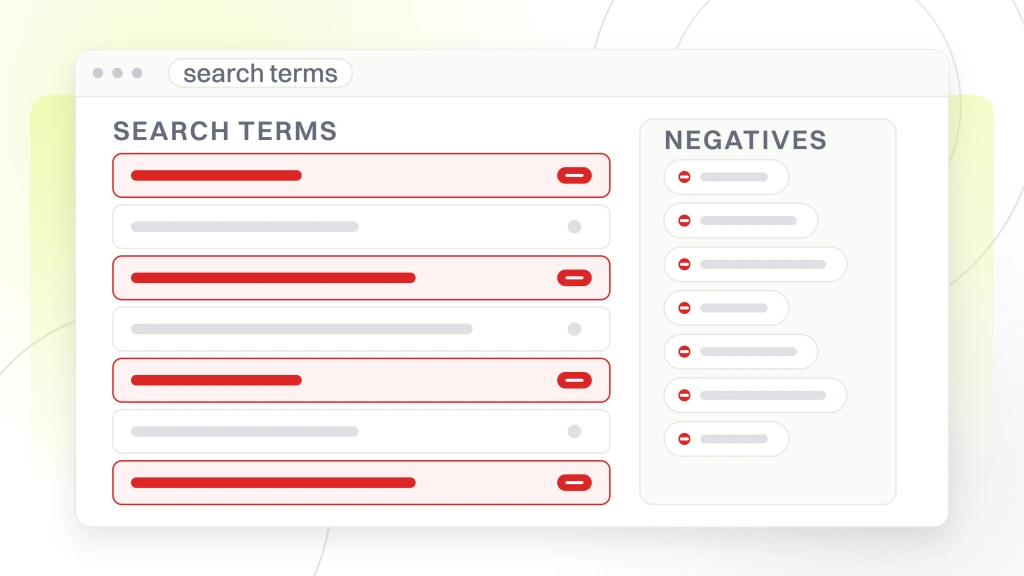
Second mistake, same landing page for every intent bucket. A distressed homeowner facing foreclosure and a probate executor selling an inherited house need different reassurance on the page. Sending both to the same page cuts conversion 40 to 60%. Every intent bucket warrants its own landing page with bucket-specific copy.
Third mistake, no negative keywords for agent noise. “Realtor,” “MLS,” “listing agent,” “free CMA,” “comparative market analysis,” “list my house,” “agent commission” all pull agent-adjacent traffic that never converts to a cash offer. A 500-line agent-adjacent negative keyword list on day one saves 40 to 60% of budget in month one alone.
Fourth mistake, no call tracking on Facebook and Google ads at the same time. Investors run Facebook alongside Google, and without unique tracking numbers per channel, the intake team can’t tell which channel produced the last 40 calls. Wire CallRail dynamic number insertion across every channel and read the source-attributed reports monthly.
Fifth mistake, paying a $2,500 monthly management fee for a spreadsheet emailed once a month with click counts, impression counts, and zero decisions on next month’s negative keyword additions. The right response the second time around is asking the vendor to name a keyword their last investor client booked the most seller calls from, the current cost per motivated seller call on that account, and the negatives they added last week. Real answers separate real management from theater.
How long PPC management for real estate investors takes to close first deal
PPC management for real estate investors produces first motivated seller calls inside 10 to 21 days from launch. First closed wholesale assignment lands 45 to 90 days out. First flip disposition lands 6 to 9 months out due to rehab timeline.
Every phase moves at Google’s data-collection pace, not the vendor’s promise pace. Weeks one to four handle campaign build, landing page launch, negative keyword list, and first data collection. Weeks five to twelve run optimization on real conversion data, ad copy refresh, and landing page A/B test one. Month four to six delivers mature economics where cost per motivated seller call drops 30 to 60% below launch levels. Closed deals from calls booked in month one commonly close in month three or four for wholesale, and month six or seven for flips due to rehab and disposition timelines.
The account compounds through year one so the CRM data, negative keyword list, and landing page conversion history feed the next quarter’s decisions. An account that starts at $420 cost per motivated seller call in month one commonly lands at $220 to $280 by month twelve. That drop happens through hundreds of small decisions, not one big optimization, which is why the monthly working session with an operator who knows the account matters more than any tactic in this guide.
What to do this week on your real estate investor PPC
Finish three actions by Friday. Pull the last 30 days of Search Terms and add every agent-adjacent query to the negative keyword list. Confirm call tracking runs on every ad and landing page. Load a competitor’s top ad and compare their landing page against yours side by side.
Those three alone usually move next month’s cost per motivated seller call 10 to 25% lower without touching bids, budget caps, or the ad copy across the campaigns you’re already running. Every week of delay pushes the compounding curve another week down the road, and a competitor with tight negatives and a fast landing page pockets the seller calls you paid for and lost to a slow page.
For teams that want the whole account run off your plate, our Real Estate PPC Agency for Brokerages team handles the build, tracking, and monthly optimization across motivated seller campaigns. For teams that need paid coverage alongside SEO on the same account, our Real Estate SEO Services for Brokerages team runs both channels under one working session so the reporting stays clean. A 30-minute audit call reads your last 60 days of Google Ads data, your Search Terms report, and your landing pages, then hands back a 90-day plan sized to your current spend.