
SEO for real estate investors is the on-page, off-page, and Google Business Profile (GBP) work that ranks a we-buy-houses, wholesaler, or fix-and-flip site in the top 3 organic results for motivated seller queries in your metro. The signature searches are “sell my house fast [city],” “cash home buyer [city],” and “we buy houses [city].” Rank inside the top 3 for 6 to 12 of those terms and your inbox pulls 12 to 30 motivated seller leads a month at a cost per lead 60 to 80% below paid channels.
I have watched solo wholesalers in Tampa and Kansas City move from page 4 to position 2 in 5 to 7 months on nothing more than a clean site, 12 city landing pages, and a review request script sent after every closing. This guide is the full plan for SEO for real estate investors that actually closes deals. You get the keyword set that captures distressed and inherited property intent, the technical baseline every cash buyer site needs, the city page template that ranks against national iBuyer competitors, the link build cadence that separates a $500 domain from a $50 one, and the reporting stack that ties organic leads to closed contracts. Bring your last 90 days of lead source data. This guide only means something with your numbers next to it.
Why SEO for real estate investors beats PPC on cost per deal
Paid Google Ads for cash buyer terms run $35 to $95 per click in most metros, since national iBuyers and Home Vestors franchises bid the market up. That works out to $180 to $520 per qualified lead and $2,400 to $7,000 per closed contract. Organic SEO for real estate investors closes the same deals at $40 to $110 per lead once the site compounds past month 6. The gap is not a marketing hypothesis. It is a channel math problem, and channel math is what a well-run search program fixes.
Motivated sellers who type “sell my house fast Tampa” already know the transaction they want. They are 3 to 5 days from calling someone, not 3 to 5 weeks from an initial consideration. Organic rankings for that intent capture the searcher at the bottom of the funnel and skip the paid cost per click entirely. That is why the cash buyer investors who scale past 4 or 5 deals a month always own the top 3 organic results for their metro, not the paid slots above them.
The 3 signals Google weighs for local intent queries inside SEO for real estate investors are relevance, distance, and prominence. Relevance is how well your site copy and GBP match the query. Distance is set by the searcher’s location, so you cannot change it. Prominence is the reputation of your business across the wider web, measured through reviews, citations, and back-links. Roughly 80% of the ranking work on a real estate investor SEO program is prominence work, which is exactly why national iBuyers spend so heavily on it.
Keyword research for SEO for real estate investors
The keyword set for SEO for real estate investors runs 40 to 60 primary terms and 200 to 300 long-tail variants across every metro. The primary categories are cash buyer intent, distressed property intent, inherited property intent, foreclosure intent, and wholesaler intent. Every category maps to a different landing page and a different conversion action, so keyword research and site architecture have to be built together, not sequentially.
- Cash buyer terms: “we buy houses [city],” “cash home buyers [city],” “sell my house for cash [city].” 40 to 200 monthly searches per metro.
- Speed-of-sale terms: “sell my house fast [city],” “quick house sale [city],” “7 day home sale.” 30 to 150 monthly searches per metro.
- Distressed property terms: “sell inherited house,” “sell house needs repairs,” “sell house foreclosure [city].” 20 to 90 monthly searches per metro.
- Wholesaler intent: “cash buyers list [city],” “real estate wholesalers near me,” “end buyers real estate.” 15 to 60 monthly searches per metro.
- Informational funnel: “how to sell a house fast,” “how much do cash buyers pay,” “do cash offers close faster.” 500 to 6,000 monthly searches nationwide.
Do keyword research with Ahrefs, Semrush, or the free Google Keyword Planner. Pull search volume for every combination of primary term plus metro, plus every zip code inside your buy box. A wholesaler working 4 counties in the Tampa metro should end up with 300 to 500 keyword targets in a spreadsheet, ranked by search volume and keyword difficulty. Any term with 20+ monthly searches and a difficulty score under 25 is worth a dedicated landing page. That threshold is what separates SEO for real estate investors done right from a scatter-shot content dump that ranks for nothing.
If your keyword sheet has fewer than 200 rows, you are missing the long-tail. Cash buyer SEO wins on breadth, not on 5 competitive head terms.
Technical SEO baseline for cash buyer and wholesaler sites
The technical baseline covers speed, crawlability, mobile experience, and schema. A cash buyer site that loads in under 2 seconds converts 25 to 40% higher than one that loads in 4 seconds, on the same traffic. Google reads slow sites as low quality and ranks them accordingly. Full page load target is 1.8 seconds on mobile, which puts you inside the top decile of investor sites without spending on custom development.
Set the site on a fast host with server-side caching (WP Rocket, Cloudflare, or a native CDN plan on Rocket.net or WP Engine). Compress every image to WebP under 120 KB. Remove any unused plugins. Build a mobile-first responsive design with touch targets of 44 pixels or larger and font sizes at 16 pixels minimum in the body. Every cash buyer landing page needs an above-the-fold form with 3 fields (address, name, phone) and a sticky call-to-action that follows the scroll. Miss any of those and 20 to 40% of your motivated seller traffic drops out before it converts.
Add LocalBusiness schema to every page, RealEstateAgent schema to your homepage, and FAQPage schema to every page with an FAQ block. Structured data on SEO for real estate investors sites earns the rich snippets iBuyer competitors chase paid ads for. Structured data is not a direct ranking factor. Instead, it earns rich snippet placements that grow click-through rate by 15 to 30% on the same ranking position. The Google SEO Starter Guide covers the crawl and index basics every investor site has to pass first.
City landing pages are the core of SEO for real estate investors
City landing pages are the single highest-value asset on any cash buyer site. Each page targets 1 primary metro keyword plus 3 to 5 semantic variants, and captures the searcher who typed the exact metro name. A well-written city page ranks in the top 5 for its target term inside 60 to 90 days on a mid-competition metro. 12 to 20 city pages built to spec cover the top 4 counties in most Sunbelt metros and pull 60 to 80% of the site’s total organic traffic.
The template that works. 1,200 to 1,600 words per page. Opening paragraph naming the city, the median home price in that market, average days on market, and the 3 property types you buy most (single-family, condo, small multi-family). 2 paragraphs on the local investor process (walk, offer, close). 2 paragraphs on situations you buy in (inherited, pre-foreclosure, tired landlord, code violations). 1 paragraph naming 4 to 6 neighborhoods in the metro with real numbers. 1 paragraph with 3 short client stories. Closing paragraph with the primary CTA (get my cash offer) plus phone number.
Every city page links to 2 adjacent city pages (lateral), 1 property-type page (funnel deeper), and 1 informational blog post (funnel wider). 6 months of city pages across 15 metros builds a working local content graph that outranks We Buy Ugly Houses and OpenDoor on long-tail intent. That is the compounding pattern behind cash buyer SEO done right. For the wider strategy view on how agent, team, and brokerage sites compete on these same signals, read our real estate SEO services guide, which covers the same signal set applied to the agent side of the market.
Publishing cadence is 1 to 2 city pages a week for the first 3 months, then 1 every 2 weeks for maintenance. Never bulk-generate 40 templated pages in 1 day. Google reads that as thin, duplicate content and demotes the whole domain. Slow, hand-written pages with real photos, real median prices pulled from Zillow the week of publishing, and 1 quote from a recent seller outrank a dozen AI-templated pages every time.
Google Business Profile for real estate investors
GBP earns a real estate investor into the local 3-pack for “cash home buyers near me” and metro-name searches. A complete profile with the right primary category, service radius, review velocity, and weekly posts pulls roughly 3x the impressions of a half-filled one. That is not a soft claim. GBP Insights reports the numbers back inside the dashboard.
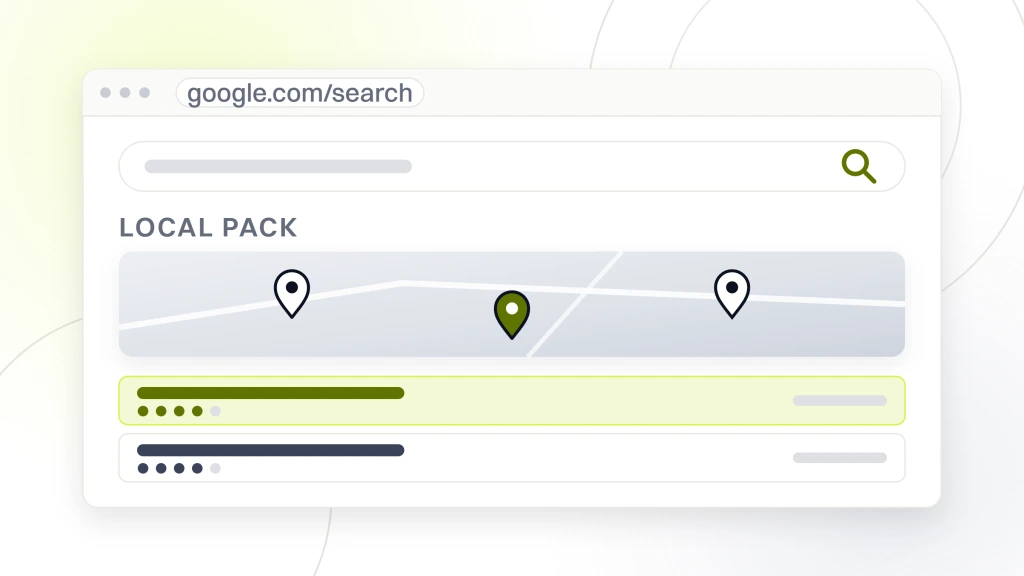
Set primary category to Real Estate Investing Service. Add every fitting secondary. Property Investment Company, Real Estate Consultant, and Real Estate Agency if you also list wholesale deals. Fill every field. Business hours, phone number, website URL, service area (list every zip code you buy in, up to 20 codes), attributes, services (cash purchase, quick close, we handle repairs, foreclosure buyout, inherited property purchase), and a description with your primary keyword in the first sentence. Post 1 GBP update per week (recent purchase, closing story, market note) and answer every Q&A within 24 hours.
Upload 25 photos minimum. Team photos, past purchases (before and after shots on repair-and-hold deals), sold signs, closing table photos, neighborhood photos. Every image gets a filename with the primary keyword and a descriptive alt text. GBP data completeness is a documented ranking factor and the fastest ranking gain most investor sites ever earn.
Reviews are the prominence signal that moves rankings fastest
Reviews are the most visible trust signal on your GBP and the fastest way to grow prominence. A cash buyer with 45 reviews at 4.8 stars outranks one with 12 reviews at 5.0 stars on almost every competitive query. Volume, recency, and keyword-rich text all count. Vendor benchmarks put review signals at roughly 15% of local pack ranking weight, which makes them the highest-value repeatable work you own on SEO for real estate investors.
The cadence that works is 1 review request per closing plus 1 per unsold appointment. Text a direct GBP review link at day 1 and a soft reminder at day 4, then stop. Roughly 35 to 55% of past clients leave a review when asked with a direct link. Under 10% do without the direct link. The link is what closes the loop.
Coach sellers to name the neighborhood, the property situation, and 1 concrete moment. “Sold our Riverview inherited house in 9 days with no repairs” tells Google far more than “great buyer, 5 stars.” Keyword-rich reviews trigger the yellow-highlighted phrases inside your GBP snippet and grow click-through rate by 20 to 30% on the local 3-pack. Respond to every review inside 48 hours, positive and negative. A 30-word response with the reviewer’s neighborhood named earns another ranking signal.
Back-links and off-page signals for investor SEO
Back-links from relevant, high-authority domains are the single strongest ranking signal Google admits and the hardest half of SEO for real estate investors to earn. A cash buyer site with 25 referring domains at DR 30+ outranks a competitor with 6 referring domains on almost every head term. The 4 link categories that move rankings are local business directories, real estate industry sites, journalist mentions, and guest posts.
- Local directories: Yelp, BBB, Chamber of Commerce, Yellow Pages, Manta, Foursquare, Angi. Free, 1 afternoon of work, foundational.
- Real estate directories: BiggerPockets marketplace, ConnectedInvestors, PropStream partner listings, National Real Estate Investors Association chapters.
- Journalist mentions: HARO (Help a Reporter Out), Qwoted, or SourceBottle. Answer 3 queries a week on inherited property, foreclosure, or market trend topics. 1 landed mention per month typically.
- Guest posts: Write 1 or 2 posts a month on adjacent industry blogs (mortgage, title, real estate agent, home inspection). Link back to a city landing page with the metro-name anchor.
Never buy back-links from vendors selling packages at $99 for 100 links. Google catches those patterns and demotes the whole site. Investor sites that ran that play in 2022 spent 6 to 12 months digging out of the penalty. The safe rule is 4 to 8 earned links per month at DR 30+ from relevant industry or local domains. That cadence compounds cleanly and never triggers a manual review.
Content and blog strategy for cash buyer sites
The blog on an investor site targets informational search intent 1 step above the transactional query. “How much do cash buyers pay for houses.” “What is the process of selling to a wholesaler.” “Do cash offers close faster than mortgage offers.” Each of those searches pulls 500 to 6,000 monthly searchers nationally, converts at 2 to 4% into leads once the reader hits a city page, and outranks Zillow’s thin auto-generated content on informational queries.
The blog template that works. 1,400 to 2,200 words per post. Opening paragraph fully answering the search query in 2 sentences. 3 to 5 H2s with keyword variants. Real numbers pulled from HUD, Zillow, or NAR data with the linked source on the number itself. 1 client story per post with the seller’s city named. 1 internal link every 200 to 300 words back to a city page or a related blog post. Closing paragraph with a soft CTA to a cash offer form. Publishing cadence is 2 posts per month, since 2 hand-written posts always outrank 8 rushed ones.
For inspiration on how the largest consumer real estate sites structure their content, browse the Realtor.com sell advice hub. The topic depth on inherited property, probate, foreclosure, and quick sale is the exact intent set your cash buyer blog needs to cover, with the difference that your site can rank on the transactional variants Realtor.com does not seriously pursue.
Abels Residential case study on London letting SEO
Abels Residential is a London-based property firm led by Callan Pang. He moved from Property Manager to Branch Manager before founding the letting agency. His problem when we started was the one every new solo entrant faces. Deep offline expertise, no digital credibility, invisible to renters searching online, and 20 established agencies competing for the same borough traffic. The overlap with a cash buyer entering a competitive metro is direct. Different transaction, same visibility problem.
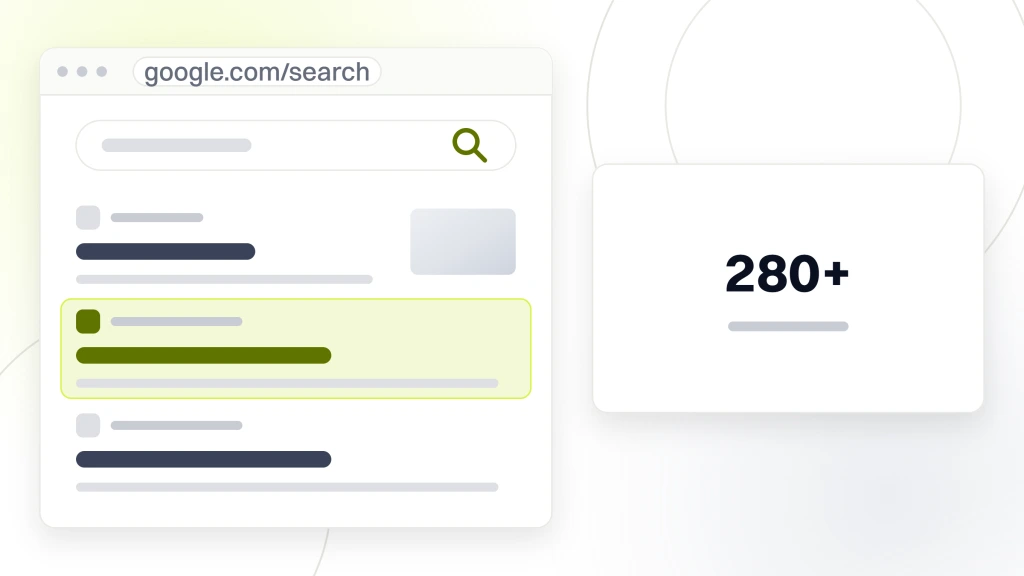
We built a conversion-focused website, ran on-page work targeting London rental keywords, and layered off-page authority through directories, PR mentions, and local citations. The site launched under 2-second full page load across every page. On-page targeted 45 primary keywords and 200 secondary variants around the letting query set. Off-page pushed 280+ Google first-page rankings inside the first 9 months. Qualified leads landed at 20+ per month from organic search alone, all directly attributed inside the CRM. Every number traces back to the exact plan above.
Abels Residential went from invisible to 20+ qualified rental leads a month and 280+ first-page rankings on a clean on-page and off-page build.
How long SEO for real estate investors takes to move rankings
Local 3-pack rankings move in 4 to 12 weeks depending on how complete your GBP is on day 1 and how competitive your metro is. New investor profiles take 8 to 12 weeks. Established profiles with existing reviews and citations move in 4 to 6 weeks. First qualified motivated seller leads from organic land in month 2 or 3.
City landing pages and blog posts take longer. First rankings on transactional metro queries land in 8 to 16 weeks. First lead from a city page lands in month 4 or 5. Compounding kicks in month 7. That is the honest timeline. Anyone quoting top 3 rankings in 30 days is either running paid ads in parallel or misreading the report.
| Signal | Time to first movement | Time to compounding |
|---|---|---|
| GBP completeness | 1 to 2 weeks | 4 to 6 weeks |
| Review velocity | 4 to 8 weeks | 3 to 6 months |
| Citation cleanup | 3 to 4 weeks | 2 to 4 months |
| City landing pages | 8 to 16 weeks | 6 to 9 months |
| Back-link building | 6 to 10 weeks | 6 to 12 months |
What SEO for real estate investors costs
Solo investors running SEO in-house budget $300 to $600 per month for tools (Ahrefs starter, BrightLocal, WP Rocket, Rank Math Pro) and 8 to 12 hours per week of their own time. That works if you already write well and enjoy the content side. Most investors do not, and they hit a wall around month 3.
Managed programs run on tiered monthly retainers. Visibility packages start at $999 per month for solo investors on a single stable metro. Traffic packages sit at $1,499 per month for investors entering a second metro or scaling past 3 deals a month. Scale packages run $2,499 per month for teams targeting 5 or more metros. Enterprise packages start at $4,500 per month for wholesale operations competing on multi-state searches. Every tier is a 6-month minimum, since the compounding pattern needs 6 to 9 months to hit stride.
Mistakes that stall investor SEO campaigns
Buying reviews or back-links. Google catches both patterns fast, filters the offending signals, and can suspend the profile. Never do it. The short-term boost is not worth the 6 to 12 months digging out of a manual penalty.
Publishing 40 templated city pages in 1 day. 200-word summaries with stock photos rank for nothing. 1,400-word pages with team photos, real median prices, and 3 client stories rank for dozens of long-tail queries each. Quality beats quantity 10 to 1 on cash buyer content, and the first pass at SEO for real estate investors always fails when volume gets prioritized over depth.
Ignoring the GBP Q&A tab. Every unanswered question sits there for years and reads as neglect. Seed 5 to 8 questions yourself with real answers on day 1. Respond to every new question inside 24 hours. That single habit adds a small but real prominence signal.
Chasing back-links before fixing the on-page baseline. 25 clean city pages plus 20 citations outrank 100 random back-links every time. Fix on-page, then build off-page. That order is intentional.
Start SEO for real estate investors this week
Start with GBP. Set primary category to Real Estate Investing Service, list every zip code inside your buy box, upload 25 photos, and post 1 update this week. That single afternoon of work moves the first ranking signal.
Then build your first 3 city landing pages. 1,200 to 1,600 words each. Metro name in the H1, first paragraph, 2 H2s. Real median prices pulled from Zillow the week you write. 1 client story per page. A cash offer form above the fold. Publish 1 page per week for the first 12 weeks and expect visible ranking movement inside 60 to 90 days.
Ready to work with a team that runs SEO for real estate investors as a compounding program, not a monthly retainer with no plan? See our real estate SEO service, our real estate marketing retainer, and our real estate PPC service for the paid layer that compounds on top of organic. For the wider marketing view, see our real estate marketing hub.