Inbound marketing for chiropractors is a patient acquisition system that pulls new patients toward your practice through helpful content, local search visibility, and trust signals, instead of pushing ads at strangers who never asked. It replaces cold outreach with a website, blog, reviews, and email or text nurture that meet patients at the exact moment they search for back pain, whiplash care, or a chiropractor near them.
Chiropractors who lean on inbound see the math change fast. Content-led practices earn an average of $44 for every $1 spent on email marketing, and search-driven traffic keeps compounding after the ad budget runs out. In short, the channel you earn beats the channel you rent.
I’ve spent 12 years running acquisition for medical and chiropractic practices, and the pattern is boring in a good way. Practices that publish patient-first content, keep their Google Business Profile tight, and nurture leads by text and email book two to three times more first visits than practices that skip any one of those pieces. This guide walks all 4 funnel stages, with real budget ranges, a case study from our own chiropractic client, and the exact tools we set up on day one.
Inbound marketing for chiropractors in one clean definition
Inbound marketing for chiropractors is a 4-stage funnel that attracts, converts, nurtures, and retains patients using content, search, forms, and email or text messages the patient asked to receive. Every step is measurable, every dollar is trackable, and every asset (blog post, review, landing page) keeps working for months after it goes live.
Outbound marketing (paid ads to cold audiences, direct mail, cold calls) still has a place, especially for a brand-new clinic with zero traffic. Inbound simply carries more of the load once your site starts ranking.
Why inbound works better than outbound for most chiropractors
3 forces push chiropractors toward inbound. First, patients research healthcare providers online before booking. Roughly 90% research before booking, even when a friend or doctor referred them. Second, inbound assets keep earning after the spend. A blog post that ranks for “chiropractor for lower back pain” books patients every month for 2 to 4 years without another ad dollar. Third, inbound builds proof at every step. Reviews, before/after stories, and educational content stack trust in a way a Google Ad never can.
The inbound math for a solo chiropractor. A single ranked blog post on “sciatica exercises” bringing 400 monthly visits, converting at 2%, books 8 new patient inquiries a month. That’s roughly $2,400 in new patient revenue at a $300 average first-visit value, for a one-time $250 writing cost. Try that with a Google Ad.
Where outbound still fits alongside inbound
Outbound isn’t dead for chiropractors, and pretending it is loses first-year practices patients they need. Run Google Ads and Facebook Ads for the first 90 days of any inbound push. Ads fill the pipe while SEO ranks. Once organic traffic covers 60% of new patient inquiries, taper paid to a maintenance level. In practice that means 30 to 40% of budget on ads year one, then 15 to 20% from year two forward.
The 3 outbound channels that still book chiropractic patients in 2026. Direct mail to targeted zip codes near the practice (best for a grand opening or a second location). Community sponsorships at a local 5K, sports league, or health fair. And professional referrals from primary care doctors, podiatrists, and physical therapists in the same building or block. These are relationship channels, not attention channels, and they compound slowly.
The 3 buckets of chiropractic marketing spend
Every marketing dollar you spend falls into 1 of 3 buckets. Understanding which bucket you’re funding stops the “why isn’t marketing working” question cold.
- External marketing. Google Ads, Facebook Ads, direct mail, community events. Reaches strangers, delivers volume, produces lower loyalty. Best used to fill a new schedule or launch a new location.
- Professional marketing. Referral relationships with PCPs, podiatrists, dentists, massage therapists, and physical therapists. Slow to build, high-quality patients, high retention. Best used from year 2 forward once your basic funnel works.
- Internal marketing. Reactivation campaigns, review requests, patient education emails, referral asks. Roughly 10x cheaper to convert than a cold lead. Best used starting day 1 of any inbound push.
Most chiropractic practices over-invest in external and under-invest in internal. Flip the ratio and the same monthly budget books 30 to 50% more first visits within 90 days.
Attract stage. How new patients find you online
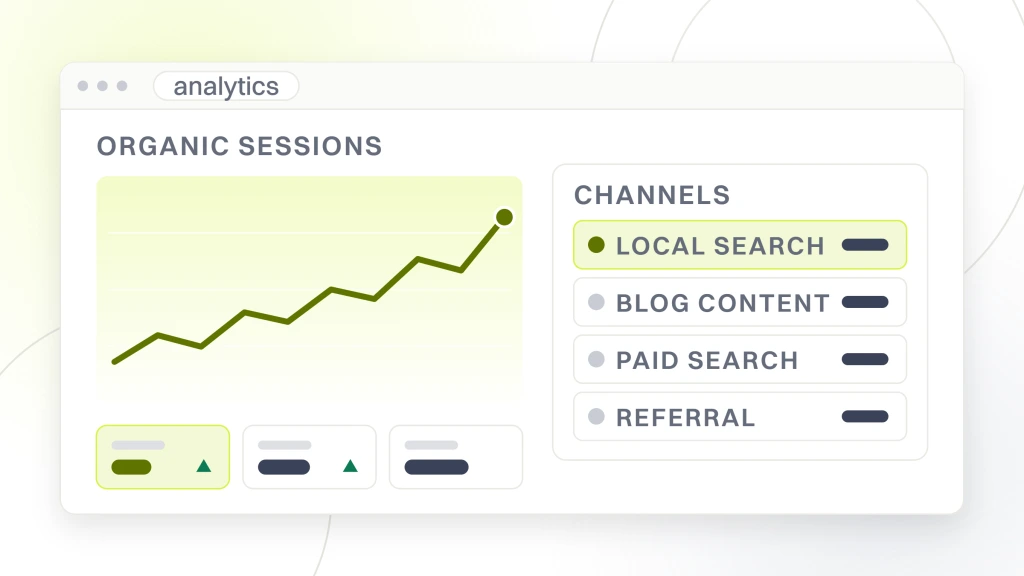
The Attract stage covers every asset that pulls a stranger to your site. For chiropractors, 4 channels do 90% of the work. Local SEO, blog content, Google Business Profile, and organic social. Nail these first, in that order, before you add anything else.
The SEO engine underneath every inbound marketing for chiropractors funnel
Local SEO is where every chiropractor starts. About 46% of Google searches have local intent, and “chiropractor near me” or “chiropractor [city]” makes up the bulk of what new patients type. Your website has to rank on page one for 5 to 12 local terms before inbound math works.
What ranks a chiropractic site.
- A Google Business Profile with 40+ reviews at 4.6 stars or higher. This is the single biggest local rank factor. Read Google’s official profile guidelines and stay inside them.
- A location page per service area. One page per neighborhood or nearby town, each with unique copy, patient photos, and a map embed.
- Condition-specific pages. One page per condition you treat (whiplash, sciatica, disc herniation, tension headaches, sports injury). These earn 60% of your long-tail traffic.
- Structured blog content on real patient questions. “How long does chiropractic treatment take for a herniated disc” pulls in patients further from the “buy” moment but with real intent to book.
Organic social as an Attract layer, not a Convert layer
Social does not book patients directly. It builds recognition so that when a patient sees your Google result, they click yours instead of the competitor’s. Post 3 times a week on Instagram or Facebook. Rotate through 3 formats. Patient education (60 second explainer videos), before/after wins (with signed consent), and behind-the-scenes clinic content. Skip the platitudes.
A single condition page ranking for “sciatica treatment in [your city]” books more first visits than 6 months of unpaid social posts. Build the pages first, then film the videos.
How AI search changes chiropractor content strategy in 2026
38% of US internet users now use AI tools like ChatGPT, Gemini, and Perplexity to research healthcare before booking, up from 8% in 2023. Roughly 77% of ChatGPT users treat it as a search engine. What that means for chiropractic content is boring but real. The same condition pages that rank on Google feed the answers AI tools deliver, and pages with clear headings, plain definitions, and 40 to 90 word answers to specific questions get quoted the most.
3 small edits make any chiropractic page AI-friendly. Open every page with a 2-sentence definition of the condition and how you treat it. Break the page into H2s that read like the questions patients ask (what causes sciatica, how long does treatment take, what does a session feel like). Put the direct answer in the first sentence under each H2, then unpack it. This is the same structure that wins featured snippets, so the work double-counts.
Convert stage. Turning visitors into scheduled patients
Convert is where most chiropractic sites bleed. Patients land on the site, read the homepage, and leave. Your job is to reduce that drop-off by giving every visitor an easy, low-commitment way to raise a hand. That means clear CTAs, short forms, and one specific offer per landing page.
Lead magnets that actually get filled out for chiropractors
A lead magnet is a small, high-value asset a patient trades their email for. Chiropractic lead magnets that book patients well are hyper-specific and easy to consume.
- “5 stretches to relieve lower back pain in 10 minutes a day” (PDF). Best for content-marketing readers on blog posts about back pain.
- “Is your headache actually a neck problem” quiz. Interactive quizzes convert 40 to 60% higher than static PDFs for symptom-driven traffic.
- “Free 15-minute pain assessment call.” A soft-touch call the front desk books. It skips the payment barrier and warms the lead for the in-clinic visit.
- “New patient special” landing page. A flat $49 first visit (adjustment plus consult), reserved for first-time patients. Every paid ad points here, not to your homepage.
Form design rules that move the needle for chiropractors
The form is where you win or lose the visitor. 6 rules matter.
- Cut fields to 4 or fewer. Name, phone, email, main concern. That’s it. Every extra field cuts conversion 5 to 10%.
- Put the form above the fold on every landing page. Not “book now” buttons that scroll. The form itself, visible without scrolling.
- Use one specific CTA per page. “Book my $49 first visit” beats “Learn more” or “Contact us” by roughly 30% in our tests.
- Ask for text opt-in on the form. 98% of texts get opened within 3 minutes, but you need explicit consent. Follow FCC telemarketing rules on written consent.
- Send an instant confirmation email plus SMS. Both channels, within 30 seconds of submit. Silence after form-fill is the #1 reason leads ghost.
- Route the lead to the front desk instantly. Slack notification, Twilio SMS, or a ringing desk phone. Contacted within 5 minutes converts 21x higher than contacted within an hour.
Email and text nurture that books the first chiropractor visit
Not every lead books on day one. Most take 3 to 14 days to schedule, and that gap is where email and SMS nurture pay for themselves. A short, useful sequence keeps you top of mind and answers the question every prospective patient asks. “Will this actually help my pain?”
SMS versus email in the chiropractor nurture stack
Both channels earn their spot. Email handles the depth (patient stories, condition education, insurance FAQ). Text handles the nudge (appointment reminders, one-click booking, quick confirmations). The 5-touch nurture sequence we install for chiropractic clients looks like this.
- Day 0, 2 minutes after form fill. Confirmation email and SMS with the booking link.
- Day 1. Email with a 90-second welcome video from the doctor. Named face and voice, not stock footage.
- Day 3. Email with 3 patient stories that match the lead’s stated concern (back pain, headaches, sports injury).
- Day 5. SMS with a soft nudge and 2 open time slots this week.
- Day 10. Email or SMS with insurance-and-cost FAQ and a final “still interested” ask.
This 5-touch flow books an extra 18 to 27% of leads who didn’t schedule on day one. In email marketing for chiropractors, cadence and specificity beat volume every time.
Personal touches from the doctor beat automation
Automation is the frame. The doctor’s voice is the picture. 3 personal touches raise booking rates in every clinic we’ve tested them in.
- A 90-second welcome video from the doctor, embedded in email 1. Recorded once, sent forever.
- A personal SMS on day 5 from the doctor’s own phone number (or a Twilio number that spells the doctor’s name). “Hey, it’s Dr. Chen. Saw you looked at our headache page. Anything I can answer?”
- A hand-signed thank-you card mailed the day after the first visit. Costs $1.50 and grows second-visit show rate by 12 to 15%.
Retain stage. Keeping the patients you already treat
Retention is where most chiropractic practices leave money on the table. A patient who finishes a treatment plan is 10x cheaper to bring back than a cold lead, but 68% of practices we audit have no reactivation system at all. Fix that first, then worry about new patient volume.
Reactivation campaigns that bring lapsed chiropractic patients back
A reactivation campaign is a scheduled outreach to patients who haven’t visited in 90+ days. The mechanics.
- Pull the list monthly. Every patient with last-visit-date older than 90 days lands in the queue.
- Send a 3-touch sequence. Email, SMS, and phone call from the front desk, spaced 4 days apart.
- Offer a specific reason to come back. “Free 15-minute posture check” or “Winter tune-up” tied to the season.
- Track by segment. Patients with 12+ prior visits reactivate at 30 to 45%. Patients with 2 to 4 visits reactivate at 8 to 12%. Different offers for each.
Reactivation campaigns cost about 10% of what cold-lead acquisition costs. Set yours up before you spend another dollar on new patient ads.
Referral asks that turn one patient into three
Every finished treatment plan is an unclaimed referral opportunity. 2 asks work better than any incentive program we’ve tested. The first is the doctor asking at the last visit. “You know 2 people I could help this month. Would you introduce me?” The second is a scripted SMS sent 7 days after the final visit with a shareable booking link tied to the patient’s name. Both cost nothing. Both convert at 15 to 25% into a new patient inquiry inside 90 days.
Birthday, anniversary, and seasonal touches
Small automated touchpoints build the long-term relationship that turns patients into referrers. The 4 automated touches every chiropractic CRM should run.
- Birthday email. A personal note from the doctor. No offer. Just a birthday wish.
- First-visit anniversary. “One year ago you walked in with back pain. How are you feeling now?”
- Seasonal check-in. Winter (posture and shoveling), spring (yard work), summer (sports injury), fall (school-year sports).
- Post-treatment follow-up. An SMS 48 hours after each visit asking how they feel. Also gathers reviews.
Common inbound marketing mistakes chiropractors make
7 mistakes show up in every chiropractic site audit I run. Fixing any one of them grows inbound results 15 to 30%.
Weak calls to action on high-traffic pages
The top mistake. A blog post ranks, brings 400 monthly visits, and has no CTA below the intro. Every high-traffic page needs a matching next step. Sciatica article gets a “book a sciatica assessment” CTA. Headache page gets a “book a headache consultation” CTA. Generic “Contact us” buttons kill conversions.
Tracking gaps that hide the real winners
Most chiropractic sites cannot answer 3 basic questions. Which page books the most patients? Which lead source has the highest lifetime value? Which ad keyword actually books versus just clicks? Fix the gap in 2 hours with Google Analytics 4 event tracking, Google Tag Manager, and call tracking on every phone number that appears on the site.
Pain Cure Clinic case study on chiropractor inbound at scale
Pain Cure Clinic, a chiropractic and full-body healthcare practice, came to us with an outdated phone-and-paper acquisition model. No automated email nurture, no referral incentives, no online booking. Paid ads delivered poor returns. Within the engagement window, we rebuilt the site, layered in condition-specific SEO content, launched targeted ads, and installed the full inbound stack.

Results. Patient appointments grew 205%. Organic traffic grew 289%. Reviews grew 162% at a 4.9-star average. Read the full Pain Cure Clinic case study for the tactical breakdown.
What worked in the Pain Cure Clinic rebuild
3 moves drove most of the gains. First, education-driven SEO. Every top patient concern got its own condition page (sciatica, whiplash, migraine, disc herniation). Second, targeted ads pointed at low-commitment offers, not the homepage. Third, review automation. Every patient got a post-visit SMS asking for a Google review, and the Google rating climbed from 4.4 to 4.9 in 8 months.
What transfers to any chiropractor practice
The 3 moves above transfer to every chiropractic practice with a real physical location and 500+ monthly website visits. The specific channel mix (paid vs organic vs referral) varies by market, but the funnel logic (attract with content, convert with a specific offer, nurture with email and SMS, retain with reactivation) holds everywhere.
Why this case study matters more than a benchmark chart
Pain Cure Clinic is a working proof point, not a marketing brag. The 3 numbers that matter for your practice are the appointment growth (205%), the review growth (162%) at a 4.9-star average, and the traffic growth (289%) over the same window. Together they show what happens when a chiropractic practice runs the full 4-stage funnel with real content and disciplined tracking, instead of chasing one channel at a time.
Practices that read this and try to shortcut the moves (skipping condition pages, skipping review automation, launching ads before analytics is set up) see 20 to 40% of the same growth and quit before the funnel compounds. Practices that run all 3 in parallel for 6 to 9 months see numbers in the same range as this case study.
The tool stack behind a working chiropractor inbound funnel
You don’t need enterprise software to run inbound marketing chiropractor practices trust. A solo clinic can run the full stack for under $250 a month. 6 tools cover every job.
Call tracking, form routing, and lead capture
Call tracking is not optional. Roughly 65% of chiropractic patient inquiries come by phone, and untracked calls hide your best-performing ads. CallRail or WhatConverts (both $45 to $95 a month for a single-location clinic) tag every call to its exact source. Pair it with Formstack or Gravity Forms for web forms, and route both to a shared inbox plus Slack notifications.
Analytics setup that shows the full chiropractor funnel
The bare minimum analytics stack. GA4 (free), Google Tag Manager (free), and a spreadsheet tracker for month-over-month lead volume by source. Add Looker Studio (free) once you outgrow the spreadsheet. 4 events matter more than the rest.
- Form submission on a landing page. The clearest “lead” event.
- Phone call over 60 seconds. A short call is a wrong number. A 60+ second call is a real inquiry.
- New patient booking confirmed. The one event your practice management software should push to GA4.
- First visit completed. Ties marketing spend to real revenue for the first time.
If your practice cannot answer “which page booked the most first-visits last month” in under 5 minutes, your analytics is broken. Fix that before you launch anything new.
Practice management integrations for the inbound marketing chiropractor stack
Your practice management system (Jane, ChiroTouch, ClinicSense) is the missing piece in most chiropractor inbound stacks. Without a direct integration, the marketing side ends at “form submitted” and never learns which forms turned into paying patients. A working stack pushes booking confirmations and first-visit completions back to GA4 through Zapier or a custom webhook, so every marketing decision is tied to real revenue. 3 hours of setup at launch pays back 12 months of clean data on which ad, page, or referral source is worth doubling down on.
Budget and timeline for a chiropractor inbound plan
Every chiropractor asks “what does this cost.” The honest answer depends on your starting point. 3 tiers cover most practices, from a solo doctor with a bare-bones site to a 3-location group with a marketing coordinator.
Solo chiropractor inbound budget
A solo practice with a working site can run inbound for $1,200 to $2,500 a month. Split roughly as follows.
- $400 to $800 on paid ads (Google Ads for local terms).
- $300 to $600 on content (1 to 2 blog posts a month plus 3 to 4 social posts a week).
- $150 to $300 on tools (call tracking, email platform, CRM).
- $350 to $800 on strategy or execution help from an outside partner, if you’re not the one writing content.
Expect first booked-from-search patients within 60 to 90 days, and steady inbound flow by month 6.
Multi-location and scale decisions past 2 locations
Past 2 locations, the math changes. Every location needs its own landing page, its own Google Business Profile, and its own local content. Budget scales at roughly 60 to 70% of a fresh solo build per additional location. A 3-location group typically runs $4,500 to $8,000 a month across the full inbound stack, with 60 to 80% of new patient volume coming through inbound by month 12.
Reporting cycle we run for chiropractic inbound clients
Every inbound marketing for chiropractors plan needs a rhythm. Data collected weekly, reviewed monthly, acted on quarterly. Skip the rhythm and dashboards become wallpaper.
- Weekly (Monday, 30 minutes). Pull leads by source, first visits booked, and reviews earned. 3 numbers on one line. No dashboards yet.
- Monthly (first Monday, 90 minutes). Look at the 3 numbers by month over the prior 6 months. Pick 1 thing to double down on and 1 thing to kill. Not 3, not 5. Two.
- Quarterly (90 days, half-day workshop). Rebuild the top-performing condition page. Swap the underperforming lead magnet. Revisit ad spend by campaign. Set the next quarter’s 3 goals.
A chiropractic practice that runs this rhythm for 12 months typically triples first-visit inbound volume with no new tools or agencies added. The rhythm does the work.
Where to start with inbound marketing for chiropractors this week
The best inbound plan is the one you actually run. Pick these 3 moves this week and you’ll see the first booking gain inside 30 days.
- Audit your Google Business Profile. Complete every field, add 10 recent patient photos, and set up an SMS request that goes out after every first visit. Fix reviews before anything else.
- Write one condition page. Pick your highest-volume complaint (sciatica, whiplash, low back pain) and publish a 1,500-word page with clear symptoms, treatment overview, and one CTA above the fold.
- Install a 3-touch nurture. Email at day 0, email at day 3, SMS at day 5. Every lead who doesn’t book on day one gets the sequence.
The bottom line. Content marketing for chiropractors, email marketing for chiropractors, and online marketing for chiropractors work together as one system, not 3 separate channels. Build the funnel once, tune it monthly, and watch new patient math shift from “spend more on ads” to “publish one more page.” If you want help running the full inbound build, our team runs chiropractor marketing services that install this exact system in 90 days. See the tactical breakdowns in our content marketing for chiropractors, email marketing for chiropractors, and online marketing for chiropractors guides.