A food social media marketing agency is the outside partner a snack, beverage, coffee, or CPG brand hires to run TikTok, Instagram, YouTube Shorts, and Pinterest as one revenue engine. That engine covers creator whitelisting, TikTok Shop affiliate programs, and organic community work that stacks. The category has split in two. Real operators run paid amplification on top of organic community. The rest still sell monthly Instagram grid decks. In 2026, food brands winning on social run creator-first content, clean paid math, and Amazon Attribution stitched across every channel.
This lays out the working scope for a food social media marketing agency in 2026. You get platform mix percentages, creator whitelisting steps across Meta Brand Partnership Ads and TikTok Spark Ads, TikTok Shop setup for shelf-stable snacks, compliance notes on functional and alcohol content, and a snack-brand proof point at $31 cost per sale. If a founder is picking a paid social partner in the next 30 days, this is the filter that separates real operators from a monthly grid deck. For the wider category view, see our food and beverage marketing agency page.
Paid amplification math inside a food social media marketing agency
Paid amplification math inside a food social media marketing agency starts with tracking organic engagement on every brand and creator post, then finding the top 15 to 25% by save rate and comment sentiment. Next comes the paid rights extension if not already in contract, then paid amplification through Meta Brand Partnership Ads or TikTok Spark Ads. Whitelisted creator content beats brand-produced ad creative by 40 to 90% on click-through rate. For the deeper creator-program build-out, see our food influencer marketing agency post. That gap flows straight through to CPA math on the paid side. Guidance from the FTC endorsement guides shapes every disclosure workflow a food brand should insist on inside the retainer.
Meta Brand Partnership Ads workflow on food content
Meta Brand Partnership Ads let a brand run a creator Instagram Reel as a paid ad from the creator’s handle, with paid rights logged inside Meta’s Brand Collabs Manager. The workflow covers creator onboarding, contract paid rights language, Reel handoff, ad account whitelisting through Business Manager, and CPA and CTR tracking on the paid ad against the organic baseline. For food brands, the top creators to whitelist tend to sit in the 50K to 250K follower range with a save rate above 4% on food content. That’s the pool a real paid social operator watches every week.
TikTok Spark Ads volume math on food content
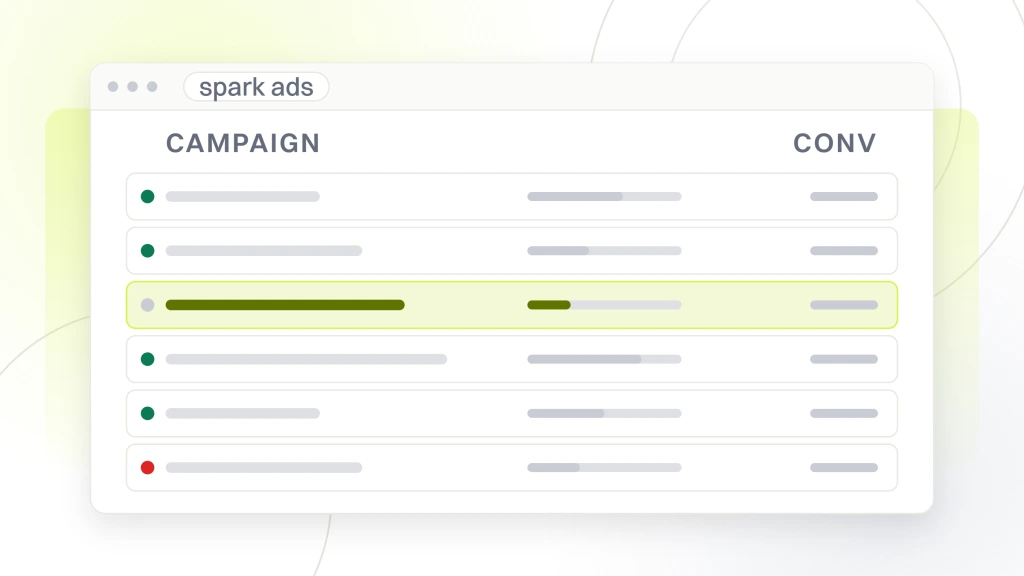
TikTok Spark Ads let a brand run organic creator posts as paid TikTok ads, keeping the creator’s original comment thread and view count intact. On food content, Spark Ads typically produce a 2 to 5x higher engaged view rate versus a fresh brand-produced TikTok ad. An agency running Spark Ads at scale keeps 5 to 10 creator posts in rotation per month, refreshes weekly by CTR decay, and pauses any post that dips more than 30% week over week. Weekly refresh is where paid TikTok Shop programs earn back their retainer.
Case study a food social media marketing agency should show
A food social media marketing agency should show a case study with the ad spend, CPA, and conversion growth as three separate numbers. Not a screenshot of monthly followers and no attributed revenue. Here is an ecommerce paid social program we ran that hits the bar.
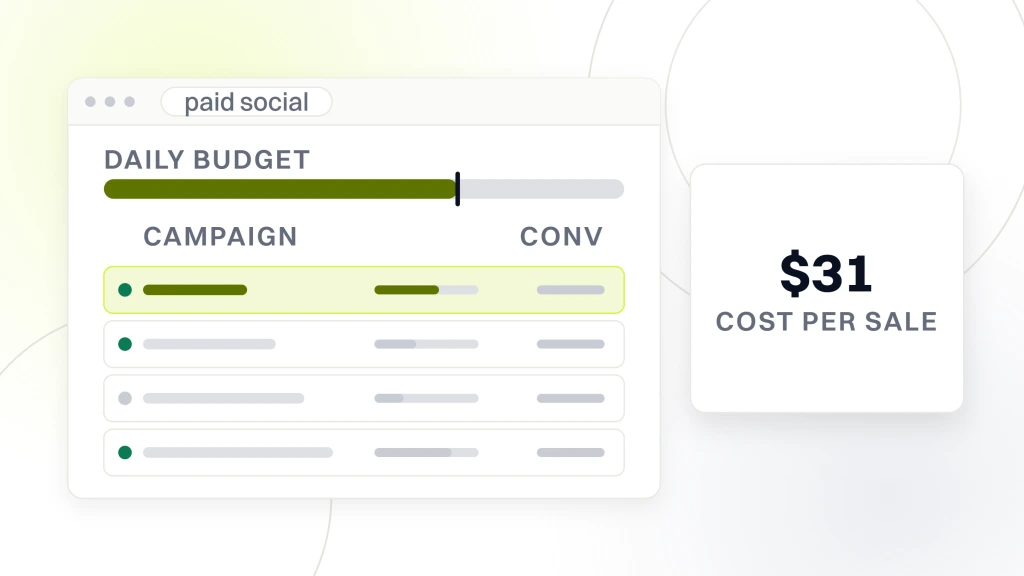
Boogie Board, a reusable-writing-tablet ecommerce brand, was running Google Ads with broad targeting, unoptimized landing pages, and no nurture flow. That combination bled budget with no repeat revenue. We rebuilt the paid stack across Google Ads and LinkedIn Ads, wrote product-focused lead magnets, rewrote the landing pages around the product benefit, and turned on automated email follow-ups plus retargeting. In 12 months the program hit $31 cost per sale, +11% conversion rate, and $650K in managed ad spend at positive ROI.
The math a food brand should read out of that story is direct. Retargeting plus creative refresh plus a real landing page cut CPA by more than half versus the broad-targeting baseline. On paid social for food brands, the same three levers apply. Whitelisted creator content in place of stock brand creative, weekly refresh in place of set-and-forget, and a real landing page in place of an Instagram link-in-bio dead end.
TikTok Shop setup a food social media marketing agency runs for shelf-stable snacks
TikTok Shop setup for shelf-stable snacks covers the seller account, product catalog upload, shipping template config, affiliate program terms, and creator outreach through the TikTok Shop Affiliate Marketplace. A partner running this end to end usually starts with a 10 to 25 SKU catalog, sets the affiliate commission at 15 to 25%, and seeds the first 30 to 50 creators with free product plus a UTM-tagged affiliate link. First-month sell-through on a well-launched TikTok Shop snack program lands in the 2 to 5% conversion range on affiliate-driven traffic.
Compliance is the piece that trips up most brands. Any functional food claim (energy, focus, gut health, immune) has to pass a claim-substantiation review before the creator brief goes out. Any alcohol content needs age-gating on the paid boost and creator paid rights logged separately from organic reach. A partner worth its retainer runs a claims register on every brand and every creator, updates it weekly, and blocks creators from posting until the register is green. Without that, one FTC letter can freeze a full quarter of paid budget.
Platform mix a food social media marketing agency runs in 2026
Platform mix inside a food social media marketing agency in 2026 leans heavier on short-form video than any prior year. TikTok and Instagram Reels together take 55 to 70% of the paid and creator budget for most snack, beverage, and coffee brands. YouTube Shorts takes 15 to 25% for brands with a founder-story angle or a functional benefit that needs 40 to 60 seconds to land. Pinterest holds 5 to 15% for recipe-adjacent categories (baking mix, pantry staples, specialty ingredients). Facebook Reels and organic Facebook Groups take the remaining 5 to 10%, mostly for retargeting a 35+ audience.
Where the mix shifts by product category
Coffee and functional beverage brands push heavier into TikTok Shop and Amazon-attributed creator posts (more depth in our beverage brand social media breakdown). Snack brands split evenly across TikTok Shop, Meta Brand Partnership Ads, and YouTube Shorts. CPG grocery brands weight toward Meta and Pinterest, with TikTok used mostly for recipe demos. Alcohol brands stay off TikTok Shop entirely (age-gating limits) and route budget through Meta Brand Partnership Ads plus creator-hosted events on Instagram Live.
A hospitality case study on turning social engagement into direct bookings
Food-adjacent hospitality brands share the same paid social problem as CPG. Strong organic reach, weak conversion path. Vejrø Resort, a Danish private-island getaway with a farm-to-table restaurant and organic locally sourced cuisine, ran into that gap head on. The resort had strong social pull on Instagram but no website, no direct booking system, and no way to convert engagement into paid stays.
The rebuild layered a conversion-focused website onto the existing social presence, added a direct booking integration, and paired on-site and off-site SEO with competitor analysis. In 3 months the program produced 10K+ organic visitors, ranked for 200+ first-page keywords, and hit a 2.2% booking conversion rate on organic traffic. That is the same pattern a food brand should expect from a paid social program with a real conversion path attached. Social engagement is the input. A landing page or product listing tied to a booking or checkout is the output. Without that second half, the retainer prints follower charts instead of revenue.
Retainer pricing for a food social media marketing agency
Full pricing detail on the base retainer lives on the dedicated page. Retainer pricing for a food social media marketing agency in the US sits in four tiers. Ad spend is billed separately, not bundled into the retainer.
- $999/mo. Organic social management on 2 platforms, 8 to 12 posts per month, no paid ads management, no creator whitelisting. Right for a pre-seed food brand testing content-market fit.
- $1,499/mo. Organic on 3 platforms, paid amplification on 1 platform, 3 to 5 creators activated per month, basic CPA reporting. Right for a Seed-stage snack brand with a first-run SKU.
- $2,499/mo. Full paid amplification on Meta and TikTok, 8 to 12 creators per month, TikTok Shop management, weekly reporting on CPA and sell-through. Right for a Series A brand with 25+ SKUs.
- From $4,500/mo. Full creator program (15+ creators per month), paid on 3 platforms, TikTok Shop and Amazon-attributed creator posts, claim-substantiation review, senior operator embedded on the account. Right for Series B and up.
What the retainer excludes
Ad spend is a pass-through cost, billed separately on the client’s own ad accounts. Product samples for creator seeding, influencer paid usage rights above the base grant, third-party UGC platforms (Aspire, GRIN, CreatorIQ), TikTok Shop affiliate commissions, and legal review on functional claims all sit outside the retainer. A partner that folds product samples into the retainer is either padding the fee or underpaying creators. Both fail on renewal.
Monthly reporting a food social media marketing agency sends
Monthly reporting from a food social media marketing agency should read like a P&L, not a follower chart. The client cares about revenue attribution, CPA, sell-through, and ROAS by platform. Follower counts and impression totals are secondary vanity metrics.
Program-level metrics on food social campaigns
Program-level metrics cover CPA by platform (TikTok Spark Ads versus Meta Brand Partnership Ads versus YouTube Shorts), creator-attributed revenue through affiliate UTMs, TikTok Shop GMV, Amazon Attribution ROAS, and save-to-CTR ratio on top organic posts. Bring these into the monthly deck as trend lines against the prior 3 months, not as one-month snapshots. Pair the paid dashboard with the recipe and blog trend lines from our content marketing for food brands guide. That is what tells you the program is compounding. Longer-horizon organic wins go through our food and beverage SEO page.
Sell-through numbers where tracking connects
Sell-through numbers show up cleanest on TikTok Shop, Amazon-attributed campaigns, and DTC ecommerce with a proper post-purchase survey. In wholesale and grocery retail, sell-through has a 2 to 6 week lag and needs Circana or SPINS pulls to confirm the paid social gain. An agency that promises real-time wholesale attribution without a scanner-data pull is guessing. Ask for the raw Circana report and see what shows up.
Red flags in a food social media marketing agency proposal
Red flags in a proposal from a food social media marketing agency are direct. Any pitch that treats organic follower growth as the top-line KPI has priced itself for a founder who has not seen the paid math yet. Any deck that skips CPA, ROAS, or Amazon Attribution has priced itself for someone who will not ask about revenue. Any pricing tier below $999/mo on paid social management is doing template posting, not paid work.
Green flags in a real food social pitch
Green flags look like this. A named case study with three separate numbers (ad spend, CPA, conversion growth). A creator roster with 10+ food creators who post consistently, not screenshots of one viral post from 2022. A written claim-substantiation process for functional food and alcohol brands. A monthly reporting template already built. A weekly working session cadence, not monthly. And a real conversation about paid rights extension math, not a hand-wave at whitelisting.
How to become a social media food influencer
You become a social media food influencer by locking one clear content niche (functional wellness, recipe demos, snack reviews, chef POV, or product-first UGC), posting 3 to 5 times a week to a single primary platform for a full 90 days, and treating comments as content. Pick a signature dish, angle, or brand pairing that a viewer can name in one line. Get a phone tripod, ring light, and cutting board on-camera in the same spot every shoot. That physical consistency compounds view time.
After the first 90 days, cross-post the top 20% of Reels into TikTok and YouTube Shorts, and start reaching out to brand accounts for paid partnership deals. A food creator hits paid partnership economics at about 15K to 25K engaged followers on one primary platform, with a 5%+ save rate on food posts. From there, join the TikTok Shop Affiliate Marketplace and Amazon Influencer program to layer affiliate revenue on top of paid partnership fees. First-year full-time food creator income lands in the $30K to $120K range on that stack, with the top decile clearing $250K by year 2.
How to market food products on social media
You market food products on social media by shooting high-contrast product visuals in the actual use context (kitchen, backpack, gym bag, coffee counter), running weekly creator seeding with 10 to 30 nano and micro creators, and posting with a claim that survives FTC review. On top of that, run paid amplification on the top-performing organic posts through Meta Brand Partnership Ads or TikTok Spark Ads. Track gains with UTM-tagged affiliate links, TikTok Shop GMV, and Amazon Attribution on the wholesale-adjacent side.
Consistency is the point most brands miss. The first 60 days of a food social program set the algorithmic baseline for the next 6 months. A brand that posts 8 to 12 pieces a week during launch trains the feed to surface its content to the right food audience. A brand that posts 2 pieces a week during launch trains nothing and starts from scratch on month 4. That is why food social media marketing agency retainers weight the first 60 days heavier than the maintenance months.
Picking the right food social media marketing agency
Picking a food social media marketing agency in 2026 comes down to three questions. Does the agency show real CPA and conversion numbers with the ad spend attached? Does the retainer scope match the platform mix your product category actually needs (TikTok Shop for snacks, Meta Brand Partnership Ads for alcohol, YouTube Shorts for functional benefit)? And can the operator walk through a claim-substantiation register on the spot? If the answer to all three is yes, the retainer earns back its fee inside 6 months. If any answer is no, keep looking. To scope a program for your brand, talk to Redefine Web.