A dental group marketing strategy needs a different frame than single-office marketing. A single office optimizes for the office. A multi-location dental group optimizes for the office cohort, and the cohort works badly when the group runs one blob of marketing across every location. The frame that works splits platform brand work from office cohort execution from affiliate practice work, then stitches all three together through reporting that shows office-level truth.
This guide walks the full dental group marketing strategy for 2026. What the three-program frame looks like at group scale. How budget allocation flexes across the programs. What reporting rhythm keeps operating partners focused on office-level moves. How to structure the marketing side when the group crosses key size thresholds. And how to pick the right vendor bench for the group profile. Every recommendation comes from live engagements we run or watch close, across groups from 8-office single-state platforms to 90-plus multi-state operators. Dental group patient acquisition is a solvable problem when the group treats it as three programs stitched together at the platform level.
Why dental group marketing needs a three-program frame
A dental group is three business layers, not one. The platform layer carries the group brand, doctor recruiting funnels, payer negotiation positioning, and PR that only makes sense above the office. The office cohort layer carries the local map pack per office, GBP hygiene, review workflow, paid search per market, and landing pages per office. The affiliate layer carries the practices the group bought but did not rebrand yet, which need their own local footprint until the group rebrands or sunsets them.
Groups that run one blob across all three layers lose focus at every layer. Platform brand gets diluted by office cohort tactics. Office cohort gets underserved because platform priorities pull budget upstream. Affiliates get ignored because they do not roll up cleanly under the group brand. A three-program frame gives each layer its own budget, its own execution team, its own KPIs, and its own reporting rhythm. Coordination happens through a single operating partner or director of marketing rather than through shared execution. Read our DSO Dental Marketing guide for the mechanics that back the three-program model.
Platform program inside a dental group marketing strategy
Platform work carries what only makes sense above the office. Group brand identity. Doctor recruiting funnels for the platform. PR that supports payer negotiations. Corporate communications for sponsor updates or M&A activity. Website architecture for the group site that sits above the office directory. Content strategy that establishes the group as a market voice rather than a chain.
Platform work runs 25 to 30% of the total marketing budget for most groups. It compounds slowly. A group brand does not move patient volume this quarter. It moves doctor recruiting quality next year, payer negotiation power in 18 months, and exit multiple in 3 to 5 years. Groups that underinvest in platform work look identical to independent practices when a buyer runs diligence. Groups that overinvest in platform work at the expense of office cohort execution lose current-quarter patient volume that should be the growth engine.
Office cohort program inside multi location dental marketing
Office cohort execution carries the work that moves current-quarter patient volume. Local pack ranking per office. GBP hygiene per office. Paid search per market. Landing pages per office. Review workflow per office. Referral automation per office. This is where 55 to 65% of the marketing budget lives, and this is where the operating partner should watch the numbers most closely because these are the numbers that move patient volume this month.
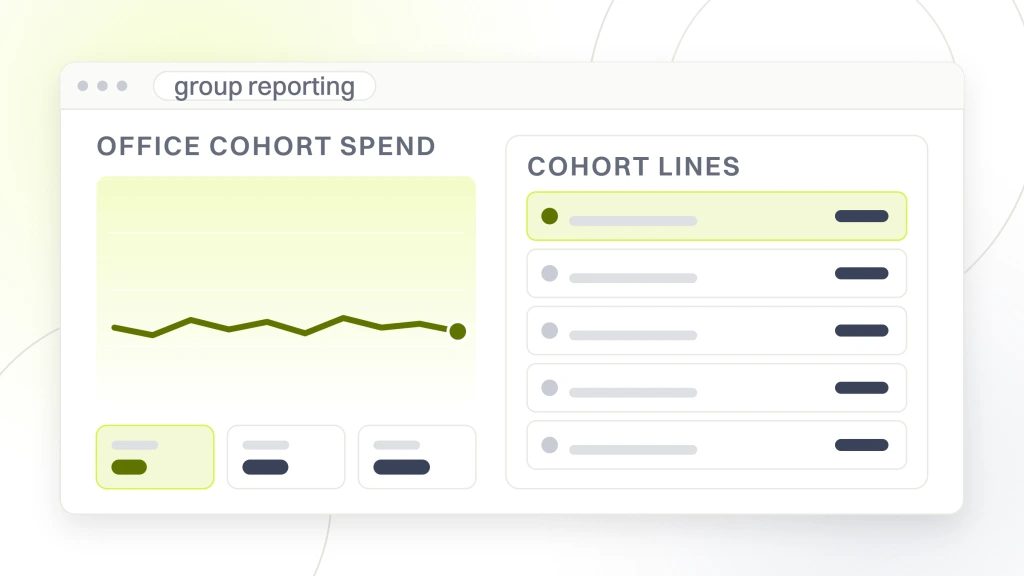
Office cohort execution needs office-level reporting from day one. Cost per new patient per office. GBP performance per office. Paid search performance per market. Review velocity per office. Rank tracking per office per priority keyword. Any vendor who runs the office cohort program without office-level reporting is not running the program. They are running the group average and hoping the offices work out. See Dental DSO Marketing Services scope for the reporting stack that produces office-level truth by default.
Affiliate program inside dental group patient acquisition
Affiliate work covers practices the group bought but did not rebrand yet. These practices trade under their original name, keep their original GBP, keep their original reviews, and often keep the original doctor as the face of the practice for the local market. Rebranding too early costs 10 to 20% of patient volume during the transition. Rebranding too late costs group brand equity in that market.
Affiliate work runs 10 to 20% of the total marketing budget depending on affiliate load. Groups with no affiliates redistribute this share into office cohort. Groups with heavy affiliate load spend proportionally more because each affiliate needs its own local footprint. Time the rebrand transition to a natural inflection point like a doctor introduction, a location expansion, or a service-line addition. Sudden rebrands without an inflection point cause patient confusion and volume loss that the market takes 6 to 12 months to absorb.
Budget allocation across dental group marketing programs
Budget runs 3.5 to 4.5% of office collections at steady state, front-loaded to 5 to 6% during the first two quarters of any new engagement. Front-loading covers plumbing fixes. GBP cleanup. Tracking rebuild. Review workflow setup. Landing page reconstruction. All four concentrate in the first six months and need capital to run cleanly.
Split across the three programs. Platform work runs 25 to 30%. Office cohort runs 55 to 65%. Affiliate work runs 10 to 20%. Inside the office cohort program, paid media takes 40 to 55%, local SEO and GBP takes 20 to 30%, review workflow takes 10 to 15%, landing page work takes 10 to 15%, and reporting takes 5 to 10%. These ratios flex a few points either way based on office maturity and market density, but the shape stays stable across group sizes until the group crosses 50 offices, at which point platform work often scales up. For groups just entering paid retainers, our standard SEO and PPC pricing starts at $999, $1,499, $2,499, and from $4,500 per month per program, with dental retainer packages priced at $1,499 per month per office for right-sized single-program engagements.
Reporting rhythm for a dental group marketing strategy
Reporting runs monthly with a fuller quarterly review. Monthly reports cover office-level patient volume, cost per new patient per market, GBP performance per office, paid search performance per market, and review velocity per office. Quarterly reviews layer year-over-year and quarter-over-quarter comparisons plus commentary on office-level movers and laggers, plus forward priorities for the next quarter.
The monthly report lands in the operating partner’s inbox by the 10th of the following month. Quarterly gets presented live, not just delivered as a deck. Live presentation forces the conversation about which offices need intervention and which are ready for expansion investment. Silent deck delivery lets the numbers sit unread. Any vendor unwilling to present live is telling you what quarterly reviews will look like once the retainer stretches.
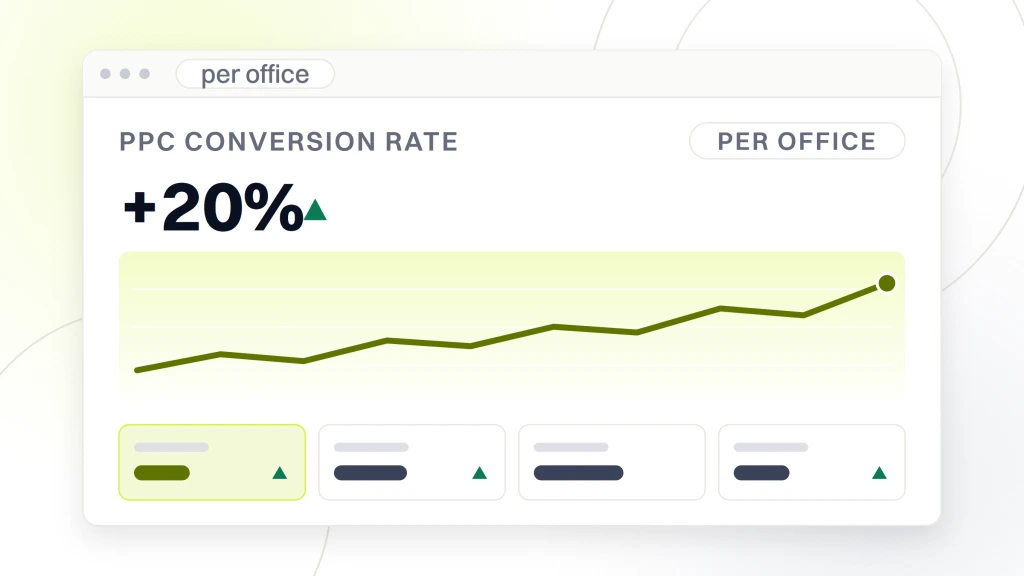
Groups that report only aggregate group totals hide the failing offices behind the winning offices. Groups that report only at the office level lose the platform brand view that matters for sponsor conversations and doctor recruiting. Real reporting shows both. Office level as the operational rhythm. Group level as the sponsor and board rhythm. Smile Design Dentistry, a 50+ location DSO, cut cost per call 30% and grew PPC conversion rate 20% only after switching to a per-office reporting stack that showed which markets were dragging the group average down.
Marketing organization structure by group size
Structure flexes by group size. Different sizes need different internal roles paired with different vendor structures.
Under 10 offices. No internal marketing headcount required. The operating partner or CFO coordinates the vendor. One specialized DSO agency handles all three programs. 10 to 20 offices. One internal marketing manager coordinates the vendor. Same vendor structure. 20 to 40 offices. Director of marketing internally with one or two operators. Vendor structure can stay as one specialized agency, or split into platform partner plus office cohort partner if the group prefers tighter focus at each layer. 40 to 80 offices. VP of marketing internally with a 3 to 5 person team. Vendor structure typically splits platform and office cohort. 80-plus offices. VP or CMO plus 6 to 10 internal team members. Vendor structure often keeps only paid media outsourced because buying velocity is hard to replicate internally.
Match structure to group size, not to what other groups your size are doing. Some 15-office groups sit inside sponsor portfolios that demand a director of marketing early because the sponsor wants a marketing narrative for the next diligence cycle. Some 40-office groups sit under founder operators who prefer to keep marketing mostly outsourced to preserve capital for operational scaling. Both approaches work when the reporting rhythm matches the structure.
Comparison of dental group marketing structures
| Group size | Internal team | Vendor structure | Monthly budget | Reporting rhythm |
|---|---|---|---|---|
| Under 10 offices | None | One specialized agency | $18K to $32K | Monthly plus quarterly |
| 10 to 20 offices | Marketing manager | One specialized agency | $28K to $45K | Monthly plus quarterly |
| 20 to 40 offices | Director plus 1 to 2 ops | Specialist or split | $45K to $85K | Weekly plus monthly plus quarterly |
| 40 to 80 offices | VP plus 3 to 5 team | Split platform and cohort | $85K to $160K | Weekly plus monthly plus quarterly |
| 80-plus offices | CMO plus 6 to 10 team | Paid media only outsourced | $160K plus | Daily plus weekly plus quarterly |
Common mistakes in dental group marketing
The most common failure patterns fall into four buckets. Running one blob of marketing across all three layers. Reporting only aggregate group totals. Underinvesting in platform work during growth phases. Skipping the affiliate program until the group tries to consolidate the brand and loses volume.
One blob across all three layers dilutes focus and blows past the boundaries between platform, office cohort, and affiliate work. Fix by separating the programs at pitch, execution, and reporting from day one. Aggregate-only reporting hides the failing offices behind the winning offices. Fix by reporting office-level everything and using the group total only in sponsor and board conversations. Underinvestment in platform work looks smart during growth mode because the office cohort numbers move fast. It looks foolish 18 to 36 months later when the group tries to raise capital and the platform brand does not carry the story. Fix by holding platform investment at 25 to 30% even during growth mode. Skipping affiliate work looks efficient when the group has 2 or 3 affiliates. It looks catastrophic when a rebrand attempt loses 20% of affiliate patient volume. Fix by budgeting affiliate work explicitly from day one and timing the rebrand transitions carefully.
Integration between marketing and operations for a dental group
Integration happens through the office-level funnel. Marketing sends traffic to landing pages. Landing pages send leads to the front desk. Front desks convert leads to first visits. First visits convert to treatment plans. Treatment plans convert to completed care. Every stage in the funnel has a marketing input and an operational input. Groups that treat marketing as separate from operations optimize marketing metrics that do not translate to patient volume gains.
The fix is joint ownership of the funnel between marketing leadership and operations leadership. Monthly reviews cover the full funnel, not just the marketing metrics. When cost per new patient improves 15% but new patient volume stays flat, the bottleneck is downstream at the front desk or the schedule. When new patient volume grows 20% but treatment plan close rates drop, the bottleneck is treatment planning or case presentation. Joint ownership catches these bottlenecks fast. Siloed ownership lets them fester. VP Dental doubled new monthly patients and added $8,100 in recurring monthly revenue only after web and SEO stopped being split across two agencies fighting over credit.
Local SEO and GBP inside a dental group marketing strategy
Local SEO is the highest-return line item in office cohort work (our dental local SEO guide covers the office-level tactics in depth). GBP hygiene, service-page depth per office, and citation consistency together drive 40 to 60% of local dental search intent through the map pack. Cheap to fix, expensive to ignore. Every office needs its own claimed GBP with photos updated in the last 90 days, hours accurate to the minute, services and insurance listed, and posts running weekly. Every office needs its own city-service landing page depth for the 8 to 15 procedures the office actually performs, not a copy-paste of the group boilerplate.
Citation consistency across NAP data (name, address, phone) is table stakes. Groups with 30 offices routinely carry 3 to 5 duplicate GBP listings per office from prior ownership transitions, all of which suppress rank in the map pack until cleaned up. Budget one citation audit per office at onboarding and one every 12 months after. iSmile Dental Spa ranked 75 keywords on page one within 6 months and grew patient load 900% by leaning into technical local SEO, optimized service pages, and PPC coordinated by market.
Paid search execution across the cohort
Paid search is the fastest lever in the office cohort program. Ad accounts split by market with dedicated campaigns per office in dense markets and shared campaigns across offices in low-density markets. Landing pages per office rather than one group page for all markets. Bidding held tight on branded keywords and cost per new patient tracked at the office level every week. When a market’s cost per new patient runs 20% over target for 3 straight weeks, the fix is landing page rebuild before it is more spend. Weak landing pages are the number one reason paid search cost per new patient sits high across a group.
Attribution is where most groups get lost. Call tracking per office. Form tracking per office. Chat tracking per office. Every channel tagged to the source at the office level so the operating partner can see where volume comes from without guessing. North County Dental Care hit +1,000% patient volume and 500% ROI on marketing spend once Google Analytics made every campaign measurable and one plan replaced scattered agencies.
Review workflow and reputation at office scale
Review workflow is the compounding engine underneath every other channel. Offices at 4.6 stars or higher with 200-plus reviews get 25 to 40% cheaper map pack visibility than offices at 4.3 stars with 60 reviews, no changes to any other input. Workflow means a text or email review request goes out within 4 hours of every completed visit, response rates hold at 25 to 35% for well-timed asks, and negative reviews get a public response within 24 hours from an office manager who is trained to defuse rather than defend.
Groups often centralize the review request send from a group platform, which is fine as long as the message reads local. Signing the request from the office name and the treating doctor grows response rates 15 to 25% versus a generic group signature. Negative review response templates get approved once at the group level, then deployed office by office with local context filled in. Weekly review velocity per office is a leading indicator that predicts patient volume 60 to 90 days out.
Vendor selection for dental group marketing execution
Vendor selection runs through six criteria. Dental-only bench. Named case studies with office counts. Three-program retainer structure. Office-level reporting samples. Live reference calls with active and lapsed accounts. Response-time SLA in writing.
Dental-only bench means the strategists and operators on the account have run dental as the majority of their portfolio. Named case studies mean the vendor can say Group X, 34 offices in Texas and Louisiana, grew patient volume 27% over 18 months. Three-program retainer means the pitch splits platform, office cohort, and affiliate work with their own line items. Office-level reporting means the sample deck shows patient volume, GBP performance, and paid search by office. Live reference calls mean the vendor connects the group with two current accounts and one lapsed account without a two-week delay. Response-time SLA means the contract specifies how fast the vendor responds to inbound requests. Any vendor that will not put SLA language in writing is telling you what response times will look like once the contract is signed.
Where to go next with your dental group marketing strategy
Next steps for a stronger program. Audit the current program against the three-layer frame. Identify where budget is running out of ratio with the recommended splits. Set a 90-day rebuild plan that addresses the plumbing fixes concentrated in the first quarter. Measure at monthly cadence with a quarterly review at the operating partner level. Adjust the program structure if the group is crossing a size threshold that changes the internal team requirement.
External references worth reading for dental group operators. Group Dentistry Now tracks the group dental market with weekly commentary. ADA Health Policy Institute publishes economic surveys and market data. DEO practice performance benchmarks cover operational KPIs against a peer set. Cross-check any vendor claim against real data from at least two of these before committing.
Read our DSO marketing overview for the multi-office execution model, and the DSO patient acquisition guide for cohort-level new patient tactics.