Dental DSO marketing pays for itself when four pieces run together. Central attribution catches every call, form, and walk-in across the network. Per-office paid media grows patient volume in each ZIP. Local brand protection keeps the goodwill each office earned before close. Monthly reporting keeps the ad accounts sharp against auction shifts. Platforms that hold all four together add 15 to 25% EBITDA over 24 months, which is what the sponsor exit story rides on and what the second-bite math needs to work for rolled sellers. Platforms that skip pieces top out at 5 to 10% or drift sideways.
Here is the playbook that moves real numbers. Central attribution built once and used by every office. Per-office PPC accounts under a manager account, not one giant campaign. A central SEO program that pairs with local SEO for each address. Brand protection through the integration window. Monthly reporting to office leadership, not quarterly slide decks. Payer mix work that raises case value alongside volume. And the LOI diligence questions sellers should ask before signing definitive documents. Every pattern here comes from platforms our team watched close or ran directly across 2024 through mid-2026.
Local brand protection in a DSO marketing program
Local brand protection is the cheapest EBITDA move on the board. The platform just paid a premium for a name patients recognize. Central rebranding inside 60 days of close throws that money away. Strong operators lock brand protection into the LOI, in writing, with specific language on the local practice name, Google Business Profile ownership at the office level, and domain preservation. The floor is the length of the seller employment term. Anything shorter tells you the platform sees local goodwill as optional.
Practice name on signage and website
Signage and web branding should keep the local practice name on top, with the DSO name in secondary position or absent from the storefront entirely. The domain stays live where it lives. No hot redirects to a generic corporate URL. Good platforms treat the local name as an asset. Weak platforms wipe it inside 60 days and then wonder why call volume drops and Google reviews slow down. The gap shows up in the hold-period P&L within two quarters.
Google Business Profile continuity
Keep the Google Business Profile at the office level. Central migration typically strips 20 to 40% of the review history and resets the local search authority that took years to earn. Reviews and profile history drive Map Pack ranking, which drives new patient calls. Good platforms leave GBP ownership local and support it centrally. Weak platforms roll everything into a corporate account inside 90 days. Sellers should negotiate written protection against central GBP migration for the length of the employment term at minimum. Put it in the LOI, not the handshake.
Local domain preservation
Local domain preservation means the practice’s existing domain stays live with the local content kept in place rather than redirecting to a central platform domain. Central redirects typically damage the practice’s earned SEO authority. Links to the old domain lose pass-through value if the redirect handling is sloppy. Well-run platforms keep the local domain and the local branding, then add central platform integration on the back end. Sellers should verify the platform’s plan for the practice domain during LOI diligence and require written commitment to preserve the domain and content through the seller employment term at minimum, with specific language covering redirect handling standards. The fuller answer on how DSOs buy dental practices lives in our guide to DSO buying dental practices.
The DSO marketing growth comparison table
The table below compares group-level growth outcomes at well-run platforms versus underperforming platforms across the key mechanisms that drive EBITDA growth during the sponsor hold. Sellers can use these benchmarks during LOI diligence to filter target platforms into the well-run bucket based on concrete operational data instead of platform pitch decks with aspirational metrics.
| Mechanism | Well-run platform | Underperforming platform |
|---|---|---|
| New patient volume growth | 15 to 25% in 12 months | 5 to 10% or flat |
| Cost per new patient | $150 to $220 | $280 to $400 |
| Cost tightening | 20 to 30% over 12 months | Flat or worsening |
| Case value optimization | 5 to 10% higher | Flat |
| EBITDA growth | 15 to 25% in 24 months | 5 to 10% or less |
| Central attribution | Full stack deployed | Partial or missing |
Read the EBITDA growth row with sponsor exit math in mind. A platform that grows EBITDA 15 to 25% over the sponsor hold typically earns 1.5 to 2 turns of multiple expansion at exit through the combined growth and scale story. A platform with flat or 5% EBITDA growth typically earns no multiple expansion at exit and often accepts multiple compression during less favorable market windows. The difference in outcomes materially affects rolled seller second-bite return. Our DSO Dental Marketing for Multi-Location Groups program supports platforms moving into the well-run column through central marketing infrastructure work across their office network.
Read the cost per new patient row with practice-level P&L context in mind. A well-run platform running at $150 to $220 per new patient generates roughly double the new patient volume of an underperforming platform at $280 to $400 per new patient on the same marketing budget. That volume difference compounds across office visits, referred family members, and repeat visits over the patient tenure. The compounding effect on practice-level revenue over 24 months drives the EBITDA growth gap between well-run and underperforming platforms across the sponsor hold cycle inside the DSO transaction structure.
Read the attribution row as the base under everything else. Without central attribution the marketing team is guessing at spend allocation, blind to funnel bottlenecks by geography, and unable to tie office P&L to media execution. Attribution is what makes every downstream service worth paying for. Sellers should verify the stack during LOI diligence, before definitive documents. Where the stack is thin, EBITDA growth is thin too, and the pattern holds across every office in the network.
Monthly reporting cadence in dental DSO marketing
Monthly is the right rhythm for group-level marketing reporting. Weekly buries office managers in noise. Quarterly hides the auction shifts and seasonal patterns that need a response inside the same month. A monthly cycle gives office leaders one clean window per month to act on new patient volume, review capture, and reactivation. Strong platforms bake monthly reporting into the service agreement from day one of affiliation close, not as a later add-on.
What monthly reports should contain
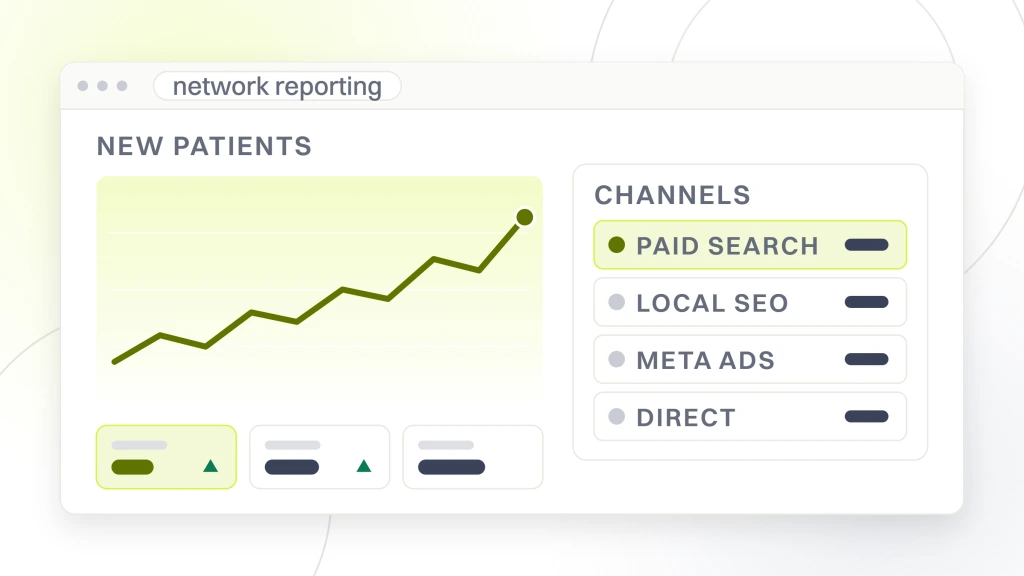
Monthly reports should contain new patient volume by channel, cost per new patient by office, conversion rate at each funnel stage, review count and rating trends over the month, and marketing spend against budget with variance analysis. Office leadership uses this data to identify weak funnel stages, adjust team behavior on review capture and reactivation, and confirm the marketing team delivers against expected practice-level volume. Well-run platforms deliver this data in a standardized dashboard format that office managers can read in 15 minutes, not a 40-page slide deck that nobody opens inside the office manager workflow.
How offices should use monthly reports
Offices should use monthly reports to identify one or two focus areas per month rather than trying to optimize every metric at once. Weak call conversion in a given month typically calls for front desk training. Weak reactivation rate typically calls for hygiene team focus. Weak review capture typically calls for treatment coordinator focus on the post-appointment review request workflow. Well-run platforms provide coaching support alongside the monthly reports so office managers know how to act on the data. Poorly-run platforms deliver the reports without coaching, which typically produces awareness without action across the network over sustained hold cycles.
Quarterly board reporting rollups
Quarterly board reporting rolls up the monthly practice-level data into platform-level trends over the trailing three months, cohort retention data on new patient lifetime value, cross-office benchmarking against network averages, and capital allocation recommendations for the next quarter. The sponsor board uses this data to confirm platform-level marketing operations are delivering against management fee. Sellers rolling equity should ask to see the quarterly board report format during LOI diligence to preview the reporting quality they can expect during the hold period across the seller employment term at each target platform under consideration.
Case studies on DSO growth
Smile Design Dentistry runs 50-plus offices across Central Florida and Tampa Bay. When our team engaged with the group, marketing was fragmented office by office. Every location ran its own PPC account and its own landing pages with no central coordination on messaging, budget, or attribution. Duplicate audience targeting and unoptimized landing flows were pulling roughly 30% of the marketing budget into waste across the network. That fragmentation is exactly what group-scale marketing is supposed to fix inside the first 12 months of central deployment.
Our team rebuilt the PPC accounts by funnel stage and geography inside a central MSO structure. Dedicated landing pages went live for each core service line. Full-funnel paid social layered on top of the search program, with audience data flowing from one unified attribution stack. Cost per call dropped 30% across the network inside 12 months. PPC conversion rate climbed 20% year over year. New patient volume grew at every office. Fifty-plus locations rolled into one dashboard for the first time, with practice-level drill-downs office managers could pull on demand.
North County Dental Care and long-run compounding
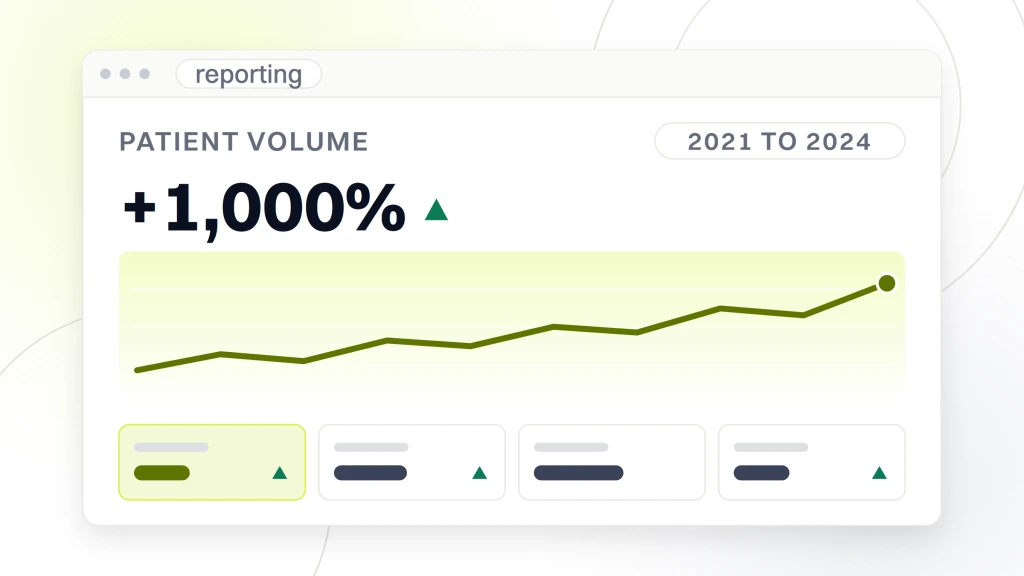
North County Dental Care shows the same pattern over a longer runway. Patient volume grew 1,000% from 2021 to 2024 under a paired SEO plus PPC program. Website traffic grew 385% through technical SEO, keyword targeting, and paid search. Marketing ROI reached 500%, and the cost of winning each patient came down. This is the compounding profile a well-run platform produces when it commits to central attribution and per-office execution for the full hold cycle instead of switching agencies every 12 months.
VP Dental and the small-office setup
VP Dental is the reference point for a single office setup that reads like a platform in miniature. New monthly patients doubled in 12 months, adding $8,100 in monthly recurring revenue from web-driven appointments. Google search impressions grew 776%, which shows the local SEO plus content pattern working in a competitive metro. Multi-office groups can pull the same playbook per address, at scale, once the central attribution layer is in place. Our Dental SEO Services team runs comparable central-domain plus per-office SEO work at platform scale for growing groups.
Pain Cure Clinic as the cross-vertical read
Pain Cure Clinic sits outside dental in the wider healthcare group but shows the same paid plus organic pattern. New patient appointments grew 205%, from about 40 a month to 122 a month. Organic traffic grew 289%. Review count grew 162%, moving the Google rating from 4.3 to 4.9 stars. The healthcare pattern reads across specialties. Central attribution plus per-office execution plus review capture is what compounds patient acquisition over 12 to 24 months, whether the offices treat teeth, spines, or eyes.
Payer mix work inside DSO growth
Payer mix work inside a group program optimizes case values through better commercial payer share, group PPO contract negotiation on stronger scale than solo practices, and targeted marketing that attracts higher-value payer mix patients. This work compounds with marketing volume growth to drive EBITDA higher than volume growth alone would deliver. Well-run platforms treat payer mix work as a first-class operational priority alongside marketing volume growth.
Commercial payer targeting
Commercial payer targeting through paid media focuses ad spend on the geographic areas and audience segments most likely to hold commercial insurance rather than Medicaid or self-pay coverage. This targeting delivers higher case value new patients from the same marketing spend. Solo practices typically cannot afford the audience segmentation infrastructure needed to run this targeting at scale. Platform-scale marketing operations deploy the segmentation across offices with central creative and targeting infrastructure that produces measurable payer mix shifts within 12 to 18 months across office networks in specific metros with mixed payer environments. Industry data at groupdentistrynow.com tracks payer mix trends across active DSO platforms quarterly.
Group PPO contract negotiation
Group PPO contract negotiation at platform scale produces better rates than solo practices can negotiate individually. Platforms with 50-plus offices in a metro negotiate PPO contracts from stronger footing than solo practices. These rate improvements compound with marketing volume growth to drive case value gains across every office in the network. Sellers should ask target platforms about recent PPO contract negotiation results during LOI diligence. Well-run platforms track rate improvements as a quarterly operational metric. Poorly-run platforms often skip formal PPO negotiation and simply accept default network rates that leave meaningful case value on the table across the sponsor hold period.
Treatment plan optimization
Treatment plan optimization through central protocols raises the treatment plan quality across every office in the network. Central clinical education, standardized case presentation protocols, and treatment coordinator training combine to raise case acceptance rates and average case values at the same time. Solo practices without central protocol infrastructure typically accept treatment plan variance across doctors that leaves case value on the table. Well-run DSO operations deploy central protocols within 6 to 12 months of affiliation close with measurable case value improvements typically visible in the same window across offices participating in the protocol rollout.
Common DSO growth mistakes
Dental DSO marketing mistakes cluster in a few predictable places that separate strong operators from weak ones. Sellers who ask about these areas during LOI diligence surface real operational quality inside a single call, faster than sellers who accept a general capability pitch at face value. Read the mistakes below carefully before signing anything. They are the shortest path to filtering target platforms based on diligence data instead of a polished slide deck.
Consolidated single-account paid media structure
Consolidated single-account paid media dilutes local relevance across offices and typically produces weaker cost per new patient across the network by 25 to 40% versus per-office structures. Sellers should ask target platforms about paid media account structure during LOI diligence. Platforms that show consolidated single-account structures typically underperform against practice-level benchmarks and rarely produce the geographic granularity individual offices need for local patient acquisition. Per-office account structure is the baseline that separates real group marketing operations from ones that merely capture management fee without delivering equivalent value.
Aggressive central rebranding
Aggressive central rebranding within 60 days of close typically damages the local reputation the platform paid for at close. Signage changes, website URL changes, Google Business Profile migration, and generic DSO copy replacement across offices typically cause patient confusion and short-term new patient volume drops that hurt EBITDA growth during the sponsor hold period. Sellers should watch for this pattern during LOI diligence and require written protection against aggressive central rebranding for at least the length of the seller employment term at target platforms with meaningful acquisition activity across their office network. Industry commentary at dentaltown.com covers rebranding experiences across DSO transitions in candid seller forums.
Quarterly-only reporting cadence
Quarterly-only reporting cadence produces weak paid media execution. Monthly attention keeps the paid media accounts responsive to changing performance patterns. Platforms that report only quarterly typically miss short-term shifts in auction dynamics, seasonal patterns, and competitive pressure that need monthly optimization cadence. Sellers should verify reporting cadence during LOI diligence and require monthly reporting as a written service standard. Reporting cadence is one of the clearest signals of marketing execution quality across target platforms under consideration during the seller preparation process ahead of a serious market entry decision.
Preparing your practice for the DSO marketing conversation
Preparing your practice for that conversation takes 12 months of consistent work on attribution, per-office marketing infrastructure, and staff continuity planning. The preparation itself gives sellers the operational readiness needed to demonstrate practice-level results to buyer QoE teams during diligence. Practices with 12 months of clean attribution earn top-of-range multiples. Practices without attribution earn bottom-of-range multiples with buyer QoE surprises during diligence that further compress the multiple.
Attribution installation
Attribution installation covers call tracking, form fill tracking, GA4 conversion event mapping, and monthly reporting for at least 12 months. Buyer QoE teams pay premium multiples for practices with clean attribution. They can model the acquisition economics into the platform playbook off the raw data. Solo practices without attribution get discounted with a marketing risk premium. Our Dental Marketing Retainer at $1,499 per month covers attribution installation, monthly reporting, and content plus SEO work across a 12 month preparation window ahead of market entry. Groups that want dedicated SEO or PPC scale can layer our tiered retainers at $999, $1,499, $2,499, or from $4,500 a month on top.
Multi-office central infrastructure
Multi-office groups should build central marketing infrastructure 12 to 18 months before market entry. Central attribution across offices. Central creative production standards. Consistent branding, with local practice names kept intact. Central reporting to one dashboard with practice-level drill-downs. Buyer QoE teams pay premium multiples for groups with the infrastructure already in place. They can model the acquisition economics into the platform playbook cleanly off day-one data. Multi-office preparation is often the highest-return investment sellers make during the 18 month runway to market entry across the group practice segment.
Staff continuity planning
Staff continuity planning covers documenting key staff relationships, formalizing employment agreements with clear job descriptions, and confirming the practice manager and lead hygienists have current employment contracts with reasonable notice provisions. Buyers value staff continuity through the integration window. Staff turnover in the first 90 days directly affects patient retention and marketing performance. Practices with tight staff continuity plans earn a quarter turn premium at LOI. Practices with loose staff arrangements earn a quarter turn discount. The buyer models integration risk into the multiple across the diligence review at LOI negotiation.
Final read on dental DSO marketing growth
A well-run group program moves EBITDA during the sponsor hold when central attribution, per-office paid media, brand protection, and monthly reporting run as one operating system, not four side projects. Platforms that hold all four together compound 15 to 25% EBITDA growth over 24 months. That is the number the sponsor exit story rides on and the number that makes the second-bite math work for rolled sellers. Platforms that skip pieces plateau at 5 to 10% or drift, and the hold period ends without a real growth chapter.
Sellers evaluating target platforms during LOI diligence should filter aggressively for the well-run bucket based on concrete operational data instead of platform pitch decks. Ask to see central attribution dashboards. Ask for practice-level results at 3 comparable offices. Ask about paid media account structure. Ask about local brand protection commitments. Ask about monthly reporting content. Platforms that share the data willingly demonstrate real execution. Platforms that dodge the questions typically capture management fee without delivering equivalent EBITDA growth over the sponsor hold cycle inside the DSO transaction structure.