Dental marketing facebook ads sit in a weird spot on the media plan. The channel prints appointments for practices that treat dental marketing facebook ads like an offer engine, and it burns money for practices that treat it like a brochure. Meta cares about one thing. Whether the person who clicks does the thing you asked them to do. If your offer is soft, the algorithm has nothing to optimize against, so it hands you the cheapest clicks (which are the worst leads). This guide walks through the offer stack, the ad structures, the targeting rules, and the measurement setup that turn Facebook budget into booked chairs instead of Instagram followers.
Redefine Web runs paid social for solo practices and multi-location dental groups nationally. The pattern in this guide reflects what actually books patients across roughly 60 dental facebook ads accounts we manage or have audited in the last 24 months across cosmetic, general, pediatric, and emergency verticals.
Ad creative that actually converts dental facebook ads
Dental facebook ads creative wins on 3 axes. It looks like the practice (not a stock photo agency), it says the price or specific value in the first 3 seconds, and it shows the outcome (a smile, a specific chair, a testimonial) not the process. Cinematic footage of a dentist walking through a hallway is not creative that books patients. It’s footage that wins design awards.
Real-life video from the practice
Phone-shot video of the doctor answering one question in 30 seconds outperforms produced video roughly 3 out of 4 A/B tests we run. Native, unpolished, and specific beats produced and generic. Study a few dental facebook ads examples before you script the next shoot. The doctor’s face is the highest-trust element you have. Use it. Change the script and reshoot monthly to feed the ad account fresh creative.
Before-and-afters (with proper consent)
Cosmetic dentistry, orthodontics, and implant practices see enormous engagement growth when they show real cases. Only run before-and-afters with signed patient photo consent and disclosure of any editing or lighting adjustment. Meta ad policy plus state dental board rules both apply here. Ads without consent expose the practice legally, and ads with heavy editing expose the practice to Meta rejection cycles. Follow the disclosure rules our dental ads compliance lays out.
Static image ads that still work
Static ads are not dead. A well-shot static image of the offer overlaid on a photo of the doctor with clear text on a colored bar outperforms a lot of video, especially on the Facebook feed. The rule is contrast, readability at thumbnail size, and 1 message. Static ads give a stable creative baseline against which video can be tested, so you know when a video is actually winning.
Targeting rules for dental office ads on Facebook
Dental office ads on Facebook succeed or fail based on the geography plus the exclusions, not the interest stack. Meta broadened its dental-related targeting restrictions in 2022 after Special Ad Category rules classified health advertising into a limited-targeting bucket. That means age, gender, and detailed demographics are locked. The knobs you can still turn matter more than the ones you cannot.
Radius targeting done right
Set the radius based on drive time to the practice, not miles. A 5-mile radius in Manhattan captures a different population than 5 miles in Austin. Aim for a 12 to 20 minute drive-time radius, which typically means 3 to 7 miles in urban settings and 8 to 15 miles in suburban ones. Radius targeting works well when combined with the interest exclusion of “already a dental patient” via your CRM upload.
Custom audiences that matter
Upload every patient email and phone number to Meta as a custom audience. Exclude the patient list from all prospecting campaigns. Build a lookalike from the top 25% of patients by lifetime value. Most dental practices skip this highest-ROI targeting move since the CRM export takes 20 minutes. That 20 minutes moves cost per new patient by roughly 25% in our accounts.
Special Ad Category compliance
Dental practices technically don’t need to check the Special Ad Category box, since dental is not health insurance or employment. Some ad accounts got flagged in 2023 for running before-and-after cosmetic ads without the SAC (Special Ad Category) declaration. If Meta flags an ad set, switch it to Special Ad Category and lose age and detailed targeting but keep radius. Losing the targeting is better than losing the ad account.
The offer stack that books dental marketing facebook ads
Dental marketing facebook ads that convert lead with a dollar-specific offer, not vague “schedule a consultation” language. Meta rewards clarity, since clarity produces clicks that convert. That lowers CPM (cost per 1,000 impressions) and pushes your ad into cheaper auctions. The offer is the single biggest lever most accounts ignore.
New-patient exam bundles
A $59 to $99 new-patient exam plus X-rays plus cleaning is the workhorse offer for general and family practices. It sets a clear price anchor, removes the mystery of what the first visit costs, and matches what people already search on Google. Practices testing $79 against $99 usually find that $79 books 15 to 25% more appointments and $99 books slightly higher-lifetime-value patients. Pick based on your patient math, not on gut.
Cosmetic and Invisalign offers
Free Invisalign consultation with a $500 to $1,000 treatment credit is the standard hook for orthodontic ads. In-office whitening at $199 to $299 works for cosmetic accounts. The credit-on-treatment pattern outperforms flat discounts, since it commits the patient to a bigger case, not a one-off. Vague “smile makeover” copy without a price rarely clears a $150 cost per booked patient.
Emergency same-day slots
Emergency accounts use a different offer shape. Same-day appointment availability, phone number in the primary text, and a click-to-call button. The offer is speed, not price. Patients in pain don’t compare 3 quotes. They call the practice that answers first. Cost per booked emergency patient sits 30 to 50% below cosmetic in most of our tracked accounts for that reason.
Funnel flow from click to booked chair
The click is the easy part. Between click and booked chair sit a landing page, a form or phone call, a front-desk handoff, and a confirmation. Every step drops patients. Dental marketing facebook ads accounts that book chairs have measured every step of that flow and closed the biggest drops first.
Landing page conversion rate
A dental landing page from Facebook traffic that converts below 6% is broken. The good ones convert at 10 to 18%. The gap between those 2 ranges is form length, offer clarity, page speed, and the visibility of the phone number. If you can’t get above 6%, the fix isn’t more traffic. The fix is the page. Our dental website conversion optimization lays out the CRO checklist.
Phone answer rate and voicemail leakage
Facebook traffic calls the practice. If the front desk drops calls, sends callers to voicemail after 9 a.m., or takes 8 minutes to call back, half the leads never book. Track answer rate. Aim for 85%. A missed call from a Facebook click costs you the full acquisition cost. This is the invisible drain most practices ignore, since the Facebook report doesn’t surface it.
Form-to-booked conversion
Every form submission needs a same-day callback and a text within 5 minutes. The industry benchmark for form-to-booked is 40 to 55% when the response is fast, and 15 to 22% when the callback comes the next day. That gap is the difference between a paid social campaign that works and one that doesn’t. Fast follow-up doubles the ROI of every dollar Meta spent.
Measurement and tracking for dental facebook ads
Meta’s algorithm is only as smart as the conversion signal you feed it. Dental marketing facebook ads that stop at the form submission event miss 60% of the value, since most bookings happen by phone. The tracking setup below feeds Meta real booking data and lets it optimize toward chairs booked, not forms filled.
Meta Pixel and Conversions API
Install the Meta Pixel through Google Tag Manager, then layer the Conversions API on top for server-side signal. iOS 14 privacy changes make client-side pixel data unreliable. The Conversions API restores about 15 to 25% of the lost signal, and Meta explicitly ranks CAPI-connected accounts higher in the auction. Use both, not one.
Call tracking that feeds Meta
CallRail, WhatConverts, and CallTrackingMetrics all forward qualified phone leads back to Meta as offline conversions. Set the qualification threshold at “answered call over 90 seconds from a non-existing patient” to filter existing patients and spam. Feeding qualified calls back to Meta as offline conversions changes the algorithm’s optimization target from form clicks to actual patient calls. That single change reduces cost per patient by 20 to 30% in our tracked accounts.
Booked-chair CRM upload
Once a lead books an appointment in your practice management software, upload that back to Meta as an offline conversion tied to the original click ID. Dentrix, Open Dental, and Curve Dental all have export options. The upload closes the loop and lets Meta learn which ad, audience, and creative produce actual bookings, not just leads. This is the deepest lever most dental accounts leave unpulled.
Budget and scale for dental office ads
Dental office ads scale in stages, not in 1 leap. Practices that jump from $50 per day to $500 per day usually watch performance collapse, since the audience saturates and the creative fatigues. Meta rewards steady, incremental scaling on winning campaigns rather than budget flips.
Starting budget by market size
A solo practice in a suburban market needs $60 to $100 per day in ad spend to produce meaningful learning inside 2 weeks. Urban markets need $150 to $250. Multi-location groups need $250 per location per month at a floor. Below those thresholds, the algorithm never exits the learning phase, and campaigns look worse than they are since the sample size is too small.
The 20 percent scaling rule
Once a campaign hits target CPA (cost per acquisition), scale the budget 20% every 3 to 4 days as long as CPA holds. Scaling faster resets the algorithm’s learning. Scaling slower leaves easy performance on the table. Aim to double the daily budget over 30 days on winning ad sets. Losing ad sets get cut, not scaled.
Creative refresh cadence
Ad fatigue on dental audiences hits at roughly 4 to 6 weeks per creative asset in urban markets and 8 to 10 weeks in smaller ones. When frequency crosses 4.0 impressions per user or CTR (click-through rate) drops 25% from the launch baseline, refresh the creative. Refreshing doesn’t mean rebuild from scratch. Swap the intro hook, the CTA, or the background music, and Meta reads it as a fresh asset.
Real world benchmarks across dental facebook ads accounts
The table below tracks the benchmarks we see across roughly 60 dental accounts on Meta. Numbers vary by market, offer, and specialty, but the ranges are consistent enough that you can use them as a sanity check on your own performance. If your account sits well outside the range in either direction, the numbers are worth double-checking.
| Metric | Cosmetic / Invisalign | General / Family | Emergency |
|---|---|---|---|
| CPM (US) | $12 to $32 | $8 to $22 | $14 to $38 |
| CTR (link) | 1.4 to 3.2% | 1.1 to 2.6% | 1.8 to 4.1% |
| Landing page conv rate | 6 to 14% | 8 to 16% | 10 to 22% |
| Cost per lead (form or call) | $28 to $85 | $18 to $55 | $22 to $70 |
| Lead-to-booked (fast reply) | 32 to 45% | 42 to 58% | 50 to 68% |
| Cost per booked chair | $85 to $220 | $55 to $135 | $45 to $115 |
| Frequency at fatigue | <3.8 | <4.2 | <5.0 |
Cross-reference these ranges against wider dental marketing cost benchmarks to sanity-check spend allocation. The single biggest factor that moves a dental facebook ads account across these ranges isn’t the ad itself. It’s the funnel behind the ad. Practices that fix the landing page, the phone answer rate, and the call-back speed usually see cost per booked chair fall by half before the ad account changes at all. The second biggest factor is offer clarity. Dollar-specific offers outperform vague “schedule a consultation” language by roughly 2x across cosmetic and general practices. Emergency accounts are the exception. The intent is already high and the ad becomes a phone-first mechanism, not an offer play. Practices tracking these numbers weekly and adjusting on the biggest gap first usually cross into the top quartile in 8 to 12 weeks. Practices that only look at cost per lead in Meta’s dashboard and never tie it back to booked chairs stay stuck in the middle of the range.
Case study Smile Design Dentistry paid social scale
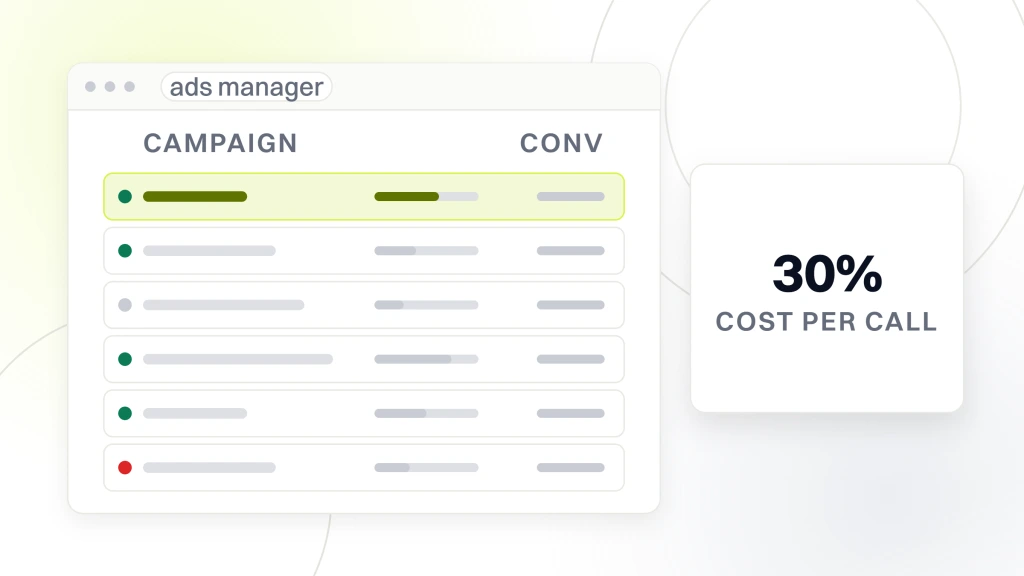
Smile Design Dentistry, a 50+ location DSO (dental service organization), came to Redefine Web with inflated ad spend, poor-quality leads, and limited tracking across a legacy Meta setup. Cost per call was climbing month over month, and the internal team couldn’t tell which locations produced actual patients versus form fills. The mandate was scale without inflating cost per booked patient.
What we changed on the Meta side
We restructured ad accounts per location, uploaded patient CRMs as custom audiences and lookalikes, and moved every location off soft “schedule now” creative onto dollar-specific new-patient offers. Server-side Conversions API went live across all 50+ locations. The creative pipeline shifted from produced video to phone-shot doctor intros refreshed monthly.
What we fixed on the funnel side
Each location got a dedicated Facebook landing page (not the site homepage), a two-field form, and a call tracking number that fed qualified calls back to Meta as offline conversions. Front-desk playbooks tightened the callback window to under 15 minutes on weekdays. The paid social budget stayed roughly flat, but the value flowing through it changed shape.
The result across the network
Cost per call dropped 30% across the 50+ locations. PPC conversion rate rose 20% since higher-quality Meta leads carried through to Google as well. The tracking closed the loop between paid social spend and actual booked appointments per location, so the DSO leadership team could see which markets to lean into. For the retainer scope that supports this work, see our dental ppc.
How facebook ads work with google ads for dentists
Dental practices that run both Meta and Google usually see the 2 channels help each other. Meta plants the awareness. Google captures the intent when the patient searches by name or by service afterward. Practices that isolate the 2 channels miss the assist patterns and misread which one is producing value.
Branded search growth
Meta drives branded search on Google. After a solid Facebook campaign runs 3 to 4 weeks, branded search volume usually rises 30 to 60%. If you aren’t running branded search campaigns on Google, competitors capture that intent. Run a small always-on branded campaign to hold the top of the SERP and convert the assist Meta paid for.
Cross-channel retargeting
A patient who saw a Facebook ad but didn’t book might search on Google 4 days later. Run Google retargeting on the pixel-fired audience from Meta. Same principle in reverse. Google visitors get retargeted on Meta. Cross-channel retargeting audiences typically convert at 3 to 5x the cost efficiency of cold prospecting. For the full retargeting map, see the dental facebook ads guide.
Unified reporting
Pull Meta, Google, and the practice management system into 1 dashboard weekly. Looker Studio, Databox, or even a spreadsheet works. The dashboard should show cost per booked appointment by channel and by location. Practices that track this weekly reallocate budget every 2 to 3 weeks and outperform practices that only look at channel-level dashboards. Our dental marketing roi covers the reporting stack in detail.
What to avoid with dental marketing facebook ads
Dental marketing facebook ads has a handful of failure modes that show up across accounts regardless of size, market, or specialty. Avoiding these 3 specific patterns saves more budget every quarter than any advanced targeting tactic or creative iteration adds on the same account.
Chasing engagement instead of appointments
Likes, shares, and video views feel good but don’t book chairs. Engagement metrics only matter as leading indicators. If a video has 100,000 views and 3 booked appointments, it’s a bad video for this channel. Optimize toward booked appointments from day 1, and use engagement as a secondary signal to inform creative iteration.
Running only prospecting and no retargeting
Prospecting-only accounts leave 30% of the conversion potential on the table. A person needs to see the practice 3 to 7 times before booking in most markets. Retargeting is what delivers those follow-up touches. Split budget roughly 65% prospecting, 35% retargeting once the pixel has enough data (usually 90 days in).
Set-and-forget campaigns
Meta rewards active management. Accounts that get looked at once a week beat accounts that get looked at once a month by roughly 40% in cost per booked appointment. The weekly cadence covers creative refresh, ad set pruning, budget shifts, and offline conversion uploads. This is the operational floor a paid social manager needs to cover. See our dental marketing for dentists for the full retainer scope.
Turn dental marketing facebook ads into booked patients
Dental marketing facebook ads work when the offer is worth clicking, the funnel doesn’t drop patients, and the tracking actually feeds Meta signal. Fix those 3, and the cost per booked chair drops to a level where the channel deserves the budget. Skip them, and no targeting trick or creative refresh will save the account. For a WCAG 2.2 AA audit of your dental site, the W3C quick reference is the working document. For Meta ad policy on health, Meta publishes its ad standards directly. For practical CRO context on why the ads are only as good as the page they land on, WebAIM’s overlay fact sheet is worth reading even if you never install an overlay.