Dental ads are the quickest lever a practice has for filling a slow week. Not the cheapest, not the most polished, but the quickest. You pay for the search, the click, or the impression, and a caller or form arrives the same day. The trick is running dental ads that fill the chair instead of the spam folder, and that discipline is built out of channel choice, offer design, landing page, and call tracking. Everything else is decoration.
This guide is the working plan for the next 90 days. You get the four channels worth funding, the cost bands per channel and per patient, the offer patterns that book real cases, the compliance rules that keep you off a Google policy hold, and the tracking setup that tells you which dollar produced which booking. Read it in about ten minutes. Pick the two sections that match where the practice sits today. Skip the rest.
What dental ads really are in 2026
Dental ads are paid placements on Google Search, Google Local Services, Meta, or YouTube that put your practice in front of patients who are actively looking for a dentist or scrolling near your service area. Four channels do 95% of the work. Every other channel is a niche play, not a booking engine.
Your channel mix follows patient intent. Google Search catches someone typing dentist near me at 9 pm with a broken tooth. Meta introduces you to a mom scrolling Instagram who has been putting off a cleaning for eight months. Local Services Ads run above search results with a Google Guarantee badge. YouTube pre-roll builds recognition before the search happens. Each channel books a different kind of patient, and none of them replaces the others.
Intent channels versus interruption channels
Google Search and Local Services Ads are intent channels. The patient is already searching. Your only job is to be there with a clear offer and a working phone number. Meta and YouTube are interruption channels. The patient is scrolling or watching, and you are the pattern break. Interruption channels need stronger creative, a stronger hook, and a stronger offer to earn the click. Practices new to paid usually start with intent for one reason. The math is cleaner. Interruption works once the intent side is dialed in.
What a dental ad is not
A boosted Facebook post is not a dental ad. A vanity billboard on the highway is not a dental ad. A directory listing on a dental portal that charges $199 a month is not a dental ad. Those are brand exposure with no measurable path to a booked appointment. If you can’t answer the question which patient booked from this spend last week, you are not running dental ads. You are donating money to a platform. Treat that money the same way you treat a rent check. Track it or stop paying it.
The four types of dental ads worth funding
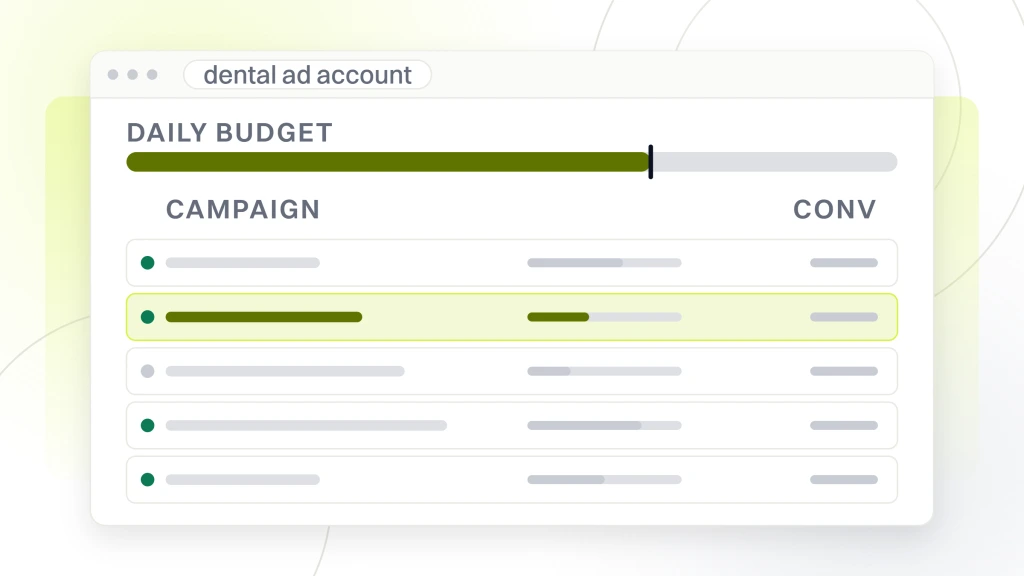
Four ad types reliably book patients across general dentistry, cosmetic, implants, and emergency. Each carries a distinct cost band, conversion window, and gotcha. The goal is not to run all four on day one. Start with the channel that fits the current stage of the practice, prove it works, then layer the next one on top.
| Ad type | Monthly spend band | Cost per booked patient | Best for |
|---|---|---|---|
| Google Search | $1,500 to $6,500 | $85 to $220 | General, implants, emergency |
| Google Local Services (LSA) | $800 to $3,500 | $45 to $120 | General, emergency, first-time patients |
| Meta Facebook and Instagram | $1,200 to $4,800 | $65 to $180 | Cosmetic, Invisalign, whitening, new-patient specials |
| YouTube pre-roll | $900 to $3,200 | $110 to $260 assisted | Cosmetic and implant awareness, multi-location groups |
Google Search dental ads
Google Search is where you catch a patient at the moment of decision. Someone types dentist near me, emergency dentist Cincinnati, or dental implants cost. Your ad shows above the map pack, they click, they call. The math is the cleanest of any channel for one reason. The patient tells you what they want in the query. Practices that spend $2,500 to $4,000 a month here usually book 20 to 45 new patients from Google Search alone. The gotcha is keyword discipline. Broad-match keywords with no negative list burn 40% of your budget on dental jobs, dental hygienist salary, and free dental clinic queries. See our dental google ads guide for the account structure that avoids it.
Local Services Ads for dental
Local Services Ads sit above the regular search results with a Google Guarantee badge. You pay per lead, not per click. The badge builds instant trust, and the pay-per-lead model caps your downside. A general dentist in a mid-size metro pays $45 to $90 per lead. An emergency dentist in a competitive market pays $90 to $180. LSAs are usually the first paid channel a solo practice should turn on. The compliance overhead is lower and the cost-per-lead math is transparent. The setup takes two to three weeks. Google verifies your license and insurance before the ad runs.
How much dental ads cost per booked patient
Dental ads run $45 to $260 per booked patient once you factor channel, market, and treatment together. A general dentistry patient in a mid-tier market lands around $95 to $140. An implant consult sits at $180 to $260. Click cost climbs and appointment rate drops at that ticket.
The math that matters is patient lifetime value against acquisition cost. A general dentistry patient stays with the practice for 4 to 7 years and produces $2,800 to $6,500 in revenue across cleanings, restorations, and referrals. Paying $140 to book one is a 20-to-1 return. An implant patient produces $4,800 to $9,500 in first-year revenue alone. Paying $260 to book a consult that closes at 35% is a 6-to-1 return on the first appointment and 20-to-1 across the treatment plan. Any dental ads spend that clears a 5-to-1 lifetime return is healthy.
Cost per click versus cost per lead versus cost per patient
Three numbers travel together and get confused all the time. Cost per click is what Google or Meta charges every time someone clicks your dental ad. It runs $4.80 to $28 depending on treatment and metro. Cost per lead is what a click costs after you divide by the conversion rate on your landing page. Most dental landing pages convert at 8 to 14%, which puts cost per lead at $40 to $180. Cost per patient is that number divided by the show-and-book rate, which for a healthy practice sits at 55 to 75%. That layered math is why a $12 click can turn into a $180 patient once every discount and no-show is priced in.
Market and treatment adjustments
Cost bands shift on three variables. Market density, treatment competition, and search intent depth. A dentist in a metro with six competing chains inside a five-mile radius pays 40 to 70% more per click than the same practice in a rural market. A cosmetic dentistry keyword costs 2 to 4 times a general cleaning keyword. The ticket size funds a higher bid. An emergency intent query converts at 18 to 24%, and a research query converts at 3 to 6%. The same click cost produces very different patient economics.
Dental ad examples that book real cases
You already know the template ads. Smiling stock family. Board-certified something. Serving the community since 1997. Those ads fill the slot and blur into the background. The dental ad examples that reliably book new patients follow four patterns any office can copy this afternoon.
- The $59 new patient exam plus x-rays plus cleaning, with same-week availability spelled out in the headline.
- The emergency dental ad with today at 4 pm still open, tied to a click-to-call phone number.
- The Invisalign consult with a free 3D scan and a specific starting price under $95.
- The implant case study with a compliant before-and-after photo and the exact treatment cost.
The new patient special dental ad
This is the workhorse of general dentistry advertising. A specific dollar amount, a specific service bundle, and same-week availability. The $59 exam plus x-rays plus cleaning outperforms the vague new patient welcome by 3 to 5 times on click-through and conversion. The price qualifies out shoppers who won’t pay for treatment, which raises your show rate and cuts your no-shows. Practices worried about attracting bad leads underprice the special. If you price it too low, you get $59 buyers who never come back. Land the special at 40 to 50% of your normal exam-cleaning bundle. That’s the sweet spot.
The emergency dental ad
Emergency dental ads book the highest cost-per-click and the highest patient value at the same time. The intent is unmistakable. Someone in pain, in front of their phone, ready to drive across town for relief. The headline is the appointment window. Emergency dentist open today, 4 pm still available in Cincinnati. The click cost hits $22 to $38 in competitive metros. The conversion rate hits 18 to 24%. Cost per booked patient lands at $110 to $180. Most practices refuse to run emergency ads. The schedule pressure is real. Practices that make space for two emergency slots per weekday clear 8 to 14 new patients per month from this channel alone.
Dental ads compliance rules that keep your account alive
Google and Meta both classify dental ads under healthcare, which triggers a stricter policy set. Get one wrong and the ad account goes on policy hold for 3 to 14 days during the appeal. Two hard rules cover 90% of policy issues. No before-and-after photos of the same patient without written consent and a compliant disclaimer. No specific claims about outcomes that can’t be substantiated. Everything else is guardrail work.
Meta enforces a stricter interpretation than Google on personal attributes. Ad copy that implies a physical trait of the viewer gets flagged. You have crooked teeth, straighten them fast gets rejected. Straighten your smile with Invisalign, consults from $95, passes. The distinction lives in second-person specificity about the viewer’s body. Google will approve the same claim but restrict the audience. The Google healthcare and medicines policy is the canonical reference. Read it once, print the summary, tape it above the ad manager screen.
Before and after photo rules
Before-and-after photos convert better than any other creative for cosmetic and implant campaigns. They also carry the highest policy risk. You need a signed HIPAA-compliant photo release from the patient covering marketing use, digital distribution, and the right to withdraw consent. You need the disclaimer results vary or individual results may vary inside the ad frame or right below it. And you need to avoid promising or implying a specific outcome. Practices that skip the release and pull photos from patient files get the ad account suspended and open themselves to a HIPAA violation. That’s not worth the extra 3 to 5% click-through rate.
Claim substantiation
Every specific claim in a dental ad needs a source you can produce on request. Number one dentist in Cincinnati needs a citation. 4.9 stars from 340 reviews needs a live Google Business Profile matching those numbers. Painless treatment is a policy trigger on both Google and Meta. Pain tolerance varies. Comfortable treatment is fine. It describes the experience without promising an outcome. The rule of thumb is your ad copy has to survive a lawyer reading it out loud. If it makes the lawyer cringe, rewrite it.
Landing pages that turn dental ad clicks into calls
The single biggest lever on cost per booked patient is the landing page. Most practices send paid clicks to the homepage. Homepage conversion rates run 2 to 4%. A dedicated landing page built for the specific ad hits 8 to 14%. That difference cuts cost per booked patient in half without touching the ad. The page is the campaign. See our dental ppc landing pages playbook for the section-by-section structure we use.
Every dental online ads landing page carries six elements above the fold. Practice name and location, the offer that ran in the ad restated in the headline, a three-field form or click-to-call button, review count with star rating, an insurance strip, and one photo of the actual practice or provider. Everything else stays below the fold. Attempting a full sitewide navigation, hero video, or six-column service grid drops conversion by 30 to 55%. It gives the visitor too many places to bounce.
Form fills versus phone calls on dental online ads
Mobile traffic on dental online ads prefers a click-to-call button. Desktop traffic prefers a form. The mistake most landing pages make is hiding the phone number behind a click-to-reveal or a scroll. Every dental landing page displays the phone number in the header, in the button on mobile, and again in the footer. Practices that put the phone number in three positions see call volume climb 22 to 35% inside a week without changing the ad or the offer. Book a call tracker on that number so you know which ad, keyword, and landing page produced the call.
Page speed and mobile UX
Landing pages that load in under 2 seconds convert 20 to 30% better than pages that load in 4 seconds. Mobile pages are where the fight is. 70% of dental search traffic is mobile. Your image weight has to stay under 200 KB per hero. Your fonts have to preload. Your JavaScript has to defer. Get Lighthouse mobile scores into the green before you run the first click, or the ad budget subsidizes a slow page instead of a fast booking.
Tracking that ties dental ads to booked patients
Dental ads are useless without tracking that ties the ad click to the booked appointment. The stack is four tools. A call tracker like CallRail. A conversion pixel on the ad platform. A form endpoint that logs source parameters. A monthly reconciliation between the marketing platform and the practice management system. Skip any of the four and the report becomes guesswork about which channel booked what.
CallRail runs $45 to $180 per month depending on call volume. Dynamic number insertion swaps the phone number on the site by traffic source. A Google Ads visitor sees one number, a Meta visitor sees another, and organic search sees a third. Every call is recorded, tagged, and scored. That single tool grows attributed conversions by 40 to 65%. The practice finally learns which paid channel produces the calls, not just the form fills. See our call tracking for dentists setup guide for the exact CallRail configuration.
GA4 conversion setup
GA4 is your source of truth for cross-channel attribution. Every ad platform reports its own numbers optimistically. GA4 shows the real path. Set up conversion events for phone_call, form_submit, and booking_completed. Import CallRail calls as offline conversions on the Google Ads side. Configure server-side tracking for the form endpoint so ad-blockers don’t cut your data. Practices that run this setup see attribution accuracy climb from about 60% to 90%, and the paid budget rebalances toward the channels producing patients.
Practice management reconciliation
The final check on dental ads performance is a monthly reconciliation between the marketing platforms and the practice management system. Google Ads reported 84 conversions last month. GA4 reported 71. Dentrix or Open Dental show 52 new patients whose first appointment reason maps to the campaign period. 52 is the number that pays for the ads. The gap between 84 and 52 is where you find fake conversions, duplicate leads, and no-shows. Reconciling monthly forces you to price the channel honestly instead of celebrating platform numbers that never touch the chair.
Multi-location dental ads and DSO campaigns
Running dental ads for one practice is a math problem. Running them across 8 or 50 offices is a systems problem. Every location has different demographics, different competition, different capacity. A campaign structure that treats all locations equally overspends on the offices already full and underspends on the ones with open chairs. Smile Design Dentistry, a 50-location DSO across Central Florida and Tampa Bay, came to us with that exact problem.
We restructured PPC by funnel stage and geography, layered full-funnel paid social, and built location-specific landing pages that matched ad creative. Bid logic went to the neighborhood level instead of the office level so patients searching from a drivable distance funneled to whichever office had capacity. Twelve months later, PPC conversion rate climbed 20%, cost per call dropped 30%, and campaigns ran successfully across all 50 plus offices. That combination of segmentation, per-location landing pages, and CallRail patient-quality scoring is the multi-location playbook. See our DSO dental marketing guide for the full multi-location structure.
| Smile Design Dentistry metric | Before | After 12 months |
|---|---|---|
| PPC conversion rate | Baseline | +20% |
| Cost per call | Baseline | -30% |
| Locations on unified system | Fragmented | 50+ live |
| Paid social funnel | None | Full-funnel active |
Per-location landing pages
A DSO or group practice with 8 or more offices needs a unique landing page per location for paid traffic. The page carries the local phone number, the local office photo, the local Google Business Profile reviews, and the local providers. Generic corporate pages hurt conversion by 25 to 45%. The visitor can’t tell if the practice is nearby. The build is templated once and cloned per location with 30 to 45 minutes of local data entry each. That two-week build pays for itself in the first month of paid spend.
Capacity-aware bidding
The biggest DSO mistake is bidding equally across all locations when three offices are already booked out four weeks and two others sit at 40% capacity. Capacity-aware bidding takes the practice management system’s booked-percentage feed and adjusts location-level bids weekly. Offices under 65% capacity get bid increases. Offices over 90% capacity get bid decreases or paused campaigns. That single feedback loop shifts 15 to 25% of spend toward productive locations without changing the total budget.
Specialty dental ads for cosmetic, implant, and emergency
General dentistry ads book cleanings and exams. Specialty dental ads book the cases that fund the practice. Implants, cosmetic, Invisalign, and emergency are where the ticket size supports a higher click cost and a longer nurture window. The campaign structure looks different from a general dentistry ad account. The sales cycle is longer, the price point is higher, and the conversion event lives further down the funnel.
Cosmetic and implant patients research for 4 to 12 weeks before they book a consult. Your ad has to run at multiple stages of that journey. Awareness on YouTube pre-roll. Consideration on Meta remarketing. Decision on Google Search. Practices that only run search miss 60 to 70% of implant demand. They show up too late. The full-funnel setup costs 30 to 40% more per booked case but produces 3 to 5 times the case volume, and the case value covers it easily.
Invisalign and clear aligner ads
Invisalign patients skew female, 22 to 45, with an active Instagram or TikTok. Meta ads outperform Google Search for this demographic 2 to 3 times on cost per booked consult. The winning creative pattern is a short vertical video of an actual aligner tray, a real patient testimonial with real-name attribution, and a specific starting price. Sending clicks to a dedicated Invisalign consult page with a free 3D scan offer books 8 to 14% of visitors, and a generic landing page books 3 to 4%. Our Invisalign marketing for dentists post covers the creative angles and offer stack.
Dental implant ads
Implant patients skew older, 45 to 72, with a specific pain point around dentures, missing teeth, or bridge failure. The winning creative angles for this audience are the eat-what-you-want angle, the no-more-adhesive angle, and the twelve-week timeline angle. Meta interest targeting works less well than Google Search for implants. The searcher intent is high and the click volume is manageable. A single-provider implant practice spending $2,800 a month on Google Search plus $1,400 on Meta remarketing books 6 to 12 implant consults a month, of which 3 to 5 close into full-arch cases.
Dental ads mistakes that waste 30% of your budget
Every dental ads account we audit at Redefine Web carries the same five waste points. The audit takes 90 minutes. The fix takes a week. The waste cut ranges from 22 to 48% of monthly spend. If the account has never been through this pass, run it this Friday. Then run it again in 90 days. Waste creeps back every quarter as new keywords come in and old negatives fall out.
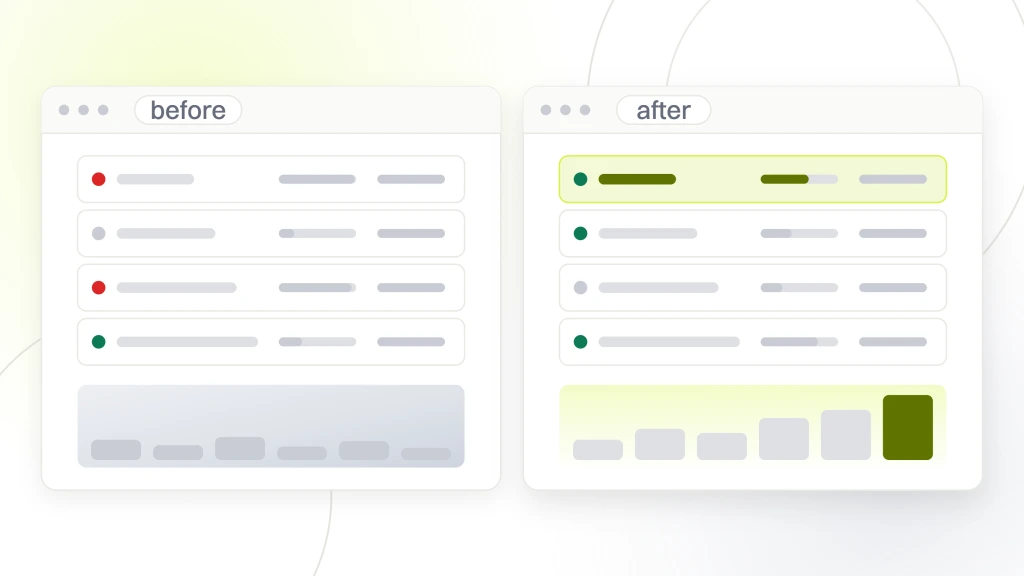
- Broad match keywords with no negative list burning 25 to 40% of budget on irrelevant queries.
- Homepage as landing page instead of a dedicated ad-matched page.
- No call tracking or the wrong number displayed to paid traffic.
- Performance Max campaigns eating branded search you already own for free.
- Location extensions pointing to offices with no capacity or wrong hours.
The negative keyword audit
Pull the search terms report from the last 90 days. Sort by impressions descending. Every query that is not a real patient intent goes into the negative list. Common categories to negate on day one. Dental jobs, dental hygienist, dental assistant, dental school, dental insurance, free dental, dental Reddit, cheap dental. Add manufacturer terms your practice does not offer. Add treatment types you do not perform. A clean negative list saves 25 to 40% of spend on most dental accounts and grows the true conversion rate by 30 to 60%. The remaining traffic is qualified.
The Performance Max trap
Google pushes every dental practice toward Performance Max for one reason. It maximizes Google’s revenue, not the practice’s. PMax campaigns route 30 to 55% of their conversions from branded search you already win in organic search for free. Practices that add PMax on top of a healthy search account see reported conversions climb 40% and actual new patient volume stay flat. If you run PMax, exclude your brand terms and monitor incrementality. If you can’t prove PMax is producing new patients over baseline, pause it and put the budget into search or Meta.
Where to start with dental ads if you have never run paid
Budget is $1,500 to $3,000 a month and nobody in the office has run paid before. Start with two channels. Google Local Services Ads and Google Search on a small keyword set. LSAs give the fastest path to a booked patient. Google handles the audience and you pay per lead. Search gives you control and lets the team learn the mechanics. Skip Meta, YouTube, and Performance Max for the first 90 days. Meta needs creative volume the practice does not yet have. YouTube needs brand recognition the practice does not yet have. PMax needs a working search baseline to compare against.
The 90-day plan looks like this. Weeks 1 and 2, LSA verification and account setup. Weeks 3 and 4, keyword research, landing page build, CallRail install. Weeks 5 through 8, launch search on 15 to 25 keywords with a $60 to $90 daily budget, review search terms weekly, tighten negatives, watch cost per call trend. Weeks 9 through 12, add one Meta remarketing campaign for anyone who visited but did not book. That sequence gets you a working paid channel by day 60 and a working funnel by day 90.
In-house versus agency for ads for dental practices
Running ads for dental practices in-house takes 8 to 14 hours a week from someone who already knows Google Ads. If your office manager or marketing lead has that time and skill, the DIY math works. If not, a PPC retainer runs $999 to $2,499 a month on top of ad spend, with enterprise scopes starting at $4,500. The break-even is around $4,000 to $5,500 monthly spend. Below that, the retainer eats too much of the budget. Above that, the agency layer usually returns 20 to 40% gain on the same spend. They catch the audit items you do not have time to catch. Read our dental ppc management post for a scope comparison.
Scaling the budget honestly
The rule for scaling dental ads is simple. Double the budget only after the current spend is producing patients at a healthy cost. Double before that and you double the waste. Watch cost per booked patient across three consecutive months. If it holds steady, scale by 20 to 40% per month. If it climbs sharply on the scale, back off and audit the funnel. Growth on paid is a controlled climb, not a launch. When the practice is ready to run this across the full stack, our dental marketing guide covers the paid, organic, and retention playbook end to end.
Reporting cadence and dental ads accountability
Dental ads need three reports on a fixed cadence. A weekly quick-look for account hygiene, a monthly performance summary for budget decisions, and a quarterly deep audit for structural fixes. Every report answers the same core question. How many patients booked, at what cost, from which channel. Any report that leads with impressions or click-through rate without a booked-patient count is padding the deck.
The weekly report is 15 minutes. Spend, clicks, conversions, cost per conversion, top-cost keyword, top-converting keyword, and any policy alerts. The monthly report is 45 minutes. Same data by channel plus GA4 attribution model comparison, CallRail patient-quality tags, and PMS reconciliation. The quarterly audit is 4 to 6 hours. Full search terms review, negative keyword refresh, landing page conversion diagnostic, ad copy refresh, budget rebalance across channels. Practices that run all three cadences hold cost per booked patient within 10% variance year over year. Practices that run none see it drift 40 to 90% higher inside 12 months.
Monthly report structure
The monthly report has six sections. Channel summary with spend and booked patients by channel. Campaign performance with cost per booked patient trend. Landing page conversion rate by page. Search terms review with new negatives to add. Ad copy performance with any creative to retire or scale. Budget recommendation for next month with a written rationale. Every recommendation ties to a number the practice manager can verify against the practice management system. That structure keeps the ad account honest and keeps the practice out of hopeful thinking.
Quarterly audit checklist
The quarterly audit works through 22 checkpoints. Account structure, conversion tracking accuracy, negative keyword coverage, landing page speed on mobile, ad copy compliance, extension coverage, geo targeting precision, dayparting relevance, device bid adjustments, remarketing audience health, exclusion lists, call tracking configuration, GA4 event setup, offline conversion import, PMS reconciliation, competitor bid analysis, seasonal calendar review, budget pacing history, invoice reconciliation, and a manual click-through of the top three keywords to verify the ad still looks and behaves as expected. Practices that run this quarterly catch structural issues before they cost 30 days of budget. Sources like Think with Google and the Google Ads help center are the reference material we lean on to keep the checklist current.
Make dental ads work for your practice
Dental ads reward operators who treat them like a discipline, not a marketing tab. Pick two channels, build a landing page that matches the ad, wire CallRail and GA4 to the practice management system, and reconcile the numbers every month. Do that for 90 days and the account starts telling you which dollar produced which patient. Ignore any one of those steps and the budget quietly funds a platform’s revenue instead of your chairs. Redefine Web builds and runs this exact stack for dental practices and DSOs. Book a 30-minute paid audit and we’ll walk your account line by line.