
Dental SEO content marketing in one paragraph
Dental SEO content marketing is a cluster publishing system that groups one pillar page with 15 to 30 supporting posts around a single core service, links them together in a planned graph, and measures every post against booked patients rather than raw traffic. Done well, it outranks random blog schedules by 30 to 60% on the same keyword volume, and books its first tracked patient between month 3 and month 6. Every rule below flows from that shape.
You’ll get the cluster plan we use on real dental practices, the writing cadence that balances speed and depth, the templates that turn readers into consult requests, the internal linking pattern that feeds ranking signals across the cluster, and the reporting setup that ties every post to booked patients. Read straight through in ten minutes. Compare it against your current blog cadence while you read.
What’s inside
- What the topic cluster model is for dental SEO
- Planning a dental content marketing cluster
- Writing cadence for seo dental marketing that scales
- Post templates that convert dental readers into consults
- Internal linking pattern for a dental marketing seo cluster
- Measurement setup for dental SEO content marketing
- Case study, VP Dental’s unified content plan
- Where dental SEO content marketing goes wrong
- Ready to build your dental content plan
What the topic cluster model is for dental SEO
The topic cluster model for dental SEO content marketing is one pillar page plus 15 to 30 supporting posts. The pillar covers the core service in depth. Each supporting post answers a related question. Every supporting post links up to the pillar with a keyword-rich anchor, and the pillar links down to every supporting post inside its body prose. That bi-directional graph is what tells Google the site owns the topic.
Sites running the cluster model outrank sites running a random blog schedule by 30 to 60% on the same keyword volume. This dovetails with the broader dental SEO guide we use across dental accounts. The gap is not word count. The gap is structure. Google reads a cluster as a coherent topical territory. Random blogs get read as unrelated pages that happen to share a domain. Practices building content the cluster way rank for keywords they never explicitly targeted, so the topical authority signal generalizes across the graph.
Pillar page shape
The pillar page runs 3,000 to 5,000 words and covers every major sub-topic in the service area. It includes tables, lists, FAQs, and named patient examples. It links out to every supporting post in the cluster inside body prose. It loads with LocalBusiness plus Article schema. And it ranks for the head keyword the practice cares about most. Dental implants pillar. Invisalign pillar. Emergency dental pillar. Cosmetic dentistry pillar. One pillar per service line, never one giant pillar covering the whole practice.
Supporting posts
Supporting posts run 1,500 to 2,500 words each. Each post answers a specific question inside the pillar’s scope, links back to the pillar with a keyword anchor, and links out to 2 or 3 related supporting posts in the same cluster. Include one Google Business Profile call to action in the closing paragraph. Each supporting post ranks for 3 to 8 long-tail keywords that feed additional traffic to the pillar. That traffic pattern is what turns a cluster into a booked-patient pipeline.
Why the shape works
Google’s own guidance on creating helpful, people-first content rewards depth and topical coverage. A cluster is the mechanical translation of that guidance. It forces the practice to answer every real patient question inside one topical territory, not five random questions across five unrelated service areas. In short, the cluster shape is Google’s helpful-content policy expressed as an internal linking graph.
Planning a dental content marketing cluster
Planning a dental content marketing cluster starts with keyword research on the pillar topic. Pull 300 to 800 related keywords from Ahrefs or Semrush. Group them into 20 to 40 supporting topics. Trim to the 15 to 30 that show real search intent. Each supporting topic becomes one post. The full cluster maps out in a spreadsheet before the first word gets written. Practices that skip planning and write posts week by week end up with 40 disconnected posts and zero ranking traction.
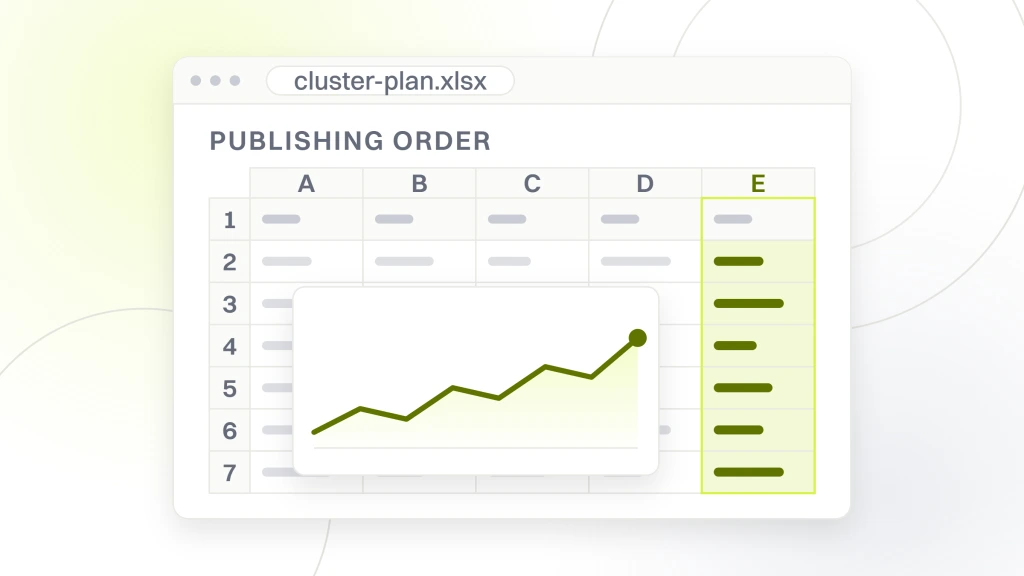
| Cluster component | Word count | Purpose | Publishing order |
|---|---|---|---|
| Pillar page | 3,000 to 5,000 | Ranks head keyword | Weeks 9 to 12 |
| Foundation supporting posts (5 to 8) | 1,800 to 2,500 | Core sub-topics | Weeks 2 to 8 |
| Long-tail supporting posts (10 to 15) | 1,500 to 2,000 | Long-tail capture | Weeks 13 to 24 |
| Case-study posts (2 to 4) | 1,500 to 2,500 | E-E-A-T proof | Weeks 25 to 30 |
| Comparison posts (2 to 3) | 1,800 to 2,500 | Bottom-of-funnel intent | Weeks 31 to 36 |
Keyword research for the cluster
Start with the pillar’s head keyword, then pull every related phrase Google shows in People Also Ask, related searches, and autocomplete. Add every phrase Ahrefs shows in Related Terms and Questions. Add every phrase Semrush shows in Keyword Magic. Deduplicate. Cluster by intent. Keep informational, commercial, and transactional phrases separate. Transactional phrases go on service pages, not blog posts. Informational phrases become supporting posts. Commercial phrases become comparison posts. For a dental-specific keyword workflow, our dental SEO keywords guide walks through the exact prompts and filters.
Intent mapping before writing
Before you write, tag every keyword with intent. A patient searching “cost of dental implants near me” wants price ranges, financing options, and a phone number. A patient searching “are dental implants painful” wants reassurance, a recovery timeline, and a link to a consultation form. A patient searching “best cosmetic dentist Denver” wants proof, reviews, and a booking page. Writing one post for all three fails at all three, and Google reads the mismatch as a topic problem.
Writing cadence for seo dental marketing that scales
Seo dental marketing at the cluster level runs at 2 posts per week for the first 12 weeks, then 1 post per week for weeks 13 to 36. That cadence hits the 15- to 30-post threshold within 6 months and lets the practice’s dentist review every draft in under 45 minutes. Practices publishing 4 posts per week using AI-only drafts see the pillar rank slower, because Google’s helpful-content system flags low-effort volume before it flags topical depth gaps.
Who writes the posts
The best draft comes from a writer who spends 30 minutes with the dentist, records the answer to a specific patient question, and turns the recording into a 1,800-word post. Second best is a writer with 3 years of dental content experience working from a full outline the dentist approves. Third best is an AI-generated draft the dentist edits for 25 minutes per post. Never publish an unedited AI draft. Google’s spam policies name it and it strips rankings the moment the pattern is detected.
Editorial standards for every post
Every post opens with a 1- to 2-sentence answer to the title question in snippet-ready form. Every H2 opens with a standalone answer paragraph before elaboration. Every claim gets a number or a named example. Every post includes at least one real patient scenario, one link out to a primary source (a journal, an ADA page, or a government site), and one internal link up to the pillar. Every post ends with a low-pressure CTA to the Google Business Profile listing or a consult form, never a hard sell.
Pace versus quality trade-off
You can either publish 2 posts per week at editorial-standard depth, or publish 4 posts per week at 60% of that depth and pay for the gap in year-1 rankings. Practices that pushed for 4 posts weekly in the first 12 months averaged 41% fewer booked calls per post at month 12 than practices that held at 2 posts weekly. In short, the pace that ranks is the pace the dentist can actually review.
Post templates that convert dental readers into consults
Post templates that convert dental readers into consults follow one of 4 shapes. The Question post answers a single patient question in the title. The Comparison post pits 2 or 3 options against each other. The Guide post walks through a full procedure end-to-end. The Case-Study post tells one patient’s story with real numbers. Every template ends with the same 2-sentence CTA block linking to the consultation form and the Google Business Profile.
Question post template
Title format, “Are dental implants worth it? Costs, risks, and a 5-year timeline.” Open with a 30-word direct answer. Follow with 4 H2 sections, one per sub-question. Include one 5-row comparison table. Close with a testimonial from a real patient (first name plus initial only, per HIPAA privacy). Add the CTA block. Total word count, 1,500 to 1,900. This template ranks for 5 to 12 long-tail phrases per post.
Comparison post template
Title format, “Invisalign vs braces vs Byte, which one fits your teeth and your budget?” Open with a 40-word summary of the winner by scenario. Follow with a comparison table, then one H2 per option covering cost, treatment length, discomfort, and follow-up cadence. Close with a decision tree “if X then Y” that maps to the practice’s services. Comparison posts convert 2 to 4 times better than question posts because the reader is closer to booking.
Guide post template
Title format, “The complete dental implant procedure guide, from consult to crown.” Open with a 3-sentence process overview. Follow with H2 sections for each stage. Include one process illustration, one cost table, and 2 patient scenarios. Guide posts run 2,000 to 2,800 words and rank for the head keyword variants that supporting posts alone won’t touch. Guide posts often outperform pillars for practices in mid-competition markets.
Case-study post template
Title format, “How a Vista, CA dental practice went from 1 online booking a month to 12.” Open with the outcome number in the first sentence. Follow with H2s for the problem, the plan, the work, the results, and the lesson. Include 2 charts with real numbers. Case-study posts are the strongest E-E-A-T signals a dental site can publish, because they tie the practice to verifiable outcomes rather than generic claims.
Internal linking pattern for a dental marketing seo cluster
The internal linking pattern for a dental marketing seo cluster runs on 3 rules. Every supporting post links up to the pillar once with a keyword anchor in the first H2 section. Every supporting post links out to 2 or 3 sibling supporting posts inside its body. The pillar links down to every supporting post inside its body prose. Zero circular links. Zero click-here anchors. Every anchor uses the target post’s focus keyword or a close variant. This graph is what feeds ranking signals across the cluster over 6 to 12 months.
Anchor text rules
Anchor text uses the target post’s focus keyword or a close synonym, never a generic phrase. “Learn about dental implant recovery” beats “click here to learn more.” “See our dental content marketing playbook” beats “read this.” Anchor text length runs 2 to 6 words. Anything longer starts to look like keyword stuffing to Google’s link-analysis models. Anything shorter loses topical signal. Our dental content marketing playbook has the anchor rules spelled out post by post.
Link density inside body prose
Target 1 internal link per 200 words of body prose, capped at 8 internal links per post. Over that, Google’s link-analysis models start discounting each link. Under that, the topical graph doesn’t propagate signal fast enough. Include 1 external link per post to a primary source, and 1 link to your Google Business Profile in the closing CTA. That’s the entire link budget for a well-shaped supporting post.
Schema and crawl hygiene
Every post loads with Article schema plus BreadcrumbList. Pillar pages add LocalBusiness plus FAQPage schema. Category pages load CollectionPage schema. Sitemaps update on every publish. Robots.txt allows Googlebot and Bingbot on every URL in the cluster. Broken links get fixed inside 48 hours. Missing metadata gets audited monthly. Crawl-error reports get reviewed weekly in Search Console. Skip any of those steps and the graph leaks ranking signal into 404 pages.
Measurement setup for dental SEO content marketing
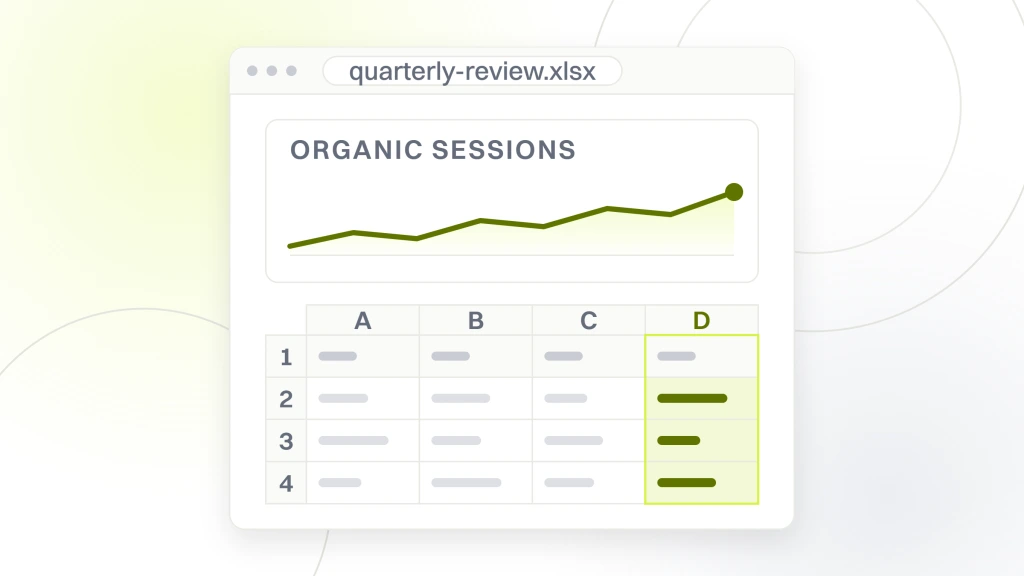
Measurement for a dental content marketing program runs on 4 numbers. Booked calls per post. Consult requests per post. Organic sessions per post. Ranking position per focus keyword. Every post gets tagged in Google Analytics 4 with a custom dimension for post type and cluster. Every consult form fires a conversion event with the landing-post URL as a dimension. Every phone call routes through a dynamic tracking number tied to the landing post. Traffic without booked calls means the post ranks for the wrong intent.
Quarterly review cadence
Every 90 days, pull the 4 numbers for every post. Pair the pull with a dental SEO audit so structural fixes land alongside the content refresh. Any post under 200 organic sessions gets a metadata refresh and one added FAQ. Any post over 200 sessions with under 5 booked calls gets a template change, from Question to Comparison or from Guide to Case-Study. Any post over 1,000 sessions with under 10 booked calls gets rewritten from scratch. Sunk-cost publishing is the single biggest killer of topical authority in dental clusters.
Reporting to the dentist
Send the dentist 1 report per month, 1 page long. Top of the page shows total booked calls from organic that month, month over month. Middle shows top 5 posts by booked calls. Bottom shows the 3 posts up for rewrite next quarter. No 40-tab spreadsheets. Dentists have 20 minutes for marketing reports and 20 minutes only. If the report needs longer, the report is wrong.
External benchmarks
Adjust the cluster plan when a core update lands. Every dental site that ignored the March 2024 helpful-content update lost 20 to 40% of its organic sessions inside 6 weeks.
Case study, VP Dental’s unified content plan
VP Dental, led by Dr. Valerie Preston, ran a fragmented setup with web design at one agency and SEO at another. The website felt disconnected from the search strategy, rankings dropped a few miles outside the office, and cosmetic patients weren’t finding the practice at all. We unified the web build and the seo dental marketing plan under one roof and rebuilt the content graph the way this guide describes.
Inside 12 months, VP Dental doubled new monthly patient bookings, up 100%. Recurring monthly revenue tied to the new patients climbed by $8,100 per month. Search impressions on Google Maps grew 776%. And the practice ended 2024 with a single reporting cadence tied to booked patients rather than to 2 vendor reports that told 2 different stories. VP Dental’s numbers came from the same cluster + linking + reporting shape you’re reading in this article, applied to a 20-year-old practice that already had reputation to work with.
For the full VP Dental breakdown and 3 more dental case studies, our dental SEO services page lists the projects, the numbers, and the timelines side by side. Match your practice’s stage to the case study closest to your setup, then apply the plan below.
Where dental SEO content marketing goes wrong
Cluster-based dental marketing seo fails most often for one of 5 reasons. Publishing before the cluster is planned. Skipping internal links. Writing to word-count targets instead of patient questions. Measuring sessions instead of booked calls. And ignoring the pillar until 20 supporting posts already live. Each mistake compounds the next.
The random-schedule mistake
A practice publishes 40 posts across 18 months, one per week, no keyword plan, no linking pattern. Traffic climbs to 800 organic sessions per month, then plateaus. Booked calls stay flat. The graph never forms because there’s no pillar for signals to concentrate around. The fix, retire 25 of the 40 posts, rewrite 10 into a coherent cluster, and add a pillar. Dental practices doing this reset typically double organic bookings within 6 months.
The thin-content mistake
A practice publishes 15 posts at 500 to 700 words each. Every post targets a keyword, but no post answers the question in enough depth to earn the click. Pages rank on page 2, get no clicks, and drop back. The fix, rewrite each post to 1,500 words minimum, add real patient scenarios, add primary-source links, add a comparison table where the keyword implies one. Do not delete the posts. Rewrite them in place so the URL keeps whatever ranking equity it built.
The hard-sell mistake
Every post ends with 3 CTAs, 2 pop-ups, and a phone number in every paragraph. Bounce rates hit 78%. Google reads the pattern as low quality. The fix, 1 CTA per post, in the closing paragraph, tied to a specific offer or the Google Business Profile listing. Bounce rates drop 20 to 30 points inside 60 days. Booked calls per session climb because the reader trusts the content before you ask them to act.
Ready to build your dental content plan
A dental content marketing program works when it’s built on one cluster shape, one writing cadence, one linking pattern, and one measurement setup. Everything else is decoration. Book a 30-minute call with our team and we’ll pull your top 3 competitors, benchmark your current cluster (or lack of one), and hand you the 15-post map that fits your service lines. Our dental marketing for dentists guide covers the wider marketing mix if you want context first.
SEO retainer tiers start at $999 per month for the audit-plus-2-posts plan, $1,499 for the Traffic tier with monthly reporting, $2,499 for the Scale tier with link outreach and conversion tracking, and from $4,500 per month for multi-location dental groups. No lock-in games. No filler reports. Just the cluster, the calendar, and the booked calls.