This dental SEO guide gives you the exact map-pack, on-page, and content plan the practices you compete against wish you never found. Local search decides which dental office a caller picks first, and the map pack alone takes 44 to 62% of the click share on “dentist near me” queries inside a five mile radius. Your Google Business Profile, review velocity, on-page structure, and service page depth decide whether you sit in the top three or on the second scroll. Nothing about this work is a mystery. It runs on a monthly cadence a practice manager can own, with an SEO partner covering the technical edges when the math gets specialized.
You are about to read the same dental SEO guide our team hands every practice owner who asks how to fill the schedule from search instead of paying for another lead-list resale. The steps produce results in month three for most single-location practices, and the numbers we quote come from the case-study work we do at Redefine Web, not from a stock template.
How this dental SEO guide reads Google’s ranking systems
The dental SEO guide starts with how Google actually ranks a local dental office. Two systems run at once. The classic organic algorithm scores your dental website SEO the same way it scores any content site. The local pack algorithm scores your Google Business Profile against the practices inside the searcher’s radius. Practices that rank in both slots on the same query take an unfair share of the clicks. Miss one and you lose half the schedule to a competitor who does both. Google publishes the plain-English basics in its ranking systems guide and the SEO starter guide, which every dentist should skim before hiring an SEO agency.
The three ranking layers this dental SEO guide covers
Local SEO, on-page SEO, and content SEO all run together. Local SEO is your Google Business Profile, citations, and reviews. On-page SEO is your service page structure, schema, and Core Web Vitals score. Content SEO is the blog and procedure library that answers what patients type before they book. Every practice we audit under-invests in one layer and overpays another. Fix the weakest layer first. That is the single move that lifts the ranking.
Why patient intent shifts the search phrasing
Patients type five different question types before they book. “Dentist near me,” a procedure name plus city, an insurance carrier plus dentist, an emergency query, and a review-comparison query. Your dental SEO strategy needs one page for each intent group, not one homepage that hopes to rank for all five. Miss a query type and you cede that slice of the market to a competitor who wrote for it.
Fixing your Google Business Profile inside this dental SEO guide
Your Google Business Profile does more for map-pack ranking than any single on-page change. Two hours cleaning it beats a week of blog content on ranking movement. Set the primary category to “Dentist” or “Cosmetic dentist,” never “Dental clinic.” Add every service the practice offers as a Google service, not just the four the previous manager typed. Post one weekly Google Post with a real photo of the practice, not a stock image. Reply to every review the same week it arrives.
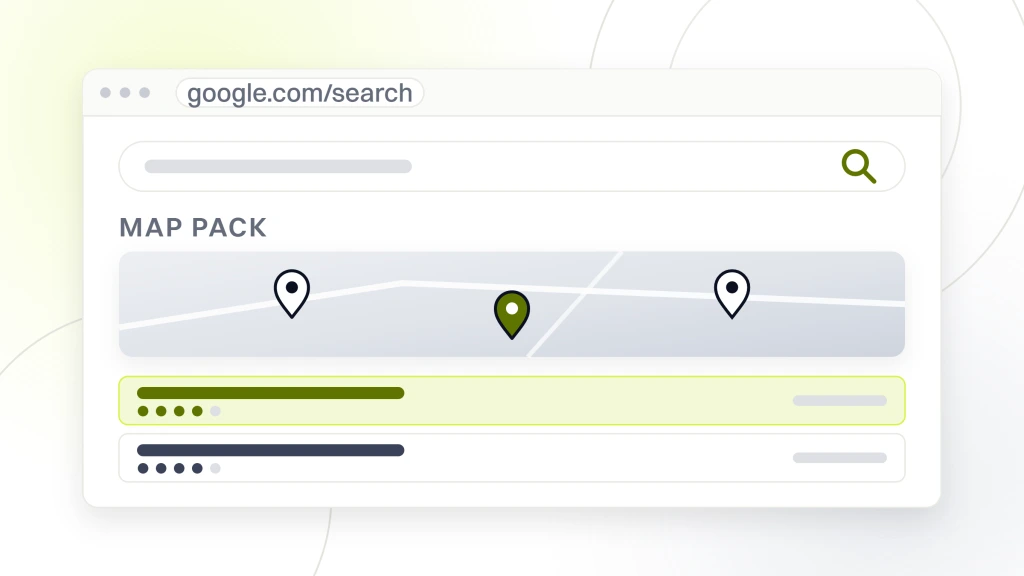
Practices that follow this dental SEO guide on Google Business Profile alone see map-pack impressions triple inside 60 days. Categories, services, photos, and weekly Posts, in that exact order, do most of the work.
Categories and services beat description text
Google reads your primary category, secondary categories, and Google service list before it reads your description. Set the primary to “Dentist.” Add “Cosmetic dentist,” “Emergency dentist,” “Pediatric dentist,” and “Orthodontist” as secondary categories only if a licensed provider covers each. Fake secondary categories tank ranking when Google’s spam algorithm catches the mismatch. Then list every real procedure as a Google service with a 200 to 300 character description that matches the on-site service page copy.
Review velocity beats total review count
A practice with 220 reviews growing at 8 new reviews per month beats a practice with 640 reviews that stopped growing 18 months ago. Send a text review request 45 minutes after the appointment ends, not the next day. Text review requests get a 4 to 8 times higher response rate than email review requests, and the review lands on Google inside two hours instead of six days. Practices that switch from email to text review requests double the monthly review count inside 90 days.
The on-page structure this dental SEO guide requires
On-page work sits on service page depth and internal linking. One page per procedure. General dentistry, cleanings, fillings, crowns, veneers, Invisalign, dental implants, root canals, extractions, teeth whitening, dentures, pediatric dentistry, emergency dentistry, and sedation dentistry each earn their own page. Stacking three procedures on one page dilutes the ranking for every one of them. This dental SEO strategy takes twice the writing time and returns four times the booked patients per procedure page.
Schema markup that Google reads on a dental site
Every dental practice site needs LocalBusiness or Dentist schema on the home page, Service schema on every procedure page, and FAQPage schema on the page a patient lands on before booking. Skip Review schema on your own site because Google no longer shows self-reported review stars for local service businesses. Add BreadcrumbList schema to help Google map the site tree. Skip Article schema on service pages because it confuses Google when the primary intent is transactional.
Core Web Vitals still gate mobile ranking
Mobile page speed still shapes ranking on competitive keywords. Google’s Core Web Vitals guidance sets the bar at Largest Contentful Paint under 2.5 seconds, Interaction to Next Paint under 200 milliseconds, and Cumulative Layout Shift under 0.1. Most dental sites we audit fail LCP because a 2 MB hero image loads at full resolution on a phone. Compress hero images to under 200 KB, add width and height attributes, and lazy-load anything below the fold. That single fix moves mobile LCP from 4.2 seconds to 1.9 seconds on most dental themes.
Content strategy the top dental SEO guide practices follow
Content SEO for a dental practice runs on procedure guides and question-answer posts. Twelve blog posts per year beats forty-eight because each post gets 900 to 1,400 words, one real photo, and one internal link to the matching service page. Write for the questions patients actually ask. “How much does a crown cost.” “Does Invisalign hurt.” “How long does a dental implant last.” A short answer up top for the search snippet, then the full context underneath.
One dental SEO guide rule beats every ranking trick. Every procedure earns its own service page with real practice photos and a booking form above the fold.
The content topics that book the most patients
Cost questions book the most patients. “How much does a dental crown cost” gets 8,100 searches per month nationally and converts at 4 to 6% when the article answers with a real price range plus insurance context. Pain questions rank next. Emergency queries rank third. Procedure comparison questions (“Invisalign vs braces cost”) rank fourth. Write those four post types before any brand-voice content. Round out with a monthly patient story that puts a real face and outcome on the practice. See our dental content marketing playbook for the full topic tree.
Internal linking that lifts the whole site
Every blog post links to one service page and one sibling blog post. Every service page links to the two closest sibling service pages and one supporting blog post. That structure spreads ranking authority through the site instead of hoarding it on the homepage. Fifteen internal links per page is the practical ceiling before the pattern looks spammy. Six to nine links per page is the sweet spot on most dental sites. For a deeper walk through page-level copy patterns, our dental website content post breaks down what to write on the home, service, location, and about pages so every link you build lands on a page that converts.
How this dental SEO guide handles blog cadence
A monthly blog cadence works for most practices under two locations. Twice-monthly cadence works for practices at three to six locations, and weekly cadence works for group practices at seven or more locations. Cadence beats volume. A dental practice that publishes one 1,200 word procedure guide monthly for two years ranks harder than a practice that publishes four thin 400 word posts monthly for the same period. Depth wins. Batch three months of research into one Friday afternoon and the writing runs faster the rest of the quarter.
A real dental SEO guide result at North County Dental Care
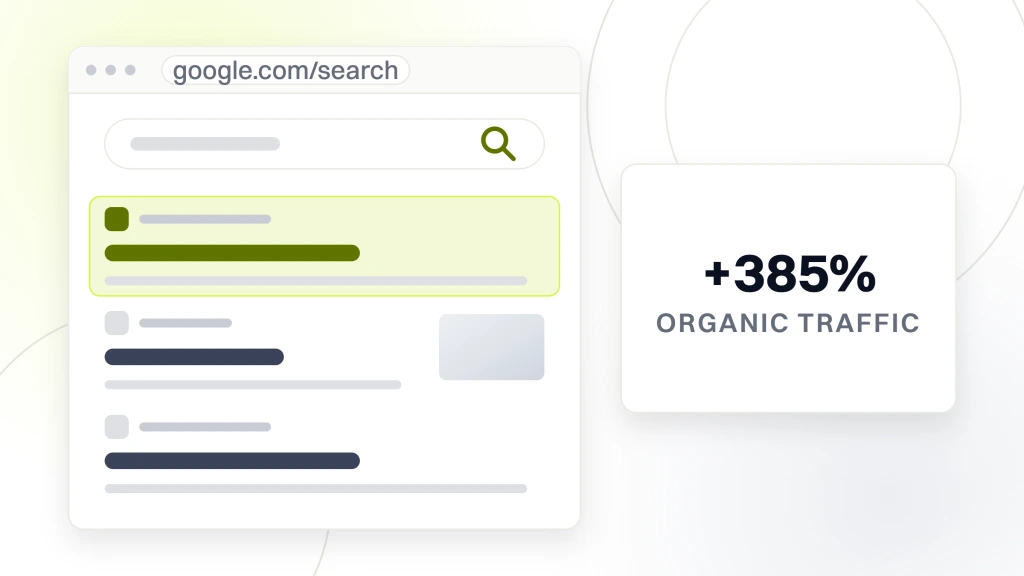
North County Dental Care in Vista, California worked with Redefine Web from 2021 to 2024 on the same kind of framework this dental SEO guide covers. Patient growth hit 1,000% over the engagement. Organic traffic climbed 385%. Marketing ROI clocked in at 500%. The unified stack ran on WordPress, Google Business Profile ads, PPC, and a full local SEO overhaul. That is the ceiling of what steady dental SEO work returns at a general and cosmetic practice with a stable service area.
VP Dental hit a different but equally strong bar with a Redefine Web website redesign plus SEO retainer. New monthly patients doubled inside the first twelve months. Search impressions climbed 776%. The practice added $8,100 a month in recurring revenue on the same schedule footprint. Delicate Dental Group, a scratch-launch family and cosmetic practice, built 700+ Google reviews, tripled Map Pack visibility, and grew Map Pack calls 280% inside four years of reputation and local SEO work. Three practices, three different starting points, one shared framework built from this dental SEO guide.
The reporting cadence this dental SEO guide locks in
Track four numbers monthly. Booked new patients from organic. Cost per booked patient. Map-pack ranking on your top five queries. Total organic sessions. Everything else is diagnostic and belongs on page two of the report. A dental SEO agency that reports on 30 ranking screenshots and no patient number is hiding weak work. Ask for the four numbers on page one, in a one-page executive summary, every month.
A dental SEO guide earns the retainer only when the report ties every hour to a booked patient. Four numbers on page one every month.
The monthly review call that keeps the work honest
A 45-minute monthly call covers wins, losses, and next 30 days. Wins name the specific keyword that moved and the specific patient count that grew. Losses name the specific keyword that dropped and the specific technical fix that will restore it. Next 30 days names the specific content pieces going live and the specific Google Business Profile edits scheduled. Vague language on any of those three is the leading indicator of a weak retainer.
The escalation path when a month goes flat
A flat month happens. A flat quarter is a problem. A flat six months is a firing. The escalation path runs strategist to account director to agency principal. If your strategist cannot name the fix in one 30-minute call, the next call is with the account director. If the account director cannot name the fix in the second call, the retainer moves. Do not wait past six months of flat numbers.
How this dental SEO guide splits fees against results
A dental SEO retainer at Redefine Web starts at $999 per month for a foundation-tier program at a single-location practice, $1,499 per month for growth tier with weekly content, and $2,499 per month for scale tier with paid search integration and multi-location coverage. Practices with three or more locations start at $4,500 per month. Ad spend bills separately. The retainer covers strategy, content production, Google Business Profile management, technical fixes, citation cleanup, review response support, and monthly reporting. Anything under $999 per month is automation-only or a lead-list resale.
Common dental SEO guide questions we hear from practice owners
The rest of this guide answers the practical questions every practice owner asks in the first sales call. Skim the ones that apply and skip the ones that do not. Every answer maps back to work Redefine Web has done for practices with your exact starting point. When you are ready to talk cost and scope, our dental marketing ROI post covers the retainer math in detail, and our dental competitor analysis post walks you through the vendor filter one step at a time.
Where map-pack ranking starts on citations and links
Citation cleanup on the top 40 dental directories takes one week and moves ranking inside 60 days for most practices. See our dental citations post for the exact list. Link building for dental websites matters less than most agencies claim. Twelve strong local links from real chambers of commerce, dental associations, and community sponsorships outrank a hundred low-quality directory links. Focus on the local business network before the national link farm.
Where multi-location practices need to adjust the framework
Multi-location practices need a slightly different variant of this dental SEO guide. Each location earns its own Google Business Profile, its own citation set, and its own location page on the site. The site-wide brand pages stay shared. Read our multi-location dental SEO playbook if the practice runs three or more locations. Our dental office SEO post covers the single-location baseline in more depth. Your Google Business Profile for dentists checklist is the fastest place to start.
When you finish this dental SEO guide, work the four numbers monthly, keep the content cadence honest, and fire the retainer the moment a six-month flatline shows up. Practices that do that for two years compound past every competitor who chases the next agency instead of running the play. That is the entire secret. The rest is discipline.
Two more practical notes before you start. First, block one Friday afternoon per month for the SEO review. Skip that block and the work drifts inside 90 days. Second, put your Google Business Profile password in a shared 1Password vault so the front desk manager, the marketing agency, and the practice owner can all log in without waiting on the last person to reply. Access delays kill more ranking momentum than any technical bug. And when the calendar starts filling from map-pack calls instead of paid ads, that is the point where this dental SEO guide has done the real job: a schedule you own, not one you rent from Google Ads every month.