A b2b saas content marketing strategy is a documented plan that turns product expertise into content pipeline, mapping each post, page, and asset to a specific stage of a multi-stakeholder buying committee, then measuring the whole system by sourced and influenced pipeline instead of raw traffic. Done well, it books demos. Done as a blog calendar, it burns budget.
Most B2B buyers do much of their evaluation before they ever talk to sales. That is the reason every serious SaaS vendor now treats content as a demand asset, not a marketing craft. Your buyers are already deciding without you in the room.
I have spent the last decade building content programs for SaaS companies, mostly at the seed to Series C stage. The pattern is consistent. Teams that hit pipeline goals treat content as a system with 8 to 12 clusters, a bottom-funnel-first publish order, and a scorecard that ties every post to sales-qualified leads. Teams that miss goals write more posts and hope Google notices.
SEO content marketing for b2b saas companies that ranks in 12 months
SEO content marketing for b2b saas companies is the practice of building topic clusters that answer every question a buying committee asks, in an order that stacks bottom-funnel wins first, so paid channels stop being the only source of pipeline within a 12-month window.
The trap most teams fall into is writing 60 top-funnel posts and calling it a strategy. You get traffic. You do not get demos. A real plan flips the order. Start with the 6 to 10 pages your sales team already sends prospects in email threads, then work backward toward awareness.
Keyword selection that ties to actual pipeline
Pick keywords with a bias for commercial intent. A useful shortcut is to score each candidate on 3 axes. Buyer stage from 1 to 5, expected conversion rate from 0.5 to 6%, and difficulty from 1 to 100. Any keyword under 30 difficulty with a stage of 4 or 5 goes to the top of the queue, even at low search volume.
Avoid the 10,000-search vanity terms until 6 pages in the buyer-decision zone are live and ranking. Take a comparison page like “Notion vs Confluence for engineering docs.” Low volume, high intent. It will out-convert a 20,000-visit-a-month awareness post by 8 to 12 times on demo requests.
Topic clusters that compound in year two
Single posts rarely rank past position 15 in competitive SaaS categories. Clusters do. Group 8 to 12 pages around a hub. One pillar guide, 4 to 6 supporting deep-dives, 2 to 3 comparison or alternatives pages, and 1 or 2 use-case pages. Link every asset back to the hub with descriptive anchor text.
The second-year compound is where the money is. In year one you rank for long-tail queries in the cluster. In year two, the pillar hub starts winning head terms because Google now sees you as the authority on the topic. A well-built cluster usually 3x its traffic between month 12 and month 24 with almost zero new content.
Backlink strategy that is honest and works
Backlinks still matter, but the mechanics have changed. Guest posts on general marketing blogs do almost nothing for SaaS rankings now. What works is data-led linkable assets. Publish an original study or benchmark, pitch it to niche newsletters and podcast hosts, and earn 15 to 40 contextual links per asset over 90 days.
The other quiet lever is customer link-building. Any customer with a marketing team is a link opportunity. Offer a co-branded template, integration guide, or ROI calculator. You get a link from a real product user, plus a piece of content your sales team can share on demos.
B2b inbound marketing for saas companies as a system, not a channel
B2b inbound marketing for saas companies is the discipline of turning content, product, and email into one connected demand engine, so a first-time reader can move from blog post to demo booked without ever touching a sales rep. It only works when the 3 layers talk to each other.
Most SaaS teams run inbound as 3 separate channels with 3 separate owners. That is why leaks appear at every handoff. A single-owner model with weekly cross-functional standups fixes most of it. The metric is time-to-demo from first content touch. Aim for 21 days at seed, 45 at Series A, and 60 at Series B.
Lifecycle email that keeps buyers warm without spamming
Behavioral email beats time-based drip on almost every SaaS retention metric. Trigger on product events and content events, not day counts. A buyer who reads 3 comparison pages in a week gets a different email than someone who downloaded 1 template. Segment by behavior, personalize by role, and cap total sends at 2 per week.
Open rates are a distraction. Track email-influenced pipeline over a 60-day rolling window. Solid programs sit at 8 to 15% of total pipeline influenced. Under 5% means the copy, the segmentation, or the timing is broken, so audit before you add volume.
Demo booking flow that removes friction, not qualification
A demo form with 12 fields kills 40 to 60% of qualified requests. Cut to 4 fields. Name, work email, company, and one open-ended question about the problem they are trying to solve. Route by company size after they book, not before. You lose 5% of unqualified traffic and gain 20 to 35% more real demos.
Then send a Loom video from an actual product person within 4 business hours. Not a rep, a product marketer or a founder. Show the exact answer to their open-ended question in 3 minutes. Show-rate to demo climbs from 55% to 78% in most programs that switch to this pattern.
Content marketing for b2b saas startups on a small budget
Content marketing for b2b saas startups is the discipline of shipping 6 to 10 high-conversion pages before month 6, using founder time and 1 contract writer, so paid channels stop being the only demo source before the next raise. Under $10,000 a month, this is the only version that works.
Most seed-stage SaaS teams try to imitate late-stage playbooks. It fails. You do not have the domain authority, the writer bandwidth, or the customer library yet. Instead, use the constraints. Founder-led content, 90-day sprints, and one honest scorecard.
Founder-led content beats agency-led at seed
Seed-stage buyers trust founders more than brands. Nothing an agency writes will out-perform a founder recording a Loom about why they built the product, then handing the transcript to a writer for cleanup. Do that 8 times in a quarter. You get 8 pieces with an insight moat, and your content lead learns your product 3 times faster.
The failure mode is founder ghostwriting where the founder never talks to the writer. The transcript-to-post workflow is the difference. Record 30 minutes, edit down, publish. In 90 days you can build 8 to 10 pieces with a voice no competitor can match on a $3,000 monthly budget.
Minimum viable topic cluster in 90 days
A minimum viable cluster is 6 pages published in 90 days around a single pain point. One pillar guide at 3,500 words, 3 supporting posts at 1,500 to 2,000 words, 1 comparison page, and 1 use-case page. Everything internally linked, everything mapped to a demo CTA.
Ship this before the next investor update. It gives you a proof point for content-driven pipeline that you can show a board, and it takes 1 founder plus 1 contract writer working 10 hours a week each. Do not build a second cluster until the first one has hit 500 organic clicks a month.
B2b saas content marketing services versus in-house team
B2b saas content marketing services from a specialist agency beat in-house builds under $150,000 a year in total spend, because you rent the strategy, writers, editors, and SEO tooling without the hiring lag. Above $300,000, in-house typically wins on product depth. Between those numbers, a hybrid is usually the answer.
The mistake most teams make is skipping the math. A senior content marketer costs $130,000 to $180,000 fully loaded. Add tools, freelancers, and management overhead, and a one-person in-house team is a $220,000 a year commitment before a single post ships. Agencies deliver 4 to 8 posts a month at retainer tiers of $999, $1,499, $2,499, and from $4,500 a month at Redefine Web, which is why early-stage teams start there.
Agency model that works for growth-stage SaaS
Pick an agency that assigns 1 dedicated strategist, 1 writer, and 1 editor to the account, and refuses to work on more than 6 accounts per pod. Anyone selling a shared pool of 40 writers is running a content mill. Ask for the exact team, their writing samples in your category, and the last 3 case studies with named clients and metrics.
Set 90-day exit checkpoints in the contract. If 4 of the first 6 posts are not on page one for their target keywords in 6 months, either the strategy or the fit is wrong. A serious agency will build that clause with you.
The order to hire an in-house content team
Once you cross $300,000 in annual content spend, start hiring. The order matters. Hire a head of content first. Then a product marketer who partners on positioning. Then a writer, then an SEO strategist, then a content ops lead. That last hire is the one most teams skip. You will regret it inside a year.
Keep at least 1 agency partner for 12 months after the first hire lands. It buys you consistency while the in-house team ramps. Cutting agency support the week your first hire starts is how programs lose 3 months of publishing velocity, right when the board is watching.
Case study on Rocket Software and a content-driven rebuild
Rocket Software, Inc. is a SaaS company that provides a subscription-growth tool for website owners. Their product-market fit was strong, but weak drip campaigns, funnel gaps, and unoptimized pricing were leaking activation. In a content strategy audit, the leaks were obvious in week one.
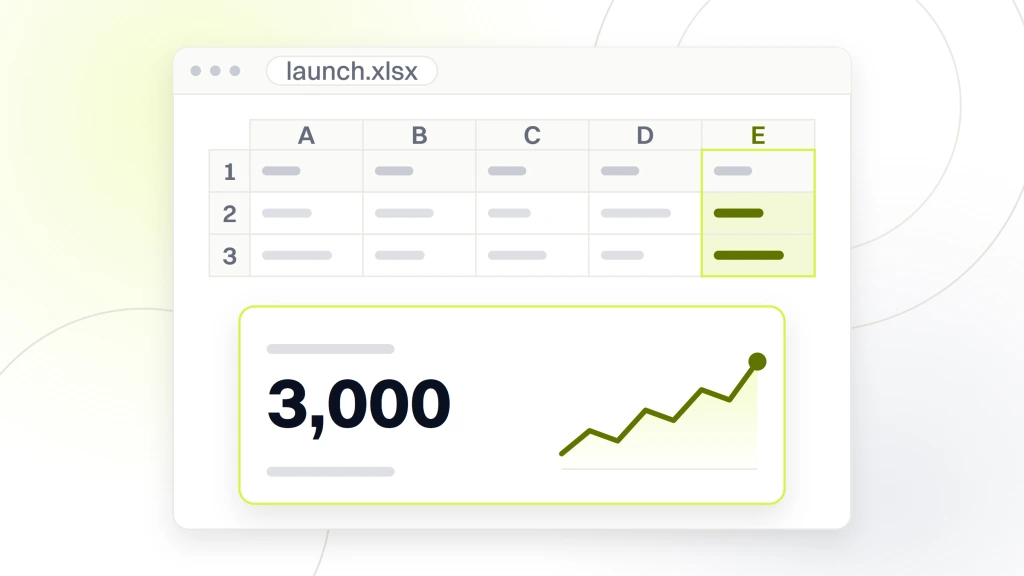
Redefine Web rebuilt the funnel for activation and long-term growth. We simplified installation with tutorial guides and video walkthroughs, added behavioral drip sequences, and coordinated a 4-channel launch across email, social, paid, and influencer. The result. Activation rate lifted 300%, Rocket Software booked 3,000 customers in the first week, and post-launch daily subscribers held steady at 400 plus.
Content as the sequencing layer in a launch
The lesson from Rocket Software is that content is the sequencing layer, not just an asset library. Pre-launch teardowns, feature walkthroughs, and comparison posts pre-sold the product to a warm audience. On launch day, paid ads pointed to pages that already ranked. That coordination is what turns a 4-channel launch into a 3,000-customer week.
The same pattern applies at any stage. Content-led launches out-perform announcement-led launches on activation by 2 to 4x, because the audience has already made a small commitment before the launch email hits.
Behavioral drip beat time-based drip on retention
The retention lift at Rocket Software came from swapping day-based email sequences for behavior-based ones. Users who installed the plugin and completed the first tutorial got a fast-path email in 24 hours. Users who installed but stalled got a friction-reduction email at hour 48. Same product, 2 different journeys, one shared goal.
Behavioral drip is boring, hard, and worth it. Expect a 25 to 45% lift in week-1 activation and a 15 to 25% lift in month-1 retention when you switch. That is why we run behavior-based sequences on every SaaS engagement now, no exceptions.
Measuring b2b saas content marketing without drowning in metrics
Measuring a b2b saas content marketing strategy comes down to 4 numbers per post and 3 rollups per program. Organic clicks at day 90, pipeline sourced, pipeline influenced, and cost per sales-qualified lead. Everything else is a diagnostic, not a KPI.
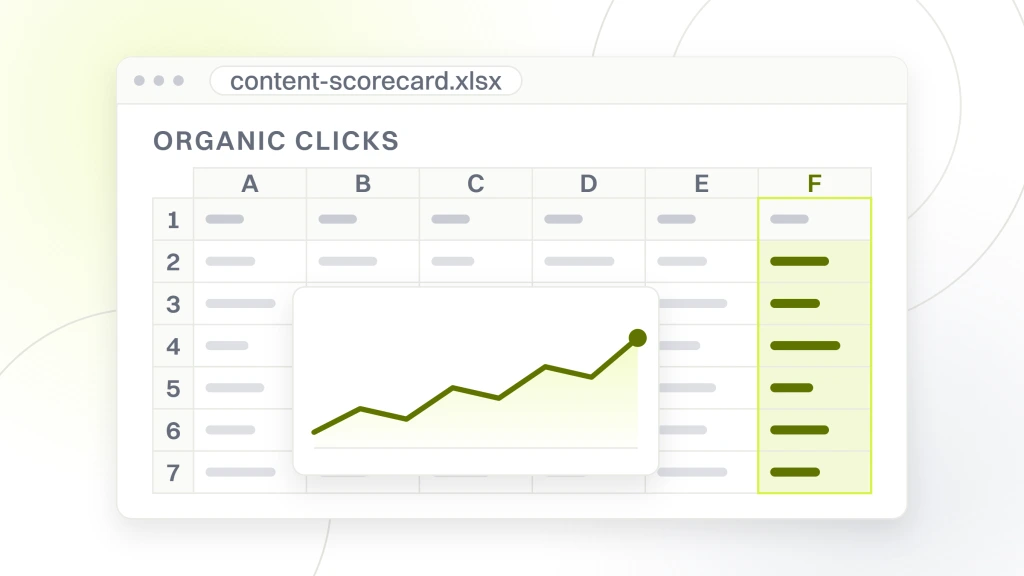
Most teams drown in dashboards. The fix is a single sheet with 1 row per post and 4 columns for the numbers above. Review it monthly. Kill or rewrite anything under target for 2 months in a row. Content programs that follow this rule tend to add 15 to 25% pipeline influenced per quarter with no extra publishing volume.
Attribution model your sales team will trust
Pure last-touch attribution undersells content. Pure first-touch oversells it. A 60-30-10 split works for most SaaS programs. 60% weight on last-touch, 30% on first-touch, 10% distributed across middle-touch. Show sales the model, get their buy-in, then run it consistently for 2 quarters before any tuning.
Do not chase perfect attribution. Chase attribution the sales team believes. A model both marketing and sales respect will out-perform a technically-correct model no one uses. Follow the Google search fundamentals for tagging, and let the analytics stack do the rest.
Per-post scorecard that drives editorial decisions
Every post gets a scorecard at day 30, day 90, and day 180. Day 30 is a health check. Is it indexed, is it climbing? Day 90 is the first kill-or-keep gate. Under 100 organic clicks or 1 sales-qualified lead, flag for rewrite. Day 180 is the second gate. Under 300 clicks or 3 SQLs, retire or consolidate.
This is the least popular part of any content program because writers hate killing their darlings. Do it anyway. Every dead post drags the crawl budget on every remaining page, and the domain-level signal to Google is that half your library is not worth ranking.
Tooling for b2b saas content marketing that pays for itself
Tooling for a SaaS content program should be 5 tools, not 25. An SEO platform for keyword and rank tracking, a CMS with strong internal linking, an email tool with behavioral triggers, a project tool for editorial ops, and a customer research tool for interview mining. Everything else is optional.
The tool stack usually costs $600 to $2,400 a month for a growth-stage SaaS. If you are spending more, audit. Most teams pay for 3 SEO tools when 1 is enough, and 2 email tools when the CRM would do the job. Trim before you scale.
Editorial calendar that respects real capacity
Calendars break because they assume everyone is 100% available. Plan for 65%. Build in edit cycles, revisions, product-marketing reviews, and legal checks. A calendar that ships 6 posts in a 30-day month is more valuable than one that plans 12 and delivers 4. Use a proven editorial calendar template and adapt it.
Make the calendar public across marketing, sales, and product. When sales sees the next comparison page shipping in 3 weeks, they stop asking for a rush job. When product sees a launch post landing on release day, they start feeding better product notes. Transparency ships more content than any tool.
Content operations that scale with the team
Content ops is the boring layer that carries the program past 3 people. Style guides, templated briefs, an approvals workflow, freelance rate cards, and a source-of-truth doc for positioning. Ship this in month 3, not month 12. Every week you delay adds a week to the eventual cleanup.
The measurable payoff is turnaround time. A program with real ops moves a post from brief to publish in 10 to 14 days. A program without ops moves the same post in 28 to 42 days, and every stakeholder blames someone else for the delay.
Common b2b saas content marketing strategy mistakes to skip
The most common mistakes in SaaS content programs cluster into 3 buckets. Publishing without a scorecard, chasing high-volume awareness terms before bottom-funnel pages exist, and treating case studies as trophies instead of sales assets. Skip these 3 and you are ahead of most competitors.
The 4th mistake worth naming is running SEO and product marketing on separate roadmaps. Every SaaS category eventually turns into a fight for comparison and alternatives pages. If your SEO team ships comparison content the product team never approves, or your product team ships positioning your SEO team never optimizes, buyers see the seam.
Vanity metrics that hide broken content programs
Social shares, time on page, and total organic sessions all lie about content health. A post can have 60,000 sessions a month and drive 0 sales-qualified leads. The vanity metric hides that the traffic is the wrong traffic. Cut it from the reporting deck.
Replace the vanity charts with 3 numbers per program per quarter. Pipeline sourced last-touch, pipeline influenced first plus middle touch, and cost per SQL from content. If those 3 are moving in the right direction, everything else is a diagnostic.
Content programs to kill before starting new ones
If you have a monthly newsletter under 800 subscribers, kill it or fold it into a bi-weekly send from your best-read blog category. If you have a podcast under 200 listens per episode, cut it and put the same time into video walkthroughs on the pages that already convert. If you have a webinar series with under 50 attendees, run 3 more, then cut it.
Content programs quietly rot. The most common cause of a stuck content program is 6 half-alive programs eating the calendar. Kill 3, double down on the strongest 3, and the pipeline number moves inside a quarter.
For a deeper look at how SaaS metrics compare, see our post on B2B SaaS marketing benchmarks. For positioning-first thinking, read B2B SaaS product marketing. And for vendor selection, read our guide on how to choose a B2B SaaS marketing agency.
Build a b2b saas content marketing strategy that books demos
A working b2b saas content marketing strategy is not more posts. It is the right 30 pages, published in the right order, measured against pipeline. When you get that right, paid channels stop being your only demand source, and your board starts asking why content did not scale sooner.
Redefine Web builds content programs for growth-stage SaaS. Retainer tiers at $999, $1,499, $2,499, and from $4,500 a month cover strategy, writing, SEO, and editorial ops. If you are ready to move from a blog calendar to a pipeline system, let’s talk about what the first 90 days looks like for your product.