Dental social media ads on Meta, TikTok, and YouTube book new patients in under 90 seconds of screen time when the offer and landing page hold up. Meta owns lead volume in every metro. TikTok gives whitening and aligner practices reach at half the cost per lead of paid search. YouTube compounds brand equity for practices building a market position over 3 years, not 3 weeks. The gap between a $100 cost per booked patient and a $400 burn on unqualified form fills is not budget. It is offer strength, creative velocity, and a landing page loading in under 3 seconds on a mid-tier Android phone.
This guide covers Meta, TikTok, and YouTube for dental practices in 2026. Which platform to start with. What offer converts on each. How to build a HIPAA-safe tracking stack. And how to read the weekly report. Every recommendation comes from campaigns our team ran for solo GPs, specialty practices, and multi-location groups between 2023 and 2026.
Why dental social media ads out-book search in most metros
Search captures existing demand. Social creates new demand. Only 2 to 4% of a metro is actively searching for a new dentist in any 30-day window. The remaining 96% will book if the right offer lands on their phone. Social outperforms search on raw volume for most practices for that reason. Treat paid social as a demand-creation engine tied to a booked-patient outcome, and the math changes fast.
Demand creation beats demand capture on volume, the same reason dental billboard ads still work in mid-tier metros
A typical suburban dental practice can absorb 40 to 80 new patients per month before the schedule tightens. Search will produce 15 to 25 of those in a competitive metro at $90 to $180 each. The remaining 25 to 55 have to come from demand creation. Meta and TikTok are the 2 channels that produce that volume at a cost that pencils inside a 3-to-1 or better lifetime value ratio. Add paid social and the growth ceiling moves 2 to 3x higher inside 6 months.
Cost per lead versus cost per booked patient
The number that matters is cost per booked patient, not cost per lead. Meta lead ads produce leads at $15 to $40 each in dental. Only 25 to 40% of those leads book. So the real cost per booked patient sits at $60 to $160 once you factor lead-to-book conversion. Our Dental PPC Management team measures every campaign on booked cost first, lead cost second. Agencies that quote a $22 cost per lead without a lead-to-book number are hiding the real math from the practice owner. Ask for both numbers on every weekly report, and cut any vendor who dodges the question 2 weeks in a row.
The dental social funnel in one paragraph
Ad impression on the feed. Click or lead form. Landing page or instant form. Confirmation email or text. Front desk callback within 5 minutes. Booked appointment on the calendar. 6 steps. Each one loses 20 to 60% of the previous step. Practices that measure and fix the weakest step first drop cost per booked patient by 30 to 50% in the first 60 days. That is the compound math that makes paid social pay off across a 12-month program.
Meta campaigns for dental social media ads
Meta stays the workhorse in 2026. Facebook and Instagram together reach 78% of American adults every week. Lead form quality has recovered since 2022 with conditional questions and higher-intent form types. Cost per booked patient on Meta lands at $65 to $140 in most metros for well-run campaigns tied to new-patient exam offers. The platform rewards creative testing and punishes lazy targeting stacks copy-pasted from 2020 playbooks. Any practice launching Meta ads with a 2020 mindset will pay 40 to 60% more per booked patient than a peer running the current structure.
Callout. If Meta cost per booked patient sits above $180 for 4 straight weeks, fix the landing page and offer before touching targeting.
Campaign structure that works
Run one Advantage+ Sales campaign with a lead objective, 3 ad sets, and 3 creatives per ad set. Total 9 ads under one campaign. Skip the old approach of 18 ad sets by lookalike, interest, and geography. Meta’s optimizer performs 30 to 40% better on a broader single campaign than on a fragmented account with tiny daily budgets. Set the daily budget at $100 to $300 at launch. Give the algorithm 2 full weeks before you cut anything. Kill only creatives that generated 500 impressions with zero form fills.
Offers that convert on Meta
4 offers convert on Meta for dental today. A new-patient exam with x-rays and cleaning at a fixed price under $150. Free consultation for a specific procedure like Invisalign or implants. First visit only for uninsured patients at a bundled cash price. And membership plan enrollment for practices with an in-house membership program. Each offer routes to a dedicated landing page. Never point Meta traffic at the homepage. Homepage bounce rates on Meta cold traffic run 70 to 85%, which crushes the cost per booked patient. Test 2 offers head to head for 3 weeks and let the numbers pick the winner.
Targeting settings for 2026
Set geographic targeting to a 5 to 10 mile radius around the practice, not the metro. Age 25 to 65. Exclude the last 90 days of website visitors from prospecting campaigns to avoid double-serving. Skip interest targeting except in very rural markets. Meta’s broad targeting with Advantage+ audience finds patients your interest stacks would miss. Detailed exclusions matter more than detailed inclusions on Meta in 2026. Exclude anyone who has already filled out a form in the last 60 days so budget goes to net-new patients, not repeat clickers.
TikTok for cosmetic and aligner practices
TikTok makes sense for practices with an offer that resonates with patients under 35 and creative that looks native to the app. Whitening, clear aligners, veneers, and cash-pay cosmetic procedures win on TikTok. Root canals, dentures, and pediatric care are hard sells. TikTok cost per lead sits at $12 to $30 for the right offer, which pushes cost per booked patient toward $45 to $90 once lead-to-book lands.
Creator content beats polished agency spots
Native TikTok creator content outperforms polished agency creative by 3 to 5x on cost per lead. Hire 1 to 3 local TikTok creators for $500 to $1,500 each to produce 3 videos of 15 to 30 seconds per month. The dentist can show up in each video, but the creator drives the format. That format looks like everything else the audience scrolls through on the app. Ads dressed as ads get skipped in 1.5 seconds. Ads dressed as content get watched to completion and then clicked. Pay creators per usage rights so you can boost the same video for 90 days without renegotiating.
Spark Ads and TikTok Symphony in 2026
Spark Ads let the practice boost organic creator posts as paid ads and keep the creator’s handle attached. Boosted creator posts get 2 to 4x higher engagement than practice-account ads. TikTok Symphony, the AI creative suite launched in late 2024, lets the account team remix winning creator videos into 12 to 20 variations for testing. The best-performing variations often outperform the original by 25 to 40% on cost per lead. Both tools push creative velocity higher without doubling the production budget.
Landing pages built for TikTok speed
TikTok traffic converts on landing pages that load in under 2 seconds and hit the offer within the first swipe. Cut the hero video. Trim the copy. Put the form or booking widget above the fold. TikTok users bounce on any landing page slower than 2 seconds since the platform trained them to expect instant feedback. Our team builds TikTok landing pages as a distinct template inside the dental site rather than reusing the Meta landing page, since the 2 audiences behave very differently on the page. Test on a Pixel 6a over 4G before launch, not on your iPhone with WiFi.
YouTube for compounding brand equity
YouTube is the compounding play. Cost per booked patient runs $120 to $200, which reads high on a spreadsheet. But branded video reach at 5 to 10 cents per view builds market awareness the same way dental radio ads compound recognition that pulls down cost per booked patient on Meta and search over 12 to 18 months. Practices that layer YouTube branding on top of Meta lead generation see Meta cost per lead drop 15 to 25% by month 6. That compounded return is what makes YouTube worth the initial higher cost per patient number.
Callout. Run YouTube only after Meta hits a stable cost per booked patient for 8 straight weeks. Layering YouTube on top of a broken Meta account wastes both budgets.
Bumper ads plus skippables build the funnel
Pair 6-second bumper ads with 30-second skippable in-stream ads. Bumpers deliver reach and frequency at 3 to 6 cents per view. Skippables drive consideration with a 30-second product story that only charges when the viewer watches past 30 seconds. Together the 2 formats produce a full-funnel branded video program at $500 to $1,500 per month for a solo practice. Practices without existing video assets can produce 4 to 8 ads from a single half-day studio shoot with a local videographer for $1,500 to $3,000. Reuse those assets on Meta and TikTok too, and per-platform production cost drops 60%.
Demand Gen campaigns for cross-Google reach
Google’s Demand Gen campaign type, which replaced Discovery ads in 2024, extends YouTube reach to the Gmail promotions tab, Discover feed, and YouTube Shorts. One campaign, one budget, 3 placements. Demand Gen picks up patients who were exposed to the branded YouTube video and later scrolled Shorts or opened Gmail. Cost per lead through Demand Gen runs $40 to $90 in dental, sitting between Meta lead ads and pure YouTube skippables on the funnel spectrum. Start Demand Gen at $30 per day for 21 days before judging performance.
Attribution windows on YouTube
YouTube attribution needs a 30-day view-through window, not the default 7-day click. Around 60 to 70% of YouTube-influenced patients call the practice directly or search for the practice by name within 14 to 21 days of watching. Without the 30-day view-through window, Google Ads reports zero conversions and the practice cancels the campaign. Turn on the wider window in Google Ads settings before you launch. Our team also cross-references branded search volume weekly to catch attribution the platform misses entirely.
Platform comparison for dental social media ads
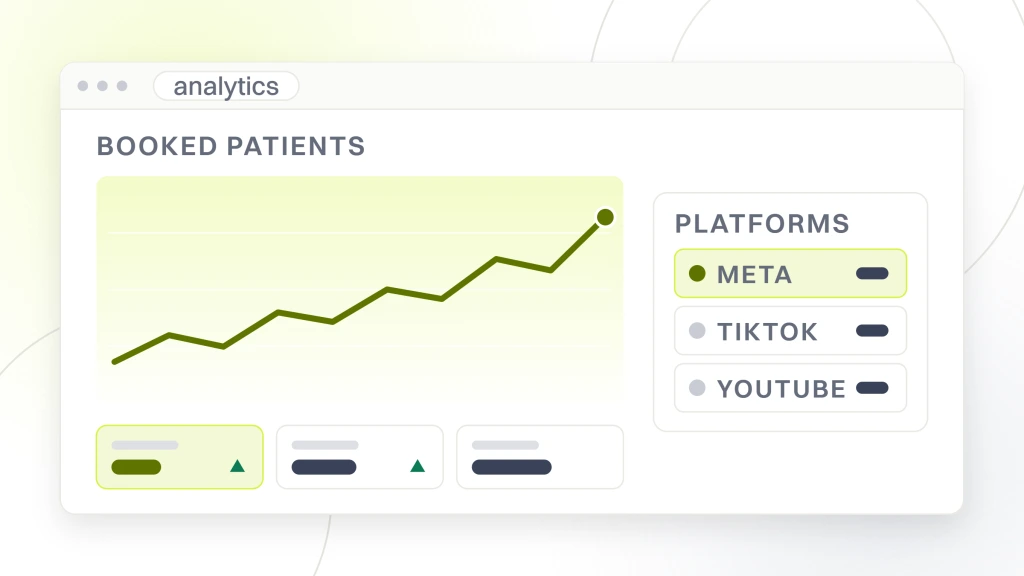
Platform choice depends on practice profile and budget. The table below compares Meta, TikTok, and YouTube on the metrics that matter when choosing where to spend the first $3,000 of monthly ad budget. Use these ranges as benchmarks for your own metro and offer, not as universal numbers.
| Metric | Meta | TikTok | YouTube |
|---|---|---|---|
| Cost per lead | $18 to $40 | $12 to $30 | $40 to $90 |
| Cost per booked patient | $65 to $140 | $45 to $90 | $120 to $200 |
| Time to first booking | 5 to 10 days | 7 to 14 days | 30 to 45 days |
| Best offer type | New patient exam | Whitening or aligners | Brand and consultations |
| Ideal patient age | 25 to 65 | 18 to 34 | 25 to 55 |
| Creative refresh cadence | Every 14 days | Every 7 days | Every 45 days |
| Minimum viable budget | $1,500 per month | $1,000 per month | $1,000 per month |
Read the table as a starting point for platform selection, not a scoring system. A GP focused on volume starts on Meta. A cosmetic practice targeting patients under 35 starts on TikTok. A multi-location group with existing video assets and a 3-year brand build starts on YouTube. Layer the second platform after the first hits stable cost per booked patient. Never launch on all 3 at once. Attribution gets muddy and the account team cannot tell which platform books the patient.
Meta needs a floor of $1,500 per month since the optimizer needs roughly 50 conversion events per week to exit the learning phase. Below that floor, the campaign never stabilizes and cost per booked patient stays 40 to 60% above the achievable rate. TikTok and YouTube each need $1,000 minimum for similar reasons. Practices trying to run all 3 on a $2,000 budget spread thin, keep every platform in learning phase, and burn cash. Pick one, feed it enough budget to exit learning, then add the second after 4 straight weeks of stable results.
HIPAA compliance for dental social media ads
Any dental paid social program must comply with the HHS Office for Civil Rights December 2022 bulletin on online tracking technologies. The bulletin declared that patient identifiers transmitted to third-party platforms through pixels count as PHI disclosures. Meta paid a $1.4 billion Illinois settlement in 2024 tied partly to this tracking class, per coverage in the ADA news at ada.org. Practices that ignore the bulletin risk state AG action, patient lawsuits, and payer network disputes. The exposure sits on the practice owner personally in most state jurisdictions, not on the marketing vendor.
Turn off advanced matching on Meta
Advanced matching on Meta pixel transmits hashed email, phone, and name back to Meta for audience building. That is a PHI disclosure under the OCR bulletin when the patient is visiting a dental site. Turn off advanced matching in Events Manager. Use server-side conversions API instead with a filtered event payload that strips all PII before firing. Ask your marketing partner for a written attestation that advanced matching is disabled and server-side is filtering identifiers. Get it before the first ad dollar spends. Store the attestation with the practice’s HIPAA compliance binder for future audits.
HIPAA-friendly form and call tracking stack
Use a HIPAA-compliant form tool like HIPAA-signed Gravity Forms, Formstack, or Jotform Enterprise. Route form submissions server-side through a HIPAA BAA-signed CRM. Use CallRail with the HIPAA-compliant plan for call tracking so caller ID does not fire in Meta or TikTok pixels. Confirm every vendor in the stack has a signed Business Associate Agreement on file. Practices without a signed BAA on any tool in the stack are exposed. Our Dental Marketing Retainer covers the full compliance stack starting at $1,499 per month, with PPC management tiers running $999, $1,499, $2,499, or from $4,500 per month based on ad spend and scope.
Landing page compliance and consent
Every dental landing page needs a clear notice of privacy practices link in the footer, a cookie consent banner that blocks pixels until consent is granted, and a TCPA-compliant checkbox on any form collecting a phone number. The TCPA rules that took effect January 27 2025 raised the bar on express consent language. Any form built before that date probably needs a copy update. Landing pages without TCPA-compliant consent risk $500 to $1,500 per violation penalties on class actions filed by consumer attorneys targeting healthcare practices. Legal fees on a single class action can dwarf a full year of ad spend.
Landing pages that convert dental social media ads traffic
Landing pages decide cost per booked patient more than any other variable in the paid social program. 2 campaigns with identical ads and identical budgets can produce $60 and $240 cost per booked patient results based purely on landing page structure. The 4 things that separate a $60 landing page from a $240 landing page are load speed, hero clarity, form length, and trust signals. Each one moves conversion rate 30 to 80% on its own. Fix them in that order and cost per booked patient drops fast.
Callout. A single well-built landing page tied to $2K per month of paid social books more patients than a $10K rebuild that ignores the ad path.
Load speed under 3 seconds on mid-tier Android
Test the landing page on a mid-tier Android phone over 4G, not on your iPhone with WiFi. Load times over 3 seconds bleed 25 to 40% of the ad budget into bounces before the visitor sees the offer. Compress the hero image to under 100 kilobytes. Defer all JavaScript that is not part of the form. Skip the pop-up plugin. Skip the chat widget. Build a page that renders the offer and form within one paint cycle on a Pixel 6a. That single change often drops cost per booked patient 30% inside 3 weeks. Speed is the cheapest optimization on the board.
Hero clarity in 5 seconds
The visitor should understand the offer, the practice, and the next step within 5 seconds of arrival. Hero headline states the offer in 7 words or fewer. Subhead adds one qualifier. Visual shows the practice or a real patient. Primary button reads Book My Exam or Claim Whitening Offer, not Learn More. Fuzzy hero messaging costs 40 to 60% of conversions on paid social. The visitor is scrolling in bed at 10 pm. If the page needs 30 seconds to explain itself, they are back on the feed.
Form length and TCPA consent
Keep the form to name, phone, email, and preferred time. 4 fields max. Every additional field drops completion 8 to 12%. Add the TCPA consent checkbox with express language. Skip the terms and conditions dense paragraph in favor of 2 clean lines. Practices that use the 4-field form with clean consent language convert 2 to 3x better than practices asking for insurance carrier, date of birth, and current symptoms upfront on the landing page. Save those questions for the front desk callback within 5 minutes.
Smile Design Dentistry case study on paid social scale
Smile Design Dentistry runs 50+ locations across Central Florida and Tampa Bay. Founded in Dade City, Florida in 2004, the group covers cosmetic, emergency, preventive, and specialty care. When our team engaged with Smile Design, offline reputation was strong but the paid social operation was fragmented. Every office ran its own boosted posts. No creative rotation cadence. No HIPAA-compliant tracking stack across the network. Cost per booked patient ran $220 to $340, double the target the ops team had set.
Our team consolidated 50 accounts into one Meta business manager. Built a centralized creative rotation cadence with 3 UGC-style videos per market per month. Layered TikTok Spark Ads on top of the top 10 highest-revenue offices. Installed a HIPAA-compliant CallRail plus server-side conversions API stack across every landing page. Cost per call dropped 30% and PPC conversion rate climbed 20% inside the first year across all 50+ offices, in line with the outcomes our Dental SEO Services team delivers on single-office engagements.
What consolidated creative did for the network
Centralized creative production cut per-office ad production spend 65% and improved creative quality across every market. Individual offices no longer had to hire local videographers or run their own boost campaigns. The central team produced 3 fresh 15-second videos per market every month with local dentist cameos. Local relevance stayed high. Central efficiency compounded. Total monthly ad spend grew from $90K to $240K across the network as cost per booked patient dropped, so total booked patient volume nearly tripled inside 12 months.
Why the compliance stack mattered
Consolidating to a HIPAA-compliant tracking stack closed a serious legal exposure the network had ignored for years. Individual offices had been running pixels with advanced matching turned on across dozens of state jurisdictions. A single class action would have cost the group more than the entire annual ad budget. Fixing the stack removed the exposure and improved attribution quality at the same time, since server-side conversions API stopped losing 20 to 30% of events to browser blocking that had plagued the old client-side setup.
VP Dental case study on unified web and paid social
VP Dental, led by Dr. Valerie Preston, has served patients for 20+ years with full-scope dental and cosmetic services. When we engaged, Dr. Preston was juggling fragmented vendors that split web from SEO, inflating costs and diluting performance. The old site had no online scheduling, no live chat, and no digital forms. Google Maps visibility fell off sharply outside a 2 mile radius, which was killing high-value cosmetic patient acquisition from surrounding neighborhoods. The paid social layer had nowhere solid to send traffic.
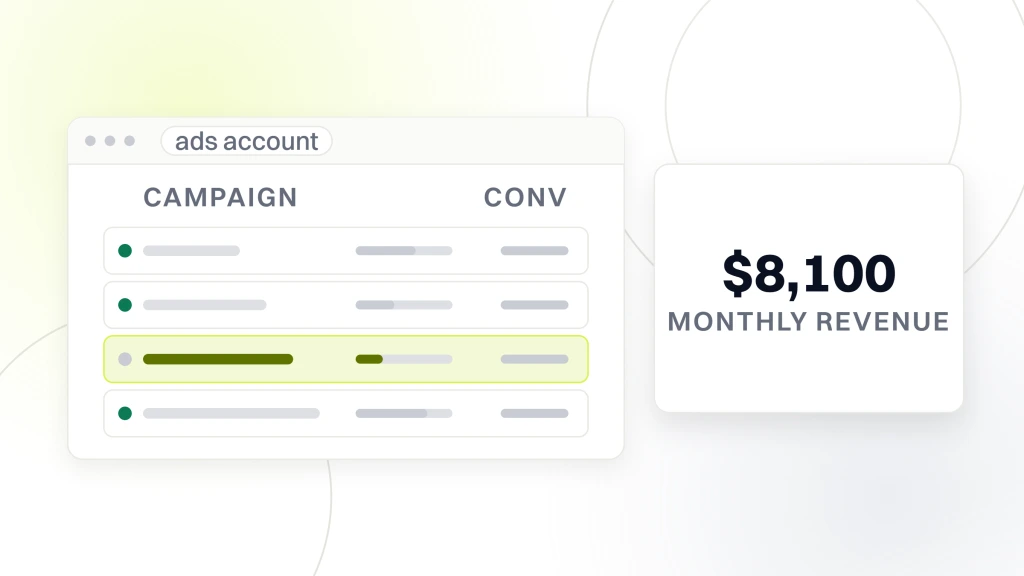
Redefine Web rebuilt the site on WordPress with integrated booking, payments, virtual consults, and digital forms. Layered a targeted Google Maps SEO campaign on top. Wired the paid social funnel into the new booking flow. The result was 100% growth in new monthly patients, $8,100 per month in added recurring revenue, and 776% more search impressions inside 12 months. The paid social layer became the top acquisition channel by month 6, feeding the same booking system that Google Maps traffic used.
North County Dental Care case study on three-year compounding
North County Dental Care, a 20+ year family dental practice in Vista, CA, was almost invisible online in spite of a strong local reputation. No top 10 search positions. Inconsistent directory listings. Weak Google Business Profile presence. Marketing was split across multiple agencies with no clear strategy or measurable ROI. The practice had capacity to grow but no reliable channel to fill it.
The unified rebuild layered a secure, mobile-first site with local SEO, Google Business Profile ads, and video, with Google Analytics tracking every campaign. Patient volume grew 1,000% from 2021 to 2024, reaching 12 to 16 new patients each month. Organic traffic climbed 385%. Marketing ROI hit 500%.
Budget allocation by practice size
Budget allocation for a dental paid social program depends on practice size, growth stage, and existing patient base. A startup solo looks nothing like a 5-office group. Rough guidelines below cover common profiles. Adjust for local market intensity and schedule capacity before committing. Practices in a slow market can trim these numbers 20 to 30% and still hit target.
Solo GP under $750K collections
Startup solo GPs spend $2,000 to $3,500 per month on paid social. Meta gets 70%. The rest goes to landing page tools, call tracking, and a modest creator budget for Meta ads. Skip TikTok and YouTube in the first 6 months. Focus entirely on booked-patient volume through Meta with a strong new-patient exam offer. Add a second platform only after the schedule holds 85% capacity for 8 weeks straight. Volume beats brand at this stage.
Established GP $1M to $3M collections
Established practices in this size band spend $4,000 to $8,000 monthly on paid social. Meta takes 60%. TikTok takes 25% aimed at whitening and cosmetic offers. YouTube takes 15% for brand build. Layered right, these 3 channels produce 30 to 60 net-new patients per month. Cost per booked patient sits at $110 to $165 across the mix. Practices in this range are typically hiring an associate and need volume to fill the second producer’s chair inside 90 days.
Multi-location group $3M+ collections
Multi-location groups run $15K to $60K monthly ad spend across paid social. Meta stays the workhorse at 55%. TikTok grows to 30% for cosmetic-heavy locations. YouTube takes 15% for network brand build. Groups at this scale benefit from centralized creative production and consolidated business manager access. Per-location budget efficiency compounds as the group grows, which is why DSO acquisition targets with clean tracking stacks price at a half turn premium on multiple during buyer diligence.
Weekly reporting for dental social media ads programs
Weekly reporting should fit on one page. 3 metrics matter most. Cost per booked patient, week over week. New patient volume from paid social, week over week. And creative performance ranking with kill and refresh decisions for the coming week. If the weekly report runs longer than one page or reports on impressions and reach without cost per booked patient, the account team is hiding weak performance behind vanity metrics. Ask for the one-page format on day one of the engagement.
The 3 numbers on the report
Cost per booked patient this week versus the last 4-week average. New patients booked from paid social this week versus target. And current best-performing creative with the next test queued for launch on Monday. Everything else is context, not decision-driving data. A one-page report with these 3 numbers lets the practice owner spend 3 minutes reviewing performance instead of 30 minutes deciphering an agency dashboard designed to obscure the underlying math on paid social spend efficiency.
Creative testing calendar
Every week the account team should launch one new creative variant. Every 2 weeks the team should retire the lowest-performing creative and replace it with a fresh test. Practices that follow this cadence hold cost per booked patient 25 to 35% lower than practices that let one winner run for 6 months. Creative fatigue is the number one silent budget killer in a dental paid social program. Kills on schedule prevent cost per lead from creeping up 10% per month invisibly across a program.
Attribution reconciliation with the practice management system
Reconcile paid social booked patient counts against the practice management system every month. Ad platforms report booked appointments through pixel events. The PMS reports them through the actual schedule. Gaps between the 2 reveal attribution weaknesses. Chasing the gap to under 10% every month drives smarter budget decisions than any dashboard optimization tactic. Most agencies never run this reconciliation since it exposes gaps the client would rather not see on the weekly review call.
Common mistakes in dental social media ads programs
Most dental paid social programs underperform for 5 mechanical execution reasons. Not compliance strategy. Not budget. Not agency choice. Just 5 mistakes that compound over 90 days into cost per booked patient that runs double the achievable rate. Every practice owner should audit against this list before renewing another 90-day retainer with the current marketing partner or ad manager. 4 out of 5 audits surface at least 3 fixes.
Sending traffic to the homepage
Homepage traffic from paid social bounces at 70 to 85%. Every ad dollar sent to the homepage burns the equivalent of 70 to 85% of the ad budget on bounces before the visitor sees the offer. Dedicated landing pages for each offer type cost $500 to $1,500 to build and pay back inside 30 days on any program spending $2,000 monthly on paid social. Ignoring this rule is the single most expensive mistake in dental paid social programs today.
Running one creative for 3 months
Creative fatigue kicks in around day 14 on Meta and day 7 on TikTok. Practices that let one winning creative run for 3 months watch cost per lead climb 40 to 80% across the run. Fresh creative every 2 weeks holds the cost curve flat. This one behavior separates the top quartile of dental paid social programs from everyone else. It is a scheduling discipline, not a creative talent question. Even mediocre creative refreshed on cadence beats brilliant creative left running for 90 days.
Ignoring lead-to-book conversion
Ad platforms report cost per lead. Practices care about cost per booked patient. The gap between the 2 is lead-to-book conversion, which sits at 25 to 40% on paid social. Programs that never measure lead-to-book miss the biggest optimization opportunity in the entire funnel. Front desk callback speed under 5 minutes doubles lead-to-book rate versus callbacks that happen the next day. Fixing callback speed often produces bigger cost per booked patient improvements than any ad-side tactical change.
Working with a partner on dental social media ads
A specialized dental marketing partner earns the fee through creative velocity, compliance rigor, and reporting discipline that in-house teams rarely hold across a 12-month program. Our team runs this work end to end for practices from solo GPs to 50-office groups. Starting ad-spend budget usually sits at $2,500 per month plus retainer for solo practices. Larger groups scale up with dedicated creative production, consolidated business manager access, and network-wide reporting in one weekly dashboard. PPC management tiers run $999, $1,499, $2,499, or from $4,500 per month based on scope and ad spend.
For groups scaling patient acquisition across a full network, our DSO Dental Marketing for Multi-Location Groups program covers the network-wide version. Solo and small-group practices start with the Dental Marketing Retainer at $1,499 per month. Coverage on dental paid social strategy at Group Dentistry Now at groupdentistrynow.com and the Dental Economics feed at dentaleconomics.com both track platform trends worth reading monthly for any practice owner running paid social in 2026.
What the retainer produces in 90 days
90 days of retainer work produces a stable cost per booked patient inside the target range for the practice size. 6 weeks of creative testing to find the winning format. 3 weeks of landing page optimization to close the funnel loop. 3 weeks of reporting reconciliation with the PMS to close the attribution loop. By day 90 the program runs on a predictable weekly cadence with one-page reporting and quarterly strategy reviews on offer testing, seasonal campaigns, and creator partnerships for the coming quarter.
When to start with paid social
Start paid social when the practice has schedule capacity for 15 to 40 net-new patients per month and front desk staff to answer inbound calls within 5 minutes. Practices without capacity or coverage burn ad budget on leads that never convert. Fix front desk coverage first. Then start paid social. Skip the capacity check and paid social looks broken when the real problem sits at the front desk during peak call hours.
A final read on dental social media ads in 2026
Paid social books dental patients when the offer, creative, tracking stack, and landing page all line up. None of the 4 alone drives results. All 4 together drop cost per booked patient to $65 to $140 on Meta and $45 to $90 on TikTok inside 90 days of a well-run program. Practices that pick one platform, fix the offer and landing page, and hold creative velocity high beat every peer running 3 platforms with one boosted post per week.
If the practice already runs paid social and cost per booked patient sits above $180, an audit against the 5 common mistakes above usually surfaces 3 to 4 fixable issues in under an hour. Fix those first. Add TikTok or YouTube only after Meta hits a stable cost per booked patient inside the target range. The math compounds fast when the fundamentals click, and it stays broken indefinitely when the fundamentals get skipped. Start with one clean channel and grow from there.