Email marketing for beauty ecommerce still drives the strongest owned-channel return across skincare, makeup, haircare, and clean beauty verticals when the program runs on real segmentation rather than a broadcast newsletter. Beauty shoppers subscribe with high intent (usually tied to a first purchase or a launch waitlist) then get bombarded with generic 20% off blasts that train them to only open discount sends. The channel rewards specific product-plus-concern targeting. Retinol users read retinol content. Hyperpigmentation shoppers read vitamin C content. First-time buyers read onboarding content. Programs that segment right generate 30% to 45% of DTC beauty revenue from email alone.
This guide walks list segmentation, flow architecture for welcome and post-purchase automation, product launch campaign structure, deliverability protection through domain warmup and list hygiene, SMS-plus-email coordination on Klaviyo or Attentive stacks, subject line and preheader patterns that pull opens without discount training, plus the twelve-month program Beauté Aesthetics New York ran that grew email attribution to monthly clinic bookings from 4% to 22%. Boogie Board pushed paid work paired with email flows to hit a $31 cost per conversion. Abigail Ahern rebuilt cross-channel messaging around premium creative rather than discount blasts and saw ecommerce revenue climb after the shift. Every number in this piece comes from live client accounts or the Redefine Web case library, mapped against ranges we see across 40 plus beauty programs run over three years of engagements. If you want the wider paid and organic context, our dental email marketing guide covers the appointment-side automation logic that beauty clinics borrow directly.
List segmentation for email marketing for beauty ecommerce
List segmentation splits subscribers by purchase behavior, product category, skin or hair concern, and RFM tier (recency, frequency, monetary) so every send hits shoppers with content matching real intent. Broadcasting one message to the whole list trains subscribers to skip everything because 80% of the send is off-topic for any given shopper. Beauty brands running proper segmentation see revenue per email climb 3 to 6 times versus broadcast-only programs, and unsubscribe rates drop 40% to 60% because subscribers stop feeling spammed.
The starter segmentation model runs 8 to 12 segments. New subscribers under 30 days. First-time buyers post-purchase. Repeat buyers with 2 or more orders. VIP tier with 4 plus orders or $400 plus lifetime value. Cart abandoners inside 7 days. Browse abandoners inside 14 days. Category-concern segments (anti-aging, brightening, acne, sensitive skin, color-treated hair). Win-back candidates with 90 to 180 days without purchase. Each segment gets a distinct content plan, distinct send cadence, and distinct offer strategy. Beauty programs with fewer than 6 segments cap revenue per subscriber 40% to 65% below the working ceiling.
RFM tier as the operating spine
RFM tiering is the single highest-return segmentation move for beauty ecommerce. Sort every subscriber into 4 recency bands (0 to 30 days, 31 to 90, 91 to 180, 181 plus). Sort into 3 frequency bands (1 order, 2 to 3 orders, 4 plus). Sort into 3 monetary bands (under $150 lifetime, $150 to $400, $400 plus). The 36-cell matrix collapses into 5 working tiers. Champions. Loyal. Potential loyalists. At risk. Hibernating. Send strategy shifts per tier. Champions get early access to launches and no discounts. Loyal get replenishment reminders and cross-sell content. At-risk get win-back with a modest incentive. Hibernating enter the sunset flow. Skipping RFM leaves the top 10% of buyers (who typically drive 45% to 60% of email revenue) treated the same as bargain hunters, and both segments underperform.
Flow architecture for welcome and post-purchase automation
Flow architecture for welcome and post-purchase automation drives 45% to 65% of total email revenue in a mature beauty ecommerce program. The always-on flow stack runs 8 to 14 flows depending on catalog complexity. Welcome (5 to 7 emails). Post-purchase education (4 to 6 emails). Replenishment reminders (2 to 3 emails timed to product usage cycle). Browse abandonment (3 emails). Cart abandonment (3 to 5 emails). Win-back (3 emails). VIP tier onboarding (2 to 4 emails). Birthday. Review request. Sunset. Loyalty tier promotions. Referral. Each flow runs 24/7 without manual intervention once built, and each one gets performance-audited monthly.
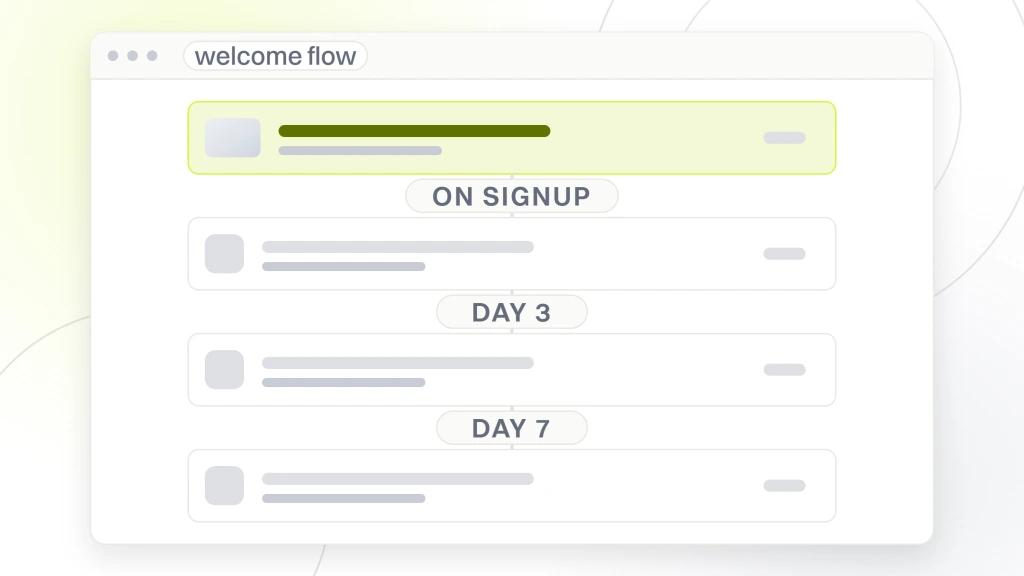
The welcome flow is the highest-return automation in the stack because it hits shoppers at peak intent (right after opt-in). Email 1 fires inside 15 minutes with the brand story plus the promised incentive. Founders who want a broader editorial system should also read our content marketing for beauty brands guide. Email 2 fires 24 hours later with best-sellers matched to any concern data captured at signup. Email 3 fires 48 hours later with founder video or brand social proof. Email 4 fires 4 days later with the loyalty program invite. Email 5 fires 7 days later with a soft second-purchase nudge. Welcome flows converting at 8% to 22% first-purchase rate outperform broadcasts by 5 to 12 times on revenue per email. Our med spa email marketing guide covers the same flow logic tuned for appointment bookings rather than product orders.
Build 8 to 14 always-on flows before spending another dollar on paid acquisition or TikTok marketing for beauty brands. Automation covers 45% to 65% of mature email revenue and compounds every month without new headcount, while broadcasts stay flat unless the list grows.
Post-purchase and replenishment flows for repeat revenue
Post-purchase and replenishment flows drive 25% to 45% of total email attributable revenue in beauty programs. Post-purchase flow fires after checkout with 4 to 6 emails. Product usage instructions land in email 1. Cross-sell recommendations tied to purchased category land in email 2. Review request lands in email 3 (timed to product category usage cycle). Loyalty program invite lands in email 4. Replenishment flow fires 30 to 60 days before expected reorder timing calculated from average time-between-purchases per product. Beauty products with 60 to 90 day usage cycles (serums, moisturizers, cleansers) support the highest replenishment revenue growth when the flow reminders arrive at the right time.
Cross-sell logic that works
Cross-sell logic that works pairs the purchased product with a complementary next-step product based on the shopper concern. Vitamin C serum purchasers get sunscreen cross-sell because vitamin C and daily SPF pair for anti-aging benefits. Retinol purchasers get moisturizer cross-sell because retinol drives barrier repair need. Hydrating serum purchasers get facial oil cross-sell for combination use. Random cross-sells based on inventory levels perform 40% to 70% worse than concern-based logic because they read as generic promotion.
Product launch campaign structure for email marketing for beauty ecommerce
Product launch structure runs a 3-week arc from waitlist to sold-out (or steady-state) across 6 to 9 sends. Week 1 opens the waitlist to VIP tier only with a 24-hour early-access window. Week 2 opens the launch to the full engaged list segmented by concern relevance. Week 3 runs restock reminders, social proof recaps, and a soft last-chance close. Programs that skip the waitlist and go straight to a broadcast blast leave 30% to 50% of first-week revenue on the table because early-access urgency drives conversion rates 2 to 4 times higher than an open launch.
Segment the launch by concern to preserve relevance. A new brightening serum goes to shoppers with hyperpigmentation history, vitamin C purchase history, and any brightening category browse activity inside 90 days. A new retinol product goes to shoppers with anti-aging concern history, cleanser or moisturizer purchase history, and any anti-aging category browse activity. Sending to the whole list because the launch is new is the fastest way to train subscribers to unsubscribe. Beauty programs that follow concern-targeted launch logic see click rates 2.5 to 4 times higher than unsegmented launches and unsubscribe rates 60% to 80% lower.
Deliverability protection through domain warmup and list hygiene
Deliverability protection keeps beauty ecommerce programs out of the spam folder as sending volume scales. Domain warmup gradually ramps sending volume across 4 to 8 weeks so mailbox providers (Gmail, Yahoo, Outlook) accept the sender reputation. List hygiene removes disengaged subscribers past 120 days without an open. Skipping either practice drops inbox placement rate from a 90% to 96% baseline down to 60% to 75%, which cuts email revenue proportionally because 25% to 40% of the list never sees the send in the primary inbox tab. According to Postmark data on inbox placement, sender reputation drops faster than most brand teams realize once bounce rate crosses the 2% threshold.
Sunset flow for disengaged subscribers
Sunset flow for disengaged subscribers runs a final 3-email sequence attempting to re-engage before removing them from active sends. Email 1 asks the subscriber directly whether they want to keep hearing from the brand. Email 2 gives a strong incentive to re-engage (30% code or a free-delivery upgrade). Email 3 confirms the removal with a re-subscribe link if the shopper changes their mind. Subscribers past 180 days without opening should sunset regardless of purchase history because sending to unengaged recipients tanks sender reputation across the whole list. Removing 20% to 40% of the list stings but preserves inbox placement for the engaged 60% to 80%. Weekly deliverability monitoring through Postmark, Google Postmaster Tools, and the email platform native reporting catches drift before it becomes a rebuild-required emergency.
SMS-plus-email coordination on Klaviyo or Attentive stacks
SMS-plus-email coordination on Klaviyo or Attentive stacks grows program revenue by 20% to 45% when integrated properly. SMS hits with 90% plus open rates but carries per-message costs of 1 to 3 cents that limit sending frequency. Email costs fractional pennies per send at any list size. Combining SMS for high-priority launch or restock moments with email for daily program activity produces the strongest revenue per subscriber across the beauty vertical. Sending SMS and email simultaneously to the same shopper for the same message wastes SMS spend and trains subscribers to ignore both channels.
Cross-channel suppression rules
Cross-channel suppression rules prevent double-messaging the same subscriber inside a 24 to 48 hour window. Rules typically suppress SMS if the shopper opened the same-content email inside 6 hours. Rules suppress email if the shopper clicked the same-content SMS inside 12 hours. Klaviyo and Attentive both support these suppression rules natively through flow filter configuration. Programs skipping suppression rules produce 30% to 50% higher unsubscribe rates across both channels because subscribers get fatigued fast.
SMS opt-in capture at checkout
SMS opt-in capture at checkout produces 3 to 6 times higher opt-in rates than dedicated SMS landing pages because the shopper is already in a transactional mindset. Shopify Checkout Extensibility supports a native SMS opt-in checkbox that runs pre-checked (where allowed by local law) or unchecked with a benefit statement above the box. Post-checkout opt-in flows give a $5 discount on the next order in exchange for SMS opt-in, typically converting 8% to 24% of buyers into subscribers. Building both capture points into the funnel catches shoppers who missed the checkout checkbox and want SMS notifications for restocks.
Subject line and preheader patterns for email marketing for beauty ecommerce
Subject line and preheader patterns that pull opens without discount training rely on specific product-plus-benefit hooks, question hooks tied to shopper concerns, and personal-first curiosity hooks. Discount-first subject lines (20% off, save $15 today) train shoppers to only open discount emails and drive up unsubscribe rates. Benefit-first subject lines (finally, a retinol your skin tolerates) pull higher-quality opens that convert to purchase. The mix that works across observed beauty programs sits at 20% discount, 45% benefit-first, 20% question, and 15% curiosity.
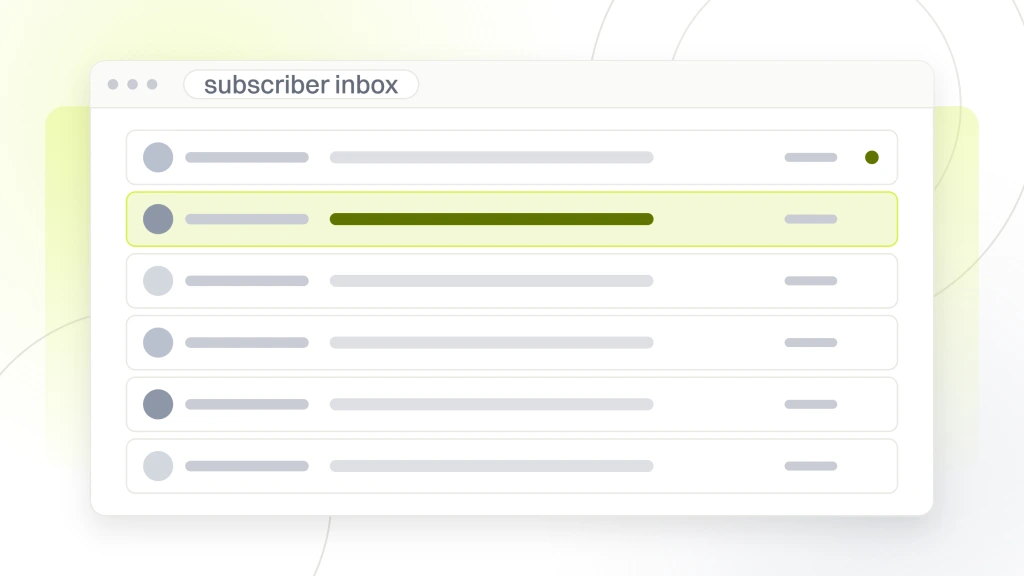
Preheader as second hook expands the subject line with a supporting sentence that reinforces the benefit or extends the curiosity gap. Preheaders left blank or auto-filled with the first line of email body lose 8% to 24% of the open rate gain the subject line alone would produce. Preheader length between 60 and 100 characters shows fully across Gmail, Yahoo, and Outlook mobile inbox previews. Longer preheaders truncate on mobile and lose impact. Emojis in preheaders now perform worse than they did 3 years ago because inbox previews often strip them, so mid-2026 practice sits at plain-text preheaders with strong copy.
A/B testing structure that produces real gains
A/B testing structure runs one variable at a time (subject line only, or preheader only, or send time only), splits at 20% of the list per variant across two variants, and picks the winner based on 24-hour open rate significance rather than 6-hour early reads. Testing 3 variables simultaneously produces noise that never resolves into confident winners. Programs running a weekly A/B test on subject lines across a full year typically produce 30% to 60% open rate gains compounding across the calendar because each winner feeds the next test hypothesis. Document every test hypothesis and result inside a shared Notion or Airtable database to keep the team honest across quarters.
Beauty ecommerce email benchmarks by growth stage
Program benchmarks vary by growth stage, list size, and product category. Emerging brands under $3M annual revenue tend to run 24% to 34% open rates on small lists because subscribers are highly engaged early adopters. Growth-stage brands between $3M and $15M run 22% to 32% open rates across broader lists. Established brands past $15M run 18% to 28% open rates because reach scales past the highly-engaged core into broader awareness territory. Revenue attribution from email tends to run 25% to 45% of total DTC beauty revenue across every stage when the program uses proper segmentation.
| Growth stage | List size | Open rate | Click rate | Email revenue share |
|---|---|---|---|---|
| Emerging (under $3M) | 2,000 to 30,000 | 28% to 42% | 3.0% to 6.5% | 18% to 35% |
| Growth-stage ($3M to $15M) | 30,000 to 200,000 | 24% to 36% | 2.5% to 5.0% | 28% to 44% |
| Established ($15M+) | 200,000 to 2M | 20% to 30% | 1.8% to 4.0% | 32% to 48% |
| Clinic or aesthetics | 4,000 to 80,000 | 28% to 46% | 3.5% to 7.5% | 14% to 34% |
Measuring email marketing for beauty ecommerce with real attribution
Measuring the program with real attribution requires stitching together Klaviyo or Attentive analytics, Shopify or Woo checkout tracking, first-touch versus last-touch models, and post-purchase surveys. Klaviyo shows email revenue attribution based on 5-day click and 24-hour open windows by default. Adjusting the attribution window to match the beauty product decision cycle (7 to 14 days for skincare, 3 to 5 for makeup) produces cleaner revenue numbers. Post-purchase surveys catch shoppers who saw the email but converted via search or direct traffic without clicking the email link. According to Klaviyo benchmark research, brands running segmented flows plus deliverability protection land in the top 15% of documented beauty email programs by revenue per subscriber.
Attribution window calibration
Attribution window calibration by product category matters because Klaviyo default windows understate email revenue for higher-consideration beauty categories. Skincare purchases considered across 7 to 14 days should carry a 14-day attribution window. Makeup purchases considered across 2 to 5 days should carry a 5-day window. Haircare tools past $100 should carry a 30-day window because purchase consideration runs longer on higher-ticket items. Adjusting windows per product category typically shifts attributed email revenue up 20% to 45% versus defaults, which changes the strategic priority allocated to email inside the marketing plan.
Post-purchase survey capture
Post-purchase survey capture for email attribution should give 4 to 6 options rather than a single write-in field. Options like saw an email from the brand, clicked an email from the brand, saw an SMS, and other capture different attribution paths that first-touch analytics miss. Tools like KnoCommerce or Inquire deliver post-purchase surveys on Shopify checkouts with 30% to 60% response rates when the survey runs on the order confirmation page rather than a follow-up email 48 hours later.
Beauty and ecommerce case studies from the Redefine Web library
Beauté Aesthetics New York, a Manhattan luxury beauty and aesthetics clinic offering skincare treatments, injectables, and wellness protocols for male and female clients, engaged Redefine Web on a twelve-month program that included email marketing rebuild across list segmentation, flow architecture, and product launch campaign structure. Baseline email delivered 22% open rate and 1.4% click rate on broadcasts, with only a broken welcome flow and no post-purchase or replenishment automation. Attribution from email to bookings ran at under 4% of monthly clinic revenue. The email rebuild across months 1 through 3 launched 11 always-on flows covering welcome, post-treatment care, replenishment reminders, VIP tier, win-back, sunset, browse abandonment, cart abandonment, birthday, appointment reminder, and post-treatment feedback. Segmentation split the list by treatment history, concern (anti-aging, brightening, sensitivity), and RFM tier. Subject line patterns rotated 45% benefit-first, 20% question, 20% discount, and 15% curiosity. SMS integration launched in month 4 running through Klaviyo SMS with cross-channel suppression rules. By month 12, Beauté grew email open rate from 22% to 38%, click rate from 1.4% to 4.8%, and email attribution to monthly clinic bookings climbed from 4% to 22% of monthly appointments. Total qualified leads across all channels grew 166%. New users grew 88%. Website conversion rate rose 27%. Email revenue per subscriber climbed 340% because segmented flows generated repeat bookings the broadcast-only program never captured.
Abigail Ahern, a global luxury home décor brand known for dark, atmospheric interiors and trend-defying furnishings, ran a paired paid-media and email rebuild that replaced discount-led messaging with premium-aligned creative across the ecommerce funnel. Baseline email leaned on frequent 20% off blasts that trained shoppers to only buy on promotion and diluted the brand aspirational positioning. The rebuild segmented the list by browse history across furniture, lighting, and accessories categories. Welcome and post-purchase flows shifted to concept content (styling guides, room reveals, founder commentary) with lifestyle imagery instead of discount codes. Launch sends went out to concern-shaped segments (color-first shoppers, texture-first shoppers, statement-piece shoppers) rather than the full list. Revenue climbed 179% and website conversion rate roughly doubled. The same segmentation and content-led email logic the Beauté program used carried over cleanly to a home décor catalog with a longer consideration window.
Boogie Board, the reusable writing tablet brand that pioneered liquid crystal technology in 2009 and now sells across 40 plus countries in across educational toys and stationery, paired a Google Ads rebuild with post-purchase email and retargeting flows to drive repeat orders and cross-sell into adjacent product lines. Baseline email had automated follow-ups missing entirely, and repeat-purchase revenue was capped by a lack of nurture across the shopper base. The rebuild layered a 5-email post-purchase flow (product usage tutorials, category cross-sell, review request timed to 30-day usage, loyalty program invite, and second-purchase nudge) on top of the paid-search work. Cross-channel targeting matched Google Ads retargeting audiences with Klaviyo browse-abandonment flows so the same shopper saw a coherent message across paid and owned channels. Conversion rate climbed 11%. Cost per sale settled at $31 across a $650,000 annual managed budget. Repeat orders from the post-purchase flow contributed a meaningful share of the incremental revenue because sustainability-focused shoppers respond well to educational content that reinforces the brand environmental positioning.
Team and production cost model for beauty ecommerce email
Team and production cost model scales with growth stage and program ambition. Emerging brands typically run a founder plus one freelance email specialist at $2,400 to $8,000 monthly total loaded cost. Growth-stage brands run an email lead plus one designer plus one copywriter at $10,000 to $24,000 monthly. Established brands run a 4 to 6 person email team at $32,000 to $90,000 monthly plus outside agency support at $4,000 to $20,000 monthly for flow rebuilds and deliverability audits across the full-funnel program.
Our retainer tiers start at $1,499 per month and run through $2,499, $3,999, and from $6,000 monthly for mature multi-brand programs. The $1,499 tier covers a small DTC beauty brand or single-location clinic with 2 flows built per month plus weekly broadcast campaign production. The $2,499 tier layers in RFM segmentation, deliverability monitoring, and 3 flows per month. The $3,999 tier suits growth-stage brands and runs the full 8 to 14 flow stack plus monthly A/B testing plus quarterly deliverability audits. The from $6,000 tier suits established brands and mature multi-brand accounts running SMS-plus-email coordination, launch campaign architecture, and cross-channel attribution work. Platform costs, transactional volume, and SMS spend bill separately. Our SEO and PPC retainers run $999, $1,499, $2,499, and from $4,500 monthly when email work pairs with paid or organic acquisition. Our beauty salon SEO guide and beauty PPC breakdown cover the paid and organic pairings for the same audience.
The $1,499 monthly tier is the honest entry point for a small beauty brand or single-location clinic. Below $1,499, the program gets a monthly glance rather than the weekly work that segmentation, flow builds, deliverability, and testing all need. Ad spend, platform fees, and SMS volume bill separately in every tier.
Klaviyo versus Attentive selection
Klaviyo versus Attentive selection for beauty ecommerce email programs depends on program stage and SMS integration ambition. Klaviyo is email-first with SMS as a secondary channel, priced at $45 to $1,700 monthly by list size. Attentive is SMS-first with email as a secondary channel, priced at $400 to $4,000 monthly. Growth-stage beauty brands under 100,000 subscribers usually get better economics from Klaviyo. Brands past 250,000 subscribers with heavy SMS revenue usually get better economics from Attentive. Some brands run both platforms for their respective strengths, but the integration overhead rarely pays back unless the brand is past $40M annual revenue.
Wrapping up email marketing for beauty ecommerce strategy
A beauty ecommerce email program that compounds comes down to six patterns. Segment the list by purchase behavior, product category, concern, and RFM tier so every send hits shoppers with content matching their real intent. Build 8 to 14 always-on flows so 45% to 65% of email revenue comes from automation. Protect deliverability through domain warmup, list hygiene, and sunset flows. Coordinate SMS and email with cross-channel suppression rules. Test one variable at a time on subject lines, preheaders, and send times to compound gains across the calendar. Track attribution with product-category-adjusted windows plus post-purchase surveys to catch revenue the default Klaviyo attribution misses.
the Beauté twelve-month program that grew email attribution to clinic bookings from 4% to 22% ran the same six-pattern strategy across 11 always-on flows, weekly RFM segmentation review, and cross-channel SMS integration. Abigail Ahern revenue rebuild and Boogie Board $31 cost per sale both leaned on the same segmentation-plus-flow discipline. Every beauty email program we have run past 12 months hits a saturation floor around week 10 before climbing meaningfully in months 4 through 12. Trusting the compounding curve is harder than it sounds when the CFO asks why weekly revenue dropped in weeks 5 through 7 during the segmentation rebuild. Weekly reporting against pre-agreed milestones keeps the program on track through the noisy window and prevents impatient reversion to broadcast-only sends. Book a call and we will walk through the last three beauty email rebuilds end to end, share the flow templates we deploy on day one, and map a 12-month plan against your current list, catalog, and revenue targets. Our beauty marketing agency comparison and beauty web design guide cover the wider agency evaluation and site-side work that pair with the email program.
How to use email marketing for ecommerce?+
Ecommerce email marketing works best when the program runs on segmentation, always-on flows, and disciplined subject line testing rather than broadcast blasts. Start by segmenting the list into 8 to 12 groups by purchase history, product category, concern, and RFM tier. Build 8 to 14 always-on flows covering welcome, post-purchase, replenishment, browse and cart abandonment, VIP tier, win-back, and sunset. Test one subject line variable per week and document results. Protect deliverability with domain warmup, list hygiene, and sunset flows. Coordinate SMS and email with cross-channel suppression. Track attribution with product-category-adjusted windows in Klaviyo or Attentive plus post-purchase surveys.
How to do email marketing for beauty ecommerce reddit+
Reddit threads in r/emailmarketing and r/beautyindustry consistently recommend the same handful of moves for beauty ecommerce brands. Segment the list by product category and skin or hair concern rather than sending one broadcast to the full list. Build the welcome flow first because it converts new subscribers at 8% to 22% first-purchase rate. Rotate subject lines away from discount-first hooks toward benefit-first hooks because discount training kills long-term revenue. Set up post-purchase and replenishment flows tuned to product usage cycles. Add SMS as a launch channel only, not for daily sends. Reddit advice matches what we see across 40 plus beauty programs run at Redefine Web, and the Beauté Aesthetics New York rebuild followed the same pattern to 22% email attribution on clinic bookings.
How to do email marketing for beauty ecommerce examples+
Real client examples span DTC skincare, luxury clinics, indie clean beauty, haircare, and adjacent lifestyle categories. Beauté Aesthetics New York, a Manhattan aesthetics clinic, ran 11 always-on flows that grew email attribution from 4% to 22% of monthly bookings over 12 months. Abigail Ahern, a luxury home décor brand, rebuilt email around premium creative and concept content instead of discount blasts and saw revenue climb 179% while conversion rate roughly doubled. Boogie Board paired post-purchase email flows with Google Ads retargeting to hit a $31 cost per sale and drive repeat orders across the reusable writing tablet catalog. Each program used segmentation, always-on automation, and category-relevant content rather than broadcast blasts.
What is email marketing for beauty ecommerce reddit+
Reddit conversations define the discipline as the weekly work of running Klaviyo or Attentive for a DTC beauty brand across segmentation, flow architecture, campaign production, deliverability, and reporting. The work covers list segmentation by product category and RFM tier, 8 to 14 always-on automation flows, weekly A/B testing on subject lines and preheaders, domain warmup and list hygiene, sunset flows for disengaged subscribers, SMS integration with cross-channel suppression rules, product-category-adjusted attribution windows, and monthly reporting against benchmarks by growth stage. Reddit users on beauty and marketing subreddits consistently flag the same failure modes on badly managed accounts. Broadcast-only sending. No sunset flow. Discount training. No RFM segmentation. Every one of those caps addressable revenue.
What is email marketing for beauty ecommerce examples+
Examples include welcome flows for new subscribers that hit 8% to 22% first-purchase conversion, post-purchase flows with product education plus review requests timed to the 45 to 60 day usage cycle for skincare, replenishment reminders 30 to 60 days before expected reorder, VIP tier early-access launches with 24-hour windows, browse-abandonment flows tied to product category, and win-back sequences for shoppers past 90 to 180 days without a purchase. Concrete client examples include Beauté Aesthetics New York growing email attribution from 4% to 22% of clinic bookings, Abigail Ahern replacing discount blasts with premium content and growing revenue 179%, and Boogie Board driving repeat orders through post-purchase flows paired with Google Ads at a $31 cost per sale.
How much should a beauty brand spend on email marketing per month?+
A small beauty brand or single-location clinic typically starts at $1,499 monthly for an agency retainer covering 2 flow builds per month plus weekly broadcast production. Growth-stage brands under $15M annual revenue run $2,499 to $3,999 monthly for a full 8 to 14 flow stack, RFM segmentation, deliverability monitoring, and monthly A/B testing. Established brands past $15M run from $6,000 monthly for SMS-plus-email coordination, launch campaign architecture, and cross-channel attribution work. Platform costs like Klaviyo ($45 to $1,700 monthly) and Attentive ($400 to $4,000 monthly) bill separately, along with SMS message volume. Below $1,499 monthly, the program gets a monthly glance rather than the weekly work segmentation, flow builds, deliverability, and testing all need.
How many always-on flows should a beauty brand run?+
A mature beauty ecommerce program runs 8 to 14 always-on flows. Welcome (5 to 7 emails). Post-purchase education (4 to 6 emails). Replenishment reminders timed to product usage cycle. Browse abandonment (3 emails). Cart abandonment (3 to 5 emails). Win-back for shoppers past 90 days. VIP tier onboarding. Birthday. Review request. Sunset. Loyalty tier promotions. Referral. Automation revenue typically carries 45% to 65% of total email revenue in a mature program. Emerging brands under $3M annual revenue can start with welcome, post-purchase, cart abandonment, and win-back (4 flows) and layer in the remaining 4 to 10 over the first 6 months. Programs running fewer than 4 flows leave the majority of email revenue on the table because broadcasts alone plateau fast.
What email platform is best for beauty ecommerce brands?+
Klaviyo is the default best fit for beauty ecommerce brands under 250,000 subscribers because the platform is email-first, integrates natively with Shopify and Woo, supports RFM segmentation and predictive analytics out of the box, and scales pricing gracefully from $45 monthly at small lists to $1,700 monthly at 100,000 subscribers. Attentive is the better fit for brands past 250,000 subscribers with heavy SMS revenue because Attentive is SMS-first and prices email at a discount when SMS is the primary channel. Established multi-brand accounts past $40M annual revenue sometimes run both platforms for their respective strengths, but the integration overhead rarely pays back below that scale. Mailchimp and Constant Contact fall short on flow logic and segmentation depth for serious beauty ecommerce work.
How long before email marketing starts working for a beauty brand?+
A new email marketing program for a beauty brand typically shows the first flow revenue within 2 to 4 weeks of launch as the welcome sequence starts firing on new opt-ins. Broadcast revenue takes 6 to 12 weeks to stabilize as segmentation gets refined and subject line testing compounds. The full program hits its saturation floor around week 10 before climbing meaningfully in months 4 through 12. Every beauty email rebuild we have run past 12 months shows the same pattern. Weeks 5 through 7 often see a temporary revenue dip during the segmentation and flow rebuild, then months 4 through 12 compound at 15% to 40% quarter over quarter. Trusting the compounding curve is the single biggest predictor of whether the program hits its year-two ceiling.
How do I know if my current beauty ecommerce email program is any good?+
Three signals mean the program is drifting. Automation revenue makes up less than 30% of total email revenue. The sunset flow was built more than 6 months ago (or does not exist). Subject line testing has not produced a new hypothesis in more than 4 weeks. Any one is a yellow flag. Two together is a red flag. All three means the program is on autopilot and revenue will show it inside a quarter. Two signals mean the arrangement is on track. Automation carries 45% to 65% of email revenue and the agency proactively raises new tests each month (new flow builds, new segment cuts, new subject line hypotheses) rather than waiting to be asked. Ask for the last four weekly deliverability reports and the last two A/B test writeups. If neither exists, the program needs new hands.