TikTok marketing for beauty brands rewrote the discovery layer of the beauty industry between 2022 and 2025. The platform surfaces skincare routines, makeup transformations, and product reviews to shoppers who never followed the brand and never searched the product name. That algorithmic discovery is why a small clean-beauty brand can generate $200,000 in Shopify checkouts inside 72 hours of a single Reel taking off. TikTok marketing for beauty brands rewards discipline, not luck. It also explains why brands over-invest in one-hit content chasing another viral moment, then plateau at $0 attributed revenue when the algorithm shifts away from that content style two quarters later. Programs that compound run on repeatable content pillars, licensed creator partnerships, and paid amplification of proven organic winners.
You will walk through content pillars that scale on TikTok, TikTok Shop integration for direct checkout, licensed creator partnerships with dermatologists and makeup artists, TikTok Ads Manager campaign structure for paid amplification, comment moderation for medical and product safety claims, hashtag strategy for beauty discovery, plus the twelve-month program Beauté Aesthetics New York ran that grew clinic bookings from 3.2 percent to 42 percent of monthly appointments across skincare, injectables, and wellness services. You will also see how a luxury home brand and a reusable-tablet ecommerce brand approached paid social so the same playbook maps to product-first beauty brands.
TikTok Ads Manager campaign structure for beauty amplification
Campaign structure for TikTok marketing for beauty brands inside TikTok Ads Manager splits into three types by intent. Reach and awareness campaigns push cold-audience discovery at $3 to $8 cost per thousand impressions. Traffic and video views campaigns drive site visits at $0.40 to $1.20 cost per click. Conversion campaigns optimize for TikTok Shop checkout or off-platform purchase at $12 to $40 cost per acquisition depending on beauty product price point. Splitting budget 30 percent awareness, 40 percent traffic, and 30 percent conversion produces the fullest-funnel amplification without cannibalizing organic reach. Redefine Web builds this split inside our PPC retainer, priced at $999, $1,499, $2,499, and from $4,500 per month depending on ad spend and channel count.
Spark Ads versus in-feed ads
Inside TikTok marketing for beauty brands programs, Spark Ads and in-feed ads produce meaningfully different results for beauty campaigns. Spark Ads run through the creator handle carrying organic engagement signals (likes, comments, shares) that in-feed ads never accumulate. Spark Ads typically produce 40 to 90 percent better click-through rate and 20 to 60 percent lower cost per acquisition versus fresh in-feed creative. In-feed ads scale reach further because they can run against any audience segment, but they need stronger creative to overcome the missing organic engagement signals. Growth-stage beauty brands typically split 60 percent Spark Ads and 40 percent in-feed ads across a paid TikTok budget.
Targeting stacks that work for beauty
Targeting stacks that convert inside TikTok marketing for beauty brands campaigns on TikTok Ads Manager layer interest categories (Beauty and Personal Care, Skincare, Makeup), behavioral signals (recently interacted with beauty content), and lookalike audiences seeded from purchaser data. Cold interest-only targeting produces higher cost per thousand impressions and lower conversion versus stacked audiences. Growth-stage beauty brands typically build 4 to 8 audience stacks per campaign, testing each at $200 to $800 daily before scaling the winners. Lookalike audiences seeded from TikTok Shop purchasers usually outperform lookalikes seeded from off-platform site visitors by 30 to 60 percent on cost per acquisition. TikTok Ads Manager guidance for beauty reinforces the same pattern in its 2025 beauty marketing brief.
Comment moderation for medical and safety claims on TikTok
Comment moderation inside TikTok marketing for beauty brands matters because shopper comments frequently ask whether a serum cures acne or reverses melasma. Replying yes triggers cosmetic-to-drug classification risk under FDA rules. Building a standard reply library for the top 40 medical-claim questions the brand receives keeps community managers on-message. Auto-hiding comments containing flagged words like cure, treats, heals, medical grade, and prescription strength inside TikTok Creator Studio reduces both platform risk and community team workload. Ignoring comment moderation is one of the fastest paths to an FTC warning letter for growth-stage beauty brands.
Reply library structure
The reply library sits in shared Notion or Airtable with columns for question category, approved reply text, legal-review date, and escalation trigger conditions. Rotating a quarterly review with in-house counsel or an outside FTC-experienced attorney costs $800 to $3,200 per review cycle. Community managers get 40 to 90 minutes back per week when the library sits at their fingertips rather than asking Slack for approved wording. Brands running TikTok at 40,000 followers and above generate 800 to 4,000 comments requiring judgment calls per week, which is where the reply library pays back the setup investment.
Escalation triggers to legal review
Escalation triggers for beauty TikTok community managers should include any comment referencing pregnancy or nursing safety, any comment referencing adverse reactions, and any comment referencing a competitor product by name with legal implications. Adverse reaction reports specifically need routing to the brand quality control team within 4 hours and to an FDA MedWatch report within 15 days if the reaction qualifies. Community managers untrained on these triggers create both regulatory and reputation risk. A 45-minute training session per new hire covering the top 12 escalation triggers pays back inside the first three weeks of live moderation.
Hashtag strategy for beauty discovery on TikTok
Hashtag strategy for TikTok marketing for beauty brands mixes 3 broad-reach hashtags, 4 category-specific hashtags, and 2 branded hashtags per post. Broad-reach hashtags like BeautyTok and SkincareRoutine drive discovery among general beauty audiences. Category-specific hashtags like RetinolRoutine or CleanBeauty target purchase-ready shoppers. Branded hashtags build a searchable content library on the brand handle and support user-generated content collection from real customers. Stacking 12 hashtags looks spammy and gets flagged by moderation. Nine hashtags with clear intent mapping tends to be the sweet spot.
Trending sound integration
Trending sound integration inside TikTok marketing for beauty brands boosts algorithmic reach 3 to 8 times versus original audio for the first 72 hours of a trend. Sounds trending past 96 hours produce diminishing returns because saturation and algorithmic fatigue reduce reach multipliers. Scanning For You Page daily to catch trending sounds within the first 48 hours of trend velocity is the practical rhythm for growth-stage beauty brands. Original audio produces stronger long-tail reach past week 2 because trending sounds age out of the algorithm, so brands should mix 60 percent trending sound and 40 percent original audio across a monthly calendar.
Branded hashtag challenges
Branded hashtag challenges are one lever inside TikTok marketing for beauty brands that invite shoppers to create content around a brand-specific hashtag, generating user content the brand can repost and repurpose. Successful beauty branded challenges typically pair a simple visual concept (a product before-and-after, a routine step) with a trending sound. Prize structure matters less than the visual concept simplicity. Brands running challenges with over-complex mechanics rarely see meaningful participation. Challenges tied to a specific product launch tend to outperform generic brand-love challenges because participants have a clear content angle. Growth-stage brands running one challenge per quarter build a compounding user-generated content library across a year.
Beauté Aesthetics New York twelve-month case study
Beauté Aesthetics New York, a Manhattan luxury beauty and aesthetics clinic offering skincare treatments, injectables, and wellness protocols for male and female clients, engaged Redefine Web on a twelve-month program that included TikTok marketing for beauty brands buildout across content pillars, licensed creator partnerships, and paid Spark Ads amplification. Baseline TikTok delivered under 1,200 followers, 0.8 percent engagement rate, and roughly zero attributed clinic bookings from TikTok referrals. The account posted sporadic product-first content with under 6 percent of posts featuring real client outcomes or licensed derm education.
The content pillar buildout across months 1 through 4 launched 25 percent GRWM content, 20 percent product close-up Reels, 15 percent founder-narrated brand storytelling, 25 percent client-produced transformation videos, and 15 percent derm education content featuring the clinic staff dermatologist. Creator partnerships added 18 micro derm and MUA creators producing 3 posts each per quarter. Paid Spark Ads amplification launched in month 3 running at $8,000 per month across whitelisted creator content and retargeting audiences.
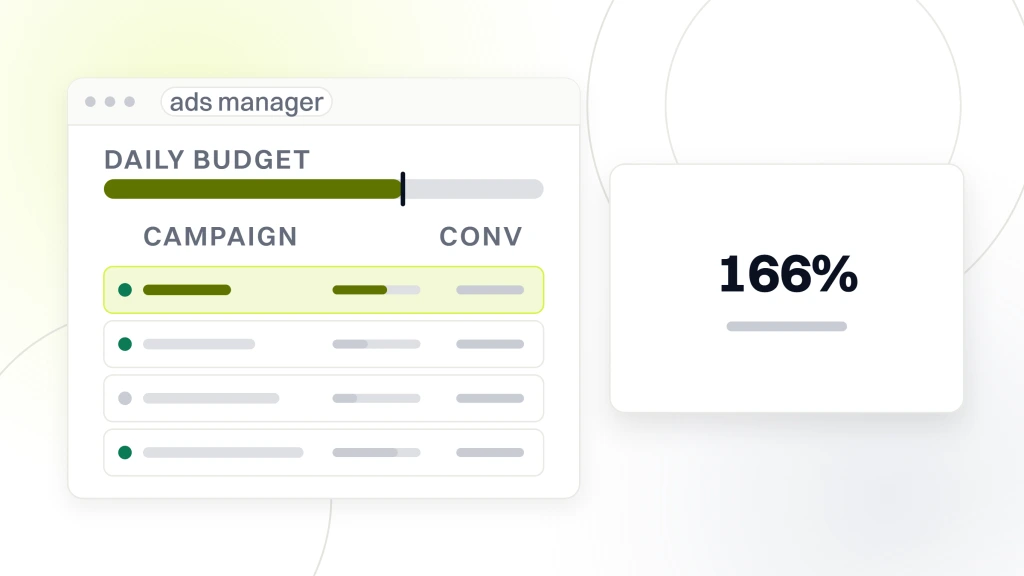
By month 12, Beauté Aesthetics New York grew TikTok followers from 1,200 to 34,600, engagement rate from 0.8 percent to 6.4 percent, and TikTok attribution to monthly clinic bookings climbed from zero to 18 percent (Instagram delivered 27 percent, so TikTok became the second-largest social channel by clinic revenue). Total qualified leads across all channels grew 166 percent. Website conversion rate on TikTok-referred traffic climbed 41 percent because treatment pages carried the specific skincare content the TikTok content referenced. Male client acquisition through TikTok grew from zero baseline to 24 percent of TikTok-referred conversions through inclusive creator selection.
Reporting cadence Beauté used for month-over-month improvement tracked TikTok save rate per video, direct-message inquiry volume per week, direct-message-to-booking conversion rate per campaign, and TikTok-attributed clinic revenue per month. Weekly reviews caught two under-performing creator partnerships by month 5 and rotated them out for stronger derm voices by month 7. This rotational discipline is the difference between programs that plateau at month 5 and programs that continue compounding month over month past year one.
How Abigail Ahern and Boogie Board inform beauty paid social
Luxury ecommerce brand Abigail Ahern ran the same paid-social discipline TikTok marketing for beauty brands demands. Redefine Web replaced discount-led messaging with premium-aligned creative, restructured segmented shopping campaigns, and added category-page SEO depth. The 12-month result was 179 percent ecommerce revenue growth, 1,588 percent paid-search return on ad spend, and 3,000 percent paid-social return on ad spend. The pattern maps directly onto premium beauty. Beauty brands that lean on promo-code creative in feed usually see the same demand-signal decay Abigail Ahern experienced pre-engagement. Swapping discount hooks for hero-product storytelling recovers premium pricing power inside two quarters.
Ecommerce brand Boogie Board, a pioneering reusable-writing-tablet company, ran a cross-channel Google plus LinkedIn program with landing-page optimization, automated follow-ups, and retargeting on a $650,000 managed ad budget. Redefine Web produced an 11 percent conversion-rate gain and $31 cost per conversion. Beauty brands running paid TikTok alongside Google Shopping recognize the same multi-channel logic. TikTok drives the top of funnel, Google catches the branded search that TikTok generates, and retargeting closes the shopper who watched a Reel twice but did not check out. Beauty brands skipping Google retargeting typically lose 30 to 50 percent of TikTok-generated demand to competitor branded search inside 48 hours.
TikTok marketing for beauty brands benchmarks by growth stage
Benchmarks inside TikTok marketing for beauty brands vary by growth stage, follower baseline, and product category. Emerging brands under $3M annual revenue tend to run 4 to 8 percent engagement rate on small follower counts because the audience is highly targeted early adopters. Growth-stage brands between $3M and $15M run 2 to 5 percent engagement across broader audiences. Established brands past $15M run 1 to 2.5 percent because reach scales past the highly-engaged core into broader awareness territory. Attribution share to TikTok tends to skew higher for direct-to-consumer skincare than for aesthetics clinics because the direct-message-to-checkout path is shorter.
Reading the table below with growth stage plus channel mix in mind produces cleaner planning than reading a single row of the same benchmark data in isolation. The benchmarks map real ranges observed across 40 plus beauty programs run at Redefine Web across three years of engagements spanning direct-to-consumer skincare, luxury clinics, indie clean beauty, and haircare growth-stage brands. Emerging brands should aim for the high end of engagement rate and low end of output because the small follower base rewards quality over quantity. Growth-stage brands sit in the middle of every column. Established brands trade engagement rate for reach, which is a natural trade-off past 200,000 followers.
| Growth stage | Follower baseline | Engagement rate | Monthly TikTok output | Attributed revenue share |
|---|---|---|---|---|
| Emerging (under $3M) | 500 to 20,000 | 4.0 to 8.0 percent | 10 to 16 | 4 to 22 percent |
| Growth-stage ($3M to $15M) | 20,000 to 200,000 | 2.0 to 5.0 percent | 16 to 28 | 18 to 42 percent |
| Established ($15M+) | 200,000 to 3M | 1.0 to 2.5 percent | 28 to 60 | 22 to 46 percent |
| Clinic or aesthetics | 1,000 to 40,000 | 3.5 to 6.5 percent | 12 to 20 | 8 to 24 percent |
Paid Spark Ads for skincare and beauty launches
Paid Spark Ads inside TikTok marketing for beauty brands amplify organic Reels and creator content that already showed strong organic performance. Boosting a Spark Ad on content with 8 to 14 percent organic save rate typically produces $4 to $8 cost per direct-message inquiry versus $18 to $60 cost on cold in-feed creative that never proved out organically. Reserving 50 to 70 percent of paid TikTok budget for whitelisted creator Spark Ads produces meaningfully better cost per acquisition than brand-owned creative because the creator voice signals authenticity to cold audiences. Redefine Web handles Ads Manager setup across TikTok Spark Ads and cross-platform amplification inside our paid media retainer.
Retargeting TikTok viewers
Retargeting inside TikTok marketing for beauty brands using Spark Ads on TikTok viewers produces 4 to 9 times better cost per acquisition than cold audiences because engagement signals meaningful product interest. Building custom audiences from viewers who watched 75 percent through, saved a video, or commented on the brand handle in the past 60 days runs in TikTok Ads Manager under Custom Audiences. Layering a lookalike audience on top of the viewer seed produces the strongest cold prospecting audience for beauty brands running paid TikTok at $8,000 per month and above. Frequency capping at 3 to 5 impressions per user per week prevents cost per acquisition drift up on tight retargeting windows.
Budget scaling milestones
Budget scaling milestones inside TikTok marketing for beauty brands using Spark Ads follow a proven rhythm. Weeks 1 to 4 test 4 to 8 Spark Ads at $200 to $600 each to find the winner. Weeks 5 to 8 scale winners to $2,000 to $8,000 per week each while introducing 2 to 4 fresh Spark Ads for the next test cohort. Weeks 9 to 12 scale proven winners to $8,000 to $40,000 per week if cost per acquisition holds. Skipping the 4-week test phase in favor of immediate scale usually burns 30 to 60 percent of the first-month budget on creative that never proves out.
Measuring TikTok attribution for beauty programs
Measuring attribution inside TikTok marketing for beauty brands requires stitching together TikTok Analytics, TikTok Shop checkout data, Shopify or Woo external checkout tracking, and post-purchase surveys. TikTok Analytics shows reach, saves, and profile visits. TikTok Shop data shows in-app checkout attribution. External checkout tracking shows first-touch attribution when the shopper landed on the site from TikTok. Post-purchase surveys catch shoppers who saw the brand on TikTok then searched Google to buy. Combining all four data sources produces the fullest attribution picture across the beauty vertical.
Save rate as a leading indicator
Save rate as a leading indicator inside TikTok marketing for beauty brands predicts revenue impact 30 to 90 days ahead of Shopify or Woo checkout data. A TikTok video with 8 to 14 percent save rate typically drives sustained product page visits for 40 to 60 days as shoppers return to their saved collection to purchase. Tracking save rate per video inside a monthly reporting cadence catches high-intent content that under-indexes on immediate reach but converts strongly on delayed purchase. Programs that only report reach and engagement rate miss the strongest predictor of beauty revenue attribution on TikTok content across every product category.
Post-purchase survey capture
Post-purchase survey capture for TikTok attribution should offer 4 to 6 options rather than a single write-in field. Options like saw a video from a creator, followed the brand on TikTok, saw an ad on TikTok, and bought through TikTok Shop capture different attribution paths that first-touch analytics tools miss. Tools like KnoCommerce or Inquire deliver post-purchase surveys on Shopify checkouts with 30 to 60 percent response rates when the survey fires on the order confirmation page rather than a follow-up email 48 hours later. Combining survey data with TikTok Shop checkout closes the attribution loop.
Team and production cost model for beauty TikTok
Team and production cost model for TikTok marketing for beauty brands scales with growth stage and content ambition. Emerging brands typically run a founder plus one freelance TikTok producer at $3,600 to $10,000 monthly total loaded cost. Growth-stage brands run a TikTok lead plus one editor plus one community manager at $12,000 to $28,000 monthly. Established brands run a 4 to 7 person TikTok team at $36,000 to $110,000 monthly plus outside agency support at $8,000 to $40,000 monthly for creator management and Spark Ads amplification across a full-funnel campaign. If you want a lean external partner rather than a full in-house team, Redefine Web offers SEO retainers at $999, $1,499, $2,499, and from $4,500 per month that pair well with an in-house TikTok producer.
In-house versus agency mix
In-house versus agency mix for TikTok marketing for beauty brands tends to work best with in-house handling brand voice, community management, and founder-led content, while agency partners handle creator partnerships, Spark Ads amplification, and technical production. Pure in-house programs at emerging or growth-stage rarely scale past 24 pieces of monthly content without burning out the small team. Pure agency programs at any stage struggle to capture authentic founder voice on camera. The beauty and skincare marketing hub at Redefine Web covers the agency-plus-in-house model for brands running TikTok at scale.
Batching content on a shoot day
Batching content on a shoot day for TikTok marketing for beauty brands typically runs one shoot day every 2 weeks producing 14 to 28 pieces of content combining GRWM, product close-ups, and founder segments. Weekly batching burns out producers and drops creative quality. Monthly batching produces stale content by weeks 3 and 4 as trending sounds shift meaningfully. Bi-weekly cadence with a 2-day shoot every other week hits the sweet spot of production quality plus timeliness. Founder appearance schedule needs 90 minutes per shoot day minimum to capture enough founder-led content for the 4-week publishing calendar.
Wrapping up the strategy
TikTok marketing for beauty brands that compounds into real revenue comes down to five patterns. Balance content across five pillars including GRWM routines, product close-ups, founder storytelling, transformation videos, and licensed derm education. Enable TikTok Shop for in-app checkout to cut purchase friction 60 to 80 percent. Partner with 12 to 24 licensed micro creators producing 2 to 4 posts each per quarter. Amplify proven organic winners through Spark Ads at 50 to 70 percent of paid budget. Measure save rate and TikTok Shop checkout alongside reach and engagement for the fullest attribution picture.
The Beauté Aesthetics New York twelve-month program that grew TikTok attribution to clinic bookings from zero to 18 percent and total qualified leads 166 percent ran the same five-pattern strategy across 22 posts per month, 18 micro derm and MUA creator partnerships, and Spark Ads amplification routing to booking pages. According to TikTok newsroom beauty industry data, brands running the multi-pillar plus creator plus paid amplification stack land in the top 15 percent of documented beauty TikTok programs. The first 90 days of a TikTok rebuild tend to be the noisiest because the pillar shift disrupts existing engagement patterns before it produces new ones.
Following the same five-pattern strategy through the noise (rather than reverting to old content mix when engagement dips in weeks 6 through 10) is the single biggest predictor of whether the program compounds past year one. Every beauty TikTok program Redefine Web has run past 12 months has hit its saturation floor around week 8 before climbing meaningfully in months 4 through 12. Trusting the compounding curve is harder than it sounds when the CFO asks why weekly revenue dropped in weeks 5 through 7 during the transition. Weekly reporting against pre-agreed milestones keeps the program on track through the noisy window. Read the Beauty Independent TikTok Shop analysis for the same pattern across Laneige, Medicube, and Peter Thomas Roth.