
Healthcare PPC services are one of those categories where the word “services” hides more than it reveals. Every agency uses the phrase. The scope inside the phrase changes wildly from vendor to vendor. This guide breaks down what belongs in a real engagement, what usually gets left out, and what to ask for before you sign. You will read about setup work, ongoing management cadence, the reporting stack, and the pricing patterns that decide whether an engagement lands profitable or bleeds budget for six months. We build on real practice work with Redefine Web clients, which shows that healthcare vertical CPCs keep trending upward. That upward drift makes scope clarity more valuable now than two years ago. By the end, you will know which questions separate real work from repackaged Google Ads maintenance, which line items always belong in a scope of work, and which ones are fair add-ons.
What Belongs in a Real Healthcare PPC Services Engagement
A real engagement starts with account architecture. That means separate campaigns per service line, per location, and per intent tier, with match-type discipline that keeps broad match out of the account until the data supports it. A weak vendor throws everything into one campaign called “Search” and lets Google reallocate on autopilot. A strong vendor builds an account map that reflects how patients search for you and how your practice tracks revenue by service line.
The next piece is HIPAA-compliant conversion tracking. Server-side event routing, PHI scrubbing at the pixel layer, and a signed BAA with any tracking vendor that touches the data. Google’s client-side gtag on its own is not HIPAA-safe for healthcare accounts. Vendors that skip this piece expose your practice to audit risk and to attribution gaps that make cost per booked patient impossible to trust. If the sales call does not mention server-side tracking within the first ten minutes, that vendor is not ready for healthcare work.
Keyword strategy sits on top of that architecture. Your vendor should map keywords by intent tier (branded, high-intent condition, mid-intent condition, research), assign each tier its own bidding strategy, and run negative keyword sweeps every week during onboarding and every two weeks after month three. Ad copy should refresh on a 30-day cadence with three to five active variants per ad group. Landing page recommendations should tie to the ad copy, not float independently, so that quality score and conversion rate move together.
Reporting Your Healthcare PPC Services Vendor Should Deliver
Reporting should hit three levels. Weekly tactical reports show spend, clicks, conversions, cost per acquisition by campaign, and negative keywords added. Monthly strategic reports add cost per booked patient, service line profitability, competitor position tracking, and creative performance. Quarterly executive reports zoom out to trend analysis, budget reallocation, and the 90-day roadmap.
The metric that matters most across all three levels is cost per booked patient. Not cost per lead, not cost per conversion, not cost per click. The pipeline metric that ties spend to booked revenue is what the practice owner cares about. A vendor who reports on cost per booked patient is worth more than one who hides behind volume metrics like impressions and click-through rate. If a report never rolls up to a booked-patient number, the vendor is measuring effort, not outcomes.
| Report Frequency | Metrics Included | Audience | Purpose |
|---|---|---|---|
| Weekly | Spend, clicks, CPA, negatives added | Marketing manager | Tactical optimization |
| Monthly | Cost per booked patient, service line P&L, creative | Practice owner + marketing | Strategic decisions |
| Quarterly | Trend analysis, budget shifts, roadmap | Ownership + finance | Executive planning |
Watch out for reports that are 20 pages of Google Ads screenshots with no interpretation. That is not reporting, that is a data dump. Real reports include analysis, hypotheses tested last cycle, and recommendations for the next cycle. Data without interpretation is just noise, and noise is what happens when a vendor is trying to look busy without delivering insight. When you review a monthly report, ask the account lead to name the two decisions you should make from it. If they cannot, the report is not doing its job.
Pricing Ranges for Healthcare PPC Services
Pricing typically follows one of four models. Flat retainer, percent of spend, hybrid, or performance-based. Redefine Web publishes flat retainer tiers so you can plan against a stable number every month. Our healthcare Google Ads management tiers run $999/mo for a single-location practice on Google Search only, $1,499/mo when we add Meta retargeting and Local Services Ads, $2,499/mo for multi-location with Search plus Meta plus LSA plus YouTube, and from $4,500/mo for DSOs and hospital systems with a dedicated pod and SLA. Ad spend gets billed separately by Google and Meta.
Percent-of-spend fees you will see elsewhere run 12 to 20 percent of media, which incentivizes scaling budget but not necessarily scaling smartly. Hybrid models pair a small retainer with a smaller percent-of-spend, which balances stable revenue for the vendor with a growth incentive. Performance-based pricing (cost per booked patient) works only when attribution is airtight and the vertical has enough patient lifetime value to absorb the risk premium the vendor charges for taking on outcome accountability directly instead of billing for effort.
Enterprise engagements start at $4,500/mo and cover multi-location DSOs, hospital systems, and specialty groups. At that scope, the fee covers not just the media buying but also a compliance review layer, creative refresh cycles, a landing page development partnership, and a named account director who runs weekly stand-ups with the internal marketing team. The engagement stops being an outsourced media function and starts being a real operating partnership, embedded in weekly ops meetings and quarterly budget cycles. Data from Gartner’s marketing effectiveness research shows that vendor-partnership models produce 30 to 40 percent better return on investment than pure execution contracts across professional services categories, including healthcare marketing.
Add-On Work Outside the Base Healthcare PPC Services Retainer
Some work lives outside the base retainer, and that is fair when the scope is well-defined. Landing page development, when it goes beyond recommendations into actual page builds, is usually an add-on. So is call scoring beyond a basic setup, extended creative production (video, motion graphics), integration work with new CRMs or scheduling systems, and any custom dashboard build in Looker Studio or a business intelligence tool. These items require dedicated production hours that a media retainer was not priced to absorb.
What should not be an add-on. Negative keyword management, standard A/B testing on existing pages, ad copy refresh cycles, weekly reporting, or any HIPAA compliance work on the tracking already in scope. Any vendor charging extra for those items is telling you they priced the base fee lower than they should have and are recovering margin through scope creep. Push back or find a vendor whose base fee actually covers the base work.
The gray area sits around creative for new service lines, ad testing for new geographies, and any work triggered by a Google or Meta platform policy change. Reasonable vendors absorb small platform-change work into the retainer and quote the larger stuff. Unreasonable vendors quote every hour. Read the contract carefully around this area, because it is where the actual cost of the engagement can drift 20 to 30 percent above the sticker price if you are not paying attention. If your vendor cannot show you a written policy on what is included versus what is billed, expect scope creep.
Questions to Ask Before Signing a Healthcare PPC Services Contract
Six questions to ask on the same call before you sign, and the answers you should look for. Take notes. Anything less than a specific answer signals a vendor who has not systematized the work.
- Who runs my account weekly, and what is their portfolio size? Look for named specialists with 6 to 10 accounts, not 15 to 20.
- Walk me through your HIPAA-compliant conversion tracking. Look for server-side, PHI scrubbing, signed BAA.
- What does your monthly report include? Look for cost per booked patient, service line profit and loss, and creative analysis.
- What is your negative keyword cadence? Look for weekly during onboarding, every two weeks after month three.
- Can I have full access to my ad account? Look for yes, no exceptions, in writing.
- What is your exit process? Look for 30-day notice, full data portability, transition support for 30 to 60 days.
The answers you get will decide the engagement. If the vendor hedges on more than two, keep interviewing. If they nail all six, you are looking at a team that has done this work enough times to have systematized the questions clients keep asking. That is exactly the kind of partner you want running the account. Follow-up questions matter too. Ask what a healthy first 30 days looks like, and listen for a concrete answer that references your specialty rather than a canned reply that could apply to any industry. That level of detail is the strongest signal you get during the sales cycle.
Common Gaps in Healthcare PPC Services Delivery
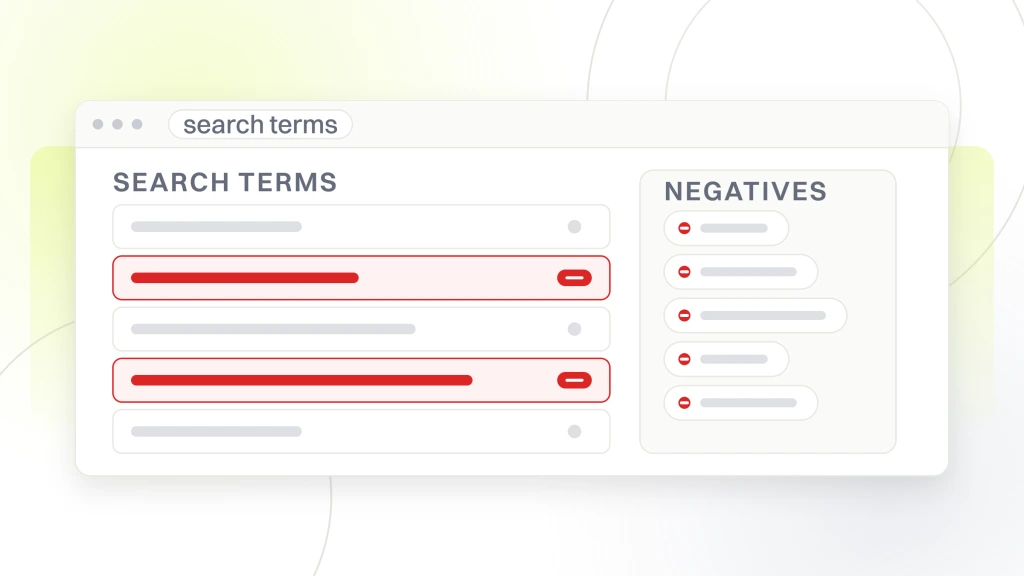
Every engagement we have cleaned up after a competitor had the same three gaps. First, no cost per booked patient reporting. The metric that matters was not tracked, so no one could tell if the account was profitable. Second, broad-match keywords running without weekly negative keyword review. That is how budget disappears into searches that had nothing to do with your specialty. Both gaps trace back to a vendor who priced the account without building the reporting stack to prove out the numbers.
Third gap, no landing page ownership. The agency ran ads to pages the client’s web team owned, and neither side would take responsibility for improving them. Meanwhile the ad quality score sagged because the landing page relevance signals never got tuned. When a vendor does not own the landing page conversation, the account plateaus in month two and never climbs. The healthcare landing pages layer is where paid traffic converts or drops off, and it needs a single owner accountable for the conversion rate.
- No cost per booked patient reporting. The pipeline metric is missing.
- Broad-match without negative keyword discipline. Budget bleeds on irrelevant clicks.
- No landing page ownership. Ad relevance sags because pages do not evolve.
- No creative refresh cadence. Ad copy fatigues after 45 days without new variants.
- No competitor auction insights review. You do not know who you are losing to.
- No HIPAA-compliant tracking documentation. Audit risk is high and portability is zero.
Close these six and the engagement starts looking a lot more like a partnership and less like transactional spend management. Practices that switch from a vendor with these gaps to one without them typically see 30 to 45 percent better cost per booked patient inside a quarter. That is the delta between competent work and mediocre work in this vertical.
Vendor Selection Filters for Healthcare PPC Services Buyers
Vendor selection can burn a full quarter if you rely on RFP responses and sales calls alone. The filters that actually work are boring on purpose. Reference calls with two current clients in your specialty, a technical review of their tracking setup on a live client account (they can share a screen), and a plain-English walk-through of their weekly checklist for account management. If a vendor cannot produce those three artifacts, they are not ready to run patient acquisition spend at scale.
Fair joke from the RFP trenches. The number of decks we have seen that promise “AI-powered bid optimization” without mentioning that the AI is just Google’s Smart Bidding you can turn on yourself with three clicks. A real vendor knows what Smart Bidding does, when to use it, and when to hold back. Vendors selling AI as a differentiator without knowing the underlying mechanism are selling a wrapper on free tools.
Also filter for vendors who publish their pricing on their website. Not everyone will, and that is fine, but agencies that hide pricing entirely usually price to what the buyer looks like they can afford, not to what the work costs. Transparency filters a lot of the noise out of the vendor comparison process. Vendors who share pricing upfront are usually the ones whose scope matches the fee cleanly. That last part is what separates a fair engagement from an expensive one, and it is why we recommend using our PPC Tips for Healthcare as a sanity check on any pitch you receive.
How Redefine Web Delivers Healthcare PPC Services
Redefine Web’s scope covers the full stack. Account architecture, HIPAA-compliant server-side conversion tracking, keyword tier build-out with weekly negative keyword additions, ad copy writing with 30-day refresh cycles, landing page recommendations with our design team available for builds, weekly optimization, monthly strategy calls, and cost-per-booked-patient reporting at every level of the account. Every retainer tier includes the same reporting stack. The difference between tiers is channel breadth and account complexity, not report quality.
Retainers start at $999/mo for a single-location practice on Google Search and climb to $4,500/mo for DSOs and hospital systems. Ad spend is billed separately by the platforms. Every engagement includes ad account ownership by the client, 30-day exit terms, full data portability, and documentation you can hand to any successor vendor. Nothing gets billed as an add-on that should be in the base fee. The scope of work is written in plain English so the practice team can hold us accountable line by line during quarterly reviews. That transparency is intentional, and it is why our retention rate on healthcare PPC services engagements sits above 94 percent year after year across dental, medical, and specialty practice categories.
For evaluation criteria and vendor comparison, our Choosing a Healthcare PPC Agency guide lays out the checklist. For ongoing management, our Healthcare PPC Management covers what a healthy cadence looks like. For the audit method itself, our PPC Audit for Healthcare walks through the exact steps we take on every new account.
Case Study · Pain Cure Clinic Healthcare PPC Services Rebuild
Pain Cure Clinic, a chiropractic and wellness-focused healthcare provider, came to Redefine Web needing a full-scope engagement alongside SEO and content work. Their previous setup had paid ads running to a generic homepage with no condition-specific tracking. Skepticism about chiropractic care and a saturated local market meant every wasted click cost them a booked patient somewhere else. The front desk knew which service lines were profitable. The paid media plan did not reflect that reality.
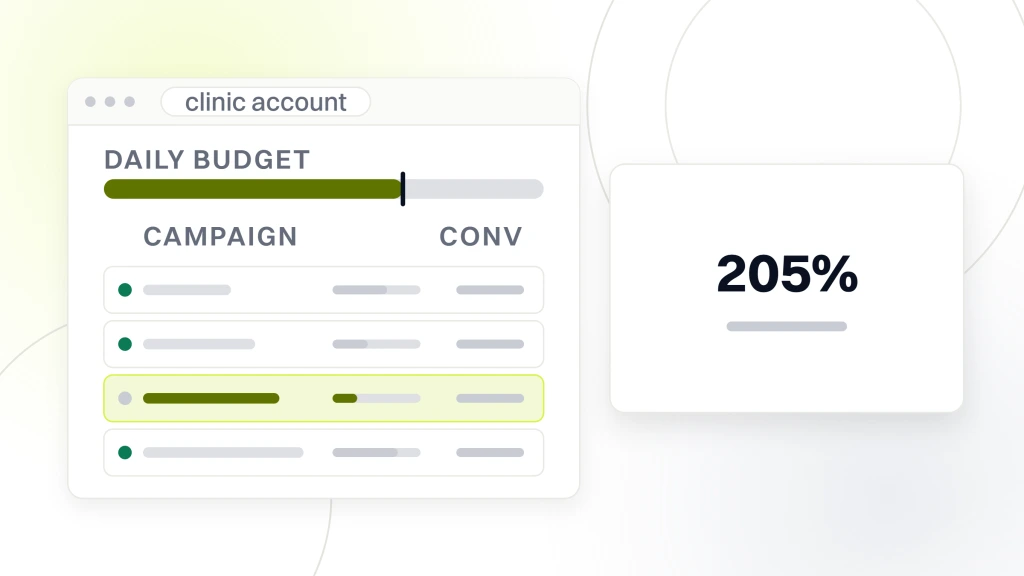
The rebuild rewired the account by condition tier (back pain, sciatica, neck pain), added HIPAA-safe server-side tracking, and paired PPC with a condition-focused content hub so ad landing pages had real relevance signals underneath them. Google Business Profile got fully rebuilt for local dominance. Meta retargeting picked up warm audiences off the content hub. Segmented email automation nurtured every inquiry that did not book on the first visit.
Twelve months of data (2023 to 2024) shows the impact. Patient appointments grew 205 percent. Organic traffic grew 289 percent. Reviews grew 162 percent at a 4.9-star average. That is what full-scope work looks like when the media plan, the tracking, and the content stack all sit under one roof. Half-scoped work produces half-movement. The scope conversation matters more than the fee conversation on every RFP we win or lose.
What Comes After the First 90 Days of Healthcare PPC Services
After the first 90 days, the work shifts from setup and stabilization to scaling and creative iteration. The account architecture is set, the tracking is clean, and Smart Bidding has enough data to work with confidently. That is when the vendor should be pitching expansion tests. New service lines, new geographies, new ad formats, and new creative angles that broaden the account without breaking what already works.
Days 90 to 180 usually include the first Meta paid social pilot for elective procedures, the first YouTube pre-roll pilot for patient education content, the first serious display retargeting pilot for warm audiences, and any Microsoft Ads expansion for Medicare-aged patient populations. Each pilot runs with a defined budget, a defined success threshold, and a defined kill criterion so the account does not drift into “we tried it and it kind of worked.” That discipline is what keeps testing generative instead of expensive.
By day 180, a mature engagement has a stable multi-channel account with clear per-channel return, a rolling creative pipeline, and a quarterly strategy cadence that keeps the account improving instead of plateauing. That is the state every account should reach by month six, and it is the state you should be measuring your vendor against from month one. If your account is not there by then, either the scope is under-priced or the vendor is under-resourced. Both are fixable if you catch them before month nine.