
A PPC audit for healthcare is a 22-check review of a Google Ads or Microsoft Ads account that finds wasted spend, tightens targeting, fixes conversion tracking, and grows patient lead quality inside 60 to 90 minutes. Most healthcare accounts hide 20 to 35% wasted spend in match-type sprawl, generic keywords, wrong geographies, and dayparting misses. This guide gives you the practical version. No 60-tab spreadsheet, no $3,000 invoice.
You’ll get the 22 checks that surface waste in under 2 hours, the exact fields where healthcare accounts burn budget without producing patients, the math for calculating real savings, and the tactics that grow lead quality without a dollar of extra media. A structured review recovers $500 to $8,000 a month on a typical account and drops cost per qualified lead 25 to 40% inside two quarters. Run it in-house or send it to a specialist. Either way, use it as the quarterly rhythm that keeps the numbers honest.
What this guide covers
- Why healthcare accounts drift faster than other verticals
- The 8 sections of a proper end-to-end audit
- 22 checks that run in 90 minutes
- 5 tactic families that grow lead quality after the audit
- Savings math to price the recoverable waste in dollars
- Weekly, monthly, and quarterly management cadence
- A real LifeStance Health case study with the raw numbers
- HIPAA compliance points to document on every review
Why a PPC Audit for Healthcare Beats Every Other Optimization Move
Healthcare Google Ads accounts drift faster than any vertical we work with. Regulatory changes push new keywords in. Seasonal search patterns shift attention. Providers get added and old campaigns keep spending. A quarterly review catches the drift before it costs 6 months of budget. Skip a quarter and the compounding waste catches up fast.
The specific reason healthcare paid search burns more budget than other verticals is the intent gap. Someone searching “chest pain” is not the same buyer as someone searching “chest pain treatment near me.” The account structure has to separate those intents ruthlessly, and most practice accounts don’t. That gap is where 25% of the budget disappears every month without producing a single qualified appointment. A structured audit surfaces the pattern and gives you a fixed cost per fix rather than a rolling monthly bleed.
The other reason is compliance. HIPAA restrictions on retargeting and audience data mean paid programs can’t lean on the same behavioral targeting other industries use to clean up messy accounts. You have to run tighter on Search itself, so the audit surface has to be more disciplined. A quarterly audit that programs actually finish and act on is what keeps costs sane as the compliance rules tighten each year. Without a regular rhythm the account drifts, and the drift compounds every single quarter you skip the review. Skip 2 quarters and cost per lead climbs 30 to 50% on almost every account we inherit.
What a PPC Audit for Healthcare Covers End to End
A proper PPC audit service for healthcare covers 8 sections. Account structure. Keyword health. Match type discipline. Negative keyword coverage. Ad copy compliance. Landing page relevance. Conversion tracking accuracy. Budget allocation across campaigns. Skip any one and the audit misses 15 to 25% of the wasted spend hiding in the account. That is why one-page vendor audits usually miss the real money.
Account structure review
Every service line should have its own campaign. Every service line campaign should have separate ad groups by intent stage (research, comparison, conversion). Every ad group should have 2 to 3 responsive search ads and 8 to 15 tightly-themed keywords. If your account has one giant “General Search” campaign with 400 keywords, the audit’s first recommendation writes itself. Rebuild the structure before you touch a single bid.
Keyword health check
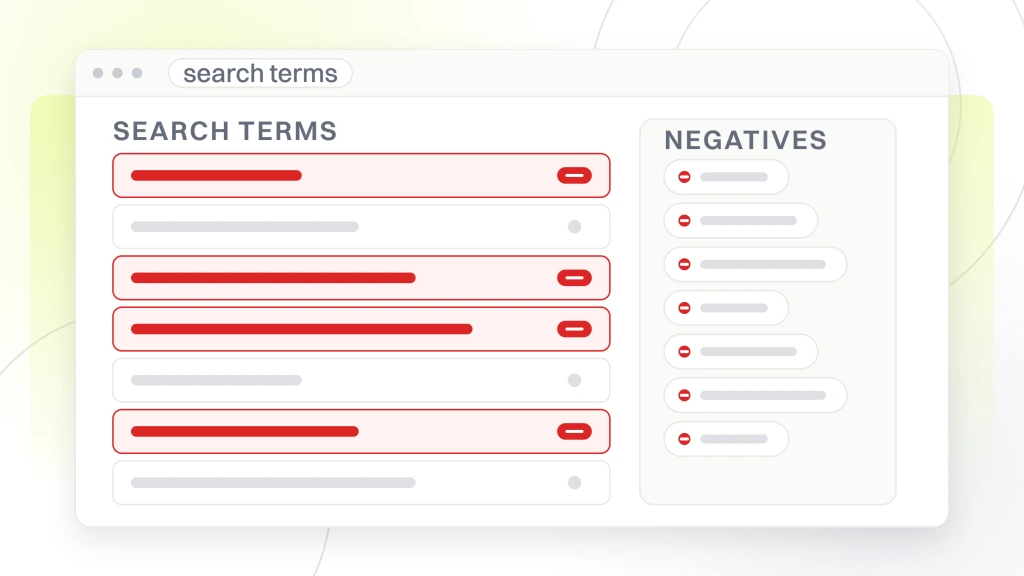
Pull the last 90 days of search terms. Sort by spend descending. Any term over $200 spent with zero conversions is a candidate to negative or reassign. Any term with strong conversions on broad match should get promoted to phrase or exact. Any medical term you’re bidding on that doesn’t match your specialty should get killed immediately. This one review usually recovers 10 to 15% of monthly spend without touching anything else.
Conversion tracking accuracy
Every phone call over 60 seconds should be a tracked conversion. Every form fill should fire a conversion. Every appointment booked online should fire a conversion. If your account is optimizing against “button clicks” or “page visits” as proxy conversions, the whole bid strategy is fighting the wrong metric. Fixing conversion tracking is usually the single most valuable move in any healthcare PPC audit. Do it before you touch anything else on the account.
The 22 Checks Inside a PPC Audit for Healthcare That Run in 90 Minutes
Structure it as a checklist. Every check is either pass, fix now, or investigate. You’ll finish in 90 minutes on a well-tracked account, longer on messy ones. Every account we’ve audited has at least 6 findings on the first pass. Most have 12 to 15. Even accounts run by expensive agencies show up with the same 4 or 5 recurring blind spots you catch inside the first pass. That is not agency laziness. It is the pace of platform change outrunning the review cadence.
- Are conversions tracked for calls over 60 seconds, form fills, and online bookings.
- Are Enhanced Conversions turned on with hashed patient data.
- Are impressions on top target keywords above 40% search share.
- Is average CPC on top keywords within 20% of industry benchmark.
- Are broad match keywords isolated in their own experiment campaign.
- Is the negative keyword list at least 200 items and refreshed monthly.
- Are competitor brand terms excluded from Search when the bid on them is not intentional.
- Are audiences properly configured under HIPAA restrictions.
- Is retargeting only enabled where compliance allows it.
- Is geo-targeting set to People In Location, not Interest.
- Are location bid adjustments used for high-value ZIPs.
- Are dayparting adjustments set for the practice’s actual open hours.
- Is Ad Rank at least average or better on every campaign.
- Are ad extensions (sitelinks, callouts, structured snippets) filled in.
- Is the call extension using a call tracker number for source attribution.
- Are landing pages relevant enough for a Quality Score of 7 or higher.
- Do landing pages load in under 2.5 seconds on mobile.
- Are impression-share losses to budget or rank documented.
- Are the account structure ad group themes matching landing page copy.
- Are Performance Max campaigns isolated from Search (or excluded from brand terms).
- Are seasonal patterns reflected in current bid strategies.
- Are budget pacing alerts set at 90% of daily budget.
Rate each check pass, fix now, or investigate. Any account with more than 6 fix-now items should freeze new spend until the fixes ship live. New budget on a broken account only accelerates the bleed. Fix the leaks, then scale the budget. That order is not negotiable, and it is what separates the practices that grow from the ones that plateau at 60% wasted spend.
Cost-Effective Tactics for Healthcare PPC Advertising After the Audit
The audit finds the waste. The follow-up is where the money comes back. Cost-effective tactics for healthcare PPC advertising fall into 5 families. Each one moves cost per qualified lead 10 to 25% when executed with discipline. Stack 3 of them in one quarter and you cut waste 40% without touching the topline budget. Run all 5 and cost per qualified lead drops in half over 6 months on most accounts.
Tight geo-targeting
People In Location, not People Interested In Location. Radius targeting around each practice location, not broad metro. ZIP-level bid adjustments for the 10 highest-value ZIPs. Exclusion of ZIPs where you consistently see low-quality leads. On multi-location accounts this alone tightens CPA by 15 to 25% inside a month. Practices in dense urban markets see the biggest drop, but suburban practices catch a real grow too.
Match type discipline
Google pushes broad match hard, and broad match burns more budget. Resist. Run 80% of your keyword budget on phrase match with tight negatives. Use exact match on your top 20 converters. Isolate broad match into a controlled experiment campaign with $50 a day capped. Broad match is not the villain, but unchecked broad match on a healthcare account burns 30% of monthly spend. Read Google’s own match type guide before touching anything, then treat their broad match advocacy with healthy skepticism.
Dayparting to match the phones
If your front desk closes at 5 PM and doesn’t check voicemail until 9 AM, you should not be paying premium CPC at 8 PM on a Sunday. Pull the conversion-by-hour report. Adjust bids down 40 to 60% during closed hours. Adjust up 15 to 25% during the 2-hour windows when calls get answered. Same budget, better lead quality. On a $10,000 monthly account this alone frees $1,500 to $2,000 that flows straight into peak-hour impressions.
Landing page tightening
Every ad group should have a landing page whose H1 matches the ad copy H1. Every landing page should have one primary CTA above the fold. Every landing page should show a trust signal (provider photo, credential, insurance accepted) in the first viewport. Skip any of these and Quality Score drops, which raises CPC, which burns the budget faster. Fix in an afternoon.
Bid strategy alignment
Max Clicks burns budget on healthcare accounts. Target CPA works once you have 30+ conversions per campaign per month. Manual CPC still wins on small accounts under $2,000 monthly spend. Match the strategy to the account size and stop letting the platform default you into whatever earns Google the most revenue. Automated bidding gets safer above 60 monthly conversions per campaign. Below that, human hands win.
How to Calculate Healthcare PPC Savings From an Audit
Every practice owner asks the same question after the audit finishes. How to calculate healthcare PPC savings honestly. The math is 4 numbers. Total monthly spend. Percentage of spend on non-converting search terms. Percentage of spend on wrong-geo clicks. Percentage of spend during closed hours. Add those 3 percentages and multiply by monthly spend. That is your recoverable waste. It is usually higher than the practice manager expects.
For example, a Phoenix orthopedic practice spending $8,000 a month with 22% non-converting terms, 8% wrong-geo, and 12% closed-hours spend recovers 42% of budget. That is $3,360 a month, or $40,320 a year, sitting inside the account waiting to be redirected. Redirected into the same channel it usually means 60 to 90 more qualified patient calls a month at the same cost per lead. The math is boring. The result is not.
Real recoverable waste on a healthcare account is almost always higher than management fees. That gap is why the audit pays for itself in the first quarter, every single time we’ve run it on an account over $3,000 monthly spend.
The savings math worksheet
Grab your Google Ads dashboard for the trailing 90 days. Line 1, total spend. Line 2, spend on search terms with zero conversions (pull the search terms report). Line 3, spend on clicks outside your practice’s true service radius. Line 4, spend during hours when the front desk was closed. Sum lines 2 through 4 and divide by line 1. That percentage is your waste rate. Multiply by monthly spend for a real dollar number. Practices at $5,000 monthly spend typically find $1,200 to $2,000 in monthly recoverable waste on the first audit.
Healthcare PPC Management After the Audit
The audit is a snapshot. Healthcare PPC management is the moving picture. Between quarterly audits you need a weekly rhythm on search terms, a monthly rhythm on negatives, and a real-time alert system for conversion tracking failures. Miss any one and the account drifts back to the same waste patterns the audit just cleaned up. The audit gives you the map. Management drives the car.
Weekly cadence
Every Friday morning, 15 minutes, one report. Pull the search terms report for the last 7 days. Sort by spend descending. Negative any term over $150 with zero conversions. Promote any term with 2+ conversions on broad or phrase to exact. That is the weekly rhythm that keeps waste under 10% between audits. Skip 3 weeks and your cost per lead jumps 10 to 15% on almost every account.
Monthly cadence
First Monday of every month, 30 minutes. Review your negative keyword list. Add any new symptom or free-info terms surfaced in the weekly reviews. Check that the negative list length hits 200+ items. Pull Search Impression Share on your top 10 keywords. If any dropped below 40%, investigate budget cap or Ad Rank issues that week. Refresh ad copy on ad groups where CTR dropped more than 15% from trailing 90-day average.
Quarterly cadence
Full 90-minute audit, the 22 checks in this guide. Compare cost per qualified lead against the previous quarter. If it climbed, dig into which of the 5 tactic families slipped. Compare conversion tracking against the practice’s actual appointment schedule for the same window. Rebuild any campaign whose ad groups drift more than 3 checks from the ideal structure. That quarterly beat is what keeps costs sane year over year.
Healthcare Case Study, LifeStance Health at $19 CPL and 3× Patient Volume
LifeStance Health inherited a Georgia Behavioral network with a tight $25 CPL goal, 10+ offices to scale across, and niche specialty needs like TMS therapy. The account had proximity-based targeting driving local traffic, but the local traffic wasn’t translating to scheduled appointments. Specialty services required precise category targeting that the incumbent structure couldn’t deliver. The whole program needed an audit tuned to the mental-health vertical.
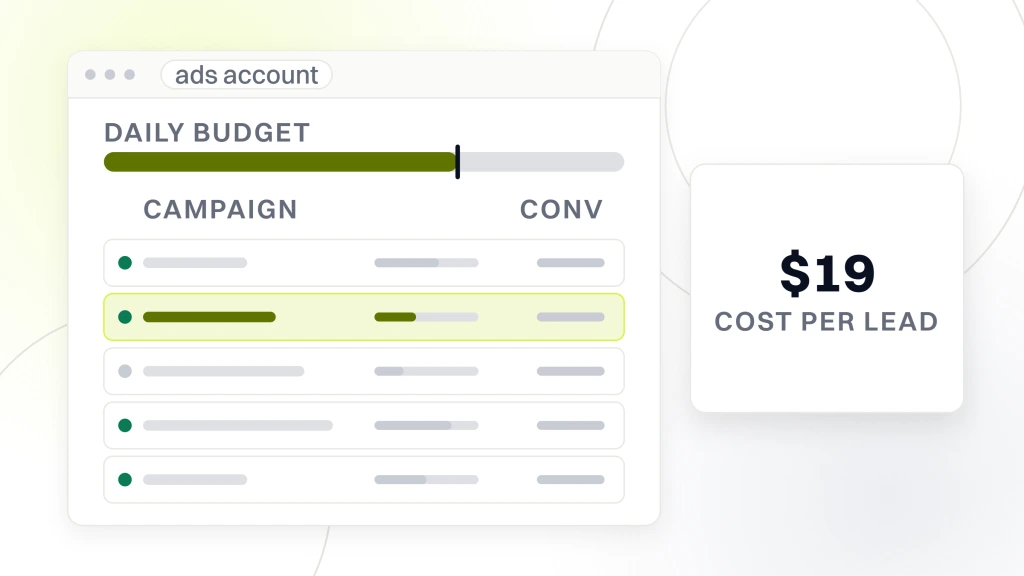
The rebuild used the same 22-check pattern in this guide, layered with hybrid geo plus service targeting, appointment-focused landing pages, GMB integration, and niche specialty scaling. Every service line got its own campaign. Every campaign got 3 ad groups by intent stage. Match types shifted 80% to phrase, exact match on top converters, broad match capped in an experiment campaign. Dayparting matched the front-desk hours across 10+ offices. Landing pages pulled H1 straight from ad copy.
Results. Average CPL landed at $19, well below the $25 target. Patient acquisition volume tripled across 10+ Georgia offices. Impression share hit 100% for TMS therapy, capturing the full niche demand. Reporting shifted to weekly cadence, service-tied. The hybrid PPC plus landing-page strategy became LifeStance’s nationwide framework, repeatable across their national footprint. That is what a real audit rebuild looks like when the follow-through matches the diagnosis.
Common Audit Findings That Repeat on Every Healthcare Account
Across the healthcare PPC audits we run, 5 patterns show up on 90% of accounts. Broad match sprawl eating 25 to 30% of budget. Missing negatives for symptom and free-info searches. Conversion tracking optimizing against page views instead of calls or forms. Dayparting bids running full price during closed hours. Geo-targeting set to Interest instead of People In Location. Fix those 5 and cost per qualified lead drops 25 to 40% inside a single quarter without touching total budget. That drop is not a rare best case. It is the median result on a competent fix.
Match type sprawl
Google’s default keyword match type is broad. Every campaign built with defaults burns budget until someone locks it down. The audit catches this in check number 5. The fix takes 20 minutes. Copy every broad match keyword into a phrase-match equivalent. Move the original into a controlled experiment campaign with a $50 daily cap. Track the delta for 14 days. In every case we’ve run, phrase-match matches or beats broad on cost per qualified lead.
Wrong-geo waste
People Interested In Location is the default. It means someone in Toronto searching “dermatologist Phoenix” for a friend can trigger your ad. Switch to People In Location. That single toggle drops wrong-geo waste from 12% to under 3% on a well-configured account. Combine with radius targeting around each practice location and ZIP-level bid adjustments and you claw back another 5 to 10% of budget.
Closed-hour waste
If your front desk is closed at 8 PM but Google Ads is still bidding full price, every conversion during that window either lands in voicemail or bounces to a competitor by morning. Dayparting is the fix. Bids down 40 to 60% during closed hours. Bids up 15 to 25% in the 2-hour windows when call answer rate is highest. Same total budget. Different mix. Cost per qualified lead drops 10 to 15% inside a month.
HIPAA Compliance Inside a PPC Audit for Healthcare Program
Any healthcare audit has to check compliance separately. HIPAA restricts patient data in remarketing lists, blocks certain conversion tracking pixels on confirmation pages, and limits audience uploads for hashed patient email lists. The audit has to verify each of those points on the account. Skip compliance checks and the account might work fine until a random Google Ads sweep pauses the whole thing. That happens on medical accounts 2 to 3 times a year in our experience.
What HIPAA allows in Google Ads
Standard Google Ads conversion tracking on non-PHI (Protected Health Information) pages is fine. Tracking a form fill on a general contact page is compliant. Tracking a form fill on a confirmation page that displays diagnosis information is not. Enhanced Conversions with hashed patient data can work when configured through the Google Ads API and a signed BAA (Business Associate Agreement) is in place with any third-party tracking tool that touches the data.
What HIPAA blocks in Google Ads
Remarketing lists built from patient interaction with condition-specific pages are off-limits. Customer Match with patient email lists needs the BAA and the API path, not the manual upload flow. Facebook and Instagram tracking on healthcare condition pages runs riskier than Google, and Meta’s BAA coverage is thinner. If the audit finds Meta pixel on a condition-specific patient page, that is a fix-now flag on the compliance sheet.
Compliance findings to document
Every audit ends with a compliance sheet. Which pages fire tracking pixels. Whether the pixels touch PHI. Whether a BAA covers every third-party tool that receives the data. Whether audiences are built from safe pages only. Whether Enhanced Conversions is configured through the API with hashed data. Every yes-no gets documented so the practice has an auditable trail if a compliance review lands.
When to Bring in a PPC Audit for Healthcare Specialist
Do it yourself if the account is under $3,000 monthly spend and the practice manager has 90 minutes plus Google Ads editor access. The 22-check framework is runnable in-house. Bring in a specialist when the account spends over $5,000 monthly, when compliance risk is present, when the practice runs multiple locations, or when the last audit was more than 6 months ago and the account has drifted badly. A specialist typically pays for itself inside the first quarter on any account over $5,000 monthly spend.
Multi-specialty groups, hospital systems, and DSO-style practice networks almost always need specialist help. The compliance surface is wider, the campaign count is higher, and the reporting cadence has to serve multiple stakeholders. On those accounts the audit is one deliverable inside a longer engagement. For solo practices and small groups, the in-house version of this guide is the honest starting point.
If you inherit an account from another agency, run the audit in the first 14 days of the engagement. Do not wait for month 2. The findings become your baseline, and the previous agency’s pattern shows up clearly against the checklist. That baseline protects the new engagement from getting blamed for waste that was already baked in. Every serious agency does this. It is not a trust issue. It is a documentation habit.
Get Your PPC Audit for Healthcare Started This Week
Book 90 minutes on your calendar. Pull up Google Ads. Open the 22 checks. Rate each pass, fix now, or investigate. Sum the fix-now items and their estimated waste percentage. Multiply by monthly spend. That number is what you leave on the table every month if the audit doesn’t get done. On a $5,000 monthly account it is usually $1,000 to $1,750. On a $20,000 account it is $4,000 to $8,000. The audit takes 90 minutes. The recovered spend runs quarterly for as long as the account exists.
The Redefine Web audit for healthcare PPC accounts is free. If you want us to manage the account and run the quarterly audits after that, we quote a fixed monthly price based on what the first report finds. If you’d rather stay in-house, the 22-check framework is yours. Rerun it every 90 days. Track cost per qualified lead against the previous quarter. Compare conversion tracking against your actual appointment schedule. If the numbers stay tight, the audit is working. If they drift, it is time for another pass. See our healthcare PPC agency evaluation guide and our campaign structure and budgeting guide for the next steps after the audit.