
Managed hosting for pet brands runs quietly behind the store, and it decides whether a paid ad dollar turns into a checkout or a bounce. A pet DTC brand on shaky managed hosting for pet brands spending $200 a day on Meta ads with a Shopify store that takes 6 seconds to load on mobile loses roughly 30% of paid clicks before the PDP even paints. That waste burns a third of the paid budget with zero chance of conversion. Fix the hosting stack behind the store, drop the load time to 1.8 seconds, and the same ad dollar produces meaningfully more revenue with no other changes to the ad account. Pet buyers convert on phones, in kitchens, at the school gate, on the sofa with the pet on their lap. Any friction on that first paint costs orders, and slow orders cost repeat orders, because the second-purchase rate on pet food subscriptions correlates with a fast, calm first checkout. This guide covers the operator view of managed hosting for pet brands in 2026. Platform choice across Shopify, WooCommerce, and headless. Caching, CDN, and database tuning. Uptime SLAs that actually pay out. Disaster recovery. Third party integrations that decide launch day. Real cases from a Surrey pet superstore that migrated 10,000 SKUs off Drupal, a Singapore puppy-and-grooming shop that consolidated retail and services on one stack, and a UK independent retail case where subscription checkout time dropped by more than half. See our pet products marketing hub for the marketing side; this piece is the infrastructure layer.
Why pet brand managed hosting matters more than most categories
Pet ecommerce needs infrastructure discipline more than most categories because pet buyers convert on mobile at higher rates than most consumer verticals and abandon slow sites faster. Pet parents shop for supplies with the pet on their lap. They book grooming during school pickup. They reorder food while waiting for coffee. Each context has the buyer on mobile with limited patience and mixed signal. A site that takes 5 seconds to render loses the sale to Amazon in the first swipe. Managed hosting for pet brands has to compress that first paint under 2 seconds on 4G, or the paid dollar underperforms. Pet ecommerce also runs on higher SKU counts than most categories, typically 2,000 to 10,000 SKUs across food, treats, toys, health, grooming, and accessories. That density is exactly why managed hosting for pet brands matters. It stresses the database in ways a 200-SKU fashion boutique never touches, and unoptimized databases show up as slow category pages, laggy product search, and cart timeouts during traffic spikes.
What managed hosting for pet brands actually covers
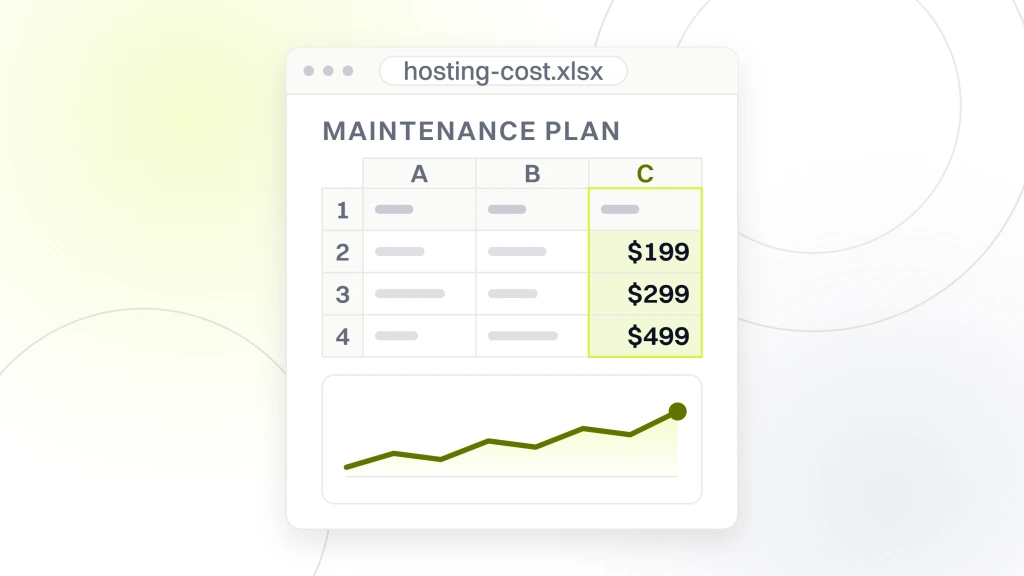
The term covers a setup where the provider owns server infrastructure, security patches, backup schedule, caching layer, CDN configuration, database tuning, and performance monitoring, so the brand’s team can focus on product, marketing, and customer service. Unmanaged hosting means the brand pays for a bare server and handles all of that themselves. Most pet DTC brands under $20M ARR do not carry the engineering headcount to run unmanaged hosting well, which is why managed hosting is the default. The premium of proper managed hosting for pet brands over unmanaged is real, but the operational time savings and uptime reliability pay it back within a quarter for any brand doing more than $50k/month in revenue. Redefine Web bundles hosting into our maintenance plans at $199, $299, and $499 per month, so pet operators do not pay a separate host bill on top of a separate maintenance retainer.
Server infrastructure and auto scaling
A pet brand’s server infrastructure should include auto scaling that adds capacity during traffic spikes without operator intervention. Pet brands running Meta prospecting campaigns can see 3x to 10x normal traffic land inside a 4 hour window when a creative pops. Servers that cannot auto scale hit CPU ceiling, response times climb, and conversion rate collapses at the exact moment the paid dollar is producing the most opportunity. Auto scaling absorbs the wave. The premium pays back the first time a viral creative lands, because the site stays fast during the window that would otherwise waste the paid spike. Passion Built saw this pattern during a launch push and needed instant headroom on the checkout path, not next-day capacity tickets.
Caching layer configuration
The caching layer for a pet ecommerce site should include full-page caching for category and PDP pages, object caching for database queries, and CDN edge caching for static assets. Pet ecommerce sites with proper caching hit sub-2-second load times on 4G mobile. Sites without caching sit at 5 to 8 seconds. That load-time delta drives a 20% to 40% conversion rate difference on the same traffic. A provider with pet ecommerce experience configures caching aggressively while excluding the dynamic elements (cart, checkout, subscription flows) that must never cache. Configuration errors on cache boundaries cause weird bugs like the wrong customer’s cart appearing at checkout, which is why the provider’s platform maturity matters more than the raw megabytes of RAM in the plan. Reference the WP Rocket team’s write-ups at wp-rocket.me/blog for the WordPress side of the caching stack.
Security and compliance baseline
The security baseline for a pet ecommerce host should include automated patches, DDoS protection, a web application firewall, PCI DSS scope reduction for payment handling, and daily backups with off-site storage. Pet brands handle credit card data through Stripe, Shopify Payments, or Braintree, so most card data never touches the site, but the checkout page still passes tokens through a page the host serves. PCI DSS scope reduction shrinks the audit surface and protects the brand from liability if a breach happens upstream. Managed hosting providers with pet ecommerce clients typically maintain PCI DSS Level 1 at the infrastructure layer, which meaningfully reduces the brand’s compliance overhead. Current requirements live at pcisecuritystandards.org.
Platform choice inside managed hosting for pet brands
Platform choice for a pet ecommerce brand falls between Shopify Plus, WooCommerce on managed WordPress, headless commerce with Next.js or similar, and custom builds on Magento or BigCommerce. Each platform maps to a specific brand profile. Small pet DTC brands under $5M ARR usually pick Shopify. Mid market brands from $5M to $20M often stay on Shopify Plus or move to headless. Enterprise brands over $20M sometimes justify custom builds. Legacy pet retailers moving off older stacks (Drupal, custom PHP) usually migrate to managed WordPress with WooCommerce or to Shopify depending on operational complexity. The Surrey pet superstore case in this guide, published on the Redefine Web site as Pet Shop · Independent Retail · UK, is a Drupal-to-managed-WordPress migration with 10,000 SKUs and real-time EPOS integration live at launch. See our pet website hosting for DTC brands and grooming salons guide for the platform-by-platform comparison at deeper level, and the managed hosting for food and beverage websites comparison for the adjacent category with similar SKU density and subscription patterns.
Shopify and Shopify Plus for pet brands
Shopify and Shopify Plus for pet brands work well up to about $20M ARR because the platform handles ecommerce basics without operational overhead. Managed hosting is included in the platform fee. Payment processing integrates cleanly. Subscription apps like Recharge and Bold handle the pet consumable subscription flow. The tradeoff is customization limits. Custom checkout flows require Plus. Custom theme work is bounded by Liquid. Pet brands with complex catalog needs (bulk pricing, wholesale, custom configurators) sometimes hit the customization ceiling on Shopify and move to headless as a result. Mission Pet Health and Pet Insurance Australia are useful references for how pet-adjacent brands operate on Shopify at scale with content-heavy funnels feeding a lean checkout.
WooCommerce on managed WordPress hosting
WooCommerce on managed WordPress hosting works well for pet brands with content-heavy sites where the blog and educational content drive real organic traffic. Managed WordPress providers such as WP Engine, Kinsta, and SiteGround handle the hosting complexity while WooCommerce handles the ecommerce layer. The customization ceiling is meaningfully higher than Shopify because the platform is open source and the plugin ecosystem is deep. Operational overhead is also higher because WooCommerce requires active maintenance. Pet brands with a technical partner or in-house engineer often prefer WooCommerce for the flexibility; pet brands without technical resources usually pick Shopify for the operational simplicity. Redefine Web’s maintenance plans absorb the operational overhead for WooCommerce brands who want the flexibility without hiring an in-house engineer.
Headless commerce for larger pet brands
Headless commerce with a decoupled front end on Next.js or Remix and a commerce backend (Shopify, Commerce Layer, BigCommerce) suits pet brands over $10M ARR where content and commerce are both heavy and the marketing team wants full control of the front end. The performance ceiling on headless is higher than either monolithic Shopify or WooCommerce, with sub-1-second LCP achievable on well-built implementations. The cost is engineering time. A headless build costs 3x to 5x a themed Shopify build up front and requires a front-end engineer on retainer. Pet brands should not go headless before they have proven product-market fit and can absorb the engineering cost.
Performance benchmarks that separate a good host from a bad one
Pet ecommerce sites should hit specific numbers on standard tests. Largest Contentful Paint under 2.5 seconds on 4G mobile. Time to First Byte under 400 milliseconds from a US or UK origin. Cumulative Layout Shift under 0.1. Total Blocking Time under 200 milliseconds. Category pages with 60+ products should render in under 2 seconds. PDPs with 12+ images should render the hero image and add-to-cart button in under 1.5 seconds. If a hosting provider cannot hit those numbers on a properly built pet ecommerce site, the provider is the problem, not the theme. Google’s Core Web Vitals documentation at web.dev/vitals/ covers the current thresholds and testing methodology, and third party lab tests at gtmetrix.com/reports give useful before-and-after evidence when a hosting change is on the table.
Uptime SLA economics for pet ecommerce
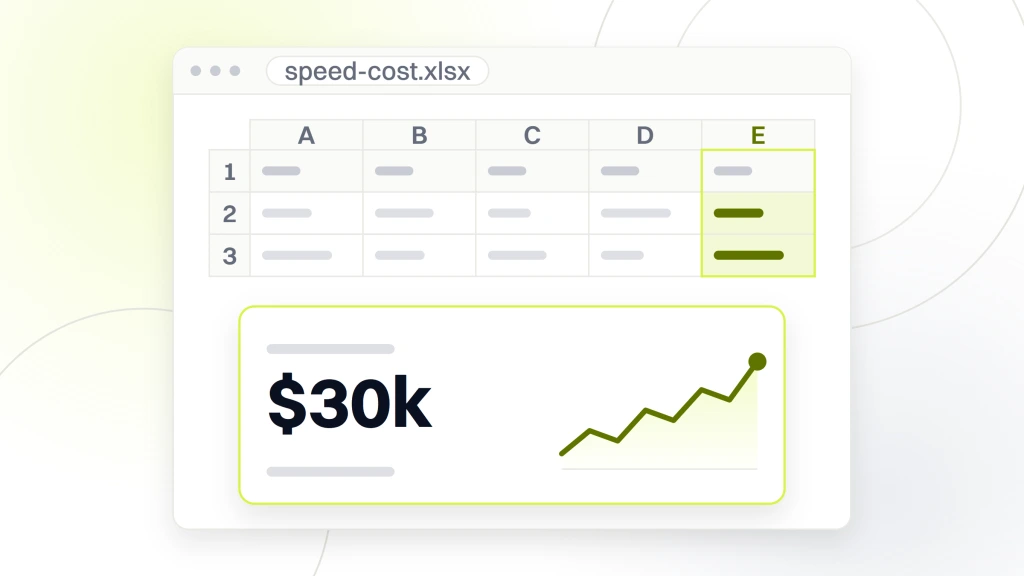
Uptime SLAs inside managed hosting for pet brands matter more for pet ecommerce than most categories because pet subscription renewals and paid ad landing pages cannot afford to be down. A 99.9% SLA means about 43 minutes of downtime per month, and that is the commitment on every plan, so the number is not what separates one tier from the next. What separates them is what happens inside those 43 minutes. A written SLA with service credits, a 30-minute response on a critical incident, and a tested restore path are what keep an outage off an ecommerce site pushing $200/day in paid traffic. Pet brands doing more than $100k/month in revenue should buy that response depth rather than a bigger uptime number. Below $50k/month, the base plan is fine. The Pet Shop · Independent Retail · UK case study on the Redefine Web site shows how the migration to managed WordPress eliminated the mid-day cart-timeout complaints that had been draining ticket volume on the old Drupal stack.
Disaster recovery and backup strategy for pet DTC
Disaster recovery under managed hosting for pet brands should include daily automated backups with off-site storage, tested restore procedures, and a documented Recovery Time Objective and Recovery Point Objective. Most managed hosts include daily backups by default. Fewer include a tested restore procedure, and fewer still document the RTO and RPO. Pet brands should ask the provider directly. What is your RTO on a full-site restore? What is your RPO on the most recent backup? When was the last time you actually restored a client site from backup as a drill, not an incident? Providers that hedge on those questions are selling backups they have never restored, which is not a backup at all. Boogie Board was a useful reference case internally on how a small brand can validate a restore path without burning a live weekend.
- Daily full-site backups retained for 30 days
- Off-site backup storage in a separate geographic region
- Tested restore drill on a staging environment quarterly
- Point-in-time restore for the database at least hourly
- Media library backup separate from the database backup
- Documented RTO under 4 hours for a full-site restore
- Documented RPO under 1 hour for the transactional database
Third party integrations that decide launch day
Pet ecommerce integrations are more complex than most categories because pet retailers often run point-of-sale hardware in a physical store, groomers run booking software, and subscription brands run recurring billing. The managed hosting layer has to accommodate all three without breaking. Real-time EPOS integration for a pet superstore that ships from store and warehouse both. Booking software integration for a pet salon that takes appointments online and in-store. Recurring billing for a subscription brand on Recharge, Bold, or Stripe Billing. Each integration adds surface area on the security and performance side, and each has failure modes that the hosting provider needs to know about before launch. The Pet Shop · Puppies + Grooming · Singapore case study on the site is a useful reference for how retail plus services plus subscriptions can all live on one managed stack when the integrations are scoped tight.
Cost benchmarks for managed hosting on pet ecommerce
Cost benchmarks for managed hosting for pet brands depend on traffic, revenue, and platform. A pet DTC brand doing $50k/month on Shopify pays $299/month for Shopify plus $79/month for a subscription app plus a few smaller apps, for a hosting-plus-platform cost of about $500/month. A pet brand doing $500k/month on Shopify Plus pays $2,000/month for the platform plus app fees for a hosting-plus-platform cost around $3,500/month. A pet brand on WooCommerce with a managed WordPress host pays $200 to $800/month for the host plus $200 to $500/month for the maintenance retainer plus plugin licenses. Redefine Web’s maintenance plans at $199, $299, and $499/month bundle the hosting, updates, backups, and security into a single line item, which is how most pet DTC brands under $2M ARR should structure the spend.
Migration steps for moving a pet brand to managed hosting
Moving a pet brand from a lesser host to managed hosting for pet brands or an aging platform to managed hosting runs on a repeatable pattern. Audit the current stack. Inventory integrations, plugins, and custom code. Map the URL structure and 301 redirects. Stage the new site on the managed host with a full copy of production. Run performance benchmarks against the staged site. Run integration tests against payment, shipping, and inventory. Cut over during a low-traffic window with DNS TTL prepared. Monitor for 72 hours with the old stack still online as a rollback path. That last step is the one most agencies skip and the one that saves the launch when a surprise integration fails at 2am. See our website maintenance for pet brands guide for what the ongoing retainer covers after migration completes, and the managed hosting for fashion brands provider comparison for the head-to-head evaluation grid we use during host selection.
When to pick a specialized pet ecommerce partner
Pet brands should pick a specialized partner when the operational cost of running the stack internally exceeds the retainer cost, when a viral moment lands and the current host cannot absorb it, when a platform migration is on the table, or when the site is losing revenue to a slow checkout that the current team cannot diagnose. Redefine Web’s website maintenance plans bundle managed hosting, security patching, performance monitoring, and content updates into a single monthly line item so pet operators can budget cleanly. The Pet Shop · Independent Retail · UK case and the Mission Pet Health case are the clearest examples of what the ongoing partnership looks like in practice. For pet brand teams still building the retail side, our pet business web design for subscription DTC brands guide covers the site build that has to sit on top of the managed hosting layer covered here, and the ecommerce custom web design and development guide covers the full build workflow when a brand outgrows a standard theme. Additional detail on the Surrey superstore migration lives in the pet shop superstore Surrey case, and pet operators comparing retainer structures should see the pet products marketing retainer page.
What to check before signing a managed hosting contract
- Auto scaling behavior during a 5x traffic spike, documented
- Full-page caching support with excludes for cart and checkout
- Object caching support and the cache backend used
- CDN included or bring-your-own, with the PoP list published
- Uptime SLA with real payout terms, not just a credit
- Backup schedule, off-site storage, and last restore drill date
- PCI DSS scope reduction confirmed at the infrastructure layer
- Support response time on a Sev-1 during a paid ad push
What the right host does not do
The right managed hosting for pet brands does not sell you a page builder, does not push a proprietary theme, and does not lock you into a stack that only they support. Portability matters. A host that owns your DNS, your files, your backups, and your admin credentials to the point where migrating away takes 6 weeks is a host that will raise prices in year two knowing you cannot leave. Every managed hosting relationship should include a documented off-boarding path so the brand can move if the service degrades. Redefine Web’s maintenance retainers document the off-boarding path in the contract, because a partnership only works when both sides can walk.
Managed hosting for pet brands is not the flashy line item on the marketing budget, and it never will be. It is the layer that decides whether the flashy line items actually convert. Get it right, and the paid ads, the SEO, the email flows, and the subscription retention all compound on a fast, stable base. Get it wrong, and every other line item underperforms its potential. See our website maintenance page for how Redefine Web bundles hosting, monitoring, updates, and support into a single retainer that pet DTC operators can budget against.