
A DTC apparel founder we onboarded last spring opened the first meeting with a spreadsheet showing a $340,000 monthly ad budget split across nine channels and a blended cost per order climbing 22% quarter over quarter. She asked which channel to kill. The right answer was none of them. The problem was a marketing plan built as nine parallel tactics with no funnel logic, no shared KPI stack, and no budget split that mapped to where actual buyers spent attention. Marketing for fashion brands only compounds when acquisition, brand, and retention run as one funnel with one budget rulebook, one measurement layer, and one Monday review meeting that stays honest about what worked and what did not.
This guide walks the working version of the plan our pod runs for DTC apparel and accessories labels between $80,000 and $2 million monthly. You’ll see the five funnel stages, the budget split by revenue band, the channel mix that produces stable growth, the retention math that decides margin, the four-stream attribution stack that stays honest, and the weekly review cadence that stops a plan from drifting into busy work.
What marketing for fashion brands really means in 2026
Marketing for fashion brands is a full funnel plan with budget rules and a shared measurement layer a founder can read on Monday morning in 40 minutes flat. Every dollar of paid spend, every creator kit, every email flow, and every landing page rolls up to one growth number the pod defends together at the review.
Most fashion programs under $2 million monthly run as three separate teams stapled to the same P&L line. Paid media buys traffic. Content produces posts. Retention sends emails. The three teams report on their own dashboards, use their own numbers, and argue about attribution at every quarterly review. That fractured setup is why 62% of DTC apparel brands under $150,000 monthly report marketing as busy but not measurable, and it’s the first thing our team fixes on any new engagement.
The three layers that add up to a program
A working plan runs on three layers. Acquisition covers paid social, paid search, creator seeding, and search-driven organic. Brand covers editorial content, PR, collabs, and the campaign calendar our fashion marketing campaigns piece lays out in more depth. Retention covers email, SMS, loyalty, resale, and community programming. Each layer has a dedicated KPI board, budget line, and review cadence. Programs that skip any single layer plateau inside two quarters, so the compounding customer base never forms.
The founder decision the plan protects
The plan protects the founder from the single most common mistake at the $150,000 to $600,000 monthly stage. Adding a new channel every time the current one softens. A DTC apparel brand that added TikTok in June, Reddit in July, and Pinterest in August without killing anything is the archetype we see fail every quarter. The plan puts a rule in writing. New channels enter through a 90-day pilot with a hard kill date, a named owner, and a revenue target the founder signs on day one. That single discipline saves a mid-market brand $80,000 to $220,000 per year in wasted software and creative production cost.
For founders scoping partners rather than tactics, our guide to evaluating fashion marketing companies covers the scoring rubric, red flags, and reference call playbook that separates a working agency from a slick reel.
For the ranked shortlist by tier, pod size, and retainer band, see our roundup of the top fashion marketing agencies worth a discovery call for DTC apparel brands.
For the retention layer that sits alongside the tactical work covered here, see our guide to fashion email marketing flows and campaign cadence for DTC apparel brands.
The 5 funnel stages every plan has to fund
Fashion buyers move through five funnel stages the plan has to name, fund, and measure. Awareness. Consideration. First purchase. Repeat purchase. Advocacy. Each stage carries a distinct creative angle, a distinct KPI, and a distinct budget share. Programs that treat the funnel as a single line item over-invest at the top and under-invest at the bottom, which is how a $500,000 monthly ad budget still produces a $180,000 revenue quarter with a thin repeat rate at day 90.
What each stage measures
Awareness measures reach, brand search growth on Google Trends, and unaided recall on a post-purchase survey. Consideration measures site sessions from paid social, add-to-cart rate, and email list gain. First purchase measures cost per order, day 7 return on ad spend, and gross margin per order. Repeat purchase measures 30-day repeat rate, 90-day repeat rate, and customer lifetime value at day 180. Advocacy measures referral revenue, tagged organic mentions, and creator organic pickup outside paid seeding. Founders who track all five stages get honest quarterly reviews. Founders who track only cost per order at stage three get quarterly reviews that argue about the same three numbers for two hours and change nothing.
Where the budget splits
A working funnel budget for a mid-market DTC apparel brand splits 25% to awareness, 20% to consideration, 30% to first purchase, 20% to repeat, and 5% to advocacy. Smaller brands under $80,000 monthly weight harder toward first purchase (up to 45%) so they build cash. Scaled brands above $600,000 monthly weight harder toward repeat and advocacy (up to 35% combined) once the compounding kicks in. Locking a single split for the whole year leaves 10 to 20% efficiency on the table by December.
Budget split for marketing for fashion brands by revenue band
Every plan starts with a documented budget split across five channel buckets that carry DTC apparel revenue. Paid social. Paid search and Shopping. Creator seeding and paid collaborations. Email and SMS operations. Site merchandising and creative production. The split shifts by revenue band, season, and campaign archetype, and the pod revises it every four weeks against the last two campaign cycles so the paid social algorithm keeps its learning phase intact on Meta.
| Revenue band | Paid social | Paid search | Creator | Email and SMS | Site and creative |
|---|---|---|---|---|---|
| Under $80K monthly | 35% | 10% | 25% | 15% | 15% |
| $80K to $250K monthly | 45% | 15% | 15% | 10% | 15% |
| $250K to $600K monthly | 45% | 20% | 15% | 10% | 10% |
| $600K to $1.5M monthly | 40% | 25% | 15% | 12% | 8% |
| Above $1.5M monthly | 35% | 28% | 15% | 15% | 7% |
The split above is the starting point, not the answer. A DTC apparel brand doing $180,000 monthly with 70% gross margin and a strong founder story often runs heavier on creator (up to 25%) and lighter on paid search (down to 8%) once the brand story does the qualifying work paid search would otherwise handle. A brand doing the same revenue with 45% gross margin and no story runs harder on paid search once the buyer knows what she wants and shops on price. Founders who copy a competitor’s split without checking margin and story fit leave 15 to 30% efficiency on the table inside two quarters. The pod running the plan revises the split at the four-week review with 5 to 10 percentage-point shifts between buckets, never more, so the paid social algorithm keeps its learning phase intact on Meta.
Acquisition inside marketing for fashion brands
Acquisition is the top of the funnel and the layer most fashion programs over-rotate around. Meta and TikTok carry the paid social side. Google Shopping and branded search carry the paid search side. Creator seeding carries the earned side. Search-driven organic carries the free traffic side. Together the four sub-layers drive 60 to 75% of first-order revenue on an apparel year.
Paid social discipline
Paid social wins on creative velocity, not budget. A DTC apparel brand producing 6 to 12 fresh creative variants weekly across static, Reel, and TikTok formats produces 30 to 60% lower cost per order than the same brand producing 2 to 3 variants weekly on the same budget. Fashion audiences fatigue creative inside 5 to 9 days on the same face and product angle, so the retainer has to be structured to feed that fatigue rate rather than fight it. Meta’s creative best practices reference is the source founders should read before scoping quarterly shoot volume.
Paid search and Shopping honesty
Paid search on apparel splits into branded and non-branded. Branded campaigns protect the brand name from competitor bidding and typically deliver a 6 to 12 times return on ad spend. Non-branded Shopping campaigns test category and product-level search terms with return on ad spend in the 2 to 4 range. Founders who count only the branded number as paid search performance overstate the channel by 200 to 400%. Non-branded Shopping is the honest test of whether the product wins on search, and the number that decides whether paid search deserves 15 or 25% of the budget.
Brand work as the middle layer
Brand work is the middle layer most fashion programs underfund and then blame paid social for. Editorial content, PR, collabs, and the campaign calendar carry the story that qualifies buyers before they ever hit a paid social ad. Skipping brand work does not save budget. It shifts the cost to paid acquisition, which then has to work harder against a colder audience with zero story context and thinner return on ad spend for every dollar of prospecting.
The editorial cadence that works
A working editorial cadence publishes one long-form piece per month (founder POV, factory tour, sustainability commitment, styling guide), one short-form piece per week (product story, model spotlight, styling tip), and one email per week (news, drop preview, community share). Fashion programs publishing less than half that volume see brand search stall inside two quarters. Programs publishing more than double it burn team hours without a proportional gain in brand search or organic revenue. The steady cadence is what compounds. The what is fashion marketing primer covers how the editorial layer plugs into the wider channel mix.
Collab math worth funding
Brand collabs pair the label with a creator, retailer, or adjacent brand to borrow audience and creative angle. A working collab program runs 2 to 4 collabs per year for a brand between $2 million and $10 million annual revenue, each with a 30 to 40% revenue split for the partner, a licensing fee floor of $8,000 to $20,000, and a signed contract before the shoot day. Collabs deliver 10 to 18% of first-order revenue on a healthy fashion year and grow the email list 12 to 25% per launch, which compounds into retention on the next drop.
Retention inside marketing for fashion brands
Retention is the layer that decides whether a fashion program hits margin or grinds through paid acquisition to break even. A DTC apparel brand with a 30% repeat purchase rate at day 90 runs 20 to 35% more contribution margin per dollar of blended spend than the same brand at 15%. Retention isn’t one channel. It’s a stack of email, SMS, loyalty, resale, and community programming that runs on a fixed monthly calendar.
Email and SMS as the core
Email drives 25 to 35% of DTC apparel revenue once the flow set is complete. Welcome, browse abandonment, cart abandonment, post-purchase, replenishment, VIP, and win-back are the seven flows every brand needs live inside the first 90 days. SMS adds another 8 to 15% of revenue at a 5 to 12% list opt-in rate. Klaviyo and Attentive dominate the DTC apparel tool stack for a reason. The two platforms handle 90% of the flow logic without custom development.
Retention as a budget line
Every DTC apparel brand should carve retention into a separate P&L line with a named owner, not roll it under paid media or under brand. The right split for a growing brand runs 55 to 65% of marketing spend to acquisition and 35 to 45% to retention. Brands with the reverse split (85% acquisition, 15% retention) plateau at their current revenue band inside 18 months, so they never build the compounding customer base the model needs. Fixing that split is worth 15 to 25% revenue growth in the following year without any new channel or creative spend.
The channel mix that carries the funnel
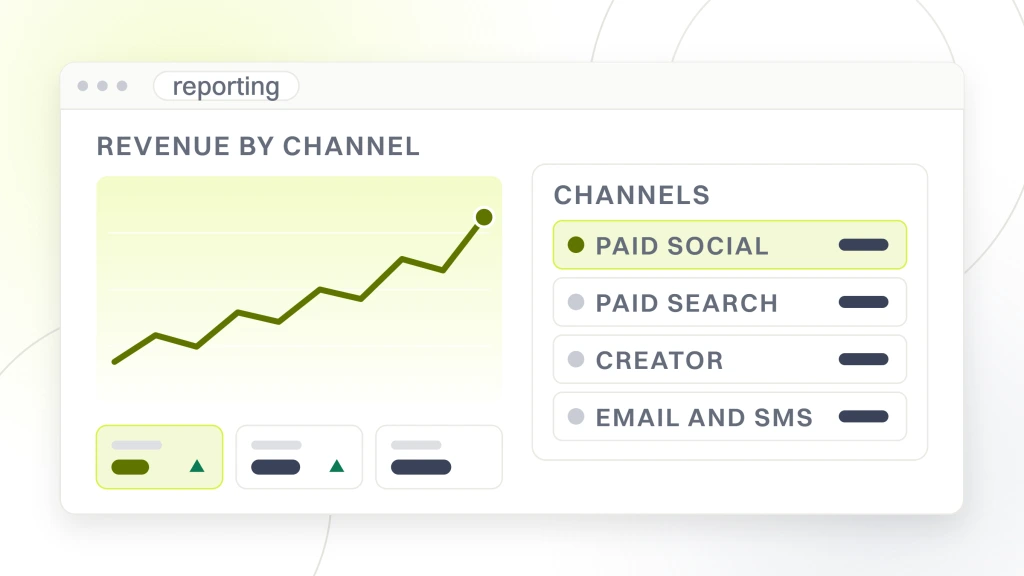
Channel mix is the tactical rollup of the funnel logic and the budget rulebook into a named tool stack. Meta and TikTok carry paid social. Google Shopping and branded search carry paid search. Klaviyo and Attentive carry email and SMS. Trove and Recurate carry branded resale. Bambuser and Firework carry live shopping. A working mix picks two to four platforms per layer, funds them fully, and refuses to spread the budget thinner in search of an edge that doesn’t exist on a seven-channel stack at $180,000 monthly.
The mix by revenue band
A pre-$80,000 monthly brand runs Meta plus one Google campaign, one Klaviyo flow set, a creator roster of 6 to 10, and one Shopify theme. A $80,000 to $250,000 brand adds TikTok Shop, a full Google Shopping feed, Attentive SMS, and a creator roster of 15 to 25. A $250,000 to $600,000 brand adds Pinterest for accessories categories, branded resale on one product line, and media mix modeling on a quarterly cadence. Above $600,000, live shopping enters as a retention play and community programming as the advocacy anchor. Founders who try to run all seven layers at $80,000 monthly produce thin execution across every one of them, which is the failure mode we see most often at that stage. The apparel fashion marketing hub covers how the wider service stack maps to each revenue band.
When to add a channel and when to kill one
A new channel enters through a 90-day pilot with a hard kill date and a revenue target the founder signs on day one. If the pilot hits 60% of the target inside 90 days, the channel gets a full budget line for the next quarter. If it hits less than 40%, the channel gets killed and the budget goes back to the winning channels. Programs that let pilots run past 90 days without a kill decision produce the cluttered stacks that eat 20 to 30% of the marketing budget on channels that never earn their line. That single discipline is what separates the fashion brands our team scales past $500,000 monthly from the ones that plateau at $180,000.
Benchmarks that keep the plan honest
Benchmarks make the plan honest and the review meeting shorter. A DTC apparel brand should read its own numbers against the industry median every quarter and act on the gaps that show up in a specific direction. Cost per order. Return on ad spend. Repeat purchase rate. Email revenue share. Return rate on apparel orders. Each has an honest median for the revenue band, and the numbers change slowly year over year, which is why a founder can plan the next quarter against them with confidence rather than guessing.
The numbers every fashion founder should know
- Blended cost per order sits at $28 to $46 for brands under $250,000 monthly, $22 to $38 for $250,000 to $600,000, $18 to $32 above $600,000.
- Meta return on ad spend sits at 2.4 to 3.6 for cold prospecting on apparel, 5 to 9 for retargeting, 8 to 14 for branded.
- Day 90 repeat purchase rate sits at 12 to 22% for launch-year brands, 22 to 32% for growth year, 32 to 45% for scaled brands with a working retention stack.
- Email drives 25 to 35% of revenue once the seven core flows are live and the list stays above 8% monthly gain.
- Return rate on womenswear apparel holds at 22 to 30%, menswear at 12 to 18%, accessories at 6 to 10%.
- Gross margin on DTC apparel sits at 55 to 72% depending on category, sourcing, and price ladder.
- Discount depth on Black Friday averages 32 to 45% across DTC apparel programs, with premium brands holding at 20 to 30%.
A founder who reads a monthly dashboard against these benchmarks catches the drift inside 30 days and adjusts the plan before the quarter closes. A founder who reads only the paid social dashboard catches the drift 90 days late, which usually means the correction shows up in the next quarter’s revenue instead of the current one. That single reporting habit is the difference between a plan that grows and a plan that runs in place.
How to measure marketing for fashion brands honestly
Honest measurement runs on four data streams reconciled inside one weekly Looker Studio dashboard the founder reads before Monday review. Shopify revenue by UTM and discount code. Google Analytics 4 sessions and assisted conversion. Meta plus TikTok ads platform attribution. A post-purchase survey on every order asking one question. Each stream lies on its own. Only the four together tell the truth inside a 5 to 8% margin on a well-tagged account.
The single biggest reporting mistake is trusting Meta’s own return on ad spend number as the campaign result. Meta over-reports by 30 to 90% on fashion accounts once the pixel double-counts view-through and click-through revenue that would have converted anyway. Google Analytics 4 under-reports once the model discounts paid social influence on longer consideration windows. Shopify tells the truth on first-order revenue but nothing on assisted revenue. Post-purchase surveys catch the audience that saw the campaign on TikTok, searched a week later, and bought through direct traffic. The four streams together reconcile inside a 5 to 8% margin on a well-tagged account. Google’s attribution model documentation is the source every founder should read before arguing about which number is correct.
Every plan reports campaign-level revenue against the campaign-level budget with a 7-day and 30-day view. Anything shorter than 7 days is noise on a fashion buying cycle. Anything longer than 30 days is too late to change the current campaign trajectory. The founder reads the dashboard once a week on Monday morning before the review meeting, not once at the end of the quarter.
The plan in production. The Boogie Board proof
Boogie Board is the closest ecommerce case in our book to the funnel logic this plan demands. The pioneer of the reusable writing tablet came to our team running Google Ads with weak targeting, unoptimized landing pages, and no nurture flow to capture repeat purchase. The plan looked busy on paper. The margin math looked thin on the P&L. The parallel to a DTC apparel program stuck at nine channels and a rising cost per order is direct.
Our pod rebuilt the program around a full funnel. We rewrote the keyword targeting, added LinkedIn Ads for cross-platform reach, redesigned the landing pages around a single conversion action, and stood up automated email follow-ups plus retargeting to catch repeat buyers. The retainer covered continuous refinement rather than one-shot optimization, and the review cadence moved from monthly to weekly so the pod could kill flat creatives at week two.
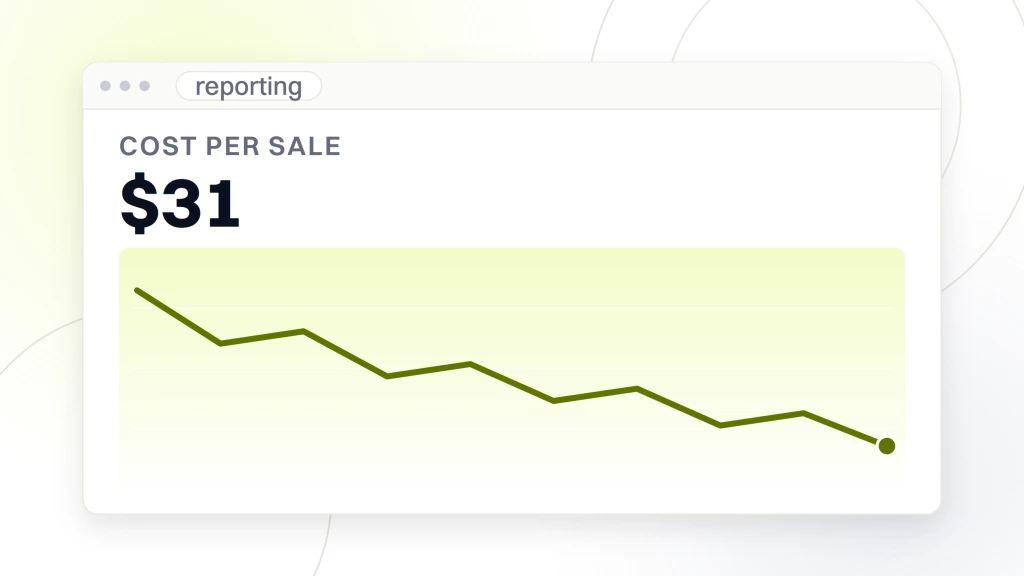
The result. Boogie Board hit a $31 cost per sale at scale, boosted conversion rate over 11% through the landing page and targeting rework, and managed $650,000 in ad spend at a positive ROI across the annual curve. The result did not come from a magic new channel. It came from applying funnel logic, a budget rulebook, and a review discipline the plan required from day one. The same three moves work on any DTC apparel program at the $180,000 to $600,000 monthly revenue band.
The weekly review that keeps the plan honest
The Monday review meeting is where a plan earns the right to keep spending for another week. 45 minutes, three agenda items, one decision. Read the reconciled four-stream dashboard together. Review the top and bottom three ad creatives by cost per order across Meta and TikTok. Decide whether the current campaign continues into next week, gets a creative pivot, or gets killed on the spot. The founder is invited and expected to make the kill decision once the numbers warrant it, not the pod lead alone.
The kill rule is simple and it holds across every campaign archetype. Day 3 return on ad spend below 40% of target and day 7 return below 60% of target triggers a 24-hour creative pivot or a full kill. Programs that hold underperforming campaigns for the full run out of hope produce the flat quarters founders learn to fear. Programs that kill fast and reallocate to the winners produce the compounding quarters that make the retainer worth its rate. Founders new to structured plans assume the kill decision hurts the numbers. In practice, killing a flat creative at week two frees the budget to double down on the winner and grows the campaign result 20 to 45% inside the next 21 days.
Where the plan fits the wider stack
The plan sits above the tactical channel work and just below the annual brand strategy inside the wider growth stack. Every retainer allocation, every creative brief, and every founder decision on inventory rolls up to the plan the pod is running against, week by week. Programs that budget for tactics without a plan produce busy months with soft revenue and no path out. Programs that build the plan first produce quarters where every published post, every ad, and every email adds up to a single growth arc a founder can read on one page.
The retainer that runs the plan starts at $1,499 monthly on a 6-month contract and scales through $2,499, $3,999, and from $6,000 per month as revenue and campaign volume grow. The retainer covers funnel logic, budget rulebook, weekly review meeting, creative direction on the campaign layer, and quarterly server-side tracking audits. Founders scoping the wider agency side should also read our fashion marketing agency guide for the broader deliverable list.
The retainer scales with revenue band, deliverable scope, and the number of active campaigns per quarter. A brand at $80,000 monthly runs a lean retainer with the founder in the review meeting. A brand at $600,000 monthly runs a fuller retainer with a dedicated pod, a weekly creative production schedule, and monthly media mix modeling reads. Every retainer tier ties back to the funnel, the budget rulebook, and the weekly review discipline the plan requires. Two outside reads worth an hour before the first plan cycle kicks off. Meta’s creative best practices reference above for paid social discipline. The Business of Fashion opinions section for the macro context that shapes which trends deserve budget in a given quarter.
Start on a working plan
The plan is the product. The funnel logic, budget rulebook, four-stream measurement, and Monday review are what turn a $340,000 monthly spend from a stack of tactics into a compounding growth arc. Book a discovery call with our team, share your current channel list and last two quarters of revenue, and you’ll leave with a written funnel plan and budget split you can run with or without us. Marketing for fashion brands rewards the founders who pick a plan and defend it. Every quarter you keep running nine parallel tactics is a quarter the compounding never starts.