
Outsource search engine optimization services the smart way and you get specialist depth, paid tool access, and content velocity without the fixed cost of an in-house team. Do it poorly and you get busywork billed as strategy, links from networks that punish your domain, and content nobody reads. The gap is not price. It is vendor selection, contract shape, and the quality controls you set on day one. Get those three right and outsourced work outperforms in-house teams for most businesses under $50M in revenue.
This guide walks through the four vendor types, honest tradeoffs, contract clauses that protect the buyer, monthly quality checks, and a real client engagement that shows what a well-run outsourced retainer produces. Read straight through in about 10 minutes. You will know which vendor type fits your business, what to negotiate before signing, and how to keep strategy in-house so execution runs outside.
Why businesses outsource search engine optimization services
Businesses hand SEO to an outside team for three plain reasons. Specialist talent access. Cost efficiency against in-house hires. Faster speed to results. A boutique agency at $6,000 per month typically delivers the output of a $180,000 fully loaded in-house SEO team, at less than half the total annual cost.
Here is the math. A US-based in-house SEO manager runs $95,000 to $160,000 in salary plus taxes, benefits, and overhead. Add tooling at $8,000 to $20,000 per year. Add content production at $30,000 to $80,000. Total lands at $130,000 to $260,000 annually for one person output. An outsourced retainer at $6,000 monthly costs $72,000 per year and puts 3 to 5 specialists on your account. That gap is why outsourcing wins for businesses under $50 million in revenue. Above that number, in-house becomes viable so you can staff enough people to justify the fixed costs.
Speed to results
Outsourced teams get to work in week 1 so the SEO lead, writers, and technical staff already exist. An in-house hire takes 8 to 14 weeks to recruit, 4 to 8 weeks to onboard, then 12 more weeks to hit full delivery. That is 6 to 8 months before the in-house function produces at the pace an outsourced team hits in month 2. If speed matters, outsourcing wins. If long-term institutional memory matters more than short-term velocity, in-house may still be the right call.
Tooling and specialist depth
Outsourced teams come with existing licenses to Ahrefs, Semrush, Screaming Frog, and Surfer at scale. Those tools alone run $650+ per month to replicate in-house. Outsourced teams bring specialist depth. A technical lead for schema and Core Web Vitals. A content planner for editorial calendars. A link outreach lead for placements. An account manager for reporting. Hiring 4 specialists in-house runs $400,000+ per year. Outsourcing gets you the same 4 roles for $6,000 to $12,000 monthly.
Outsource SEO vendor types you can hire
Outsource SEO vendor types fall into four honest categories. Full-service agencies. Specialist boutiques. White-label SEO providers. Solo consultants. Each fits a different business shape and budget. Match the vendor type to your business stage before signing, not the other way around.
Full-service agencies handle strategy, content, technical, and links under one contract at $3,000 to $30,000 per month. Specialist boutiques focus on one discipline like local SEO, technical audits, or link building at $1,500 to $10,000 per month. White-label providers execute for other agencies who resell the work at $500 to $4,000 per month. Solo consultants advise or run small retainers at $75 to $450 per hour, or $500 to $3,500 monthly. Which one fits depends on scope, budget, and how much strategic ownership you want to retain in-house.
| Vendor type | Monthly range | Best for |
|---|---|---|
| Full-service agency | $3,000 to $30,000 | Businesses wanting one vendor for everything |
| Specialist boutique | $1,500 to $10,000 | Businesses with a specific SEO gap to close |
| White-label provider | $500 to $4,000 | Marketing agencies reselling SEO to their clients |
| Solo consultant | $500 to $3,500 | Small businesses or advisory-only relationships |
| Offshore team | $400 to $2,000 | Best paired with US-based editorial oversight |
Full-service agency fit
Full-service agencies fit businesses that want to outsource the whole SEO function under one contract, one point of accountability, and one monthly report. The tradeoff is cost and coordination overhead. You pay for account management layers you may not need, and coordinating one bigger vendor takes some client-side effort every week. For businesses under $50 million in revenue with no in-house SEO leadership, this shape usually makes sense. You focus on the business so a single vendor handles the rankings.
Specialist boutique fit
Specialist boutiques fit businesses with one specific SEO gap. A technical debt problem. A link acquisition problem. A local map pack problem. You keep strategy in-house and hire the boutique to close the one gap you cannot close internally. The advantage is depth and speed. A technical audit boutique will catch issues a generalist agency misses. A link outreach boutique will place editorial links a generalist cannot access. Pay premium rates for the specialization and get faster movement on the specific problem.
White-label provider fit
White-label providers fit marketing agencies who sell SEO to their clients but do not want to build a delivery team. The provider does the work under your brand. You keep the client relationship and margin. For a design agency, PR firm, or paid media shop adding SEO to the retainer, white-label is the fastest path to a real service line. The risk is quality control, so vet the provider actual output before naming them on any client account.
Contract clauses that protect the buyer when you outsource SEO
Contract clauses matter more with an outsourced vendor than when you hire in-house. Bad hires get replaced. Bad contracts trap you for 12 to 24 months. Seven specific clauses belong in every buyer contract to defend against the common failure modes.
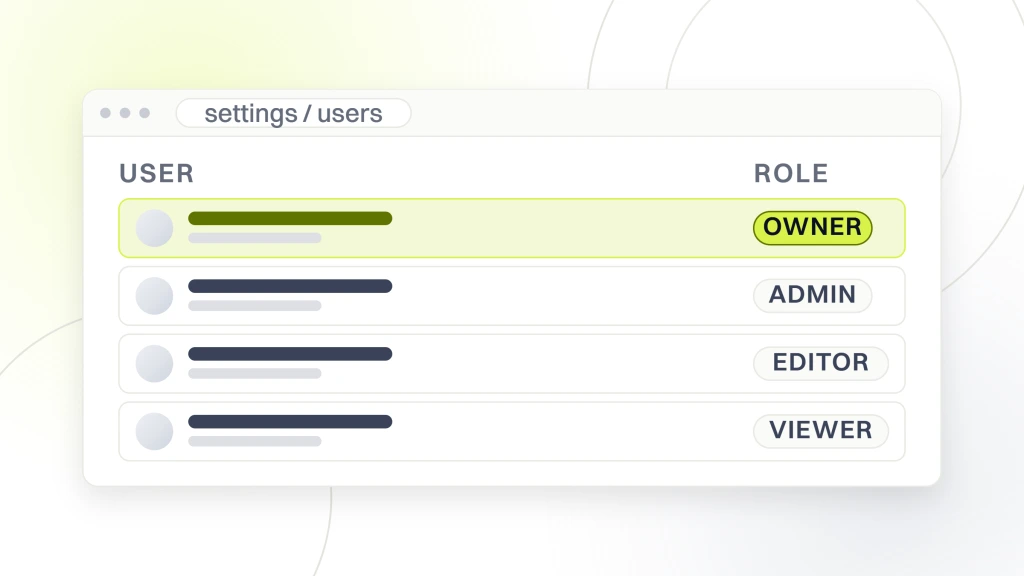
Require seven clauses in every SEO outsourcing contract. Exit terms of 30 to 60 days notice. Asset ownership on all content and links produced. Tool access from day one. Defined KPIs with performance triggers. Monthly reporting cadence in writing. A dispute resolution process. Confidentiality on business data. Any contract missing three of these is a caution sign. Any contract missing five is a hard pass. Vendors who cannot accept standard buyer-protective clauses are either brand new or planning to hide something. Neither is what you want.
- Exit terms. 30 to 60 days notice, no penalty, all assets return in editable form.
- Asset ownership. All content, landing pages, and link data belong to you.
- Tool access. Read-only access to Ahrefs or Semrush from day one.
- Performance triggers. Exit clause tied to specific KPI thresholds at month 6.
- Reporting cadence. Monthly reports by the 15th of the following month.
- Dispute resolution. Written process for handling underperformance.
- Confidentiality. Mutual NDA covering strategy documents and analytics data.
The exit clause in detail
A fair exit clause lets either party terminate with 30 to 60 days written notice. It requires the vendor to hand back all assets in editable form within 15 days of termination. It bars the vendor from restricting your use of content or links after termination. Anything longer than 90 days notice is unfair to the buyer. Any clause that restricts asset transfer is unfair. Any penalty for early termination beyond paying out the notice period is unfair. Read this clause word by word and negotiate anything that leans too heavily in the vendor favor.
Performance triggers in the SOW
Performance triggers tie the exit clause to specific KPI thresholds. A fair example. If primary keyword rankings do not gain at least 8 positions inside 6 months of consistent work, you can exit with 30 days notice at no cost. Vendors confident in their delivery accept this clause. Vendors who hedge tell you something about how they expect the engagement to go. Push for the trigger in writing. Get it into the SOW, not just the master services agreement.
Quality controls to run monthly on outsourced SEO
Outsourced SEO needs client-side quality controls even when the vendor is strong. Run four checks monthly. Audit the content produced. Verify link placements are real. Spot-check technical work. Reconcile the reported hours against actual output. Twenty minutes per month prevents 6 months of wasted retainer.
The quality control mindset is not distrust of the vendor. It is verification. Even the best vendors have off months, and your oversight catches problems before they compound. Vendors who welcome the oversight are the ones you want to work with long term. Vendors who chafe against it are hiding delivery quality. Set the quality control cadence on day one so it becomes a normal part of the engagement, not a fight that starts in month 4 once something has already gone wrong.
Monthly content audit
Read one piece the vendor published this month all the way through, and ask three questions. Does it read like a human wrote it? Does it match the topic depth of the top-ranking pages for the target keyword? Would you share it on LinkedIn as your own thinking? If the answer to any of the three is no, the vendor is cutting corners on content, and rankings will suffer inside 6 months. Have the conversation early. Content quality issues are fixable in month 2 and hard to unwind in month 8.
Monthly link verification
Pick 2 links the vendor claims to have placed this month. Visit the pages. Confirm the links are live, dofollow, and inside the body of real editorial content. If a link sits on a low-traffic directory, a guest post on an obviously spammy blog, or a PBN with thin content, the vendor is placing bad links. Bad links can trigger manual actions that hurt your entire site. Escalate immediately if you see PBN patterns. The Google Search Central manual action guidance covers what happens when bad links get flagged.
Monthly technical spot-check
Pull one page the vendor optimized this month. Run it through PageSpeed Insights. Check the title, meta description, headings, and schema against the audit deliverable. If the vendor claimed a Core Web Vitals fix and the page still fails on mobile CLS, the fix did not stick. Flag it in the next status call and get a re-do inside 10 business days. Twenty minutes here saves you from a rankings decline that shows up in month 5.
A real outsourced SEO engagement in the field
Take Automation Anywhere, a global leader in Robotic Process Automation serving 2,800+ companies and 1,600+ enterprise brands. They came to Redefine Web paying close to $2,000 per lead through their existing paid search and content programs. Their in-house team was capable but too thin to run strategic audits, competitive positioning, and campaign optimization in parallel. Costs kept climbing yet pipeline quality stalled.
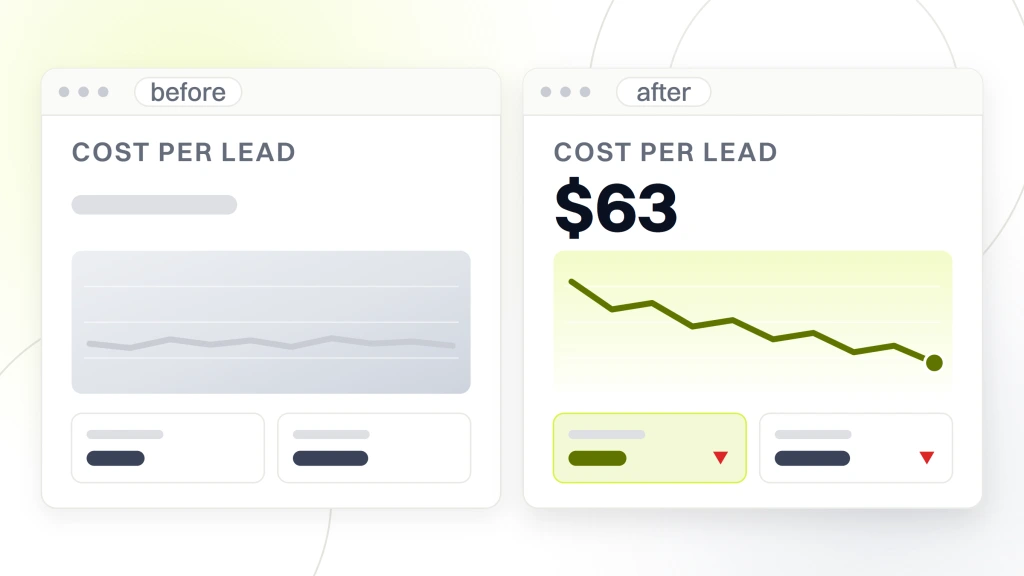
The firm signed a full-service outsourced retainer covering strategic audits, competitive offer testing, and precise campaign optimization against a defined 6-month scope. Their marketing team stayed as the client-side owner and approved every offer and page change weekly. Cost per lead dropped 97%, from close to $2,000 down to $63, and qualified MQL volume scaled 100 times over the engagement. Three commercial-intent pages moved into the top 10 for their target keywords. That is what outsourced SEO produces when the client-side owner stays engaged and the vendor delivers focused work against a written scope.
Why outsourcing worked
Three factors made the outsourced model work at Automation Anywhere. First, one client-side owner made decisions quickly, so nothing got stuck in stakeholder committees. Second, the scope was defined in writing and both sides stuck to it. Third, the vendor kept a named lead on the account for the full 6 months, so nothing had to be relearned. When these three factors line up, outsourced engagements move faster than in-house teams. When any one breaks, outsourcing stalls just like in-house does.
The client-side owner role
Every outsourced engagement needs one internal owner. Not a committee. Not a rotating team member. One person who approves content, signs off on technical changes, and reviews reports. Businesses that fail at outsourcing usually fail so nobody owns the client-side relationship. The vendor cannot make decisions on your behalf and cannot proceed without approvals. Pick the internal owner before signing the retainer, and set their SEO responsibilities in writing. Budget 2 to 5 hours per week of their time. Below that threshold, the retainer stalls.
The hybrid model with in-house strategy plus outsourced execution
The hybrid model puts one in-house SEO manager in charge of strategy and hires an agency for execution. This shape works for businesses at $50 million to $500 million in revenue. The in-house manager owns the strategic direction, the reporting narrative, and the relationships with internal stakeholders. The agency owns content production, technical implementation, and link outreach.
The hybrid model gets you institutional memory from the in-house manager plus specialist depth and scale from the agency. Total cost usually lands at $180,000 to $350,000 per year. Roughly $110,000 for the in-house manager plus $70,000 to $240,000 for the agency retainer. That is more expensive than pure outsourcing but delivers stronger strategic ownership. For growth-stage businesses with complex products or multiple stakeholders, the hybrid model usually justifies the extra cost through faster strategic decisions and cleaner internal alignment.
The in-house manager role
The in-house SEO manager in a hybrid runs three functions. Strategy and roadmap, translating business goals into SEO plans the agency can execute. Stakeholder management, handling approvals, feedback, and priority conflicts inside the business. Vendor management, keeping the agency accountable, quality-checking deliverables, and negotiating scope changes. This is not a coordinator role. It is a strategy role, so hire a senior candidate at $110,000 to $140,000 rather than a junior at $65,000. Junior hires cannot drive senior-tier agencies well.
The agency role in a hybrid
The agency in a hybrid runs execution against the in-house manager strategy. Content production at defined cadence. Technical implementation of the fix list. Link outreach at defined volume. Reporting on rankings, traffic, and conversions monthly. The agency does not set strategy in a hybrid, though they may recommend adjustments. Setting strategy in a hybrid is the in-house manager job. Agencies that push to own strategy inside a hybrid arrangement usually create friction with the in-house manager. Screen for agencies comfortable with the hybrid split during vendor selection.
Offshore SEO outsourcing partner considerations
Offshore SEO teams cost 40% to 70% less than US-based agencies but require more editorial oversight to produce publishable output. The right offshore role is as an execution engine directed by US-based strategy, not as a full-service replacement for a US agency.
Offshore teams from India, the Philippines, and Eastern Europe can be excellent at technical implementation, schema markup, keyword research, and basic content production. Where offshore struggles is on content that needs US-market cultural fluency, link outreach to US publications where relationships matter, and quick-turnaround decisions during US business hours. Match the offshore role to the skills that translate well. Use US-based strategy and editorial review for the parts that need cultural context. That split gets you the cost advantage without the delivery risk.
Where offshore fits well
Offshore fits well for four roles. Technical implementation of the fix list a US SEO lead wrote. Schema markup and Core Web Vitals work. Multilingual content for global sites where the offshore writer is native in the target language. Keyword research and competitor analysis feeding a US-based SEO lead. In these roles, offshore teams deliver strong work at 40% to 70% lower cost. Combined with a US-based lead directing the work, the total cost lands between full US pricing and full offshore pricing, with US-market quality preserved.
Where offshore usually fails
Offshore struggles at four roles. Long-form editorial content for US buyers in verticals like healthcare, legal, or home services. Link outreach to US publications where existing relationships matter more than pitch quality. Strategy work that needs cultural context on US buyer behavior. Real-time coordination during US business hours. If your engagement leans heavily on any of these four, offshore alone will disappoint. Pair offshore with US-based strategy or accept US pricing. Pure offshore for US-market SEO usually underperforms both alternatives.
Switching outsource SEO vendors mid-engagement
Switching vendors mid-engagement is stressful yet often the right call. Roughly 25% of outsourced SEO relationships change vendors inside 24 months. Knowing when to switch and how to switch cleanly saves months of stalled rankings.
The signals to switch are consistent underperformance against agreed KPIs, missed reporting deadlines, communication breakdowns with the account lead, and quality drops in the delivered work. Any one signal alone is worth a candid conversation with the vendor. Two or three together over 6 to 8 weeks usually means the relationship is not fixable and you should start vendor selection for the replacement. Do not stay in a bad engagement out of switching-cost aversion. The cost of staying is bigger than the cost of switching, especially past month 3.
Transition planning
Plan the transition before you tell the old vendor. Line up the new vendor. Confirm asset transfer clauses in the old contract. Get read access to Search Console, Analytics, and any tools the old vendor holds. Then give the notice, and use the notice period to migrate assets, hand off login credentials, and brief the new vendor on the engagement history. A clean 30 to 60 day transition prevents ranking losses from the switch. A messy transition can drop rankings 10% to 25% temporarily as work stalls during the handoff.
Onboarding the new vendor
Brief the new vendor on what worked, what did not, and what you need in the first 90 days. Share the old vendor monthly reports, the current tool access, the content archive, and the technical fix history. The new vendor should treat the first 30 days as diagnostic when you are pushing them to move fast. A vendor who accepts the previous work without question is not doing their diagnostic job. A vendor who dismisses everything the previous vendor did is being political. The right posture is honest evaluation before executing new work. Our Search Engine Optimization Services lay out the onboarding process on the contract page. For the pricing conversation, our Search Engine Optimization Services Pricing breakdown covers the tiers side by side.
Industry fit when you hire an outsource SEO agency
When you outsource SEO, industry fit matters as much as vendor size. Healthcare and dental need vendors with YMYL content workflow and clinical reviewer relationships. Legal needs jurisdictional accuracy and bar-admitted author schema. Ecommerce needs product schema and catalog structure. Home services needs local map pack expertise. A generalist can do adequate work in any vertical, yet a specialist outperforms on the same retainer.
Industry specialization pays off in three ways. Faster ramp so the specialist already knows the buyers, language, and competitive set. Better content so the writers have real depth in the topic. Stronger links so the specialist already has relationships with the vertical publications. Look for vendors with 3-plus current clients in your industry, published content on your industry SEO, and existing relationships with your industry publications.
Healthcare and dental outsourcing
Healthcare and dental outsourced engagements need clinical reviewer workflow, physician schema, and appointment booking integration. Content needs a licensed practitioner to review it before publish. Our Dental SEO Services Built for Local Map Dominance shows what the scope looks like for single-location practices and DSOs. Broader medical scope lives on the Healthcare SEO Agency for Patient Growth page.
Home services outsourcing
Home services outsourced engagements need Google Business Profile optimization, service area page templates, review generation systems, and citation building. The map pack rank matters more than classic organic rank for many local service queries, so strategy tilts toward local signals. Our Home Services SEO Built for Local Map Pack Dominance shows the scope breakdown for HVAC, plumbing, roofing, and adjacent verticals.
Make outsource search engine optimization services work for you
Outsource search engine optimization services when the math favors it, and that is most businesses under $50M in revenue. Pick the vendor type that matches your scope. Full-service for whole-function outsourcing. Specialist boutique for one-gap fixes. Solo consultant for advisory or small-scope work. Offshore paired with US-based strategy for cost-sensitive execution. Negotiate the seven buyer-protective contract clauses before signing. Run four quality controls monthly to catch problems early.
The best outsourced engagements share three traits. One client-side owner who makes decisions quickly. Defined scope both sides stick to. A named lead who stays on the account long enough to know the business. If a prospective vendor can commit to all three, the outsourced SEO math will clear. If any one is missing, look at other vendors or rethink whether outsourcing fits your business right now. Redefine Web runs outsourced SEO retainers across dental, healthcare, home services, ecommerce, and B2B. Bring your business specifics to a call and we will show you what the first 90 days would look like for you.