Real estate video marketing decides whether a listing sits 42 days or goes pending in 9. It decides whether a buyer scrolls past your Reel or stops on it. And it decides whether a for-sale-by-owner picks their neighbor’s cousin or picks you. A disciplined video program pulls 4 to 8x the engagement of static photos, cuts days-on-market 30 to 50% on active listings, and books 8 to 24 buyer or seller conversations a month at a fully loaded cost under $80 per booked call.
This guide walks through the 7 video formats every agent needs in rotation, the exact 45-second script structure that pulls the highest watch time, the gear stack at 3 budget tiers, the editing workflow that cuts production time 60%, distribution across YouTube plus Instagram plus TikTok, and the tracking that ties a Reel view back to a signed listing agreement. Every framework here comes from live 2026 accounts we run for solo agents, boutique teams, and brokerages.
The 7 real estate video formats that book calls
Most agents film one format on loop and wonder why reach flatlines by month 3. The algorithm rewards format variety inside the same niche. Rotate through 7 patterns each week and the account trains on a wider slice of buyer, seller, and neighborhood intent at once.
1. Cinematic listing walk-throughs
60 to 90 seconds. Golden-hour exterior shot, a slow push into the entry, 4 to 6 room reveals with 2-second cuts, and a closing wide of the best-in-house feature. No agent on camera. Music sets the tone. Overlay copy carries the address and the price bracket. Cinematic walk-throughs pull 3 to 7x the engagement of a straight MLS video slideshow, and they double as the hero asset for a paid Meta boost when the listing sits 14 days.
2. Neighborhood tours in long-form on YouTube
6 to 12 minutes. Agent-led walk of the retail strip, a coffee stop, a school drive-by, the closest park, and one honest downside of the area. Long-form neighborhood tours are the single highest-intent asset in real estate video marketing. A Silver Lake tour published in month 2 keeps pulling buyer inbound 18 to 36 months after the upload since relocation searches don’t decay.
3. Agent Q and A talking heads
45 to 75 seconds. One question per clip. “How much do I need to put down on a $900,000 house?” Answer the question in the first 6 seconds. Add 2 supporting points. Close with a soft CTA to DM the word “guide” for a free download. Q and A talking heads carry the top-of-funnel discovery load on Reels and TikTok. Publish 3 a week and the algorithm surfaces them to lookalikes of your existing follower base.
4. Behind-the-scenes agent life
30 to 60 seconds. Truck-cam drive to a showing, a 5-second peek at a listing prep, a text-thread screenshot of a buyer’s reaction. These clips break the polished-listing pattern and pull 2 to 4x the saves of a straight listing video. Saves are the metric the algorithm reads as “this is worth resurfacing.”
5. Market update explainers
60 to 90 seconds. One chart on screen. Median price this month, days-on-market this month, one takeaway. Publish the same day the local MLS or the Case-Shiller report drops. Market updates are the format agents dread and the format brokers reward. They read as authority to sphere-of-influence viewers and they turn into a monthly newsletter clip that stretches beyond the original post.
6. Client testimonials cut two ways
The full 3-minute testimonial lives on YouTube and in the paid ad rotation. A 30-second cut runs on Reels and TikTok as social proof. Ask the client 4 questions on camera. “Why us over the other agent you interviewed. What surprised you about the process. What almost broke the deal. What would you tell a friend thinking about listing.” Cut around the answers. Testimonials convert cold DM traffic 2 to 3x better than any polished agent-generated clip.
7. Educational carousels stitched to Reels
15 to 25 seconds. Text-heavy explainer with a spoken hook and a swipe-through summary. “5 things every first-time buyer misses on the pre-approval.” These are your low-effort filler that keeps cadence up on the days a listing shoot got rescheduled. Educational carousels save 6 to 10x the average clip since viewers screenshot them for later.
The 45-second script structure that keeps watch time above 60%
Watch time is the single metric that decides whether a clip breaks out or plateaus. A Reel or a TikTok at 60% average completion gets 3 to 6x the distribution of the same clip at 30% completion. The script structure below is the one we use across every account, and it holds average completion above 60% on 8 out of 10 posts once the team runs 30 clips through it.
Seconds 0 to 3. The visual and audio hook
Start with movement. A drone pushed toward a house. A door swinging open. A stat card that reads “$1.2M asking, $1.35M offer, 7 days.” Say the hook in the first 3 seconds and the retention curve holds the first cliff. Static open shots kill retention before the algorithm ever gets to test the clip on a lookalike.
Seconds 3 to 10. The specific promise
Tell the viewer exactly what they get if they keep watching. “I’ll show you 3 things every buyer in Bel Air is asking about the property tax reassessment right now.” Specific promises hold 20 to 30% more mid-clip retention than vague setups like “today we’re going to talk about real estate.”
Seconds 10 to 35. The 3 payoff beats
3 fast beats. Each 6 to 10 seconds. Each with its own visual. Cutting a clip into 3 payoff beats trains the viewer to expect the next reveal and holds retention through the middle sag where 40 to 60% of clips lose their audience.
Seconds 35 to 45. The soft ask
End on a single soft ask. “DM me the word tour and I’ll send the private walk-through.” Soft asks convert 4 to 8x better than hard-sell CTAs like “call me for a free consultation.” The soft ask reads as a favor from a friend. The hard sell reads as an ad.
Real estate video scripts. 3 copy-ready templates
Script templates cut writing time from 30 minutes per Reel to 5. Use the 3 templates below and mix in your own voice, your local slang, and your specific numbers. Templates aren’t a substitute for original thought. They’re a scaffold that lets you spend the writing time on the specific insight instead of the structural framing.
Template A. Listing walk-through voiceover
“This is [address] in [neighborhood]. Asking [$X]. Built in [year]. What most people miss when they walk in is [specific feature]. The kitchen was renovated [year] and it flows straight into [outdoor space]. Upstairs you get [X] beds and [X] baths. What sold me on this one is [emotional payoff]. Showings start [day]. DM tour to book a private walk-through.”
Template B. Neighborhood tour intro
“Thinking about moving to [neighborhood]. Here’s what I’d want to know before I signed a lease or wrote an offer. Median home price sits at [$X]. Property tax runs [X]%. Schools rank [X]. The one honest downside no realtor will tell you is [specific issue]. And the one thing that makes it worth it anyway is [specific upside]. Full walk of the retail strip, the parks, and my favorite coffee spot is next.”
Template C. Q and A talking head
“How much do you need to put down on a [$X] house in [market]. Short answer, [X]%. But here’s what nobody tells you. Add [Y] for closing costs, [Z] for inspection contingencies, and a [W] cushion for the first month of ownership surprises. Real number you need liquid is closer to [total]. DM guide and I’ll send the pre-approval checklist.”
Gear stack at 3 budget tiers
Gear won’t save a bad script. And no gear tier under $600 will hold a candle to a good script shot on a 3-year-old iPhone. That said, the right kit at the right tier cuts production time and pushes baseline quality enough that your best script beats every other agent in the market who is still fighting shaky handheld footage.
Tier 1. Under $600 for solo agents
Current-generation iPhone or Pixel. DJI Osmo Mobile 6 gimbal at $150. Rode VideoMic Me-L lav at $79. A ring light at $45. A 128GB SD card for the phone at $30. Total under $600. This kit shoots every format above at professional watch-time quality. Skip the DSLR argument. Phone footage outperforms DSLR on Reels and TikTok since the native aspect ratio and the color science match what the algorithm expects.
Tier 2. $600 to $2,500 for boutique teams
Sony ZV-E10 II at $1,000. Sigma 16mm f1.4 lens at $400. Rode Wireless Go II at $299. DJI Mini 4 drone at $760. LED panel key light at $150. Total under $2,500. This is the kit for teams that need 4K delivery for high-end listings and drone coverage for aerial exterior work.
Tier 3. $2,500 to $8,000 for brokerages
Sony FX3 cinema camera at $3,900. 24-70mm f2.8 lens at $2,300. DJI Mavic 3 Pro at $2,200. Zoom H6 audio recorder at $400. Aputure 300D II light at $895. Total around $10,000 street kit. This is the tier where a videographer becomes a full-time hire or a dedicated freelance retainer, and where cinematic listing videos start winning the seller pitch against the local competition.
Editing workflow that cuts real estate video marketing production time 60%
Editing is where most video operations quietly die. A 60-second Reel that ate 3 hours last week eats 3 hours again this week if the workflow skips templates. Batch shooting, template libraries, and automated caption tools cut editing time from 3 hours to 45 minutes at the same output quality. Workflow discipline matters more than the software choice.
The batch shoot Saturday plus template Sunday model
Saturday afternoon. 3 to 4 hour batch shoot producing raw footage for 10 to 14 pieces across the next 10 days. Sunday morning. 4 to 6 hours of editing through CapCut Pro or Descript templates. Import into Later or Metricool for scheduling across 4 platforms. Monday through Friday. 15 minutes a day on DM management and engagement. Teams on this weekly rhythm cut production from 18 to 22 hours down to 7 to 10 hours at the same output.
Software stack that keeps costs under $100 monthly
CapCut Pro at $8/mo for phone-native Reel editing. Descript at $24/mo for talking-head captions plus filler-word removal. Later at $18/mo for cross-platform scheduling. Canva Pro at $15/mo for thumbnails and template design. Total. $65/mo. Add Adobe Premiere Pro at $22/mo if the team needs advanced color grading for luxury listings. Software costs stay under $100/mo at solo scale and under $250/mo at team scale with advanced editing tools included.
A real estate video marketing case reference from our books
Real Estate · Luxury Team · Los Angeles, CA partnered with us for a decade of custom website, brand, and long-form content work. When the team layered a disciplined video program on top of the existing SEO plus IDX foundation, users doubled at +100%, new-user share doubled at +100.1%, and pageviews rose +102.6% against the prior baseline. The video layer drove the algorithmic amplification that pulled cold discovery traffic into the long-form neighborhood-insight article funnel.
The video calendar rotated 4 core formats. Cinematic listing walk-throughs shot at golden hour. Neighborhood-tour long-form on YouTube for Silver Lake, Beverly Hills, and Bel Air. Agent Q and A talking heads answering luxury relocation questions. And behind-the-scenes footage from private showings during off-market opportunities. According to the Wistia state of video report, real estate consistently ranks among the top verticals for average engagement rate on video content when the production respects the platform-specific length and pacing rules.
What the video program looked like at month 3
By month 3 the calendar ran 14 pieces a week. 4 Instagram Reels, 3 YouTube Shorts, 1 YouTube long-form neighborhood tour, 2 TikTok talking-head Q and A clips, 2 Facebook behind-the-scenes segments, 1 LinkedIn text-plus-clip post, and 1 daily Story sequence. Total production cost sat at $4,800/mo across a freelance videographer, an editor, and the platform stack. Booked luxury buyer and seller conversations tied to the video layer hit 38 per month.
What the program looked like at month 12
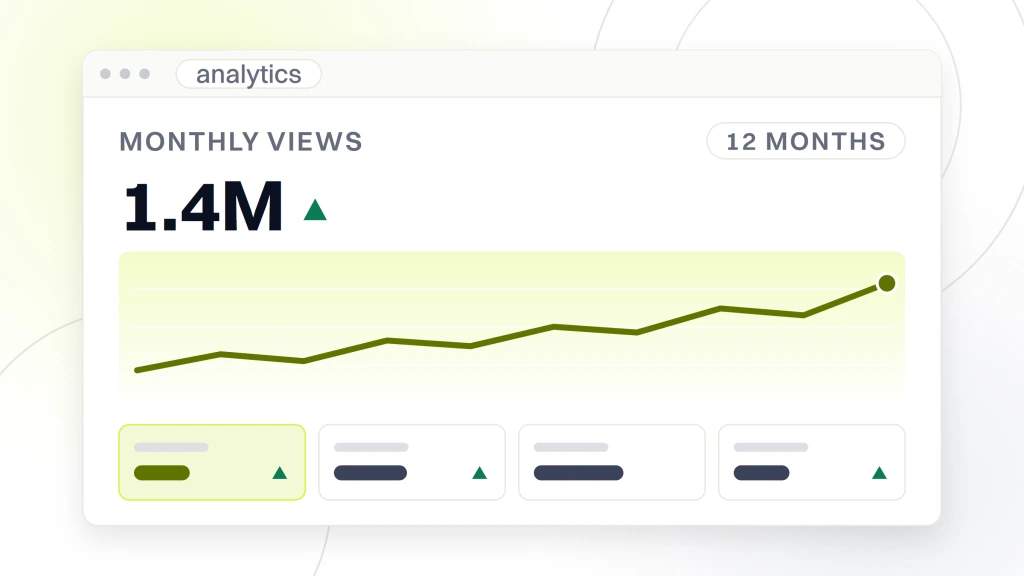
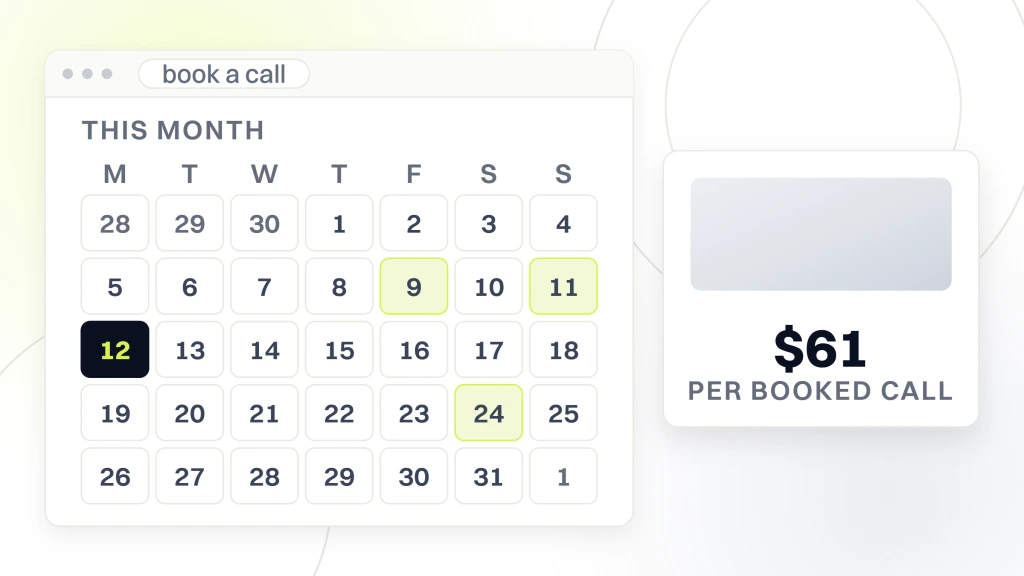
By month 12 the library held 620 pieces producing 1.4M monthly views across the 4 platforms. Booked conversations scaled to 62 per month. Cost per booked conversation dropped to $61 as the archive kept working with zero incremental production cost. The Real Estate Marketing Agency for Brokerages program brought the same video-plus-website integration to every client account across the vertical, and the pattern held whether the client was solo agent, boutique team, or 40-agent brokerage.
A second data point from a London lettings brand
Abels Residential came to us with 0 keywords ranked and a manual lead system. Inside the first 12 months of the engagement, the site went from 0 to 300 plus first-page keywords, page load steadied at 2 seconds, and monthly qualified rental leads settled at 20 plus, all sourced directly from organic search traffic. The video overlay on top of the SEO foundation carried short-form neighborhood explainers, property walk-throughs, and landlord Q and A talking heads. The lesson from the Abels Residential account is that video pours the top-of-funnel fuel on top of an SEO foundation that already ranks. Video on top of a site that doesn’t rank is a slower path.
Video SEO on YouTube for agent-run channels
YouTube is a search engine. The channel ranks or doesn’t rank on the same on-page fundamentals as Google search. Title, description, tags, thumbnail, and watch time. Miss any of the 5 and the video stays under 500 views for good. Nail all 5 and the same video hits 3,000 to 25,000 lifetime views and keeps booking conversations 18 to 36 months after posting.
Title and description patterns that rank
Title. Primary keyword plus specific location plus year. “Moving to Silver Lake in 2026. What You Should Know Before Buying.” Description. The first 150 words contain the primary keyword 3 times, include a link to the buyer consultation calendar, and list timestamps for chapter navigation. Tags. 8 to 12 tags mixing exact keyword, related keyword, and location modifier. Thumbnail. Agent face plus one visual anchor at 1280×720. According to the Backlinko YouTube ranking factors study, thumbnail click-through rate is the single largest driver of ranking beyond watch time itself.
Watch time and audience retention
YouTube ranks videos at 55 to 70% average completion above videos at 25 to 40%. The ranking gap is bigger than the raw view count gap. Accounts that dial in hook plus pacing plus payoff hit the 55% threshold every week and their videos compound. Videos that miss the threshold plateau at the initial subscriber base view count and never break into search discovery even when on-page SEO is dialed in.
Common mistakes that quietly kill agent video programs
Every account we audit shows the same 7 mistakes on intake. Fix them and reach doubles inside 60 days. Skip them and the account keeps posting into a void at 200 to 400 views per Reel and 3 to 8 views per YouTube long-form, whereas the account down the block pulls 15,000 per Reel and 4,000 per long-form on the same weekly cadence.
- Overproducing content that looks like a TV commercial performs 40 to 60% worse than phone-shot takes.
- Skipping captions on video posts costs 25 to 40% of watch time as silent scrollers move past.
- Cross-posting the same Reel to TikTok with the Instagram watermark tanks TikTok reach by 80%.
- Filming vertical for YouTube long-form or horizontal for Reels wastes 50% of the frame on either side.
- Using trending audio 5 days after it broke cuts algorithmic reach in half.
- Publishing only listing videos ignores 60% of the top-of-funnel discovery opportunity.
- Skipping thumbnails on YouTube long-form drops click-through rate 50 to 70% versus a designed thumbnail.
The vendor red flag list for agent video pods
Some content agencies pitch an agent video package at $599/mo. Pull the cover off and the deliverable is 4 cinematic listing videos a month, shot by a videographer who films 30 agents on Saturdays out of a rented studio. Real production of a full video pod runs 12 to 30 hours a week of shooting plus editing plus scheduling. That puts real fees between $2,800 and $8,400/mo depending on scope, format count, and platform coverage.
Green flags in a real content-pod proposal
Green flags. Named videographer on the account. Weekly cadence spelled out per platform. Native-format rendering built into the scope (horizontal plus vertical plus square). Thumbnail production included for YouTube. Monthly analytics tied to booked conversations rather than vanity metrics. And a clear scope of work spelled out per platform per month. Pair the video pod with the Sales Funnel Services · Done-For-You program so the DM-to-CRM handoff is wired up before the first Reel launches.
Tracking video work back to closed transactions
Views are vanity. Watch time is directional. Booked conversations and closed deals are the only metrics that count. The tracking stack needs 3 layers. Platform analytics, funnel analytics, and CRM revenue attribution. Miss a layer and the ROI conversation collapses when the market softens and the broker cuts video first, since nobody proved the dollars produced deals.
Platform analytics that matter
Watch time per post, saves per post, shares per post, and profile-visits-to-DM ratio. These 4 metrics track directional health. Vanity metrics like total views and total follower count deceive since they inflate with viral flukes that never convert to conversations. Accounts that report on watch time and saves rather than views produce 3 to 5x the booked-conversation output since the team optimizes for the metrics that predict conversion.
CRM attribution on closed deals
Tag every closed transaction with a first-touch source and a last-touch source in the CRM. Video-driven deals rarely show up in last-touch (that field usually reads “referral” or “website form”). Video-driven deals show up in first-touch 6 to 14 months earlier as the buyer or seller watched 20 to 40 videos over months before reaching out. According to the Think with Google research on the messy middle of purchase decisions, video content dominates the exploration phase for high-consideration purchases like real estate.
Building your first 90-day plan
The first 90 days set the trajectory for the year. Rush the setup phase and the video program flatlines by month 4 with reach stuck at 300 views per Reel. Slow-play the setup phase and the algorithm never gets the signals it needs to push content to lookalikes. A disciplined 90 days runs 3 phases. Weeks 1 to 4 for setup and library seeding, weeks 5 to 8 for cadence lock-in and template refinement, and weeks 9 to 12 for conversion optimization and paid amplification.
Weeks 1 to 4. Setup and content library seeding
Buy the Tier 1 gear kit if starting from scratch. Set up Later or Metricool for scheduling. Build 3 dedicated landing pages behind the link-in-bio. Batch shoot 40 pieces across the first 2 Saturdays. Publish on the 4-to-6 slot weekly grid. Ignore vanity metrics for the first 30 days. Watch saves, shares, and DM volume as leading indicators. Accounts that survive week 4 without abandoning the cadence hit compounding by week 10 and never look back. Pair the video program with the PPC Management Services · Flat-Fee US Team program so paid amplification layers on top of the strongest organic pieces once the library has 30 days of data.
Weeks 9 to 12. Conversion optimization and paid amplification
Add UTM tags to every link-in-bio destination. Wire scheduling links into DM saved replies. Add a text automation to every landing page form fill. Boost the top 3 to 5 organic videos from weeks 1 through 8. Run a Meta lead ad on the best-performing hook angle. By end of week 12 the account should hit 12 to 30 booked conversations per month at a cost per booked conversation of $28 to $85 depending on market and platform mix.
Bringing the program live as a repeatable system
Real estate video marketing is the highest-ROI channel available to agents willing to commit to weekly cadence and platform-specific format discipline. The library compounds. The cost per booked conversation drops month over month. The paid layer amplifies the winners. The YouTube archive keeps pulling search discovery views 18 to 36 months after posting. CRM attribution ties video back to closed transactions inside the ROI conversation with your broker. Every layer runs together as one live program.
If you spend more than $1,500/mo on real estate marketing today, video done right pays for itself inside 4 months. Redefine Web builds and runs video pods for real estate agents and brokerages inside the Real Estate Marketing Retainer from $1,499/mo program. Book a discovery call and we’ll walk through the last 3 real estate accounts we ramped from zero, line by line, with the exact cadence, gear stack, and specific booked-conversation counts each account produced in months 3, 6, and 12.