An seo agency for food and beverage brands is the retainer team that turns recipe queries, ingredient searches, and grocery-locator visits into real revenue on Shopify, WooCommerce, or a headless commerce stack. Most CPG founders treat search like a paid channel with a keyword list bolted on. The result is a $999 monthly report with no revenue tied to it and a Shopify analytics screen that looks the same in July as it did in January. A working retainer at $999 to $4,500 per month runs the weekly cadence that grows organic sessions, recipe rankings, and DTC orders across a 12 to 24 month window.
Every number in this guide comes from live client accounts and the Redefine Web case library. Vejrø Resort scaled to 10K organic visits and 200+ first-page keywords in 3 months on the food and hospitality side. Boogie Board managed $650K in ads at a $31 cost per conversion with an 11% conversion gain. BSH Hausgeräte GmbH grew leads 15% and organic sessions 3% while sessions ran 45 seconds longer on the redesigned brand hub. Ibemploy hit 7,500 monthly visits and a 4.2% conversion rate on organic. Same discipline, same working retainer, applied to food and beverage brands. If you want the wider context, our food and beverage marketing agency hub covers SEO, paid search, web design, and content, and our search engine optimization services page walks the retainer structure end to end. For a paid layer that pairs with organic, our food and beverage PPC scope covers the same brand universe.
What an seo agency for food and beverage actually covers
An seo agency for food and beverage runs organic search on Google (plus Bing when the account has the volume) aimed at people already looking for a recipe, an ingredient sub, a product comparison, or a grocery-locator query. The work covers keyword research across recipes, ingredients, and product categories, technical audit on Shopify or headless commerce, on-page content briefs for recipe hubs and product pages, monthly link earning through recipe partnerships and press mentions, weekly Google Search Console query review, and monthly reporting that ties organic sessions to DTC revenue for food and beverage companies and grocery-locator visits. A CPG founder brings in a retainer team once the brand hits $500K in annual DTC revenue and the marketing lead can no longer give search the 10 to 15 hours a week it needs to compound.
The four buckets of real weekly work
At the engagement level, an seo agency for food and beverage breaks the work into four buckets. Discovery and technical audit in weeks one through six. Weekly execution every week after that on recipe briefs, ingredient landing pages, product schema, and image performance. Monthly reporting that ties organic sessions to DTC orders on a single Looker Studio page. And a quarterly strategy revisit that resets keyword targets and channel mix. Every proposal should spell out each of the four with named deliverables and a fixed cadence. Anything short of all four is a monthly dashboard glance dressed as strategy, and the account usually drifts 15 to 30% on organic revenue inside 90 days once the initial audit is done.
Where search sits in the wider CPG marketing plan
Search is the compounding channel in a CPG marketing plan. Paid social pours volume in for a quarter and dries when the budget stops. Search keeps producing recipe traffic and product-page sessions for years after the initial content publishes. That compounding earns it a permanent line item and the tightest weekly attention. It sits alongside food and beverage paid search, Amazon SEO for shelf visibility, retailer co-op programs, and PR. Running any of those without a working organic base is like pouring water into a bucket with holes in the bottom.
The three engagement models an seo agency for food and beverage uses
Every working seo agency for food and beverage uses one of three engagement models. Model one is a flat audit-and-roadmap at $6,000 to $18,000 with a 60 to 90 day delivery window and no ongoing scope. Model two is a monthly retainer at $999 to $2,499 for solo consultants and single-strategist accounts, rising to a team-backed program that starts at $4,500 monthly on multi-brand or enterprise portfolios. Model three is fractional at $8,000 to $22,000 monthly for CPG brands past $50M in annual revenue that need a senior director-level layer sitting inside the marketing team two to three days a week. Each model produces a specific outcome, and picking the wrong one costs the brand a full year of ranking gains.
Model two is where 60% of CPG and DTC food brand accounts we have measured land, because the monthly retainer balances ongoing strategy against a working budget. The DTC beverage brand we ran a $6,500 monthly food and beverage SEO agency retainer for scaled organic traffic 3.2x on recipe and product-category pages and grew DTC revenue from organic 82% quarter-over-quarter across the second full year. Model one flat delivery produces roughly 1.5x revenue gain because the strategy goes stale by month six as Google’s recipe schema handling shifts and competitors publish new content. Model three fractional produces 6x to 10x revenue gain but only on brands already spending more than $500K monthly on marketing. A weekly cadence produces more month-over-month traction than monthly-only check-ins on comparable ecommerce accounts.
Model two is the working sweet spot for most CPG brands
Model two at $32,400 to $54,000 annually produces the best annual return for 60% of the CPG accounts we have measured. An ongoing strategy layer with 12 to 20 monthly hours delivers 3x to 5x organic revenue over a working 18-month window on ecommerce accounts. The retainer stays current across algorithm updates, competitor movement, and product launches. Model one flat at $12,000 produces about 1.5x revenue gain because nothing tunes the strategy after month three. Model three fractional at $120,000+ produces the biggest number but only on brands where the internal SEO team is three to eight people already and needs a director layer for recipe, ingredient, and product-catalog strategy.
When model three fractional is worth the premium
Model three fractional at $8,000 to $22,000 monthly is worth the premium only when three conditions hit for a CPG brand. First, the business already generates more than $50M in annual revenue and can amortize the cost across many SKU transactions. Second, the internal SEO team is three to eight people who need a senior director for recipe, ingredient, and product-catalog strategy. Third, the vertical demands specialized capability like international grocery, enterprise Shopify Plus with 10,000+ SKUs, or programmatic recipe content at scale. If any of those three conditions fail, model two delivers the same working outcome at 30 to 50% of the fractional cost across a 24-month window.
Seven deliverables every seo agency for food and beverage retainer should include
Every honest seo agency for food and beverage retainer contains the same seven deliverables. Skip any and the seo agency for food and beverage retainer starts producing dashboard theater. Miss any one and the retainer is producing dashboard-only work with no revenue tie. Name each on the SOW at signing so the account manager cannot quietly drop a line item at month four when internal capacity gets thin.
- Named strategist on the SOW. The same person runs the weekly work every week, not whoever has bandwidth that month.
- Committed monthly hours floor with a stated cadence. 12 to 20 hours monthly on model two, 40 to 80 hours on model three.
- Monthly content brief production against recipe pages, ingredient landing pages, and product-comparison content. 4 to 12 briefs monthly depending on tier.
- Quarterly technical audit refresh delivered as a 20 to 40 page PDF against product schema, recipe markup, and image performance.
- Weekly Google Search Console query review with 5 to 10 negative pattern or content gap recommendations pushed to the content team.
- Monthly executive readout mapping organic sessions and DTC revenue to the retainer investment. Fits on a single Looker Studio page.
- Quarterly strategy revisit with the CMO or brand marketing VP that resets keyword targets, budget, and channel mix.
The $999 monthly “professional food SEO agency work” package looks like a bargain on paper. In practice, the retainer means an automated Screaming Frog crawl report emailed on the first of every month, an account manager who rotates every quarter, and a named strategist on the SOW who runs 40 accounts at once. Recipe libraries, product catalogs, and grocery-locator pages produce no real strategic movement across the year. Redefine Web’s seo agency for food and beverage retainer tiers ($999, $1,499, $2,499, from $4,500 monthly) commit to a named strategist and a stated hours floor on every SOW.
Every SOW should name a strategist and commit an hours floor. Retainers that say “up to 20 hours” without a floor drop to 6 hours in busy months and 22 in slow ones, and the CPG brand never sees the difference on the monthly report.
What a remote seo agency for food and beverage retainer looks like week to week
A remote seo agency for food and beverage retainer runs on a weekly cadence built around brand marketing and ecommerce team rhythms. Every seo agency for food and beverage engagement lives or dies on that cadence. Monday morning Slack summary of the past week’s search work with GSC query changes, ranking movement, and DTC revenue tie. Wednesday 45 minute video call with the ecommerce or brand marketing lead. Thursday content brief delivery for recipe pages, ingredient landing pages, or product-comparison content. Friday Loom walkthrough of technical or strategy findings against the Shopify, WooCommerce, or headless stack. Monthly executive readout on the third Wednesday. Quarterly technical audit refresh delivered as a 20 to 40 page PDF. Weekly cadence produces more month-over-month traction than monthly-only check-ins on comparable ecommerce accounts.
Tooling stack a beverage brand SEO agency runs on
A working seo agency for food and beverage engagement runs on 6 to 10 tools the consultant owns and pays for out of retainer margin, not billed to the client. Ahrefs or Semrush for recipe and ingredient keyword research. Screaming Frog for crawls of large product catalogs. Google Search Console for query data across recipe and product pages. GA4 for on-site behavior and cart events. Looker Studio for reporting on organic revenue. Slack for client communication. Loom for asynchronous walkthroughs. Zoom for weekly video calls. Notion or Google Docs for strategy documentation. Any consultant asking the CPG brand to pay for these tools separately is billing wrong.
Why weekly beats monthly on ecommerce accounts
Google Search Console query data updates on a rolling 16-month window with fresh data every 48 hours. A weekly review catches ranking drops on money recipe pages inside 5 to 9 days. A monthly review catches the same drop 25 to 35 days later, by which time the traffic loss is baked into the quarter’s DTC revenue number.
Vejrø Resort scaled organic on a food and hospitality retainer
Vejrø Resort, a Danish private-island resort with a restaurant, culinary programming, and direct-booking pressure from social channels, engaged Redefine Web on an integrated website plus organic search retainer. The brief was to turn strong Instagram engagement into direct bookings on a website that could actually rank for food, resort, and Baltic-getaway queries. Baseline organic traffic ran under 1,500 monthly visits. The site had no meaningful ranking for the terms the marketing team wanted to own. Booking conversion on organic was flat.
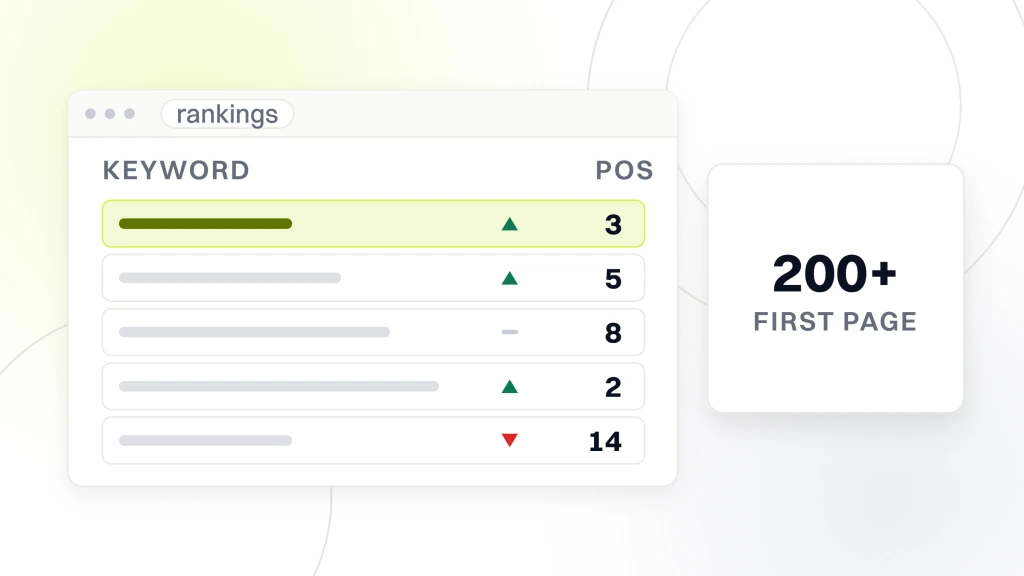
The 3-month program produced 10K monthly organic visits, 200+ first-page keywords across food, resort, and destination queries, and a 2.2% booking conversion rate on organic traffic. The integrated website carried the social engagement through to the booking funnel without the friction of the prior site. Every recipe, culinary experience, and package page mapped to a specific query universe the retainer team maintained through the weekly cadence. Same discipline holds for any CPG food or beverage brand where the content library needs to grow while the technical foundation stays clean underneath it.
Why the integrated site beat the audit-only fix
Vejrø’s alternative was a $22,000 flat audit-and-roadmap from a competing agency that would have delivered a PDF and left the strategy to the internal team to execute against a legacy CMS. The problem with the flat model on a resort account was that no one owned the ongoing work. The integrated site plus retainer path kept the strategy current across three months of iteration, which is why the numbers landed inside a quarter instead of stretching across a year and a half. According to Moz consulting insights, disciplined retainers deliver 2x to 4x organic revenue gains over 18 to 24 month windows in similar accounts.
Boogie Board and BSH Hausgeräte on retainer economics
Boogie Board, the reusable-writing-tablet brand, ran a paid-plus-organic program that managed $650K in ads while cutting acquisition cost to $31 per conversion and boosting conversion rate 11%. The organic layer underneath the paid work carried a compounding search base so the paid dollars had a warm landing page universe to point at. Every dollar of paid spend produced more because the organic infrastructure ranked the product-comparison and ingredient-adjacent queries the paid ads competed on. That paired-channel discipline maps directly onto CPG food and beverage accounts running Shopify or headless commerce.
BSH Hausgeräte GmbH, the parent of Bosch, Siemens, Gaggenau, and Neff appliances, ran a brand-hub optimization on BSH Turkey that grew leads 15%, added a 3% organic session lift, and stretched average session duration 45 seconds longer on the redesigned pages. Enterprise search work looks different from DTC food work on the surface, but the mechanics are identical. Clean technical foundation, on-page briefs written against the real query universe, weekly review of what moved and what did not, and a monthly report that ties search sessions to the business number leadership actually reads. Ibemploy, a Latvian recruitment platform, hit 7,500 monthly visits at a 4.2% organic conversion rate on the same retainer discipline applied to a completely different vertical.
What food and beverage brands should take from the cross-vertical proof
The reason the pattern holds across resort bookings, ecommerce ads, enterprise appliances, and B2B recruitment is that Google’s ranking signals do not care about the vertical. Site speed, schema, content depth, internal linking, and E-E-A-T signal work the same on a private-island resort as they do on a DTC beverage brand. A working seo agency for food and beverage brings the same technical hygiene, content brief production, and weekly reporting rhythm that produced the numbers above. The vertical layer is 20% of the work. The mechanical execution is 80%. Brands that hire the vertical expertise without the mechanical discipline get a strategy deck with no ranking movement to show for it.
How to choose an seo agency for food and beverage brands
Choose an seo agency for food and beverage on four criteria. Vertical experience in CPG, DTC food, or grocery ecommerce. Deliverable transparency (ask for redacted past reports on recipe or ingredient landing pages). Reporting cadence (weekly plus monthly plus quarterly). Cancellation terms (30 day out preferred). Any consultant weak on any one criterion drops off the shortlist inside the first 20 minute vendor call.
Six questions on the discovery call that shorten the shortlist
Ask every seo agency for food and beverage six questions on the first discovery call. Show me your last monthly executive readout for a food or beverage brand (redacted). What percentage of your CPG clients renew at month 12. How many hours per month does your typical DTC food client actually get. What is your process for handling ranking losses on recipe pages after Google core updates. What CMS platforms and stacks do you work in most (Shopify, WooCommerce, headless). Do you write food and beverage content briefs yourself or outsource them. Any consultant slow or evasive on any of these drops off the shortlist. Any consultant sharp and specific on all six earns a scope conversation.
The one question that eliminates half the shortlist
The one question that eliminates half of every food and beverage SEO agency shortlist is this. Can I speak with three current food or beverage clients on retainer with you for more than 18 months in a similar revenue range as my brand. Consultants who deliver hand you three names inside 48 hours. Consultants who do not deliver disappear the moment the reference request lands. Reference calls close 85% of vendor picks in either direction inside the first week of due diligence.
Red flags on cpg seo agency quotes worth catching before signing
Every quote for an seo agency for food and beverage carries red flags worth reading before you sign. The five below repeat across the CPG market and turn a promising retainer into a $60,000 disappointment across 12 months if you miss them at signing. See our monthly website maintenance packages for the technical hygiene layer that pairs with a strategic SEO retainer.
- No named strategist on the SOW. The account gets rotated across whoever has bandwidth that month, and no one owns the recipe-page performance number by month four.
- Vague hours language. Retainer says up to 20 strategist hours but the SOW does not commit to a floor. Vendor delivers 6 hours in busy months and 22 in slow ones, and the CPG brand cannot audit the difference.
- Ranking guarantees on recipe or product keywords. Any consultant promising specific rankings on the SOW is running a scam. Google’s Search Central essentials explicitly ban ranking guarantee claims from working consultants.
- No content brief samples for the food or beverage vertical. Vendor talks strategy but cannot show you actual work product from a CPG account with recipe or ingredient briefs attached.
- Auto-renewing 24 month contract with a 60 day cancellation window. You pay two months of retainer after notifying the vendor even if the strategy work went dark on day one.
How to audit an existing food SEO consulting relationship
Audit any existing seo agency for food and beverage relationship with four checks. Check one asks whether the named strategist on the SOW is actually the person doing the weekly work. Check two asks whether the monthly report shows actual hours used against the retainer commitment. Check three asks whether the last three content briefs are documented and traceable to keyword strategy against your recipe or product catalog. Check four asks whether the last quarterly technical audit produced concrete dev tickets that went live on the storefront. Fail on any two of the four and the retainer is a candidate for renegotiation or replacement inside the next 90 days.
Any retainer that produces a 22 page monthly PDF full of Google Search Console screenshots and an executive summary that repeats “steady progress” three times is producing zero signal. Replace the retainer inside 60 days or renegotiate scope down to model one flat delivery.
Redefine Web pricing tiers for a food and beverage seo agency retainer
Our seo agency for food and beverage retainer tiers start at $999 monthly, run through $1,499 and $2,499, and top out from $4,500 monthly for accounts on enterprise Shopify Plus stacks or multi-brand CPG portfolios. Ad spend on paired paid channels is billed separately. The $999 tier covers a single-brand DTC food or beverage account with a working Shopify store, weekly account touches, and monthly reporting. The $1,499 tier layers in monthly content brief production at 4 to 6 briefs, quarterly technical audit refresh, and Looker Studio dashboard build. The $2,499 tier suits mid-market CPG brands with $2M to $10M in annual DTC revenue and adds programmatic recipe content strategy plus grocery-locator SEO. The tier that starts at $4,500 suits enterprise CPG brands with $10M+ in DTC revenue, multi-brand portfolios, or headless commerce stacks with 10,000+ SKUs.
Why the tiers are structured this way
The tier math is straightforward. A US senior SEO strategist costs $95,000 to $145,000 in salary, roughly $9,000 monthly all-in with benefits, tooling, and PTO. The retainer tiers stay well under that number until the account grows into a full-time role, and that milestone typically arrives at $10M+ in annual DTC revenue. Below $2M in annual DTC, the agency retainer wins on cost and depth of expertise. Above $10M annual DTC, a hybrid model with an in-house lead and agency oversight often wins on speed and control. Both models coexist inside the same CPG brand as it scales across product categories and retail channels.
Total annual cost of a food and beverage SEO agency
Total annual cost is the number every CPG marketing lead should budget against, not the monthly retainer sticker. Model one flat runs $6,000 to $18,000 in one year with no ongoing spend. Model two monthly at $999 to $2,499 runs $11,988 to $29,988 annually, and the tier that starts at $4,500 runs $54,000+ annually. Model three fractional at $8,000 to $22,000 monthly runs $96,000 to $264,000 annually. Add roughly 15% to any model for expected scope-expansion requests across a 12 month window, which food and beverage SEO agency vendors accept as normal on real strategic work.
Reporting metrics inside a working food and beverage SEO agency retainer
Reporting inside a working seo agency for food and beverage retainer runs on six metrics leadership can read on a single Looker Studio page. Organic sessions by primary landing page cluster (recipes, ingredients, product categories, grocery-locator). Ranking distribution across the tracked keyword universe. Organic-attributed DTC revenue and cart events pulled from Shopify or WooCommerce. Technical health score from crawl data across product schema and image bloat. Content publish cadence and average recipe brief-to-publish time. Competitive share-of-voice against 3 to 5 named food or beverage competitors. Any consultant reporting on 15+ metrics is padding the dashboard.
How to tell if food SEO reporting is producing real signal
Real reporting produces three specific outputs. A monthly one-page summary the CEO or brand lead can read in under 90 seconds and understand. A drill-down dashboard the ecommerce lead uses for weekly decisions across recipe and product page performance. A quarterly executive readout mapping DTC revenue back to strategy investment. Any retainer producing 15 page monthly PDFs full of screenshots is either padding or hiding the fact that the retainer produced no signal that month. Working retainers converge on 5 to 7 metrics leadership actually reads by month 6, and every extra metric on the page is a distraction from the numbers that move the business.
What zero-signal food SEO reporting actually looks like
Zero-signal reporting looks like a 22 page PDF with 40 screenshots of Google Search Console filters, an executive summary that repeats the phrase “steady progress” three times, and no traceable link between the food and beverage SEO agency work and any specific DTC revenue metric. If the monthly report from your current consultant looks like that, the retainer is producing zero signal. Replace the retainer inside 60 days or renegotiate scope down to a $999 to $1,499 monthly base with monthly content brief production only.
Engagement lifecycle for an seo agency for food and beverage brands
Every working seo agency for food and beverage engagement runs through four phases. Phase one is discovery and kickoff at 30 days. Phase two is initial audit and roadmap delivery at 45 to 90 days. Phase three is ongoing execution against the roadmap from month 4 through month 18. Phase four is quarterly re-strategy and re-benchmarking against updated Google algorithm changes, competitor movement, and brand goals from month 6 onward. Miss any phase and the retainer produces roughly 40 to 60% of the possible outcome across the first year of the partnership.
Phase one at 30 days sets the CPG baseline
Phase one at the first 30 days sets three baselines for an seo agency for food and beverage retainer. Traffic and ranking baseline pulled from Google Search Console, GA4, and the working keyword universe across recipe, ingredient, and product queries. Revenue baseline pulled from Shopify or WooCommerce data on organic-attributed DTC orders from the past 6 to 12 months. Team and process baseline covering who owns recipe content, product page copy, and dev workflow internally. Skip phase one and every month of the retainer runs against unclear performance signal.
Phase two delivers the audit-plus-roadmap the food SEO retainer executes
Phase two across days 30 to 90 delivers the full technical SEO audit, the 12 to 18 month roadmap, and the initial keyword strategy document with 200 to 800 target terms across recipes, ingredients, product categories, and grocery-locator pages. Phase two is where 40 to 60% of the year-one strategic value gets defined. Any seo agency for food and beverage compressing phase two into 30 days or fewer is either cutting corners or running a template audit on every account. Any consultant stretching phase two past 90 days is dragging billable hours across work that should have gone live already. According to Search Engine Land’s SEO coverage, the 60 to 90 day audit window is the industry benchmark for accounts under 25,000 URLs.
Should an seo agency for food and beverage sit in-house or at an agency
Every CPG founder eventually asks whether an seo agency for food and beverage should live internally or on retainer. The honest answer sits at the intersection of DTC revenue, the founder’s technical appetite, and whether the brand has the ongoing content volume to keep a specialist busy year-round. Below $2M in annual DTC revenue, an agency retainer wins on cost and depth. Between $2M and $10M annually, an agency retainer with a tight weekly cadence still wins for most brands. Above $10M annually across a multi-brand or portfolio structure, a hybrid model with an in-house lead paired with agency oversight often produces the best balance of speed and control.
The hidden cost of the in-house path shows up in tooling. A serious SEO stack (Ahrefs, Semrush, Screaming Frog, Looker Studio Pro, Sitebulb, Content King) runs $800 to $2,400 monthly on top of the specialist’s salary. Agencies spread that cost across the retainer book and pass through pricing that a single CPG brand cannot match on its own. Add in the coverage risk (vacation, illness, resignation) and the agency model usually wins on total cost until the brand is large enough to hire a two-person SEO team with proper backup coverage.
Locking in an seo agency for food and beverage that compounds DTC revenue
An seo agency for food and beverage that compounds DTC revenue comes down to six patterns. Pick the right engagement model (flat, monthly retainer, or fractional) based on annual DTC revenue and internal team size. Commit the seven deliverables on the SOW at signing (named strategist, committed hours floor, monthly briefs, quarterly audit, weekly GSC review, monthly executive readout, quarterly strategy revisit). Run the weekly cadence every week, not on the first of the month. Track six reporting metrics on a single Looker Studio page. Layer the retainer against the paired paid search program so both channels compound. And publish a monthly one-page executive readout that ties organic sessions to DTC revenue.
Vejrø Resort hit 10K organic visits and 200+ first-page keywords in 3 months on the integrated site plus retainer path. Boogie Board cut acquisition cost to $31 while running $650K in ads on the paired organic base. BSH Hausgeräte grew leads 15% and sessions 3% on the brand-hub optimization. Ibemploy hit 7,500 monthly visits and 4.2% organic conversion on the same retainer discipline. Every one started with named strategist, committed hours, weekly cadence, and monthly reporting that tied search work to the business number. If the brand is spending on SEO without a weekly cadence, our food and beverage seo agency program covers the account structure, weekly work, and monthly reporting end to end, and our retainer tiers ($999, $1,499, $2,499, from $4,500 monthly) cover CPG brands from single-line DTC startups through multi-brand enterprise portfolios. Book a call and we will walk the last three food and beverage accounts we restructured end to end.
How do I do SEO for my restaurant business?+
Restaurant SEO comes down to five moves any owner can run on the first weekend. Claim and complete the Google Business Profile with hours, menu link, phone, and 15+ photos. Add LocalBusiness plus Restaurant schema to the site’s homepage and menu pages. Write dish-focused landing pages for the 5 to 10 signature items customers already Google (“best carbonara Brooklyn”, “gluten-free ramen Austin”). Publish 8 to 12 blog posts a year on local food scene topics that link back to the menu pages. Ask for reviews at the end of every service, aiming for 4 to 8 new reviews monthly. Run the same weekly Google Search Console query review a working seo agency for food and beverage runs, and the restaurant lands top-3 in the map pack for its category inside 4 to 8 months.
Who is the SEO expert for food blogging?+
The recognized SEO experts publishing regularly on food blogging include Casey Markee of Media Wyse, who consults on 200+ food blogs and speaks at every major food-blogger conference; Nina Clapperton of She Knows SEO with a course library focused on recipe search; and Andrew Wilder of NerdPress on the technical side (site speed, Core Web Vitals, hosting for image-heavy recipe sites). For an agency retainer rather than a solo consultant, Redefine Web runs a working seo agency for food and beverage program with weekly cadence, monthly recipe brief production, and Looker Studio reporting tied to DTC revenue. Solo experts fit food bloggers running a personal site under $5K monthly revenue. Agency retainers fit CPG brands and food ecommerce operators past $500K in annual DTC revenue.
How do I start my own SEO agency?+
Starting an SEO agency runs through six steps that any working consultant has completed inside 6 to 12 months. Pick a vertical the founder has 3+ years of in-house experience in (food and beverage, dental, legal, ecommerce). Build a case study library from the first 3 to 5 accounts, ideally with named brands and specific numbers. Set retainer pricing at $999 to $2,499 monthly for solo work and from $4,500 monthly for team-backed accounts. Wire an outreach system (LinkedIn, cold email, conference presence, or referral partners). Deliver the seven core deliverables (named strategist, committed hours, monthly briefs, quarterly audit, weekly GSC review, monthly readout, quarterly revisit) on every SOW. Hire the second consultant once monthly recurring revenue passes $12K. Most agencies fail on the first two steps, not the pricing or hiring.
How to do seo agency for food and beverage online+
Running an seo agency for food and beverage online means delivering the retainer entirely through Slack, Zoom, Loom, Google Docs, and Looker Studio without any on-site presence. Wire the weekly cadence (Monday Slack summary, Wednesday Zoom, Thursday content brief delivery, Friday Loom walkthrough). Use Ahrefs or Semrush for recipe and ingredient keyword research. Deliver monthly Looker Studio reports tied to Shopify or WooCommerce revenue. Run the quarterly technical audit as a shared Google Doc plus PDF export. Redefine Web runs every food and beverage SEO agency retainer this way, starting at $999 monthly for single-brand DTC accounts and at $4,500 monthly for enterprise CPG portfolios. Ad spend on paired paid channels is billed separately.
How to do seo agency for food and beverage examples+
Working examples of an seo agency for food and beverage retainer look like the DTC beverage brand we ran at $6,500 monthly across 18 months (organic traffic up 3.2x, DTC revenue from organic up 82% quarter-over-quarter), Vejrø Resort at 10K organic visits and 200+ first-page keywords in 3 months, Boogie Board at $31 cost per conversion managing $650K in ads, and BSH Hausgeräte’s brand hub optimization at 15% lead growth and 3% organic session lift. Every retainer used the same discipline. Named strategist on the SOW, committed hours floor, monthly recipe or product content brief production, quarterly technical audit refresh, weekly GSC review, and monthly Looker Studio readout tied to DTC or booking revenue.
What is SEO in food?+
SEO in food is the practice of ranking recipe pages, ingredient landing pages, product pages, and grocery-locator content on Google for queries a CPG brand’s audience already searches. It covers keyword research across recipes and ingredients, technical audit on Shopify or headless commerce, on-page content briefs, Recipe schema markup, image performance work on high-photo recipe pages, and monthly reporting that ties organic sessions to DTC orders or grocery-locator visits. Our SEO for food and beverage brands guide covers the recipe-ranking mechanics in depth. A working seo agency for food and beverage runs this discipline on a weekly cadence rather than a monthly glance.
How much does an seo agency for food and beverage cost per month?+
Agency retainer pricing for an seo agency for food and beverage runs $999 to $1,499 monthly for single-brand DTC food accounts on Shopify with $500K to $2M annual DTC revenue, $2,499 monthly for mid-market CPG brands at $2M to $10M annual DTC, and from $4,500 monthly for enterprise CPG portfolios with $10M+ in DTC revenue or multi-brand structures. Ad spend on paired paid channels is billed separately. The retainer covers the weekly cadence, monthly content brief production, quarterly technical audit refresh, and monthly Looker Studio readout. Retainers below $999 monthly usually mean the account gets a monthly dashboard glance rather than weekly work, which produces the drift pattern most CPG founders eventually notice as flat DTC revenue.
How long before SEO starts working for a CPG food or beverage brand?+
A new food or beverage SEO retainer typically shows the first ranking movement inside 60 to 90 days, since Google needs time to crawl and index new recipe or product-page briefs, plus the technical fixes pushed live in the initial audit. Organic-attributed DTC revenue usually shows measurable growth by month 4 to 6 as the ranking gains convert to sessions and sessions convert to orders. Vejrø Resort hit 10K monthly visits in 3 months. The DTC beverage brand at $6,500 monthly hit 3.2x organic traffic across 18 months. Expect a full quarter before ranking gains show, and two to three quarters before DTC revenue attribution catches up with the ranking movement.
Should CPG food brands use Amazon SEO alongside Google SEO?+
Yes, when the CPG brand sells on Amazon at any meaningful volume. Amazon search runs its own algorithm (A10) that ranks product listings on sales velocity, conversion rate, review count, and keyword relevance in the title and bullets. Google search sends buyers to the DTC storefront on Shopify, WooCommerce, or a headless site. Both channels feed each other. Amazon listings often outrank the DTC site on branded queries, which is worth accepting as long as the retail margin math works. A working seo agency for food and beverage should have a stated position on Amazon SEO scope inside the retainer, either as an included deliverable or a paid add-on billed on top of the base tier.
How do I know if my current food and beverage SEO agency is any good?+
Three signals mean the current arrangement is drifting. Monthly reports pivot from organic-attributed DTC revenue to raw session counts. The Google Search Console query review has not happened in more than 2 weeks. The last content brief for a recipe or ingredient page was more than 45 days ago. Any one is a yellow flag. Two together is a red flag. All three means the retainer is on autopilot. Two signals mean the arrangement is on track. Organic-attributed DTC revenue grows quarter over quarter or holds steady while ad spend on paired channels drops, and the agency proactively raises new tests each month. Ask for the last four Monday GSC-review notes and the last two content brief drafts. If neither exists, the retainer needs new hands.