The channel mix that carries a DTC beauty brand from launch to $80,000 monthly falls apart on the way to $250,000. The influencer pipeline that produced the first 3,000 customers stops producing repeatable results at customer 8,000. Meta ads that opened at a 4.2x return stall at 2.1x by month nine. An abandoned-cart flow that closed 22% of carts drops to 9% as list quality shifts. Brands that break through rebuild the DTC beauty stack around ten channels instead of pushing harder on the three that carried the first year.
This guide walks the ten channels the Redefine Web team runs on growing DTC beauty brands through 2026. Meta and TikTok paid. Google Ads for transactional queries. Influencer partnerships across three tiers. SEO for problem-plus-ingredient queries. Email and SMS retention flows. Content tied to ingredient education. Amazon and marketplace strategy. Retail placement pursuit. Plus the reporting stack that tells a founder which channels compound and which cannibalize. Pull the last 90 days of Shopify, Meta Ads, and Klaviyo data before touching a dollar of the current mix.
The ten channels that shape modern skincare marketing
The modern beauty stack runs across ten channels with wildly different economics. Meta Ads. TikTok Ads. Google Ads. Influencer partnerships. SEO. Email plus SMS. Content marketing. Amazon and marketplace. Retail placement. Community and loyalty. Each channel carries a different cost per first order, a different repeat purchase rate, and a different pairing profile with the rest of the stack. Skincare brands that pick three channels and pretend the other seven do not exist plateau at $80,000 to $180,000 monthly DTC revenue. Skincare brands that layer all ten in the right sequence scale past $500,000 monthly across 18 to 36 months of consistent weekly work.
The sequencing matters as much as the channel selection. Meta Ads and TikTok Ads carry the first 90 days of demand generation because the platforms let a new brand reach cold audiences fast. Influencer partnerships enter at month 3 to 6 when the brand has enough Meta creative data to know which product and message pairings convert. SEO and content marketing enter at month 6 to 9 because the ranking work needs runway. Amazon and marketplace enter at month 9 to 12 once the DTC brand equity is strong enough to defend against copycat listings. Retail placement enters at month 12 to 18 once the brand has enough proof to pitch buyers at Sephora, Ulta, and Credo.
Beauté Aesthetics New York, a Manhattan luxury beauty and aesthetics clinic, showed the payoff of layered channel work with a 166% growth in leads, 88% growth in new users, and 27% conversion rate growth across a 12-month partnership. The pattern is transferable across DTC skincare when a brand commits to the ten-channel stack rather than defaulting to the three-channel launch stack that worked at $30,000 monthly and stops working at $180,000. Every DTC beauty growth plan that scales past mid-six-figures monthly funds all ten channels at the working floor and rotates the mix per revenue stage.
Meta and TikTok anchor the paid layer of skincare marketing
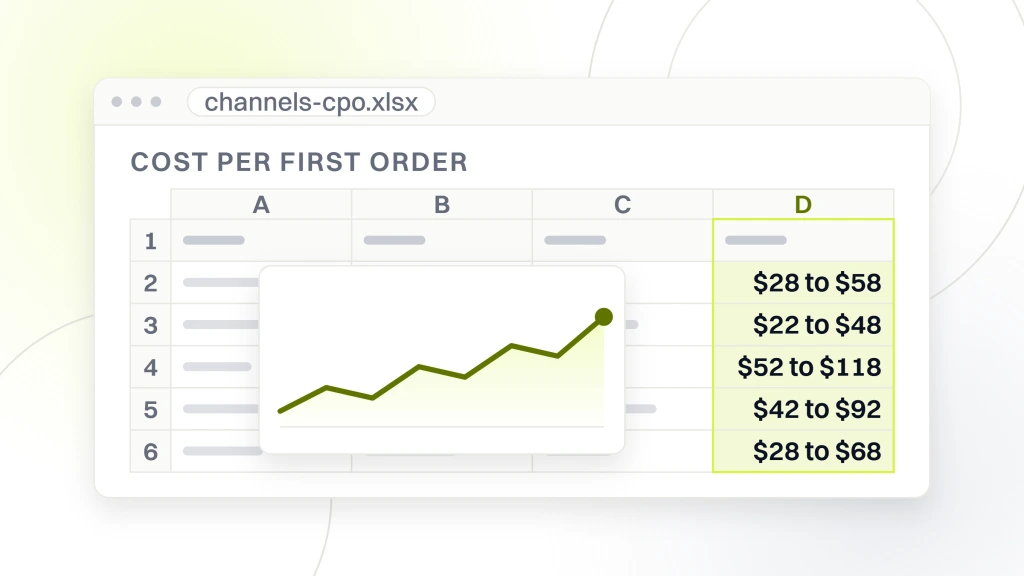
Meta and TikTok anchor the paid layer because both platforms reach cold audiences at scale with interruption creative that shows skin change, ingredient chemistry, and routine demonstration in 6 to 15 seconds. Cost per first order on Meta runs $28 to $58 for well-optimized skincare accounts with weekly creative rotation. TikTok runs $22 to $48 for accounts with founder-led or creator-partnership content. Both platforms decay quickly if creative rotation stops. A single creative that ran at 3.8x ROAS in week one drops to 1.4x ROAS by week four if the ad set does not receive fresh creative every 5 to 8 days.
The working Meta setup for skincare runs four creative rules. Ingredient-first hooks in the first 2 seconds (2% Hyaluronic Acid versus 1% Retinol as a comparison hook). Real skin content over stock (before-and-after slides, texture close-ups, application demonstration). Skin-tone and skin-type diversity across the creative rotation. Transparent ingredient percentages in the copy (Contains 5% Niacinamide, no fillers). Meta ads that name the ingredient percentages produce click-through 1.6 to 2.4 times higher than generic benefit-only variants. The beauty skincare PPC page covers the paid framework we apply on premium DTC skincare brands.
TikTok wants a different creative structure than Meta. TikTok skincare content runs longer (30 to 90 seconds) with a heavier education-plus-story format because the platform rewards content that keeps viewers watching. Founder-led talking head videos consistently out-perform polished ad-agency work on TikTok because the platform reads authenticity signals differently than Meta. Read the TikTok Ads video specs documentation for the current-year aspect ratios and duration limits by placement across the platform.
Google Ads captures transactional intent in skincare marketing
Google Ads plays a smaller role for beauty brands than for med spa or dental clients because transactional query volume is lower and legacy brands with 20-year AdWords budgets control most of the auction. Cost per first order on Google Ads for a mid-size DTC skincare brand runs $52 to $118. That number is higher than Meta or TikTok for the acquisition-only channel. Google Ads earns budget in the skincare stack for one reason. The channel captures buyers already searching for the brand or the ingredient with intent to purchase inside the current session.
The working Google Ads structure for skincare runs three campaign types. Search campaigns on branded queries (defensive spend to prevent competitor bidding on the brand name). Search campaigns on ingredient-plus-modifier queries (best niacinamide serum, 5% BHA cleanser, vitamin C serum for sensitive skin). Shopping campaigns feeding the full product catalog through Merchant Center. Performance Max campaigns should stay off the account until month 4 or 5 when the account has enough conversion history to feed the algorithm reliably across product categories and geographic markets.
Branded search defense typically runs 8% to 15% of monthly Google Ads budget and produces a 6x to 12x ROAS because the buyer already knew the brand name before the click. Skincare brands that skip branded defense lose 12% to 28% of first-party revenue to competitors bidding on the brand name. Boogie Board, a reusable-writing-tablet brand, cut acquisition costs to $31 per conversion and grew conversions 11% while running $650K in ads with sustainable ROI. The same paid discipline (branded defense, clean feed, tight audience targeting) reads across skincare accounts once the ad copy and product feed match category norms. Reference the Google Merchant Center feed specifications for the product feed format that powers Shopping campaigns across every skincare SKU.
Influencer partnerships remain central to skincare marketing
Creator partnerships stay central to the category because beauty runs on trust signals that paid ads and organic content cannot manufacture. Skincare buyers trust a creator with 50,000 followers demonstrating a serum on their own skin more than a polished ad showing a professional model. Cost per first order on influencer partnerships runs $18 to $88 depending on the tier of creator and the exclusivity terms. The economics work when the brand runs partnerships across three tiers rather than concentrating budget on one tier.
The working three-tier structure runs like this. Tier one is nano and micro creators (5,000 to 50,000 followers) at 30 to 60 partnerships per month at a $80 to $220 gifted-plus-fee structure per creator. Tier two is mid-tier creators (50,000 to 250,000 followers) at 5 to 12 partnerships per month at a $600 to $2,400 fee structure. Tier three is macro creators (250,000 to 1M followers) at 1 to 3 partnerships per quarter at $6,000 to $24,000 per partnership. That tiered mix produces 45% to 90% of monthly DTC customer acquisition across the first 18 months for premium skincare brands running the full stack.
The picking rule is simple. Nano and micro creators drive volume of user-generated content that feeds the paid creative rotation. Mid-tier creators drive first-purchase demand from audiences already primed by nano coverage. Macro creators drive brand credibility that opens retail buyer meetings 12 months later. Running only one tier produces one of those three outputs and starves the other two. That is why skincare brands running a single-tier influencer program plateau on the metric the missing tiers were built to move.
SEO and content marketing compound revenue across 12 months
Organic search for beauty runs on problem-plus-ingredient queries. A buyer searching for how to fade dark spots is at the top of the funnel and worth capturing with a 2,400-word content piece that ranks in positions 3 to 8 and drives 800 to 3,200 monthly organic sessions. A buyer searching for best 5% niacinamide serum for oily skin is deeper in the funnel and worth capturing with a product comparison page that ranks in positions 1 to 4 and drives 45 to 220 monthly first orders. Both queries feed the same SEO engine but want different content structures to convert.
The working content cadence runs three pieces per week. One long-form ingredient education piece (2,000 to 3,500 words) covering the science, use cases, product pairing, and buyer FAQs for a single active ingredient. One long-form skin concern piece (1,800 to 3,000 words) covering the problem, the routine, the ingredient stack, and the product recommendations. One product comparison piece (1,200 to 2,200 words) covering the brand product versus the top 3 to 5 competitors on the same use case. That cadence produces 90 to 140 pieces per year and generates 40,000 to 180,000 monthly organic sessions by month 18 for premium skincare brands.
The SEO layer supports the content layer through five workstreams. Technical health (Core Web Vitals under 2.5 seconds LCP, crawl budget optimization, canonical hygiene). On-page optimization (title tags, meta descriptions, schema markup, internal linking structure). Link building (digital PR to skincare publications, guest posts on wellness blogs, HARO-style expert quotes). International SEO (hreflang tags for brands selling into multiple regional markets). Product schema across the full catalog through Rank Math or Yoast SEO Premium. Abigail Ahern, a luxury home décor brand, grew revenue 179% and doubled conversion rates once SEO and paid media were restructured around intent-driven traffic and premium creative. The same intent-plus-creative discipline reads directly into skincare accounts. The beauty skincare SEO page covers the full ranking framework.
Skincare marketing channels ranked by cost per first order
The ten channels below rank by blended cost per first order at month twelve, assuming the brand funds each channel at the working floor for the full window. Numbers reflect DTC skincare brands with $50,000 to $500,000 monthly revenue. Enterprise skincare brands running $2M-plus monthly see channel economics shift as scale kicks in and category-leader brand equity produces free organic demand that reduces reliance on paid channels below the numbers shown here.
| Channel | Cost per first order | Repeat purchase rate | Compound curve at month 12 |
|---|---|---|---|
| Meta Ads | $28 to $58 | 28% to 42% | Flat with creative rotation |
| TikTok Ads | $22 to $48 | 32% to 48% | Flat with creator content |
| Google Ads | $52 to $118 | 38% to 55% | Flat to 5% cheaper |
| Nano and micro influencers | $18 to $48 | 34% to 52% | 22% cheaper |
| Mid-tier influencers | $38 to $88 | 42% to 58% | Flat |
| SEO and content marketing | $12 to $32 | 48% to 62% | 68% cheaper |
| Email plus SMS (repeat orders) | $4 to $12 | N/A (retention only) | Flat by design |
| Amazon and marketplace | $42 to $92 | 18% to 32% | Flat |
| Retail placement | $28 to $68 | 22% to 38% | Flat |
| Community and loyalty | $8 to $22 | 62% to 82% | 38% cheaper |
The table looks static but the pairing profile is what decides which four to six channels a specific brand should run at each revenue stage. A brand at $50,000 monthly revenue should run Meta plus TikTok plus micro influencers plus email plus SMS. A brand at $200,000 monthly should add Google Ads plus SEO content marketing plus mid-tier influencers. A brand at $500,000 monthly should add Amazon plus community and loyalty. The beauty skincare marketing retainer page covers the channel stacks we run at each revenue tier.
Email and SMS carry the retention half of skincare marketing
Email and SMS drive the retention half of the mix at a cost per repeat order 8 to 14x lower than paid acquisition. Skincare is a repeat-purchase category by nature. A serum bottle lasts 6 to 10 weeks. A cleanser lasts 8 to 12 weeks. A moisturizer lasts 8 to 14 weeks. Every skincare brand that skips the automated flow structure loses 35% to 55% of annual revenue because the acquisition budget keeps buying first orders while the current customer base gets no reorder nurture and gradually lapses to a competitor at the routine-refresh moment.
The working email and SMS setup runs seven automated flows. Welcome flow (4 emails over 10 days covering ingredient education plus first reorder prompt). Post-purchase flow (3 emails plus 1 SMS over 21 days covering routine building plus product pairing). Reorder reminder flow (2 emails plus 1 SMS timed to typical bottle-empty date). Winback flow (5 emails over 45 days for customers past their expected reorder date). Cart abandonment (3 emails over 24 hours with progressive discount ladder). Browse abandonment (2 emails over 48 hours). Birthday and anniversary (1 email and 1 SMS per customer per year). Klaviyo, Attentive, and Postscript all handle the seven-flow stack natively with Shopify integration.
The compound math on email plus SMS looks small on any given month and considerable across a year. A skincare brand with 22,000 email subscribers and 8,400 SMS subscribers running the seven-flow stack typically produces $80,000 to $220,000 monthly retention revenue at a marketing cost under $2,400 monthly for platform fees plus flow-writing work. That is a 33x to 91x return on the retention channel, which is roughly 10 times the return the acquisition channels produce on the same monthly spend. Skincare brands that measure ROI channel by channel see the retention channel as the highest-return line item in the marketing plan every quarter. Subscribe-and-save programs stapled to the reorder flow grow repeat rates another 12 to 22 points once the reorder cadence is dialed in.
Amazon and marketplace strategy in skincare marketing
Amazon and marketplace strategy enters the mix at month 9 to 12, once DTC brand equity is strong enough to defend against copycat listings. Cost per first order on Amazon runs $42 to $92 for premium skincare brands running Amazon Ads plus proper listing optimization plus Brand Registry protection. Repeat purchase rate on Amazon runs 18% to 32%, which is lower than DTC because Amazon customers shop across brands within Amazon rather than staying loyal to a single brand across reorders.
The working Amazon setup runs five workstreams. Brand Registry enrollment through Amazon Brand Registry (protects against counterfeit listings and opens A-plus content). Listing optimization across title, bullets, description, and A-plus content with proper keyword targeting. Amazon Ads across Sponsored Products, Sponsored Brands, and Sponsored Display at 8% to 15% of Amazon revenue. Review generation through Vine and Amazon Live streams. Inventory management through FBA with 45 to 60 day forecasting to prevent stock-outs during peak demand windows. Reference the Amazon Seller Central help documentation for the current-year listing optimization rules and Brand Registry requirements across the marketplace stack.
Retail placement fits the mature skincare marketing stack
Retail placement enters at month 12 to 18, once the brand has enough DTC proof (revenue, review counts, social engagement) to pitch buyers at Sephora, Ulta, Credo, Target, and regional specialty retailers. Cost per first order through retail runs $28 to $68 blended across paid retail marketing, sampling programs, and buyer meeting travel. Repeat purchase rate through retail runs 22% to 38% because retail shoppers cross-shop brands within the aisle rather than staying loyal to a single brand across reorders.
The pitch to retail buyers wants four pieces of evidence. DTC revenue trajectory over the past 12 to 18 months showing month-over-month growth. Repeat purchase rate above 40% on the flagship product. Review count above 800 with 4.5-plus star average on the brand website. Social engagement above 2% on Instagram and TikTok combined. Brands hitting all four benchmarks typically land Sephora Accelerate, Ulta Sparked, or Credo Sustainable Beauty program placement within 6 to 12 months of the first buyer meeting. Brands missing two or more benchmarks get deferred to the next quarterly review cycle without a pass or a fail.
The economics of retail placement change the DTC economics after launch. Retail placement typically cannibalizes 12% to 28% of DTC revenue in the first 90 days because retail buyers who would have discovered the brand DTC now discover it in-store. That cannibalization stabilizes at month 6 as retail becomes a discovery channel that drives future DTC repeat orders for buyers who prefer subscription models over trip-to-store models. Plan the DTC revenue forecast to dip in months 1 through 6 after retail launch and recover through months 7 through 18 as the cannibalization inverts into a discovery flywheel.
Reporting stack that ties skincare marketing channels together
Six to ten concurrent channels want a reporting stack that tells the founder which channels compound and which cannibalize. The working stack runs four dashboards. Dashboard one covers blended CAC by channel week over week. Dashboard two covers 30-day, 90-day, and 180-day LTV by acquisition channel. Dashboard three covers repeat purchase rate by acquisition channel across 6 and 12 month windows. Dashboard four covers organic-to-paid ratio week over week (rising means the SEO and content investment is compounding, falling means the paid channels are pulling ahead).
The tools that build the reporting stack for skincare brands run at three price tiers. Free tier uses Google Looker Studio pulling from Shopify plus Meta Ads plus Google Ads plus Klaviyo native connectors. Mid tier uses Northbeam, Triple Whale, or Fivetran at $600 to $2,400 monthly for multi-touch attribution across the paid channels. Enterprise tier uses Segment plus a warehouse (BigQuery or Snowflake) plus a BI tool (Looker or Tableau) at $4,800 to $18,000 monthly for full first-party data pipeline control. Pick the tier that matches the current revenue stage. A brand at $80,000 monthly should stay on the free tier. A brand at $250,000 monthly should move to mid tier. A brand at $1M-plus monthly should move to enterprise tier.
The reporting stack costs less than one week of paid ad spend at every tier and prevents 20% to 40% of the misallocated budget that happens without it across a typical marketing year. Skincare brands that skip the reporting layer default to Meta Ads Manager and Shopify Analytics as the only source of truth. Both platforms overstate their own attribution and neither shows LTV by channel. The blind spots produce 22% to 44% overinvestment in the highest-attribution-claim channel and 22% to 44% underinvestment in the compound channels (SEO, email, community) that produce revenue Meta cannot claim credit for.
Common mistakes across DTC skincare marketing stages
Every DTC beauty audit turns up the same short list of stage mistakes. Fixing the list at the current revenue stage takes 20 to 40 hours of focused work and produces measurable CAC and LTV movement inside 30 to 60 days. The mistakes below apply whether the brand runs paid, organic, email, or a combination stack across the full marketing year.
- Concentrating 70%+ of budget on Meta Ads at any revenue stage above $80,000 monthly
- Recycling the same three creatives across every ad set without weekly rotation
- Skipping branded search defense on Google Ads and losing 12% to 28% to competitor bidding
- Running one influencer tier only instead of the three-tier structure across nano, mid, and macro
- Underfunding SEO content in months 1 through 6 then wondering why organic traffic is flat
- Sending one generic monthly email newsletter instead of the seven automated flow structure
- Launching Amazon without Brand Registry and losing DTC organic traffic to Amazon listings
- Pitching retail buyers before hitting the four evidence benchmarks and getting deferred forever
Every mistake gets fixed once and stays fixed. The compound benefit runs across every subsequent month of the marketing year. A brand that fixes the eight mistakes above in a single 90-day sprint typically sees blended CAC drop 22% to 41% and LTV climb 18% to 34% across the full channel stack. The movement holds through the following 12 months barring major auction or category shifts that want a fresh audit and adjustment cycle.
Scaling path from launch to $500,000 monthly in skincare marketing
The scaling path from launch to $500,000 monthly DTC revenue in the skincare stack runs across four stages. Stage one (month 0 to 6, revenue $0 to $80,000 monthly) runs Meta Ads plus TikTok Ads plus micro influencers plus email plus SMS at $8,000 to $22,000 monthly marketing spend. Stage two (month 6 to 12, revenue $80,000 to $200,000 monthly) adds Google Ads plus SEO content marketing plus mid-tier influencers at $18,000 to $48,000 monthly. Stage three (month 12 to 18, revenue $200,000 to $350,000 monthly) adds Amazon plus community and loyalty at $32,000 to $78,000 monthly.
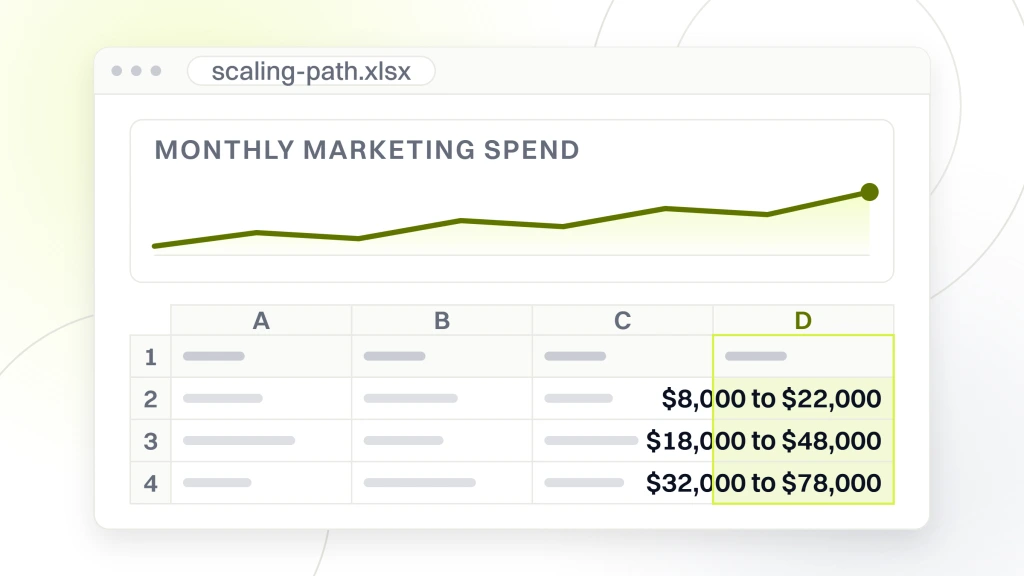
Stage four (month 18 to 24, revenue $350,000 to $500,000 monthly) adds retail placement plus international expansion at $52,000 to $128,000 monthly marketing spend. Blended CAC across the four stages typically follows a curve. Stage one runs $34 to $48 blended. Stage two drops to $28 to $42. Stage three holds at $28 to $42 as Amazon and community reduce reliance on paid. Stage four climbs to $32 to $48 as retail launch and international expansion carry higher fixed costs before the revenue kicks in. LTV at 18 months typically climbs from $92 in stage one to $148 in stage two to $182 in stage three to $198 in stage four.
Skincare brands that skip stages produce short-run wins with no compounding. A brand that launches at $80,000 monthly and jumps straight to retail placement pursuit at month 8 typically fails the four-evidence-benchmark test and burns 6 to 9 months of runway trying to land placement it was not ready for. Better to stay in the current stage until the revenue floor of the next stage becomes stable and then move to the next stack. Site architecture that supports each of the four scaling stages matters as much as the channel picks themselves. Retainers for the mix start at $1,499/mo for early-stage brands, run $2,499/mo through $3,999/mo across stages two and three, and start from $6,000/mo for stage-four builds. Ad spend is billed separately across every tier.
Where skincare marketing fits the full brand growth plan
Beauty growth sits inside a broader plan alongside product formulation, packaging design, supply chain, and community engagement. Marketing channels drive first-touch discovery and reorder nurture. Product formulation decides whether the brand can deliver on the marketing claims. Packaging design decides whether the unboxing moment produces the UGC that feeds future creative rotation. Supply chain decides whether the brand can serve demand at scale without stock-outs. Community engagement decides whether customers become advocates who drive organic growth beyond paid.
Brands that budget for marketing channels without the surrounding workstreams produce short-run wins with no compounding. Brands that get all five workstreams running together turn every twelve-month investment into a compounding revenue channel that scales past $500,000 monthly. The broader plan sits inside our beauty and skincare marketing agency page, which covers the sequencing that puts paid, organic, retention, and community work in the right order relative to product and supply chain across the first 24 months of any new DTC skincare brand.
The whole discipline reduces to picking six to ten channels that pair well at the current revenue stage, funding each at the working floor for the full 12-month window, and running the weekly rhythm across every one consistently. Get the pairing profile locked to the current stage, install the reporting layer, run the weekly rhythm, and let the compound effect play out over 90 to 730 days across the four scaling stages. That is the whole plan.