
Most DTC brands spend $8,000 to $80,000 monthly on ecommerce marketing and treat the program as a rotating set of tactics rather than a set of habits. Meta gets a new creative pack in week 1, Google Shopping gets a bid overhaul in week 2, Klaviyo gets a flow rewrite in week 3, and nobody checks whether the previous change earned. Best practices for ecommerce marketing fix this by turning the program into a written weekly rhythm every owner runs against every Monday morning. Habits, not heroics, protect revenue across the 12 months after launch.
This guide walks the operational hygiene rules our team runs against real DTC clients from starter Shopify stores at $200,000 yearly revenue up through scale brands past $20 million. Every rule below has a specific reporting cadence, a named owner, and a number attached. Read straight through in 10 minutes, then hand the checklist to your team on Monday and start the first weekly review by Friday.
Paid Media Hygiene Under Ecommerce Marketing Best Practices
Paid media hygiene covers the checklist of foundational items that stay green before any campaign optimization work matters. Pixel firing correctly. Product feed clean. Creative rotation on schedule. Audience seeds refreshed. Negative keywords updated. Attribution windows aligned across platforms. Miss any single item and the paid program silently drifts. That drift shows up 60 days later as a 25 to 40% ROAS drop nobody can trace back to a single decision.
Pixel and Feed Audits Run Every 30 Days
The pixel and feed audit runs on the first Monday of every month. Meta Pixel fires on view content, add to cart, initiate checkout, and purchase events with server-side backup through Conversions API. Google Analytics 4 mirrors the same events with the items array populated correctly. Google Merchant Center feed has zero disapproved items, GTINs on 100% of items, and product schema markup validated. A brand that skips the monthly audit usually discovers 3 months later that Meta Pixel stopped firing purchase events after a Shopify app update, which invalidates every campaign learning during that stretch.
Creative Rotation Runs Weekly Across Every Prospecting Campaign
Creative rotation launches 3 to 5 new variants weekly per active prospecting campaign. Variants alternate between UGC-style customer testimonials, static product benefit callouts, animated feature demos, and lifestyle placements. Underperforming variants pause after 7 days and the winner runs another 2 weeks before rotating out. Rotation prevents ad fatigue, which drops click-through rate 30 to 60% across 90 days without fresh creative. Guidance from Think with Google’s ecommerce search coverage reinforces the same discipline on Shopping.
Lifecycle Email and SMS Inside Ecommerce Marketing Best Practices
Lifecycle email plus SMS carries 20 to 40% of ecommerce revenue at healthy DTC brands, so the flow discipline is table stakes. The 7 core flows every brand runs. Welcome. Abandoned cart. Browse abandonment. Post-purchase. Winback at day 90. Replenishment for consumables. VIP for the top 5% value tier. Any brand missing 2 of those 7 leaves 10 to 18% of the yearly revenue floor on the table before a single ad runs.
Flow Sequencing Adds One Per Month
The right sequencing launches the 4 core flows on day 1 then adds 1 flow per month across months 2 through 4. Attempting to launch all 7 flows during week 1 produces thin copy and misfires since the team runs out of creative capacity. One thoughtful flow per month with 3 to 5 emails plus 1 to 2 SMS beats 7 half-built flows every quarter. Klaviyo, Attentive, Postscript, and Sendlane all support the same 7-flow skeleton, so tool choice matters less than the flow discipline itself. Klaviyo’s benchmark data shows welcome flows recover 30 to 50% of first-week email revenue at a healthy starter brand.
Campaign Calendar Runs Parallel to the Flows
Alongside the 7 flows, run a monthly campaign calendar of 4 to 8 sends per segment. Segments split as new subscribers under 30 days, engaged subscribers, lapsed subscribers past 90 days, and VIP. Campaign cadence holds constant even when new product drops delay since inconsistent sending patterns train subscribers to stop opening. A brand that emails weekly for 6 months then goes silent for 3 weeks loses 15 to 30% of the active list to inbox invisibility. Our ecommerce digital marketing services retainer walks the campaign calendar build for growth-stage brands.
Ecommerce SEO Cadence That Compounds Organic Revenue
Ecommerce SEO runs on a fixed monthly cadence covering category page rewrites, product page schema audits, buyer-intent blog content, and internal linking hygiene. Cadence beats effort here. A brand publishing 2 solid category rewrites and 2 well-researched blog posts monthly earns more organic revenue at month 12 than a brand publishing 10 thin posts monthly across the same window. The cadence document pins each rewrite to a named owner and a due date so nothing drifts month over month.
Category Page Copy Owns Commercial Intent
Category page copy captures the buyers most ready to purchase. A DTC skincare brand’s vitamin C serum category page targets a query that pulls buyers with wallet out. Rewrite the above-the-fold copy to 150 to 250 words that state what the category solves, who it fits, and what proof stands behind the pick. Add filter and sort logic tuned to the top 3 buyer decisions. Integrate review counts against each product tile. Wire in related product blocks against browsing patterns. Category page work returns organic revenue 2 to 3 times faster than blog content at any brand stage since the intent already exists. The full technical detail lives inside our ecommerce marketing definition deep read.
Buyer-Intent Blog Content Runs on Schedule
Buyer-intent blog content catches readers researching the product category 2 to 12 weeks before buying. A candle brand publishing a guide on soy versus paraffin wax earns readers today and converts them at week 8 when the brand shows up again during a promo. Blog cadence at 2 to 4 posts monthly with 1,800 to 2,600 words each produces measurable organic revenue by month 9. Deep guides on Google Search Central’s product structured data documentation walk the schema requirements that open rich results eligibility for the same posts.
How Best Ecommerce Marketing Strategies Handle Attribution
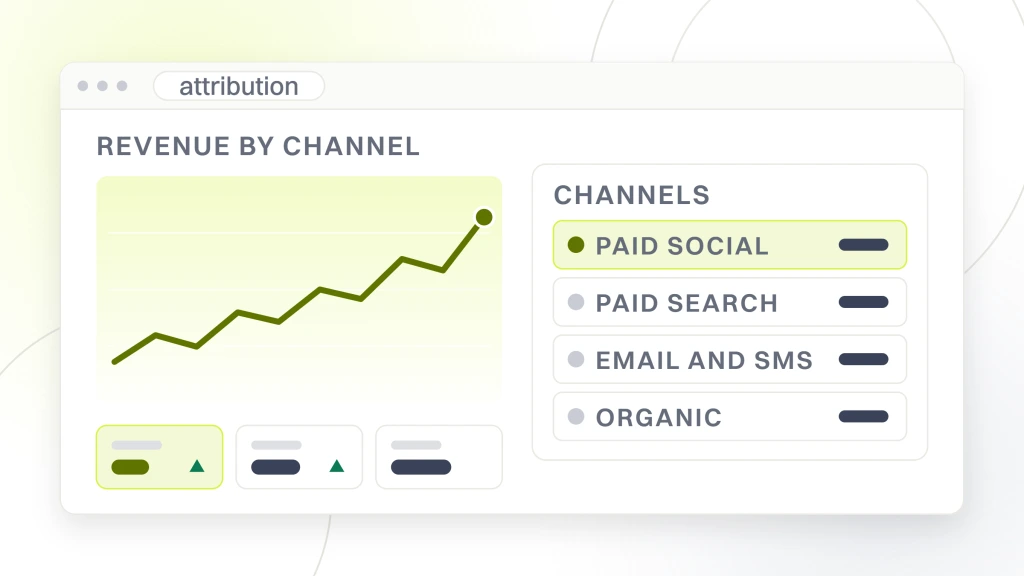
Best ecommerce marketing strategies handle attribution by running 3 overlapping views weekly rather than trusting any single platform’s number. Meta reports one number. Google reports another. Klaviyo reports a third. The truth sits inside a triangulated view against Shopify or WooCommerce order data pulled through a post-purchase survey and a marketing efficiency ratio at the brand level. Founders that read only Meta’s dashboard usually overspend by 25 to 40% inside 60 days.
Post-Purchase Survey Adds Human Signal
A 1-question post-purchase survey asks the customer where the brand got heard about first. Options include Instagram, Google, a friend, TikTok, podcast, and other. Response rates run 20 to 40% when the question shows on the thank-you page rather than in a follow-up email. Survey data corrects for platform over-attribution, which routinely inflates Meta by 40 to 80% and Google by 20 to 35% at growth-stage brands. Kno Commerce, Fairing, and Inquire Labs run this survey pattern well. Founders new to the pattern often see the Meta-reported ROAS drop from 4.2 to 2.6 after triangulation, which feels like bad news but produces cleaner budget decisions the next month.
Marketing Efficiency Ratio Runs Monthly
Marketing efficiency ratio calculates total revenue divided by total marketing spend across every channel including agency retainer, ad spend, software, and creative production. A healthy DTC brand at growth stage runs a marketing efficiency ratio between 3 and 5. Scale brands settle between 2 and 3.5. Brands under 2 usually miss retention discipline or pay too much for cold acquisition. Brands over 5 usually underinvest in growth and cap themselves against a real market opportunity.
Customer Experience Inside Ecommerce Marketing Tactics
Customer experience is the layer of ecommerce marketing tactics that most brands treat as a support function rather than a marketing lever. The truth runs the other direction. Post-purchase communication, review request flows, shipping updates, and support response time all shift lifetime value more than any single ad creative rotation. Brands ignoring the experience layer cap the retention curve and leave 15 to 25% of yearly revenue on the table.
Review Request Timing Runs Post-Delivery
The review request email fires 14 to 21 days after delivery for physical products and 3 to 5 days after first login for digital products. Fire too early and the customer has not experienced the product. Fire too late and the memory has faded. Judge.me, Loox, Okendo, and Yotpo all run this timing correctly by default. Brands hitting the timing right earn 20 to 35% response rates on the review request. Brands firing at day 1 from the shipment notification earn 3 to 7%. Review counts on category and product pages compound conversion rate over 12 months.
Support Response Time Shifts Lifetime Value
Support response under 2 hours during business hours correlates with repeat purchase rates 25 to 40% higher than brands responding after 24 hours. Gorgias, Zendesk, and Front all run the workflow correctly with tag-based routing. The trick is not the tool. The trick is the discipline of the 2-hour window itself. Founders that treat support as a cost center miss the marketing signal. Founders that treat support as a retention engine invest in the 2-hour window and read the reply rate as a leading indicator on lifetime value.
Budget Benchmarks Across Brand Stage
Budget benchmarks pin the abstract habits to concrete dollar figures. A starter brand under $500,000 yearly revenue that spends $2,000 on paid needs different discipline than a scale brand spending $200,000. Same skeleton, different depth, and different math. The table below lays out the benchmark ranges we see across live DTC accounts.
| Brand stage | Yearly revenue | Total monthly marketing spend | Retainer floor | Media spend | Marketing efficiency ratio |
|---|---|---|---|---|---|
| Starter | Under $500K | $3,000 to $8,000 | $1,499 | $2,000 to $6,500 | 4 to 6 |
| Growth | $500K to $2M | $10,000 to $30,000 | $2,499 to $3,999 | $6,500 to $23,500 | 3 to 5 |
| Mid-market | $2M to $10M | $30,000 to $150,000 | $3,999 to $6,000 | $23,500 to $138,000 | 2.5 to 4 |
| Scale | $10M to $30M | $150,000 to $400,000 | Starts at $6,000 | $138,000 to $380,000 | 2 to 3.5 |
| Enterprise | $30M plus | $400,000 plus | Starts at $6,000 | $380,000 plus | 2 to 3 |
The table matches spend against revenue tier so a founder can spot whether the current spend fits brand stage. Overspend past tier usually points to premature scaling. Underspend below tier caps growth against a real market opportunity. Adjust monthly to keep spend aligned with the actual revenue trend, not the yearly target set in January. Founders that hold spend flat across a peaked-season business often starve peak weeks and overspend off-peak weeks. That flat-spend pattern drops annual gross margin 4 to 7 points inside 2 years and stays invisible on monthly reporting.
Common Mistakes That Break Ecommerce Marketing Best Practices
The mistakes that break the strongest ecommerce marketing programs cluster into 6 recurring patterns. Chasing shiny channels before the core 3 earn. Discounting weekly to solve a demand problem that is actually a positioning problem. Reporting monthly rather than weekly. Skipping the pixel audit. Ignoring lifecycle flows until paid ROAS drifts. Treating the plan document as a one-time write rather than a monthly rewrite. Every founder we’ve onboarded at growth stage hits at least 3 of the 6.
Chasing Shiny Channels Wastes Test Budget
A brand at $400,000 yearly revenue that pours $8,000 into a TikTok test budget before Meta and Google prospecting hit target burns cash that would have compounded on the anchor channels. Test budget sits at 5 to 10% of paid spend until the anchor channels earn. Founders that reverse the ratio usually blame the platform when the test fails, then repeat the same reversal on the next shiny channel. The pattern breaks when the reporting rhythm forces monthly attention to the anchor channels rather than the test budget headlines. Our ecommerce digital marketing agency guide walks through which channels earn the anchor status.
Discount Dependency Trains Buyers to Wait
Discount dependency is the mistake that quietly collapses contribution margin across 6 months. A brand running a 20% off promo every third weekend trains subscribers to hold purchase intent until the next promo. Full-price sell-through drops 15 to 35% inside 90 days and never recovers without a hard pattern break. The fix is to reserve discounts for winback and VIP segments only and hold site-wide promos to 3 or 4 calendar peaks per year. A brand that switches from monthly promos to quarterly promos usually sees full-price revenue climb 20 to 30% inside 1 quarter as buyers stop waiting.
Real Work Behind Best Practices for Ecommerce Marketing
Abigail Ahern, a luxury home decor brand out of London, engaged Redefine Web in August 2020 to unify a marketing plan that had drifted into heavy discount reliance and branded search dependency. The brief centered on cutting discount messaging that had trained buyers to wait for promotions, rebuilding Google Shopping campaign structure around non-branded intent, and restoring category page SEO for high-intent design queries. Paid media and ecommerce SEO ran under one retainer with one account team.
The rebuild ran against the same best practices for ecommerce marketing walked above. A weekly Monday reporting rhythm on 6 KPIs. A monthly channel budget lock. A creative rotation on 3 variants weekly. A pixel and feed audit every 30 days. A category page cadence covering the top 40 pages across the first 6 months. A discount discipline that reserved promotional messaging for calendar peaks and VIP segments only.
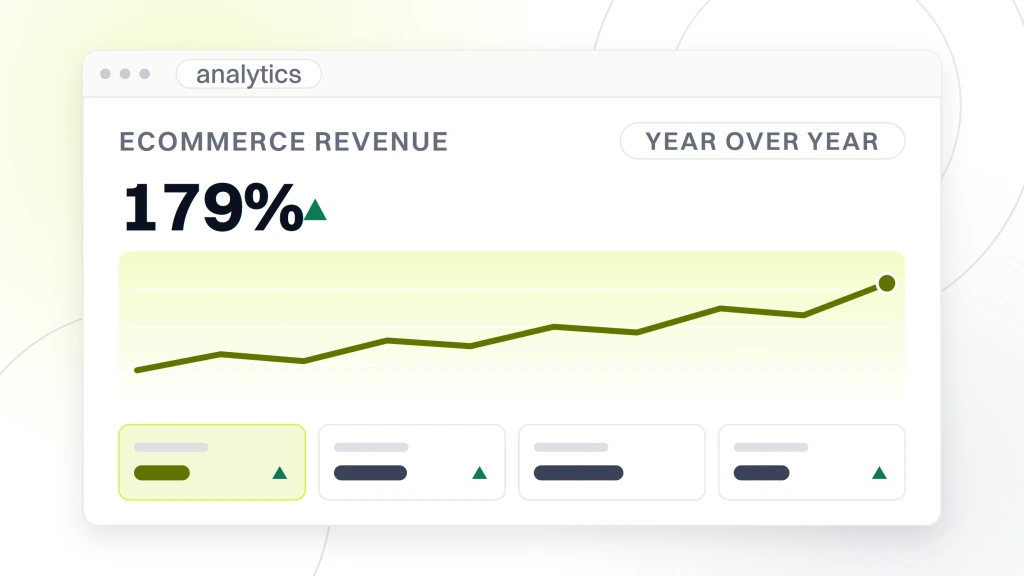
The 12-month results on a unified plan. Ecommerce revenue grew 179% year over year. Paid search return on ad spend climbed to 1,588%, more than doubling the previous cycle’s efficiency. Paid social return on ad spend reached 3,000% through disciplined retargeting and prospecting audience work. Conversion rate roughly doubled from the pre-partnership baseline. Non-branded search demand that had been going to competitors flipped back to Abigail Ahern category pages inside 6 months. Habits produced the numbers. The ecommerce marketing plan deep read walks the plan-document format the brand ran against every month.
Where Ecommerce Marketing Best Practices Fit Your Stack
These habits sit at the operational layer between the brand strategy doc and the weekly channel reports. Strategy tells the team why the brand exists. The practices tell the team what to do every week. The channel reports tell the team whether the practices are working. All 3 documents matter, and each runs on a different cadence.
Founders that collapse the 3 into a single doc usually end up updating none of them. Founders that run the 3 separately with named owners keep the operational discipline that compounds into real revenue outcomes across 12 to 24 months. The habit-first pattern earns compounding gains from month 6 onward since the team stops rewriting foundational decisions every Monday and starts iterating on real campaign data. The founders that break through the $2 million yearly revenue ceiling almost always report the same shift from tactical firefighting to weekly habit execution. Creative ideas layer on top of that habit engine, but only after the habits themselves earn.
Start Best Practices for Ecommerce Marketing This Monday
Founders ready to run these practices against real brand numbers can start with a free audit of the current channel mix, spend, and reporting rhythm. That audit produces a written fix map and a channel-priority order before any retainer conversation begins. The ecommerce marketing retainer scope holds at $1,499, $2,499, $3,999, or from $6,000 per month based on revenue tier and channel depth. Whether the brand is a starter Shopify store at $200,000 yearly revenue or a scale brand pushing past $20 million, the habit-first pattern beats the tactic-first pattern every quarter. For the retail-side playbook that pairs with this guide, our pet shop marketing covers local SEO, Google Business Profile, and breed clubs for independent pet retailers.