Pay monthly websites are subscription contracts where a vendor bundles design, hosting, security, edits, and support into one recurring fee, usually $99 to $349 a month for a small business site. The real risks of pay monthly websites usually surface in month 14, not month one. Sales call went great. Site launched on time. Invoices posted quietly to the bookkeeper. Then the owner wants to move hosts, redesign the homepage, or cancel because revenue is tight, and each request hits a wall the vendor never mentioned in the pitch. That gap between the pitch and month 14 is where every pay monthly website contract risk actually lives.
You are here because someone just quoted you $149 a month for a five-page site with hosting, support, and edits. That price is either fair or the front door of a trap. If you have not yet chosen between monthly and outright, our earlier walkthrough on whether you have to pay monthly for a website covers the base decision. This guide covers how to tell fair from trap, what monthly website services traps look like once you are 18 months in, the honest benefits when the plan is written cleanly, and the 5 contract clauses that separate a good vendor from a bad one. 8 minutes, straight through.
The 5 Vendor Personalities to Watch on Monthly Plans
The clearest way to spot risk early on a monthly plan is to watch how vendors behave on the sales call. Every monthly-plan vendor falls into one of 5 patterns, and the pattern shows up before you sign if you know what to look for. Match the vendor sitting across from you to one of these 5 and the risk profile becomes obvious in advance.
1. The template farm
Prices are $29 to $59 a month. Every site looks the same because every site is the same template with a logo swap. Discovery calls are 15 minutes because there is nothing to discover. Support is a ticketing system with a 48 to 72 hour response. Fine for a bare-bones brochure site, terrible for anything with a business goal beyond “we exist.”
2. The white-label reseller
Prices look reasonable at $99 to $149 a month. The vendor claims a big design team and a proprietary platform. In reality, the work is subcontracted to an overseas white-label shop, the platform is a WordPress install with 3 plugins, and the account manager is the only real employee. Fine when nothing goes wrong. When something breaks, the reseller is guessing along with you.
3. The honest small agency
Prices sit at $149 to $349 a month. Real designers and developers on payroll. Discovery is 60 to 90 minutes. Support responds inside 4 business hours. Contract terms are readable in one sitting. Most owners never realize how much better this vendor is until they have already lived through one of the first 2 categories.
4. The full-service partner agency
Prices sit at $349 to $2,500 a month. Real strategy help, in-house design and development, a project manager on every account, quarterly business reviews, and heat map plus A/B (split test) work built into the plan. Contracts are written with clean exit clauses because the agency has never needed to trap a client to keep them. Fits a business where the site is the primary lead engine and every point of conversion matters. Overkill for a single-service brochure site.
5. The lock-in artist
Prices look attractive at $79 to $129 a month. Then you read the fine print. 36-month term with an early-termination fee equal to the remaining balance. Ownership sits with the vendor. Migration at exit is either impossible or priced at $4,000. The salesperson glides past every ownership question with “we handle all that for you.” This is the vendor pattern that ruins the category for everyone else, and the one every owner is trying to avoid when they start reading guides like this one.
When a Pay Monthly Website Actually Fits Your Business
Every small business owner asks this after the third quote lands. The answer sits inside 3 tests. Pass all 3 and monthly is the right call. Fail even one and buy outright, or wait until the situation shifts before you sign anything.
Callout. If your monthly budget cannot absorb $199 to $349 without a quarterly chat with your accountant, buy outright and skip the plan. A monthly plan rewards stable cash flow, not stretched cash flow. See our real cost tiers for a web design and development build if you prefer the one-time route.
Test 1. The cash flow test
Can your operating budget absorb $149 to $349 a month without triggering a conversation with your accountant every quarter? If yes, monthly is safe. If no, the plan will feel like a burden by month 5 and you will start missing edits or renegotiating the scope in ways that damage the site. Cash flow is the first test, and the deal-breaker for a real share of owners.
Test 2. The maintenance test
Do you have anyone on staff who wants to learn WordPress site admin, do plugin updates, and troubleshoot a broken contact form at 8 PM? If yes, a custom web design and development build is cheaper long term. If no, a monthly plan absorbs 10 to 15 hours a month of infrastructure work you would rather not do.
Test 3. The change test
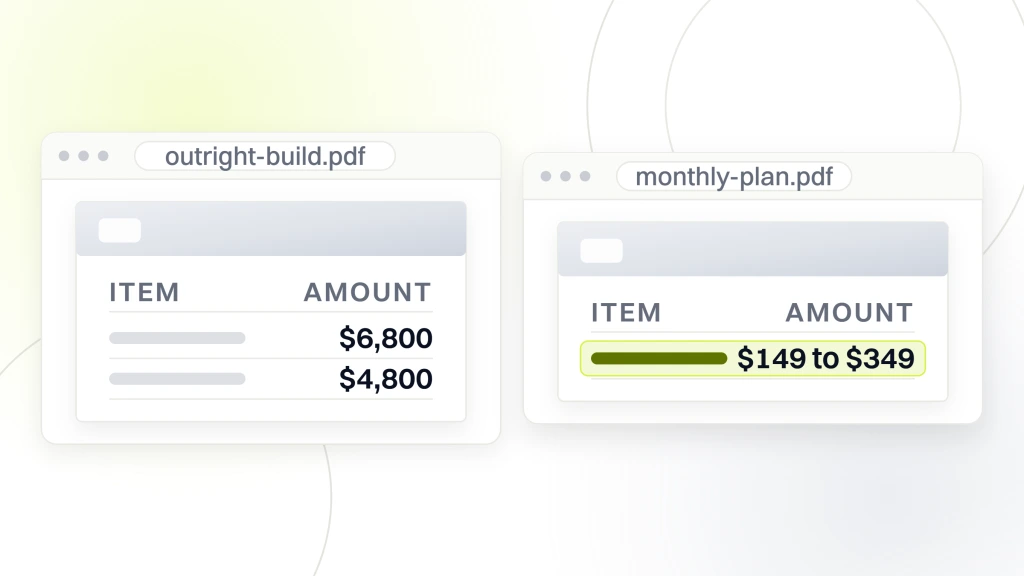
Will your business change scope in the next 24 months? Add a service, hire staff, open a second location, pivot on pricing, launch a new product? If yes, a monthly plan absorbs those changes as they arrive without a fresh $4,800 quote each time. If you honestly expect the business to look identical in 2028, an outright build fits fine. For a static brochure site, our fixed-scope Small Business Website Packages at $2,500, $4,500, and $7,500 fit better than any monthly plan.
A Real Client Story on the Benefits of Pay Monthly Websites
Tilghman Builders, a residential home renovation firm, is one of the cleaner benefits-of-monthly stories in our portfolio. In 2015, the owner refused to sign anything monthly. He wanted to buy a site outright and be done. We talked him into a 12-month monthly agreement instead. That decision compounded into a +353% annual revenue increase over a 9-year window.
What the monthly plan enabled
Between 2015 and 2024, we added 11 service pages, ran 3 homepage refreshes, launched 5 paid campaign landing pages, integrated HubSpot for lead nurture, and rebuilt the case studies section twice. Every one of those changes fit inside the monthly scope. Total across 9 years, Tilghman Builders grew from $1.5M to $6.8M in annual revenue, with 784% traffic growth and 637% qualified lead growth over that same window.
Why an outright build would have failed
The 2015 outright quote was $6,800. That version of the site would have hit the wall by 2017 when the business added its second truck and expanded to 3 surrounding metros. Rebuild quotes at that point sat between $8,400 and $12,000. Instead of paying that twice across the 9-year window, Tilghman Builders paid a fair monthly plan that absorbed the change one page at a time.
The one thing that could have gone wrong
None of that story works if the vendor had padded the contract with lock-in clauses or refused to migrate at exit. The reason the story reads clean is the contract was written cleanly on day one. Tilghman Builders could have walked away in month 13 with the code, the domain, and the design files. That option, unused, is the reason the relationship compounded instead of stalling.
How to Price a Fair Monthly Website Plan
A fair monthly plan is honestly priced at $149 to $349 a month for a small business site. Below $99, the vendor cuts corners on hosting or plans to make the margin back on hidden fees. Above $399, you should get real strategy input, not execution work.
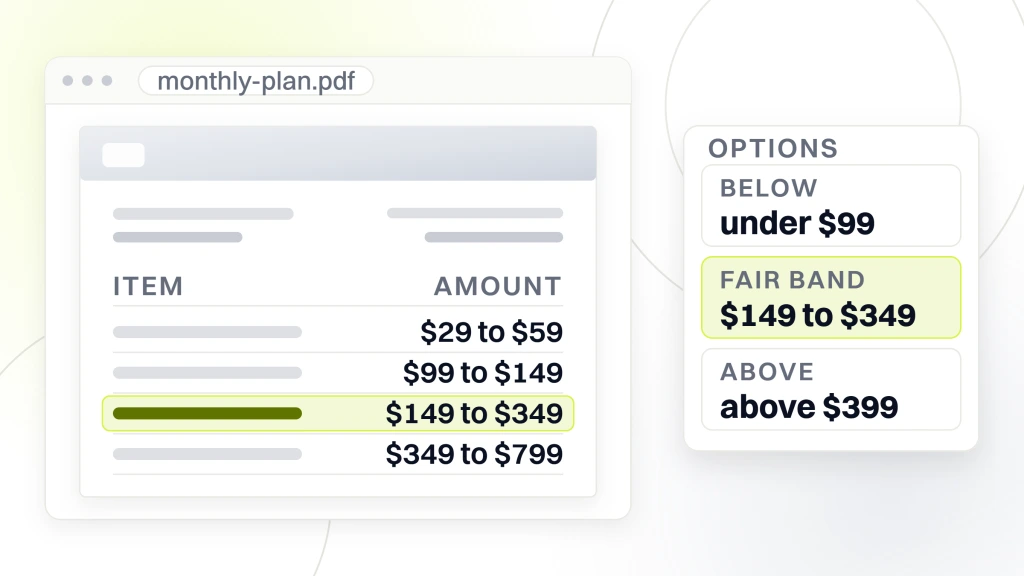
Callout. Fair pay monthly websites plans sit at $149 to $349 a month. Anything under $99 gets made up on the back end in upsells and migration fees within 18 months.
The $99 to $149 band
Design, launch, managed hosting, SSL, and 2 hours a month of edits. Ideal for a solo practitioner or single-service business that needs a maintained brochure site. Do not expect strategic input, custom integrations, or a rebuild every 2 years. What you see is what you get, and what you get is enough for many small businesses.
The $199 to $299 band
Everything in the entry band, plus 4 hours a month of edits, quarterly strategy calls, and a modest content contribution like a monthly blog post or landing page. Fits a growing business with 3 to 8 service pages, one or two paid campaigns, and a real conversion goal. Most Redefine Web monthly plans live in this band. See Pay Monthly Websites | $0 Upfront, From $99/mo for the exact scope inclusions.
The $299 to $399 band
Multi-location or multi-service businesses. Includes 6 to 8 hours a month of edits, monthly strategy calls, deeper conversion work such as heat maps, A/B tests, and landing page iterations, and a real content pipeline. This band pays for itself when the site is the primary revenue channel and the business needs the site to keep pace with a growth curve.
Red Flags That Say Walk Away From a Monthly Website Vendor
The loudest monthly website services traps show up in vendor behavior long before the contract lands. Spot any of the 5 patterns below during the sales cycle and walk. Hundreds of vendors work this market. Nobody is worth signing a bad deal with just because a salesperson was friendly on the call.
- Contract stall. The vendor refuses to email the contract before the sales call.
- Ownership hedge. The salesperson pivots to “trust us” language when you ask about code or domain ownership.
- Hidden pricing. The pricing page shows one plan tier and every real detail sits behind a call to action.
- Mystery host. The vendor cannot name the hosting provider or dodges with “proprietary infrastructure.”
- Faceless proof. The case studies section is anonymous or shows before-after design shots with no numbers.
Callout. If a vendor stalls on emailing the contract before the sales call, they are protecting a clause. Walk before month 1, not after month 14.
The contract question
Any vendor who will not send the contract in advance is protecting a clause they know you would push back on. Good vendors have nothing to hide. Their contract is short, clean, and reasonable, and they are proud of it. If the response to your request for the contract is a call to schedule a follow-up call, that is your answer.
The vague ownership answer
Ownership is binary. Either you own the code, files, and domain, or the vendor does. If the salesperson gives you a nuanced answer with words like partnership or transparency instead of a direct yes or no, the answer is no. Get it in writing. Real vendors are happy to spell it out in a two-line contract clause.
The mystery hosting stack
If the vendor cannot name the host they use (Kinsta, WP Engine, Cloudways, SiteGround, Rocket, Pantheon), the host is a shared $6/month box somewhere and the site is on borrowed time. Real vendors are proud of their host and will send you a live client’s page speed report on request. Fake vendors say “proprietary infrastructure” because the real answer is embarrassing. For a fair reference on what real managed WordPress hosting costs, see Kinsta on WordPress hosting cost.
The Final Worth-It Answer on Pay Monthly Websites
Weighing the risks against the benefits, are pay monthly websites worth it? For most small businesses with a growing scope, a limited technical team, and a real cash flow constraint, yes. For a five-page brochure that will never change, buy outright and skip the plan. Match the plan shape to the business shape, never the other way around.
Where monthly wins
Monthly wins when the site is a live marketing asset that needs quarterly edits, occasional new pages, and continuous performance care. That describes 80% of small businesses. It wins because the friction of managing the site outside a plan costs more than $199 a month in hidden time and lost momentum.
Where outright wins
Outright wins in 3 scenarios. A technical person on staff with real bandwidth. A fixed-scope site that will not change for 3 years. Or an owner with a budget cushion who genuinely hates recurring bills. For those cases, a one-time build paired with a $199 or $299 a month maintenance retainer beats a full monthly plan on cost and on peace of mind.
The middle path most owners land on
Most small business owners we quote end up on a monthly plan in the $99, $199, or $349 a month band with a 12-month initial term, then continue year after year because the site stays maintained without a fresh capital outlay. That is the pattern the market has settled into for real reasons, and the reasons hold up when the contract is written honestly. Read web.dev on Core Web Vitals to know what a good site should measure so you can benchmark any vendor’s live client work.
Pro Tip From a 9-Year Monthly Plan Operator
Before you sign any pay monthly website contract, ask the vendor for two specific documents in writing. First, the migration clause that spells out exactly what you receive on exit and what it costs. Second, a live client reference on a plan older than 24 months who you can call directly. Real vendors send both within an hour. Vendors hiding contract risks stall, negotiate, or send a redacted case study instead. That single ask filters more bad vendors than a two-hour sales call ever will.