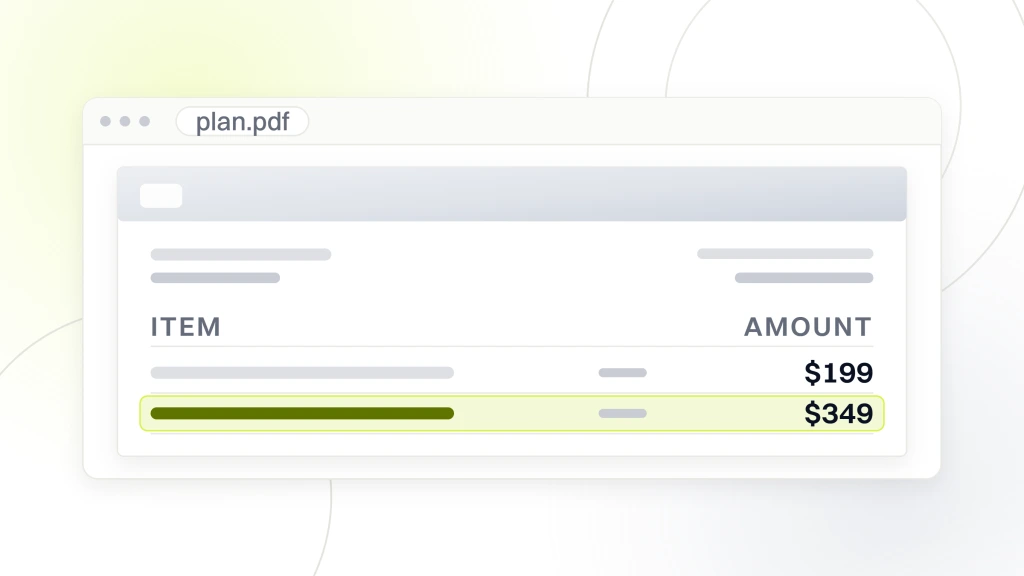
Pay monthly websites UK plans are website builds paid in fixed monthly installments that bundle design, hosting, updates, and support into one figure between £29 and £499 plus VAT. They sit alongside our $199 / $349 USD pay-monthly tiers, and GBP conversion is available on request. Every SEO shop from Manchester to Brighton runs a £29-a-month landing page, and the honest vendors sit between the flashy Shopify partner in a Peckham WeWork and the reseller running a hosting account out of Bracknell. This is how a UK small business owner tells the two apart before signing a 36-month contract.
The outright quote you got last Tuesday was £6,400 plus VAT plus separate hosting plus separate maintenance, and none of it fit the operating budget. Fair. This guide covers what UK monthly website plans cost, what they include, the traps that make headline pricing meaningless, and the vendor personalities you will meet on a sales call. Ten minutes, read straight through.
Key takeaways
- Honest UK template plans run £99 to £299 per month plus VAT.
- Bespoke pay monthly web design UK sits at £199 to £499 monthly.
- Cap contract term at 12 months with 30-day rolling notice after.
- Get code, design files, domain, content in writing before signing.
- Walk from any vendor who hides the contract until the sales call.
What you’ll find in this guide
- The 5 red flags on pay monthly websites UK vendors
- Real pricing bands for monthly website plans UK
- When bespoke pay monthly web design UK is worth it
- How UK pay monthly contracts should be written
- Case study of a rebuild that booked £48k in a year
- The honest verdict on UK monthly plans
- Frequently asked questions
The 5 red flags on pay monthly websites UK vendors
Five behaviors give a bad vendor away before the contract lands. Spot any one during the sales cycle and walk. Hundreds of UK vendors compete on price. Nobody is worth signing a bad deal with just so their rep can hit quota.
- The contract stays hidden. The vendor refuses to email the paperwork before the sales call.
- Ownership goes vague. The rep pivots to “trust us” language when you ask about code, files, or domain.
- Pricing hides behind a form. The public pricing page shows one plan and every real detail sits behind a call-to-action.
- Hosting stays a mystery. The vendor cannot name the host and hides behind “proprietary infrastructure.”
- Case studies stay anonymous. Client work is shown as blurred before-after screenshots with no numbers attached.
The contract question
Any UK vendor who won’t send the contract before the sales call is protecting a clause they know you’d push back on. Good vendors have nothing to hide. Their contract is short, clean, reasonable, and they’re proud of it. If the response to your request is a call to schedule a follow-up call, that’s your answer.
The ownership answer
Ownership is binary. Either you own the code, design files, and domain, or the vendor does. If the rep gives you a nuanced answer with words like partnership or transparency instead of a direct yes or no, the answer’s no. Get it in writing. Real UK vendors spell it out in a two-line clause that names each asset and the exit trigger.
The mystery hosting stack
If the vendor can’t name the host they use, it’s a shared £4/month box somewhere and the site is on borrowed time. Real vendors name their host and send a live client page speed report on request. Cross-check any vendor’s hosting spec against our Website Maintenance Packages as a fair reference on what a managed stack should include. Fake vendors say “proprietary infrastructure” when the real answer would embarrass them. See web.dev on Core Web Vitals for the benchmarks any live client site should hit.
The anonymous case study problem
If a UK vendor’s case studies section shows blurred screenshots, unnamed clients, and vague phrases like “significant growth,” they have no work worth naming. Real vendors publish client names, real metrics with time windows, and a link out to the live site. Ask for three named references from clients still on the plan at month 18. Vendors who refuse are burning through customers on annual cycles.
Real pricing bands for monthly website plans UK
Honest monthly website plans UK sit in three tight bands. Entry template at £29 to £99, mid template at £99 to £299, and bespoke at £199 to £499, all plus VAT. Anything under £29 is a shared reseller stack. Anything over £499 is either an enterprise brief or padded with services you won’t use.
Entry template plans, £29 to £99 per month
This tier gets you a five-page templated site, shared hosting, basic SSL, and email support with a two to five day response. It fits a solo tradesperson, a coach, or a single-service micro business. Do not expect custom booking logic or a dedicated designer picking up the phone. Cheap works when the brief is small and truly stable.
Mid template plans, £99 to £299 per month
The £99 to £299 band is where 70% of UK small businesses land. You get a 10 to 20 page site, a proper CMS, faster hosting, a monthly hour or two of edits, and phone or Zoom support. Most honest plans sell here. If a vendor pitches you at £399 for what looks like a mid template, ask what makes it worth double the market rate.
Bespoke plans, £199 to £499 per month
Bespoke UK pay monthly website design starts at around £199 and tops out near £499 per month plus VAT. You get a custom design, integrations with a CRM or booking platform, and a proper support SLA. This tier fits growing service businesses, multi-location operators, and B2B brands that need distinct look and feel. Below £199, bespoke usually means “we changed the colors on a template.”
If a plan sits below £29 or above £499, the vendor is either cutting hosting corners or bundling services you don’t need. Stick to £99 to £299 for template.
When bespoke pay monthly web design UK is worth it
Bespoke pay monthly web design UK earns its price when custom functionality, distinct brand, or a growth trajectory make a template a false economy. Match three of the five tests below and bespoke monthly is the right call. Match zero and a fixed-template plan works fine.
Custom functionality tests
Does your business need a booking system, custom quote calculator, GDPR-compliant lead capture with automated routing, an integrated CRM push, or a multi-step form the sales team uses? If yes, bespoke is worth it. Off-the-shelf plans hit a wall on custom logic by month three, and the vendor either says “not included” or bills a change order that wipes the cost advantage.
Brand distinctiveness tests
Does your brand need to look distinct from every other business in your category, or is a category-standard look acceptable? Legal firms, consultancies, and established B2B brands usually need distinct. Trades, single-service retailers, and micro-agencies can often ride a category-standard template. Match the tier to the brand ambition, not to the smaller number on the quote.
Growth trajectory tests
Will your UK business change scope inside 24 months? Add a service line, hire staff, open a second premises, pivot pricing, launch a new product? Bespoke absorbs those changes without a fresh £4,800 quote each time. Fixed-template plans stall on those changes. Growth-stage brands almost always pay less over three years on bespoke.
Pro tip. Run a 24-month spreadsheet before signing
Before signing, model the full 24-month cost including expected change orders, price escalation, and one migration scenario. Vendors who look cheap in month one often overtake mid-tier plans by month 14. A ten-minute spreadsheet catches this every time.
How UK pay monthly website contracts should be written
Every UK contract should be readable in one sitting by a non-lawyer owner. If it runs longer than four pages, something is padded. Fair contracts cover four clauses in plain English: term, ownership, price escalation, and exit. If any one is missing or vague, ask for it in writing before signing.
Term and cancellation
Fair plans have an initial term of 6 to 12 months, then convert to rolling cancellation with 30 days notice. Bad plans lock you in for 24 to 48 months with a cancellation fee equal to the remaining balance. Ask what happens if you close, sell, or pivot the business. The answer should be a proration clause, not a full-balance penalty.
IP ownership and exit rights
Ownership language should transfer all code, design files, and content at any exit point. Domain rights are separate and should transfer too if the vendor registered the domain on your behalf. If the contract is silent on ownership, you own nothing. UK owners miss this after the rep talks partnership language for an hour. Partnership language is not a contract clause.
Price escalation and annual review
Some UK contracts allow annual increases up to CPI plus 5%, which in 2024 was around 8%. Cap it. Fair contracts either fix the price for the initial term or cap annual increases at CPI. Uncapped clauses give the vendor the right to raise your plan cost by 15% a year, which is how a £149 plan turns into £197 by year three with no visible service change.
If a vendor won’t cap annual price rises at CPI in writing, assume 10 to 15% yearly jumps and add them to your 24-month spreadsheet before signing.
Pro tip. Read the migration clause twice
The most expensive line in a contract is the migration clause. Fair vendors let you export the site as a WordPress backup at any exit point. Predatory vendors charge £600 to £1,800 to release the files. Read the clause. Get the export format named. If it’s not spelled out, insist it is.
Passion Built rebuilt one site and booked £48k in a year
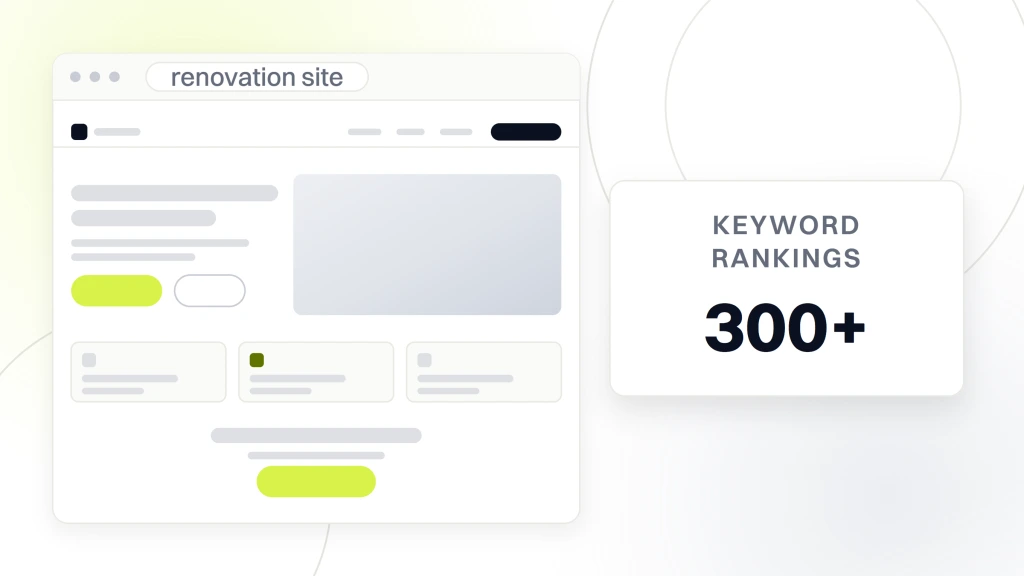
Real numbers beat vendor promises. Passion Built, a Sydney bathroom and home-renovation specialist, replaced two underperforming websites with a single SEO-driven site, secured 300+ keyword rankings, and converted 10% of new visitors, generating $60,000+ in bookings within a year (roughly £48,000 at 2026 rates). The market context sits outside the UK, and the outcome shape is market-independent.
The starting point
Passion Built had fragmented digital efforts. Two separate sites competed for the same brand, job-board spend chewed the marketing budget, and word-of-mouth carried too much of the pipeline. Quality was strong. Visibility was not. The owner needed one site that ranked, converted, and stopped costing more to maintain than it earned. The lesson translates cleanly to any UK small business paying two vendors for what should be one site.
What the rebuild changed
One consolidated site replaced the two. Every service page targeted a specific keyword cluster with proper on-page structure. The lead form dropped to three fields with a clear next step. Local schema and Google Business Profile alignment lifted map-pack visibility. Content answered the exact questions a renovation client asks before quoting. Nothing was outsourced offshore. Every page was written for the buyer stage it targeted.
The result the owner cared about
Inside a year, 300+ keyword rankings, a 10% visitor-to-inquiry conversion rate, and $60,000+ in booked project revenue. The site paid for itself in the first 90 days and kept compounding. Read the full Passion Built case study for the tactical breakdown.
Why this pattern travels to the UK market
The outcome shape is market-independent. A small business site that ranks, loads fast, and converts at 10% turns into pipeline in Sydney, Bristol, or Leeds. What changes is the pricing surface. A UK owner running the same play on a monthly plan pays £149 to £299 per month plus VAT for the build and support, and treats the retainer as marketing spend rather than a capital hit.
The 3 changes that carried the win
- One brand, one site. Consolidating stopped the two properties fighting each other for the same keywords.
- Service-page depth. Each service earned its own long page with real answers, not a bullet list.
- Lead form under three fields. Every field removed lifted the inquiry rate on mobile.
The honest verdict on UK monthly plans
Are these plans worth signing? For most UK small businesses with a growing scope and a lean internal tech team, yes. For a five-page brochure site that never changes, buy outright and skip the plan. Match the plan shape to the business shape, not the other way around.
Where the monthly plan wins
Monthly wins when the site is a live marketing asset that needs quarterly edits, occasional pages, and continuous performance care. That describes 80% of UK small businesses. It wins when managing the site outside a plan costs more than £199 a month in hidden time and lost momentum. If you are still weighing the base question, our post on whether you have to pay monthly for a website covers the fundamentals.
Where outright wins
Outright wins in three scenarios. A technical person on staff with real bandwidth. A fixed-scope site that will not change for three years. Or an owner with a budget cushion who hates recurring invoices. For those cases, a one-time build with a light £60/month maintenance retainer beats a full monthly plan on cost and on peace of mind.
The middle path most UK owners land on
Most UK small business owners we quote end up in the £149 to £299 band with a 12-month initial term, then continue year after year as the site stays maintained without a fresh capital outlay. That’s the pattern the UK market has settled into, and the reasons hold up when the contract is written honestly. Our related read on whether pay monthly websites are worth it covers the same math from a US-first angle.
Most UK owners land in the £149 to £299 band on a 12-month term. If a vendor pushes above £299 for a template, ask for the itemized extras.
Pro tip. Audit the vendor’s own website first
A vendor whose own site loads in 5 seconds, hides its pricing, or lacks named case studies is telling you exactly how yours will look in six months. Run their homepage through PageSpeed Insights before the sales call. The number tells you everything.
The honest verdict is boring. Worth it when the contract is fair, the vendor is honest, and the plan matches the business. Trap when the contract hides multi-year commitments, ownership is muddy, and the pricing headline hides upsells. Compare against fixed-price alternatives like our Small Business Website Packages before signing. Read the paperwork. Ask the hard questions. Walk from any vendor who gets defensive.