Website design pricing packages sit inside 3 real bands. Starter runs $2,500 to $8,000. Growth runs $8,000 to $25,000. Custom runs $25,000 to $120,000. Anything outside those bands hides a trade-off worth spotting before you sign. This guide walks the math tier by tier, shows the hours behind each price, and calls out the costs most package proposals leave off until the first change-order invoice lands 3 weeks after kickoff.
You’ll see real hourly rates, the 6 line items every proposal should include, and why website design package prices under $2,000 usually cost 30 to 50% more once you count the rebuild inside 12 months. Skip to the pricing table if you’re shopping right now. Read straight through in 9 minutes if you’re drafting an RFP, comparing 3 quotes on your desk today, or checking whether your incumbent agency is overcharging you at renewal.
Website design pricing packages you can trust
Website design pricing packages sit inside 3 bands. Starter runs $2,500 to $8,000. Growth runs $8,000 to $25,000. Custom runs $25,000 to $120,000. Add pay-monthly at $99 to $499 per month and maintenance at $199 to $999 per month on top. Every band matches a real scope, timeline, and set of trade-offs.
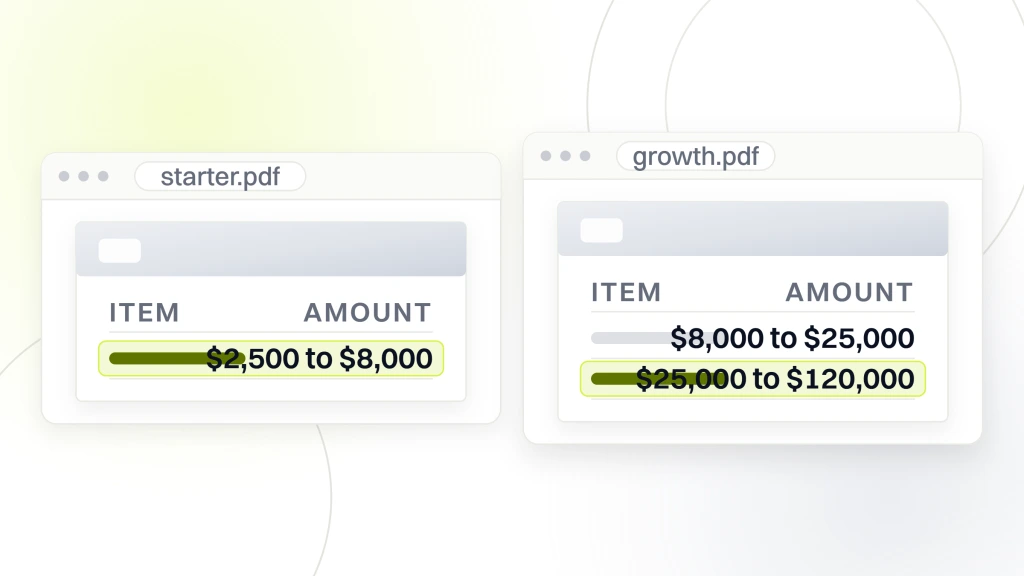
Website design package prices reflect 3 inputs. Hours per phase. Agency blended rate. Deliverables count. A 10-page growth package at $15,000 usually breaks down as 120 to 140 hours of billed work at a blended rate of $110 to $135 per hour. If the sticker price doesn’t roughly match hours times rate, one side of the math is wrong and you should ask which. For a cross-industry rate reference, see the Webflow website design cost breakdown. Our small business website packages page shows how the starter tier fixed-pricing works in practice.
| Package tier | Website design package prices | Hours behind price | Timeline |
|---|---|---|---|
| Starter | $2,500 to $8,000 | 25 to 60 hours | 4 to 8 weeks |
| Growth | $8,000 to $25,000 | 80 to 200 hours | 8 to 14 weeks |
| Custom | $25,000 to $120,000 | 220 to 900 hours | 12 to 26 weeks |
| Pay monthly | $99 to $499 per month | 60 to 180 hours upfront | 4 to 8 weeks to launch |
| Maintenance | $199 to $999 per month | 2 to 12 hours per month | Ongoing |
Starter website design price packages
Starter website design package prices run $2,500 to $8,000 for 25 to 60 hours of work across 5 to 8 pages. Scope covers template-driven design, basic copy support, on-page SEO across 3 to 5 target keywords, and a Google Analytics install. Turnaround runs 4 to 8 weeks. Best fit for solo operators, side businesses, and any company that needs a brochure site up before a specific event. Skip the starter tier if you plan to run paid ads. Template designs rarely convert paid clicks well, and you’ll rebuild inside 9 months at 2x the original spend.
Growth website design package prices
Growth website design package prices run $8,000 to $25,000 for 80 to 200 hours of work across 10 to 20 pages. Scope covers custom design inside a proven layout system, full copy across every page, on-page SEO across 8 to 15 target keywords, analytics install, and 30 days of post-launch support. Turnaround runs 8 to 14 weeks. Best fit for small businesses running paid ads, service firms building a local moat, and practices that need booked appointments from the website inside 90 days. Growth packages usually earn back the build fee inside 4 to 7 months on booked business.
Custom website design package prices
Custom website design package prices run $25,000 to $120,000 for 220 to 900 hours of work across 20 plus pages. Scope covers full brand system, custom CMS build, funnel design, ecommerce or membership integrations, and 90 days of post-launch optimization. Turnaround runs 12 to 26 weeks. Best fit for ecommerce brands doing $500K plus yearly, SaaS teams with a defined ICP, multi-location practices, and enterprise teams with compliance requirements. Custom packages need a dedicated project manager, 3 to 5 rounds of design revisions, and post-launch A/B testing on key conversion pages. Cross-reference our responsive web design and development cost tiers for a fuller build-vs-buy breakdown.
Hours behind every website design package price
Every website design package price ties back to hours per phase. A $15,000 growth package usually breaks down as 20 to 30 discovery hours, 30 to 50 design hours, 20 to 40 copy hours, 30 to 50 dev hours, and 10 to 20 QA hours. Total, 110 to 190 hours. Multiply by a blended rate of $95 to $135 per hour and the math lands on $15K.
Website design package prices vary because agency blended rates vary. Small studios in the Midwest run $65 to $95 per hour. Coastal agencies in New York, San Francisco, and London run $125 to $220 per hour. Offshore teams run $25 to $55 per hour, and the trade-off is timezone drift, communication overhead, and higher project management cost. Match the rate to the outcome you need. A $65 per hour rate saves 40% on the build price but adds 4 to 6 weeks to the timeline in most cases. That delay costs real money if you’re trying to launch before Q4.
- Discovery hours. 15 to 40 depending on package tier.
- Design hours. 25 to 200 depending on custom versus template.
- Copy hours. 20 to 120 depending on page count.
- Dev hours. 30 to 400 depending on CMS versus custom code.
- QA hours. 10 to 60 depending on browser coverage.
Website design package pricing by agency location
Agency blended hourly rates drive 40 to 60% of website design packages pricing variation. New York and San Francisco agencies charge $150 to $250 per hour blended. Chicago and Austin agencies charge $110 to $170 per hour. Suburban and remote-first agencies charge $85 to $130 per hour. Offshore teams in Eastern Europe, South America, and India charge $30 to $65 per hour with slower turnarounds. Every $20 per hour rate change moves the total package price 12 to 20% depending on hour count. Ask every agency for their blended rate up front. Vague answers hide 25 to 40% price drift. Buyers comparing regional bands can review our website design packages UK tiers for a parallel market read.
Copy hours versus design hours inside pricing
Copy hours and design hours run 40 to 60% of total build hours combined. Design at 30 to 200 hours depending on custom versus template. Copy at 20 to 120 hours depending on page count and depth. Agencies that quote low website design package prices usually cut copy first. The proposal shows “copywriting support” as a line item, which means the agency edits your existing copy rather than writing new. That single line item hides 40 to 80 hours of work you’ll do yourself at 10 PM on Sundays leading up to launch.
Hidden costs inside website design package prices
Website design package prices hide 4 costs most buyers miss. Hosting and domain fees. Premium plugin or theme licenses. Third-party integrations. Post-launch maintenance. Add them up and total ownership cost usually runs 30 to 60% higher than the sticker price on the proposal.
Hosting runs $30 to $250 monthly depending on traffic and CMS choice. Domain and SSL run $12 to $40 yearly on average. Premium theme licenses run $60 to $250 yearly per theme. Premium plugin bundles for WordPress run $180 to $600 yearly across 4 to 8 must-have plugins. Third-party integrations for CRM, email marketing, booking systems, and payment gateways run $50 to $500 monthly combined. Ask for a total cost of ownership table on any website design package proposal. If the agency won’t provide one, add 40% to the sticker price for a realistic first-year budget number.
Hosting and domain costs on top of package prices
Hosting sits outside the initial website design package price in 90% of proposals. Shared WordPress hosting runs $8 to $40 monthly. Managed WordPress hosting runs $40 to $250 monthly. Enterprise hosting on Kinsta, WP Engine, or Pantheon runs $150 to $650 monthly. Domain registration runs $10 to $30 yearly. SSL certificates run free through Let’s Encrypt or $80 to $400 yearly on premium certs. Add the first-year hosting and domain math to your website design package price before signing. That’s usually another $500 to $2,400 in year one.
Third-party integration costs on top of pricing
Third-party integrations add real recurring cost on top of website design package prices. CRM integration through HubSpot, Salesforce, or Pipedrive runs $50 to $180 monthly. Email marketing through Mailchimp, Klaviyo, or ActiveCampaign runs $30 to $250 monthly. Booking systems through Calendly, Acuity, or industry tools run $15 to $80 monthly. Payment gateways charge 2.4 to 2.9% per transaction. Add these to first-year budget planning. Total integration cost usually lands at $1,200 to $6,000 yearly across a full stack.
Payment structures on website design pricing packages
Website design package prices come with 4 payment structures. Fixed-price milestone. Hourly against a cap. Monthly retainer with build folded in. Pay-monthly financing. Fixed-price milestone is safest for buyers with clear scope.
Fixed-price milestone payments split into 4 payments. 30 to 40% at kickoff, 20 to 30% at design sign-off, 20 to 30% at dev complete, and 15 to 20% at launch. Overruns get eaten by the agency, so the milestone amount stays locked. Hourly against a cap runs riskier for both sides because overruns get billed unless the contract excludes them. Monthly retainer with build folded in runs $2,500 to $6,000 monthly for 4 to 6 months plus ongoing maintenance. Pay-monthly runs $99 to $499 monthly across 12 to 36 month contracts. Our pay monthly websites tier fits the fourth structure.
Milestone payment schedule on website design package prices
Milestone payment schedules on fixed-price web design package deals usually run 4 payments. Kickoff at 30%, design approval at 25%, dev complete at 25%, and launch plus warranty at 20%. Some agencies run 3 payments instead, which cuts admin overhead but concentrates cash flow risk on the agency side. Ask which structure the agency prefers and why. If they insist on 50% upfront with no clear milestones, that’s a project management red flag worth walking away from before you sign anything.
Pay monthly website design package pricing math
Pay monthly website design package pricing spreads the build cost across 12 to 36 months at $99 to $499 monthly. Total cost over 3 years lands 10 to 25% higher than a fixed-price build. Cash flow trade usually beats waiting 6 to 12 months to save up for a lump-sum build. Contract length runs 6 to 36 months depending on tier. Exit clause matters. Some pay-monthly contracts charge a buyout of 40 to 60% of remaining payments if you cancel early. Read the exit terms before signing any long-term pay-monthly website design package price agreement.
Website design pricing packages for small businesses
Website design pricing packages for small businesses concentrate in the $5,000 to $18,000 band. Below $5,000 the scope skips copy, QA, or SEO. Above $18,000 the scope adds features most small businesses don’t need in year one. Target the middle of that band for a growth-tier build that fits 5 to 50 employee businesses.
Small business website design package pricing splits 3 ways depending on cash flow. Cash-strong businesses pay $15,000 to $18,000 upfront on a fixed-price milestone contract and get the site in 10 to 12 weeks. Cash-flow constrained businesses go pay-monthly at $199 to $399 monthly on a 24-month plan and launch inside 6 weeks. Middle-ground businesses split the difference with $8,000 upfront plus $99 monthly maintenance. All 3 structures land at similar total cost over 3 years. Match the structure to when your business needs the cash, not to which structure sounds cheapest on the sales call.
Solopreneur website design price packages
Solopreneur website design package pricing sits at $2,500 to $6,000 for a 5 to 8 page starter build. Scope covers template-driven design, basic copy support, on-page SEO across 3 to 5 target keywords, contact form, and Google Analytics. Turnaround runs 4 to 8 weeks. Skip the growth tier if you book fewer than 10 qualified leads monthly. A starter website design package pricing hits your lead volume target without over-buying. Solopreneurs that jumped straight to a $12,000 growth package rarely earned back the delta inside 12 months of ownership.
Local service business website design pricing
Local service business website design pricing sits at $8,000 to $22,000 for a 12 to 18 page growth-tier build (vertical example, see our chiropractor website cost guide for a niche breakdown). Scope covers custom design, service-specific pages for each offering, local SEO across 15 to 30 city and service keywords, LocalBusiness schema markup, Google Business Profile integration, and a booking form. Turnaround runs 8 to 12 weeks. Local service packages usually earn back the build fee inside 4 to 6 months on booked jobs. Our search engine optimization services retainer at $999 monthly stacks on top for ongoing rank growth.
How to negotiate website design package prices
Website design package prices carry more flex than most buyers realize. Agencies quote to hit revenue targets, not fixed cost. That gap is where negotiation lives. Every proposal has 10 to 20% flex on price if you know which levers to pull.
Three real negotiation levers on website design package prices. Timeline flex, scope trim, and payment terms. Timeline flex means offering a 4 to 6 week longer turnaround in exchange for 10 to 15% off the sticker price. Agencies slot longer timelines into gaps between higher-priority projects and pass some of the utilization savings back. Scope trim means dropping 2 to 4 pages from the initial build with a written option to add them post-launch. Payment terms flex means offering 50% upfront instead of 30% in exchange for a 5 to 8% discount. Any of the 3 moves the price 5 to 15% without dropping quality.
- Offer 4 to 6 week longer timeline for 10 to 15% discount.
- Trim 2 to 4 pages from initial build, add post-launch.
- Pay 50% upfront for 5 to 8% discount.
- Bundle in a maintenance retainer for 8 to 12% build discount.
- Accept template design in exchange for 15 to 25% price drop.
Timeline flex on website design package prices
Timeline flex is the highest-impact negotiation move on website design package prices. Offer 4 to 6 weeks of extra timeline in exchange for 10 to 15% off the sticker price. Agencies with 6 to 10 concurrent projects slot longer timelines into gaps between higher-priority builds and pass utilization savings back to you. Timeline flex works best on growth-tier and custom-tier packages where the build already runs 10 to 20 weeks. Starter tier packages have less flex. Turnaround is already fast enough that timeline extension doesn’t free up agency capacity meaningfully.
Scope trim on website design package prices
Scope trim is the second highest-impact move. Drop 2 to 4 pages from the initial build with a written option to add them post-launch at a fixed per-page rate. Each dropped page removes 8 to 15 hours of design, copy, and dev time. Two dropped pages save $1,600 to $4,000 on a growth-tier website design package. The trade-off is you launch with fewer pages and rebuild the site nav later to accommodate the additions. Works well when 2 of the original 12 pages were nice-to-haves that could wait 90 days without hurting the sales math.
Case study, growth package pricing for Abels Residential
Abels Residential, a London property lettings agency, bought a growth-tier website design package in 2023. Package price landed at $16,800 across 14 pages with full copy, WordPress build, on-page SEO across 22 local keywords, LocalBusiness schema, and 30 days of post-launch support. Turnaround ran 12 weeks. Post-launch results across 6 months, 300+ first-page keywords ranked, page load time under 2 seconds, and 20+ qualified rental leads monthly. Package pricing earned back inside 5 months on booked commissions.
What made the Abels Residential website design package pricing work was scope match. Abels needed 14 pages, not 20. They needed local SEO across the specific London boroughs they serve, not national coverage. They needed a booking form for property viewings, not a full CRM integration. Cutting the scope to match the actual sales math saved $4,000 to $6,000 versus a maxed-out growth package. The website design package prices for this build landed near the middle of the growth band because scope discipline held from discovery forward. Post-launch, the booking form conversion rate landed at 3.8% on organic traffic, feeding 20+ qualified rental leads monthly at zero added ad spend. Website design package pricing math wins when scope discipline holds through the build, not just through the sales call. Six months in, Abels Residential added a second rental portal for corporate relocations at a fixed add-on rate of $2,400, which the original growth-tier package pricing left the option to bolt on cleanly.
Red flags in website design package prices
Website design package pricing red flags cluster around 3 patterns. Vague scope. Unrealistic timelines. Full payment upfront. Each one hides a project management or scope-creep risk worth walking away from before signing.
Vague scope shows up as “custom website with revisions as needed” without page counts, revision limits, or feature lists. Open-ended revisions almost always cap at 3 to 4 rounds in practice and get invoiced as change orders after that. Unrealistic timelines show up as “launch in 3 weeks for a 15-page custom site.” That isn’t possible without cutting discovery, copy, or QA. Full payment upfront shows up as “50% to start and 50% at midway with no clear milestones after.” That structure gives the agency zero incentive to hit launch date and gives you zero recourse if the project drifts. For market-wide pricing patterns and common contract structures, see the Upwork website design cost guide.
Vague scope inside pricing proposals
Vague scope is the number one red flag inside website design package prices. Proposals that read “custom website with all the features you need” without page counts, deliverable lists, revision caps, or timeline milestones almost always end in scope disputes. Best practice, every proposal should include a scope table with page counts, deliverables per phase, revision caps per phase, and out-of-scope items listed by name. Missing any of those sections gives the agency room to invoice as “custom work” for anything you thought was included. Ask for a full scope table before signing any website design package pricing agreement.
Open-ended revisions inside website design package prices
Open-ended revisions inside website design package prices read as a buyer benefit but function as a scope trap. Agencies that advertise no-cap revisions define a revision as any change request under 2 hours of work. Anything larger gets scoped as a change order. In practice you get 3 to 4 rounds of small tweaks and every larger request bills separately at $95 to $185 per hour. Proposals with defined revision caps of 2 to 3 rounds per phase deliver better final quality because each round gets treated as consequential rather than infinite.
Website design packages pricing comparison worksheet
Comparing 3 website design package prices side by side needs a scoring system. Build a simple worksheet that ranks each proposal on scope match, hours per phase, deliverables count, timeline realism, and payment terms. Score each on 1 to 5 across 5 dimensions, total 25 points, and pick the highest score. Sticker price alone tells you almost nothing.
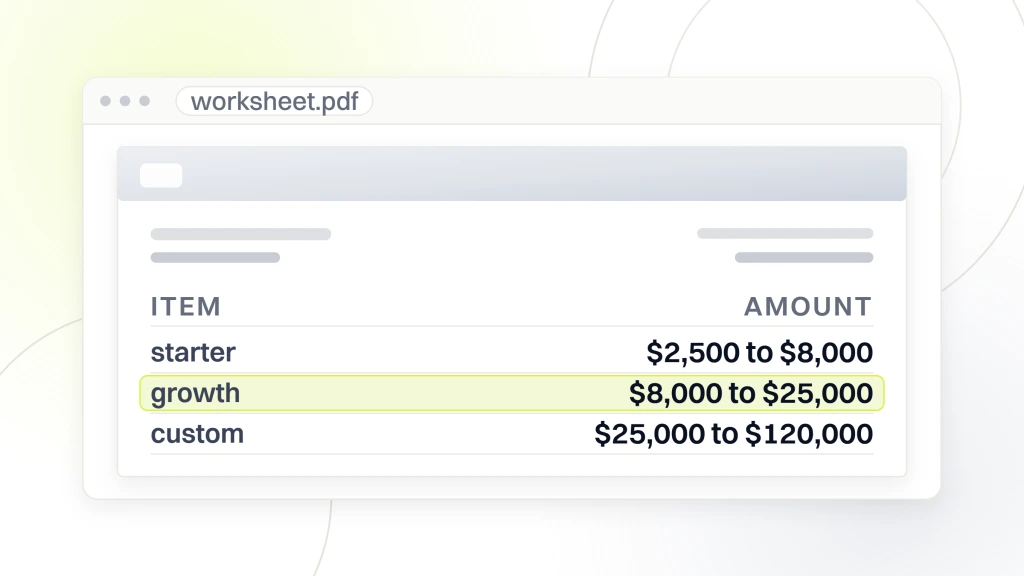
Two website design packages prices at $12,000 can differ 40 to 60% in actual value once you score them across the 5 dimensions. Proposal A at $12,000 with 140 hours, defined milestones, 2-week warranty, and a 12-week timeline usually beats Proposal B at $12,000 with 80 hours, vague scope, no warranty, and a 6-week timeline. The delta is 60 hours of missing work that will either not happen or get billed as change orders after signing. Score every proposal on the worksheet before deciding which website design package prices actually deliver the best value for the money.
Scoring scope match across proposals
Score scope match across proposals on 1 to 5. A 5 means every page you need is listed with clear deliverables. A 3 means 60 to 80% of pages are listed and the rest reads as “and other pages as needed.” A 1 means the proposal lists page counts without deliverables per page. Two proposals with different scope match scores usually differ 25 to 40% in real value at the same sticker price. High scope match tells you the agency understood the discovery phase. Low scope match tells you the sales team wrote the proposal without input from delivery.
Scoring timeline realism across proposals
Score timeline realism on 1 to 5. A 5 means the timeline includes weekly milestones with named deliverables per week. A 3 means the timeline shows phase-level dates but no weekly breakdown. A 1 means the timeline shows a start date and a launch date with nothing in between. Realistic timelines for a 12-page growth-tier build run 10 to 14 weeks. Anything under 8 weeks usually means the agency will skip discovery or copy. Anything over 18 weeks usually means missing project management. Both extremes score 1 or 2 on the worksheet regardless of sticker price on the proposal.
Payback window on website design package prices
Payback window on website design package prices matters more than sticker price. A $15,000 growth package that earns back inside 5 months beats a $6,000 starter package that never books a qualified lead. Measure payback as build fee divided by monthly booked business added post-launch. Any growth-tier build should hit payback inside 4 to 9 months.
Payback math on website design package prices depends on 3 inputs. Average deal size, close rate on qualified leads, and monthly organic plus paid traffic post-launch. A local service business with $2,000 average deal size, 30% close rate on qualified leads, and 12 monthly qualified leads adds $7,200 monthly booked business. That covers a $15,000 growth-tier package build fee inside 2 to 3 months. A B2B services firm with $8,000 average deal size, 20% close rate, and 6 monthly qualified leads adds $9,600 monthly, covering the same $15,000 build inside 2 months. Ecommerce math varies more because average order value runs $40 to $300 and needs volume math to hit payback. For platform cost baselines, see the WordPress.org pricing overview. Our affordable website design packages tier sits at the payback sweet spot for most small businesses.
Payback math for service businesses
Payback math for service businesses on a growth-tier website design package runs 2 to 5 months at standard conversion rates. Formula, build fee divided by monthly booked business added. A $15,000 build times a 4-month payback means the site needs to add $3,750 monthly in booked business inside 90 days of launch. Service businesses with $500 to $5,000 average deal sizes usually hit this target on 3 to 8 monthly qualified leads. Anything longer than 9 months means the package was over-scoped for the sales math or under-scoped on copy and SEO. Diagnose in that order.
Payback math for ecommerce brands
Payback math for ecommerce brands on a growth-tier website design package runs 3 to 9 months depending on average order value and conversion rate. Formula, build fee divided by incremental gross margin on new post-launch revenue. A $20,000 ecommerce package build against 60% gross margin and $80 average order value needs 417 additional orders to reach payback. At 15% traffic growth and 2.5% conversion, that lands in month 4 to 6 post-launch. Longer payback windows usually mean pricing was over the growth-tier band for a business that would have hit the same numbers on a $12,000 package.
Make website design pricing packages work for your build
Pick the tier that matches your sales math, not the tier that sounds impressive. Starter for solo operators and brochure sites. Growth for small businesses running paid ads or booking service appointments. Custom for ecommerce brands doing $500K plus yearly and enterprise teams with compliance needs. Add the hosting, plugin, and integration math to the sticker price before signing. Ask for the hours behind every line item. Score every proposal on the 5-dimension worksheet before comparing sticker prices side by side.