
Social media marketing for optometrists is the paid and organic system that turns Facebook, Instagram, and Google Business Profile activity into booked eye exams, measured in cost per booked exam and revenue over the patient’s first 12 months. It works when you treat the feed as a booking channel with a clear scoreboard, not a brand play with vanity metrics.
Vision Express, an independent optometry practice, drove a 135.9% organic traffic surge and 62% more booked exams in 6 months by pairing local SEO with the paid and social layer covered here. Dr Parth Shah, a Canberra eye surgeon starting from zero online, hit 120% organic traffic growth, 22 top-10 keyword rankings, and 40% more patient bookings inside the same 6-month window. Those numbers came from the working book at our optometrist marketing agency.
You get the platform mix, the content pillars, the offer structure, the HIPAA-safe posting rules, and the cadence that actually books exams. Social media marketing for optometrists is measurable when the setup is right. Skip anyone selling follower counts nobody at the practice can convert.
Facebook marketing for optometrists in 2026
Facebook marketing for optometrists in 2026 splits into two layers. Organic community presence carries the practice page, local group participation, and event promotion. Paid ads run conversion campaigns on eye exam intent, targeted at parents, adults 35 plus, and defined interest groups like contact lens wearers, glasses shoppers, and dry eye patients.
The organic mechanic that works is steady participation in 3 to 5 local Facebook groups. Not selling. Not dropping the practice link on every post. Just answering questions honestly when they surface. “My kid needs a first eye exam, where should I go?” is a question that comes up 4 to 8 times a month in every mid-size metro group. Answer it thoughtfully and the practice reputation compounds across the group. That reputation converts to bookings inside 6 to 12 months.
Paid Facebook Ads run three campaign types. First, conversion campaigns targeting cold audiences with the standing offer. Second, retargeting campaigns targeting website visitors from the last 30 days. Third, custom audience campaigns targeting the practice’s own patient list, with matched email and phone data, for optical purchase offers and referrals.
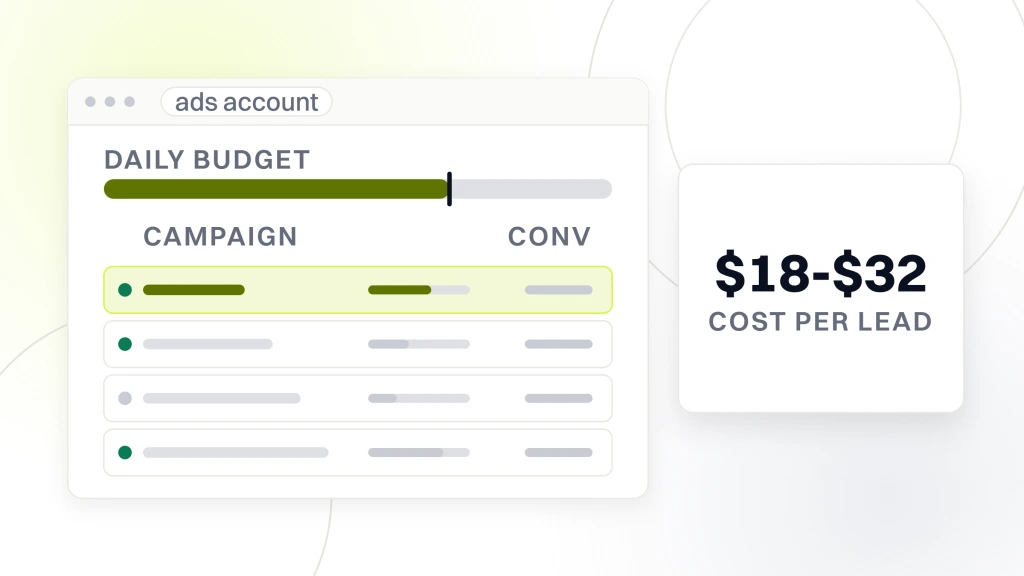
Cost per lead on Facebook Ads for optometry runs $18 to $32 for the standing offer, $12 to $22 on retargeting, and $6 to $14 on custom audience campaigns. Custom audience returns are strong since the practice already has trust with those patients. Retargeting stays efficient since website visitors are pre-qualified on interest. Cold conversion campaigns cost more per lead, yet produce the volume growth every practice needs to scale bookings past word of mouth.
Instagram tactics inside optometrist social media marketing
Instagram tactics inside optometrist social media marketing focus on Reels, Stories, and product tagging. Reels reach further than any other post type in 2026. Meta’s own data puts Reels reach at 2.4x static feed posts for local business accounts. Stories drive engagement with existing followers. Product tagging in feed posts pulls direct shop clicks on frames.
Reels that work for optometry include quick “try on this frame” clips of 5 to 15 seconds, before-and-after progressive lens fittings, 30-second doctor tips on eye health, and behind-the-scenes clips of eye exams with signed patient consent. Two to three Reels a week is the working cadence. The clip does not need studio production. Phone video with steady framing beats over-produced content on this platform every time.
Stories run daily on the practice account. Poll stickers like “Team blue-light or team no-blue-light?”, quiz stickers like “Guess which frame is trending this season”, and countdown stickers on offers all pull engagement. Stories build a habit of the audience checking the practice account, which improves feed algorithm placement over 3 to 6 months of consistent activity.
Product tagging on frame posts routes Instagram shoppers to the practice site or directly to a product page. The practice needs a business account with Instagram Shopping approved and a product catalog synced. Setup takes a week. Impact shows up over 2 to 3 months. Frames posted with product tags pull 4 to 8 times the direct-to-site click volume of untagged posts, which turns the feed into a real optical revenue channel.
Posting cadence for social media marketing for optometrists
Posting cadence for social media marketing for optometrists lands at 12 to 18 posts a week across platforms. Facebook takes 3 to 4 feed posts per week. Instagram takes 3 to 4 feed posts plus 5 to 7 Stories per week. Google Business Profile takes 2 to 4 posts per week. That is the sustainable pace at a single-location practice with either an in-house coordinator or an agency doing the work.
Anything faster than that pace requires a two-person social team or a full-time coordinator. Practices that try to hit 30 posts a week burn out inside 90 days. Practices that post twice a month go invisible on the algorithm. The 12 to 18 pace is what the numbers show works consistently across optometry accounts. The table below covers the weekly split by platform for the working cadence.
| Platform | Feed posts/wk | Stories/wk | Ads active | Cost per booked exam |
|---|---|---|---|---|
| 3 to 4 | N/A | Yes | $18 to $32 | |
| 3 to 4 | 5 to 7 | Yes (via Meta) | $22 to $38 | |
| Google Business Profile | 2 to 4 | N/A | Yes (via GBP) | Organic only |
| Nextdoor | 1 to 2 | N/A | Yes | $28 to $45 |
Batching content production keeps the cadence sustainable. Two hours of shooting on the first Monday of the month produces 30 to 45 short clips. Two hours of writing produces 20 to 30 caption drafts. One hour of scheduling in Meta Business Suite plus GBP loads the whole month. In total, roughly 5 hours a week of active work spread across a coordinator or a marketing team keeps every platform fed.
Weekend posts pull the highest engagement in optometry. Saturday mornings between 9 and 11 a.m. and Sunday evenings between 6 and 8 p.m. hit 30 to 45% more reach than weekday midday posts. Schedule the highest-priority frame content, patient stories, and offer posts into those windows. Save educational tips and doctor Q&A for weekday slots.
Compliance rules for optometrist social media marketing
Compliance rules for optometrist social media marketing follow three lines. HIPAA for patient content. FTC for endorsements. Platform policies for eye care claims. Break any one and the account risks suspension or worse. All three stay manageable with a simple checklist and a signed BAA between the practice and the agency running the account.
HIPAA covers patient identifiability. Any post that shows a recognizable patient face, name, or specific medical detail needs a signed HIPAA-compliant consent form. Not a verbal okay. A signed release with specific language covering social media use. Testimonial videos work if the release is on file. Before-and-after content works if the release is on file. Never post identifying content without the paperwork.
FTC rules cover endorsements and testimonials. Paid influencer partnerships need a #ad or #sponsored disclosure. Staff who post about the practice on personal accounts should disclose the employment relationship. Any claim about product performance, like “this lens reduces eye strain by X percent”, must be substantiated. The practice carries liability for unsubstantiated claims in posts, even when the manufacturer made the same claim first.
Platform policies restrict specific eye care claims. Meta blocks ads that make medical outcome promises. Google Ads restricts prescription-related claims. Both platforms allow eye exam booking ads with standard language. Both restrict before-and-after ads for medical procedures without proper disclaimers. Any agency running the ads should know the current rules and update the compliance sheet quarterly as platforms shift. For platform compliance updates, reference the Content Marketing Institute social strategy playbook.
Measuring social media marketing for optometrists
Measuring social media marketing for optometrists starts with the three numbers that matter. Cost per booked exam by platform. Attribution to social from booking-form fills. Revenue attribution from social-first patients over their first 12 months. Skip the vanity metrics like followers, reach, and impressions, except when they show up as a leading indicator on one of the three real numbers.
Cost per booked exam calculation stays straightforward. Monthly platform spend divided by monthly booked exams attributed to that platform. Facebook Ads sits at $18 to $32. Instagram Ads via Meta sits at $22 to $38. Nextdoor Ads sits at $28 to $45. Organic social, harder to attribute, usually sits at $12 to $22 in equivalent cost when the coordinator’s time is priced in at market rate.
Attribution needs the booking form to ask “how did you hear about us” with social platform options in the dropdown. Off-the-shelf trackers miss 20 to 30 percent of true attribution. UTM parameters on every social link help. Call tracking on the Facebook page phone number helps too. Total attribution accuracy caps out around 78 percent for social channels, versus 92 percent for paid search. Read the numbers with that ceiling in mind.
Revenue attribution over 12 months matters since social-first patients skew younger and buy more optical products. Vision Express data showed social-first patients averaged $520 in first-year revenue versus $410 for search-first patients. That extra $110 per patient turns social channels from break-even to strongly return-positive at the same booked exam count. Multiply across 40 to 60 new social-first patients a month and the annual delta clears $60K in gross revenue.
Case study on optometrist social media marketing
Vision Express, an independent optometry practice competing against corporate chains, grew booked appointments 62% and organic traffic 135.9% over a 6-month partnership. Practice growth hit 71% in the same window. The mix was service-page redesign, GBP optimization, location-based SEO, and high-intent paid ads tied to online scheduling. The social channel carried a meaningful slice of that growth by feeding the booking funnel with warm, geo-targeted intent.
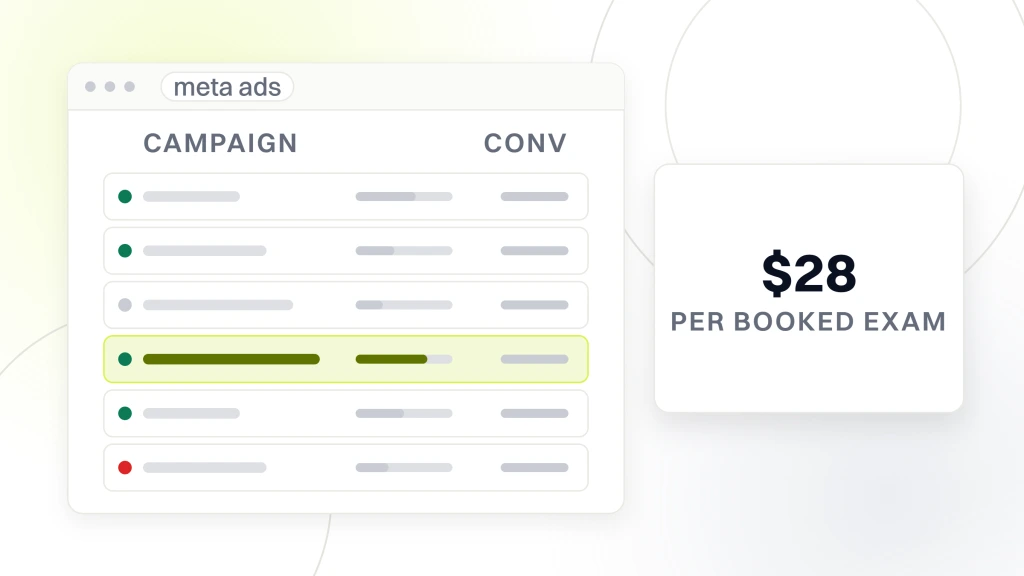
The applicable pattern for other optometry accounts is 3 to 4 feed posts weekly on Facebook plus 2 to 3 Reels weekly on Instagram, wrapped in a $1,800 monthly Meta Ads budget targeting local intent. Expected outcome is 45 to 75 booked exams a month from social channels alone by month 6, at a blended $28 cost per booked exam. Those ranges fit what current optometry accounts consistently produce at the working cadence and offer structure.
Dr Parth Shah, a Canberra eye surgeon starting with no website, hit 120% organic traffic growth, 22 top-10 keyword rankings, 40% more patient bookings, and 35% revenue growth in 6 months. The stack was an accessible-first site build, high-intent SEO on cataract and pediatric terms, a performance and security layer, local SEO with GBP, and outreach to GPs and optometrists in Canberra. Social carried the reputation and referral loop.
The takeaway is that social channels work when the mix, cadence, and offer structure line up. Break any one and the numbers disappoint. Get all three working together and social channels produce 20 to 30 percent of a mature practice’s monthly bookings at a cost per exam competitive with paid search.
One founder we interviewed spent $6K on a TikTok influencer campaign in Q1 that generated 340,000 views, 12,000 likes, and exactly zero booked exams. He now posts on the practice’s own TikTok account twice a month for free and books 3 to 5 exams a month from it. The lesson was expensive but permanent. Cheap and consistent beats expensive and viral in optometry every time.
First 90 days on social media marketing for optometrists
The first 90 days on social media marketing for optometrists cover setup, cadence, and the first ad campaigns. Day 1 to 30 covers profile audit, content batching setup, and the first 30-day content calendar. Day 31 to 60 launches Facebook and Instagram Ads on the standing offer and cranks organic cadence to steady state. Day 61 to 90 layers in retargeting, custom audience campaigns, and Nextdoor Ads for local reach.
By day 30 the practice should have complete profile setup across Facebook, Instagram, GBP, and Nextdoor. Content batching workflow documented. First 30 days of posts scheduled. First round of team content shot and edited. This is boring work. Skipping it costs 3 to 6 months of drift on the algorithm since early activity signals to Meta and Google whether the account is worth surfacing on discovery feeds.
By day 60 the standing-offer ad campaign should produce 8 to 15 booked exams a month at $22 to $38 cost per exam. Organic cadence at 12 to 18 posts a week is running. Story cadence at 5 to 7 per week is running. Followers grow 8 to 15 percent a month in this window. Any of those numbers missing by 25 percent or more needs a check-in call, not a resignation email or a panicked pivot to a new platform.
By day 90 the full social stack produces 15 to 30 percent of monthly booked exams. Practices already running Marketing for optometrists plays should tie social into the same reporting. Cost math sits in Optometrist marketing cost. Strategy sequencing sits in Optometrist marketing strategy. When you are ready to bring the whole stack in-house or hand it to a specialist, our PPC services and Web design services pair with the social layer covered here.
Scale social media marketing for optometrists past month 6
Scale social media marketing for optometrists past month 6 by doubling down on what the data already proved. Any campaign holding cost per booked exam under $30 for 8 straight weeks gets a 50% budget increase. Any content pillar producing above-average engagement gets 2 extra posts a week. Any ad creative dropping below 1.5% click-through rate gets refreshed within 14 days. That is the scaling loop that keeps returns compounding.
Practices at the 6-month mark typically add a second offer to the ad mix. The first offer stays the standing eye exam promo. The second offer targets optical purchases, contact lens starter packs, or specialty services like dry-eye treatment. Splitting the ad budget 60/40 across the two offers keeps cost per booked exam stable and grows revenue per patient by 15 to 25 percent inside 90 days.
UGC (user-generated content) becomes the highest-return content pillar past month 6. Patients wearing new frames, tagging the practice, and sharing on their own feeds pull 3 to 5 times the engagement of practice-produced content. Set up a small incentive, like a $10 optical credit for tagged posts, and the pipeline of UGC assets grows on its own. Reshare every tagged post to the practice Story within 24 hours.
Grow your practice with social media marketing for optometrists
Social media marketing for optometrists works when it is treated as a booking channel with a scoreboard. Cost per booked exam, attribution accuracy, and 12-month revenue per patient are the three numbers to watch. Everything else is a leading indicator or a distraction. Vision Express hit 62% booking growth in 6 months by pairing this social layer with local SEO and paid ads. Dr Parth Shah hit 40% booking growth from a standing start.
Pick one platform to run at the full working cadence, then layer in the next after 60 days. Facebook first for most practices. Instagram second. GBP third. Nextdoor fourth. Skip TikTok until the practice already has a natural on-camera personality ready to shoot 3 to 5 Reels a week. Chasing every new platform at once is the fastest way to burn out the marketing budget and produce zero booked exams.
Set a check-in at day 30, day 60, and day 90. Compare the numbers to the ranges in this guide. If the practice hits the ranges, keep scaling. If the practice misses by 25 percent or more, audit the offer, the cadence, and the compliance sheet in that order. The mechanics rarely fail. The offer or the pace almost always does. Fix those first and the rest follows.