
Optometrist marketing cost is the single number that decides whether a plan runs or drifts. Too low a budget and the plays never mature. Too high and the return math breaks. The honest ranges below cover single-location practices, small groups, and multi-location groups, split by pricing model and channel. Every number is what we see in real books at our optometrist marketing agency, not a range from a directory site that mixes optometry with cosmetic surgery.
This guide breaks down monthly optometrist marketing cost by practice stage, the three pricing models you’ll be quoted (flat retainer, percent of ad spend, performance-based), the Vision Express result set with the plays that produced it, and the ROI math to run before you sign an agreement. If you own or run marketing for an independent optometry practice, the ranges below give you the vocabulary for a real budget conversation with any prospective agency. Skip the salesy “custom quote” language. Ask for the numbers below and compare.
What does optometrist marketing cost at a single-location practice
Optometrist marketing cost at a single-location independent practice runs $4,000 to $7,000 per month in 2026. That splits into $1,500 to $2,800 agency retainer plus $2,000 to $4,000 in ad spend that goes straight to Google or Meta. New practices in growth mode run higher, around $5,500 to $8,500, so they can build recall from a standing start.
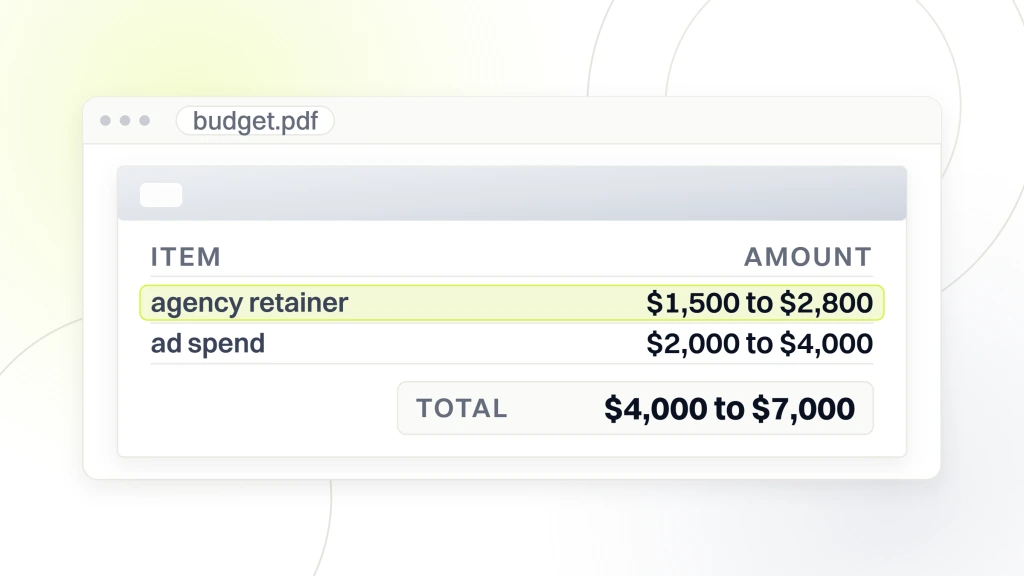
The retainer covers strategy, account management, creative production, Google Business Profile (GBP) posting, recall flow tuning, weekly reporting, and a monthly deep-dive. The ad spend goes to platforms. Some agencies bundle a call tracking tool and a landing page tool into the retainer. Others pass those through as line items. Total-cost math should include tool subscriptions either way.
Practices at the bottom of the range (around $4,000 all-in) typically have the owner running some of the work in-house. GBP posting, review responses, and the social calendar sit with the owner or office manager. Practices at the top (around $7,000) hand everything to the agency, including monthly print collateral and event-based social pushes.
One factor that raises the number fast is metro competition. Practices in San Francisco, New York, Los Angeles, or Boston push the retainer 20 to 40% higher so the account can compete with more content, more link building, and more creative variants. Rural single-doctor practices sit at the low end and often beat schedule-fill targets faster since competition is thinner.
One caveat before the ranges below. Every practice we work with has quirks that shift the math. Practice-management software choice moves recall costs by 20 to 40%. Front desk staffing shifts phone answer rate, which shifts cost per booked exam. Insurance mix affects which channels earn the retail overlay. Read every number below as a working range, not a fixed rule.
How does optometrist marketing cost change by practice stage
Optometrist marketing cost shifts with practice stage. New practices in year one need a heavier paid share so bookings show up before the patient list can recall itself. Established practices with 3,000 active patients spend the same total but move more dollars into recall and organic. Multi-location groups spend more in absolute terms but less per booked exam.
The table below covers the four stages. Media spend on ads sits inside the total, not on top. That’s the format most reputable agencies quote when asked directly. Some quote retainer-only to make the number look smaller, then present ad spend separately. Both approaches produce the same math. Make sure the total is what you compare, not the retainer alone.
Read the table with the caveat that these are working ranges, not fixed rules. A new practice with a strong social presence and existing referral network can start closer to established numbers. An established practice moving into a hyper-competitive metro pushes toward new-practice numbers for 6 to 12 months and rebuilds visibility from there.
| Practice stage | Retainer | Ad spend | Total monthly | New patients/mo |
|---|---|---|---|---|
| New (months 1-6) | $1,800 to $3,000 | $3,000 to $5,500 | $5,500 to $8,500 | 20 to 40 |
| Established, single-location | $1,500 to $2,800 | $2,000 to $4,000 | $4,000 to $7,000 | 40 to 90 |
| Two to three locations | $3,000 to $5,500 | $4,500 to $8,000 | $8,000 to $14,000 | 80 to 180 |
| Multi-location group (4+) | $5,500 to $9,500 | $8,500 to $18,000 | $14,000 to $28,000 | 150 to 400 |
The comparison that matters is not agency A versus agency B. It’s total cost of ownership across a full year. That number includes retainer, ad spend, tool subscriptions, opportunity cost of missed calls, and the founder’s time. Adding those five and dividing by booked exams from the digital channel produces the true cost per booked exam. Most practices only track retainer and ad spend, so they under-count total cost by 25 to 40%.
A useful cross-check is spend as a share of gross revenue. The industry standard for an eye care practice marketing budget sits in the 1 to 5% band of gross revenue, per PECAA’s benchmark. Established practices with strong recall usually sit at 1 to 2%. New practices or established practices in aggressive growth mode sit at 3 to 5%. If your total optometrist marketing cost sits above 5% of gross revenue for two quarters running, the plan needs a review.
What pricing models do optometrist marketing agencies use
Optometry agencies use three pricing models. Flat retainer, percent of ad spend, and performance-based. Each one has a right context and a wrong context. Pick the wrong model in the wrong context and it distorts incentives and costs the practice bookings inside 6 months.
Flat retainer is the default at reputable optometry-focused shops. The agency charges a fixed monthly fee regardless of ad spend. Incentives point at booked exams and cost per booked exam. You’re not surprised by budget swings. The downside is that retainer sizing depends on scope, so scope creep happens if the statement of work is loose.
Percent of ad spend (usually 10 to 20% of media) sounds fair on paper. In practice it pushes the agency to grow ad spend, not booked exams. Agencies on this model resist recall flow work. Recall shrinks the ad-spend share their fee rides on. Optometry does not benefit from this model. Avoid it.
Performance-based (a cost-per-booked-exam contract) sounds ideal and rarely holds up. Agencies undercharge for setup, then raise per-exam fees once the practice is dependent. Owners lose access to ad account data. Only 4 to 8% of optometry engagements run this model, mostly with owners who have prior agency experience and can hold the contract terms.
A common question we get is whether the optometrist marketing cost math still works in low-competition rural markets. It does, at lower absolute numbers. Rural single-doctor practices run $2,800 to $4,000 monthly total marketing spend, produce 30 to 50 booked exams a month from digital, and hit blended cost per booked exam at $25 to $45. The math scales down cleanly so ad platform costs track local competition, not practice ambition.
Vision Express and what optometrist marketing cost delivered in 6 months
Vision Express is an independent optometry practice that partnered with us on a flat-retainer program covering service-page redesign, GBP optimization, location-targeted SEO, and high-intent paid ads. Inside 6 months, appointment bookings rose 62%, organic traffic climbed 135.9%, and overall practice growth hit 71%. Those numbers landed on a single-location independent practice competing against corporate chains, not on a national brand.
The pricing model was flat retainer. The scope was tight. Service-specific landing pages for vision therapy, dry-eye treatment, and specialty contact lenses. A full GBP tune covering photos, hours, service list, and posts. Location-based SEO across geo-modified pages and local backlinks. And high-intent paid ads pointed at premium service queries with conversion tracking wired end to end. Online booking tools cleaned up the funnel so a call or click actually converted.
The lesson for your budget is not the dollar number. It’s the shape. A flat retainer plus a defined ad-spend line, aimed at premium service pages, with tracking wired before any campaign goes live, is what turns optometrist marketing cost into booked exams. Loose scope plus percent-of-spend pricing plus untracked calls is what turns the same dollar number into a year with no growth.
Another question that comes up is whether cost math changes with in-house dispensing versus outsourced lab work. It does, slightly. Practices with in-house dispensing capture more optical revenue per exam and can carry higher optometrist marketing cost per booked exam without breaking return math. Outsourced-lab practices have thinner optical margins, so cost-per-exam targets need to sit 10 to 20% lower to preserve return.
How optometrist marketing cost compares across medical specialties
Optometrist marketing cost per new patient runs lower than most medical specialties. Blended cost per booked exam sits at $22 to $45. Dental runs $90 to $140. Dermatology runs $150 to $260. Orthodontics runs $190 to $380. General practice runs $50 to $110. For context on the E-E-A-T signals ranking algorithms weight across every vertical, see Google Search Central guidelines.
The retail overlay from glasses and contacts is the reason optometry math looks so generous. Every booked exam is worth 4 to 8 times the exam fee once optical revenue is counted. A cost per booked exam of $34 against a $460 average new-patient revenue is a strong return. The same $34 in a dental practice, where average new-patient revenue is $220 to $340, sits closer to break-even.
Cost per click on “eye exam near me” runs low too. Roughly $2.80 to $6.20 in mid-size US markets. Compare that to “dentist near me” at $8 to $18 or “orthodontist near me” at $12 to $28. The narrow query universe and high commercial intent keep quality score high and cost per click low. That’s the technical reason optometry paid search works so much better than most medical verticals. Reference the Google Ads exam intent best practices to see how quality score compounds inside a tight account structure.
There’s a payment-timing question worth flagging too. Most reputable agencies invoice the retainer at the start of the month and ad spend at month-end. Some invoice retainer plus ad spend together on a single monthly invoice. Cash flow implication matters at the practice level. Ad spend can spike in specific weeks (holiday, back-to-school). Ask about invoicing cadence during the negotiation, not after.
The hidden layers inside optometrist marketing cost
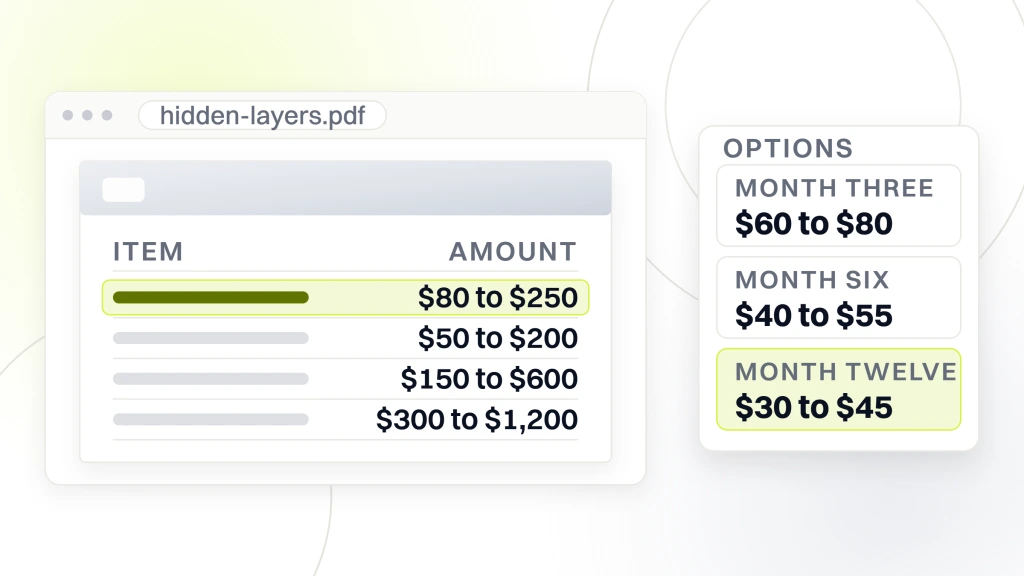
Optometrist marketing cost has hidden layers most quotes skip. Tool subscriptions, creative production, and lost bookings from operational drift all pile on the total. A clean $4,000 quote can turn into $5,500 all-in once these get counted honestly.
The hidden layer nobody discusses is the cost of a broken phone answer rate. If the front desk misses 20% of new-patient calls between noon and 2 p.m., the practice loses 8 to 16 booked exams a month. At $460 revenue per booked exam, that’s $3,700 to $7,400 in lost monthly revenue on top of the ad spend that produced the missed calls. Fix the phone before you add a dollar to ad spend.
The list below covers the hidden costs most engagements do not surface until month three. Ask any prospective agency about each one before signing.
- Call tracking software: $80 to $250/mo depending on volume.
- Landing page tool: $50 to $200/mo (Unbounce, Instapage, HubSpot).
- Email plus SMS platform: $150 to $600/mo depending on patient list size.
- Creative production (photos, graphics, video): $300 to $1,200/mo.
- Third-party ad tracking (for practices with 2+ locations): $200 to $800/mo.
- Lost bookings from phone drop-offs: $2,000 to $8,000/mo (opportunity cost).
- Lost bookings from a below-fold booking widget: 40 to 60% conversion drop.
Contract length is the third payment lever. Most retainers run on 6-month or 12-month terms with a 30 to 60 day exit notice. Rolling monthly contracts sound flexible and usually price 15 to 25% higher so the agency can price in churn risk. Longer contracts (12 months minimum) get better pricing but require confidence the agency can execute. Six months is the working middle ground for most first engagements.
How to calculate ROI on optometrist marketing cost
ROI on optometrist marketing cost is straightforward once you have the numbers wired. Take monthly marketing spend, divide by monthly booked exams, and get cost per booked exam. Take average new-patient revenue (exam plus optical purchase at first visit), subtract cost per booked exam, and get contribution margin per new patient. Multiply by monthly booked exams for total contribution.
The tricky part is measuring average new-patient revenue correctly. Most practices under-measure so they only count the exam fee. The right number covers the exam plus glasses or contacts purchased at the same visit plus the 12-month follow-on purchase (contact lens refill, second pair of glasses). That full number typically sits at $460 to $780 for independent practices.
Once average new-patient revenue is measured, the ROI math works. At $460 average revenue and $34 cost per booked exam, contribution margin per new patient is $426. Sixty booked exams a month produces $25,560 in monthly contribution against $4,000 in marketing spend. That’s a 6.4x return, which is why optometry marketing math works so much better than most medical verticals.
The setup fee question comes up in almost every negotiation. Reasonable setup fees range from $0 (baked into month 1 retainer) to $3,500 (site rebuild, ad account structure, recall flow wiring, GBP audit). Anything past $5,000 setup fee should trigger a scope review. Some agencies use high setup fees to lock in the client, which is a signal to walk. Legitimate setup work is billable and should map to specific deliverables.
What happens when optometrist marketing cost is too low
Optometrist marketing cost under $3,000 total monthly at a single-location practice does not produce enough booked exams to move the schedule. Below that threshold, the retainer covers only basic GBP edits and ad spend cannot reach frequency. Practices at that budget add 8 to 15 booked exams a month, not the 40 to 90 the range above targets.
The $3,000 to $4,000 range works for rural single-doctor practices with strong review counts and thin competition. Above that band, the range works for any practice with chair capacity. Below that band, cutting the budget saves cash and does not grow the practice.
The other underspend pattern is agencies charging $1,000 to $1,500 monthly retainer with no accountability. Those engagements produce one blog post and a few GBP edits. No campaigns actually run. No recall flow gets wired. Practices on that model end year one with the same booked-exam volume as year zero, having spent $12K on marketing that never earned back.
Reporting cost is the last hidden lever. Some agencies bundle monthly reports into the retainer. Others charge $200 to $600 monthly on top for reporting. Some charge nothing and produce three-slide reports that skip the numbers that matter. Ask to see the actual monthly report format during negotiation. If the report is 30 slides of charts with no cost per booked exam number on page one, the reporting cadence is wrong.
The onboarding period deserves its own numbers. First-month cost usually includes setup work that does not repeat, so month one runs higher than month twelve. Budget for the first three months at 110 to 130% of steady-state monthly cost. That covers the setup work, the first campaigns going live, and the site or GBP work that only happens once. Steady state kicks in around month four.
What happens when optometrist marketing cost is too high
Optometrist marketing cost above $10,000 monthly at a single-location practice usually means the agency is stacking services that do not clear return math. Programmatic display advertising, connected TV, and expensive creative agencies rarely pay back at single-location scale. Practices at that budget produce booked exams and often at cost-per-exam that erases the retail overlay margin.
The right ceiling for a single-location practice is $7,000 to $8,500 in year one, dropping to $5,500 to $7,000 in year two once recall pulls its weight. Multi-location groups have higher ceilings since scale amortizes creative production across locations.
The scam pattern to watch for is agencies pushing $12K to $18K monthly plans on single-location practices under the “aggressive growth” label. Aggressive growth in optometry does not require aggressive spend. It requires disciplined attention on the same five plays that work at every practice. Any budget past $8,500 for a single location should get a hard justification, ideally with cost per booked exam projections by channel.
One line item most quotes miss is A/B testing infrastructure. Landing page A/B testing needs a tool subscription and creative production. Ad A/B testing needs additional creative variants. Recall A/B testing needs email templates and text send-time variants. Practices that skip A/B testing miss 15 to 25% of the growth their spend could produce, a hidden cost that shows up in a lower total return on marketing investment year over year.
How to negotiate optometrist marketing cost with an agency
Negotiating optometrist marketing cost with a prospective agency comes down to four asks. Ask for scope in writing, with weekly and monthly counts spelled out. Ask for cost per booked exam targets in writing at month 3, 6, and 12. Ask for a defined miss protocol. Ask for the exit clause covering ad account ownership.
The scope ask matters. Roughly 30% of retainer overruns happen inside scope creep. If GBP posting cadence isn’t defined, some agencies post twice a week in month one and drop to twice a month by month four. If creative production isn’t defined, budget swings 50% depending on how much creative each campaign needs. Nail the scope numbers before signing.
The cost per booked exam target matters. It’s the number that decides success. Any agency that won’t commit to a target range for month 6 and month 12 isn’t confident in the numbers. Reasonable targets sit at $60 to $80 in month 6 and $30 to $45 in month 12 for a single-location practice. Miss protocol matters too. Bad months happen. Exit clause matters. Engagements sometimes end for reasons no one predicted.
- Ask for scope by channel with weekly and monthly counts (posts, ads, emails, reviews answered).
- Ask for cost per booked exam targets in writing at month 3, 6, and 12.
- Ask for the miss protocol, spelling out what happens if targets miss for two consecutive quarters.
- Ask for the exit clause covering notice period, data handover, and ad account ownership.
- Ask who owns the Google Ads account and GBP once the engagement ends.
- Ask what the retainer covers in creative production per month.
What good execution of optometrist marketing cost looks like
Good execution of optometrist marketing cost looks boring on the P and L. Monthly spend is flat within 10%. Cost per booked exam trends down each quarter. Booked exams trend up each quarter. Return on marketing investment holds at 4 to 8 times through year one.
The scoreboard is short. Monthly marketing spend divided by monthly booked exams equals cost per booked exam. That number should sit at $60 to $80 in month 3, $40 to $55 in month 6, and $30 to $45 in month 12. If those milestones miss, the plan needs a quarterly review.
The other tell is reporting cadence. Weekly numbers pull with 4 to 6 metrics. Monthly deep-dive with 12 to 18 metrics. Quarterly strategy review with the full year target check. No 40-slide monthly decks. No “engagement scores.” No unexplained “strategic alignment” spend. Reference the monthly retainer plans starting at $1,499 for a locked ceiling starting point.
The last operational tell is what happens on a bad week. A well-run engagement produces a specific diagnosis by Monday morning after a bad week. Which channel missed, what the leading indicator was, and what the reallocation is for next week. A poorly run engagement produces reassurance without numbers. Ask any prospective agency what their last bad week for a current client looked like in specific numbers, and how they responded.
One number worth watching quarterly is retainer share of total marketing spend. In year one, retainer usually sits at 35 to 45% of total spend. In year two, the share climbs to 40 to 50% once ad spend flattens and retainer covers more sophisticated work (content, referral outreach, third-location expansion prep). If retainer share drops below 30%, ad spend is likely padding a soft strategy.
Where optometrist marketing cost is heading through 2027
Optometrist marketing cost per booked exam is trending down through 2027. Three factors move it. Recall automation tools are cheaper and better than they were 3 years ago. AI-driven creative production drops per-campaign cost 30 to 50%. Google Business Profile now takes bookings directly on some accounts, cutting a click out of the funnel.
The direction of retainer cost is less clear. Some retainers will drop once automation absorbs manual work. Some will hold and the strategy layer stays human. Practices should not expect retainer cuts as an automatic trend. Ask any prospective agency what their retainer will look like in 12 months, and how automation is affecting scope.
Ad spend will hold flat or climb slightly in dense metros so cost per click on “eye exam near me” grows with competition. Rural markets will hold at current levels. Blended cost per booked exam should still land at $28 to $42 through 2027 for practices running the plays right. See our SEO services for optometrists and optometrist PPC services for the specific line items driving these numbers. For the account structure that keeps cost per click low, reference Google Ads exam intent best practices.
Optometrist marketing cost is not the number to obsess over. Cost per booked exam is. A $4,000 monthly plan producing 60 booked exams at $34 each beats a $7,500 monthly plan producing 55 exams at $58 each. Read the total in context of the channel mix, the practice stage, and the return math. Ask any partner for their current-client cost per booked exam numbers before signing. If they can’t share, they’re not measuring it. Book a call from any page on the site if you want your current numbers benchmarked against 40-plus other optometry practices we work with, and mention this piece so we route the call to the eye care group.