
Video Marketing for Ecommerce Formats Platforms and Examples
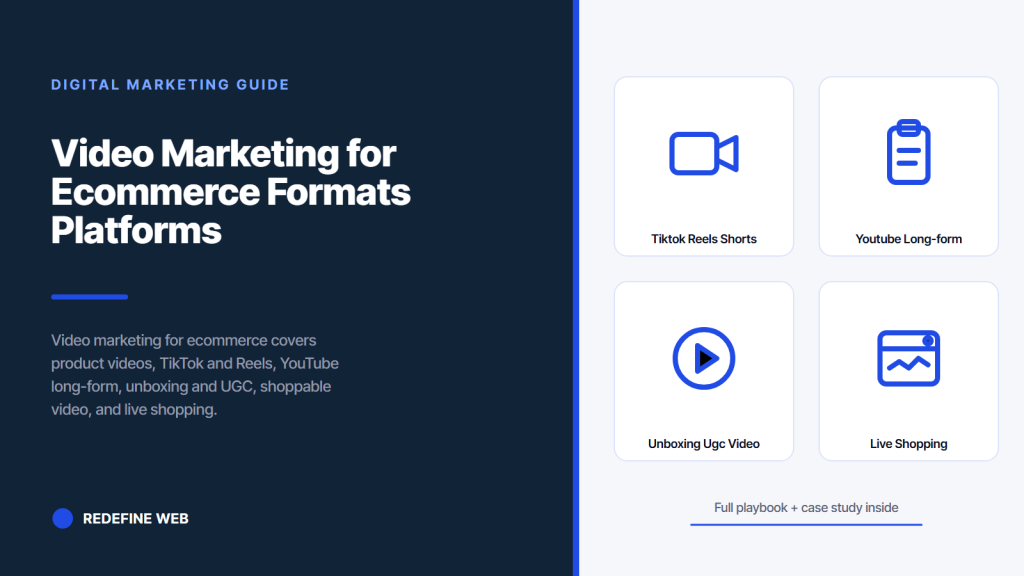
- Six format families cover product PDP short form long form UGC shoppable and live.
- Ecommerce video marketing examples work when the mechanism translates across categories.
- Cadence beats total production volume for compounding organic reach on TikTok and Reels.
- Shoppable video removes the click between watch and purchase and raises close rate.
- Measure video by attributed revenue and video-touched conversion, not view counts.
- TikTok Reels and Shorts for ecommerce video marketing strategy
- YouTube long-form video that ranks for research queries
- Unboxing and UGC video marketing ecommerce programs
- Shoppable video that puts checkout in the feed
- Live shopping for ecommerce video marketing strategies
- Ecommerce video marketing examples worth borrowing
- Production costs and budget for video marketing for ecommerce
- Measurement stack that closes the loop on video
- A DTC brand running video marketing for ecommerce in production
- Where video marketing for ecommerce fits the stack
Most DTC brands treat video like the last item on the content calendar. A monthly product clip filmed on a phone, posted to Instagram Reels with a generic caption, watched by 82 people, and then buried under the next post. The output is real, the plan is absent, and the revenue attribution stays at zero. A real video marketing for ecommerce plan fixes this by starting one layer up. It picks the format for the buying stage, matches the platform to the audience, wires a distribution routine that gets the clip in front of buyers instead of the algorithm graveyard, and measures the gain as attributed revenue rather than view counts. Six format families cover the buyer journey with distinct math and platform quirks.
This guide covers video marketing for ecommerce the way we run it on DTC accounts every week. The six format families, the platforms that carry each format, the named brand examples worth studying (Gymshark, Glossier, Chubbies, Dyson, ILIA Beauty), the production math per clip, and the measurement stack that closes the loop from view to purchase. Our ecommerce marketing agency hub covers the wider paid plus retention model this video plan feeds into.
TikTok Reels and Shorts for ecommerce video marketing strategy
Short-form video on TikTok, Instagram Reels, and YouTube Shorts is where discovery-stage buyers actually spend time, and it is where a DTC brand’s ecommerce video marketing strategy earns the cheapest top-of-funnel reach available in 2026. The three platforms behave differently at the algorithm level, and treating them as one channel is the single biggest mistake mid-market brands make when they start posting video.
Platform quirks that decide who wins
TikTok favors native talent, low-polish edits, trends, and duets. Reels favors mid-polish creator content, music-driven cuts, and product-in-use footage. YouTube Shorts favors subscribable creators, cross-linking to the main channel, and content that ports well from long-form. Brands running one edit across all three platforms cap their reach on all three, because each algorithm rewards different signals. The healthiest ecommerce video marketing strategy in 2026 runs three separate edits from the same shoot day, cut for each platform’s aspect ratio, pacing, and audio conventions. That triples the production output from a single filming session without tripling the production cost.
Cadence and creator ratio that produce revenue
Post three to five short-form clips per platform per week, split roughly 60 percent creator or UGC content, 30 percent product-in-use content, and 10 percent founder or brand content. The 60-30-10 mix works because pure-brand content underperforms creator content by 4 to 8 times on cost per acquisition across DTC accounts we run. Cadence must hold for at least 90 days before the algorithm rewards the account with sustained reach. Brands that post twice a week for two weeks then quit blame the platform for the flat numbers, but the platform is running the account against a cold-start signal that needs consistent output to overcome. A sibling read on ecommerce social media marketing channels and playbooks covers the wider social plan the video slots into.
YouTube long-form video that ranks for research queries
YouTube long-form video is the compounding channel most DTC brands skip because it takes six to nine months to produce measurable revenue. The brands that commit to the channel own the top of the research funnel for their category and pay much less for acquisition three years in than the brands that only run paid social. Long-form YouTube also produces content that Google Search itself surfaces as video snippets against high-intent queries.
Video length and topic patterns that rank
The YouTube videos that rank for ecommerce research queries in 2026 sit in the 8 to 14-minute band, cover a single buying question start to finish, include on-screen text summarizing the key point every 30 to 45 seconds, and end with a subscribe plus product link callout. Topics that convert best fall into four buckets. Category-education videos (how to choose the right X). Comparison videos (X versus Y with a real teardown, not sponsored fluff). Setup and how-to videos for the brand’s product. Behind-the-scenes videos on materials, manufacturing, or founder story. Each of those topic types answers a research query the buyer will run before purchasing, and each of them keeps compounding views once the video accumulates watch-time signal in the algorithm.
Channel-level plays that raise the whole account
Upload two long-form videos per month at minimum. Group videos into series or playlists that keep the watcher on the channel. Write real descriptions with the target keyword in the first 150 characters. Add chapters so YouTube can surface the chapter timestamps in Google Search. Cross-link the long-form to Shorts uploaded on the same day, so the Shorts pull discovery traffic and the long-form catches the deeper watch session. Every long-form video should end with a clear next-step in the description, either a product link or a lead magnet the brand can email off later. A sibling read on content marketing for ecommerce pillars and distribution covers the wider content plan that YouTube fits inside.
Unboxing and UGC video marketing ecommerce programs
Unboxing and UGC video is the video marketing ecommerce format that costs the least per piece and beats objection-stage buyers better than any paid production. The mechanism is trust: a real customer holding the product on their kitchen counter closes a comparison-stage buyer that a polished agency ad cannot reach. Building a UGC program is one of the cheapest wins in the entire DTC video stack.
How to source UGC without paying agency rates
- Seed product to 20 to 40 micro-creators per quarter, with usage rights baked into the delivery brief.
- Run a monthly UGC contest that rewards the best customer video with store credit or a gift card.
- Rerun review requests as video prompts, asking existing customers for a 20-second phone clip instead of a text review.
- Partner with Insense, Trend, or Billo for on-demand UGC delivery at $60 to $180 per clip with full usage rights.
- Repost customer content to Reels and TikTok weekly, tagging the creator and driving engagement back to their account.
- Bake UGC review carousels into every PDP, sitting next to the star rating block where comparison-stage buyers actually read.
Running that six-point program produces roughly 40 to 80 usable UGC clips per quarter at a total cost of $2,500 to $8,000, versus $15,000 to $40,000 for agency-produced spots delivering fewer assets. The UGC content wins on paid social CPMs too, because the audience does not scroll past a phone-shot customer clip the way they scroll past a produced ad. Fashion Nova, Chubbies, and Youthforia scaled to eight and nine-figure revenue on UGC-first video programs, and the pattern translates to any DTC brand willing to build the creator pipeline.
Rights and disclosure discipline that keeps the FTC off your back
Every UGC video used in a paid ad needs written usage rights from the creator, an ad or paid partnership disclosure per FTC rules, and a clear delivery window covering the platforms the brand plans to run on. Brands that skip the paperwork end up with cease-and-desist letters when a creator’s video takes off and the creator realizes the brand made money off it. A one-page usage-rights template solves the problem, and the WordStream guide to user-generated content covers the compliance side in more depth for teams doing this in-house.
82 views on Reels tells you nothing. Wire UTM'd promo codes into every clip. If you can't count purchases per format after 30 days, kill the format.
Shoppable video that puts checkout in the feed
Shoppable video is the format that removes the click between watching and buying. Instead of watching a video, tapping a link, loading a PDP, adding to cart, and checking out, the buyer taps a product tag inside the video and finishes the purchase without leaving the feed. Meta, TikTok Shop, and YouTube all built shoppable video pipelines in 2024 and 2025, and the checkout completion rates on shoppable video sit 40 to 90 percent higher than the same audience clicking a link to the store.
| Platform | Feature name | Best for | Setup effort | Attribution model |
|---|---|---|---|---|
| Instagram / Facebook | Product tags in Reels and posts | Beauty, apparel, home | Low (Meta Commerce catalog) | Last-click, same session |
| TikTok Shop | Shoppable video and live | Impulse buys under $80 | Medium (Shop approval + catalog) | Last-click, in-app |
| YouTube Shopping | Product shelf on videos + Shorts | High-consideration, research-heavy | Medium (channel eligibility) | Last-click, external redirect |
| Shopify Shop app | Shoppable video block on PDP | DTC stores already on Shopify | Low (theme app) | Direct on-site |
| Firework or Videowise | Site-embedded shoppable feed | Homepage or category pages | Medium (integration + tags) | Direct on-site |
| Klaviyo email video | Product-tagged clips inside emails | Retention and post-purchase | Low (Klaviyo drag-drop) | Direct via UTM |
The healthiest DTC shoppable-video programs run at least three of the six routes in the table. Instagram product tags on organic Reels for discovery. TikTok Shop for the sub-$80 impulse SKUs. Firework or Videowise on the homepage to convert paid traffic. Setting all three up takes roughly two weeks of engineering time and produces a measurable checkout-rate boost inside 30 days. A sibling read on marketing automation ecommerce platforms and flows covers the retention email side where shoppable video also wins.
Shoppable video attribution is cleaner than most paid-social attribution because the platforms record the click, the view, and the checkout in a single funnel. That gives the marketing team a real revenue-per-video number they can use to decide which clips deserve boosts and which clips deserve to be cut. Brands treating shoppable video as a separate funnel with real numbers pull ahead of brands running the same clips as pure organic reach.
Live shopping for ecommerce video marketing strategies
Live shopping is one of the highest-converting ecommerce video marketing strategies available in 2026 for the right category. It works because it stacks scarcity, real-time demo, host trust, and a limited-window offer in one session, and the buyer either commits during the stream or leaves. Beauty, fashion, home decor, and collectibles convert at 10 to 30 times regular ecommerce rates during live sessions. Categories with a high research phase (mattresses, appliances) convert less well because the buyer needs more time.
Platforms carrying real live-shopping traffic
TikTok Live is the leader for impulse-driven categories under $80, with 4 to 12 million concurrent US viewers on peak evenings. Amazon Live works for brands already on Amazon and produces cheap discovery via the shopping feed. Shopify’s own live-shopping integrations (Buywith, Bambuser, CommentSold) work for brands wanting the session on their own site. YouTube Live works for research-heavy categories where the host walks through product depth for 30 to 60 minutes. Meta scaled back its native live-shopping product in 2023 but Instagram Live still produces engagement if the brand has an existing audience. The right platform depends on where the audience already spends time, and picking two platforms and running weekly sessions for 12 weeks beats picking five and running each once.
Session structure that closes the buyer during the stream
Every live-shopping session runs on a repeatable structure. A five-minute intro that names the offer and the window. A 30 to 45-minute product walk-through covering four to eight SKUs with real demos and questions from chat. A five-minute urgency block that reads the countdown, shows remaining inventory, and pushes the checkout link. A five-minute wrap that reminds viewers of the next session and drives them into the email list. Running that same structure every week trains the audience to show up for the next stream, and the brands running weekly for 12 weeks build a repeat-buyer flywheel that keeps producing revenue without paying for reach.
Ecommerce video marketing examples worth borrowing
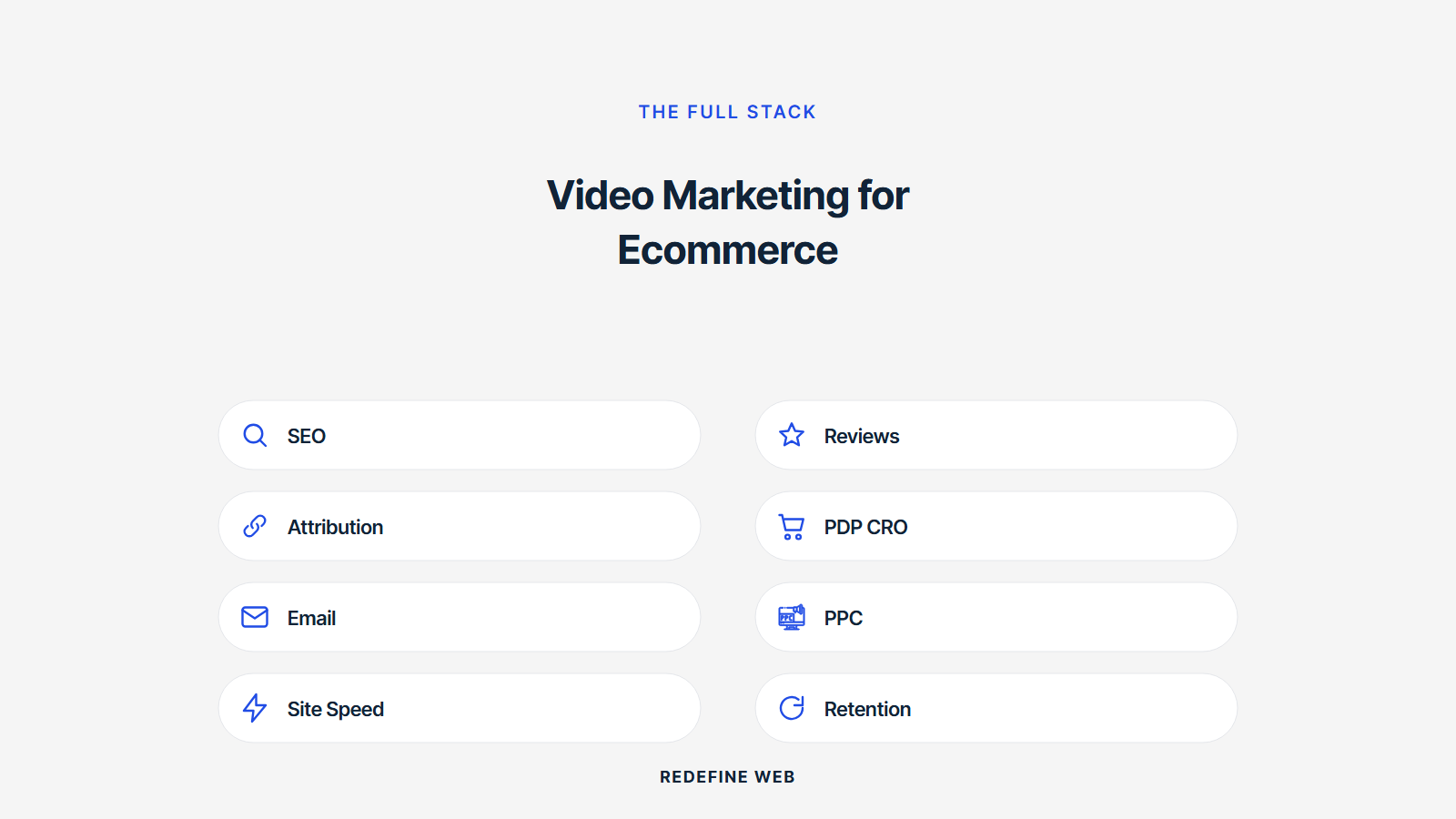
The best ecommerce video marketing examples reveal a mechanism the brand runs consistently, not a one-off viral hit. Copying the surface of a Gymshark ad rarely works for an outdoor apparel brand. Copying the mechanism (community athlete storytelling, high-frequency shoot cadence, low-cost UGC-style edits) translates across categories. Five brand examples worth studying at the mechanism level.
Every DTC video review meeting eventually reaches the moment where the founder points at a competitor’s TikTok with 2.4 million views and asks the agency to do exactly that. The video is a woman crying while unboxing a candle. The founder sells industrial lubricant. The polite recommendation is that the mechanism does not translate. The founder will insist on trying anyway, and three months later the agency is asked why the crying-lubricant-unboxing series did not go viral. Somewhere in the content archive of every DTC brand, a viral-copy attempt from a category that does not fit quietly lives on as evidence that copying the mechanism, not the surface, is the actual play.
Five brands that ran the format properly
Gymshark built a nine-figure apparel brand on athlete-partner content that ran on Instagram and YouTube for years. The mechanism was community storytelling at high cadence, with athletes carrying the brand voice on their own accounts. Glossier ran Into the Gloss video interviews as an editorial layer before scaling paid social to Reels. The mechanism was audience-first content that let the founder speak in first person. Chubbies scaled a shorts brand on absurdist short-form video that treated the product as the setup for the joke. The mechanism was tonal consistency across every clip. Dyson runs long-form product-demonstration video on YouTube that covers engineering depth for two to eight minutes per product. The mechanism was authority through detail. ILIA Beauty runs founder-led tutorial content that shows the product in real use on real faces, with Reels and Shorts feeding the main YouTube channel. Copy the mechanism, not the surface, and the framework carries.
Mid-market examples that translate to smaller budgets
Not every brand has the Gymshark budget. Blume runs founder-led TikTok content that costs almost nothing to produce and pulls in Gen Z buyers through relatability. Peak Design runs long-form YouTube product tutorials that rank for photography-gear queries. Athletic Greens runs testimonial-video ads on Meta at high volume, testing 40 to 80 UGC creative variants per month. Each of those programs stays inside modest budgets, runs a repeatable video format, and produces meaningful revenue attribution over 12 to 24 months. Any mid-market brand can copy the mechanism and adapt to its own budget.
Production costs and budget for video marketing for ecommerce
Budget decides which format families a DTC brand can run at scale, and getting the budget wrong is one of the most common mistakes on new video marketing for ecommerce programs. The number that matters is production cost per usable second of finished video, because that number rolls up to cost per acquisition when the video runs as a paid ad. Getting the per-second cost down without dropping conversion is what separates the profitable video programs from the ones that get cut in the next budget review.
Per-format production math
Short-form UGC clip: $60 to $180 per clip at Insense or Trend rates, $80 to $250 per clip through Billo or the brand’s own creator pipeline. Short-form agency-produced clip: $400 to $1,200 per clip depending on creator fee and edit complexity. Long-form YouTube video: $600 to $2,500 per video for the shoot, plus $300 to $900 for edit and thumbnail. PDP demonstration video: $180 to $600 per product. Live-shopping session (weekly): $200 to $800 for host plus tech setup. Brand or founder film (annual anchor): $3,000 to $15,000 for a proper shoot day. Running four to six of those formats in parallel through a monthly retainer produces a full video content library at $6,000 to $18,000 monthly at mid-market scale, and larger DTC brands scale up to $30,000 to $80,000 monthly on integrated shoots. The rule of thumb is that video should cost around 15 to 25 percent of the DTC brand’s total content budget and produce 30 to 55 percent of attributed revenue back.
Budget tier by revenue stage
Under one million in annual revenue: run UGC-only, budget $1,500 to $4,000 monthly on video. One to five million: add short-form agency creator content and PDP demonstration videos, budget $4,000 to $10,000 monthly. Five to twenty million: add YouTube long-form and shoppable video setup, budget $10,000 to $25,000 monthly. Above twenty million: run the full six-format stack including live shopping, budget $25,000 to $80,000 monthly with in-house team plus agency partner. A sibling read on best practices for ecommerce marketing across paid organic and CRM covers the wider budget math the video line sits inside.
Measurement stack that closes the loop on video
Measurement is the layer that decides whether the video marketing for ecommerce program gets renewed next quarter. Videos measured only by view counts get cherry-picked to support the clips the team already wanted to run. A real measurement stack tracks the numbers that connect video to purchase, and reads the numbers together every month rather than pulling them one at a time from four dashboards.
Seven numbers that matter for video
View-through rate at 25, 50, and 100 percent completion, from the platform’s native analytics. Cost per view, calculated on paid boosts. Click-through rate from the video to the PDP, from UTM tracking. Add-to-cart rate on visitors who watched the video, from GA4 event tracking. Purchase conversion rate on video-touched sessions versus non-video-touched sessions, from a segmented GA4 report. Video-attributed revenue, from GA4 attribution model plus platform pixel data. Cost per revenue dollar from video, calculated as production cost plus paid spend divided by attributed revenue. Reading those seven numbers together every month tells the founder whether the video dollar is producing revenue, and which formats are pulling their weight. A sibling read on ecommerce marketing strategies that drive DTC revenue covers the wider measurement view the video KPIs feed into.
Attribution windows and tools that catch assisted revenue
Video sits earlier in the funnel than a checkout page, so last-click attribution undercounts video revenue by 30 to 60 percent on most accounts. Use a 30 to 90-day attribution window with a data-driven or position-based model in GA4, and add a marketing mix model (Rockerbox, Northbeam, or a spreadsheet if the brand is small) that combines platform-reported and independently-measured revenue. Google Search Central publishes helpful documentation on video SEO markup that the technical team should apply to any long-form video hosted on the site. Combined attribution plus proper schema markup catches the assisted revenue video creates and gives the founder a fair picture of the payback.
A DTC brand running video marketing for ecommerce in production
Abigail Ahern came to our team with a design-savvy audience, a luxury home decor catalog, and zero video on the PDPs. The paid social account was running static image ads at CPMs the ad platform could not push down further. The organic content was static photography plus long captions on Instagram, with no Reels output. The brand voice sat halfway between aspirational and irreverent, and it translated well to short-form video once the video program got built properly.
Our team built a four-format video program covering PDP demonstration videos on the top 30 SKUs, three short-form Reels per week using a mix of UGC and founder-led content, one long-form YouTube video per month covering room-design walkthroughs, and shoppable video on the homepage powered by a Firework embed. Production cost held around $9,000 monthly across writer, editor, and creator fees. Cadence held for 11 of 12 months across the year. Paid social boosts ran on the top-performing three Reels each month, with a $1,200 monthly boost budget that pulled paid social ROAS up to 3,000 percent by month six.
Over the following year, ecommerce revenue climbed 179 percent, paid search ROAS grew to 1,588 percent, and paid social ROAS reached 3,000 percent without a single discount banner running on the site. Video-attributed revenue accounted for roughly 34 percent of last-click revenue and roughly 52 percent on a data-driven attribution model that captured assisted paths. The four-format program was a big part of the shift, and it paid back the production cost inside the first quarter. That is the shape of a video marketing for ecommerce program that actually pays back the retainer.
Where video marketing for ecommerce fits the stack
Video marketing for ecommerce sits inside the wider retention plus paid plus organic stack a DTC brand runs. It is not a standalone tactic. The video plan feeds paid social creative, powers organic discovery, populates the PDP conversion layer, and gives email marketing dynamic content it could not otherwise carry. Brands that treat video as isolated from the rest of the marketing stack produce clips that look nice and move nothing.
Pick the format family first, then the platform, then the cadence, then the production math, then the measurement. Run PDP video plus short-form on two platforms plus at least one UGC pipeline as the baseline for any mid-market brand. Add long-form YouTube in year two when bandwidth allows. Add shoppable video widgets and live shopping in year three when the audience is big enough to fill a session. Read the seven KPIs every month and refresh the format mix every quarter. Do those seven things for 12 months and video grows into a real revenue line the founder can point at.
Our sibling read on email marketing for ecommerce flows campaigns and examples covers the owned-channel side where video-tagged emails close the retention loop. Our read on sms marketing for ecommerce covers the SMS side. Together, the three channels form the retention layer the top-of-funnel video program feeds into.
Our ecommerce marketing retainer starts at $599 per month and runs six months, because a video content program needs a full quarter to build the format library and another quarter to prove the attribution math. Faster than that and the numbers are noise. Slower than that and the creator pipeline loses momentum before the format mix compounds. The ecommerce marketing retainer page covers the scope and pricing in more depth.
Frequently asked questions
What is video marketing for ecommerce?
Video marketing for ecommerce is the practice of using video across the buyer journey to move a DTC store's revenue. It covers six format families that work together. Product videos on the product detail page close ready-to-buy visitors. Short-form video on TikTok, Instagram Reels, and YouTube Shorts drives discovery. Long-form YouTube video ranks for research queries. Unboxing and UGC video beats comparison-stage objections. Shoppable video closes checkout inside social feeds. Live shopping closes high-consideration purchases in real time. Brands running four or more of the six families in parallel produce compounding organic reach, higher conversion rates, and cheaper paid acquisition than brands running one channel.
What are the best ecommerce video marketing examples worth studying?
Five brands worth studying at the mechanism level. Gymshark built a nine-figure apparel brand on athlete-partner content across Instagram and YouTube, with community storytelling at high cadence as the mechanism. Glossier ran Into the Gloss video interviews before scaling paid social. Chubbies scaled a shorts brand on absurdist short-form video with consistent tone. Dyson runs long-form product-demonstration video on YouTube covering engineering depth. ILIA Beauty runs founder-led tutorial content on real faces. Mid-market brands can study Blume, Peak Design, and Athletic Greens for smaller-budget versions of the same mechanisms. Copy the mechanism, not the surface, and the format translates across categories.
How do ecommerce video marketing strategies for TikTok, Reels, and Shorts actually differ?
The three platforms behave differently at the algorithm level and reward different creative signals. TikTok favors native talent, low-polish edits, trending sounds, and duets. Instagram Reels favors mid-polish creator content, music-driven cuts, and product-in-use footage. YouTube Shorts favors subscribable creators, cross-linking to the main long-form channel, and content that ports well from longer video. Brands running one edit across all three platforms cap their reach on all three. The healthiest ecommerce video marketing strategies in 2026 run three separate edits from the same shoot day, cut for each platform's aspect ratio, pacing, and audio conventions.
How much should a DTC brand budget for an ecommerce video marketing strategy?
Budget scales with revenue tier. Brands under one million in annual revenue run UGC-only programs at $1,500 to $4,000 monthly. One to five million adds short-form agency creator content and PDP demonstration videos at $4,000 to $10,000 monthly. Five to twenty million adds YouTube long-form and shoppable video setup at $10,000 to $25,000 monthly. Above twenty million runs the full six-format stack including live shopping at $25,000 to $80,000 monthly. The rule of thumb is video should cost around 15 to 25 percent of the total content budget and produce 30 to 55 percent of attributed revenue back on a mature program.
How does a DTC brand measure video marketing for ecommerce properly?
Seven numbers matter for a video program. View-through rate at 25, 50, and 100 percent completion. Cost per view on paid boosts. Click-through rate from video to product detail page. Add-to-cart rate on visitors who watched the video. Purchase conversion rate on video-touched sessions versus non-video-touched. Video-attributed revenue from GA4 plus platform pixel data. Cost per revenue dollar from video, calculated as production cost plus paid spend divided by attributed revenue. Use a 30 to 90-day attribution window with a data-driven or position-based model, because last-click undercounts video revenue by 30 to 60 percent on most accounts.
Book your free 30-minute strategy call.
No spam, no sales rep. We use your email to schedule your call with a senior strategist. That is it.
More from the blog
View all articles → Digital Marketing
 Dental Marketing Tips That Compound Into New Patients
Read article Digital Marketing
 Ecommerce Marketing Strategies That Drive Real DTC Revenue
Read article Digital Marketing