
Webflow SaaS Website Design Agencies That Actually Build Product-Grade Sites
- Webflow shortens SaaS marketing iteration to 48 hours.
- Pattern library depth predicts shipping cadence.
- CMS collection modeling decides marketing team autonomy.
- Interaction depth separates product-grade sites from templates.
- Server-side conversion tracking recovers iOS signal loss.
- Why webflow saas website design has become the default stack
- Pattern library depth in a webflow saas website design agency
- CMS collection modeling inside webflow saas website design
- Interaction and animation depth in webflow saas website design
- Webflow saas website design case study: Roof4Roof
- Top webflow saas website design agencies worth a shortlist call
- Comparison of webflow saas website design agencies by tier
- Integration wiring for a webflow saas website design build
- SEO patterns inside webflow saas website design
- Webflow saas website design pitfalls to avoid
- What to check on your webflow saas website design agency call this week
Webflow SaaS website design has quietly become the default stack for SaaS marketing sites at the seed to Series B stage. The reason is not the visual polish. It is the shipping cadence. A marketing team on Webflow ships a new page in 48 hours. The same team on a hand-coded stack waits 3 weeks for the next engineering sprint to open. That gap decides whether the marketing site keeps up with the product roadmap or falls a year behind by Series A.
You will get the pattern library depth to look for in a Webflow SaaS website design agency shortlist, the CMS collection modeling that scales past 3,000 pages, the interaction library that separates a real Webflow build from a template, and the pipeline math behind an engagement that actually pays back. Read this before signing a statement of work because the agency picks decide more than the Webflow theme ever will.

Why webflow saas website design has become the default stack
Webflow shortens the marketing team’s iteration cycle from 3 weeks to 48 hours. That gap decides how fast the marketing site keeps up with the product roadmap. A SaaS team on Webflow ships a landing page for the new integration on Monday. A SaaS team on a hand-coded stack waits until the next engineering sprint opens.
The tradeoff is enterprise scale. Webflow’s CMS collection limits, form-to-CRM plumbing, and multi-site instances get uncomfortable above roughly 3,000 pages. Most seed to Series B SaaS marketing sites live well below that ceiling. Series C and beyond usually migrate to a headless Next.js stack once the CMS collection modeling reaches its Webflow ceiling.
Webflow SaaS website design also carries the visual polish argument. The interaction library, timeline builder, and CMS-driven collection templates let a designer build motion states that would take a React engineer 2 weeks to reproduce. That polish matters in the SaaS category because buyers evaluate visual trust in the first 8 seconds. Reference the Webflow SaaS showcase for the pattern language most credible agencies work in.
The hosting story on Webflow simplifies the SaaS marketing site build. Webflow’s hosting ships with global CDN, automatic SSL, and standardized deploy pipelines. No separate hosting contract, no PHP version debate, no plugin patch coordination. That simplification frees the marketing team to focus on content and conversion instead of DevOps. The tradeoff is vendor lock-in. Every asset lives inside Webflow’s platform, and migrating off Webflow later runs 8 to 16 weeks depending on the site’s CMS complexity.
Pattern library depth in a webflow saas website design agency
The first thing to audit in a Webflow SaaS website design agency is the pattern library depth. Every credible Webflow SaaS agency runs a symbol library of 60 to 200 pre-built components covering hero variants, feature grids, pricing tables, testimonial layouts, and interactive product tours. That library carries most of the visual velocity behind the agency’s shipping cadence.
Ask to see the symbol library on the shortlist call. Agencies that don’t have a library or refuse to demo it usually rebuild every SaaS site from scratch, which explains why their delivery timeline stretches to 16 to 24 weeks for a marketing site that should ship in 8 to 12. The library also decides how many revision cycles the agency can absorb without missing the deadline. Deep libraries absorb 4 to 6 revision rounds. Shallow libraries collapse after 2.
The best Webflow SaaS website design agencies also open-source or publicly publish parts of their pattern library. Refokus, Flow Ninja, and Duckhouse each maintain public component collections on the Webflow marketplace or Relume. That transparency is a good signal. Agencies that guard their pattern library as a proprietary black box are usually charging a premium for what everybody else already has on Relume. See our SaaS Website Design Services for the pattern set we bring into every SaaS engagement.
Relume and the webflow saas pattern ecosystem
Relume Library sits as the reference component library across most Webflow SaaS engagements. It ships 1,000+ Webflow-native components and 300+ page templates keyed to the SaaS motion. Agencies that use Relume as the starting layer ship faster than agencies building from a blank canvas. See Relume Library for the reference component set.
CMS collection modeling inside webflow saas website design
CMS collection modeling is the quiet layer where Webflow SaaS website design agencies separate. A shallow agency treats the CMS as a blog collection plus a case study collection. A deep agency models the entire marketing site: features, integrations, use cases, verticals, roles, resources, changelog, careers, and every downstream template that references those collections through reference fields.
The right CMS collection design lets the marketing team ship a new integration page by filling out 4 fields inside a form, not by hiring a designer. The wrong CMS collection design forces the marketing team to duplicate an existing page and rewrite half of it every time. Ask the agency to walk through their reference collection setup on the shortlist call. If they can’t explain reference fields in 90 seconds, the CMS modeling will be shallow.
Webflow’s CMS collection limits still matter at scale. Each collection caps at 10,000 items on the enterprise plan and 100 items on the CMS plan. Multi-collection reference fields cap at 5 per collection. SaaS marketing sites that outgrow these limits either migrate to enterprise, split into multiple site instances (linked by subdomain), or start planning the Next.js headless migration. Track the collection sizes quarterly to know when the ceiling arrives. Multi-locale sites hit the ceiling faster than English-only sites because localization multiplies the collection item count.
If your product roadmap adds 100+ programmatic pages a quarter, Webflow's CMS limits will bite by Series A. Plan the exit before you sign the SOW.
Interaction and animation depth in webflow saas website design
Webflow’s interaction and timeline system is what separates a product-grade Webflow SaaS site from a template. The credible agencies build scroll-linked animations, sticky product tours, cursor-driven state changes, and CMS-driven interaction variants. Template-tier agencies stack four static hero blocks and call it a day.
Ask to see a product tour interaction on the shortlist call. A real Webflow SaaS agency should demo a scroll-triggered product walkthrough where the UI changes as the user scrolls, mimicking a product tour without the react overhead. That interaction pattern converts 20 to 35 percent higher on the demo request page than static screenshots. If the agency can’t show you that pattern working, they haven’t built a real Webflow SaaS site.
Interaction depth also has to work on mobile. Every Webflow SaaS site now sees 45 to 65 percent of traffic on mobile depending on the paid channel mix. Interactions that break on mobile lose 20 to 30 percent of the conversion advantage. Ask the agency to demo the same product tour on a phone. If the mobile version is a static image instead of a scroll-triggered interaction, the agency skipped the mobile design pass. Motion performance also matters for accessibility, so the agency should respect the prefers-reduced-motion setting and provide a static fallback for users who disable animation at the OS level. Overdone animation can also hurt Core Web Vitals if the interaction fires layout-thrashing repaints.
Webflow saas website design case study: Roof4Roof
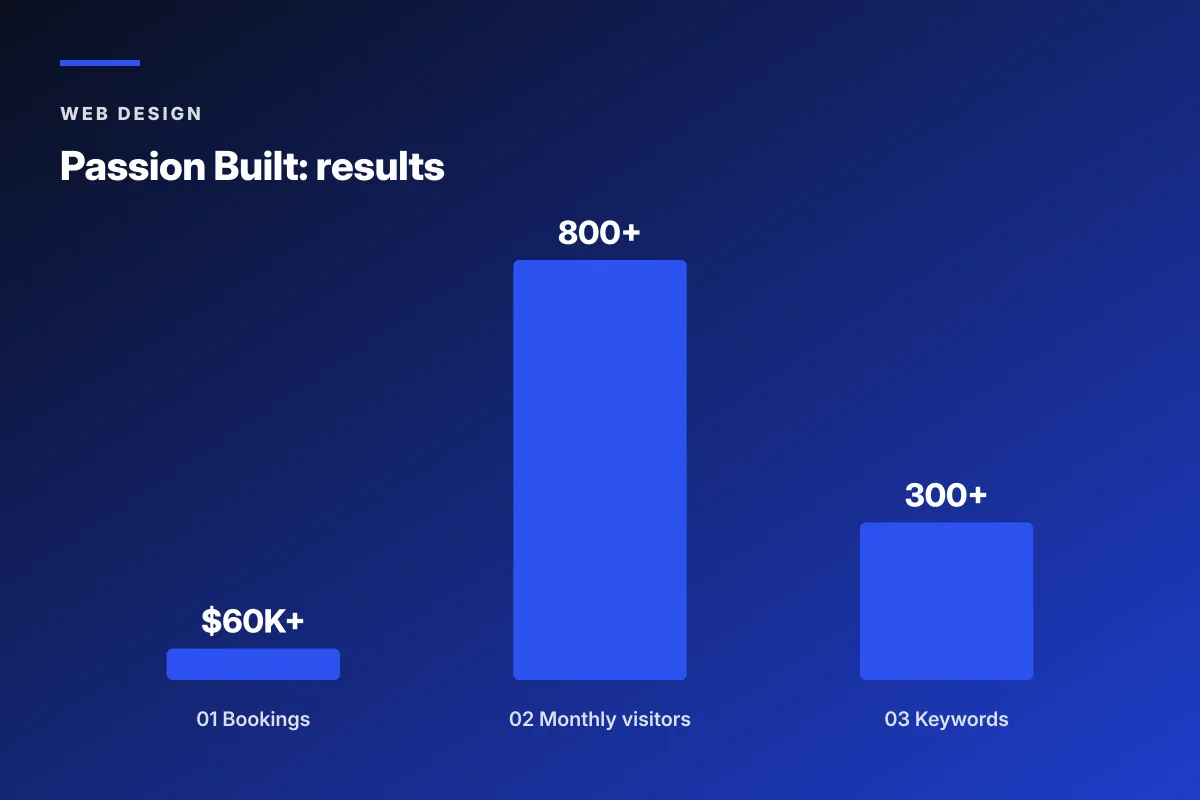
Roof4Roof is a services vertical rather than a pure SaaS play, but the Webflow build pattern that carried the engagement is the same shape a Webflow SaaS website design agency runs on a product marketing site. Roof4Roof needed a fast-iterating site that could ship new service pages inside 48 hours as the operational team expanded into new markets.
Redefine Web ran a Webflow-first rebuild plus SEO. The CMS was modeled with 5 core collections (services, markets, testimonials, case studies, integrations). Every new service page filled 4 CMS fields inside a form and the page generated automatically through a reference field template. Interaction design used scroll-triggered feature reveals and sticky pricing calculators, both patterns that map straight to a SaaS marketing site.
The pattern that worked at Roof4Roof scales up and across verticals. Deep CMS collection modeling, interaction library that matches the buyer’s expectation, and hosting that handles the traffic band. For a Webflow SaaS website design engagement, swap the services collection for a features collection and the markets collection for an integrations collection. Everything else translates directly. The result: a marketing site that ships as fast as the product roadmap changes. The Roof4Roof engagement also carried an SEO pass because the CMS reference field structure had to feed structured internal linking. That linking pattern is the same one a Webflow SaaS site needs to rank on integration keywords.
Top webflow saas website design agencies worth a shortlist call
The credible Webflow SaaS website design agencies in 2026 cluster into three tiers. Boutique premium (Refokus, Flow Ninja, Fable). Mid-market growth (Duckhouse, Edgar Allan, Finsweet). Product-house hybrid (Redefine Web, Superside, Manhattan Creative). Each tier fits a different budget and a different product-motion depth.
Boutique premium agencies work at $60,000 to $180,000 for a full SaaS marketing site rebuild, running 12 to 20 weeks. They’re the pick for the well-funded SaaS company that wants a signature-level design and can wait the timeline. Mid-market growth agencies work at $25,000 to $80,000 running 8 to 14 weeks. They’re the pick for the Series A SaaS company that needs a strong marketing site without the boutique premium. Product-house hybrids work at $15,000 to $60,000 running 6 to 12 weeks, with the tradeoff being less pure design polish and more product-motion focus.
Every tier has agencies that miss the shortlist because their portfolio looks great but the CMS collection modeling behind the pages is shallow. Audit the CMS modeling in every finalist’s portfolio before signing the SoW. Ask for read-only access to a live Webflow project to see how the collections are structured. Agencies that refuse to open the collections are usually hiding a shallow CMS setup that will cost you 4 to 6 weeks of rework at launch. Ask for two client references from the last 12 months and call each one. Ask specifically how the CMS held up as the marketing team added new pages, and whether the pattern library discipline stayed intact 6 months post launch.
Comparison of webflow saas website design agencies by tier
The three tiers each fit a different SaaS stage and budget. The table below sizes the tradeoffs across timeline, pattern library depth, and typical outcome. Match the row to the SaaS stage the buyer is at, not the row that reads best on the boutique agency’s website.
| Tier | Cost band | Timeline | CMS depth | Best fit |
|---|---|---|---|---|
| Boutique premium | $60k < $180k | 12 < 20 wk | Deep | Series B plus SaaS |
| Mid-market growth | $25k < $80k | 8 < 14 wk | Deep to medium | Series A SaaS |
| Product-house hybrid | $15k < $60k | 6 < 12 wk | Deep | Seed to Series A SaaS |
| Freelance solo | $4k > $15k | 4 > 8 wk | Shallow | Pre-seed SaaS |
Pick the tier before the shortlist call. Every engagement that starts the shortlist without a clear tier target ends up with a mismatched agency picked for the wrong reason. Series A SaaS companies that hire the boutique premium tier usually blow the budget in 6 months. Series C SaaS companies that hire the freelance tier usually end up hiring a second agency 12 months later to redo the CMS modeling from scratch.
Team fit is the other tier consideration worth pricing. Boutique premium agencies work well with a founder-CMO who owns the site outcome and can approve creative direction fast. Mid-market agencies work well with a marketing manager plus a content lead who can review weekly. Product-house hybrids work well with a marketing operations lead who can translate product requirements into web requirements. Freelance solo builds work well only when the SaaS company has an internal designer who can carry the visual direction.
Integration wiring for a webflow saas website design build
Integration wiring is where Webflow SaaS builds either fly or crash. Webflow doesn’t ship native HubSpot or Salesforce integration, so every form-to-CRM handoff runs through a webhook layer. The credible agencies wire this through native Webflow forms plus a Make.com or Zapier workflow that posts to the CRM with UTM parameters, referrer data, and enrichment from Clearbit or Apollo.
Server-side event forwarding is the enterprise pattern most Webflow SaaS agencies now default to. Instead of client-side JavaScript firing a Facebook or Google Ads pixel event, the form posts to a server endpoint that forwards to the ad platforms in parallel. That server-side layer recovers 15 to 25 percent of conversion signal lost to iOS 17 privacy features. Ask the agency if they wire server-side conversion tracking by default. If they don’t, the ad reporting will underreport pipeline by 20 percent.
Analytics setup also matters. Webflow ships with a native Google Analytics 4 field. Beyond that, Segment or PostHog handles the deeper event tracking for the SaaS marketing team that wants funnel visibility across the marketing site. Every Webflow SaaS agency should install Segment plus PostHog on the launch checklist, not as a follow-up sprint. See our Search Engine Optimization Services for the search analytics wiring that pairs with the marketing analytics install. Reference the Webflow University form integration lesson when scoping the CRM handoff so the buyer and the agency work from the same technical baseline. Also confirm the agency wires a lead scoring model into the CRM at launch, not as a post-launch add-on. Scoring wired later never catches the first 90 days of ambiguous leads.

SEO patterns inside webflow saas website design
SEO on Webflow works well but requires specific configuration that a lot of Webflow SaaS website design agencies skip. Every page needs a filled meta title and description field, schema markup for Organization and SoftwareApplication types, structured internal linking through CMS reference fields, and Core Web Vitals under 2.5 seconds on Largest Contentful Paint.
Webflow’s built-in image optimization handles most of the LCP challenge, but hero videos and large PNG backgrounds still slip through and drag the score. Ask the agency to run Lighthouse against three of their live SaaS builds during the shortlist call. If any one of the three is under 90 on Performance for mobile, the agency is not building for Google’s Core Web Vitals thresholds. That gap costs 15 to 30 percent of organic traffic on the finished site.
Content depth also decides the SEO ceiling. A Webflow SaaS site with 30 shallow pages caps organic traffic at brand-only searches. A Webflow SaaS site with 200+ deep pages covering integrations, use cases, verticals, roles, and comparisons pulls in the informational and commercial-investigation searches that produce a real pipeline. Ask the agency about their content depth model. If they don’t have one, the site will underperform on SEO for the first 12 months after launch. Pair the site build with a marketing-facing partner like our Web Design and Development Services team for the content pipeline.
Webflow saas website design pitfalls to avoid
First pitfall: hiring a Webflow SaaS website design agency because the portfolio looks polished but the CMS collection modeling is shallow. Audit the CMS setup before signing. A shallow CMS costs 4 to 6 weeks of rework at launch and locks the marketing team into designer-dependent page creation for the next 18 months.
Second pitfall: skipping the interaction depth audit. Every Webflow SaaS site needs product-tour, scroll-linked, and CMS-driven interactions to convert at the SaaS category benchmark. Static hero blocks stacked four times deep convert at 40 to 60 percent below the interaction-rich benchmark. Ask for the live product tour demo on the shortlist call.
One SaaS marketer told us she picked her Webflow agency based on the Dribbble portfolio. Six months in, her marketing team was still opening a Notion ticket to spin up a new landing page because the CMS didn’t have a landing page collection. As she put it, “I hired a design agency, not a marketing agency. Turns out I needed both, and I picked wrong.” She rebuilt the CMS layer with a second agency the following quarter. Vet the CMS modeling before you sign, not after you launch.
Third pitfall: no ongoing Webflow maintenance retainer post launch. Webflow updates plugin behaviors, interactions, and CMS features every quarter. Sites that don’t have a monthly retainer drift as the marketing team adds pages that break the pattern library discipline. Book a 4 to 12 hour monthly retainer with the agency for pattern library maintenance and CMS modeling reviews. Our Monthly Website Maintenance Packages cover the same pattern for teams that split site build and site maintenance across two vendors.
What to check on your webflow saas website design agency call this week
Three actions before the shortlist call. Ask to see the symbol library live in a Webflow project. Ask for read-only access to a live client build so you can audit the CMS collection modeling. Ask the agency to run Lighthouse against three of their live SaaS builds and share the mobile scores.
Those three checks filter out roughly half of the Webflow SaaS website design shortlist inside the first call. The agencies that pass all three are the credible finalists worth a longer scoping conversation. Sign the SoW only after those three checks pass. Every Webflow SaaS website design engagement that skipped the checks ended up with a 4 to 8 week overrun, and the marketing team always regretted not asking on the intro call.
Frequently asked questions
What is a webflow saas website design agency and what do they do?
A Webflow SaaS website design agency builds SaaS marketing sites on the Webflow platform, covering visual design, CMS collection modeling, interaction and animation programming, form-to-CRM integration wiring, and Core Web Vitals optimization. The credible agencies also carry a symbol library of 60 to 200 pre-built components, which shortens delivery timelines to 6 to 14 weeks instead of the 16 to 24 weeks a from-scratch build takes. The engagement typically includes a launch checklist covering analytics install, server-side conversion tracking, schema markup, and a 30-day post-launch review with the marketing team.
How much do webflow saas website design agencies charge in 2026?
Webflow saas website design agencies price by tier. Boutique premium agencies charge $60,000 to $180,000 for a full SaaS marketing site rebuild running 12 to 20 weeks. Mid-market growth agencies charge $25,000 to $80,000 running 8 to 14 weeks. Product-house hybrid agencies charge $15,000 to $60,000 running 6 to 12 weeks. Freelance solo builds run $4,000 to $15,000 but usually ship shallow CMS modeling that costs the SaaS company a full rebuild inside 18 months. Match the tier to the SaaS stage and the marketing team's headcount, not to the shiniest portfolio.
How do you evaluate a webflow saas website design agency shortlist?
Three checks on the shortlist call decide credibility. Ask to see the agency's symbol library live in a Webflow project. Ask for read-only access to a live client build so you can audit the CMS collection modeling depth. Ask the agency to run Lighthouse against three of their live SaaS builds and share the mobile scores. Any agency that refuses to demo the library, opens the CMS, or shares Lighthouse scores under 90 on mobile Performance is not building at the SaaS category standard. Those three filters cut roughly half of any Webflow SaaS agency shortlist inside the first call.
Should a SaaS company build on Webflow or on Next.js?
Webflow fits seed through Series B SaaS companies with a marketing site under 3,000 pages and a marketing team of 1 to 5 people who need iteration speed without engineering headcount. Next.js on a headless CMS like Contentful or Sanity fits Series C and beyond, where the site scales past Webflow's CMS collection limits and the engineering team has capacity to own the front end. Migrating from Webflow to Next.js runs 12 to 20 weeks and costs $80,000 to $250,000 depending on the CMS complexity, so pick Webflow only if the SaaS company will fit under the ceiling for the next 24 months.
What role does Relume play in webflow saas website design?
Relume Library sits as the reference component library across most credible Webflow SaaS engagements. It ships 1,000+ Webflow-native components and 300+ page templates keyed to the SaaS motion. Agencies that use Relume as the starting layer ship 30 to 50 percent faster than agencies building from a blank canvas. The tradeoff is visual homogeneity: sites built entirely on stock Relume components look similar to each other. The best Webflow SaaS website design agencies use Relume as a scaffold, then rebuild the hero, pricing, and product-tour sections from scratch to carry the brand's visual identity.
What is the biggest mistake in a webflow saas website design engagement?
Picking the agency based on Dribbble or Behance portfolio polish without auditing the CMS collection modeling underneath. A shallow CMS costs 4 to 6 weeks of rework at launch and locks the marketing team into designer-dependent page creation for the next 18 months. Every credible Webflow SaaS agency should walk the buyer through reference fields, collection template design, and multi-collection page generation on the shortlist call. Agencies that can't explain reference fields in 90 seconds have shallow CMS modeling and the finished site will pay for that gap every time the marketing team wants to ship a new page.
Book your free 30-minute strategy call.
No spam, no sales rep. We use your email to schedule your call with a senior strategist. That is it.
More from the blog
View all articles → Web Design
 Core Web Vitals Healthcare Websites Actually Need to Book Patients
Read article Web Design
 Professional Services Website Design Best Practices for 2026
Read article Web Design