B2B SaaS product marketing is the function that turns software features into buyer language, launches into pipeline, and positioning into a win rate you can defend. Done right, it moves four numbers inside 6 months. Sales cycle down 15 to 30 percent. Win rate up 8 to 20 points against the top competitor. Inbound pipeline sourced from launches up 20 to 40 percent. And trial-to-paid conversion up whenever the positioning feeds activation copy.
This guide is the honest version of what the function does inside a B2B software company at $3M to $60M ARR. What a good agency retainer costs in 2026. How to split work between an in-house hire and a fractional partner. And the metrics that tell you if the money is landing. Read it straight through in about ten minutes and you will know what to put into your first SOW.
Written for founders, heads of growth, and demand gen leads who need messaging that closes deals and not more content that nobody reads. By the end you get pricing bands, the launch runbook, the four positioning strategies that separate the top companies for market positioning in b2b saas from the ones stuck in feature-list purgatory, and a working template for the first 30 days with any product marketing agency for b2b saas.
What does product marketing do in b2b saas
Product marketing owns the space between what the software does and what a buyer thinks it does. That means positioning, messaging, launches, sales enablement, competitive battlecards, win-loss research, pricing input, and the language that flows into the pricing page. In a B2B SaaS company under 200 people, one product marketing lead runs all of that with agency support on launches. Above 200 people, the function splits into launches, competitive intelligence, and sales enablement as separate seats.
The function is not writing every blog post, running paid ads, or building ABM lists. When it drifts into those tasks the pipeline outcomes go flat inside a quarter. So the first job of a strong product marketing lead is to write the scope down in month one and defend it. If you can not answer “what does product marketing do in b2b saas at our stage” in three sentences, the function will drift into whatever lands in the marketing inbox that week.
Pricing bands for a b2b saas product marketing agency in 2026
Fractional b2b saas product marketing consultants charge $5,500 to $11,000 per month for 15 to 25 hours of work. Boutique product marketing agencies for b2b saas retain at $7,500 to $18,000 per month for strategy plus launch execution. Enterprise repositioning projects run $45,000 to $120,000 fixed fee over 8 to 12 weeks. Fees track number of launches per quarter, sales team size, and how much category education the buyer needs.
| Engagement type | Monthly fee | Best fit stage | What you get |
|---|---|---|---|
| Fractional product marketing consultant | $5,500 to $11,000 | Seed to Series A | Positioning plus one tier-one launch per quarter |
| Boutique product marketing agency | $7,500 to $18,000 | Series A to Series B | Positioning, launches, sales enablement, battlecards |
| Full-service product marketing retainer | $14,000 to $28,000 | Series B to Series C | All of the above plus win-loss program, pricing work |
| Repositioning project (fixed fee) | $45,000 to $120,000 | Any stage, once every 2 years | Full research, positioning rebuild, launch plan |
The five drivers that push agency fees higher
Regulated verticals like fintech and healthtech, a sales team above 12 reps, more than one tier-one launch per quarter, a pricing rebuild in scope, and international expansion each add $2,500 to $5,000 per month to the retainer. Add all five and you are already above $22,000. Any agency that quotes a flat fee without asking about these five variables is guessing at your scope. Ask for a scope worksheet before the second call. If they can not produce one, they have not run this at your stage before.
Retainer versus project pricing shapes
Retainer buys velocity and a working relationship. Project buys a specific deliverable. A positioning rebuild sits well as a project. A launch runbook can sit either way. Ongoing win-loss, battlecards, and sales enablement only work on retainer, so the cadence dies without a monthly commitment. When you interview product marketing agencies for b2b saas, ask which parts of their work they insist run on retainer. That answer tells you more about their operating model than the pricing page. Redefine Web’s SaaS Marketing Retainer Plans from $1,499/mo covers the retainer entry points at each tier.
Best market positioning strategies from b2b saas providers that actually work
Four positioning strategies drive most of the wins we watch in B2B SaaS. Category creation for products that do not fit an existing bucket. Category redefinition for challenger brands. Vertical specialization for horizontal categories that got crowded. And integration-first positioning for products that live inside a larger tool ecosystem. Pick one and commit for at least 18 months.
The mistake we watch operators make is switching positioning every 4 months in response to a competitor move. That is not positioning, that is reaction. Real positioning holds through two or three competitor launches without changing. If yours does not, you never had a position, you had messaging that felt directionally right for a quarter. The best market positioning strategies from b2b saas providers all share one trait, they were held for 18 months plus before the operator claimed victory.
Category creation for genuinely new products
Category creation is expensive, slow, and only works when your product genuinely does not fit an existing category buyers already search for. Think product-led sales, revenue operations software, or customer education platforms in the year before those categories showed up in Gartner reports. Category creation costs 30 to 40 percent of your marketing budget for the first two years. Payoff is a defensible position and the ability to shape the buying process. If your product fits an existing category, do not attempt this. You will burn cash educating buyers who could have bought from a bucket they already understood.
Vertical specialization inside a crowded horizontal category
Vertical specialization is the highest-ROI positioning move for most B2B SaaS at Series A or B. Pick one industry, become the default choice there, then expand. Toast did this in restaurants. Procore in construction. Veeva in life sciences. The math works so a vertical narrows your ICP, sharpens your messaging, and gives sales a shorter list of accounts to target. A generalist product marketing agency for b2b saas will hedge on vertical specialization. A vertical specialist will push you into it faster than you are ready for. Split the difference and pick a vertical you can dominate inside 24 months.
Integration-first positioning inside a bigger ecosystem
If your product plugs into Salesforce, HubSpot, or Slack as the main use case, lead with that in every asset. The AppExchange listing, the marketplace ranking, and the joint webinar with the platform partner matter more than the homepage headline. Integration-first positioning shortens sales cycles by 30 to 45 percent in vendor benchmarks, so the buyer never has to sell a new tool internally. They are extending a system they already own.
How to stand out in crowded b2b saas market without shouting louder
You stand out in a crowded b2b saas market by narrowing your ICP, sharpening your point of view, and shipping category-education content that competitors can not copy. Louder is not a strategy. Sharper is. The brands that break out in a crowded space almost always did less, not more. Fewer messages, tighter positioning, one clear enemy.
The specific moves that work. Publish an opinionated point of view that names the outdated way of doing things you are replacing. Interview 20 clients on video and let their words carry the marketing. Turn your best product marketing insights into a benchmark report and update it annually. Ship one unmissable feature every 90 days that competitors can not match without rewriting their backend. And say no to 3 opportunities for every 1 you take. Trying to be for everyone in a crowded market is the fastest way to be for no one. Google’s guidance on creating helpful content is a good frame for the content half of this.
Publishing a real point of view
A point of view is not a manifesto. It is a specific stance on the outdated way your category does things, and why that way costs the buyer money or time. Gong took a stance on gut-feel sales calls. Drift took a stance on lead forms. Airbase took a stance on procurement software that ignores card spend. Each stance was defensible with data and lived for years. If your team can not write your point of view in three sentences, you do not have one. Fix that before you write another blog post.
Letting client voice carry the marketing
The single biggest miss we see is companies writing marketing copy in the boardroom. Real messaging comes from client language in interviews. Sit down with 20 recent clients on video, ask them how they described the problem to their boss, and mine that language for your website. Buyers trust language that sounds like their own more than any polished tagline. Set aside one afternoon a month for these calls. The insights compound and the copy writes itself. Related: SaaS SEO Agency Tied to Pipeline & ARR.
Top companies for market positioning in b2b saas and what they got right
The top companies for market positioning in b2b saas over the last five years share three habits. They picked one enemy and named it. They committed for at least 18 months before claiming the position. And they aligned every function around a single point of view, including product roadmap. Look at Gong, Drift in its prime, Airbase, Ramp, Notion, and Linear. Each holds a position competitors can not easily copy.
What they did NOT do is chase every category expansion, launch every quarter, or run every possible campaign. They said no more than yes. Ramp famously turned down a whole product tier that would have chased a bigger TAM so it would have blurred their positioning as the finance automation platform for growing companies. That kind of discipline is what separates the top companies for market positioning in b2b saas from the ones stuck at $30M ARR with a broad positioning statement and no clear enemy.
Gong on the revenue intelligence category
Gong built the revenue intelligence category by naming a specific enemy, gut-feel sales calls, and showing data that made the enemy uncomfortable. They committed to that positioning for 4 plus years before category creation paid off. The math worked so they held. Every piece of content, every launch, every partner post reinforced the same three-word category. That kind of repetition is what category creation actually looks like when it works.
Linear on developer-first project management
Linear positioned against Jira from day one and never softened. They picked a developer audience, wrote for that audience, shipped a product for that audience, and refused to add features that would please project managers over developers. The result is a defensible position inside a category that looked saturated to every outside investor. Linear proves that in a crowded market, narrower and sharper beats broader and louder every time. The SaaS Website Design Agency for B2B SaaS hub covers the site-side of this narrowing.
The launch runbook for product marketing b2b saas teams
The tier-one launch runbook covers 8 weeks from kickoff to launch day plus 4 weeks of post-launch amplification. Week 1 is positioning and messaging. Weeks 2 and 3 are asset production. Weeks 4 and 5 are sales enablement and channel priming. Weeks 6 and 7 are dry runs. Week 8 is launch. Weeks 9 through 12 are amplification and metrics review.
Skip any of the 8 pre-launch weeks and the launch lands soft. The most common shortcut we watch is skipping the dry run in week 7, which is when sales, demand gen, and success walk through the exact scripts, one-pagers, and objection handling for the launch. That dry run catches 80 percent of the friction that would otherwise show up on launch day and eat pipeline for a month. Do not skip it. Any product marketing agency for b2b saas that suggests you can is protecting their delivery schedule, not yours.
Launch tiers that match feature magnitude
- Tier one: category-shifting feature. Full 8 week runbook, all channels, press outreach, client roundtable.
- Tier two: material feature. 4 week runbook, in-product plus email plus one paid channel.
- Tier three: iterative improvement. Release notes, changelog, in-product tooltip.
- Tier four: bug fix or polish. Changelog only, no marketing motion.
Metrics your launch should move
A working tier-one launch moves four numbers inside 30 days. Feature adoption among active users, expansion revenue from the target segment, inbound pipeline sourced from launch content, and win rate against the top competitor. Track all four for 90 days, not 7. Launches that spike on day one and go flat by day 14 look like wins in the celebration email but do not compound. The good ones climb through week 4 and hold. Your product marketing agency should report these four numbers by day 30 without you asking.
A real B2B SaaS product marketing engagement we ran and what moved
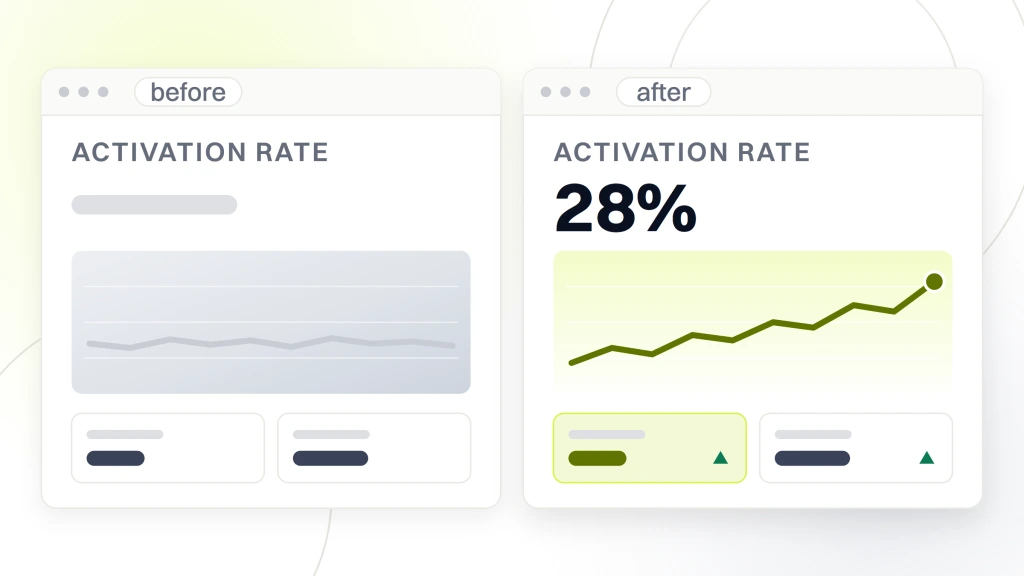
Rocket Software, Inc. came in with a $3M ARR product, a 7 percent activation rate, broken onboarding, and messaging that read like a feature list. The engagement covered positioning, activation copy, and a full launch of a rebuilt onboarding drip flow. Activation rose to 28 percent inside the first month. The first 3,000 clients landed in week one of the relaunch. That is a 300 percent activation gain and 400 plus daily subscribers post-launch, per the Rocket Software case study in our portfolio.
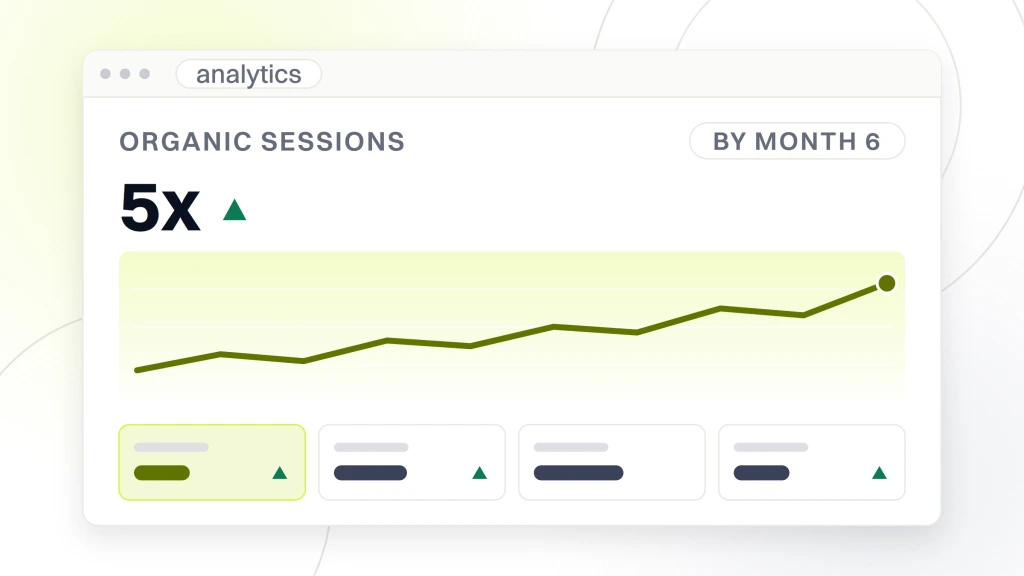
Month one was positioning workshops, client interviews, and a messaging house that named the specific job the product did better than any competitor. Month two rebuilt the activation drip, the pricing page, and the top three landing pages against the new positioning. Month three launched the rebuilt onboarding, with paid demand gen and lifecycle running against the new messaging. Daily new subscribers held above 400 for the remainder of the retainer. Organic sessions to product-led landing pages grew 5x by month 6.
The numbers the engagement moved
Activation rate went from 7 percent to 28 percent, a 300 percent gain, inside 30 days. First 3,000 clients landed in week one of the relaunch. Daily new subscribers held above 400 through the rest of the retainer. Organic sessions to product-led pages grew 5x by month 6. Cost per client dropped by 42 percent so paid spend rode a stronger organic base. Those numbers came from positioning discipline, not from more spend.
What almost broke the engagement
The founder wanted to keep the old messaging live on the pricing page during the relaunch to avoid confusing existing clients. That would have split the positioning across two live surfaces and killed the coherence the launch depended on. We pushed back. The founder agreed to a 48-hour cutover instead of a phased rollout. The launch held together. If your product marketing agency will not push back on a founder shortcut that kills the work, you are paying for a yes-machine.
Metrics your product marketing engagement should actually move
Six months into any product marketing engagement, four metrics should move. Sales cycle length down 15 to 30 percent. Win rate against the top competitor up 8 to 20 percentage points. Inbound pipeline sourced from launches up 20 to 40 percent. Activation or trial-to-paid conversion up if the positioning fed activation copy.
Anything less and either the agency missed or internal execution missed. The trap most operators fall into is measuring the engagement on outputs, launches shipped, one-pagers written, decks refreshed. Those are inputs. Pipeline and win rate are outputs. If your quarterly review with the product marketing agency for b2b saas is a list of deliverables shipped rather than a list of pipeline metrics moved, rewrite the scorecard before month 4.
Leading indicators that predict the outcomes
Three leading indicators to watch monthly. Battlecard usage rate among sellers, target above 60 percent. Positioning recall in win-loss interviews, target above 70 percent of buyers naming your differentiator unprompted. Messaging consistency across website, sales deck, and one-pagers, target 90 percent alignment on the top three value pillars. If those three trend up, the pipeline outcomes follow inside a quarter. If they trend flat, the outcomes will not move regardless of how many launches ship.
Reporting cadence that keeps both sides honest
Monthly one-hour review with the marketing leader. Quarterly two-hour review with the marketing leader plus sales leadership. Every 6 months a written retrospective that scores the engagement against the SOW. That cadence catches drift before it costs a quarter of pipeline. Anything less frequent and the agency drifts on scope. Anything more frequent and you burn agency hours on reporting instead of the work. Reporting patterns worth borrowing sit in the Content Marketing Institute archives.
Common mistakes that stall a product marketing engagement
Three mistakes account for most stalled engagements. Product marketing reporting to a demand gen lead who can not influence roadmap. Scope creep into content, ABM lists, or paid channel copy. And undefined success metrics that let both sides claim victory or blame at the end of quarter.
Reporting line is the one operators overlook most often. Product marketing needs to influence product roadmap, sales enablement, and demand gen. If the function reports up to a demand gen lead, it gets pulled into ad copy support and loses influence over roadmap. If it reports up to a founder without a marketing lead in the middle, it gets whatever the founder finds interesting that week. The clean setup is reporting to the head of marketing or CMO, with a dotted line to the head of product.
Scope creep that dilutes the function
Product marketing hires often get pulled into any writing task that lands in the marketing inbox. Blog posts, ad copy, email nurture, ABM list building, SDR templates. Each ask is reasonable in isolation. Together they drown the function inside a quarter. Write the scope down in month one and defend it. If demand gen needs writing help, they need a copywriter, not a product marketer running interference. A good product marketing agency for b2b saas will decline scope creep on your behalf, which is one of the reasons the agency-plus-in-house model works.
Undefined success metrics that let engagements drift
If the SOW does not name specific pipeline and win rate targets, the engagement drifts. Both sides will hedge on outcomes and celebrate outputs. Write in specific numbers. Sales cycle down 20 percent by month 6. Win rate up 10 points against the top competitor by month 9. Pipeline sourced from launches at $2M by end of year. Those numbers force real conversation about scope, resourcing, and priority. Vague SOWs are a signal one side is planning to underdeliver and hide behind soft targets. Related: Search Engine Optimization Services.
Getting started with your first b2b saas product marketing engagement
Start with a 30 day paid positioning pilot before signing a 6 month retainer. The pilot delivers competitive research, a positioning workshop, a messaging house draft, and 2 sample battlecards. Cost $6,500 to $12,000. You keep the deliverables regardless of whether you sign the retainer.
The paid pilot filters agencies that can actually think from agencies that sell hard on the discovery call and thin out on delivery. Anyone who refuses a paid pilot is signaling they can not back the pitch with real work. Anyone who insists on 12 months up front before a pilot is protecting themselves from a client who might walk after seeing the actual output. Neither is a fit. The right product marketing agency for b2b saas meets you at a 30 day paid pilot and is transparent about what you get.
What the 30 day pilot covers
The pilot covers competitive analysis on 5 top competitors, 6 to 8 win-loss interviews, a positioning workshop, a messaging house draft, and 2 sample battlecards. That is 40 to 60 hours of real work. Delivered in writing, presented on a 90 minute readout, and left with you as owned IP. An agency that will not invest 40 to 60 hours to win a 6 to 12 month retainer is telling you the engagement is not worth their focus. That saves both sides time.
Ready to run your first product marketing b2b saas pilot
Line up two or three product marketing agencies for b2b saas for paid pilots, run them concurrently over 30 days, and pick the one whose thinking best matches your product and stage. Yes, you spend $15,000 to $30,000 on two or three pilots. You end up with owned strategic thinking and a clear pick for the 12 month retainer that follows. That investment pays back inside a quarter of avoided agency churn. Redefine Web has been the winning pilot on 9 of the last 14 SaaS engagements we ran at that shape.