How to choose a B2B SaaS marketing agency without a twelve-month regret is a real question. Most founders and CMOs pick the wrong agency the first time. The pattern is predictable. A slick pitch, a vague scope, a slow start, and by month nine the retainer feels like a tax on the burn rate. This guide walks through the exact filters, the comparison scorecard, and the questions that separate a real growth partner from a well-designed vendor.
You are probably in one of three spots. Founder-led marketing has stopped scaling. Your in-house team is overloaded and you want a specialist retainer to unblock them. Or you are weighing a fractional CMO and want to know which fits. This guide covers all three, gives you a working scorecard, and ends with the questions to ask on every intro call.
1. B2B marketing agency experience for SaaS clients as a scoring input
B2B marketing agency experience for SaaS clients matters more than experience in adjacent B2B categories. SaaS unit economics, sales motion, and buyer profile do not translate cleanly from consulting or services. Ask for named SaaS clients by name, and check that at least 3 of them have crossed $10 million in ARR under the agency’s watch.
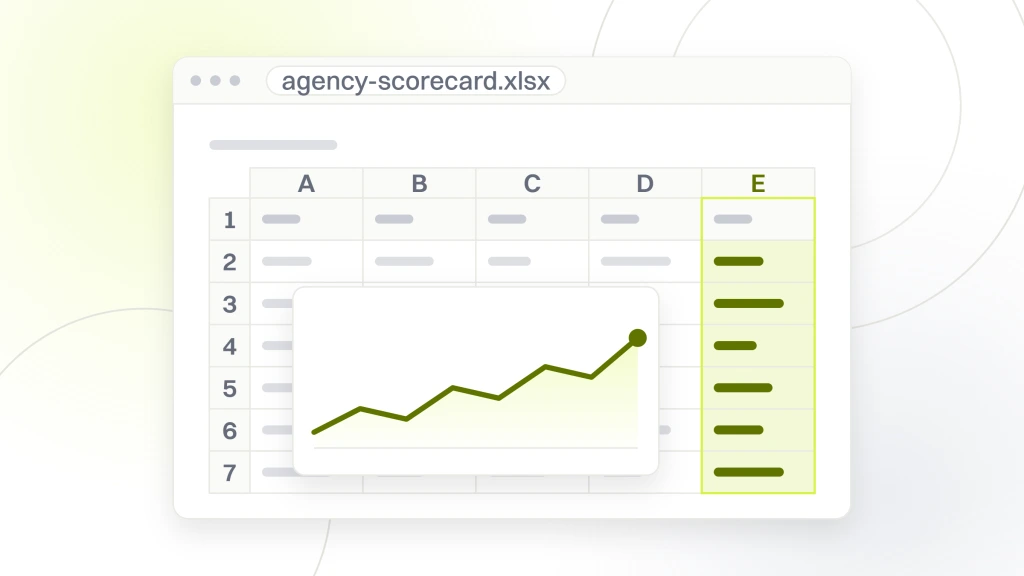
Agencies claim SaaS experience widely. Most of that claim is padded with B2B service accounts that share a superficial buyer profile but not the actual mechanics. A SaaS engagement optimizes for CAC payback under 18 months, net revenue retention above 110%, and self-serve conversion at a specific price point. The KPIs sit in a different world from consulting or services work, and an agency that has only done the second cannot run the first. Ask which specific SaaS accounts they have worked on, at what ARR band, and for how long.
ARR band and stage fit
ARR band matters. An agency running marketing for pre-seed to seed SaaS knows the founder-led buying motion. One running Series B to C SaaS knows the pipeline-attributed spend model. One running enterprise SaaS knows the account-based motion and multi-thread buying committees. The playbooks look nothing alike at each stage. A perfect Series C shop is the wrong hire at seed.
Sales motion fit
Sales motion matters as much as stage. A product-led SaaS with self-serve conversion needs an agency that gets activation and expansion, not just top-of-funnel. A sales-led SaaS with a 90-day cycle needs an agency that can build the account list, warm the target contacts, and hand off marketing-sourced pipeline into a clean handoff. If the agency has only run demand-gen playbooks for demo-request motions, they will underperform in a product-led environment. Ask about product-led experience if that is your motion, and vice versa.
2. Benefits of hiring a marketing consultant for B2B SaaS versus a full agency
Benefits of hiring a marketing consultant for B2B SaaS are speed of insight, lower monthly cost, and freedom from the retainer machine. The downsides are limited execution capacity and the risk of losing continuity when the consultant moves on to the next engagement.
A marketing consultant for B2B SaaS is usually an experienced operator running a solo practice or a small partnership. They cost $4,000 to $12,000 per month for two to four days of focused work. They produce strategy, playbooks, and specific fixes fast. What they cannot do is run five channels in parallel with an execution team. That is where a full agency wins. The right sequence for many SaaS is a consultant for the first 90 days to set strategy, then a specialist agency for execution once the strategy is clear. If you cannot afford both, run the consultant first and lock the diagnosis before you sign a bigger retainer.
When a consultant is the right call
A consultant is the right call when you need diagnosis, not execution. You have an in-house team that can build but does not know what to build next. You have a paid channel that stopped working and you cannot see why. You have a positioning problem that no agency will fix because they will just build campaigns around the current positioning. In each of those cases, a consultant delivers more value in 90 days than an agency does in 6 months, at a fraction of the cost. Match the tool to the job.
When an agency is the right call
An agency is the right call when you need capacity, not just insight. You have a clear plan, a working channel mix, and you need people to run it at scale. 12 pieces of content per month, 4 landing pages, 3 paid campaigns, weekly optimization. That volume of execution needs a team, not a consultant. A consultant can advise the team, but they cannot run every deliverable themselves. When you need a factory, hire an agency. When you need an architect, hire a consultant. Both together works well too, sequenced right.
3. Fractional CMO vs agency for B2B SaaS marketing decision framework
Fractional CMO vs agency for B2B SaaS marketing is not a versus. It is a sequence. The fractional CMO owns strategy and leadership. The agency owns execution and channel operations. Both together fits growth-stage SaaS with a founder-CEO who does not want to hire a full-time CMO yet.
A fractional CMO runs 1 to 3 days per week for a SaaS, usually for 6 to 18 months, at $10,000 to $25,000 monthly depending on tenure. They own the marketing strategy, the vendor selection, and the QBR with the CEO. The agency reports to the fractional CMO on execution. This split fits SaaS between $2 million and $20 million ARR really well. Below that, a consultant plus a specialist agency usually works better. Above that, you need a full-time CMO because the strategic surface area is too big for a fractional role to cover.
Fractional CMO responsibilities in the split
The fractional CMO owns the strategic surface. Positioning and messaging framework. Channel mix decisions. Budget allocation. Vendor selection and management. Board reporting on marketing performance. Hiring plan for the in-house team over the next 18 months. Those responsibilities take 12 to 20 hours per week for a mid-market SaaS, which fits the fractional model well. The fractional CMO should never run campaigns themselves, or they lose strategic altitude and turn into a very expensive campaign manager.
Agency responsibilities in the split
The agency owns the execution surface. Paid channel operations. Content production. SEO implementation. Landing page builds. Reporting infrastructure. Weekly optimization on live campaigns. Those responsibilities take a team of 4 to 6 operators. The agency reports to the fractional CMO on operational cadence, and the fractional CMO translates that output into board-level reporting for the CEO. When the split is clean, this model runs well for 18 to 36 months before the SaaS needs to bring marketing fully in-house.
4. B2B marketing agency expectations from clients that make engagements work
B2B marketing agency expectations from clients run in both directions. The agency needs access, feedback speed, and honest data. The client needs proactive communication, transparent reporting, and honest problem escalation. Both sides skipping any of these breaks the engagement inside 6 months.
Engagements break for predictable reasons. The client stops giving feedback on drafts, the agency stops pushing for it, and by month 4 the work drifts from the brand voice. The client stops answering CRM access requests, the agency stops trying, and by month 6 the reporting is thin. The client asks for a change, the agency does it without documenting, and by month 8 there is no shared understanding of the current strategy. The fixes are boring. Weekly working sessions, documented decisions, and an escalation path for stalled workflows.
What the agency needs from the client
The agency needs 3 things from you as the client to do good work. First, a named decision-maker who can approve creative and strategy inside 48 hours. Second, CRM and analytics access on day one, not day 40. Third, honest reporting on sales-side outcomes so the agency can tie their marketing output to real pipeline. Without these 3, the agency runs blind on the most important loop in the engagement. If you cannot provide them, the agency should decline the engagement rather than accept it and underperform later.
What the client needs from the agency
You need 3 things from the agency. First, weekly proactive updates that surface problems before they turn into QBR arguments. Second, direct dashboard access that does not gate reporting behind an account manager. Third, honest problem escalation when a channel stops working or a strategy is not landing. An agency that hides bad news until the QBR is running a slow-motion breakup. An agency that surfaces problems on the weekly is running a partnership. The behavior in month 2 tells you which one you hired.
5. Top KPIs SaaS businesses use to grade agency performance
Top KPIs SaaS businesses use to grade agency performance are sourced pipeline, CAC payback period, net revenue retention influence, and marketing-influenced revenue. Vanity KPIs like impressions and MQL count do not make the list. Any agency that leads with vanity metrics is a vendor, not a partner.
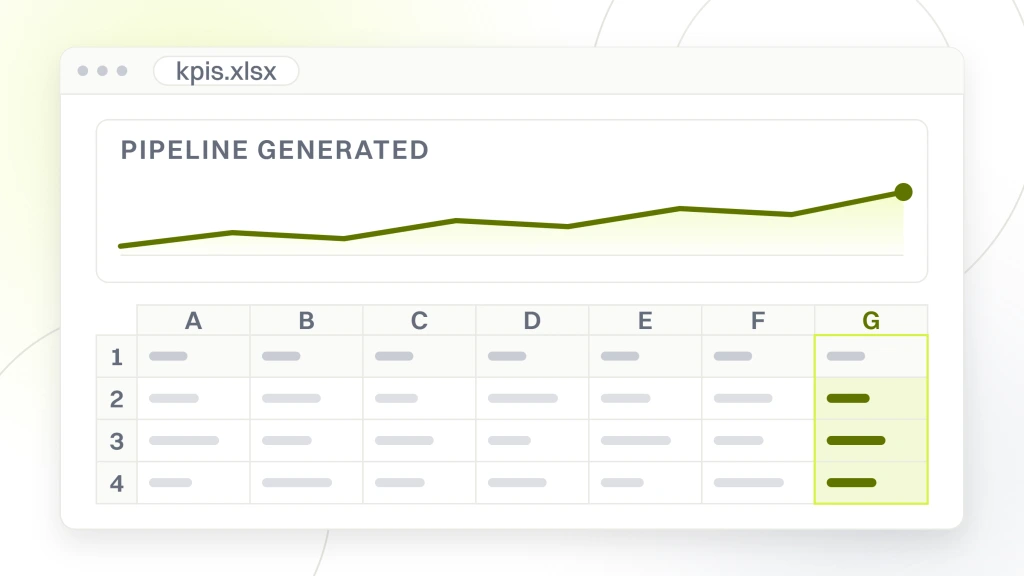
The KPI list looks short, but the reporting depth behind each one is real work. Sourced pipeline needs CRM integration and tagging discipline. CAC payback needs revenue accounting tied to marketing-source. NRR influence needs a way to attribute expansion revenue partly to marketing. Marketing-influenced revenue needs multi-touch attribution or a working assist model. Any agency that promises these on day one but cannot describe the infrastructure is over-promising. The first quarter of a serious engagement is often about building the reporting stack.
| KPI | What it measures | Target range for mid-market SaaS |
|---|---|---|
| Sourced pipeline | Opportunities directly attributed to marketing campaigns | 3x to 5x marketing spend |
| CAC payback period | Months to recover blended CAC | Under 18 months |
| Marketing-influenced revenue | Closed revenue that touched marketing before closing | 60 to 80% of new revenue |
| Net revenue retention influence | Marketing contribution to expansion in existing accounts | 5 to 15% of NRR |
| Content-sourced pipeline | Opportunities sourced by SEO or content | 25 to 40% of total sourced |
| Sales-accepted lead rate | MQLs the sales team accepts | Above 55% |
For context on what a full inbound rebuild produces at mid-market scale, our Rapyd Financial Network engagement tripled inbound leads, added £1.8m in sales pipeline, and drove 5x organic traffic growth over the program. That result stack is what agencies with real B2B SaaS chops can point to; if a candidate agency cannot cite named numbers on named accounts, they are showing you a portfolio, not a track record.
Why sourced pipeline beats MQL count
Sourced pipeline beats MQL count because MQL counts get gamed. Any agency can drive up form fills with a cheap giveaway campaign. Sourced pipeline requires the CRM to accept the lead as a real opportunity, which filters out the noise. When you tie the retainer performance to sourced pipeline, the agency’s incentives line up with your revenue team’s. When you tie performance to MQLs, they misalign inside 6 months, the sales team stops trusting the leads, and the agency keeps hitting the target.
Why CAC payback beats CAC
CAC payback beats CAC because CAC alone does not account for retention. An $8,000 CAC is great if the account retains for 60 months and expands. It is a disaster if the account churns at 14 months. CAC payback bakes both variables into a single number and tells you whether the marketing spend is generating durable revenue. Agencies that report on CAC without payback are missing half the picture. Ask for the payback view by name, and if the agency does not have it, add it to the reporting scope in the contract before you sign.
6. How to choose a B2B SaaS marketing agency on the intro call
The intro call is your best diagnostic tool. 60 minutes with the right questions tells you more than 50 pages of proposal. Ask the same 9 questions of every shortlisted agency and grade each answer on a 1 to 5 scale in real time. That grading discipline is the difference between hiring on chemistry and hiring on evidence.
The intro call is where agencies self-select. Confident operators answer hard questions directly. Weak operators deflect, reframe, or blame the last client. The questions below surface the difference in the first 30 minutes. Take notes verbatim and compare across agencies afterward. The pattern of answers reveals more than the individual answers do. Do not sign anything the same week as the intro call.
- Walk me through your last engagement failure and what you changed.
- Show me a live client dashboard, redacted for account name.
- Who runs my account by name, and what is their prior B2B SaaS experience.
- How do you handle account continuity when a lead operator leaves.
- What is your median client tenure right now.
- Which of your KPIs would you fire yourselves over.
- What does the first 90 days actually look like day by day.
- How do you charge for media spend and what is your mark-up policy.
- What is your termination notice period and IP transfer clause.
The failure question sequence
The failure question is the highest-signal question in the sequence. A confident agency has a specific story about a recent engagement that did not hit its numbers, a clear articulation of what went wrong, and a change to the process implemented afterward. A weak agency either denies failure or blames the client. If the agency has never failed in the last 12 months, they have either not tried anything new or they are being dishonest. Neither is the profile you want for your B2B SaaS.
The self-firing KPI question
The self-firing KPI question is the second-most-diagnostic. An agency that would fire itself over a specific KPI has skin in the game. An agency that would not is not confident enough to stake retention on outcomes. Push back if the answer stays vague. Any real KPI has a threshold. Below the threshold, the agency should offer a refund, a re-scope, or an exit. The specific KPI they name tells you what they believe they can control, which is a useful diagnostic on its own.
7. Red flags and green flags in B2B SaaS marketing agency conversations
Red flags and green flags show up early. 2 red flags in the first hour is a strong reason to move on. 2 green flags is a reason to schedule a follow-up. The list below is what to watch for across every conversation.
Both lists come from patterns across dozens of engagements. Every agency has small versions of each, and one red flag is not a deal-killer. What matters is the density. 3 red flags inside a 60-minute call means keep interviewing. 3 green flags with no red flags means move fast, because good agencies get picked up quickly. Run the process even if you already have a preferred candidate in mind.
- Red flag: proposal cannot list specific deliverable counts by month.
- Red flag: the person selling you will not be the person doing the work.
- Red flag: references are testimonials on the website only.
- Red flag: pricing is a single number with no linkage to scope.
- Green flag: proposal reads like a service level agreement.
- Green flag: the operator on your account is on the intro call.
- Green flag: named references get scheduled inside 72 hours.
- Green flag: pricing shows retainer, media, and out-of-scope rates separately.
Green flags in the follow-up
Green flags in the follow-up matter as much as green flags in the intro. Does the agency send a written recap inside 24 hours. Does the recap include specific commitments and dates. Does the follow-up proposal reflect what you discussed, or does it look like a boilerplate document with your logo pasted on top. The recap discipline in the first week is a preview of the operating cadence for the next 12 months. Sloppy recaps predict sloppy execution. Precise recaps predict clean execution.
Red flags in the contract
Red flags in the contract come at the end. Non-competes that block you from hiring similar agencies. Long notice periods that push you past the value window. Vague IP transfer language. Auto-renewal clauses without a written 60-day notice window. Any of these is negotiable. Push back on all of them. If the agency will not budge on standard commercial protections, they are prioritizing themselves over partnership, and the engagement will feel that way for its whole run. When your negotiation stalls before signing, imagine what negotiation on QBR outcomes will feel like in month 9.
8. Pricing shapes and what a fair B2B SaaS retainer looks like
Pricing on a B2B SaaS marketing agency retainer scales with scope, not with headcount. A single-channel specialist retainer starts around $999 a month for entry work, $1,499 a month for a working channel program, $2,499 a month for a growth program, and from $4,500 a month for full multi-channel operations. Media spend is billed separately and should never be blended into the retainer line item.
Any agency that hands you a single number with no linkage to scope is inviting a scope fight in month 4. The right proposal breaks out retainer, media, and out-of-scope rates on 3 separate lines. That structure protects both sides. When the scope changes, the line items change. When the media spend moves, only the media line moves. If the agency will not break pricing out this way, treat it as a red flag on the scorecard.
What to look for in the retainer breakdown
The retainer line should list deliverable counts, not activities. 12 blog posts per month is a count. Content marketing is not. 4 landing pages per quarter is a count. Conversion optimization is not. When the retainer counts deliverables, you can grade output on the weekly. Push for counts. If the agency cannot commit, ask why, and grade the answer. The right answer is usually a fair one about ramp in the first 60 days, with counted deliverables kicking in from month 3.
9. Wrapping up how to choose a B2B SaaS marketing agency
The whole exercise reduces to 3 moves. Define the problem tightly. Filter shortlists ruthlessly. Grade intro calls on the same scorecard for every candidate. Do those 3 and the wrong hire becomes unlikely, not just less likely.
Every SaaS founder we talk to who regretted their pick skipped one of these 3 moves. They had a vague problem statement, so every proposal looked plausible. They interviewed too many agencies without a scorecard, so they picked based on chemistry. They signed the contract without pushing back on scope specificity, so month 3 turned into arguments about deliverables. A tight scorecard, a specific problem paragraph, and a scope-first proposal review are what a real answer to this hire produces. When you are ready to talk numbers, our SaaS marketing retainer plans lay out engagement shapes, scopes, and pricing at each stage. Our SaaS SEO agency work and SaaS PPC agency work cover the two channel-specialist engagement shapes. Broader industry benchmarks from OpenView Partners, the annual SaaStr marketing archive, and the Gartner Marketing research library give you outside baselines for the KPI ranges above. Our B2B SaaS marketing agency engagement is built around the scorecard model in this guide, and that model is the same shape we use internally when we help SaaS founders decide how to choose a B2B SaaS marketing agency.