
Search for affordable SEO and the results price the same words between a few hundred dollars a month and several thousand. That range is not a market being irrational. It is the same two words describing genuinely different pieces of work, and nobody in the results has much incentive to tell you which one they are selling.
So this article does the unglamorous thing instead of arguing. It quotes what a published cheap plan actually contains, states what we charge and why we are the expensive option, and then says plainly which readers should not buy from us. Every figure below comes from a page we opened, including our own, with the date it was read.
The honest declaration first. We sell SEO retainers and our entry price is several times the cheap end of this market, so we have an obvious interest in you concluding that cheap is bad. It is not always bad, and the section on when it is the right call is there because the argument would be worthless without it.
The number that explains affordable SEO better than any argument
One price appears on both ends of this market and comparing what it buys settles most of the confusion in a single stroke.
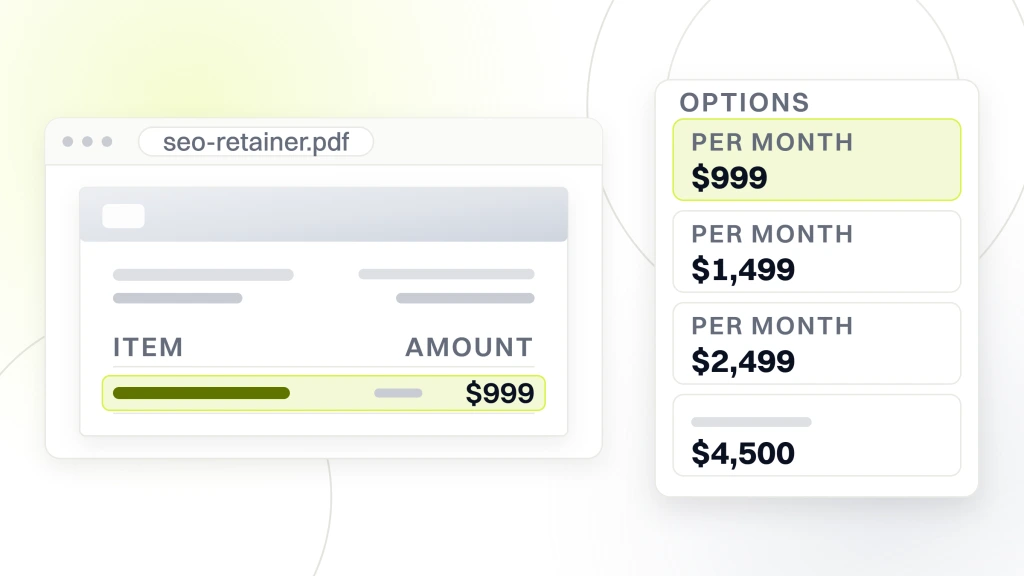
On theaffordableseoservices.com, read on 16 September 2026, the top published tier is a “Pro Plan” at $999 / Month, described as “Best for competitive markets & multi-location”. On our own services page, read the same day, the first line of pricing is that “SEO retainers start at $999 per month” (redefineweb.com, our search engine optimization services page).
Same number. One vendor’s ceiling, our floor. Neither of us is lying, and the gap is not margin. It is that the word SEO covers a range of commitments from a few hours of setup to a team working continuously, and the price mostly reflects how many hours per month somebody has promised you.
That reframes the buying question. You are not shopping for the best SEO at the lowest price. You are choosing how much work you are buying, and the honest version of affordable is the amount of work that fits both your budget and the job actually in front of you.
It also explains why comparing quotes is so unrewarding. Two proposals listing technical SEO, content and links look like the same service at different prices, and they are not. One means a technical pass done once and two pages written a month, the other means a standing allocation of somebody’s week. Until you know which, the cheaper number is not better value, it is a different purchase with a coincidentally similar description.
What a published cheap plan actually contains
Rather than characterize the cheap end second hand, here is one vendor’s entry plan as its own page lists it.
The same site states that “Plans start at $299/month, with no setup fees or long-term contracts”, and its Starter Plan at $299 / Month is described as “Best for new businesses getting into local search”. The contents are listed as a website SEO audit, keyword research covering 5 to 8 keywords, on-page SEO for up to 5 pages, technical SEO basics, and Google Search Console and Analytics setup.
Read that list carefully, because it is honest and it is finite. Those are the tasks you do once to a website that has never had them done. An audit, a short keyword list, a handful of pages tidied, the tracking connected. There is no content production in it, no link work, and no reporting.
Their next tier up, Standard at $599 / Month, is where those appear: content optimization for two pages or posts, local optimization, 2 to 4 backlinks a month, and a monthly report with a strategy call. So the vendor’s own ladder tells you where setup ends and an ongoing program begins, and it is between those two tiers rather than between cheap and expensive.
That is the most useful thing in this article and it came from reading a competitor’s pricing page properly rather than dismissing it.
Where the cheap tier stops, and what it is honestly not
The problem with a setup package sold monthly is not the price. It is that the second month contains nothing the first month did not already finish.
Five pages optimized stay optimized. An audit delivered is delivered. Analytics connected stays connected. If the plan contains no content, no links and no reporting, then the work genuinely runs out, and what you are paying for in month four is availability rather than activity.
So the question to ask any cheap monthly plan is not what do I get. It is what happens in month six that did not happen in month one. A supplier with a good answer will describe something recurring. A supplier without one is selling you a one-off piece of work on a subscription, and you would be better off buying it as a one-off.
The second limit is scale rather than honesty. Keyword research covering 5 to 8 terms and on-page work across 5 pages is proportionate to a small site selling one thing in one area. Point the same plan at a site with two hundred pages and it is not cheap, it is simply too small to touch the problem.
There is a third limit that nobody advertises, which is that a small plan contains no room for being wrong. Search work involves trying things that do not work, noticing, and changing course. A plan sized to deliver a fixed list has spent its hours the moment the list is delivered, so when the first approach turns out to be the wrong one there is no budget left to respond. That is not a criticism of cheap suppliers. It is arithmetic, and it is the reason the same plan can perform well on a simple site and badly on a contested one.
What we charge, and why we are the expensive option
Fairness requires our own numbers on the table rather than a vague claim about being premium.
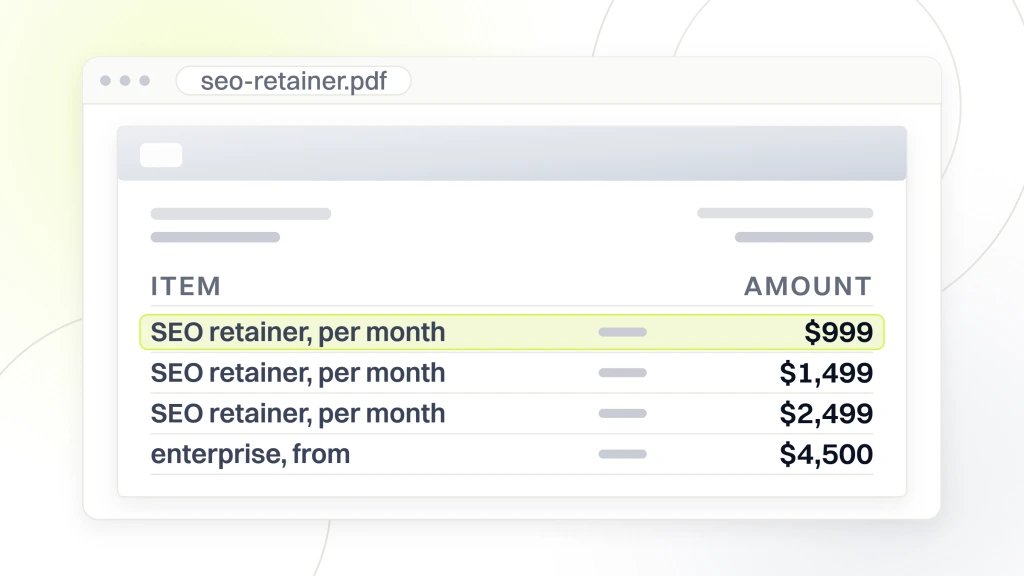
Our published tiers are $999, $1,499 and $2,499 per month, with a fourth enterprise tier that starts at $4,500 per month, read from our own SEO services page on 16 September 2026. Our entry price is the other vendor’s top tier and our fourth tier starts at roughly fifteen times their starter plan.
What that buys is continuous work rather than a completed setup. Content produced every month, technical work on a site large enough to keep generating problems, link acquisition, and a person whose job is to decide what to do next when the plan stops matching reality. Those are recurring costs because they are recurring activities.
What it does not buy is a better version of the $299 plan. If your site is small, already tidy and selling one thing locally, our lowest tier would spend most of its hours looking for work to do, and you would be paying for capacity you cannot use. That is not a good deal at any price and we would rather say so here than discover it together in month three.
Our breakdown of what SEO pricing packages really run goes through the tier ladder properly, and our look at what local SEO really costs covers the local version, which is where most genuinely small budgets are.
When the cheap option is the right call
Three situations where a few hundred dollars a month is the correct purchase and a large retainer would be waste. We are describing ourselves out of these deliberately, because an article that found no such case would not be worth reading.
The site has never had the basics done. If nobody has ever audited it, connected the tracking, or written the page titles on purpose, then a setup package is exactly the right shape of work and paying a large retainer to do it is paying a specialist rate for groundwork. Buy a cheap SEO package, or buy an audit outright, and reassess when it is finished.
The business is small, local and sells one thing. A short keyword list and a handful of pages is not a compromise here, it is the size of the actual problem. Most of what will move results is the Business Profile, reviews and a page per service, and none of that needs a large monthly commitment.
You cannot yet afford to lose the money. This one gets left out of every article on this subject and it matters most. If the retainer would be painful to write off, do not commit to one. Search work does not guarantee an outcome, and a commitment you cannot comfortably absorb turns a normal quiet quarter into a crisis. Spend less, or spend nothing, until it would be an investment rather than a gamble.
A fourth case is worth naming because it is temporary rather than permanent. If the site itself is about to be rebuilt, almost any retainer is money spent on pages that will not exist. Wait, get the new build right, and start the ongoing work against something stable. Suppliers rarely suggest this because a paused engagement is a lost one, but paying for content and technical fixes on a site you are replacing is the most avoidable waste in this whole subject.
When cheap becomes the expensive mistake
The reverse case is real too, and it is not about quality so much as about mismatch.
A cheap plan pointed at a large site is the clearest example. A catalog, a multi-location business or a site with hundreds of pages generates more problems per month than a small plan contains hours, so the work never catches up and you pay steadily for a gap that widens. The invoice is small and the cost is the year.
The second is anything cheap that includes link building without explaining where links come from. Links that are bought in volume at low prices come from somewhere, and that somewhere is the part worth asking about. A supplier who can name the kind of site and the reason it would reference you is fine at any price. One who cannot is selling you a risk rather than a service.
The third is cheap content produced at volume. Pages published to hit a number rather than to answer anything are the most common thing a small budget gets spent on, and they are not neutral. Our guide to running a content audit covers cleaning that up afterward, which is work you would rather not have to buy.
The fourth is the reporting trap, and it is the one that makes a bad cheap engagement last longest. A plan with no reporting in it cannot show you that nothing is happening, so the engagement continues on the assumption that it must be. Notice that the published starter plan above includes no monthly report at all and only the tier above it does. That is disclosed rather than hidden, which is to the vendor’s credit, but it means a buyer at the cheapest tier has to check the results themselves or not at all.
The free path, and who it genuinely suits
Before any of the above, there is an option nobody selling SEO wants to lead with, which is doing it yourself for nothing.
The tooling that matters is free. Search Console reports what actually happened in Google and costs nothing. The Business Profile is free. Google publishes its own starter guidance, and it is written for people who are not specialists. Our comparison of free SEO tools covers what else is genuinely usable without a subscription.
What it costs instead is attention, and that is the honest trade. A few hours a month, sustained, will outperform a cheap retainer on a small site, because the person doing it knows the business and cares about the outcome. What it will not do is scale, survive a busy period, or tell you when you are wrong about something.
So the free path suits somebody with a small site, some time, and the temperament to keep at something with slow feedback. If that is you, keep your money. If you know from experience that it will get dropped in the first busy month, paying somebody a small amount to do it reliably is worth more than a plan you will abandon.
There is also a middle path that gets overlooked. Do the free work yourself and buy one thing you genuinely cannot do, rather than buying a plan that bundles both. Most owners can write their own page titles, manage their own Business Profile and ask their own customers for reviews. Far fewer can diagnose why a page is not being indexed. Paying a specialist rate for the second while doing the first yourself is usually better value than any tier on any published ladder, and it is not an option anybody sells because it is not a package.
Why one-off work often beats a thin retainer
The option missing from most affordable SEO comparisons is not a cheaper subscription, it is not subscribing.
At the bottom of the market, a monthly plan is mostly a way of spreading the cost of a fixed piece of work while adding an obligation. If what your site needs is an audit, a technical pass and the pages rewritten once, buying that as a project gives you the same result, a defined end, and no relationship to unwind.
It also produces something the thin retainer usually does not, which is a document you own listing what was wrong and what was done. That is portable. You can act on it yourself, hand it to somebody else later, or use it to judge whether the next supplier is proposing anything new.
Then reassess with evidence rather than on a renewal date. Our guide to telling whether your SEO is working covers the checks that decide whether committing to something ongoing is justified yet.
Questions that separate a cheap supplier from a bad one
Price tells you almost nothing about whether somebody is any good. These four questions tell you more, and they work at every price including ours.
What happens in month six that did not happen in month one. The test from earlier, and the one that separates an ongoing program from a setup package sold by the month.
Who owns the accounts. If the Search Console property, the Business Profile and the analytics are created under the supplier’s control, leaving costs you your own history. This is free to get right at the start and expensive to fix later.
Where do links come from. Not how many. A supplier who will describe the kind of site and why it would mention you is answering. One who quotes a monthly quantity is not.
Who does the work. At the cheap end the person who sells is frequently not the person who delivers, and the delivery may be a different company again. That is not automatically a problem, but you should know it, because it decides whether the answers you were given at the pitch are binding on anybody. Ask who will be in the account and whether you can speak to them before signing.
What would you tell me not to buy. Any supplier worth paying can name something in their own list that you do not need. A provider whose entire offering is essential to every client has not looked at your situation. Our guides to picking an SEO agency and choosing SEO services go through the rest of that conversation.
What we would tell you not to buy from us
Applying our own last question to ourselves, since an article that asks it and then dodges it is worth nothing.
If your site is under about a dozen pages, already technically sound, and selling one service in one area, do not buy our lowest retainer. The hours would not find enough to do. A one-off audit, the Business Profile handled properly and a page per service will get you most of what is available, and you can buy those without a monthly commitment from us or from anybody.
If your constraint is that visitors arrive and do not buy, do not buy SEO at all yet. More of the same traffic will not fix a page that is failing the traffic it already has, and we would be taking money to make a problem larger. That is a conversion problem and it is cheaper to solve.
And if you are here because a cheap supplier disappointed you, do not assume the answer is to spend more with us. Find out what actually happened first. A supplier who did not do the work means buy differently, possibly at the same price, from somebody who will. A plan that delivered exactly what it listed and still produced nothing means the work was the wrong size for the job, and paying four times as much for a bigger version of the same list repeats the mistake at a higher price. Neither of those diagnoses points at us by default, and we would rather you reached one before you speak to anybody, ourselves included.
And one limit on our free offer so nobody is misled. Our free website audit reviews the website itself. It is not a full search audit, it does not log into anybody’s advertising account, and it is a genuinely useful starting point rather than a substitute for the paid work. If you want the deeper version, our SEO audit is a paid engagement and we would rather write that here than let you assume otherwise.
So point the whole article at us. Every price in it comes from a page anybody can open, ours included, with the date attached. Ask the supplier you are considering to show you their tier contents the way the cheap vendor above does, item by item, then ask what recurs. If we cannot answer that better than somebody charging a fraction of our price, you should buy from them, and the comparison above gives you what you need to check.
The first move costs nothing. Write down how many pages your site has and how many things you sell, because those two numbers decide which half of this article applies to you.