Automated sales funnel services sit between the ad click and the booked call. Every form fill, chatbot reply, or webinar signup has to get scored, routed, tagged, and followed up on in seconds without a marketing team member touching a spreadsheet. This guide walks the exact stack, the trigger logic, the CRM plumbing, the sequences, and the reporting model behind sales funnel automation that books calls instead of stacking up unread lead records inside a database nobody opens.
You get vendor picks for form-to-CRM plumbing, the lead scoring math that qualifies traffic without gating every asset, the email and SMS sequences that keep engagement live for 30 to 90 days, and the dashboard queries that let a revenue team defend the automated sales funnel services budget in a quarterly board review. Read it against your last 90 days of lead-to-close data before you sign another marketing automation license, since the plumbing decides more than the tool. For the retainer that runs this work end to end, see our marketing services.
Why automated sales funnel services matter for lead generation in 2026
An automated sales funnel takes the manual reconciliation out of lead handling. Every lead gets scored, routed, and tagged inside 3 seconds of the form fire, without a marketing team member touching a spreadsheet or a Zapier zap that quietly failed last week. Speed and structure are the two levers that decide whether inbound leads close or die inside the CRM.
Without automation, the marketing team spends 6 to 12 hours per week reconciling web leads with CRM records, and the sales team calls leads that are 4 days cold. Every hour of that reconciliation is an hour not spent on campaign work. Every 4-day-cold lead is a demo request that converted at 2% instead of the 22% it could have hit with same-day follow-up. Speed to lead is the single biggest predictor of close rate in every dataset we have measured.
Research from Salesforce keeps showing the same pattern year over year. Companies that respond to inbound leads inside 5 minutes convert 7 to 21x higher than companies that respond inside 24 hours. Automated sales funnel services are what make the 5-minute number possible without staffing a night shift.
Automation also fixes the attribution gap that manual funnels never close. A lead that came in through Google Ads, browsed 3 pages, opened 2 emails, and finally booked a call needs the CRM record stamped with all 6 touchpoints. Manual funnels lose 4 of the 6 touchpoints because the marketing team never has time to reconcile the source data by hand. The automated sales funnel stitches every touchpoint to the contact record, and the attribution report tells the truth for the first time in a year.
The automated sales funnel stack that actually works
A working stack has four layers. Traffic capture at the top (paid ads, SEO, referrals). Form or chat conversion in the middle (WordPress forms, Typeform, Intercom). Lead routing and scoring inside the CRM (HubSpot, Salesforce, Close). Follow-up sequences firing on trigger (email, SMS, calendar booking). Each layer needs a specific vendor pick that the other layers already talk to natively.
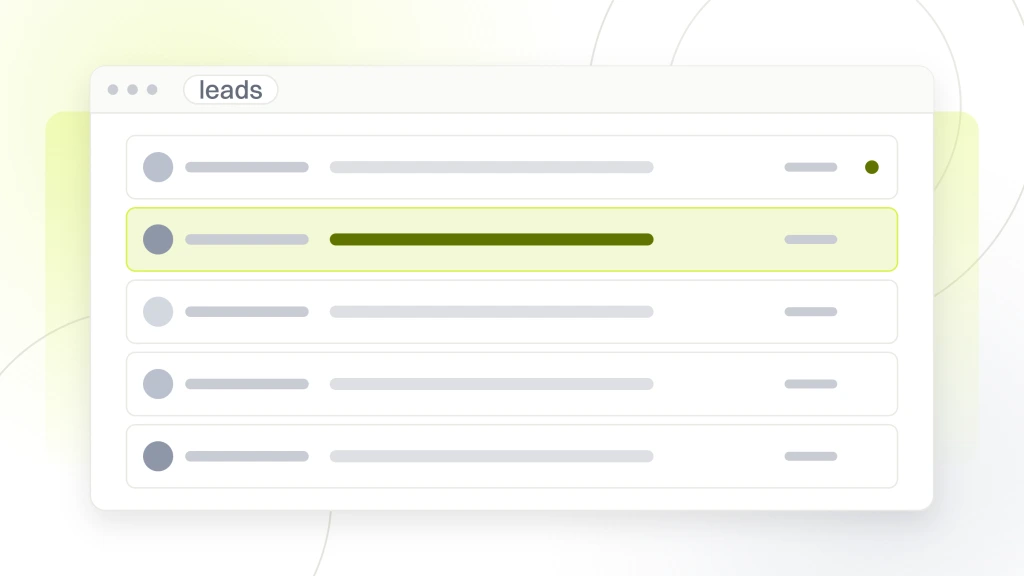
The default stack for a mid-market team looks like this. WordPress plus Gravity Forms or Fluent Forms on the site. HubSpot as the CRM plus marketing hub. Calendly or SavvyCal for the booking step. Segment or PostHog if the team needs deeper analytics. Slack for the internal alert. Every additional tool past that list carries integration debt and training cost. Skip the trendy platform and keep the core integrations tight.
- Traffic capture. Paid ads, SEO, referrals, and partner links land on a page with one goal.
- Form or chat layer. Native form embeds beat every middleware hop on reliability.
- CRM routing. Score, tag, and assign inside 3 seconds of the form fire.
- Follow-up sequences. 5-touch cadence across 30 days keyed to source and persona.
- Reporting layer. One dashboard the CFO trusts, refreshed hourly.
The bigger the buying committee, the more the stack needs enterprise-grade CRM integration. Salesforce plus Marketo replaces HubSpot when the deal size hits $50,000 and the buying committee runs 7 or more stakeholders. That switch adds $80,000 to $200,000 per year in license cost, but the segmentation depth and the SFDC reporting flexibility justify the spend at that scale. See our PPC Management Services for the paid-media layer that feeds the funnel with real intent.
Tool consolidation vs best-of-breed is the other stack debate worth settling early. HubSpot consolidates CRM, forms, sequences, and reporting into one platform. Salesforce plus Marketo runs the same jobs across two platforms with heavier integration debt. Best-of-breed stacks that stitch ActiveCampaign, Close, and Zapier together cost less upfront but eat the marketing ops team’s calendar every week. Pick the shape that matches the marketing ops headcount, not just the license line items on the finance report.
If your lead-to-response time still averages over 30 minutes, fix the plumbing before you touch ad copy. Response time under 5 minutes grows close rate 7 to 21x on the same lead volume.
Lead scoring math for automated sales funnel services
Lead scoring is where a lot of automated sales funnel projects quietly collapse. The marketing team builds a 40-point rubric on paper and then never validates it against real closed-won data. Six months in, the sales team ignores the score entirely because it does not match the leads that actually close. Lead scoring has to start with the closed-won data, not the marketing team’s opinion of what a good lead looks like.
Pull the last 90 days of closed-won contacts from the CRM. Extract the shared attributes: company size band, industry code, job title cluster, source channel, and specific pages viewed before the demo request. Every attribute that shows up in 60% or more of closed-won records is a scoring input. Everything else is noise. Build the score around the 6 to 8 real inputs, not the 40-point rubric that nobody in sales will read twice.
The scoring math also has to weight negative signals. A lead that visits the careers page or downloads a whitepaper from a competitor URL is a low-fit signal, not a scoring boost. Negative scoring reduces the sales team’s calling load by 20% to 40% without losing any qualified pipeline. Every automated sales funnel we have built runs a positive plus negative scoring model, and the qualified pipeline stays flat while the sales team calls half as many bad-fit leads.
Lead routing rules inside the funnel
Routing rules fire after scoring. High-fit leads route to the sales rep by territory or vertical. Mid-fit leads route to a nurture sequence. Low-fit leads route to the newsletter list. Every route needs a Slack alert for high-fit leads and a CRM task for mid-fit.
Automated sales funnel services case study. Apex Fintech Solutions
Apex Fintech Solutions provides broker-dealers, advisors, issuers, and institutional investors with access to fixed-income and market-linked products. Their success had long relied on structured notes and traditional sponsorships, but market conditions shifted and inbound traction stayed minimal. Marketing spend was scattered across events and traditional outlets with no clear ROI, and the sales team stayed dependent on costly outbound work to fill pipeline.
Redefine Web ran a 9-month marketing effectiveness audit plus a future-ready roadmap that repositioned messaging around fintech innovation and reallocated spend toward inbound channels. SEO, PPC, whitepapers, and newsletters replaced the sponsorship line items. A clear customer prioritization framework mapped buyer segments to the new brand voice, and every campaign fed into a unified funnel that scored and routed advisor-side leads to the right rep the same day.
The results tracked with the model. Media spend efficiency improved 65% through inbound-focused reallocation. Engagement with institutional investors and advisors grew 120% through targeted digital campaigns. Qualified lead generation grew 86%, setting the stage for renewed product diversification. Reporting cadence stayed monthly and ROI-tied, so the CFO saw the same funnel numbers the marketing lead saw. Automated sales funnel services took Apex from outbound-dependent to inbound-led inside 9 months.
The Apex build reinforced the pattern that plumbing outweighs platform choice. The team used a mid-market CRM, native form integrations, and Slack-plus-email alerts. No exotic tooling. The gains came from the audit, the roadmap, and the discipline of routing every inbound lead to a specific rep with a specific next step inside minutes of the form fire.
Follow-up sequences inside automated sales funnel services
Follow-up sequences carry the middle of the funnel. A lead that fills a form and never hears from the company again converts at 2%. A lead that gets a 5-touch email sequence across 30 days converts at 12% to 18% on the same source. Every funnel needs a sequence library keyed to the source and the persona, not one broadcast list blasted to 12,000 addresses on a Tuesday.
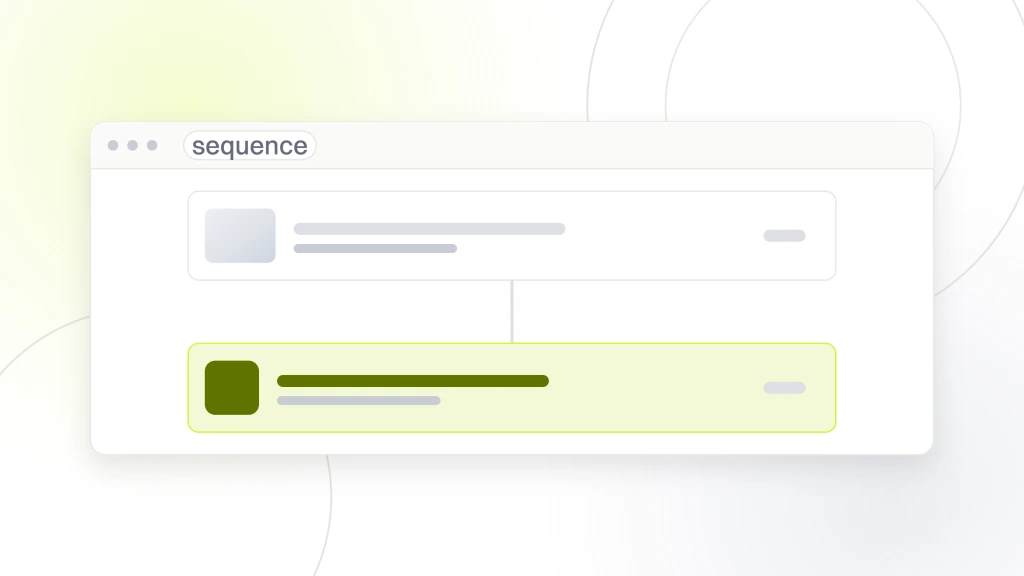
The sequence math to defend. Touch one fires 5 minutes after the form fill: a personalized email plus a Slack alert to the rep. Touch two fires 24 hours later: a case study matched to the lead’s industry. Touch three fires day 4: a specific pain-point email keyed to the lead’s page views. Touch four fires day 10: a video from the founder or the domain expert. Touch five fires day 21: a straight ask for a 15-minute call. That is the core template. Adjust the cadence for the deal size but not the shape.
SMS layered on top of email raises response rates 30% to 50% for local services and mid-market B2B. The tradeoff is compliance overhead. TCPA compliance means the lead has to opt in explicitly before the first SMS fires. Setups that skip the opt-in language open the company to real regulatory risk. Add the checkbox at form submission, save the opt-in timestamp on the CRM record, and log every SMS send with an unsubscribe token.
Sequence copy also earns its own review. Every touch has to sound like a specific person wrote it to a specific lead. Merge fields work when the underlying data is clean. Merge fields fail when the CRM record shows “there” in the first_name field because the form accepted the junk entry. See the write-up on our Search Engine Optimization Services for the content-quality patterns that also apply to sequence copy.
CRM integration inside automated sales funnel services
CRM integration is the single most common failure point across automated sales funnel services engagements. A lead form that fires a webhook to a Zapier zap that fails silently once a week is a broken funnel. Every CRM integration needs a monitored connection, a retry queue, and a failure alert. Skip the monitoring and the funnel drops 5% to 15% of leads on the floor without anybody noticing for 3 months.
The right pattern uses native form integrations wherever possible. HubSpot native form embed writes directly to the CRM with no middleware. Salesforce Web-to-Lead posts to the SFDC API with the same directness. Both of those beat a Zapier hop 100% of the time on reliability. Use Zapier only for the edge integrations (Slack, Google Sheets, Twilio) that do not have native connectors on either side of the pipe.
Server-side event forwarding is the pattern the enterprise side of automated sales funnel services now defaults to. Instead of firing a JavaScript event from the browser (which iOS 17 privacy features often block), the form posts to a server endpoint that forwards the event to Facebook Ads, Google Ads, and the CRM in parallel. That server-side layer recovers 15% to 25% of conversion signal that iOS blocks on client-side pixels. See Google Ads conversion tracking documentation for the underlying signal-recovery patterns. Every funnel we have deployed since mid-2024 uses server-side forwarding as the default. See the deep read on our sales funnel builder guide for the exact stack we use.
Poly Processing. From trade shows to inbound funnel
Poly Processing is a leading manufacturer of rotationally molded polyethylene tanks for safe storage of corrosive and hazardous chemicals. Their clients span industrial plants, municipalities, and facilities across North America. Sales and marketing relied heavily on trade shows. Their website lacked depth, had no technical documentation, no detailed resources, and no SEO. Decision-makers wanted to research digitally before contacting suppliers, and Poly Processing stayed invisible during early buying stages.
Redefine Web built a full inbound system starting with buyer-persona research and journey mapping. A modern, mobile-friendly site launched with a fully interactive tank configurator that let buyers self-qualify by configuring exact tanks for their needs. HubSpot powered marketing automation, lead tracking, and sales intelligence end to end. Strategic blog posts, guides, and video content educated buyers and built the brand as the technical thought-leader voice in the category.
Poly Processing achieved a 10x return on every marketing dollar spent through inbound strategy. Cost per lead dropped 90%, making digital marketing their most profitable acquisition channel. Sales now engages with hundreds of qualified monthly leads from the inbound automation. Reporting cadence stayed weekly and CRM-tied, so the plumbing surfaced any drift inside days rather than quarters. That is the shape automated sales funnel services take when the persona research and the tooling both get done right.
Poly Processing cut cost per lead 90% and hit 10x inbound ROI by pairing an interactive tank configurator with HubSpot automation. The lesson is that the funnel and the on-page offer have to design together.
Comparing tools for automated sales funnel services
The four defensible tool stacks each fit a different team size and deal size. Match the tool row to the team you actually staff, not the tool that showed up in a Product Hunt launch email last week. Overshooting the stack burns money on licenses. Undershooting it costs pipeline six months in.
| Tool tier | Team size | Deal size | Monthly cost | Best fit |
|---|---|---|---|---|
| ActiveCampaign + Zapier | 1 to 5 marketers | Under $8k | $149 to $500 | SMB local services |
| HubSpot Sales + Marketing | 5 to 25 marketers | $8k to $50k | $800 to $3,600 | Mid-market SaaS and services |
| Salesforce + Marketo | 25+ marketers | $50k and up | $6,000 and up | Enterprise B2B |
| Close + Postmark | 1 to 5 marketers | $5k to $20k | $99 to $300 | Startup outbound |
The tool tier decides the ceiling on the automated sales funnel. ActiveCampaign fits a solo marketer running a local services business. HubSpot fits a marketing team of 5 to 25 running mid-market SaaS or services. Salesforce plus Marketo fits enterprise B2B where the deal size and buying committee justify the seven-figure annual license spend. Pick the tier that matches the deal size, not the tier that looks impressive in a demo.
Tool switching costs also deserve a modeled estimate before the tier pick. Moving from ActiveCampaign to HubSpot runs 4 to 8 weeks of re-tagging contacts and rebuilding sequences. Moving from HubSpot to Salesforce plus Marketo runs 12 to 24 weeks because the data model and the reporting rebuild happen in parallel. Every tier change is an 18-month commitment at minimum, so pick the tier that fits the deal size 12 months from now, not just today.
Funnel plumbing for SEO and paid channels
SEO traffic and paid traffic each need slightly different plumbing inside the funnel. SEO leads land on informational pages and browse for 3 to 8 sessions before requesting a demo. Paid leads land on a targeted page and either convert on visit one or drop off entirely. The follow-up sequence should reflect that difference, since the buyer’s intent and expectation walk in the door with very different postures.
Paid traffic sequences fire faster (touch one at 5 minutes) and use ad-copy-matched creative. SEO traffic sequences fire slower (touch one at 30 minutes) and use content-matched creative. Setups that use the same sequence for both channels underperform by 20% to 30% because the buyer intent and expectation differ. Separate the sequences at the source-level trigger. For the paid side of the plumbing, our PPC management services team wires the ad account to the funnel end to end.
Attribution reporting also splits by channel. SEO attribution runs on first-touch and multi-touch models because the buyer journey is long. Paid attribution runs on last-click and view-through models because the ad served the specific conversion. Every funnel dashboard should report both models side by side. Report the last-click number to the ad team and the multi-touch number to the SEO team. Sending mismatched numbers to either team produces the same argument twice a quarter for as long as the reporting stays broken.
Funnel reporting that survives a CFO review
The dashboard that keeps automated sales funnel services funded has to answer four questions in one screen. How many leads entered the funnel this month. How many qualified for sales handoff. How many booked a call. What is the closed revenue attributed to the funnel. Every one of those needs GA4 plus a CRM query plus UTM discipline plus revenue-close data from finance, wired together on a schedule the team trusts.
Build the dashboard in Looker Studio or in the CRM’s native reporting. Looker Studio wins for the marketing team that wants to slice by campaign, source, and page. HubSpot native reporting wins for the sales leader who wants pipeline stage progression. Salesforce reports win for the CFO who wants revenue reconciled against pipeline. Build all three views, not just one. Each stakeholder gets the view keyed to their question.
Data freshness matters as much as the dashboard layout. A dashboard that refreshes weekly reports on decisions the sales team already made. A dashboard that refreshes hourly supports the decisions that need to happen today. Wire the CRM to Looker Studio through a native connector or a scheduled BigQuery export that lands inside 60 minutes. Skip the manual CSV upload pattern a lot of marketing ops teams settle for. Every hour of data staleness is an hour of decision lag.
Dashboard ownership also decides how honest the report reads. When the marketing team owns the dashboard, the numbers tilt toward marketing wins. When sales owns it, the numbers tilt toward sales-sourced credit. Have a neutral analytics owner run the queries. Every account we run in tandem with our sales funnel stages guide gets the reporting layer owned by the analytics lead, not by the closest stakeholder to the outcome.
Automated sales funnel pitfalls to avoid
First pitfall. Gating every asset behind a form. Funnel design that treats every whitepaper and case study as a gated download breaks top-of-funnel search behavior. Google indexes ungated content and rewards it in search. Gate the calculator, the assessment, and the demo. Leave the case studies and the guides ungated so the SEO layer keeps feeding the funnel with real interest.
Second pitfall. Over-engineering the lead score. A 40-point rubric that nobody in sales trusts is worse than a simple 3-point system that sales actually uses. Start with 3 points (industry match, company size, page views on pricing) and expand only when the data shows a specific new signal that correlates with closed-won.
Third pitfall. Running the funnel without a monitoring alert on the integration layer. Every CRM webhook needs a health check that fires an alert if the connection drops for 15 minutes. Skip the monitoring and the funnel drops leads on the floor for weeks before somebody notices. Pipeline reviews go quiet, and the marketing team gets blamed for a plumbing failure they did not know about.
Fourth pitfall. No owner for the funnel post launch. Marketing ops teams treat the funnel as done after the go-live push and the sequences drift as personas change, product lines add, and the CRM data model evolves. Every funnel needs a named owner reviewing the flow at least monthly, checking the drop-off rates at each stage, and updating the copy or the routing when the numbers move against the baseline.
Fifth pitfall. Skipping the compliance review. GDPR, CCPA, and TCPA each have specific rules about opt-in, data retention, and unsubscribe handling. A funnel that fires an SMS without explicit opt-in exposes the company to per-message fines. Route the funnel design past a compliance reviewer before launch. It costs half a day of legal time and prevents a class-action-scale problem 18 months later.
Pricing for automated sales funnel services
Redefine Web packages automated sales funnel services inside a retainer that scales with company size and buying committee. Foundation runs $1,499 a month and fits solo marketers standing up a first funnel on ActiveCampaign or Fluent Forms. Growth runs $2,499 a month for a mid-market team on HubSpot with 5 to 25 marketers. Scale runs $3,999 a month for teams running SEO plus PPC feeding the same CRM. Enterprise starts at $6,000 a month for Salesforce plus Marketo builds where the buying committee runs 7 or more stakeholders.
Ad spend and license cost bill separately. HubSpot Marketing Hub Pro runs $800 to $3,600 a month at seat count. Salesforce plus Marketo runs $6,000 and up. Ad spend runs $2,000 to $50,000 a month depending on the channel mix. Every proposal we send breaks the retainer, the license cost, and the ad spend into three separate lines so the CFO can approve each against a specific ROI target. Read the shape of the SEO side at our sales funnel vs marketing funnel comparison.
Contract length is 6 months on the retainer. That timeframe covers the audit, the roadmap, the build, and one round of optimization on real data. Shorter engagements leave the funnel half-wired. Longer engagements roll on 6-month renewal cycles once the baseline lands. Every automated sales funnel we run stays under a named account lead who reviews the plumbing monthly and reports to the client’s marketing lead on the same cadence.
What to spec in your automated sales funnel this week
Three actions finish the automated sales funnel services scope this week. Audit the current lead-to-response time across every form on the site. Pull the last 90 days of closed-won records and extract the 6 to 8 shared attributes. List every Zapier zap or middleware hop in the current stack and mark the ones without monitoring.
Those three audits produce the roadmap. The response-time audit shows where the plumbing is dropping leads. The closed-won attribute pull produces the scoring model. The monitoring audit lists the integration debt to pay down in the next sprint. Every automated sales funnel we have deployed started with those three audits, and every one that skipped them went live with a broken funnel that took 90 days to catch on the pipeline report.
Ready to work with a team that runs automated sales funnel services as a retainer with a named account lead? Talk to Redefine Web about the audit, the roadmap, and the build. For related reading in this cluster, see our sales funnel stages, the sales funnel vs marketing funnel comparison, the sales funnel builder tool review, and the sales funnel template we hand new clients on day one. Pair those reads with our web design services for small business team when the funnel launch needs a fresh landing page.