
Chiropractor marketing solutions get judged on booked patients, not on how the proposal deck reads. This guide is the working stack we run at independent practices booking 30 to 90 new patients a month. Solutions by practice size. Budgets you can hold to. Timelines that match cash flow. Straight numbers on what each solution produces in the first 30, 60, and 90 days. Every play below is field-tested at real practices, not sold on a webinar.
By the end you’ll have a clear picture of which chiropractor marketing solutions fit your practice size, which stack to build first, and which picks to cut. Nothing here needs a rebrand or a 3-year contract. The picks match revenue stage, competitive pressure, and internal capacity. Copy a metro playbook into a rural market and it flops. Match the solutions to the context and the schedule fills.
Solo practice chiropractor marketing solutions
Solo doctors booking under 30 new patients a month run the leanest stack in the guide. Total monthly cost sits at $2,500 to $4,500, split roughly 50% paid ads, 30% agency or contractor fees, 20% tools. The stack is tight on purpose. Every dollar has to trace to a booked exam or it gets cut at the next Friday review.
Six solutions carry the load. 1 Google Ads campaign on back pain in a 5-mile radius. 6 condition pages on the site, each tuned to a real search intent. A Google Business Profile with 40 plus reviews at a 4.6 or higher average. Call tracking on every ad, form, and phone extension. A single reactivation email hitting the 90-day lapsed patient file. And an intake source field in the EMR. That’s the whole solo stack. The rest is noise until the first 30 patients a month arrive.
Where the solo budget goes
Google Ads takes $1,200 to $2,000 monthly. Call tracking sits at $45 to $95. Review software runs $60 to $150. Reactivation email tools cost $30 to $80. Content and SEO help lands at $600 to $1,200 depending on whether the doctor writes copy or hands it off. Every line item earns its keep by producing measurable booked exams inside 60 days.
What the 2-doctor stack adds
Practices with 2 doctors booking 30 to 60 new patients a month layer 3 picks on top of the solo stack. A second Google Ads campaign on sciatica or auto injury. A written referral loop tied to a patient satisfaction check at visit 6. A monthly video shoot of the doctors talking through the top 3 conditions for the site and Instagram. Monthly cost climbs to $4,500 to $8,000. New patient volume clears 45 to 70 a month by month 4 in most markets, and the doctor stops answering front-desk overflow calls after work.
Multi-location chiropractor marketing solutions
Practices with 3 plus doctors, 2 plus locations, or $50,000 plus monthly production run a bigger stack of picks. Attribution across locations. Marketing automation. Paid content amplification. Total monthly cost clears $8,000 to $15,000 depending on how ad spend splits across markets. The stack gets more sophisticated once the stakes get bigger and the mistakes cost more.
Add 4 solutions on top of the 2-doctor stack. A marketing CRM (HubSpot Starter or Keap at $50 to $250 monthly), location-specific landing pages with unique phone numbers per market, Facebook and Instagram retargeting ads to condition-page visitors, and quarterly video production for use across YouTube, Instagram Reels, TikTok, and the site. Total stack now covers 12 solutions.
Multi-location tracking that holds up
Unique phone numbers per location fed into CallTrackingMetrics or CallRail. Separate GA4 property per location or a single property with location dimension. Location-specific Google Business Profile with location-specific reviews. A CRM lead source field tagged to the location that answered the phone or received the form. Without this setup, marketing spend at 1 location gets credited to a different location, and the practice can’t allocate budget correctly across markets. The Google local business schema guide covers the technical setup for location-specific pages.
Paid social for multi-location practices
Retargeting on Facebook and Instagram makes sense at multi-location scale. A retargeting audience of anyone who visited a condition page in the last 90 days runs $400 to $1,200 monthly and books 8 to 20 extra exams. Lookalike audiences from the CRM patient list add another 5 to 15 booked exams monthly. Skip broad awareness campaigns without an offer. They eat budget and produce 0 measurable exams. Set the retargeting frequency cap at 3 impressions per user per 7 days, or the audience burns out and CPMs climb 20 to 40% inside a month.
SEO solutions that carry months 3 through 12
SEO is the patient, high-return pick that starts producing in month 3 and carries the practice through month 12 and past it. Google Ads gives fast bookings at a higher unit cost. SEO gives compounding results at a lower unit cost once the pages move. Any serious growth plan runs both side by side.
The SEO stack covers 3 layers. On-page (condition pages, blog posts, local pages), technical (site speed, schema, crawlability), and local (Google Business Profile, citations, reviews, local backlinks). Read SEO for chiropractors for the full technical breakdown.
The condition page set that carries traffic
Back pain. Sciatica. Neck pain. Auto injury. Headaches. Sports injury. 6 condition pages carry 70 to 80% of the search traffic that turns into a booked exam. Each page runs 900 to 1,400 words, 3 photos of the doctor working, 3 trust signals, 1 first-person patient story, and 1 call to action above the fold plus 1 at the bottom. Longer pages don’t rank higher. Better-targeted pages do.
Local backlink building that moves the needle
Local sponsorships that link back to the site. Chamber of Commerce membership. Guest posts on local health blogs. A single high-quality local backlink from a school district website or a local news outlet is worth 10 to 20 low-quality directory links. Target 4 to 6 real local links a year through named partnerships, and skip the $99 mass-submission tools that fire the same page to 500 dead directories overnight.
PPC solutions that book new patients in week 1
Google Ads is the fastest reliable channel for new patients in week 1. The account gets built for booked exams, not for cheap clicks. Practices chasing low cost per click pull in cheap traffic from the wrong search terms and end up with an empty schedule. Cost per booked exam is the only metric that matters.
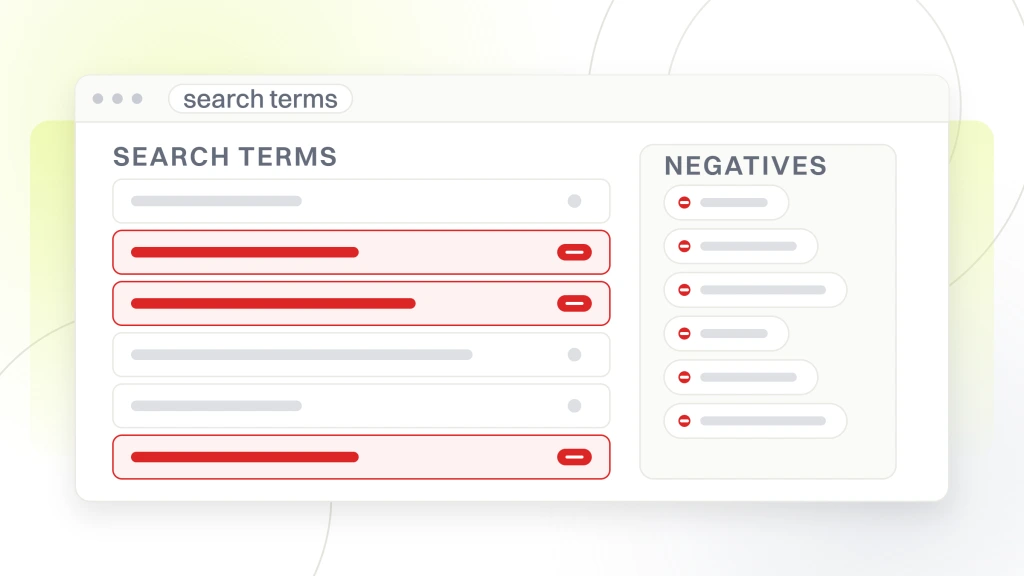
4 campaigns handle 90% of the intent. Back pain. Sciatica. Auto injury. Branded search. Every campaign has 1 exact-match ad group and 1 phrase-match ad group. Negatives run 60 deep and refresh weekly. Conversion tracking fires on the booking form submit and on any phone call over 90 seconds through Google Ads call tracking. Read PPC for chiropractors for the campaign structure.
The branded search play most practices skip
Somebody who Googles the practice name is 4 to 7 times likelier to book than a cold searcher. Branded search ads catch them before a competitor buys the same click. Owners hate paying for a click on their own name, then a competitor pays $2.40 for that click and steals the exam. Buy the branded traffic. It’s the cheapest booked patient in the account.
The weekly negative keyword solution
Every Friday the account manager pulls the search terms report and adds 15 to 30 new negatives. Job seekers. School searches. Insurance-only queries. Free consult tire kickers. Skip this for 4 weeks and cost per exam drifts up 30 to 50%. Every serious PPC solution includes this weekly pass. Every mediocre one skips it and blames the market 3 months in.
Chiropractor marketing solutions to avoid in year 1
Not every marketing solution belongs in a first-year stack. Some pay off only after the base solutions are producing steady bookings. Others produce nothing at any stage and just drain budget. The list below is the pattern we see burn practice budgets year after year.
Podcasting. YouTube long form (over 10 minutes). Printed magazine ads. Radio spots. Billboards. Broad Facebook awareness ads without an offer. Loyalty apps. AI chatbots that add friction to the booking flow. All-in-one marketing platforms sold on 3-year contracts. Any solution where the sales rep won’t name the price on the first call. Every 1 of these picks has a ceiling that sits above what a solo or 2-doctor practice can honestly afford to lose in the first 12 months of trading. Test them in year 2, once the base stack books 40 plus new patients monthly on autopilot and the practice has real budget to lose on an experiment. Set a hard cap of 15% of monthly marketing spend on any single year-2 experiment, and pull the plug on day 91 if cost per exam sits above the ceiling for 2 straight weeks.
Why all-in-one platforms quietly underperform
Platforms like PatientPop, Weave, and Solutionreach package website, email, reviews, and reminders into 1 bill at $400 to $900 a month. The bundle looks convenient. The reality is a mediocre version of every tool with no export path when the practice wants to switch. Every module underperforms the specialist tool it replaced. Practices lock in for 2 years and then pay to migrate off. The best picks get chosen 1 at a time, not bundled.
Solutions worth revisiting in year 2
Once the base stack produces consistently, podcasting and YouTube long form can work as brand-building solutions. Community sponsorships beyond the youth sports league. Print in a hyperlocal neighborhood magazine. Radio during morning drive time. All produce measurable returns in year 2 when the base is booking predictably. In year 1 they eat budget from the solutions that book patients.
Tracking solutions that reveal what books patients
Every pick has to be measured against booked exams. Without tracking, the practice spends the same money on the same channels every quarter and can’t say which one worked. The tracking stack has to be built before ad spend starts, not bolted on 3 months in.
4 pieces cover the tracking need. Call tracking on every ad campaign and landing page. Conversion event fires on booking form submits. Every new patient tagged in the EMR at intake with a source field. 1-page weekly scoreboard the front desk reads Monday morning. Read marketing tracking maintenance for chiropractors for the technical setup.
The EMR source field that solves attribution
Add a source field to the EMR intake form. “How did you first hear about us?” Google, referral, sign, drive-by, other. Costs nothing. Lets the practice pull cost per new patient by channel at the end of every month without a spreadsheet detective session. Practices that skip it end up arguing over whether Facebook or Google produced last month’s growth. The answer was on the intake form.
The weekly scoreboard the front desk reads
1 page, 5 rows, updated every Monday. New patient count month to date. Booked exam count month to date. Average cost per booked exam month to date. Review count added last 7 days. Reactivation email open rate on the last send. Every other metric is supporting cast in the workbook. The scoreboard is what the doctor reads at the top of every Friday review meeting.
How to choose the right chiropractor marketing solutions for your practice
Picking solutions starts with a written new patient target, then the budget, then a current stack audit, then a gap list. Each pick closes the biggest gap first. Every pick runs against a cost per booked exam ceiling.
Divide average patient case value by 4. That is the cost per new patient ceiling. A practice with a $1,600 case value can spend up to $400 to acquire a new patient across paid channels and still make the math work over a 12-month care plan. Any channel added to the stack has to be measurable against this ceiling. Solutions that produce booked exams under the ceiling get more budget. Solutions that produce clicks with no exams get cut.
The 90-day test cycle for every new solution
Any new solution added to the stack gets a 90-day test cycle. Fixed budget. Fixed KPIs. Weekly scoreboard tracking. At the end of 90 days, the solution either produces booked exams under the ceiling and stays, or it goes. No “give it more time” without written evidence. This discipline is what separates practices that grow every year from practices that spend more every year without growth.
The gap priority order
Close tracking gaps first. Close conversion gaps second. Close acquisition gaps third. Close retention and reactivation gaps fourth. Close reviews and referrals gaps last. This order is not intuitive. Practices without tracking can’t know which acquisition solution is working, so they cut the wrong ones. Practices with a broken booking flow waste every acquisition dollar. Fix the funnel from the bottom up and every next solution produces more.
How Redefine Web runs chiropractor marketing solutions
Redefine Web runs the full stack as a monthly retainer covering campaigns, tools, tracking, and reporting. Practices sign on when they want the plan to run instead of sit in a folder. Contracts are typically 6 months, since that is how long the base solutions need to compound.
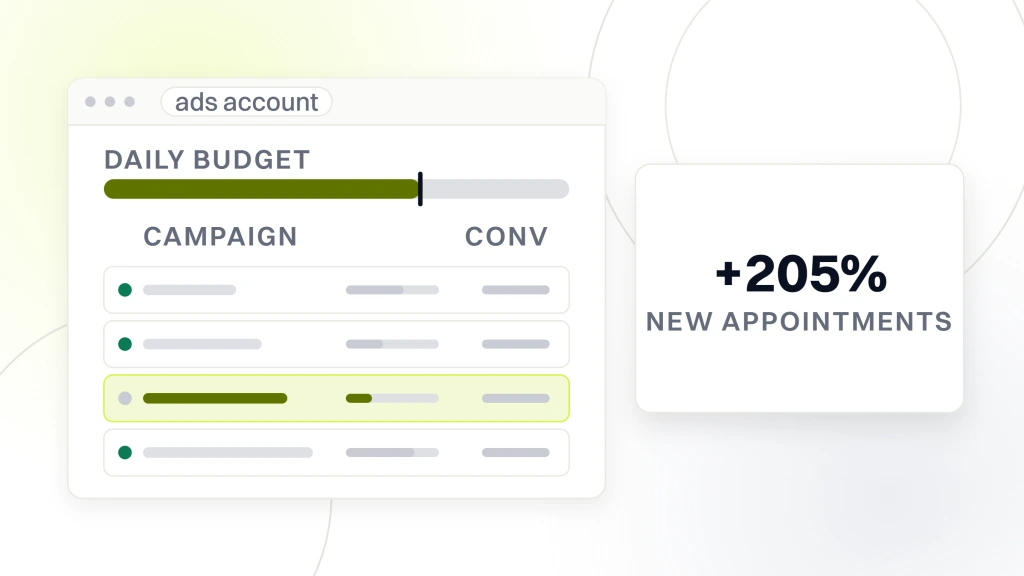
We opened the case work with Pain Cure Clinic on the same foundation of solutions. Education-driven SEO content, condition pages, targeted Google Ads and Facebook ads on the highest-intent conditions, an automated intake and reactivation sequence, and a written referral loop tied to a review workflow. 12 months later the practice had 205% more new appointments, 289% more organic traffic, and reviews up 162% to a 4.9-star average. The solutions were not exotic. The follow-through was.
A typical engagement
2-hour audit of the current stack. Written 90-day plan in the practice’s inbox by day 3. Solutions installed inside 2 weeks. Tracking wired in week 1. Ad campaigns migrated in week 2. Weekly Friday calls for the first 8 weeks, biweekly after that. Retainer starts at $1,499 per month for the base package and scales with market size and ad spend. Read marketing plan for chiropractors for the full 90-day plan structure.
Which picks to start with this week
Fix tracking first. Install call tracking, GA4, and the EMR source field. Then send the reactivation email to the 90-day lapsed file. Then launch a $50 daily Google Ads back pain campaign. 3 moves. 2 weeks. First booked patients inside a week. Book a strategy call through the chiropractor marketing services page when the practice is ready to run the full chiropractor marketing solutions stack with support.